News
Arrested. Injured. Suspended. Six NYC university students say they'll keep protesting


Pro-Palestinian students locked arms as they braced for New York Police Department officers to raid Columbia University’s campus to dismantle encampments and remove protesters from Hamilton Hall on April 30.
Seyma Bayram/AP
hide caption
toggle caption
Seyma Bayram/AP

Pro-Palestinian students locked arms as they braced for New York Police Department officers to raid Columbia University’s campus to dismantle encampments and remove protesters from Hamilton Hall on April 30.
Seyma Bayram/AP
At Columbia University, word was spreading among the student protesters who’d defied the university’s order to take down their pro-Palestinian encampment on a central lawn. Police were gathering outside the school’s locked gates. Arrests seemed imminent. It was the evening of April 30.
Allie Wong, a doctoral student, was off campus when she heard what was happening. She rushed there and found a way to sneak in.
Before the night was over, Wong would be one among nearly 300 protesters arrested at two New York City colleges. NPR spoke with six of them about their choice to risk arrest, discipline from their universities, and possibly their academic and professional futures.
Allie Wong said she knew what she was getting into.
“I ran like a bat out of hell,” she said, “and sprinted to Hamilton Hall,” the building that a group of students and people unaffiliated with the university had occupied the previous night in an escalation of their protest against Israel and the war in Gaza.
Wong linked arms with other students in front of the building. They were singing songs about peace when the police arrived to force their human chain apart.
Several blocks north, Bashir Juwara arrived at the City College of New York driven by a similar sense of responsibility. He’s the student body president at Hunter College, another campus within the City University of New York system. Hunter students were participating in the pro-Palestinian encampment at City College, and as their president, Juwara wanted to show support. He was live streaming the scene outside the school’s gates when police arrested him, along with 172 others there that night.
In the two weeks since, police have made some 4,000 arrests at pro-Palestinian encampments on dozens of college campuses across the country.
The arrests have rattled academia to its core, inviting criticism that schools are using force to repress the most significant student movement in recent history, but also support from people who see some aspects of the anti-Israel protests as antisemitic.
After being arrested inside Hamilton Hall, Columbia University graduate student Aidan Parisi got a tattoo — a watermelon slice — symbolizing Palestinian solidarity.
Keren Carrión/NPR
hide caption
toggle caption
Keren Carrión/NPR
After being arrested inside Hamilton Hall, Columbia University graduate student Aidan Parisi got a tattoo — a watermelon slice — symbolizing Palestinian solidarity.
Keren Carrión/NPR
Wong, Juwara, and the other arrested students NPR spoke with all said they were conscious of the potential consequences of defying their universities. But they characterized their punishments as minor compared to the suffering that the Palestinians of Gaza are enduring. They all allege Israel is carrying out a genocide that they say they have a moral obligation to try to stop.
Israeli officials reject the genocide accusation, saying the intent of their military operation is not to wipe out Palestinians, but to wipe out Hamas and prevent a repetition of its Oct. 7 attack that Israel says killed 1,200 soldiers and civilians. Israel blames Hamas for the Gaza death toll — 35,000 people killed, according to local health authorities — saying the militant group embeds itself among civilians.
Some of the students NPR spoke with said they believed if they could force their universities to agree to their main demand — divestment from companies doing business with Israel — other institutions might follow, putting further pressure on Israel to end the war.
At Columbia, president Nemat Shafik refused to divest. She said the pro-Palestinian encampments had created a hostile environment on campus. Some Jewish students said they no longer felt safe because of explicit antisemitism that some student and non-student protesters had expressed. When Shafik asked the police to dismantle the protests on April 30, she said it was because they had turned destructive after students took over Hamilton Hall. At City College, Chancellor Félix Matos Rodríguez said he called on the police because protesters – many of whom he said were unaffiliated with the university – had also tried to break into campus buildings, “creating an emergency situation.”
Student protesters insist that being critical of Israel does not make their movement antisemitic. And they say that accusation is aimed at tarnishing a peaceful anti-war movement.
Among the six Columbia and City College students that NPR spoke with after their April 30 arrests, two suffered injuries. Two of the Columbia students have either been suspended from their university programs or notified of the university’s intent to expel them. All who spoke to NPR said they have no regrets.
Here are those six students:
Allie Wong’s tattoo is of a sculpture titled “Non-violence” that stands outside New York’s United Nations Headquarters. It depicts the knotted barrel of a gun. “I’ve never experienced that kind of violence,” she said of the way NYPD officers carried out their arrests of Columbia University student protesters.
Keren Carrión/NPR
hide caption
toggle caption
Keren Carrión/NPR
Allie Wong’s tattoo is of a sculpture titled “Non-violence” that stands outside New York’s United Nations Headquarters. It depicts the knotted barrel of a gun. “I’ve never experienced that kind of violence,” she said of the way NYPD officers carried out their arrests of Columbia University student protesters.
Keren Carrión/NPR
Allie Wong, 38, doctoral student at Columbia Journalism School.
Arrested linking arms outside Hamilton Hall. Charged with trespassing.
Wong said she had attended a few campus protests in the months after the war started, but was not very active. A turning point came when Columbia’s president called on the police to clear protesters’ first encampment on April 18. Wong was outraged. She got more involved, and eventually decided she was willing to risk arrest facing off with police in front of Hamilton Hall. Her trespassing charge was dismissed this week.
“You know, I have a lot of things to contribute to this movement, but physical might is not one of them. So, at no point did I fight back. At no point did I resist. But it didn’t matter. The best way I can describe it is that feeling when you’re at the beach and you get hit by a wave that makes it so that you are no longer in control of your body. When they approached us, it was immediately using batons and shields to break us apart, as well as fists and arms. The first thing that I remember, especially in the context of my injuries, is getting pummeled in the head with an object. I don’t know what the object was. But I remember getting hit in the head and kind of taking a dizzy step back to regain my composure. And twice, I was thrown to the ground.
“I am privileged enough to know that what I risk by being arrested is nothing compared to what my peers risk… I’m not 19. I’m 38 years old and I already have had a career. If I am expelled from Columbia, if I am no longer allowed to get my Ph.D., I’ll be okay. Whereas other people, it might ruin their career. So perhaps that’s naïve of me, but that was the risk I was willing to take.
“The central message that’s important to me and important to those who were arrested and were protesting is that this is not about us, this is not about making us the story. It’s about putting the focus back on what is happening (in Gaza) and doing everything in our power with our voices to make that the central message.”
Basil Rodriguez was arrested linking arms outside Hamilton Hall, but said the arrest had strengthened their resolve to continue protesting. The trespassing charge Rodriguez faced was dismissed this week.
Keren Carrión/NPR
hide caption
toggle caption
Keren Carrión/NPR
Basil Rodriguez was arrested linking arms outside Hamilton Hall, but said the arrest had strengthened their resolve to continue protesting. The trespassing charge Rodriguez faced was dismissed this week.
Keren Carrión/NPR
Basil Rodriguez, 24, Columbia master’s student in American Studies.
Arrested linking arms outside Hamilton Hall. Charged with trespassing.
Rodriguez is Palestinian-American, and has been protesting the war in Gaza since October. Rodriguez, who uses they/them pronouns, said they were angry at Columbia’s refusal to divest from companies doing business in Israel. They narrowly avoided arrest when police cleared students’ first encampment on April 18.
“That day, 108 students who I love, who I consider like family and friends, were arrested. I had been at the encampment since day one, and actually left the morning of those arrests to go feed my cat, and was on the train back when I started getting notifications that the arrests had started. I had this intense survivor’s guilt for not having been there with them. I felt like I had abandoned them. So that’s when I was a lot more conscious of the fact that I couldn’t leave the (second) encampment anymore until they arrested me. And I fully knew all of the risks of arrest. I really believe in this cause and I really believe it’s a just cause. And I was also prepared to face expulsion or suspension because to me, that’s an honor. To give anything up for my people is an honor because they are paying with their lives on the daily.
“This arrest has really emboldened me to continue to speak up for Palestine and for Palestinians — to continue to speak up against the ongoing genocide. Even when I was in the jail cell and reflecting on what I had done to get there, I had zero regrets. I wouldn’t change what I did at all. And I will continue to protest and continue to face whatever consequences are thrown at me, because this is bigger than me. This is bigger than any one of us.”
After being arrested inside Hamilton Hall, Aidan Parisi is facing expulsion from Columbia.
Keren Carrión/NPR
hide caption
toggle caption
Keren Carrión/NPR
After being arrested inside Hamilton Hall, Aidan Parisi is facing expulsion from Columbia.
Keren Carrión/NPR
Aidan Parisi, 27, master’s student at the Columbia School of Social Work.
Arrested inside Hamilton Hall. Charged with misdemeanor trespassing. Facing expulsion.
Parisi has been a visible leader of the pro-Palestinian movement at Columbia, at times leading protests. In early April, Parisi, who uses they/them pronouns, was suspended after refusing to cooperate with the university’s investigation into an event that the university said featured speakers “known to support terrorism and promote violence.” The event was hosted by the student group that has been calling on Columbia to divest. Parisi is a member of that group, but told NPR they did not organize the event, and that they believe in non-violence. Despite being restricted from campus, Parisi was a regular presence at the pro-Palestinian encampments. But they said they avoided actions that might bring further discipline. On April 30, Parisi changed their mind, and was among the students who occupied Hamilton Hall.
“I was just not really seeing where I belonged in the movement. I was worried that I wouldn’t bring anything to it. I was kind of having an existential crisis. And then I saw a video online, just like many of the videos I’ve seen over the past seven months, of children brutally bombed and murdered by Israel. And something just clicked in my mind and I realized that I could give a little bit more and I could risk a little bit more.
“This expulsion is not going to be the end of my studies. This is not going to be the end of my career. I hope to go to law school and deal with situations just like what’s going on in Gaza, with humanitarian law, or even looking into protest law. And I’m definitely going to fight my expulsion. I mean, I don’t want to waste the $40,000 of student loans I’ve already taken out. No matter what, I will fight this. I’ll fight my suspension, my eviction, my potential expulsion. I will fight all of this to set the precedent that Columbia cannot silence our voices, that they cannot silence a movement — and not just our movement, but any future movements. And that’s why I’ve remained adamant about fighting.”
Bashir Juwara said that as a student body president, he felt a responsibility to advocate for his classmates’ right to protest.
Keren Carrión/NPR
hide caption
toggle caption
Keren Carrión/NPR
Bashir Juwara said that as a student body president, he felt a responsibility to advocate for his classmates’ right to protest.
Keren Carrión/NPR
Bashir Juwara, 24, Hunter College undergraduate student body president.
Arrested at City College. Charged with trespassing and walking in the roadway.
Juwara live streamed the scene of the protest at City College, approaching NYPD officers blocking the entrance to campus and peppering them with questions about why they were there. As a student body president, he said he felt a responsibility to ask. When the arrests began, an officer knocked his phone out of his hand in the middle of his broadcast.
“I actually had a conversation with the cop that arrested me. He was asking, is it really worth it? I said, is it really worth it? Is that a genuine question that you asked? But then I described to him why I did what I did, because I believe that students should be protected. Students should have a right to peaceful protests and assembly. It’s their constitutional rights.
“CUNY gave me an opportunity that not many schools gave me. When I first arrived, I was undocumented. CUNY offered me a scholarship at a community college. And then by the time I transferred to Hunter College, I had my legal documentation. CUNY gave me the opportunity to develop as a student leader. This is something that I am incredibly grateful for. But when I was arrested, I had to rethink. Does CUNY actually support students that learn things in the classroom and try to use what they learn to stand up for what they believe in? After I was arrested, some of that I had to rethink.
“As a student leader, I’m trying to get students that were involved in the encampment to have a meeting for negotiations with the chancellor’s office, because I don’t think the negotiations should be scrapped just because the encampment has been destroyed by brutal force by NYPD. I think that is really important — to show that we can still find a way to negotiate. That is my next step.”
Laith Shalabi was arrested linking arms at the encampment at the City College of New York.
Keren Carrión/NPR
hide caption
toggle caption
Keren Carrión/NPR
Laith Shalabi was arrested linking arms at the encampment at the City College of New York.
Keren Carrión/NPR
Laith Shalabi, 22, first-year student at the CUNY School of Law.
Arrested linking arms at the City College encampment. Charged with trespassing.
As a Palestinian-American with family in the West Bank, Shalabi said he’s always felt deep guilt over the privileges he enjoys that his family there does not. Last fall, a passerby recorded a video of Shalabi tearing down fliers on his campus featuring the photos of Israelis kidnapped by Hamas. He told NPR that he did it in “a moment of frustration” over the many Palestinian children killed by Israel’s bombardment, and the many others that Israel has held without charges but whose detentions he said have historically generated less public sympathy. He said he doesn’t regret removing the fliers, but said he wouldn’t do it again. After the video was shared online, Shalabi was doxxed, and said he and his family started getting threatening emails and phone calls.
“I’m still a student. I still have a home. I have somewhere to sleep at night. I have food. I’m privileged. I’m 22, and 22 is an age a lot of Palestinians don’t reach. And so for us over here with these protests, we are fighting for people who are our age. There’s not a single university left standing in Gaza. They’re all destroyed. Thinking about each one individually, on a human level, and that each university had a student body. Each university had a system of professionals and academics ready to transform these kids’ lives to contribute amazing things to society – to become doctors, become engineers, become lawyers, become whatever their hearts desired. And now these vehicles of life have been taken from them. My arrest is an extremely small price to pay in comparison.”
Marie Adele Grosso, 19, a sophomore at Barnard College, was arrested twice. First at the Columbia encampment that police dismantled on April 18. And again outside Hamilton Hall on April 30.
Keren Carrión/NPR
hide caption
toggle caption
Keren Carrión/NPR
Marie Adele Grosso, 19, a sophomore at Barnard College, was arrested twice. First at the Columbia encampment that police dismantled on April 18. And again outside Hamilton Hall on April 30.
Keren Carrión/NPR
Marie Adele Grosso, 19, sophomore at Barnard College, Columbia University.
Arrested linking arms outside Hamilton Hall. Charged with trespassing. Suspended.
Grosso spent time as a child living in the West Bank, where her mother worked as a legal advocate and her father researching food access. She was arrested at Columbia’s first pro-Palestinian encampment on April 18. The university suspended her for that, but lifted the suspension. She was suspended again after her second arrest on April 30. Her trespassing charge was dismissed this week.
“I have several injuries as well as bruising all over my body. My shoulder dislocated. But I was able to put it back in, so I didn’t really need to go to the hospital for that. I have a wrist injury that’s a little undefined and then I have some form of back injury.
“With the charge, I will likely not be able to do one of the jobs I was hoping to do this summer. That’s substitute teaching. They have a policy for the protection of kids, obviously. I’m disappointed, because I love the kids, trying to help them learn. I love watching them grow. But it’ll be okay. I have other jobs.
“We’re watching a genocide unfold on social media, and in a lot of ways, we’re helpless. And it’s a moral obligation to do everything and anything we can to stop it. I can’t imagine watching it and being able to sit by.”
NYPD officers clear the pro-Palestinian encampment at Columbia University on April 30.
Marco Postigo Storel/AP
hide caption
toggle caption
Marco Postigo Storel/AP
NYPD officers clear the pro-Palestinian encampment at Columbia University on April 30.
Marco Postigo Storel/AP



Smoke rises over Konarak naval base in southern Iran on Sunday. The base was one of hundreds of targets of U.S. and Israeli forces throughout the country.
Planet Labs PBC
hide caption
toggle caption
Planet Labs PBC
Commercial satellite images are providing a unique look at the extent of damage being done to Iran’s military facilities across the country.
The U.S. and Israeli military campaign opened with a daytime attack that struck Iranian leadership in central Tehran. Smoke was still visible rising from Ayatollah Ali Khamenei’s compound following the attack that killed the supreme leader.

An image by the company Airbus taken on Saturday shows the aftermath of an Israeli strike on Iran’s Leadership House in central Tehran. Iran’s Supreme Leader Ayatollah Ali Khamenei was killed in the opening wave of attacks.
Pléiades Neo (c) Airbus DS 2026
hide caption
toggle caption
Pléiades Neo (c) Airbus DS 2026
Israel and the U.S. have gone on to strike targets across the country. Reports on social media indicate that there have been numerous military bases and compounds attacked all over Iran, and Iran has responded with attacks throughout the Middle East.
U.S. forces have also been striking at Iran’s navy. In a post on his social media platform, President Trump said that he had been briefed that U.S. forces had sunk nine Iranian naval vessels. U.S. Central Command did not immediately confirm that number but it did say it had struck an Iranian warship in port.

An image captured on Saturday shows a ship burning at Iran’s naval base at Konarak.
Satellite image ©2026 Vantor
hide caption
toggle caption
Satellite image ©2026 Vantor
Numerous satellite images show burning vessels at Konarak naval base in southern Iran. Images also show damage to a nearby airbase where hardened hangers were struck by precision munitions.

Hardened aircraft shelters at Konarak airbase were struck with precision munitions.
Satellite image ©2026 Vantor
hide caption
toggle caption
Satellite image ©2026 Vantor
And there was extensive damage at a drone base in the same area. Iran has launched numerous drones and missiles toward Israel and U.S. military installations in Bahrain, Kuwait and Qatar. Many drones have been intercepted but videos on social media show that some have evaded air defenses and caused damage in nearby Gulf countries. In Dubai, debris from an Iranian drone damaged the iconic Burj Al Arab, according to a statement from Dubai’s government.

Buildings at an Iranian drone base at Konarak were destroyed in the strikes.
Satellite image ©2026 Vantor
hide caption
toggle caption
Satellite image ©2026 Vantor
Iran’s most powerful weapons are its long-range missiles. The Iranian Revolutionary Guards have hidden the missiles deep inside mountain tunnels. Images taken Sunday in the mountains of northern Iran indicate that some of those tunnels were hit in a wave of strikes.
Following Khamenei’s death, Iran declared 40 days of mourning. Satellite images showed mourners gathering in Tehran’s Enghelab square on Sunday.
Iranian Foreign Ministry Spokesperson Esmail Baghaei told NPR on Sunday that Iran will continue to fight “foreign aggression, foreign domination.”
A White House official told NPR that Trump plans to talk to Iran’s interim leadership “eventually,” but that for now, U.S. operations continue in the region “unabated.”

A large crowd of mourners fill Enghelab Square in Tehran on Sunday, following the death of Iran’s Supreme Leader Ayatollah Ali Khamenei, who was killed in an Israeli airstrike.
Satellite image ©2026 Vantor
hide caption
toggle caption
Satellite image ©2026 Vantor

new video loaded: What the Texas Primary Battle Means for the Midterms
By J. David Goodman, Alexandra Ostasiewicz, June Kim and Luke Piotrowski
March 1, 2026

Gunfire rang out at a bar in Austin, Texas, early Sunday and at least three people were killed, the city’s police chief said.
Austin Police Chief Lisa Davis told reporters the shooter was killed by officers at the scene.
Fourteen others were hospitalized and three were in critical condition, Austin-Travis County EMS Chief Robert Luckritz said.
“We received a call at 1:39 a.m. and within 57 seconds, the first paramedics and officers were on scene actively treating the patients,” Luckritz said.
There was no initial word on the shooter’s identity or motive.
Davis noted how fortunate it was that there was a heavy police presence in Austin’s entertainment district at the time, enabling officers to respond quickly as bars were closing.
“Officers immediately transitioned … and were faced with the individual with a gun,” Davis said. “Three of our officers returned fire, killing the suspect.”
She called the shooting a “tragic, tragic” incident.

Austin Mayor Kirk Watson said his heart goes out to the victims, and he praised the swift response of first responders.
“They definitely saved lives,” he said.
Davis said federal law enforcement is aiding the investigation.

Kentucky Lottery Cash Ball, Pick 3 Evening winning numbers for March 1, 2026

Jury selection begins Monday in one of Louisiana’s largest auto insurance fraud cases
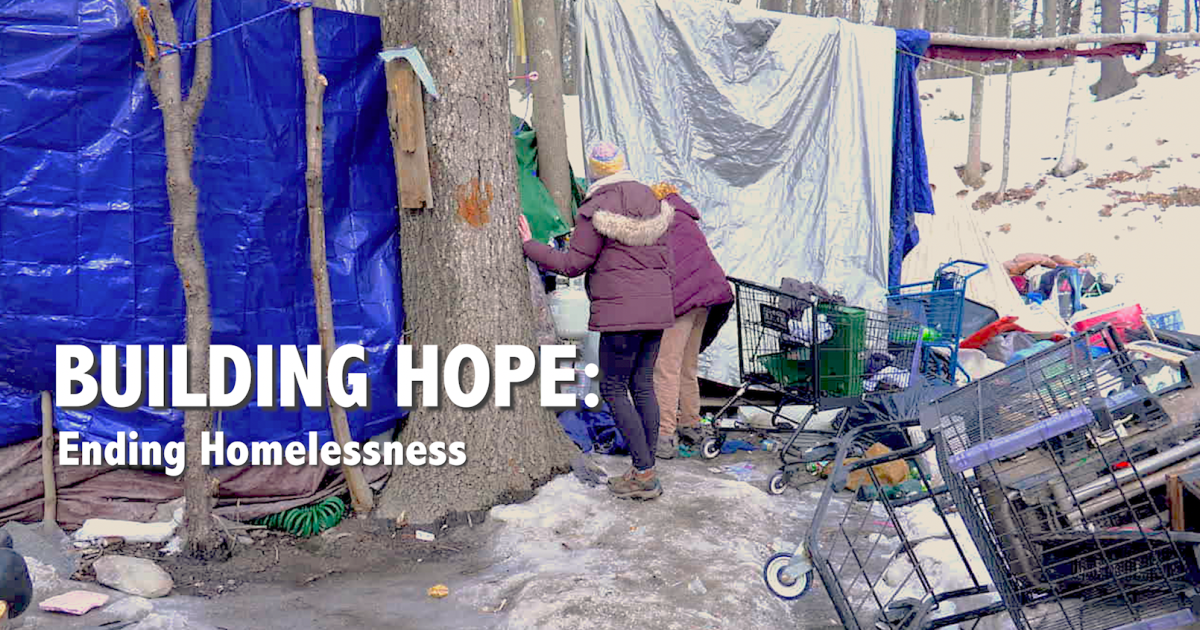
Building Hope: A Community Film Event to End Homelessness

SUN: Dozens of vehicles moved to planned Maryland ICE facility; advocates concerned

Michigan State Police patrol car damaged in hit-and-run on Lodge Freeway in Detroit

Florida High School Football Rankings: Top 25 teams – Oct. 21

Cleary's 21 help Le Moyne down Central Connecticut State 69-64 in OT

How old is Bo Nix? What to know about Oregon quarterback ahead of 2024 NFL Draft

99th annual Pony Swim held in Virginia

Indiana Members Credit Union announced as new anchor tenant at Bottleworks District

House Republicans push Johnson to go to war with Senate over SAVE Act

Israel FM says Europe too divided, slams Spanish PM
Satellite images provide view inside Iran at war

Video: What the Texas Primary Battle Means for the Midterms

Dems’ potential 2028 hopefuls come out against US strikes on Iran
-

 World4 days ago
Exclusive: DeepSeek withholds latest AI model from US chipmakers including Nvidia, sources say
-

 Massachusetts5 days ago
Mother and daughter injured in Taunton house explosion
-

 Denver, CO4 days ago
10 acres charred, 5 injured in Thornton grass fire, evacuation orders lifted
-

 Louisiana1 week ago
Wildfire near Gum Swamp Road in Livingston Parish now under control; more than 200 acres burned
-

 Technology1 week ago
YouTube TV billing scam emails are hitting inboxes
-

 Politics1 week ago
OpenAI didn’t contact police despite employees flagging mass shooter’s concerning chatbot interactions: REPORT
-

 Technology1 week ago
Stellantis is in a crisis of its own making
-

 News1 week ago
World reacts as US top court limits Trump’s tariff powers