News
Apple, Google tell workers on visas to avoid leaving the U.S. amid Trump immigration crackdown

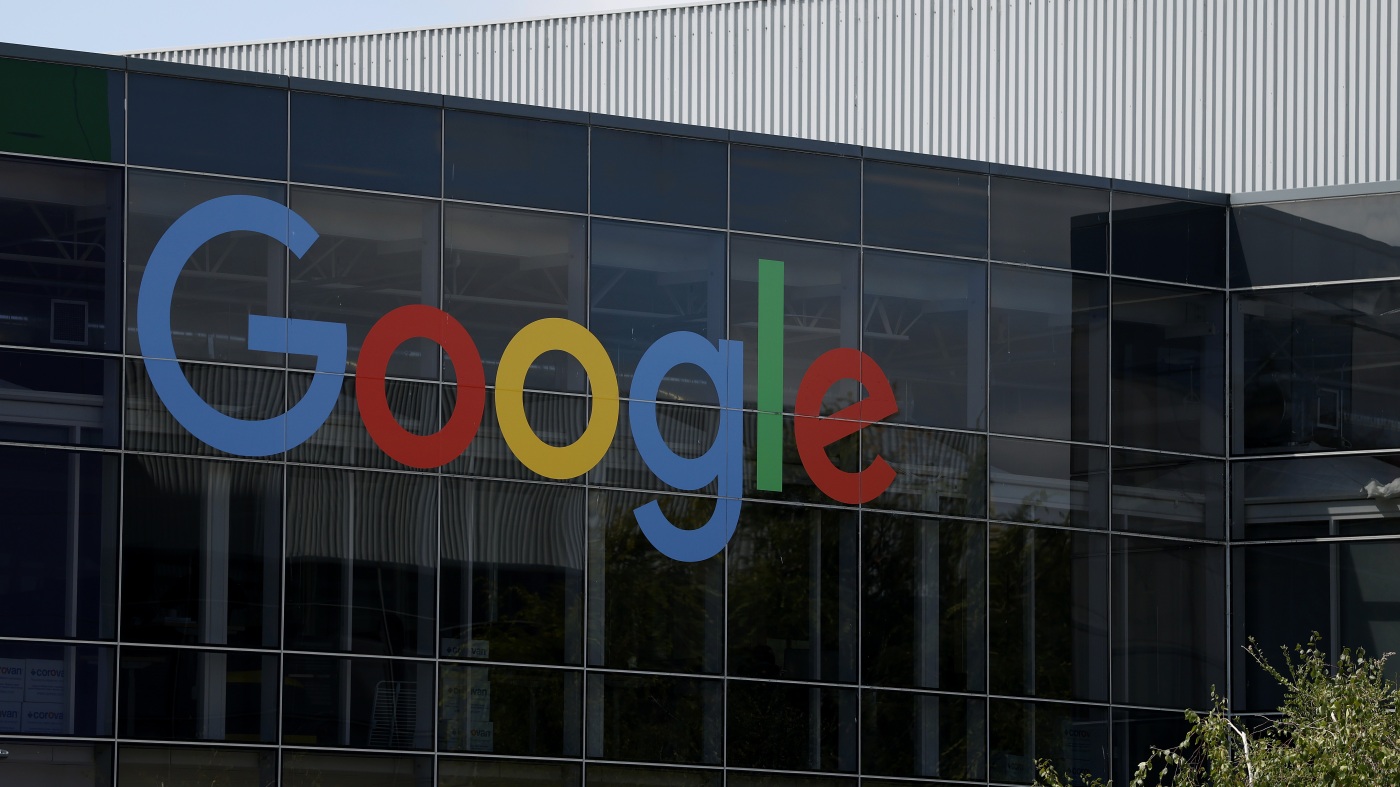
With reported months-long consulate and embassy delays, Google and Apple say employees on H-1B visas should stay put in the U.S. right now to avoid the risk of getting stranded abroad. The latter tech company’s headquarters campus is seen in Mountain View, Calif.
Justin Sullivan/Getty Images
hide caption
toggle caption
Justin Sullivan/Getty Images
Apple and Google are warning some U.S-based employees on visas against traveling outside of the country to avoid the risk of getting stuck coming back, as the Trump administration toughens vetting of visa applicants, according to recent internal memos from the tech companies that were reviewed by NPR.
U.S. consulates and embassies have been reporting lengthy, sometimes months-long delays, for visa appointments following new rules from the Department of Homeland Security requiring travelers to undergo a screening of up to five years’ of their social media history — a move criticized by free speech advocates as a privacy invasion.
For Apple and Google, which together employ more than 300,000 employees and rely heavily on highly-skilled foreign workers, the increased vetting and reports of extended delays were enough for the companies to tell some of their staff to stay in the U.S. if they are able to avoid foreign travel.
“We recommend avoiding international travel at this time as you risk an extended stay outside of the U.S.,” Berry Appleman & Leiden, a law firm that works with Google, wrote to employees.

The law firm Fragomen, which works with Apple, wrote a similar message: “Given the recent updates and the possibility of unpredictable, extended delays when returning to the U.S., we strongly recommend that employees without a valid H-1B visa stamp avoid international travel for now,” the memo read. “If travel cannot be postponed, employees should connect with Apple Immigration and Fragomen in advance to discuss the risks.”
Apple and Google declined to comment on the advisories, which were first reported by Business Insider.

It’s the latest sign of how the Trump administration’s aggressive immigration policies are affecting the foreign-born workforce in the U.S.
Earlier this year, the White House announced that companies will be subjected to a $100,000 fee for all new H-1B visas, a type of visa popular among tech companies eager to hire highly skilled workers from abroad.
H-1Bs typically last three years, and applicants have to return to an embassy or consulate in their home country for a renewal, but reports suggest such a routine trip could lead to people being stranded for months as a result of the Trump administration’s new policies.
On Friday, The Washington Post reported that hundreds of visa holders who traveled to India to renew their H-1Bs had their appointments postponed with the State Department explaining that officials needed more time to ensure that no applicants “pose a threat to U.S. national security or public safety.”
At Google, the Alphabet Workers’ Union has been campaigning for additional protections for workers on H-1B visas. Those workers would be particularly vulnerable in the event Google carried out layoffs, since losing employer sponsorship could jeopardize their legal status, said Google software engineer Parul Koul, who leads the union.
The need to support H-1B holders at Google, she said, has “only become more urgent with all the scrutiny and heightened vetting by the Trump administration around the H1B program, and how the administration is coming for all other types of immigrant workers.”


The Justice Department sent letters warning election officials in all 50 states and the District of Columbia that they could face criminal prosecution over noncitizen voting, a spokesperson for the Justice Department confirmed Tuesday.
The letters, signed by Assistant Attorney General Harmeet Dhillon, who heads up the department’s Civil Rights Division, give states five days to explain how they will comply with federal voter eligibility laws and how they will maintain “clean voter lists.”
“The Department sent these letters to all 50 states and the District of Columbia, asking for voluntary compliance in a timely manner with their obligations under federal law to ensure only citizens vote in federal elections,” a Justice Department spokesperson said in a statement.
Noncitizen voting in federal elections is extremely rare, but Trump and his administration have falsely portrayed it as a widespread issue.
Michigan Secretary of State Jocelyn Benson, Nevada Secretary of State Francisco Aguilar and Utah Lt. Gov. Deidre Henderson are among those who said they received the letters from the Justice Department.
The letters say state election officers “could be criminally prosecuted for aiding and abetting” noncitizen voting. They further specify that any election officer who knowingly retains noncitizens on a statewide voting registration list or who facilitates noncitizens’ receiving and casting ballots could be subject to criminal liability.
“An intentional act that is aimed at diluting the votes of citizens could also constitute a violation” of federal law, the letters said.
Henderson wrote on social media that the threats constitute “truly bizarre behavior.”
“Got another love letter this morning from the DOJ sprinkled throughout with threats of criminal prosecution,” she wrote. “I’m sure I’m not the only chief election officer of a state who is being targeted for following state and federal laws by resisting DOJ’s demands for private voter data that have thus far been ruled illegal by at least a dozen courts.”
The letters are the latest move in the Justice Department’s campaign to assert more federal control over state elections.
While some states have complied with the administration’s demands that they hand over voter roll data, the Justice Department has sued 30 states and Washington, D.C., for resisting. So far, 11 different federal courts have dismissed the Justice Department’s efforts to seize voter rolls.

Lionel Messi #10 of Argentina celebrates scoring his team’s second goal during their World Cup match against Egypt in Atlanta on Tuesday.
Elsa/Getty Images
hide caption
toggle caption
Elsa/Getty Images
They looked beaten. And out. Argentina, the defending World Cup champion and No. 1-ranked team, was down 2-0 late against Egypt.

Then, in a span of 13 remarkable minutes, Argentina scored not once, not twice, but three times, capping a comeback for the ages and leaving Egypt stunned and shellshocked.
For much of the game in Atlanta, Egypt was in control, hobbling Argentina early. The Egyptian attack began almost immediately with a stunning header goal delivered by Yasser Ibrahim in the 15th minute. After that, Egypt’s defense closed ranks, making it practically impossible for Argentina to equalize.
It was downhill from there for the Argentines: team captain Lionel Messi failed to convert a penalty kick, and in the 67th minute, Egypt got a second goal from Mostafa Ziko (after an earlier Egyptian goal had been disallowed after a video review). It looked like Argentina was finished. On the brink of elimination.
But no one told the Argentine players that.
In the 79th minute, Lionel Messi began doing his thing. He fired a cross near the Egyptian goal, and Cristian Romero headed it in. Messi was not done. Four minutes later, he powered a shot past the Egyptian keeper. It was his eighth goal of this tournament, the most of any player. The score was 2-2.
Then, in stoppage time, yet another Argentina header and another goal, this time from Enzo Fernandez.
“This is the World Cup for you,” said Messi after the game. “It wasn’t easy to come back from two goals down. But as I always say, this group never gives up. We always try to fight until the end.”

French referee François Letexier speaks with Egypt forward Mohamed Salah during the World Cup Round of 16 match between Argentina and Egypt in Atlanta.
Roberto Schmidt/AFP via Getty Images
hide caption
toggle caption
Roberto Schmidt/AFP via Getty Images
Afterward, Egypt coach Hossam Hassan complained about the French referee and the officiating. “I am not convinced. I am not convinced with this outcome. I’m not convinced with the way things unfolded during this match,” said Hassan in a post-match news conference. “We have been treated unfairly today. We have suffered injustice.”
“We would have deserved to earn this win, but we are leaving with honor, with pride, regardless of this defeat,” said Hossan.
African soccer teams have been the stars of this World Cup. Morocco has yet to lose a game. Cape Verde qualified for the first time in its history and stymied Spain, Uruguay and Saudi Arabia. Argentina barely beat them in a nail-biter of a match.
For Egypt, getting this far in the tournament is historic in itself: it’s the first time the team has made it this far. For Argentina, it was a terrifying yet relieving victory: several players, including Messi himself, cried after the game.
Next, they move to the quarterfinals and will play the winner of today’s Switzerland-Colombia match.

Top Senate Democrats are pushing for answers on whether a provision in a controversial settlement agreement between President Trump and his own administration applies to companies co-founded by or affiliated with the Trump family.
As part of a deal struck in May by the Justice Department to resolve a lawsuit brought by Mr. Trump, the Internal Revenue Service is permanently barred from pursuing claims against Mr. Trump, his oldest sons Don Jr. and Eric, and the Trump Organization based on prior tax returns.
In a one-page document signed by Acting Attorney General Todd Blanche and dated May 19, the Justice Department said the defendants in the president’s lawsuit — the IRS and the Treasury Department — are “FOREVER BARRED and PRECLUDED” from “prosecuting or pursuing, any and all claims” arising from tax returns filed before the settlement took effect. Blanche also wrote that the settlement applies to “parties including trusts, parent, sister, or related companies, affiliates, and subsidiaries.”
Now, Senators Elizabeth Warren of Massachusetts, Senate Minority Leader Chuck Schumer of New York, and Ranking Member of the Senate Finance Committee Ron Wyden of Oregon are pushing 11 businesses and organizations with ties to the Trump family to get answers for the “significant questions” the settlement raises relating to the tax audit provision, and whether the companies are included in the deal.
“Under the guise of a so-called legal settlement, the Trump administration has attempted to decree that the President, his family, and their entire business empire — potentially including entities with even the vaguest ‘affiliation’ to the family — are to face zero consequences if they have committed a range of financial crimes or misdeeds — regardless of the severity of the violation,” the senators wrote in letters transmitted to the companies Monday night.
The letters were sent to mining company Kaz Resources, defense firm Powerus, cryptocurrency companies World Liberty Financial and American Bitcoin, robotics startup Foundation Future Industries, investment firm 1789 Capital, private aviation company Tag Air, and prediction markets Polymarket and Kalshi.
All of the companies either were founded by Mr. Trump and his two adult sons, or list members of the Trump family as advisers, board members, or partial owners. Donald Trump Jr. sits on Polymarket’s advisory board and 1789 Capital, where he’s a partner, has invested in Polymarket. Days before Mr. Trump took office for his second term, Kalshi also announced Trump Jr. would be a strategic adviser.
The Democrats, who are in the minority, lack subpoena power, so Mr. Trump, his children and his companies can’t be forced to answer the questions posed by the senators.
According to recent financial disclosures, the president earned more than a billion dollars from cryptocurrency ventures alone last year, including from his meme coin business and World Liberty Financial, his family’s cryptocurrency firm.
Separately, the senators also asked the Trump Organization in a separate letter if it believes it has “immunity from all audits, civil penalties or federal prosecution” for any crimes that could have occurred before the settlement.
Trump Media and Technology Group, which is majority owned by a trust that lists Mr. Trump as the sole beneficiary and operates the Truth Social platform he uses daily, also received a letter from the Democratic senators.
“The public deserves transparency about the scope of this get-out-of-jail free card for Trump-aligned businesses, and about whether you intend to rely on this settlement as a free pass for any possible violations of the law,” the senators continued in their letter, which also seeks any communications that executives at the companies have had with the Justice Department and White House leading up to or after the settlement was signed.
The settlement was announced months after Mr. Trump and two of his sons and the Trump Organization accused the IRS and Treasury Department of unlawfully allowing a government contractor to leak tax returns to media outlets in 2020.
In a statement, a Justice Department spokesperson said “the IRS routinely provides releases as part of resolving taxpayer reviews and audits. This settlement follows that same standard practice.”
The spokesperson did not provide specific information about which companies are covered by the audit provision, or whether the Trump Organization and Trump family are the only entities covered by that addendum.
-
 Lifestyle12 minutes ago
Can you say no to a friend’s wedding? : It’s Been a Minute
-

 Technology20 minutes ago
The robotaxi law that could ban Tesla
-

 World27 minutes ago
US urges donors to abandon UNRWA funding as UN defends agency’s mission
-

 Politics30 minutes ago
EXCLUSIVE: FBI adds alleged COVID fraudster accused of taking $5M from kids’ meal program to Most Wanted list
-

 Health35 minutes ago
One walking habit could signal a healthier brain after 80, scientists say
-

 Sports42 minutes ago
New Jersey pro wrestling promotion bringing the fight to the beach
-

 Technology45 minutes ago
Are airline miles still worth it?
-
 Business50 minutes ago
Walmart’s EV chargers are coming to California with discounts for members

