Midwest
Trump’s immigration victory in a Minnesota court is a win for all law-abiding citizens


NEWYou can now listen to Fox News articles!
Minnesota is not an island – geographically or legally. That’s the firm message from the Jan. 31 decision by Judge Katherine Menendez, refusing to issue a preliminary injunction against the federal government’s immigration law enforcement operations in Minnesota.
The federal immigration laws apply in Minnesota just as much as in Missouri. Contrary to cynical politicians who seek to weaponize misguided individuals into fighting a phantom holy war pitting some states against the national government, Operation Metro Surge is neither unconstitutional nor a violation of states’ rights.
The federal court’s stinging rebuke appears to have quickly forced Minnesota’s governor to deliver “unprecedented cooperation” and enable border czar Tom Homan to draw down federal agents on Feb 5. Here’s why.
Let’s start with how this case got to court. Minnesota’s politicians have been engaged in lawfare against the Trump administration, claiming that the federal government is intruding on the state’s sovereignty. They challenged the federal enforcement actions as violative of the 10th Amendment to the U.S. Constitution, which states, “The powers not delegated to the United States by the Constitution, nor prohibited by it to the States, are reserved to the States respectively, or to the people.” Minnesota sought a preliminary injunction to stop Operation Metro Surge.
‘BORDER CZAR’ TOM HOMAN SETS THE RECORD STRAIGHT ABOUT HIS MISSION IN MINNEAPOLIS
People participate in an anti-ICE rally Sunday, Jan. 25, 2026, in Minneapolis. (AP Photo/Jack Brook)
Even though the court’s ruling was on a preliminary motion, the constitutional argument was effectively busted by the judge’s reasoning.
Minnesota argued that Operation Metro Surge was motivated by political animus, aimed at punishing it because it was a sanctuary state, and violated the Constitution’s equal sovereignty and anticommandeering principles.
The problem is that our Founding Fathers designed the Constitution to ensure the supremacy of federal laws and the capacity of the executive branch to enforce them. In Federalist No. 44, James Madison expounded on the perils of not having such supremacy: “the world would have seen, for the first time, a system of government founded on an inversion of the fundamental principles of all government; it would have seen the authority of the whole society every where subordinate to the authority of the parts; it would have seen a monster, in which the head was under the direction of the members.”
MINNESOTA DRAGS TRUMP’S ICE TO COURT IN EFFORT TO PAUSE IMMIGRATION CRACKDOWN
Madison concluded that “no part of the power is unnecessary or improper for accomplishing the necessary objects of the Union. The question, therefore, whether this amount of power shall be granted or not, resolves itself into another question, whether or not a government commensurate to the exigencies of the Union shall be established; or, in other words, whether the Union itself shall be preserved.”
Nowhere is the question about the preservation of the union more critical than in the matter of immigration and foreign relations. That’s why the president has such broad powers in these areas, because he needs those powers as they are “commensurate to the exigencies of the Union” and necessary to preserve a unified country under the laws.
Here, the supreme federal law is the Immigration and Naturalization Act, a statute passed by Congress. That law confers power on federal officials to undertake various enforcement actions, including detention and removal. And President Donald Trump campaigned and won an election specifically on the total abdication by the prior administration in enforcing immigration laws. Having won the election on that issue, it stood to reason that Trump would keep his promise and seek to remove illegal migrants – especially those with criminal backgrounds.
BORDER CZAR TOM HOMAN CALLS ANTI-ICE ROADBLOCKS IN MINNEAPOLIS A ‘JOKE’ AFTER POLICE CHIEF DISBANDS THEM
In the face of widespread fraud and diversion of federal funds to illegal migrants and the state governor’s willful refusal to prosecute them, Trump deployed federal officers to enforce the law.
Minnesota’s argument in court that Trump violated the 10th Amendment’s anticommandeering principle is nonsense. As explained by the Supreme Court in New York v. US, 505 U. S. 144, 161, “Congress may not simply ‘commandeer the legislative process of the States by directly compelling them to enact and enforce a federal regulatory program.’” The purpose is to ensure political accountability, protect individual liberty and prevent the federal government from transferring the costs of enforcing a federal law on to the states.
Contrary to cynical politicians who seek to weaponize misguided individuals into fighting a phantom holy war pitting some states against the national government, Operation Metro Surge is neither unconstitutional nor a violation of states’ rights.
Trump and ICE did not commandeer Minnesota state officials to enforce immigration laws. In fact, the Minnesota governor and Minneapolis mayor have both loudly proclaimed that they will not enforce immigration laws or cooperate with the federal government. They have labeled ICE agents as thugs and goons and incited resistance. Clearly, state officials are not being commandeered – the facts show the opposite: resistance.
CLICK HERE FOR MORE FOX NEWS OPINION
Minnesota also claimed that ICE operations were causing it to respond and divert resources away from other purposes. This is equally nonsensical – it takes fewer resources to cooperate and help ICE in arresting criminals than it does to obstruct and resist. No one forced Minnesota to appease its voter banks and provide a freebie for those who evade immigration laws. In effect, Minnesota is telling anyone who is clever enough to violate or evade immigration law that the state’s legal machinery will protect them. That is a response and diversion of resources to protect lawbreakers – of Minnesota’s own choosing. It was not a choice forced on it by ICE.
Second, the equal sovereignty argument is unavailing. The president has discretion on the enforcement of the immigration laws just as he does in the context of other executive powers conferred upon him by the Constitution. The Supreme Court explained in US. v. Texas, 599 U.S. 670, 678 (2023), that under Article II, “the Executive Branch possesses authority to decide ‘how to prioritize and how aggressively to pursue legal actions against defendants who violate the law.’”
CLICK HERE TO DOWNLOAD THE FOX NEWS APP
White House border czar Tom Homan deployed to Minnesota on Jan. 26, 2026, to run point on the immigration crackdown in the state. (Jim Watson/Getty Images)
The deployment of ICE officers in larger numbers in Minnesota underscores the value of the discretion possessed by the president. Clearly, the fraudulent diversion of funds to illegal migrants and Minnesota’s refusal to take corrective actions warranted a more robust federal enforcement response than in other states. Equal sovereignty is not violated by the prudent exercise of discretion – it is reinforced by proportionate enforcement.
Ultimately, Democrat Gov. Tim Walz’s lawfare against the Trump administration is not a war about state sovereignty. It is a war for and on behalf of lawbreakers being fought by diverting valuable resources away from law-abiding citizens and using misguided citizens as cannon fodder. Minnesota deserves better.
Read the full article from Here



Detroit, MI
Retired Detroit sergeant faces new sexual assault charge involving 14-year-old victim from 2002

An additional case, this one involving a victim who was then 14 years old, has been added to the sexual assault investigation against a former Detroit Police Department sergeant.
Wayne County Prosecutor Kym Worthy announced the latest charges on Friday against Benjamin Martin Wagner, 68, who now lives in Greenville, N.C. He had retired from the Detroit Police Department in 2017.
The victim in the additional charges was 14 years old when the assault happened in October 2002 in Detroit, Worthy said. The prosecutor alleges that Wagner approached the victim, pointed a handgun at her, ordered her away from the location and then sexually assaulted her.
In this case, he faces charges of kidnapping, two counts of first-degree criminal sexual conduct and two counts of third-degree criminal sexual conduct. An arraignment hearing took place Friday in the 36th District Court in Detroit. A probable cause conference is scheduled for April 7.
The woman is now 37 years old.
“She has lived with what happened to her for 23 years and has now bravely decided that she wants to be a part of holding him accountable,” Worthy said.
Wagner participated in a court hearing Thursday and was remanded to jail, one week after he was charged with 15 counts of kidnapping and rape in five separate sexual assault cases. All of those incidents happened between 1999 and 2003 in the northwest side of Detroit, with the victims being young women between the ages of 15 and 23.
The court dates for the earlier list of charges are April 7 for a probable cause hearing and April 14 for a preliminary exam.
Wagner joined the Detroit Police Department in 1989 as a police officer and was eventually promoted to sergeant. He retired in 2017 and moved to North Carolina.
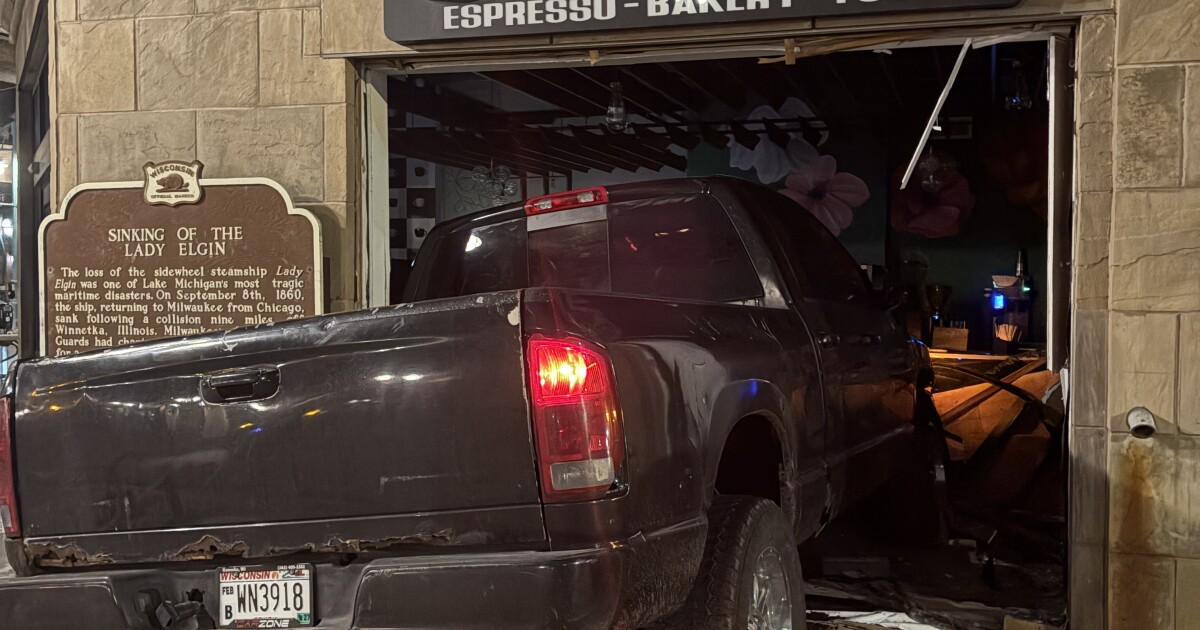
MILWAUKEE — A truck drove through the Grace Coffee Co. in Milwaukee’s Historic Third Ward on early Friday morning, the owners announced in a social media post.
Due to the extensive damage that was done, the coffee shop will be closed until further notice.
TMJ4
“We’re incredibly grateful no one was hurt, and we’ll keep you updated as we begin repairs,” the coffee shop said in the post.
TMJ4 reached out to the Milwaukee Police Department but have yet to hear back.
Let’s talk:
Hey there! At TMJ4 News, we’re all about listening to our audience and tackling the stuff that really matters to you. Got a story idea, tip, or just want to chat about this piece? Hit us up using the form below. For more ways to get in touch, head over to tmj4.com/tips.
It’s about time to watch on your time. Stream local news and weather 24/7 by searching for “TMJ4” on your device.
Available for download on Roku, Apple TV, Amazon Fire TV, and more.
Report a typo or error // Submit a news tip

Police say two people were hurt and one other man died.
A homicide investigation is underway in Minneapolis after a shooting early Friday morning killed one man and hurt two others.
Minneapolis police were called to the area of East Franklin Avenue and Chicago Avenue at around 12:30 a.m.
5 EYEWITNESS NEWS cameras caught more than 65 evidence markers scattered across the ground in the area and shattered glass at a bus shelter. Some nearby businesses also appeared to have some damage.
Minneapolis police are still working to determine what led up to the shooting and who was involved but investigators say first responders found the three men suffering from gunshot wounds.
One injured man is in his 40s, the other in his 50s, police say. Both were taken to a hospital by ambulance.
The third man died at the scene. His name and age haven’t yet been publicly released.
Police say early information suggests the men were on a sidewalk when at least one person opened fire, then fled in a vehicle.
So far, no arrests have been made.
Anyone with information about what happened is asked to call police at 612-673-5845 to leave a voicemail or email policetips@minneapolismn.gov.
“This is a tragic and deeply disturbing act of violence that has taken a life, and left others seriously injured,” MPD Chief Brian O’Hara said. “This kind of violence is unacceptable, and we are committed to identifying those responsible and holding them accountable.”
Minneapolis police investigating alleyway shooting near East Franklin Avenue
It comes less than 30 hours after another serious shooting along East Franklin Avenue, just a half-mile west of Friday’s scene. That incident left a man hospitalized with a potentially life-threatening gunshot wound. No arrests have been announced in that case either.
5 EYEWITNESS NEWS is still working to learn more about this shooting. Stay with KSTP-TV for the latest updates on air and on the KSTP app.


The race against time to destroy Iran’s illicit nuclear weapons program heats up amid fresh strikes

WATCH: Senate hearing goes silent after Angel Father confronts top Dem over daughter’s death

Another state bans ‘gas station heroin’ as officials warn of deadly risks

Tiger Woods involved in rollover crash in Florida less than 2 weeks before Masters: reports

Fox News AI Newsletter: Family turns down $26M from AI giant to keep farmland

Florida High School Football Rankings: Top 25 teams – Oct. 21

How old is Bo Nix? What to know about Oregon quarterback ahead of 2024 NFL Draft

Cleary's 21 help Le Moyne down Central Connecticut State 69-64 in OT

99th annual Pony Swim held in Virginia

Indiana Members Credit Union announced as new anchor tenant at Bottleworks District
WATCH: Senate hearing goes silent after Angel Father confronts top Dem over daughter’s death

US diplomat Marco Rubio denounces settler violence, tolls in Hormuz strait

Iran-linked hackers have breached FBI Director Kash Patel’s personal emails | CNN Politics

Live: CPAC 2026 Day 2

Video: Will ICE Change Under Its New Leader?
-

 Detroit, MI1 week ago
Drummer Brian Pastoria, longtime Detroit music advocate, dies at 68
-

 Movie Reviews1 week ago
‘Youth’ Twitter review: Ken Karunaas impresses audiences; Suraj Venjaramoodu adds charm; music wins praise | – The Times of India
-

 Sports6 days ago
IOC addresses execution of 19-year-old Iranian wrestler Saleh Mohammadi
-

 New Mexico5 days ago
Clovis shooting leaves one dead, four injured
-
 Business1 week ago
Disney’s new CEO says his focus is on storytelling and creativity
-

 Technology5 days ago
YouTube job scam text: How to spot it fast
-

 Tennessee4 days ago
Tennessee Police Investigating Alleged Assault Involving ‘Reacher’ Star Alan Ritchson
-

 Texas1 week ago
How to buy Houston vs. Texas A&M 2026 March Madness tickets