Midwest
Students at Ohio elementary school can participate in Satanic Temple's religious learning program

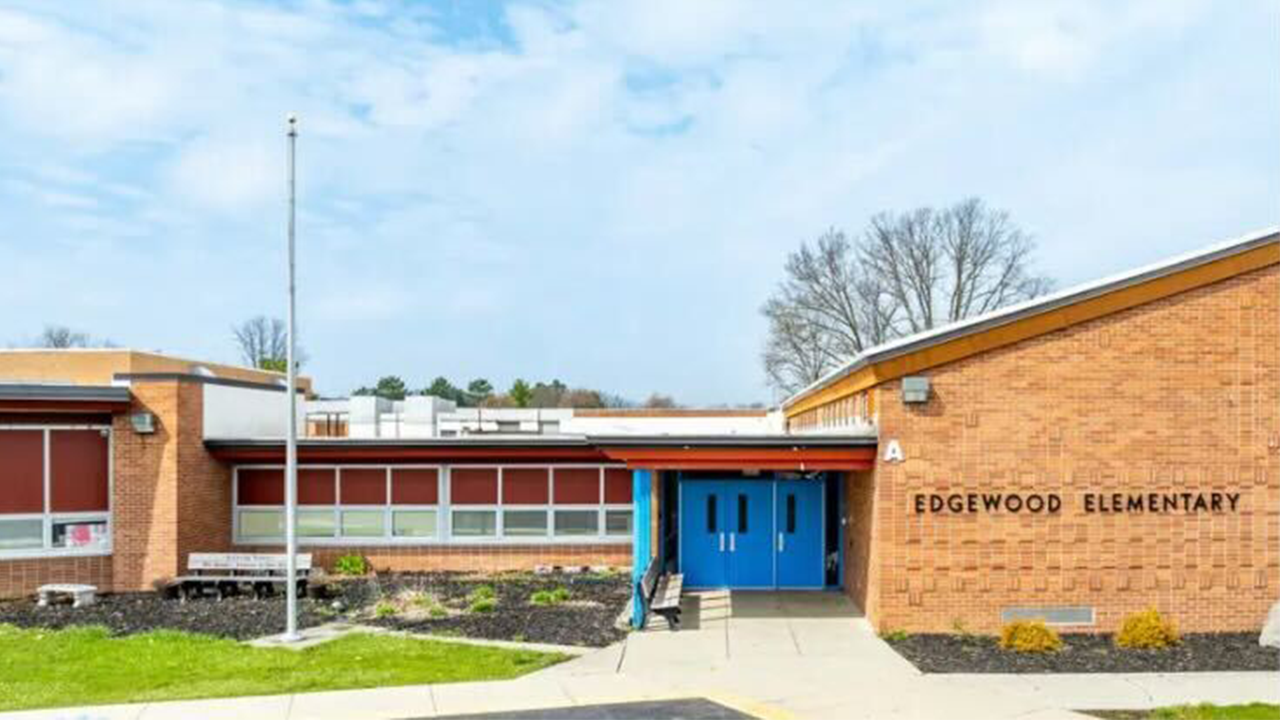
The Satanic Temple is offering a religious learning program to students at an elementary school in Ohio as part of the state’s religious release program.
Students at Edgewood Elementary School in Marysville, Ohio, can attend the Hellion Academy of Independent Learning, or HAIL, starting this month under the Release Time Religious Instruction, or RTRI, program in the state, with learning opportunities being offered off-campus during school hours once a month.
Other lessons under the RTRI program, including Bible study, are also offered to students at the school. HAIL is not affiliated with or approved by the local school district or board members.
HAIL seeks to strengthen students’ critical thinking, good works in the community, compassion and empathy, self-directed learning and creative expression.
OHIO GIRL, 7, BEGGED HER DAD NOT TO KILL HER AFTER MURDER-SUICIDE THREAT: ‘I DON’T WANT TO GO TO HEAVEN TODAY’
HAIL seeks to strengthen students’ critical thinking, good works in the community, compassion and empathy, self-directed learning and creative expression. ( Hellion Academy of Independent Learning)
June Everett, the campaign director for the After School Satan Club and an ordained minister for the Satanic Temple, told WCMH that a parent reached out asking for a Satanic Temple program at the school.
Everett added that the Satanic Temple only offers programs for students when parents request them, and only in districts where there are other religious release programs.
She said the parent who asked for HAIL was searching for an alternative to LifeWise, an Ohio-based Christian program offering Bible lessons to students during lunch and recess once a week, because students who choose not to attend sometimes feel left out or ostracized.
“We aren’t trying to shut the LifeWise Academy down, but I do think a lot of school districts don’t realize when they open the door for one religion, they open it for all of them,” Everett said.
LAWSUIT AGAINST NY EDUCATION DEPARTMENT TO MOVE FORWARD AFTER PARENTS SAY CHILDREN WERE DISCRIMINATED AGAINST
Students at Edgewood Elementary School in Marysville, Ohio, can attend the Hellion Academy of Independent Learning under the Release Time Religious Instruction program in the state. (Google Maps)
Everett said HAIL is only offered monthly as opposed to LifeWise’s weekly lessons because the Satanic Temple has fewer resources and a smaller budget than LifeWise, which often partners with local churches.
The program in Marysville is the Satanic Temple’s first release program in Ohio, but its sister program, the After School Satan Club, has operated in Dayton, Wilmington and Lebanon, Everett said.
The Satanic Temple and HAIL, Everett said, are often misunderstood.
“We aren’t worshipping the devil and sacrificing babies and using blood. It’s actually the opposite,” Everett said.
The Baphomet statue is seen in the conversion room at the Satanic Temple where a “Hell House” was being held in Salem, Massachusetts, on October 8, 2019. (JOSEPH PREZIOSO/AFP via Getty Images)
Everett told WOSU that Satanists, as a whole, “are non-theistic, meaning we don’t believe in any supernatural deities and that includes, you know, God or Satan.”
LifeWise CEO and founder Joel Penton said HAIL is a good example of why his organization supports Ohio House Bill 445, which would require school districts to implement a release instruction policy. Penton said the bill would offer clarity on how to implement the religious programs.
“LifeWise isn’t fearful of other organizations offering RTRI,” Penton told WCMH. “We believe all families should have the opportunity to choose religious study during school hours and we trust parents to make the best choice for their children.”
Read the full article from Here


GRAND FORKS — A Grand Forks man will serve no additional time for a federal methamphetamine charge.
Jeremie Richard Castoreno, 43, was sentenced Thursday, Jan. 29, to 12 years for conspiracy to possess with intent to distribute and distribute a controlled substance.
He was involved in a drug conspiracy where he possessed more than 1,000 grams of a mixture that contained methamphetamine, according to the information filed in the case.
Castoreno’s sentence will run concurrently with the
12 years he is already serving
for a Grand Forks County case in which he pleaded guilty to Class A felony delivery of a controlled substance inside a correctional facility.
The federal sentence then adds no additional time to his prison term.
Conditions of his federal sentence include that Castoreno be placed at the lowest-level security facility as close to Grand Forks as possible, so he can be near family, and that he serve his time at a facility that allows participation in substance abuse treatment, including the 500-hour Residential Drug Abuse Treatment Program.
He should also be allowed to participate in educational and vocational opportunities, as well as any mental health treatment that’s deemed appropriate by the Bureau of Prisons.
After serving his time, Castoreno will be on supervised release for five years. Special conditions of his release include abstaining from the use of alcohol or illegal drugs, submitting to drug/alcohol screening and searches and participating in any relevant treatment.

COLUMBUS, Ohio — Youngstown City School District, Ohio’s first and last district under state oversight, is seeking an exit ramp to local control.
The past 16 years of state oversight have taken the forms of academic distress commissions, CEOs and academic improvement plans.
While state oversight may have been well-intentioned, the results in Youngstown – and in Lorain and East Cleveland, which also were formerly under academic distress commissions – show that there may be no secret recipe that will turn around a struggling district.
Educators critical of state takeovers said school performance is affected by a host of variables, and what works for one might not work for another. But for almost every case, a specifically tailored plan requires monetary support.
Still others say that East Cleveland’s recent success of getting off academic distress, coupled with rising achievement Youngstown has made in recent years, are evidence that the Academic Distress Plan is working, and that state accountability is necessary.
Youngstown officials have pleaded their case to leave academic distress at the Ohio Department of Education and Workforce, but officials there say they must follow the law as it’s written.
Now the district is backing bills in the Ohio House and Senate that would dissolve the Youngstown Academic Distress Commission.
“To me, our body of work should stand for itself,” Youngstown Superintendent Jeremy J. Batchelor said. “We should not be the lone district in academic distress. In my opinion, we are no longer the lowest-performing school district in the state of Ohio. There was a time when we were and we are not anymore.”
Currently, Youngstown is trying to emerge from a three-year Academic Improvement Plan. While it’s on the plan, it gets a reprieve from some parts of state control: The locally elected school board takes power back from the Youngstown Academic Distress Commission, and the superintendent does the job of the CEO.
But the initial three years have passed, and Youngstown didn’t hit the necessary benchmarks in the last two of those years. State law allows the district to apply for two additional one-year extensions, and Youngstown has applied for its first extension this year. If it cannot pass the Academic Improvement Plan by the end of the 2026-2027 school year, the law states the academic distress commission and CEO again take over, which was unpopular locally.
In the Lorain City School District, the General Assembly dissolved its Academic Distress Commission in 2023 due to improved performance on the school report card.
East Cleveland met the benchmarks outlined in its Academic Improvement Plan, and announced on Dec. 24 it was no longer under state oversight.
These are some of the proposals education experts suggest for elevating struggling schools.
Proposal: Consult the community, provide resources
Critics of the state takeover in Youngstown point to problems under its oversight.
The Youngstown Academic Distress Commission closed a STEM School specializing in science, technology and math. The number of foreign language courses decreased.
Between 2016 and 2022, when Youngstown City Schools were run by a CEO, there was turnover, with two different people in that position. Changes brought by the CEOs resulted in higher turnover among faculty and staff.
Ohio Education Association President Jeff Wensing said that’s because when the state made changes, or appointed people to make changes, the local voice was lost. The community best understands its challenges. It can help diagnose and fix the problem, he said.
Wensing and state Sen. Nathan Manning, a North Ridgeville Republican instrumental in getting Lorain off academic distress, don’t believe in heavy-handed mandates from above.
“Bring resources and be there to lift up a community and not force things on them,” Manning said.
“Quite honestly, there is really no simple solution,” Wensing said. “There’s no magic wand that can be waved.”
That’s because each community is different.
Although no longer under academic distress, Lorain Superintendent Jeff Graham said that the state could have helped the district with its high rate of chronic absenteeism, which occurs when students miss at least 10% of school.
Some Lorain students missed 40 days in a year. Twenty percent of Lorain families have no vehicle and 25% have one family vehicle. Low attendance hurts achievement, Graham said.
Forty-four percent of the district is of Hispanic heritage. The current immigration environment where people fear they could be stopped by federal authorities based on race, ethnicity or their speaking Spanish is keeping many parents and children away from school, he said.
“Our kids are scared to death,” Graham said.
Wensing suggested that student support outside of academics may help some struggling districts.
Low-income districts have students who arrive at school hungry, which may be exacerbated by the coming reductions in SNAP benefits in the One Big Beautiful Bill. Students may have mental health challenges, or have poor vision and need eyeglasses.
“These are called wraparound services,” Wensing said. “You have to meet the needs of the person first before you can address the academic needs.”
The state never offered Youngstown, East Cleveland or Lorain any extra money for student services when academic distress commissions took over.
Yet Youngstown made gains in the Performance Index, a measure in the state report card that gauges student achievement in grades 3 through high school.
In 2024-2025, Youngstown scored 57.6, the same as East Cleveland. The highest achievable score was 109.8. For comparison, Lorain’s performance index was 53.1, the lowest in the state. Seven other school districts were lower than East Cleveland and Youngstown.
The wealthiest school districts performed best on the school report cards, according to a cleveland.com analysis of incomes and report card scores. The poorest tend to do the worst.
This has long been the case, said Wensing.
“When you look at these standardized test scores, you tell me the scores, you tell me the economic status of that community,” he said.
Proposal: Building-level oversight
In Youngstown, Superintendent Batchelor said that instead of state oversight, he supports a plan in Senate Bill 322, which would dissolve the Youngstown Academic Distress Commission and end the Academic Improvement Plan.
In its place, SB 322 would require student support teams in buildings that received one or two stars on the Ohio School Report Card. The support teams would be made up of the superintendent, school board members, classroom and special education teachers, school improvement specialists, intervention specialists, parents, representatives from DEW, among others.
The team would survey the school community and others such as attendance officers, develop a plan, with the school board’s approval. The school would have to follow the plan until the building gets 3 stars or higher.
SB 322 is sponsored by state Sen. Al Cutrona, a Mahoning County Republican, who said that he doesn’t think the state should take over any district, that education improvement should stay local and that paying high salaries for CEOs is wasteful when the money should have been poured into classrooms.
“I think it’s essential that we stick with local control,” he said. “I think the local people know best how to handle their schools. We’ve seen dramatic improvement in Youngstown. Youngstown City Schools have dramatically improved from the time that I’ve been in the legislature. These last report cards that came out were incredible. I think the schools should be applauded for their efforts, and their progress in the right direction.”
In the House, House Bill 610 would also dissolve the Youngstown Academic Distress Commission and repeal the law that created academic distress commissions and CEOs. It’s sponsored by Democratic Reps. Juanita Brent of Cleveland and Lauren McNally of Youngstown.
Proposal: Stay the course
An example of improvement in Youngstown is the graduation rate.
In the class of 2025, Youngstown’s high school graduation rate was 86.4%. That’s up from 79.4% in the class of 2018.
Batchelor said this was achieved through focusing on post-graduation pathways – encouraging students to choose college, gain a technical skill or join the military – and ensuring they had the right classes for their path, starting in the ninth grade.
Yet this improvement hasn’t been enough under the state takeover. Youngstown has not met the graduation rate benchmark in its Academic Improvement Plan for the four-year graduation rate.
-For the class of 2023, the graduation rate was supposed to be 90%. Youngstown’s rate was 84.3%.
-In 2024, it was supposed to be 91.5%. Youngstown achieved 85.9%.
-Last year, it was supposed to be 93%. Its weighted rate was 86.4%.
These gains show that Youngstown’s Academic Improvement Plan is working, even if the district isn’t hitting the benchmarks, said Aaron Churchill, Ohio research director for the Thomas B. Fordham Institute.
Churchill disagrees with Youngstown officials’ push to get off academic distress. The district should stay the course and work harder on its Academic Improvement Plan, he said.
“Our students in every part of the state deserve a great education,” he said. “They deserve an education where they can graduate high school proficient in math and reading. And right now that is not happening in some of the districts in our state. I think that additional pressure from the state and oversight from the state can really help make sure students are getting what they deserve.”
The Youngstown Academic Improvement Plan contains 24 benchmarks – the four-year graduation rate and Performance Index are just two of them. The district needs to hit 51% of the benchmarks each year to get out of academic distress.
“The disconnect here is there’s a three-year plan, and every year the benchmarks actually increase,” Batchelor said. “I’m so proud of East Cleveland that they did what they needed to do, but none of us had the same plan. Everybody was able to write their own plan with different benchmarks. And then they had to be approved by the state.”
Youngstown met enough benchmarks in 2022-2023, when hit 16. It did not in 2023-2024, when it met nine. In 2024-2025, it met six.
“I think when 20% to 30% of your students are meeting state reading and math standards, like what’s happening in Youngstown and a couple other districts around the state that have had academic challenges, I think there does need to be some state action in those situations,” Churchill said.
Those are scores the district submitted last school year to the state to update the status of its Academic Improvement Plan.
For example, the benchmark for third grade English on Ohio’s State Tests last year was 46% of the students scoring proficient or above last year. Just 34% were proficient in Youngstown.
For the benchmark for grades 3-5 math scores on the state tests, 33% were supposed to be at least proficient. But just 22.61% were.
“Every student in Youngstown has the ability to meet state standards, math and reading standards,” Churchill said. “We need to make sure that they have the education that helps them get there.”
The South Dakota Lottery offers multiple draw games for those aiming to win big.
Here’s a look at Jan. 31, 2026, results for each game:
Winning Powerball numbers from Jan. 31 drawing
02-08-14-40-63, Powerball: 23, Power Play: 3
Check Powerball payouts and previous drawings here.
Winning Lucky For Life numbers from Jan. 31 drawing
09-13-25-30-43, Lucky Ball: 18
Check Lucky For Life payouts and previous drawings here.
Winning Lotto America numbers from Jan. 31 drawing
07-21-47-48-49, Star Ball: 03, ASB: 03
Check Lotto America payouts and previous drawings here.
Winning Dakota Cash numbers from Jan. 31 drawing
16-19-20-34-35
Check Dakota Cash payouts and previous drawings here.
Feeling lucky? Explore the latest lottery news & results
Are you a winner? Here’s how to claim your prize
- Prizes of $100 or less: Can be claimed at any South Dakota Lottery retailer.
- Prizes of $101 or more: Must be claimed from the Lottery. By mail, send a claim form and a signed winning ticket to the Lottery at 711 E. Wells Avenue, Pierre, SD 57501.
- Any jackpot-winning ticket for Dakota Cash or Lotto America, top prize-winning ticket for Lucky for Life, or for the second prizes for Powerball and Mega Millions must be presented in person at a Lottery office. A jackpot-winning Powerball or Mega Millions ticket must be presented in person at the Lottery office in Pierre.
When are the South Dakota Lottery drawings held?
- Powerball: 9:59 p.m. CT on Monday, Wednesday, and Saturday.
- Mega Millions: 10 p.m. CT on Tuesday and Friday.
- Lucky for Life: 9:38 p.m. CT daily.
- Lotto America: 9:15 p.m. CT on Monday, Wednesday and Saturday.
- Dakota Cash: 9 p.m. CT on Wednesday and Saturday.
This results page was generated automatically using information from TinBu and a template written and reviewed by a South Dakota editor. You can send feedback using this form.

No additional time for Grand Forks man’s federal methamphetamine charge

As last district remains in academic distress, debate continues on whether Ohio takeovers work

Oklahoma high school football coaching news: Bridge Creek hires John Boogaard

Johan Munch, Matija Samar lead Oregon State over San Diego 78-76 in OT

This 120-year-old Pennsylvania-New Jersey bridge faces uncertain future

Florida High School Football Rankings: Top 25 teams – Oct. 21

Cleary's 21 help Le Moyne down Central Connecticut State 69-64 in OT

How old is Bo Nix? What to know about Oregon quarterback ahead of 2024 NFL Draft

99th annual Pony Swim held in Virginia

Indiana Members Credit Union announced as new anchor tenant at Bottleworks District

Trump says Iran ‘seriously talking to us’ as military ships head to Middle East

Campaign to boycott Israel looks to future after Gaza ‘ceasefire’

Democrat Taylor Rehmet wins a reliably Republican Texas state Senate seat, stunning GOP

Chicago mayor Brandon Johnson puts ICE ‘on notice’ with executive order seeking prosecution of agents

Bomb cyclone could drop 10 inches of snow on Southeast
-

 Illinois1 week ago
Illinois school closings tomorrow: How to check if your school is closed due to extreme cold
-

 Pennsylvania6 days ago
Rare ‘avalanche’ blocks Pennsylvania road during major snowstorm
-

 Technology1 week ago
Ring claims it’s not giving ICE access to its cameras
-

 Tennessee1 day ago
UPDATE: Ohio woman charged in shooting death of West TN deputy
-

 Movie Reviews5 days ago
Vikram Prabhu’s Sirai Telugu Dubbed OTT Movie Review and Rating
-

 News1 week ago
Video: Jack Smith Defends His Trump Indictments During House Hearing
-

 Politics1 week ago
White House explains bruise on Trump’s hand
-
 Politics7 days ago
Trump’s playbook falters in crisis response to Minneapolis shooting