South Dakota
SD’s prison tablet provider dinged for data breach by Federal Trade Commission • South Dakota Searchlight


The company that gave electronic tablets to South Dakota prison inmates under a contract with the state hid a 2020 data breach for nine months and then told only a fraction of affected users about it, according to a settlement filed in late February with the Federal Trade Commission.
The FTC’s decision and order in the data breach and fraud case against Global Tel Link (GTL) was issued on Feb. 27, two weeks before the South Dakota Department of Corrections suspended tablet-based phone calls and text messages for about 3,600 inmates.
That suspension is thought to have contributed to multiple nights of unrest last month at the penitentiary in Sioux Falls, including an assault that injured an employee. Attorney General Marty Jackley has said inmates involved will be prosecuted “to the fullest extent of the law.”
South Dakota Department of Corrections spokesman Michael Winder said via email that GTL did not inform the agency of any data breach. South Dakota Division of Criminal Investigation spokesman Tony Mangan said the Attorney General’s Consumer Protection Division has yet to hear from the company about the number of South Dakotans affected by the breach, if any.
Corrections: Search for contraband follows second night of unrest at Sioux Falls prison
It’s one of several legal issues faced by GTL (rebranded as ViaPath Technologies in 2022), which works with nearly 2,000 facilities across the U.S.
For years, critics have called the Virginia-based company’s business practices exploitative and called on the federal government to step in and regulate rates – something the FTC has worked on for phone calls, most recently with an interim rate cap last reviewed in September.
The tablet communication shutdown in South Dakota wasn’t announced publicly until March 20, when the DOC said it was the result of an investigation. Gov. Kristi Noem said inmates were using the GTL-provided devices for “nefarious” activities. The DOC has not responded to questions about whether tablet security was part of the problem.
One week after the DOC posted a memo on tablet restrictions to its website, media gathered outside the penitentiary on the first night of disturbances could hear inmates inside shouting “we want phones.” The following night, inmates could be heard yelling “we have rights” and “water.”
Family members had been unable to visit inmates on “the Hill,” the area of the prison where the incidents took place, until this week.
A Monday memo from the DOC, posted to its visitation page, says that in-person visits will commence for those inmates on Saturdays, Sundays and the third Friday of each month.
Since last week, inmates have been allowed to make up to five phone calls a day with 20-minute time limits, using either tablets or wall phones. Electronic messaging remains suspended.
Inmates and their families have bristled at the restrictions on tablet-based communications, and some have complained about frozen inmate accounts with unusable balances.
Advocates who argue for rate caps and regulation of communications providers say the issues in South Dakota and across the nation come as prisons have become more isolated places. During the COVID-19 pandemic, for example, many prisons and jails stopped allowing in-person visits in favor of video visitation.
“At the end of the day, the fact that people are being exploited and still would rather have the technologies than not have them just goes to show how bad prison life is,” said Wanda Bertram of the Prison Policy Initiative, a prison reform nonprofit based in Massachusetts.
Data security, financial practices scrutinized
South Dakota is far from alone in its use of private-company tablets for inmate communications, which typically double as correctional revenue engines. The state’s contract with GTL specifies commission rates for messaging and prepaid phone calls.
The South Dakota DOC charges less than the FTC’s interim 14-cent-per-minute cap for phone calls, but messaging services aren’t capped federally, and the state has collected revenue from both messaging and phone calls. Between 2021 and February, South Dakota collected at least $1.25 million in commission payments, according to data released to South Dakota Searchlight last month.
GTL has frequently been on the receiving end of political and legal scrutiny. In 2022, the company agreed to pay back $67 million to settle a class action lawsuit launched in U.S. District Court in Georgia over its practice of pocketing money from dormant inmate accounts.
Corrections has collected $1.25 million for calls, messages since 2021
Just last month, families in Michigan sued GTL and other communications providers, alleging they conspired with jailers to end in-person visits in favor of paid-for video visits.
The recent FTC action against the company involved a data breach in August 2020. The company and its subsidiaries had placed personally identifying and financial information into the Amazon Web Services cloud to test software. The FTC alleged in November that it did so without encrypting or otherwise protecting customer information, leaving information like the Social Security numbers, dates of birth and credit card information of inmate families and friends vulnerable to hacking.
That’s exactly what happened, according to the FTC’s complaint.
“As early as November 2020, (GTL) received multiple complaints from consumers stating that the consumers’ personally identifiable information obtained from Respondents had been located on the dark web,” the complaint reads.
By then, a data security blog called Comparitech had asked GTL subsidiary Telmate about the incident. Telmate told the blog the issue was resolved, and that no passwords or financial information had been exposed.
Those statements were false, the FTC said.
It took nine months for the company to inform individual users, and it only reached out to 45,000 of the approximately 650,000 people affected.
The FTC’s February order requires GTL to implement a host of security and consumer protection measures. Periodic third-party security assessments and reports back to the FTC on the results will be required for the next two decades.
The company will also need to inform all the impacted users – potentially including South Dakotans – that their personal information had been stored in an unsecure cloud computing environment later accessed by hackers, and to provide them with credit monitoring and identity protection services.
A spokesperson for the FTC said the agency does not have any information on whether the data of South Dakotans was part of the security breach or dark web data sales, referring South Dakota Searchlight to GTL for those answers.
GTL did not respond to an email on those questions.
Reform advocate: Prepaid communications a magnet for abuse
Inmates and their families are uniquely vulnerable to being squeezed by communication providers, according to Bertram of the Prison Policy Initiative.
Calls and messages to and from correctional institutions are tightly controlled, as they are subject to security screening by corrections officials and paid for under the terms of prison or jail contracts with providers that offer no choice on costs.
Tablets have become lifelines for people in prison and their families, Bertram said, particularly in the face of restrictions on other forms of communication. South Dakota shut down face-to-face visits for more than a year during the COVID-19 pandemic.
“In a lot of places, sending mail and visiting a loved one have become more difficult as prisons have imposed additional restrictions,” Bertram said. “And that has only increased the value and the importance to incarcerated people’s welfare that these tablets have.”
Talk of tablets, phone calls and pricing schemes are important for the general public, she said.
Research suggests that maintaining family connections translates into a lower likelihood of continued criminal behavior after release. One study in Minnesota found that inmates who had regular visits were 13% less likely to return to prison on new felony charges. Another study of female inmates across multiple states found that “familial telephone contact was most consistently associated with reduction in recidivism.”
High prices or strict limits can put financial stress on families who aim to stay connected, she said, which can have ripple effects across communities.
“You don’t have to find space in your heart to be compassionate for people who have committed crimes,” Bertram said. “But you do have to think about the implications for broader society when there’s companies that are allowed to run rampant and do what they will with incarcerated people’s money by turning them into a captive market.”
The Prison Policy Initiative recommends free calling and messaging for inmates. Absent that, the organization argues that prisons and jails should not collect commission. Removing the financial incentive for correctional institutions tends to lower prices.
Dallas, Texas, ceased to collect commissions and was able to negotiate lower prices, now charging a cent a minute for phone calls through its provider, Securus, a GTL competitor commonly known as JPay.
In Connecticut, the Legislature made calls free, and barred both commission collections for its prison system and forced video visitation. California followed suit with free audio calls from tablets and wall phones.
Dropping commission payments also prevents the misuse of funds, she said. In Dauphin County, Pennsylvania, an investigation by the news outlet PennLive revealed that the county spent nearly $300,000 in phone and messaging payouts between 2019 and 2021 to purchase gun range memberships for prison staff, the sheriff’s department, the district attorney’s criminal investigation division, and probation and parole.
Fulton County, Georgia, saw commission funds used to purchase thousands of honey-baked hams.
“You shouldn’t be charging incarcerated people and their families for these basic needs and then turning around collecting money off of that,” Bertram said.
Other models in use nationwide and in South Dakota
Bill Pope isn’t so sure that dropping commission payments is always the right call. Pope is the CEO of NCIC, a Texas-based GTL competitor offering tablets that give hour-for-hour entertainment credits to inmates who use them for coursework.
Pope pointed to California to explain why. That state offers free calls, and the state’s Public Utilities Commission opted to cap commission payments and set rates for prepaid calls in local jails at 7 cents a minute.
State will turn on tablet calls for inmates and raise daily limit from three to five
Pope said those moves “obliterated the inmate welfare fund” that had been propped up by payouts. That fund is meant to be “used for the benefit, education, and welfare of inmates of prisons and institutions.”
Many institutions simply want to offer the lowest possible price in a communications contract, Pope said, but others view the commission payments as reasonable ways to cover the expenses of monitoring calls and messages. The bigger problem is hidden fees, he said, like connection fees that some providers charge. Pope would like to see those regulated.
“Eliminating commissions can probably hurt the incarcerated users more than help them,” Pope said. “Unless, of course, the providers are overcharging.”
Pope says his company is the largest privately held communications provider in the U.S.
He sees his company’s approach to tablets as more beneficial for inmates, families and institutions. NCIC has contracts in South Dakota with jails in Yankton and Sioux Falls, among others. Its contract with the Minnehaha County Jail includes commission payments for the Sioux Falls facility, but inmates needn’t necessarily pay – at least for entertainment. Inmates can earn credits through coursework.
The NCIC contract charges 16 cents a minute for calls – more than double the rate listed for calls on the South Dakota DOC’s website – but Pope said the calls subsidize the entertainment that keeps inmates busy and would otherwise be paid for by their families.
“Do your homework, and then you can watch TV or play games,” Pope said.
GET THE MORNING HEADLINES DELIVERED TO YOUR INBOX



The South Dakota Lottery offers multiple draw games for those aiming to win big.
Here’s a look at July 8, 2026, results for each game:
Winning Powerball numbers from July 8 drawing
12-29-37-43-55, Powerball: 18, Power Play: 4
Check Powerball payouts and previous drawings here.
Winning Lotto America numbers from July 8 drawing
17-26-31-32-37, Star Ball: 01, ASB: 02
Check Lotto America payouts and previous drawings here.
Winning Dakota Cash numbers from July 8 drawing
07-11-18-31-33
Check Dakota Cash payouts and previous drawings here.
Winning Millionaire for Life numbers from July 8 drawing
16-18-43-48-50, Bonus: 01
Check Millionaire for Life payouts and previous drawings here.
Feeling lucky? Explore the latest lottery news & results
Are you a winner? Here’s how to claim your prize
- Prizes of $100 or less: Can be claimed at any South Dakota Lottery retailer.
- Prizes of $101 or more: Must be claimed from the Lottery. By mail, send a claim form and a signed winning ticket to the Lottery at 711 E. Wells Avenue, Pierre, SD 57501.
- Any jackpot-winning ticket for Dakota Cash or Lotto America, top prize-winning ticket for Lucky for Life, or for the second prizes for Powerball and Mega Millions must be presented in person at a Lottery office. A jackpot-winning Powerball or Mega Millions ticket must be presented in person at the Lottery office in Pierre.
When are the South Dakota Lottery drawings held?
- Powerball: 9:59 p.m. CT on Monday, Wednesday, and Saturday.
- Mega Millions: 10 p.m. CT on Tuesday and Friday.
- Lucky for Life: 9:38 p.m. CT daily.
- Lotto America: 9:15 p.m. CT on Monday, Wednesday and Saturday.
- Dakota Cash: 9 p.m. CT on Wednesday and Saturday.
- Millionaire for Life: 10:15 p.m. CT daily.
This results page was generated automatically using information from TinBu and a template written and reviewed by a South Dakota editor. You can send feedback using this form.

LARCHWOOD, Iowa (KIWA) – A Tea, South Dakota man has been arrested on a felony domestic abuse charge after an incident near Larchwood.
According to a criminal complaint filed with the Lyon County Clerk of Court’s Office by the Iowa State Patrol, 45-year-old Beau Christensen of Tea is accused of assaulting his girlfriend in their hotel room at Grand Falls Casino & Golf Resort near Larchwood. He was arrested on Wednesday, July 8.
In his statement, the state trooper who filed the report says Christensen put his hands around the victim’s neck. The victim stated she could not breathe while this was happening.
Christensen was charged with domestic abuse assault – impeding air or blood flow, a class D felony. If convicted, he could face up to five years in prison. He also faces a misdemeanor charge of possession of marijuana.
He faces a preliminary hearing on Friday, July 10.
At last report, Christensen remained in the Lyon County Jail in Rock Rapids in lieu of a $6000 bond.
Want to get the latest news and weather from Siouxland’s News Source? Follow these links to download our KTIV News app and our First Alert Weather app.
Copyright 2026 KTIV. All rights reserved.

BROOKINGS, S.D. – Instead of boarding airplanes or planning weeklong vacations, many South Dakota families are spending summer weekends closer to home, filling festivals, community events and family attractions that offer affordable ways to make memories together.
That trend is showing up across the state, according to South Dakota tourism officials. And organizers of many local events say they’ve watched it evolve over decades.
“We did re-coin that term ‘staycation’ again this year,” said Shari Budahl Avery, publicity chair for the 55-year-old Brookings Summer Arts Festival. “If things are a little tight but you want to get away for a day, we can provide that experience.”
Families are redefining summer travel
Travel South Dakota has reported that many travelers are choosing more affordable destinations, taking shorter trips and staying closer to home because of continued economic uncertainty. The department said South Dakota is well positioned because many visitors already travel by car from nearby states.
According to the department, 58% of visitors travel within 150 miles of home, and affordability, scenic beauty and family experiences remain among the state’s strongest attractions.
Travel South Dakota reports that visitors rate the state highly for affordability and family experiences, with 87% saying they would recommend South Dakota to others and 90% planning to return.

Shawn Steward, public affairs manager for AAA South Dakota, said travelers look for ways to make summer vacations fit their finances rather than canceling them altogether.
“People still want to travel,” Steward said in an interview with South Dakota News Watch. “They’re just making different choices.”
Steward said many families are adjusting by taking shorter trips, traveling by car instead of flying or choosing destinations closer to home, trends that align with what tourism officials and local event organizers are seeing across South Dakota.
Local events become summer destinations
Budahl Avery said those statewide trends match what festival organizers have observed for years.

“We’re kind of dead center in a pretty good population center,” she said. “People can come on what one friend from Texas called a ‘tank trip’ – somewhere you can drive on one tank of gas and get home.”
The two-day festival features about 178 juried artists, live entertainment, children’s activities, food vendors and historical demonstrations. Budahl Avery said the goal is to create an experience where multiple generations can spend time together without needing an expensive vacation.
Affordable, convenient entertainment
During a recent stop in Brookings, the Cardin International Circus drew families from across the region. Ringmaster and comedian Rulito Videla said attendance varies from city to city, but he believes many families are looking for affordable experiences closer to home.

“If they are staying home, support your local events,” Videla said. “The circus is family-oriented entertainment. You create memories.”
Visitors interviewed in Brookings described making similar choices.
Erica Quam said her family often prefers several smaller outings over one major vacation.
“We live right near Brookings,” Quam said. “It’s close, there were some coupons that made it more affordable, and it’s just a fun, easy activity.”
Sienna Vanmeveren also chose to stay closer to home this summer to save money.

“It’s easier than traveling somewhere,” she said, adding that she would likely travel more if finances allowed.
Not every family is changing its travel habits.
Sviatlana Senchanka said her family recently completed a road trip from South Dakota to California and continues to spend time outdoors at local lakes. She said work schedules determine when her family travels more than travel costs.
For Budahl Avery, however, the value of community events extends beyond economics.
“What keeps families coming back?” she said. “Tradition. Joy. Making memories.”
Whether families travel across the country or simply across town, organizers and visitors alike say a memorable summer doesn’t always require going far from home.
South Dakota News Watch is an independent nonprofit. Read, subscribe for free and donate at sdnewswatch.org. Amina Aidarkhanova received the 2026 Jeffrey B. Nelson Investigative Journalism Endowed Internship and the Chuck Raasch and Sandy Johnson Scholarship from the SDSU Foundation. Contact: amina.aidarkhanova@sdnewswatch.org.
-

 Utah7 minutes ago
Man suspected in 2006 Utah murder left suicide note in Las Vegas jail cell: police
-
 Vermont9 minutes ago
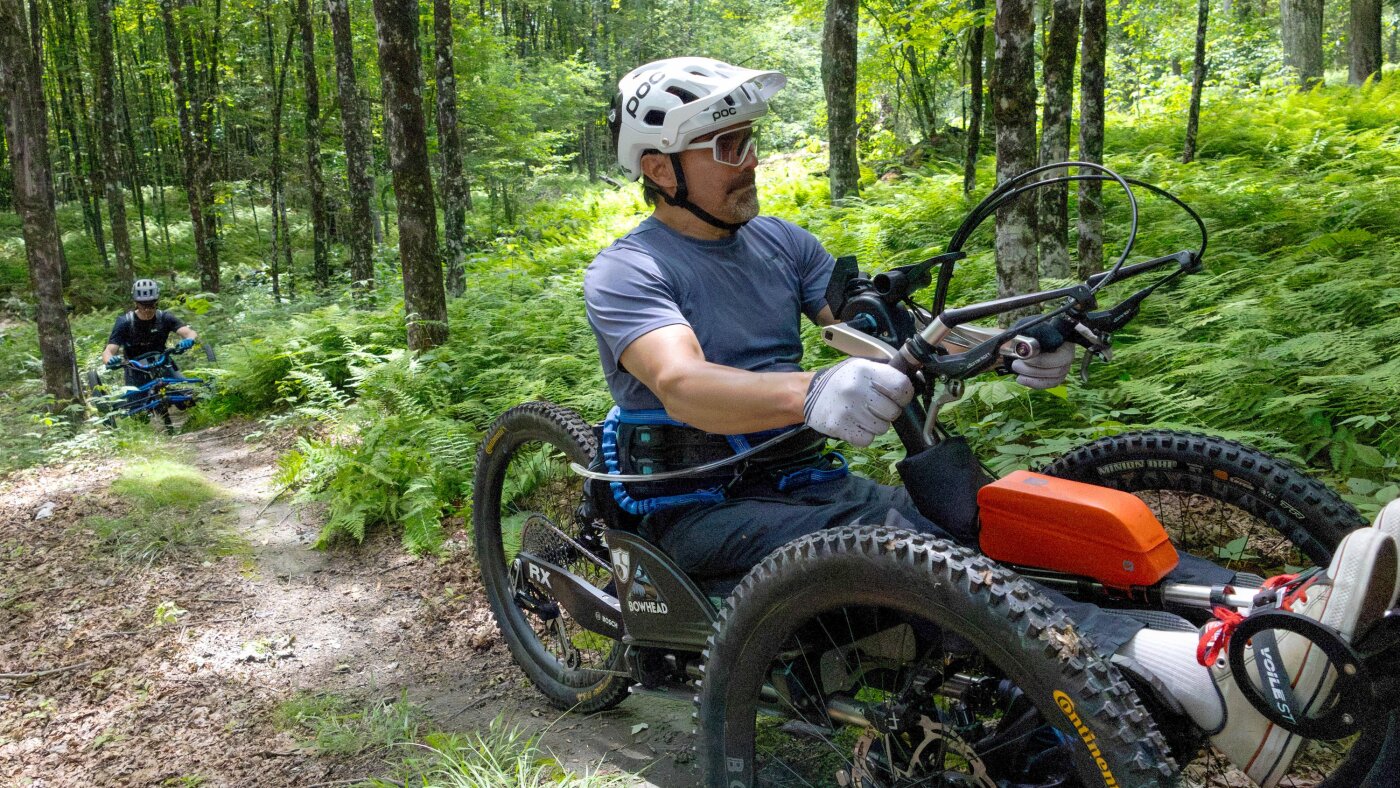
OUTDOOR ACCESS FOR DISABLED IN VERMONT
-
 Virginia15 minutes ago
4 indicted in Virginia double homicide; second victim ID’d as grandmother of 6
-

 Washington21 minutes ago
Washington Commanders are retiring Hall of Famer John Riggins’ No. 44
-

 Wisconsin24 minutes ago
Wisconsin State Patrol rides with truck and bus drivers to spot violations in five areas
-

 West Virginia29 minutes ago
West Virginia town fires entire police force after chief resigns, sergeant alleges evidence room break-in
-

 Wyoming37 minutes ago
WHP: July 5 single-vehicle rollover north of Riverton resulted in one death, one injury
-

 Crypto39 minutes ago
British Airline Jet2 Shares Jump 9% After $536M Fuel Hedge Gain Offsets Middle East Travel Fears

