Midwest
Serial killer’s daughter exposes chilling secret, turns him in to police

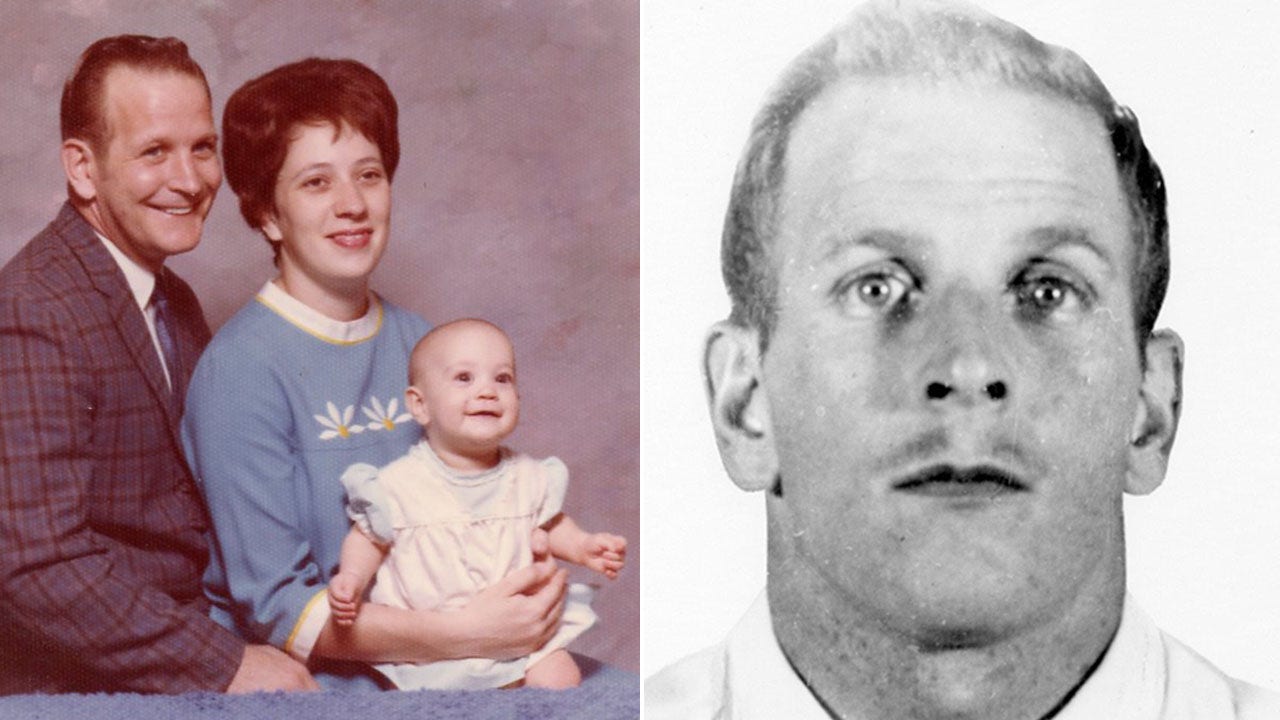
One night in 1980, April Balascio’s father, Edward Wayne Edwards, woke up the household and told everyone to start packing. They were leaving their home in Watertown, Wisconsin, after living there for a year.
It wasn’t new for Balascio, who was 11 years old. She was accustomed to moving every six months to a year without warning. It wouldn’t be until decades later when she discovered why.
“Each time we moved, it was hard,” Balascio told Fox News Digital. “You develop new friends each time, and then you have to leave them. But one thing that came out of it is you learn how to pack quickly and tightly because if you didn’t, your stuff would get left behind.
SERIAL KILLER’S DAUGHTER CONFRONTS HIM BEHIND BARS OVER EXPLOSIVE DIARY ENTRY THAT SUGGESTS SHE TOO WAS VICTIM
April Balascio as a child. (Courtesy of April Balascio)
“But it was hard having to upend everything,” she shared. “It was hard starting a new school every year or even sometimes twice a year. … He made us believe we were leaving because people were coming after us. So, there was also that fear that we were being hunted, that fear that we could be killed.”
Edward Wayne Edwards with his wife Kay Sept. 25, 1972. (Akron Beacon Journal/USA Today Network)
Balascio has written a new book, “Raised by a Serial Killer: Discovering the Truth About My Father.” In it, Balascio details how she discovered her father’s true identity and the horrific crimes he committed.
The patriarch died in 2011 at age 77 from natural causes. At the time, he was behind bars after being sentenced to death by lethal injection.
April Balascio’s memoir, “Raised by a Serial Killer,” is out now. (Gallery Books )
“I wanted this story to be told, but it took a long time to write it,” Balascio admitted. “It was a very difficult thing to do. I was protecting my memories.”
Balascio described Edwards as charismatic, a “big kid” who enjoyed parties and entertaining. But he also had “a very dark side.”
“It was scary,” she said. “He was abusive. And especially as I got older, I became more scared of hearing his tires on the gravel in the driveway. I would wonder how he was going to walk through the house. Was he going to be in a good mood or a bad mood? For a while, I hated him.
FOLLOW THE FOX TRUE CRIME TEAM ON X
Edward Wayne Edwards was charming and charismatic, but he also had “a dark side,” daughter April Balascio told Fox News Digital. (Courtesy of April Balascio)
“I witnessed his violence, and it was a common occurrence, whether he took his anger out on me or he took it out on my mom,” Balascio added. “Especially when I was younger, I witnessed more of him taking his anger out on my mom.
“I witnessed him hitting her, punching her in the face.”
For years, Balascio wondered why, at times, the family had to suddenly leave in the middle of the night. It stayed with her that Edwards also had a fascination with crime announcements in the local newspaper.
April Balascio had a nomadic upbringing. As an adult, she would discover why. (Courtesy of April Balascio.)
In March 2009, when Balascio was about 40, she began digging, revisiting the cases that intrigued her father. After searching for “cold case” and “Watertown” online, Balascio came across reports about the “Sweetheart Murders.”
In this Aug. 19, 1980, photo, a psychic, who was called in on the case of the two missing Jefferson County teens, stands near the car the couple had driven the night they were last seen, in Sullivan, Wis. (Michael Sears/USA Today Network)
In 1980, high school sweethearts Timothy Hack and Kelly Drew disappeared after a wedding reception. The remains of the 19-year-olds were found in a field two months later. Edwards, then a handyman, was questioned by police but insisted he had no information.
After the bodies were discovered, Edwards and his family left Wisconsin.
SIGN UP TO GET THE TRUE CRIME NEWSLETTER
Judith Straub, 18, of Sterling, Ohio, was found in Silver Creek Metropolitan Park in August 1977. She was one of Edward Wayne Edwards’ five known victims. (Akron Beacon Journal/USA Today Network)
“I suspected my dad was doing some bad things, but I didn’t verbalize it to anyone,” said Balascio. “There was no proof. … I can’t say I suspected that it was exactly murder, but I did believe he was harming people.”
People search for Timothy Hack and Kelly Drew in Jefferson County. (Benny Sieu/USA Today Network)
Balascio learned that investigators had reopened the case. She reached out to detectives, eager to share everything she remembered from her childhood. Balascio told them she suspected her father could have been responsible for the killings but didn’t have any proof, only memories of what she saw and felt.
She described how, when the pair were initially missing, Edwards talked about them “constantly.” One day he quipped to a pal, “I bet you they find them in a field.”
William Lavaco, 21, from Doylestown was found in Silver Creek Metropolitan Park in August 1977. (Akron Beacon Journal/USA Today Network)
At a lab, Edwards’ DNA and the genetic material at the crime scene matched, Oxygen.com reported. Edwards was arrested in Kentucky, where he had moved with his wife. He confessed to five murders.
“That’s when it truly hit me how evil my dad was,” said Balascio. “He was a bad man.”
As a child, Edwards was raised in an orphanage and spent time in juvenile detention, the outlet reported. In 1962, he was arrested for an armed bank robbery and spent five years behind bars. His life of crime didn’t end there.
GET REAL-TIME UPDATES DIRECTLY ON THE TRUE CRIME HUB
Edward Wayne Edwards at an orphanage. (Courtesy of April Balascio)
Edwards confessed to killing 21-year-old William “Billy” Lavaco and 19-year-old Judith Straub, another couple, in 1977. The murders took place in Ohio, where Edwards grew up.
Edward Wayne Edwards had a tumultuous childhood that led to a life of crime. (Alamy)
Edwards also confessed to murdering his foster son, Dannie Boy Edwards, in 1996. His motive was to collect the payout of the 23-year-old’s life insurance, which was worth $250,000.
Balascio remembers one of the last times she saw her father. He was hospitalized, and she decided to visit him with her children.
Edward Wayne Edwards died in 2011. He was 77. (David Harpe/USA Today Network)
“My daughter wrote my dad a get-well card,” Balascio recalled. “I don’t remember the exact words, but it said something to the effect that Jesus forgives everybody and everything. You just need to ask him. There was also something in there about God being forgiving and God being loving. My daughter was only in elementary school, but she had made this card for him.
“I remember my dad reading it and crying. He said, ‘It’s funny that you should say that because I was just thinking, telling God that he couldn’t forgive me for all the bad things that I had done.’
“We had to leave the room because he had an emergency that needed to be taken care of,” she shared. “I remember thinking, ‘Maybe he was going to change his ways.’”
April Balascio is seen here with her parents at 7 months old. (Courtesy of April Balascio)
Balascio said she was “relieved” when Edwards died.
“He was supposed to be executed, and he ended up dying before the execution,” she said. “I was not looking forward to the execution. I knew it would be a media circus. I knew the reporters would be knocking on the door again and calling because he asked for the death penalty. His dying before the execution was a blessing. It was a relief. It was all over.”
Edward Wayne Edwards follows court proceedings along with defense attorney Larry Whitney. Edwards entered guilty pleas on two counts of aggravated murder for the 1977 killings of Billy Lavaco of Doylestown and Judy Straub of Sterling. (Phil Masturzo/USA Today Network)
But the story isn’t quite over for Balascio, who now lives a more peaceful life on a farm. She has submitted her DNA, hoping it could lead to answers to any cold cases her father may have been involved in.
Police searched the area along Highway 16 for the bodies of Timothy Hack and Kelly Drew, who went missing in August 1980. (Ned Vespa/USA Today Network)
“You don’t have to be a product of your environment,” said Balascio. “We all make choices. My dad made the choices that he made, and they were bad choices. But he has children who are all law-abiding citizens who have made the right choices and have loving families.
“I have so much empathy and sympathy for the parents who lost their children. … To this day, I still break down and cry when I think about the devastation that my father has caused in people’s lives… There are still repercussions from the evil things my dad did. That doesn’t go away.
April Balascio lives a more peaceful life on a farm. (Jonathan Easterling)
“My dad did confess to five murders, yes, but I also believe … there’s more out there,” she reflected. “There are more victims out there.”
The Associated Press contributed to this report.
Read the full article from Here

NEWYou can now listen to Fox News articles!
Rep. Ilhan Omar, D-Minn., says her guest at President Donald Trump’s State of the Union address was forcibly removed and arrested by Capitol Police on Tuesday night.
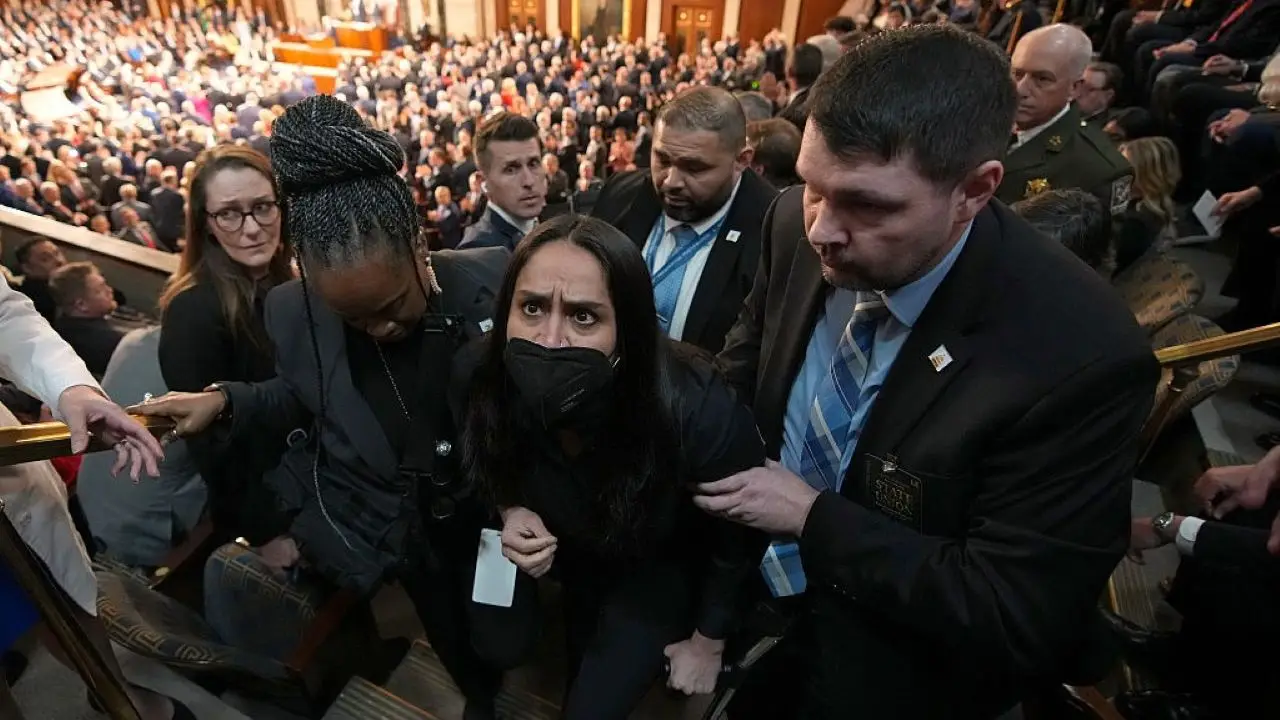
Omar cited “reports” claiming that software engineer Aliya Rahman was “aggressively handled” as she was forcibly removed from the chamber during Trump’s speech. Omar invited Rahman after she had an altercation with federal agents in Minnesota during “Operation Metro Surge” in January.
“My guest, Aliya Rahman, stood up silently in the gallery during the president’s speech for a short period of time, part of which other guests were also standing. For that, she was forcibly removed, despite warning officers about her injured shoulders and ultimately charged with ‘Unlawful Conduct,’” Omar wrote in a statement.
“Reports indicate she was aggressively handled until someone intervened to secure medical attention. She was taken to George Washington University Hospital for treatment and later booked at the United States Capitol Police headquarters,” she continued.
Rep. Ilhan Omar says her guest to Trump’s State of the Union address was arrested. (Andrew Caballero-Reynolds / AFP via Getty Images)
“The heavy-handed response to a peaceful guest sends a chilling message about the state of our democracy. I am calling for a full explanation of why this arrest occurred,” she added.
Fox News reached out to Capitol Police, but they did not immediately respond.
The charge Omar said Rahman faces exposes her to a possible sentence of six months in prison and a fine of up to $500.
“There are only two things you can do at the State of the Union, and they are sit down and stand up,” Rahman told Democracy Now. “I was arrested for standing up.”
ILHAN OMAR DOESN’T HAVE ANY REGRETS FOR HER ”UNAVOIDABLE’ OUTBURST AT STATE OF THE UNION
Aliya Rahman, a guest of Rep. Ilhan Omar, D- MN, and a Minneapolis resident who was detained by DHS agents, is escorted from the chamber as Trump delivers his State of the Union address during a Joint Session of Congress at the U.S. Capitol on February 24, 2026, in Washington, D.C. (Photo by Andrew Harnik/Getty Images)
The incident comes after Trump deployed border czar Tom Homan to Minneapolis last month after several violent and even deadly interactions between anti-ICE agitators and federal law enforcement.
Homan announced the end of “Operation Metro Surge” earlier this month, saying it was no longer necessary thanks to new cooperation from local law enforcement.
“As a result of our efforts here, Minnesota is now less of a sanctuary state for criminals,” Homan said Feb. 12.
White House border czar Tom Homan attends a press conference in Minneapolis, Minn., Jan. 29, 2026. (Shannon Stapleton/Reuters)
Homan clarified that a “small footprint of personnel” would remain for a period of time, and he also remains in Minnesota monitoring the drawdown process.
CLICK HERE TO DOWNLOAD THE FOX NEWS APP
“Additionally, federal government personnel assigned to conduct criminal investigations into the agitators, as well as the personnel assigned here for the fraud investigations, will remain in place until the work is done,” Homan said at the time.
Fox News’ Stephen Sorace contributed to this report.
Related Article

Read the full article from Here

When to call 911 and when to use non-emergency lines
This video explains the importance of knowing when to call 911 for emergencies and when to use non-emergency lines for less critical situations.
Detroit restaurateur and nightlife mainstay Michael “Mike B.” Brown was fatally shot early Saturday morning on the city’s west side, a violent incident that also left two other people injured and sent shockwaves through Detroit’s hospitality and entertainment communities.
According to Detroit police, the shooting occurred outside Suite 100, a cocktail bar on Schaefer Highway near Puritan Avenue. Investigators are urging anyone with information to come forward. As of Sunday afternoon, authorities had not announced any suspects or arrests.
“At approximately 4:30 a.m., Saturday, there was a triple shooting that occurred at 15789 Schaefer,” Detroit Police Department (DPD) media relations manager Jasmin Barmore wrote in an official statement Sunday afternoon. “Two of the vicims were found in front of the location and the third across the street from the location. Unfortunately, the victim found across the street from the location, Mikey Brown, succumbed to his injuries.
“The Detroit Police Department extends their condolences to the family and is asking the community for assistance with this incident. Anyone with information about this incident is asked to please contact DPD’s homicide unit or, they can submit an anonymous tip through Crime Stoppers or Detroit Rewards TV.”
Brown, 52, had spent decades building a name for himself across Detroit’s club and restaurant circuits, evolving from party promoter to business owner and, in recent years, a culinary entrepreneur with expanding ambitions. His death comes at a moment when he had been working to grow his “Sloppy” restaurant brand – a move that aligned with the rise of new Black-owned establishments reshaping the city’s dining landscape.
His first major restaurant venture, Sloppy Chops, opened in 2020 on West McNichols just off the Lodge Freeway. The steakhouse featured high-end cuts like ribeyes and tomahawks, but it quickly drew wide attention for its low-cost lamb chop specials – a dish with a fervent local following and long-standing ties to the city’s food culture.
A year later, Brown launched Sloppy Crab, later renamed the Crab Sports Bar, on East Jefferson Avenue near the Renaissance Center. The seafood spot mixed Detroiters’ love for crab dishes with the energetic, nightlife-forward atmosphere Brown had refined during his years in the entertainment scene. Occasional cover charges, signature strong cocktails and celebrity drop-ins helped make the venue one of downtown’s most animated destinations, placing it alongside longstanding nightlife pillars such as Floods Bar & Grille and Sweetwater Tavern.
Both restaurants emerged during a period when Detroiters were increasingly vocal about who new development served. Sloppy Crab’s proximity to the riverfront offered an answer to residents who wondered where Black diners fit into the city’s transforming downtown, while Sloppy Chops demonstrated that restaurants with the energy and polish of downtown destinations could thrive in the neighborhoods as well.
As of Sunday afternoon, more than 1,000 comments expressing sadness and shock had flooded a pinned post on Brown’s Instagram page, along with a number of posts on his Facebook profile.
On her own page, Darralynn Hutson, an award-winning journalist, author, documentarian and media strategist who has provided content to a host of media outlets including the Detroit Free Press, shared photos of herself with Brown.
“I had the opportunity to interview Mike a few years ago for a feature in Food & Wine and I remember how reluctant he was about sitting down to talk,” Hutson recalled. “Interviews weren’t his thing – he was much more comfortable building than explaining. I had to call him more than 20 times to set up the interview. He didn’t care about Food & Wine. But once we ate and got into conversation, what came out was his commitment to creating something for his Detroit.”
Brown’s influence stretched far beyond his menus. His establishments became recognizable gathering places, and his presence – familiar from downtown corridors to Dexter Avenue – made him a significant cultural figure in Detroit’s nightlife and, later, its dining renaissance.
His death leaves both industries mourning a personality whose ambitions were still growing, and whose imprint on the city’s social fabric remains unmistakable.

Community members and city leaders celebrated the opening of four new community-powered fridges on the North Side of Milwaukee. A ribbon-cutting ceremony was held on Friday, Feb. 27, at Metcalfe Park Community Bridges, 3624 W. North Ave., to mark the occasion.
The effort to fight food scarcity by opening community-powered fridges comes after several grocery stores closed in the area, creating a food desert.
District 15 Ald. Russell W. Stamper II, who saw several grocery stores in his district close over the past few years, served as the event’s emcee.
“We could either complain about the problem, or we could come together to find a solution,” Stamper said.
In July 2025, a Pick ‘n Save on the North Side closed, prompting the opening of a community-powered fridge at Tricklebee Café in the Sherman Park and Uptown area. Since then, several other grocery stores have closed in the area.
This led Stamper, FEED MKE, Metcalfe Park Community Bridges and One MKE to open four more community-powered fridges.
Christie Melby-Gibbons, executive director of Tricklebee Café, talked about the organization’s community-powered fridge. About a week ago, the fridge was empty for the first time since its launch, so staff turned to their online community for support.
“Within 20 minutes, a woman came in with bags of food and filled the fridge for less than $100,” Melby-Gibbons said.

The community-powered fridge network is run by residents on a take-what-you-need, leave-what-you-can model. Taking a grassroots approach to solving food insecurity in the area, community members provide fresh produce and other healthy food options to ensure that their neighbors have access to nutritious foods.
“Everybody deserves to eat. I can’t go to sleep at night knowing my neighbors are hungry,” said Melody McCurtis, deputy director of Metcalfe Park Community Bridges.

Here’s a list of all the community-powered fridges:
Metcalfe Park Community Bridges
3624 W. North Ave.
Rooted & Rising- Washington Park
3940 W. Lisbon Ave.
Sherman Park Community Association
3526 W. Fond du Lac Ave.
Dominican Center
2470 W. Locust St.
Tricklebee Café
4424 W. North Ave.
Jonathan Aguilar is a visual journalist at Milwaukee Neighborhood News Service who is supported through a partnership between CatchLight Local and Report for America.
This article first appeared on Milwaukee Neighborhood News Service and is republished here under a Creative Commons Attribution-NoDerivatives 4.0 International License.

Tel Aviv analyst shelters from 30 missile sirens in 48 hours, says Iran ‘won’t recover’

House Republicans push Johnson to go to war with Senate over SAVE Act

Diabetes surge among Americans could be driven by ‘healthy’ breakfasts, doctor warns

Deion Sanders mourns loss of Colorado quarterback Dominiq Ponder: ‘One of my favorites’

Iran networks suffer losses amid airstrikes, showing digital evolution of conflicts

Florida High School Football Rankings: Top 25 teams – Oct. 21

Cleary's 21 help Le Moyne down Central Connecticut State 69-64 in OT

How old is Bo Nix? What to know about Oregon quarterback ahead of 2024 NFL Draft

99th annual Pony Swim held in Virginia

Indiana Members Credit Union announced as new anchor tenant at Bottleworks District
House Republicans push Johnson to go to war with Senate over SAVE Act

Israel FM says Europe too divided, slams Spanish PM

Satellite images provide view inside Iran at war

Video: What the Texas Primary Battle Means for the Midterms

Dems’ potential 2028 hopefuls come out against US strikes on Iran
-

 World4 days ago
Exclusive: DeepSeek withholds latest AI model from US chipmakers including Nvidia, sources say
-

 Massachusetts4 days ago
Mother and daughter injured in Taunton house explosion
-

 Montana1 week ago
2026 MHSA Montana Wrestling State Championship Brackets And Results – FloWrestling
-

 Denver, CO4 days ago
10 acres charred, 5 injured in Thornton grass fire, evacuation orders lifted
-

 Louisiana7 days ago
Wildfire near Gum Swamp Road in Livingston Parish now under control; more than 200 acres burned
-

 Technology1 week ago
YouTube TV billing scam emails are hitting inboxes
-

 Technology1 week ago
Stellantis is in a crisis of its own making
-

 Politics1 week ago
OpenAI didn’t contact police despite employees flagging mass shooter’s concerning chatbot interactions: REPORT