Connect with us

Midwest

Parents of Kansas City Chiefs fan found dead think victims 'saw something they shouldn't have seen'

Published

on

Parents of Kansas City Chiefs fan found dead think victims 'saw something they shouldn't have seen'

Join Fox News for access to this content

Plus get unlimited access to thousands of articles, videos and more with your free account!

Please enter a valid email address.

By entering your email, you are agreeing to Fox News Terms of Service and Privacy Policy, which includes our Notice of Financial Incentive. To access the content, check your email and follow the instructions provided.

As the families of three dead Kansas City Chiefs fans await the results of their loved ones’ toxicology reports, one victim’s father has a “sinister theory” about what may have preceded their mysterious deaths. 

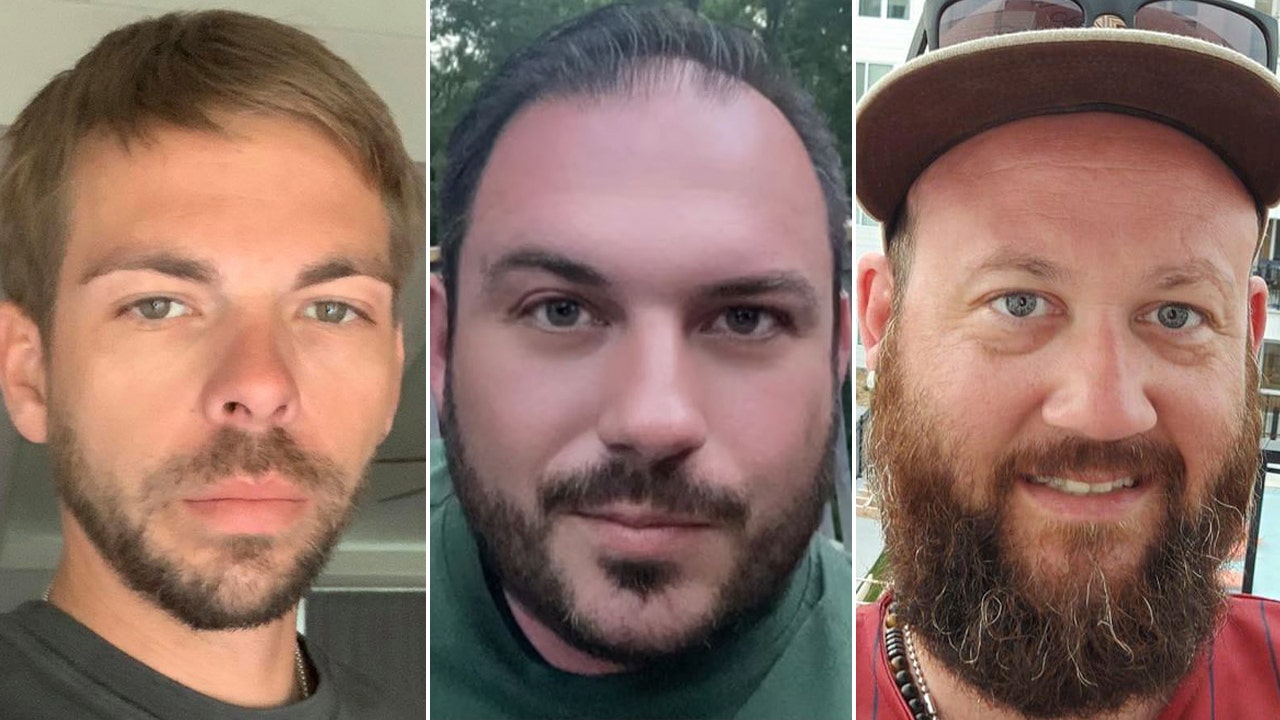
The bodies of Ricky Johnson, 38; Clayton McGeeney, 36; and David Harrington, 37, were discovered on January 9, two days after they had gathered at their friend Jordan Willis’ home to watch the Chiefs play the Los Angeles Chargers. 

Advertisement

Willis’ attorney has said his client had no idea the men were outside, and was only made aware of the bodies when police showed up at the Northwest 83rd Terrace home days later. He said he slept for nearly 48 hours following the party, according to his attorney John Picerno, while family members of the deceased fans tried to contact him and even showed up at his home. 

Harrington’s father, Jon Harrington, told Fox News Digital that he is “not buying” that story and “doesn’t believe anything [Willis’] attorney says.”

BROTHER OF CHIEFS FAN WHO WAS FOUND DEAD IN FRIEND’S BACKYARD SPEAKS OUT, SAYS STORY ‘NOT ADDING UP’

David Harrington, far left, Clayton McGeeney, second from right, and Ricky Johnson, right, were found dead in their friend’s backyard two days after they had gathered to watch a Kansas City Chiefs game. (Ricky Johnson/Facebook)

“[Harrington’s mother] and I are both convinced that Jordan Willis played a part in this somehow,” the elder Harrington said on Thursday. “We just haven’t figured out how yet. . . . What else could it be? Perfectly healthy men don’t just drop off the face of the earth.”

Advertisement

“There were four of you in the house and now three of them are dead and you’re not. That doesn’t add up,” the father continued. “I’m thinking that he, the three of them learned something or saw something that they shouldn’t have seen, and he decided ‘well, I need to get rid of you now.’ Friends or not.”

5TH MAN CONTRADICTS KANSAS CITY CHIEFS FANS’ PAL ABOUT MEN’S DEATHS

David Harrington’s father described him as a “rabid” football fan. His celebration of life, the father said, was an 80-person-strong watch party of the Chiefs game against the Buffalo Bills on January 21. “Whenever the Chiefs would make a drive, they were all chanting my son’s name. I will never forget that for the rest of my life,” Jon Harrington said. (Facebook)

After speaking with the Platte County prosecutor’s office, Harrington’s father said he “would expect that they will treat this as a drug overdose and go on with their business.” 

“But I don’t think it’s as simple as that,” he said. “I’m aware that they may have done some substances that were questionable – but the idea was to get high, not dead . . . If they were supposed to be friends, why didn’t [Willis] come find them. I’m sure they have a hundred different answers to that, but that’s my question.”

Advertisement

Jennifer Marquez, Harrington’s mother, told Fox News Digital that although her son “smoked cigarettes and drank beers with his friends,” she doesn’t believe he overdosed, and that “Jordan [is going to] have everything to do with what we find out” about his death.

“Yes, I believe that something happened that night and that Jordan had something to do with it,” Marquez said. “We all believe that Jordan had something to do with that.”

Jennifer Marquez said her son David Harrington, pictured, could “almost make you pass out laughing” and that his “favorite thing in the world was to make other people happy.” (Facebook)

“He sat in that house for two days and had time to get rid of and clean up evidence,” Marquez said on Thursday. “He’s had no drug test done on him. He’s had no alcohol test. He has had nothing to see how he might be included in this – they’ve given him two weeks to get any evidence completely gone.”

“Jordan’s not telling the truth,” Marquez continued. “When you tell the truth, your story is solid. It’s when you’re lying that your story changes, and that’s what’s been happening. I don’t understand why the police don’t see that.”

Advertisement

The Kansas City Police Department has stressed that Willis is not suspected of any wrongdoing and is not facing criminal charges.

BROTHER OF CHIEFS FAN WHO WAS FOUND DEAD IN FRIEND’S BACKYARD SPEAKS OUT, SAYS STORY ‘NOT ADDING UP’

Clayton McGeeney, Ricky Johnson and David Harrington were found dead at Northwest 83rd Terrace, pictured, two days after they watched the Kansas City Chiefs game there.  (FOX4 KC)

“First and foremost, this case is 100% not being investigated as a homicide,” Capt. Jake Becchina of the Kansas City Police Department previously told Fox News Digital. “There have not been any arrests [or] charges, and no one is in custody. There are no specific threats or concerns for the surrounding community at this time. The resident at the house was cooperative with detectives the day the deceased were discovered.”

Police corroborated Picerno’s statement that Willis voluntarily let them search his home; the Johnson family attorney, Ross Nigro, told Fox News Digital that a search warrant was carried out two days later. Picerno said Willis has since moved out of the home in fear of “retaliation.”

Advertisement

Jennifer Marquez, Harrington’s mother, said that her son was the “best person [she has] ever known” and that she will do whatever she can to “find out what happened that night.” (FOX4 KC)

Harrington’s father is not the only party who is suspicious of Willis – while some friends have taken to social media with their doubts, Johnson’s parents have posted that Willis took an active role in their son’s death.

Ricky Johnson, right, was a “responsible” man who “wasn’t going to go outside and freeze to death,” his parents told Fox News Digital.  (Norma Chester)

Willis, who holds a Ph.D., is a senior principal scientist at IAVI Neutralizing Antibody Center’s Schief Lab in Kansas City, according to the nonprofit’s website. IAVI did not respond to Fox News Digital’s requests for comment. 

“Something that comes to my mind: This guy wants to brag about how smart he is, he’s a scientist,” Norma Chester, Johnson’s mother, told Fox News Digital earlier this week. “My thoughts are that he concocted something and gave it to all three men. I know I’m just thinking, but how could this have happened?”

Advertisement

“Seriously, these were responsible men. How do they go in a backyard and freeze to death, all three of them,” Chester said.

Picerno called accusations of drugging or poisoning “ridiculous.” 

FAMILY OF KANSAS CITY CHIEFS FAN FOUND DEAD OUTSIDE PAL’S HOUSE THINKS HE WAS DRUGGED

“Just the thought of him dying and then him sitting outside in the cold for two days,” Caleb McGeeney, the cousin of Clayton McGeeney, pictured, told FOX4 Kansas City. “It’s extremely devastating. The whole family is messed up. He was such a good person.” (Facebook)

“He’s a scientist, and somehow he’s to blame? That’s an opinion not based in fact,” the attorney said in response to Chester’s comments.

Advertisement

CLICK HERE FOR THE FOX NEWS APP

“There’s no allegation of any animosity between Jordan and his three friends,” Picerno told Fox News Digital on Tuesday. “People want to speculate, [but] it’s not like anyone ever called the police saying, ‘We’re afraid of this Jordan guy.’”

Read the full article from Here

Continue Reading
Click to comment

Leave a Reply

Your email address will not be published. Required fields are marked *

This site uses Akismet to reduce spam. Learn how your comment data is processed.

South Dakota

South Dakota primary results leave Legislature seats in limbo

Published

on


play

Advertisement
  • Ten Republicans who lost their seats in the Legislature in 2024 are trying to win them back this year.
  • Incumbents and lawmakers who gave up House seats to run for Senate fell to challengers in several places.
  • Votes are still being tallied across the state.

The makeup of the Legislature was up in the air as of 1 a.m. after South Dakota’s primary election. 

Ten Republican state lawmakers ousted in 2024 are angling to get their seats back in 2026. Results were mixed for the nine who had primaries on Tuesday, with results still coming in for several races and others set for possible recounts.

Shawn Bordeaux of Rosebud won the state’s only Democratic primary, beating Troy “Luke” Lunderman for a chance to return to the state Senate.

Bordeaux will face Chamberlain Republican Rebecca Reimer in November’s general election. Reimer, who was term-limited in the state House of Representatives, beat Lower Brule Sen. Tamara Grove in Tuesday’s primary.

Advertisement

In Watertown’s District 5, Rep. Josephine Garcia fell in a state Senate primary to incumbent Sen. Glen Vilhauer. Garcia beat Byron Callies in the 2024 primary to earn her seat in the House of Representatives, but opted to challenge Vilhauer for his Senate seat instead of seeking reelection to the House. 

Callies, Vilhauer and Garcia are all from Watertown.

Vilhauer won with 59% of the vote. His was one of the first state legislative victories of the night reported on the Secretary of State’s website.

Vilhauer won handily, but he said he wasn’t necessarily expecting to as polls opened on Tuesday.

“I knew it was going to be a battle going in,” Vilhauer said. “She worked hard on her side, and I didn’t know what to expect.”

Advertisement

Callies was among the first to call Vilhauer to congratulate him, around 9:30 p.m.

“I’m happy, because Glen’s a solid legislator,” said Callies, who’s angling to win his seat back in the general election.

Garcia did not return a call seeking comment.

Advertisement

In District 21, Sen. Mykala Voita of Bonesteel beat former Sen. Erin Tobin of Winner in a rematch of their 2024 contest, which Voita won by a few dozen votes that year. This time around, Voita bested Tobin by 1,002 votes. 

In response to a request for comment, Voita sent a text reading “Glory to God!”

Tobin did not return a call from South Dakota Searchlight about her race after it was called, but said earlier in the evening she would be “at peace” with the results regardless of what they might be.

Another rematch saw Yanktonites Lauren Nelson and Jean Hunhoff battling for District 18’s state Senate seat. Nelson was a newcomer in 2024 when she beat Hunhoff, who’d spent decades in the Capitol between stints in the House and Senate. On Tuesday, Nelson held off Hunhoff, winning by 243 votes.

Other notable races

  • District 4 Rep. Dylan Jordan of Clear Lake, first elected in 2024, finished fourth in a five-way race. As of 1 a.m. Wednesday, he trailed Ryan Kohl of Milbank and former Rep. Fred Deutsch of Florence, in first and second place, respectively. A recount is possible in that race, with 59 votes separating the top two vote-getters while Rep. Kent Roe, of Hayti, came in third place, with 72 fewer votes than Deutsch.
  • District 4 has two possible recounts. In the other, Bryant’s Stephanie Sauder beat Clear Lake’s Tim Begalka by 105 votes in the unofficial tally from the Secretary of State.
  • District 1 Rep. Logan Manhart of Aberdeen, elected in the 2024 primary, fell to Rep. Nick Fosness, a hospital administrator appointed by Gov. Larry Rhoden in 2025, and newcomer Daniel Kjos.
  • Another recount was possible as of Wednesday at 1 a.m., in the District 16 race for House of Representatives. Rep. John Shubeck of Beresford trailed Lisa Bogue of Beresford by 245 votes in unofficial results. Jason VanDenTop of Canton was in third place, trailing Shubeck by 68 votes.

Vote totals incomplete

  • Sen. John Carley of Piedmont, who won his first term in 2024, trailed William Meirose of Sturgis by 166 votes as of 1 a.m. Wednesday.
  • Former Rep. Tyler Tordsen led Rep. Tony Kayser by two votes in the District 14 primary, with results still coming in. The Sioux Falls men are vying for second place and a spot on the November general election ballot alongside Rep. Taylor Rehfeldt of Sioux Falls, who led by more than 600 votes early Wednesday.
  • District 28 Sen. Sam Marty of Prairie City was in a close race with former legislator Ryan Maher of Isabel.
  • Former Rep. Gary Cammack of Union Center, who lost his seat in 2024, and Gary Deering of Hereford, led Reps. Terri Jorgenson of Piedmont and Kathy Rice of Blackhawk in the District 29 race.
  • In District 30, Hot Springs Sen. Amber Hulse led former Sen. Julie Frye-Mueller of Rapid City by more than 1,300 votes.
  • Former Sen. David Johnson of Rapid City led Sen. Curt Voight of Rapid City in a rematch of their 2024 race for District 33 Senate in early results.
  • Rep. Heather Baxter of Rapid City has signaled her intention to challenge sitting Secretary of State Monae Johnson for the Republican nomination to that constitutional office at the state’s Republican Party convention this summer. In early results, Baxter trailed former Rapid City Rep. Becky Drury and Rep. Mike Derby in the District 34 primary.
  • Early results in the District 35 primary put Sen. Greg Blanc, elected in 2024, in a close race with fellow Rapid City resident Nicole Mitzel.

South Dakota Searchlight is part of States Newsroom, the nation’s largest state-focused nonprofit news organization.


Source link

Advertisement
Continue Reading

Wisconsin

Racing Sausages, Wienermobile, ancient canoes all call this place home

Published

on

Racing Sausages, Wienermobile, ancient canoes all call this place home


Just east of the Capital City Trail crossing at the Yahara River, a nondescript warehouse rises on Madison’s west side. Its blank exterior offers no hint of what’s inside, and even the interior is not set up for glass cases and museum spotlights.

But its more than 180,000-square-feet of climate-controlled space contains the largest collection of North American history outside of the Library of Congress.

In all, the Wisconsin Historical Society holds 3.8 million print publications, 25,000 maps, 3 million images, 125,000 cubic feet of archival material and 750,000 historic and archaeological objects. Most are stored in the State Archive Preservation Facility, including the original Milwaukee Brewers Racing Sausages, one of the country’s first weather maps, traditional Ho‑Chunk baskets and comedian Chris Farley’s football jersey from Edgewood High School.

Advertisement

It’s a largely unknown, certainly underappreciated, Wisconsin treasure.

The archives are managed by the Wisconsin Department of Administration and operate in partnership with the Wisconsin Historical Society, Wisconsin Department of Veterans Affairs and University of Wisconsin-Madison. 

Typically, history is presented in a carefully curated way – edited in a textbook, displayed behind a rope, maybe protected under glass. But the archives are an uncurated mix, and in many ways a more accurate reflection of the jumble that is human life than the single storyline we try to make it out to be.

Here, history feels human and unfinished. Every box, aisle and rack holds items that come to life when someone pulls them out and shares their story.

Advertisement

“Without the stories, the passion behind them, the experiences of individuals, it’s just a desk or a chair, but it’s the stories that are there,” said Nick Hoffman, chief creative officer with the Wisconsin Historical Society. 

Preserving film history at 40°F

As the heavy doors to the “cold room” on the second floor swing open, chilled air spills out. The room’s temperature holds at 40 degrees Fahrenheit with 35% relative humidity – the ideal balance to protect film and videotape. 

More than 44,000 film cans sit packed inside, and despite Madison’s distance from entertainment hubs like Los Angeles and New York, this is one of the world’s leading collections of film and television history.

More than 300 manuscript collections include materials from figures such as Michael and Kirk Douglas, Agnes Moorehead, Rod Serling and Edith Head. The shelves hold Mary Tyler Moore’s full archive, materials from early talk show host Faye Emerson, and footage of the McCarthy hearings later used in a documentary by Emile de Antonio.

The oldest film in the archives − “The Lumberjack,” a 16-minute silent film shot in Wausau − dates back to 1914.

Advertisement

Many donors have no ties to Wisconsin. What binds the archive isn’t geography so much as the pull to preserve a legacy.

“It’s often about an individual,” said Jill Sterrett, chief collections officer.

History written in ink on paper

One of the country’s oldest newspaper collections resides on the third floor, including a July 10, 1776, edition of The Pennsylvania Gazette, with one of the earliest printings of the Declaration of Independence, as well as Frederick Douglass’ 1850s newspaper, and the Cherokee Phoenix, the first newspaper published in a Native language.

The archives has the ability to bring people down to the individual level, then zoom out to show how an individual connects to a huge moment in U.S. history, Hoffman said. “That’s the scale that we have here,” he said. 

In the early 1960s, for example, the Historical Society began collecting material from civil rights groups and activists, becoming a leading center for studying the American civil rights movement. Today, the archives hold hundreds of thousands of documents and recordings from the Highlander Research and Education Center in Tennessee. Highlander trained activists like Rosa Parks to organize and educate people, especially on voting rights.

Advertisement

That training partly shaped Parks’ refusal to give up her bus seat to a white man, which sparked the Montgomery Bus Boycott, said senior archivist Lee Grady.

One of the earliest weather maps by Milwaukee scientist Increase Lapham is also in the collections. Lapham made the map in 1868, reconstructing a storm from a decade earlier to show how weather patterns could be tracked. The map served as a proof-of-concept, Grady said, which helped prompt Congress to establish the National Weather Service in 1870.

The archives also have an ongoing, little-known interaction with the public. Grady said the Historical Society fields about 16,000 questions a year, mostly by email, on topics like land records, divorce filings, even whether a house is haunted. Family history requests are the most common, he said.

Racing Sausages, Freedom Desks, tribal baskets share space

About 100,000 objects share space in a cavernous room on the fourth floor. 

Advertisement

The original, 7-foot-tall Milwaukee Brewers Racing Sausages tower around the first corner. Made with foam and rubber cement, they are being restored by the Historical Society before they go on display in the new Wisconsin History Center, which is scheduled to open in 2028. 

Directly above the Racing Sausages sit “Freedom Day” school desks from Milwaukee. During Milwaukee’s 1964 “Freedom Day” boycotts, thousands of students left segregated public schools to attend alternative Freedom Schools in local churches.

Also on display are materials from the March on Milwaukee – the 200 consecutive nights of marching to protest segregated housing, led by the NAACP Youth Council and advised by the Rev. James Groppi. 

Wedged in the middle of a nearby clothing rack is a bowling shirt from Earlene Fuller, a legendary Milwaukee bowler who became known for designing custom shirts, many featuring kente cloth and other African-inspired patterns. She broke down racial barriers in the sport, and was the first Black woman to bowl a perfect 300 game.

There’s also Rosie the Riveter coveralls made in Beloit and Jane Kaczmarek’s “Lucky Aide” smock from Malcolm in the Middle. 

Advertisement

“These are telling the stories of everyday efforts to win World War II, to the stories that make us laugh,” said Leo Landis, director of curatorial services. 

More aisles open up at the push of a button. Each aisle is arranged by when its contents were donated, a densely packed uncurated cross-section of memorabilia.

One aisle holds West Allis–born speed skater Dan Jansen’s Levi’s velour Olympic warm-up jacket from 1984.

A couple of aisles down are Ho-Chunk baskets, some that date back to the 1800s, weaving together more than a century of tradition.

Advertisement

Ancient canoes sit alongside the Oscar Mayer Wienermobile

Downstairs, in one of the unassuming basement rooms, it’s hard to know where to look first.

The tightly packed space holds the original Oscar Mayer Wienermobile as well as a Culver’s sign from one of the first franchises, made from a repurposed Ford dealership sign.

There’s also a Packers helmet-shaped ice shanty built by Bill Casper of Sturgeon for Tomorrow, a nonprofit that promotes sturgeon conservation and celebrates Lake Winnebago’s ice-fishing culture.

But one of the most striking displays underscores how history is still being written.

Advertisement

Two dugout canoes raised from Lake Mendota sit soaking in a chemical bath. Discovered in 2018 and 2022, they have been dated to roughly 1,200 and 3,000 years old.

For the past year and a half, the canoes have been treated with polyethylene glycol, a resin that slowly fills the cells of the waterlogged wood. In about six months, Sterrett said, the canoes will be shipped to Texas A&M to be freeze-dried in a giant chamber, drawing out the water while letting the resin holding its shape. 

Sterrett said the canoes, along with others found in Wisconsin lakes, are reshaping what people know about the region’s past climate and how people lived on and with the water.

Advertisement

Authority, access, audience engagement

The Historical Society is no longer just collecting items. It is rethinking ownership, renegotiating who defines history, and in some cases returning pieces and material.

That shift is visible in the “repatriation room,” where desks and shelves made from Menominee Forest wood help ground the consultations between the Historical Society and tribal nations on returning cultural items. Repatriation has expanded in recent decades, moving beyond compliance toward collaboration.

More broadly, archivists are rethinking access and engaging different audiences.

Advertisement

The state archives already operates an inter-archival loan system across University of Wisconsin schools. The Historical Society now is working to move records, such as family and land documents, closer to the communities they are tied to. 

Anyone can access materials at the Wisconsin Historical Society headquarters on Library Mall on the UW-Madison campus. But the State Archive Preservation Facility is generally closed to the public, with tours offered just twice a year and some items coming out only for special events. When the Wisconsin History Center opens in early 2028, many items from the archives will be on rotating display. 

As the leaders of this repository look to the future, they are convinced interest in history hasn’t waned. The key is letting people know what Wisconsin has, and making it available in a way that makes the most of it.

And as always, sharing all those great stories behind the archives.

As Sterrett said, “The risks of not sharing are far greater.”

Advertisement

New history center will increase access to archives

The new history center, slated to open in early 2028, will provide unprecedented access to the objects, entertainment and print products housed within the archives.

The Wisconsin Historical Society broke ground on its new $160.5 million center in 2025. The five-story, 100,000-square-foot building on Capitol Square in Madison will more than double the exhibition space of the previous history center.

When it opens, the center is expected to welcome 260,000 visitors each year. It will feature three core galleries, a rotating community gallery, rooftop terrace, café as well as educational spaces.

Caitlin Looby covers the Great Lakes and the environment for the Milwaukee Journal Sentinel. Contact: clooby@gannett.com. Follow her on social media @caitlooby.

Advertisement

Caitlin is an Outrider Fellow whose reporting also receives support from the Brico Fund, Fund for Lake Michigan, Barbara K. Frank, and individual contributions to the Journal Sentinel Community-Funded Journalism Project. Journal Sentinel editors maintain full editorial control over all content. To support this work, visit jsonline.com/support. Checks can be addressed to Local Media Foundation (memo: “JS Community Journalism”) and mailed to P.O. Box 85015, Chicago, IL 60689.

This fundraising effort is made possible through our partnership with Local Media Foundation, a verified 501(c)3 nonprofit organization (tax ID #36-4427750) and EnMotive Company, LLC, a subsidiary of USA TODAY Co., Inc. USA TODAY Co., Inc. is the parent company of this publication.

The JS Community-Funded Journalism Project is made possible through our partnership with Local Media Foundation, tax ID #36-4427750, a Section 501(c)(3) charitable trust affiliated with Local Media Association, and EnMotive, LLC, a subsidiary of USA TODAY Co., Inc. USA TODAY Co., Inc. is the parent company of this publication.


Source link

Advertisement
Continue Reading

Detroit, MI

Another bribery scandal hits Detroit. It involves the People Mover

Published

on

Another bribery scandal hits Detroit. It involves the People Mover


play

  • A former Detroit People Mover official is accused of accepting $300,000 in bribes.
  • The official allegedly approved phony invoices for IT work that was never performed.
  • The businessman who submitted the invoices owned a home restoration company with no IT experience.

More than a decade ago, a juror in a Detroit public corruption trial that ended with three men getting convicted in a $97 million bribery scheme exclaimed: “Hopefully this is the end of this nightmare … this is a whole new beginning.”

It didn’t quite go that way as the following years saw two city councilmen indictments, a dozen school principal bribery convictions, a towing scandal, as well as a toxic dirt and demolition fiasco.

Advertisement

And now there’s this.

In a new criminal filing in U.S. District Court, a former city official in charge of the Detroit People Mover shuttle is charged with taking $300,000 in bribes from a businessmen who reportedly billed the city for work that was never performed — all with the help of his connected associate.

According to a criminal complaint unsealed Tuesday, June 2 in U.S. District Court, the alleged scheme involves 55-year-old Michael Anderson, a former director with the Detroit Transportation Corporation, who allegedly helped Detroit businessman Terrence Parker bill the city for nearly $305,000 in information technology work that was never performed.

Moreover, court records show, Parker’s company has no experience with IT work, but rather performs restoration work on homes damaged by storms and natural disasters. Still, the FBI says, Parker managed to submit 22 phony invoices to the DTC for IT work, including fixing computer monitors — and got paid for all of it. That’s because Anderson was approving his phony invoices from the inside, the government says, and getting money in exchange for his help.

Advertisement

Anderson and Parker both are charged with conspiracy and federal program theft/bribery and face up to 10 years in prison, if convicted. They were released on bond following their initial appearances in U.S. District Court. Their court-appointed lawyer could not be reached for comment.

According to the complaint, Anderson, who was hired by the city in 2022, was in charge of overseeing People Mover operations until he was fired in April for conduct unrelated to the pending criminal case. Parker owns a business called Total Care Restoration (TCR), which performs restoration work on homes damaged by fire, water, windstorms, or other elements.

According to the government, Parker was billing the DTC for information technology services, even though his company has no experience in that field, nor has it ever submitted a bid proposal to the city for such work, or signed any contract with the DTC.

Still, the government alleges, between 2023-25, the DTC paid nearly $305,000 to TCR for 23 invoices it had submitted, 22 of those invoices charged for IT services.

Advertisement

“Anderson approved the invoices and Parker deposited the checks into TCR’s bank account. TCR did not submit any invoices or receive any payments before Anderson was hired as Procurement Director. Likewise, TCR did not submit any invoices or receive any payments after Anderson was fired as Procurement Director,” the complaint states.

According to the government, Anderson did actually procure and manage IT contracts with a number of companies while he worked for the DTC. But TCR was billing the city for work that those companies had been contracted to do.

“At least six TCR invoices listed work that was actually contracted to (another company),” an FBI agent wrote in his affidavit attached to the criminal complaint.

Advertisement

Also noteworthy, the FBI agent writes: “Most of TCR’s invoices contained a charge for debris removal. In my experience, debris removal is a common line item for restoration projects but not for IT work.”

According to the complaint, the FBI figured out that Parker was funneling money to Anderson by reviewing their bank records, and noticing that their deposits and withdrawals coincided. For example, on Aug. 16, 2024, Parker deposited a DTC check for $23,934 and withdrew $18,000 cash. That same day and over the next several days, Anderson made cash deposits into his account for $1,500, $1,300, $1,000, $700 and $1,850.

“There is probable cause to believe that Parker paid Anderson a portion of the money from the TCR invoices,” the FBI agent writes.

Contact Tresa Baldas: tbaldas@freepress.com


Source link

Advertisement
Continue Reading
Advertisement

Trending