Connect with us

Midwest

‘Outsider’ TV veteran jumps into swing state House race aiming to flip longtime red seat back to GOP

Published

on

‘Outsider’ TV veteran jumps into swing state House race aiming to flip longtime red seat back to GOP

NEWYou can now listen to Fox News articles!

FIRST ON FOX: Longtime West Michigan meteorologist Terri DeBoer is launching a run for Congress as a Republican, hoping to represent the state’s 3rd Congressional District in a campaign centered on border security, economic issues and what she called restoring “fiscal sanity” in Washington.

I’m an outsider,” DeBoer told Fox News Digital in her first interview since becoming a Republican candidate for Congress running to unseat Rep. Hillary Scholten, D-Mich., who has held the seat since 2023.

“I am a West Michigan resident, and as an outsider, I believe that West Michigan is not blue, West Michigan is not red. West Michigan is all about solving the problems that we face, no matter who has those ideas, no matter what side of the aisle they happen to sit on.”

DeBoer has spent more than 30 years on West Michigan television, working at stations including WWMT-TV, WOOD-TV and most recently FOX-17 (WXMI-TV), where she returned in 2024 after a brief break.

Advertisement

NEWSOM PREDICTS TRUMP IS ‘TOAST,’ WILL DRAG GOP INTO MIDTERM WIPEOUT

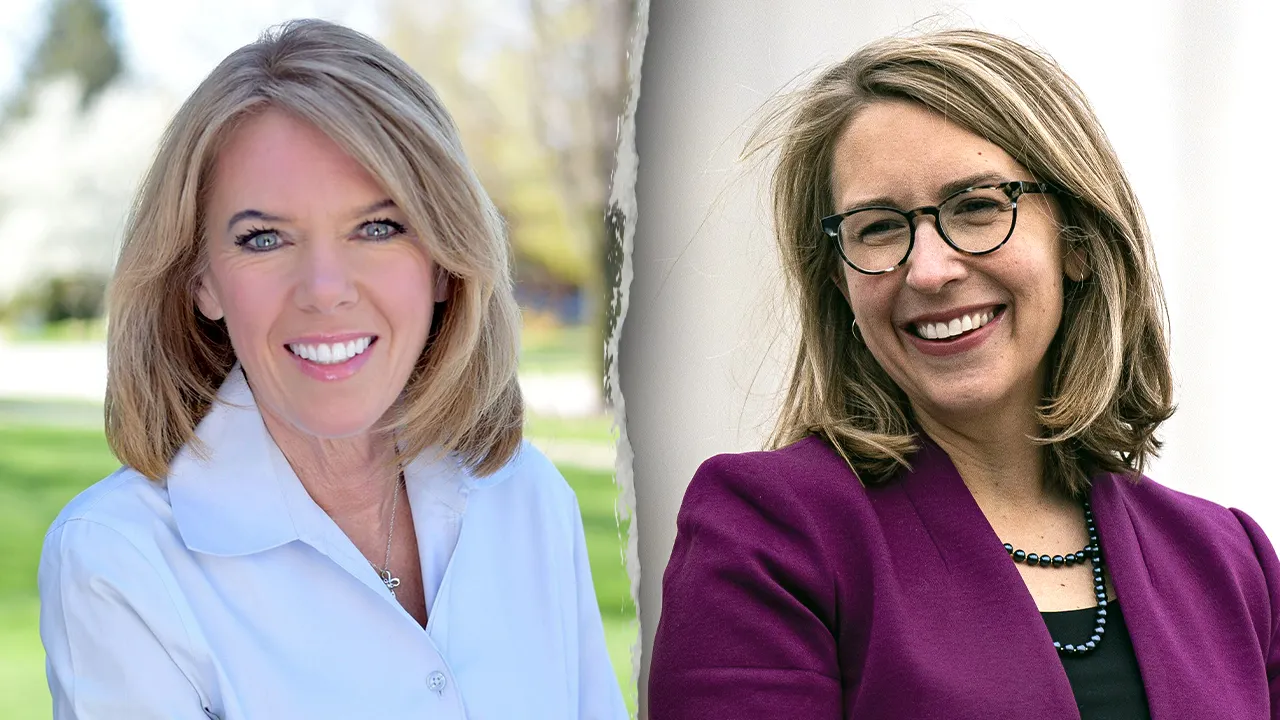
Meteorologist Terri DeBoer, left, has launched a congressional bid in Michigan. (Fox News Digital; Getty Images)

She began her career in broadcast journalism as a news reporter before transitioning to meteorology in the early 1990s. Known to many viewers as “everyone’s mom,” DeBoer has been a steady on-air presence during major weather events, including the 1998 derecho and the 2022 Christmas blizzard.

DeBoer says she sees similarities between her previous position, where she was affectionately referred to by many as “everyone’s mom,” and helping people navigate and prepare for tough weather ahead.

DEMOCRATS NAME CANDIDATES TO ‘RED TO BLUE’ INITIATIVE, AIMING TO FLIP GOP MAJORITY DURING MIDTERMS

Advertisement

The U.S. Capitol in Washington, D.C., on Jan. 7, 2026. (Al Drago/Bloomberg via Getty Images)

“I am asking the people of Michigan’s 3rd District to send me to Capitol Hill so that I can make a difference helping prepare people for the storms that we’re facing and help steer us away from the impact of those storms,” DeBoer said.

DeBoer, a wife, mother and grandmother, says her interest in politics was inspired by hearing former President Ronald Reagan speak in person during her senior year of high school. She said she thought to herself that if she ever had the opportunity to “serve my country,” she would “step forward and do it.”

DeBoer is the first major Republican candidate to enter the race in a district the Cook Political Report ranks as “Solid D,” in a state that President Donald Trump carried in 2024 and that is known for narrow margins of victory.

Additionally, when Scholten won her election, she became the first Democrat to win that seat since the 1970s. 

Advertisement

National Republican Congressional Committee spokesperson Zach Bannon called Scholten a “rubber stamp” for the “radical far left” in a statement to Fox News Digital and said Republicans are “on the offense.”

Rep. Hillary Scholten speaks at a press conference following a House Democratic Caucus meeting. (Kevin Dietsch/Getty Images)

Other priorities from DeBoer, according to a press release and her newly launched campaign website, include pushing back against the “political elite” and “open-border policies” and advocating for affordability.

“For me, I am someone who is willing to listen to all great ideas, because I know that the problems that we have to solve, we are going to face, are going to need to be tackled by everyone, and so we need to come together and the best way to come together is to send an outsider to Washington,” DeBoer said. “I have loyalty to West Michigan. I don’t have loyalty to a party.”

Advertisement

Republicans currently control the House by a 218-214 majority, with two right-tilting districts and one left-leaning seat vacant. Democrats need a net gain of three seats in the midterms to win back the majority for the first time in four years.

Read the full article from Here

Advertisement

South Dakota

SD Lottery Powerball, Lotto America winning numbers for June 15, 2026

Published

on


The South Dakota Lottery offers multiple draw games for those aiming to win big.

Here’s a look at June 15, 2026, results for each game:

Winning Powerball numbers from June 15 drawing

25-55-57-60-62, Powerball: 23, Power Play: 2

Check Powerball payouts and previous drawings here.

Advertisement

Winning Lotto America numbers from June 15 drawing

01-15-18-30-46, Star Ball: 02, ASB: 03

Check Lotto America payouts and previous drawings here.

Winning Millionaire for Life numbers from June 15 drawing

12-14-20-54-58, Bonus: 04

Check Millionaire for Life payouts and previous drawings here.

Feeling lucky? Explore the latest lottery news & results

Advertisement

Are you a winner? Here’s how to claim your prize

  • Prizes of $100 or less: Can be claimed at any South Dakota Lottery retailer.
  • Prizes of $101 or more: Must be claimed from the Lottery. By mail, send a claim form and a signed winning ticket to the Lottery at 711 E. Wells Avenue, Pierre, SD 57501.
  • Any jackpot-winning ticket for Dakota Cash or Lotto America, top prize-winning ticket for Lucky for Life, or for the second prizes for Powerball and Mega Millions must be presented in person at a Lottery office. A jackpot-winning Powerball or Mega Millions ticket must be presented in person at the Lottery office in Pierre.

When are the South Dakota Lottery drawings held?

  • Powerball: 9:59 p.m. CT on Monday, Wednesday, and Saturday.
  • Mega Millions: 10 p.m. CT on Tuesday and Friday.
  • Lucky for Life: 9:38 p.m. CT daily.
  • Lotto America: 9:15 p.m. CT on Monday, Wednesday and Saturday.
  • Dakota Cash: 9 p.m. CT on Wednesday and Saturday.
  • Millionaire for Life: 10:15 p.m. CT daily.

This results page was generated automatically using information from TinBu and a template written and reviewed by a South Dakota editor. You can send feedback using this form.


Source link

Continue Reading

Wisconsin

Wisconsin schools added thousands of staff despite enrollment falling

Published

on

Wisconsin schools added thousands of staff despite enrollment falling


play

  • Wisconsin public schools have seen a 9% drop in student enrollment since 2011 but a 7% increase in staffing.
  • The decline in student population is largely attributed to the state’s falling birth rate since 2007.
  • Despite fewer students, districts have hired more staff to address growing needs, like mental health and academic gaps.
  • Financial strain from this trend may force districts to close schools, reduce staff or cut educational programs.

Wisconsin public schools are employing more staff despite serving about 80,000 fewer students than they did 16 years ago, according to a new report from the Wisconsin Policy Forum.

Since the 2010-11 school year, the number of students enrolled in the state’s public schools has fallen more than 9% to about 792,000 students this school year. Meanwhile, the number of staff in schools increased 7%, and the number of public schools decreased about 3%, the Policy Forum reported.

Advertisement

With state funding tied to student counts, enrollment declines put additional strain on district budgets. The Policy Forum warned “the cost pressures of increased staffing will grow” as districts seek to maintain their workforces with shrinking revenues.

Combined with other financial constraints, including growing student needs and revenue limits that haven’t kept up with inflation, “districts will likely face tough financial decisions around closing schools, reducing their workforce, or cutting educational programming,” the Policy Forum said.

Here are five takeaways from the report:

Elementary schools see biggest enrollment drop

Enrollment trends varied across Wisconsin. Students, schools and staff declined in urban school districts. In suburban districts, enrollment remained stable and staffing increased nearly 19% since 2011. Both town and rural districts lost students but expanded staff.

The Policy Forum attributed the enrollment loss to the state’s declining birth rate, which has continuously fallen since 2007.

Advertisement

Over the past 16 years, elementary school enrollment dropped about 16%, compared with nearly 9% in middle schools and about 8% in high schools, the organization reported.

Fewer schools but closures haven’t kept pace with enrollment decline

In response, some districts have closed or consolidated schools to reduce costs. The number of public schools in Wisconsin decreased from 2,202 schools in 2011 to 2,132 in 2026.

The number of elementary schools decreased 9%, and the number of high schools decreased nearly 6%, according to the Policy Forum. However, the number of standalone middle schools increased by about 7%, and schools serving both elementary and high school students – many of them charter schools – grew more than 150%.

Private schools in Wisconsin also declined more than 8% over the past 16 years.

Advertisement

Even so, the decline in the number of schools hasn’t kept pace with the loss of students. The Policy Forum said it’s hard for districts to close schools or cut staff because student losses are typically spread across grade levels and buildings.

“Staffing cuts and school closures are also unpopular and painful for districts and communities, leaving leaders with difficult decisions and tradeoffs,” the report said.

MPS is cutting some staff, but adding jobs, too

For Milwaukee Public Schools, where enrollment has long been on the decline, outside consultants have suggested permanently closing five schools on the city’s north side. Superintendent Brenda Cassellius has said she isn’t yet ready to recommend closing those schools but does eventually expect to call for closures over multiple years.

The district’s budget for the upcoming school year also includes more than 260 cuts to non-classroom staff positions, though it also adds more than 150 new paraprofessionals and 150 teachers.

Paraprofessionals and other aides added across Wisconsin

Across Wisconsin, the number of classroom teachers has grown by less than 1% since 2011, or about 470 additional full-time equivalent positions. Schools have also added the full-time equivalent of more than 3,360 paraprofessionals and program aides, a nearly 31% increase, according to the Policy Forum.

Advertisement

Overall, teachers and paraprofessionals in classrooms increased by more than 5%. The number of all other licensed staff members – including district administrators, principals, counselors, therapists and other school support staff – increased by the full-time equivalent of 1,849 positions, or nearly 16%.

No effective alternative, district leaders say

District leaders told the Wisconsin Policy Forum they have expanded staffing to address growing student needs, including mental health challenges, widening academic gaps and increased numbers of students who have disabilities or are English learners.

Still, “district leaders expressed frustration with employing more staff for fewer students, but said they have not found an effective alternative,” the report said.

With enrollment projected to continue falling, the Policy Forum said districts will likely keep relying on property tax referendums to maintain services and staffing levels. The organization said district leaders may also seek additional support from the state, and lawmakers have an opportunity to “consider how to best protect student learning during this demographic shift.”

Kayla Huynh covers K-12 education, teachers and solutions for the Journal Sentinel. Contact: khuynh@gannett.com. Follow her on X: @_kaylahuynh.

Advertisement

Kayla Huynh‘s reporting is supported by Herb Kohl Philanthropies and reader contributions to the Journal Sentinel Community-Funded Journalism Project. Journal Sentinel editors maintain full editorial control over all content. To support this work, visit jsonline.com/support. Checks can be addressed to Local Media Foundation (memo: “JS Community Journalism”) and mailed to P.O. Box 85015, Chicago, IL 60689.

The JS Community-Funded Journalism Project is administered by Local Media Foundation, tax ID #36-4427750, a Section 501(c)(3) charitable trust affiliated with Local Media Association.


Source link

Continue Reading

Detroit, MI

New home demand, construction soften in Metro Detroit amid high rates

Published

on

New home demand, construction soften in Metro Detroit amid high rates


play

Buyers are still shopping for newly built homes in Metro Detroit, but fewer are moving quickly to sign contracts as higher borrowing costs pressure household budgets.

That’s what Darian Neubecker, president of Bloomfield Hills-based Robertson Brothers Homes, is seeing across the company’s communities. While potential buyers continue to research the homebuilding process, website traffic and in-person visits have declined from a year ago.

Advertisement

“There are certainly folks doing homework on buying,” Neubecker said. “I think as soon as we see relief on interest rates, we’ll see sales activity pick back up.”

Neubecker attributed the slowdown to temporary factors, such as higher mortgage rates amid geopolitical factors, including the U.S.-Israel war with Iran. And those factors are impacting new home activity.  

Builders pulled 931 single-family permits across Macomb, Monroe, Oakland, St. Clair and Wayne counties through April, marking the second-slowest start to a year since 2012, according to the Home Builders Association of Southeastern Michigan.

In April, builders pulled 310 single-family permits across the five-county region, down 18.4% from 380 permits a year earlier. The decline was led by Wayne County, where permits fell 30.2%, while Oakland County permits dropped 16.5% and Macomb County permits fell 12.1%.

Advertisement

One bright spot: April activity was up slightly from March, when builders pulled 302 permits. While the need for housing remains strong, higher mortgage rates and home prices have reduced affordability and caused some prospective buyers to delay purchasing decisions, economists say.

Mortgage rates remain elevated, with a 30-year fixed loan averaging around 6.5% in recent Freddie Mac data.

“Everybody’s basically waiting to see what happens to mortgage rates, and they have been like on a seesaw,” said Daniil Manaenkov, U.S. forecasting specialist for the University of Michigan’s Department of Economics. “So you would get some improvements, it would start edging down, but then something would happen, and rates would edge back up.”

Manaenkov said housing activity today more closely resembles pre-pandemic levels than the market after COVID-19, when low borrowing costs fueled demand and construction.

Advertisement

The market has softened, though it’s relatively stable rather than severely depressed, Manaenkov said.

Market’s ‘one-two punch’

One recent morning, Neubecker stood inside a two-bedroom townhome under construction at the Scripps District development along Trumbull Avenue in Detroit’s Woodbridge neighborhood.

As crews worked throughout the partially finished development, he spoke of the property’s features and the state of the homebuilding market. The project includes 65 two-bedroom townhomes priced from the upper $300,000s. Construction began about two years ago and is expected to be completed in 2027.

Neubecker said it has been one of Robertson Brothers Homes’ strongest-selling communities, outperforming the company’s other southeast Michigan developments during its early months on the market.

The company has about 100 homes under construction across southeast Michigan, and he estimates sales are down between 15-20%. Some of the other communities in Metro Detroit have seen a slowdown in sales, including developments in Troy and Lyon Township.

Advertisement

He said recent softness in buyer demand is showing up in early-stage sales data and could mean lower permit activity in the near future, Neubecker said: “Sales is always a three- to six-month leading indicator of permit activity.”

He expects the slowdown to be temporary. “Long term, not worried; medium term, not worried,” he said. “Short term, I would classify it as a nuisance more than anything.”

Vito Castellana, owner of V.I.P Homes & Development, said the most significant slowdown is occurring at the entry-level segment of the market, where affordability is the toughest.

In Burton near Flint, he said the company is building 1,500-square-foot single-story condos priced in the high $200,000s and 2,000-square-foot two-story colonials priced in the low $300,000s. Among the company’s other projects are seven single-family homes in Sterling Heights, ranging from 2,600 square feet to 4,000 square feet with three-car garages priced in the $800,000s.

Castellana said many potential buyers are pausing due to current mortgage rates and the desire not to lose the low rates they have on their present homes.

Advertisement

“The market is a little bit slower than what we’re used to, given costs and given interest rates, so it’s kind of a one-two punch right now,” he said. “So it’s not as robust as we’re used to seeing in previous … spring to summer markets.”

Vito said that has changed the broader housing mix for his company, which is putting more emphasis on multifamily and rental housing as buyers prioritize flexibility.

He said construction costs have also impacted housing prices, noting long-term increases in land and development expenses. For example, the home pricing in Burton starting in the high $200,000s is possible because the company purchased the land about 10 years ago, he said.

“If you had to go develop and put those lots in (now), it might cost tenfold of what we paid for them,” he said. “And this is just hypothetically speaking, like, if I sold that house for $320,000 last week, if we had to put the lots in and put the improvements in, like in current market rate, it could probably potentially be — that $320,000 could be a $420,000 home.”

Joel Berner, senior economist at Realtor.com, said that in the Northeast and Midwest markets, including Detroit, the focus is on higher-priced homes that better accommodate cost constraints.

Advertisement

“New construction has been expensive,” he said. “It’s really kind of operated as a luxury product, hasn’t really competed with existing homes on price so much.”

Berner also pointed to a tight market for skilled labor, rising material costs and the challenges of urban infill development as factors that make it hard to offer lower-priced homes in places like Michigan.

‘Consistent level of activity’

Despite the ups and downs, some buyers are still in the market.

Lucy Kollin, 50, of Troy is building a four-bedroom home in Robertson Brothers Homes’ Village at Clawson Park development. It’s been a two-year research process, she said.  

Kollin, a real estate agent, previously lived in a Robertson-built condo and wanted another new build close to downtown Birmingham.

Advertisement

She decided to purchase a 2,400-square-foot single-family home with a base price of $600,000. She expects the house to be finished by the end of August.

“If you want something, keep looking,” she said. “Don’t give up.”

The overall slowdown in permits has not brought construction activity to a complete halt. Michele Chirco, general counsel for home-builder MJC Companies, said sales have remained largely in line with last year for his company.

“We’re still seeing pretty consistent level of activity,” he said. “Doesn’t really feel too much different than what we’ve seen through most of last year.”

Affordability continues to limit how much builders can raise prices, he said, while material and labor costs have become more predictable after years of pandemic-era supply disruptions and tariff-related uncertainty.

Advertisement

MJC Companies has about 20 speculative single-family homes under construction that have not yet been sold, Chirco said, and about 60 homes under contract across its communities.

“We have probably a larger percentage of homes that we start as spec homes,” he said. “We tend to keep maybe three to five homes within a community that we start without a buyer, just to make that decision and that process easier for anybody looking for new construction.”

Shanta Favors, 43, lives in MJC Companies’ Cypress Gardens subdivision in Taylor. She says she has watched new phases of construction fill in around her home.

“I do like the fact that it’s a community, a whole community,” she said, describing how the subdivision has grown into a fuller neighborhood over time, even as affordability has become more difficult for new buyers.

Favors, a disability advocate, purchased her home in 2020 for $301,000 after customizations designed to make things accessible for her wheelchair use. She figures her home is valued at about $500,000 now.

Advertisement

“There are people still buying in this subdivision,” she said.

cwilliams@detroitnews.com


Source link

Continue Reading
Advertisement

Trending
