Ohio
Avery Gach commits to Michigan over Ohio State. Is OSU’s 2025 offensive line class in trouble?


Ohio State seemed to have an idea of what Avery Gach would become.
The Buckeyes offered Gach in the middle of his sophomore season at Groves High School in Birmingham, Michigan, when the 2025 offensive lineman held one offer: Toledo.
Ohio State was first, followed days later by Michigan, months later by Michigan State and Wisconsin, and nearly a year later by programs such as Georgia, Southern California, Oklahoma and Florida State.
“In my mind, (OSU offensive line coach Justin Frye) did a tremendous job of identifying a talent not because everyone else had identified him, which is what happened afterward,” said Groves offensive coordinator Matthew Turner. “But he took the first step to make the identification.”
Ohio State made Gach a priority. But on Friday, Ohio State finished on the outside looking in as the four-star, 6-foot-5, 290-pound tackle committed to Michigan.
“It’s 45 minutes from my house,” Gach said before his Michigan commitment. “They just came off a national champion win. They brought 18 guys to the combine, which no team has done. And my main goal is to go to the NFL … so that just shows that they can do it.”
Per 247Sports’ composite rankings, Gach is the second-best Michigan prospect in the 2025 class behind five-star quarterback and LSU commit Bryce Underwood. Gach is also ranked as the No. 236 player in the country.
Groves coach Brendan Flaherty said Ohio State made Gach feel he was a priority throughout his recruiting process, from impromptu school visits by OSU assistant coaches to a tandem visit with offensive line coach Justin Frye and head coach Ryan Day.
Through multiple camp, game-day and unofficial visits to campus, Gach, Flaherty said, saw firsthand Ohio State’s pitch of how the program would get him better and help him get to the NFL.
“He’s a down-to-earth guy,” Flaherty said of Frye. “Like he’s been open and honest with Avery from the get go. I think one of Justin’s first comments was like, ‘Hey, I’m part of the process. But this is a business. You shouldn’t make a decision on picking a school on just your position coach or one coach. There’s a lot of factors here. I’m going to take care of you. Here’s how I coach, here’s what I do.’ ”
Gach said Ohio State “took a chance” on him as his second offer and that the Buckeyes were always good to his family.
But to Gach, no school provided the relationship Sherrone Moore provided him, having recruited him initially as Michigan’s offensive line coach before filling Jim Harbaugh’s shoes as the team’s head coach.
“There’s not a school that has done that,” Gach said. “I don’t think there’s a head coach that I’ve built a relationship with as well as coach Moore.”
What’s next for Ohio State offensive line recruiting in 2025?
Ohio State has already started its 2025 offensive line class with a prospect it desperately needed to secure.
Carter Lowe, a Toledo four-star tackle and the No. 50 prospect in the country, committed to the Buckeyes over Michigan in February. Lowe said after the OSU spring game he feels “completely at home” with Ohio State.
Of Frye’s eight signees in the 2023 and 2024 classes, five have been from Ohio, including the state’s top option in 2023, Luke Montgomery.
When it comes to out-of-state signees under Frye, one has entered Ohio State as a top-200 prospect: Indiana 2024 four-star Ian Moore. Ohio State finished as finalists for five-star Kadyn Proctor (Alabama) and four-star Olaus Alinen (Alabama) in 2023 and five-star Brandon Baker (Texas) in 2024.
In 2025, with Lowe already in the fold, Frye and Ohio State find themselves in a similar situation.
Ohio State is a finalist for David Sanders Jr., a 6-6, 285-pound five-star offensive tackle out of Charlotte, North Carolina, who is the No. 2 prospect in the class.
Providence Day School coach Chad Grier said Sanders is an NFL shoe-in and already puts up testing numbers that “would have been exceptional at the NFL combine.”
Grier said Ohio State has “done a great job” recruiting Sanders.
“The program speaks for itself,” Grier said. “David knows that and surely knows the pedigree of the guys that have come out of there and the guys that coach Day has been a part of producing.”
But Ohio State is one of six finalists vying for Sanders’ services along with Alabama, Clemson, Georgia, South Carolina and Tennessee.
“It was no small feat to cut a list from 130 to six,” Grier said. “He left some really great programs and coaches he cared about off that list. But the final six were thoughtful and deliberate, and Ohio State earned the right to be on that stage with David.”
Sanders may be at the top of the list. But he’s not the Buckeyes’ only offensive line target in 2025. He’s joined by four-star Micah DeBose, four-star Douglas Utu and five-star Josh Petty, each of whom are top-100 linemen from outside of Ohio.
In the days leading up to Gach’s commitment to Michigan, Ohio State’s offensive line offer list grew to include Fort Worth, Texas, three-star Henry Fenuku and Roswell, Georgia’s Andrew Stargel, who is not ranked on 247Sports’ composite rankings but holds offers from Kentucky and Cincinnati.
Like Sanders, Ohio State was “on that stage” for Gach. The Buckeyes were there at the beginning, but came up short and will instead have to face him for the next three to four seasons.
Missing Gach is not the end-all, be-all of Ohio State’s 2025 offensive line recruiting class. But Gach is another miss on a list of highly-coveted misses, one that can only end with a highly-coveted out-of-state offensive line recruiting win.
Get more Ohio State football news by listening to our podcasts
cgay@dispatch.com



COLUMBUS, Ohio (WSYX) — Thousands of people are expected to head to downtown Columbus for the 23rd annual Home Improvement Show this weekend.
Organizers say visitors can find ideas for everything from small interior design projects to major renovations.
The event is being held at the Ohio Expo Center and includes seminars, exhibits and demonstrations from local and national companies.
The show begins at noon Friday and runs until 6 p.m.
It continues Saturday from 10 a.m. to 6 p.m. and Sunday from 11 a.m. to 5 p.m.
Adult tickets cost $5 at the door.

Matt Patricia’s contract extension earlier this offseason included a pay raise that figures to make him the highest-paid assistant coach in college football this year.
But Patricia, who will make $3.75 million in guaranteed compensation as Ohio State’s defensive coordinator in 2026, also held an appreciation for his situation.
“Ohio State is such a special place, not only just the history, the tradition, the football program, the school, but the people here,” Patricia said. “Having a chance to have a little stability with my family, it’s hard when you have to move your family around, your kids and the new school and all that.”
Before he joined Ryan Day’s staff last year, the 51-year-old Patricia had bounced around as an assistant in the NFL for much of the decade.
He spent 2021 and 2022 in a variety of roles with the New England Patriots, then a year as a defensive assistant with the Philadelphia Eagles. He took off from coaching in 2024. The frequent relocation gave him perspective.
“We had an unbelievable experience settling into Columbus,” Patricia said. “Everybody’s been so nice and welcoming. It feels like home. It’s a big deal for us to be in a place where everybody’s happy. That’s really important.”
Patricia had a significant impact on the Buckeyes in his first year replacing Jim Knowles. Despite heavy roster attrition following their national championship season, he kept the defense atop the Football Bowl Subdivision. For the second straight season, no one allowed fewer points than Ohio State.
The 9.3 points per game allowed by the Buckeyes were the fewest by any defense since Alabama in 2011.
The success made Patricia a hot commodity on the coaching market, rebuilding his reputation as a sharp and creative football mind only a decade removed from his tenure as a Super Bowl-winning defensive coordinator for the Patriots. He was a finalist for the Broyles Award as the nation’s top assistant.
Patricia said he heard about opportunities in the NFL and elsewhere across the college football landscape, though none of them would pry him away from Ohio State.
“It wasn’t necessarily something where you’re looking to leave,” Patricia said, “but you do have to listen when those things come up. I’m just glad everything worked out.”
His challenge in his second season mirrors his previous one, as the Buckeyes are again managing the loss of eight starters on defense.
But unlike 2025, they have fewer returning pieces, relying on a larger class of transfers to help fill the holes on the depth chart.
“With as much coming into the program for the first time, not only are you trying to catch them up on the football scheme, but you’re also trying to catch them up on everything else,” Patricia said. “This is how we work, this is how we do things, this is the standard we’re looking for, this is how we practice, this is how we prepare, this is how we go to school. That has to be also taught. It becomes a lot, but that’s why you bring in the right guys that have the mental makeup to do all that.”
Joey Kaufman covers Ohio State football for The Columbus Dispatch. Email him at jkaufman@dispatch.com and follow him on @joeyrkaufman on X.


Gahanna Lincoln High’s principal shares thoughts on new building
Principal Jessica Williams speaks about the new Gahanna Lincoln High School on Tuesday, Feb. 24, in Gahanna, Ohio.
Which central Ohio school districts get the most bang for their buck?
On average, school districts in Ohio spend $16,069 per-pupil for education, according to the education think tank Fordham Institute.
However, different district types spend different amounts of money. For example, large urban districts with very high poverty spend around $21,000 per-pupil, but small towns with low poverty spend around $14,900. The district type closest to the state average are those considered rural and high poverty and suburban districts with low poverty.
Aaron Churchill, lead Ohio researcher for the Fordham Institute, said that urban districts – like Columbus City Schools, the state’s largest district – often have higher spending because they can pull more in tax revenue and the state supports them at a higher rate because they are serving a higher proportion of disadvantaged students. Small, high-poverty towns on the other hand, generate less tax revenue from property values and district employee wages, the highest expense for schools, may be lowered by less market competition.
Churchill said schools should be focused on directing their funding toward initiatives that improve student outcomes and achievement.
“It’s making sure we’re focused on quality, we’re focused on performance, and that we’re rewarding performance,” Churchill said. “And we don’t do enough of that in the education system now.”
Churchill said there is a long-running debate among education researchers about whether increasing spending translates to meaningful results for students. Overall, school funding has increased on average over $2,000 per-pupil since 2015 and reached a record-high in 2025, according to the Fordham Institute.
“You can see in the numbers that we’re spending more than we ever have,” Churchill said. “The real million-dollar question is ‘Can our schools spend the money well?’”
Which central Ohio districts have the best results compared to funding?
The Dispatch compared overall spending per-pupil for central Ohio school districts to the ODEW’s performance index, using 2025 state data.
The Performance Index uses the performance level results for students in third grade through high school on Ohio’s state testing. The Performance Index (PI) score accounts for the level of achievement of every student, not just whether they are “proficient.” Higher performance levels receive larger weights in the calculation, but all achievement levels are included. Overall, the state average of performance scores was 91.8, according to 2025 state data.
The central Ohio school district with the highest spending was Columbus City Schools, which spent $24,505 per pupil and received a PI score of 60.7. The district with the highest PI was Grandview Heights Schools, which received a 106 PI score and spent $21,567 per pupil. New Albany-Plain Local Schools was a close second in PI at 105.1 while spending more than $4,000 less than Grandview Heights at $16,923 per-pupil.
Here’s how central Ohio schools stack up by spending versus achievements on tests, according to the Ohio Department of Education (sorted by highest spending per-pupil):
- Columbus City Schools – Spending per-pupil: $24,505; PI score: 60.7
- Grandview Heights Schools – Spending per-pupil: $21,567; PI score: 106
- Bexley City Schools – Spending per-pupil: $21,025; PI score: 102.7
- Dublin City Schools – Spending per-pupil: $18,702; PI score: 97.6
- Worthington City Schools – Spending per-pupil: $18.573 ; PI score: 94.3
- Madison-Plains Local Schools – Spending per-pupil: $17,646; PI score: 88
- New Albany-Plain Local Schools – Spending per-pupil: $16,923; PI score: 105.1
- Westerville City Schools – Spending per-pupil: $16,815; PI score: 89.7
- Olentangy Local Schools – Spending per-pupil: $16,780; PI score: 103.9
- Groveport Madison Local Schools – Spending per-pupil: $16,236; PI score: 72.6
- Upper Arlington City Schools – Spending per-pupil: $16,282; PI score: 103.6
- Canal Winchester Local Schools – Spending per-pupil: $16.154; PI score: 89.1
- Average Ohio school district – Spending per-pupil: $16,069; PI score: 91.8
- Reynoldsburg City Schools – Spending per-pupil: $15,956; PI score: 72.2
- Gahanna-Jefferson City Schools – Spending per-pupil: $15,742; PI score: 89.7
- Hilliard City Schools – Spending per-pupil: $15,694; PI score: 90
- South Western City Schools – Spending per-pupil: $15,600; PI score: 78.5
- Whitehall City Schools – Spending per-pupil: $15,593; PI score: 66.95
- Johnstown-Monroe Local Schools – Spending per-pupil: $15,163; PI score: 94.5
- Jonathan Alder Local Schools – Spending per-pupil: $14,803; PI score: 95.9
- Pickerington Local Schools – Spending per-pupil: $14,470 ; PI score: 90.9
- Big Walnut Local Schools – Spending per-pupil: $14,239; PI score: 95.1
- London City – Spending per-pupil: $13,750; PI score: 81.3
- Marysville Exempted Village Schools – Spending per-pupil: $13,608; PI score: 95.5
- Licking Heights Local Schools – Spending per-pupil: $13,585; PI score: 85.4
- Hamilton Local Schools – Spending per-pupil: $12,971; PI score: 82.2
- Bloom-Carrol Local Schools – Spending per-pupil: $12,720; PI score: 90.89
- Licking Valley Local Schools – Spending per-pupil: $12,587; PI score: 85
Cole Behrens covers K-12 education and school districts in central Ohio. Have a tip? Contact Cole at cbehrens@dispatch.com or connect with him on X at @Colebehr_report

Another state bans ‘gas station heroin’ as officials warn of deadly risks

Tiger Woods involved in rollover crash in Florida less than 2 weeks before Masters: reports

Fox News AI Newsletter: Family turns down $26M from AI giant to keep farmland

Commentary: How a custody fight over an old dog showed why lawyers should never trust AI to tell the truth
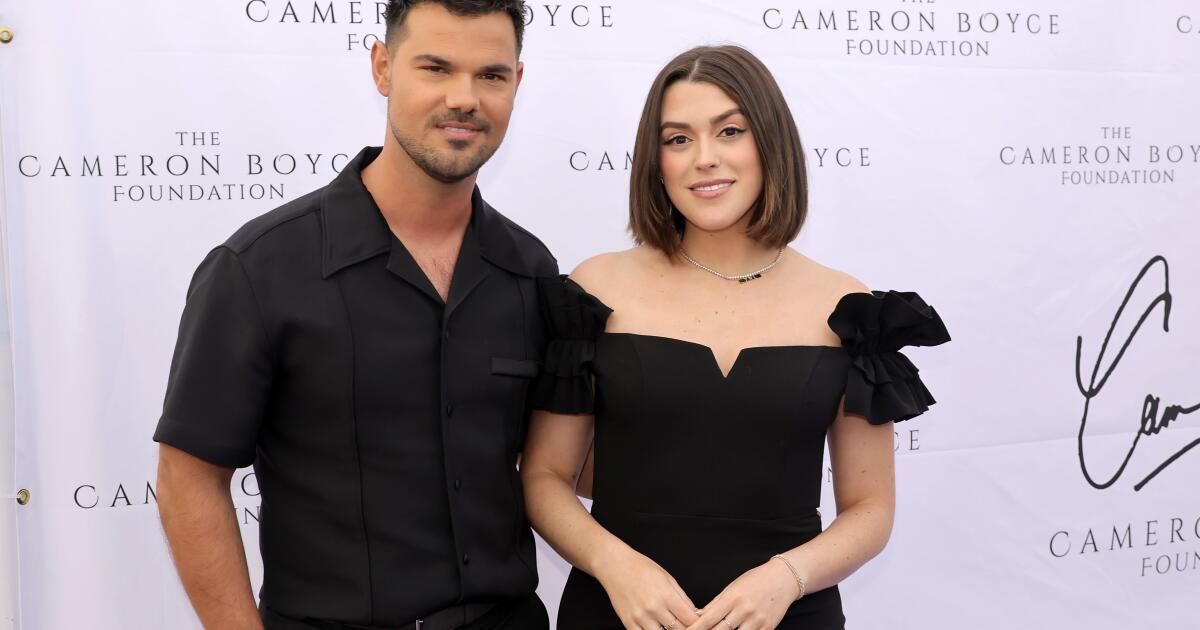
The two Taylor Lautners announce a baby Lautner is on the way

Florida High School Football Rankings: Top 25 teams – Oct. 21

How old is Bo Nix? What to know about Oregon quarterback ahead of 2024 NFL Draft

Cleary's 21 help Le Moyne down Central Connecticut State 69-64 in OT

99th annual Pony Swim held in Virginia

Indiana Members Credit Union announced as new anchor tenant at Bottleworks District

US diplomat Marco Rubio denounces settler violence, tolls in Hormuz strait

Iran-linked hackers have breached FBI Director Kash Patel’s personal emails | CNN Politics

Live: CPAC 2026 Day 2

Video: Will ICE Change Under Its New Leader?

DHS shutdown breakthrough comes at cost for Republicans as funding fights nears end
-

 Detroit, MI1 week ago
Drummer Brian Pastoria, longtime Detroit music advocate, dies at 68
-

 Movie Reviews1 week ago
‘Youth’ Twitter review: Ken Karunaas impresses audiences; Suraj Venjaramoodu adds charm; music wins praise | – The Times of India
-

 Sports6 days ago
IOC addresses execution of 19-year-old Iranian wrestler Saleh Mohammadi
-

 New Mexico5 days ago
Clovis shooting leaves one dead, four injured
-
 Business1 week ago
Disney’s new CEO says his focus is on storytelling and creativity
-

 Technology5 days ago
YouTube job scam text: How to spot it fast
-

 Tennessee4 days ago
Tennessee Police Investigating Alleged Assault Involving ‘Reacher’ Star Alan Ritchson
-

 Texas1 week ago
How to buy Houston vs. Texas A&M 2026 March Madness tickets