Ohio
AG sues Columbus City Schools for breaking Ohio law by not busing non-public school students

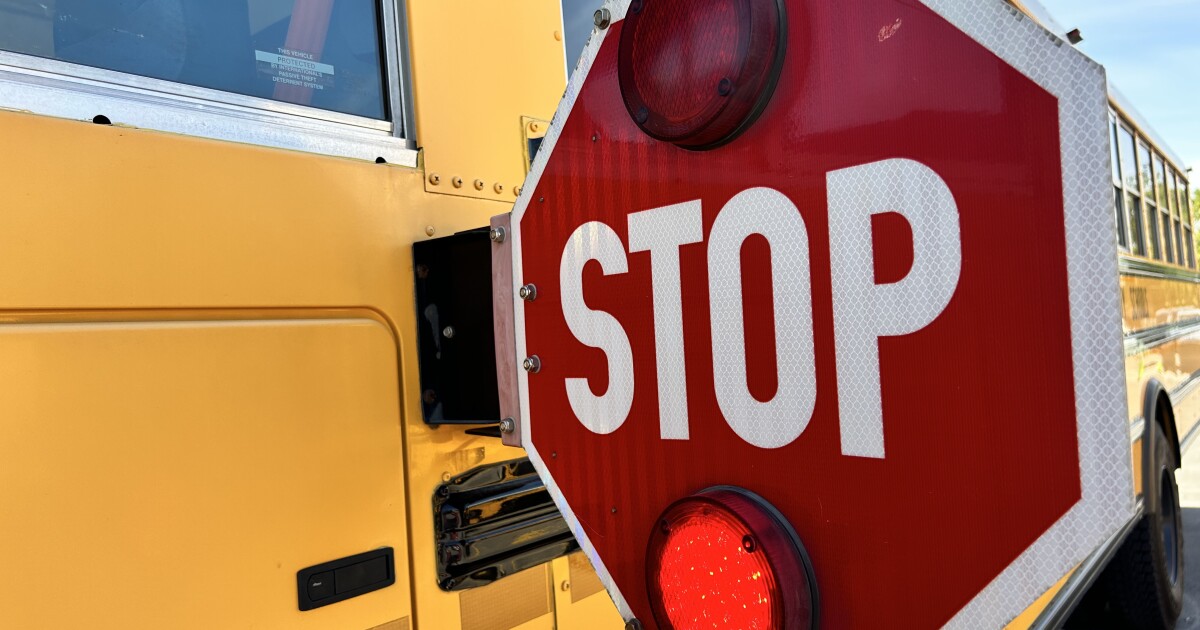
Republican Attorney General Dave Yost filed a lawsuit against the Columbus City Schools after warning earlier in the week it must resume busing private and charter school students or it will be breaking the law.
It’s the combination of more families using taxpayer-paid vouchers to send their kids to other schools along with a bus driver shortage that’s been going on for four years.
Yost said the district has “blatantly failed to comply” with state law requiring public school districts to transport both their students and those in the district limits who are attending private or charter schools. The lawsuit said the district has declared around 1,380 students impractical to transport based on six factors the district approved to determine eligibility.
“Students deemed impractical to transport and their student families have been denied the freedom of choice of educational institution,” Yost wrote in the lawsuit. “Moreover, many families have been forced to endure financial hardships to acquire the transportation for their children that the Columbus School Board has refused to provide.”
District said state law allows its actions
The district said in a statement that it “believes its actions are consistent with the laws promulgated by the General Assembly and is complying with its legal obligations to transport students.” The statement added that Yost’s lawsuit infringes on the districts right to make ineligibility determinations, it attempts to circumvent the authority of legislators who passed the ineligibility law and that it’s “also an infringement upon the equal rights of public school districts and community or nonpublic school parents/guardians to due process.”
The district is transporting 37,000 kids to 113 Columbus City Schools buildings and 9,000 kids to 167 private and charter school buildings.
Columbus City Schools executive director of transportation Rodney Stufflebean said the district condensed and combined routes, brought in contractors, and tried to hire more drivers. But he said the district also had to consider the state law on ineligibility.
“We look at the resources that we have through the legislature and things of that nature and the tools and the rules and the guidelines in the Ohio Revised Code that gives us ways to combat the shortage of drivers,” Stufflebean said. “We had to start using those as part of our tools to efficiently route for the students that we are 100% obligated to provide transportation for.”
The district has a little over half the bus drivers it did four years ago. The district is paying some parents to transport their kids or put them on public transit. But Yost said in the lawsuit that money won’t go out till the end of the school year, and some families “have been forced to resign their jobs or take other actions that jeopardize their jobs in order to provide their children the transportation that the Columbus School Board has refused to provide.”
Impact of vouchers on the case
Yost suggested in the suit that the district is trying to force students to leave those non-public schools. He cited comments from Columbus Board of Education member Brandon Simmons, who suggested struggling families choose to send their kids to Columbus City Schools instead.
“Multiple private and charter schools are faced with huge declines in enrollment and attendance because of students’ inability to find transportation. These declines in enrollment and attendance equate to declines in funding and threaten the continued viability of these institutions,” Yost wrote. “The Columbus School Board’s actions, therefore, threaten the competitive vigor of Ohio’s markets for educational services for K-12 students.”
The school bus driver shortage has been going on for years, and those in public education say the increase in the use of vouchers has only added to the problem.
“A lot of the laws and legislation are from days passed when the environment of school transportation looked far different,” Stufflebean said. “What we need to do as a system is sit back, look at this together as a whole, take input on what we’re seeing and how we’re dealing with this. And let’s create some some legislation and laws that put us in the right direction to be successful as a group, and not penalizes for things that we have no control over.”
A survey of districts done for the Ohio School Boards Association revealed around 7% report being fully staffed with an adequate number of substitute drivers. Nearly a third of districts need subs and extra trips to transport all students. In about 13% of districts, office staff and mechanics are driving regular routes. And about 9% of districts say no solution is working.
The lawsuit was filed in the Ohio Supreme Court.

Ohio
No. 9 Penn State men’s lacrosse stays perfect in Big Ten play, beats No. 6 Ohio State on the road

Penn State notebook | Men’s lacrosse coach Jeff Tambroni talks UNC loss, upcoming Ohio State matchup
Penn State is trying to build momentum as it has entered Big Ten play. The squad has won thr…
Submit a Letter to the Editor
If you’re interested in submitting a Letter to the Editor, click here.
Submit
Send Letter to the Editor
googletag.cmd.push(function() {
googletag.display(‘ad-1563088’);
});

Aaron Churchill is the Ohio research director for the Thomas B. Fordham Institute, an education policy think tank based in Columbus.
In November, the Ohio Senate unanimously passed math reforms that would help a generation of struggling students. House lawmakers should send that excellent package known as Senate Bill 19 to the governor’s desk post haste.
Math difficulties start early for many Ohio students. Last year, 45,000 third graders, or 36% statewide, fell short of proficiency on the state math exam. These youngsters had difficulty solving basic arithmetic and measurement problems. Without such skills, big trouble lies ahead for them.
Meanwhile, even larger percentages of high schoolers fare poorly in this subject. On last year’s algebra I state exam, 53,000 students – 41% of test takers – did not achieve proficiency, while a staggering 72,000 students (57%) fell short in geometry.
These failure rates are unacceptable. Students should not be left to struggle with the routine math needed to manage their personal finances, bake a cake or do a home repair. Nor should they lack the critical thinking, data interpretation and problem solving skills that are demanded by today’s employers and essential to career success.
Ohio must help more students gain fluency in math. Senate Bill 19 does this in the following ways.
First, it supports students with math deficiencies. The bill would require schools to provide math interventions to students scoring at the lowest achievement level (known as “limited”) on state tests. Importantly, schools must engage a child’s parents to create an individual improvement plan that outlines the interventions and how progress will be monitored.
Second, the bill promotes strong math curricula. The Ohio Department of Education and Workforce would be tasked with reviewing math materials and establishing a high-quality list. With dozens of programs and textbooks on the market – some far better than others – this vetting process would aid school districts in finding the best curriculum for their students.
Third, it asks colleges of education to better prepare elementary teachers. Research from the National Council on Teacher Quality shows that teacher training programs often lack serious math content, especially in the elementary grades, leaving teachers ill-prepared for effective instruction. To help address the problem, the bill mandates that prospective educators pass the math section of the state licensure test to teach the subject, something that is not presently required.
Fourth, it gives high-achieving math students a boost. Traditional course placement practices rely on teacher and parent referrals, which tend to overlook economically disadvantaged students who excel in math. Yet, as a recent Fordham Institute study found, access to advanced coursework is critical to high-achieving, low-income students’ college prospects. Through automatic enrollment provisions, Senate Bill 19 would ensure that all high achievers are placed in challenging math courses, including algebra I in eighth grade.
Some may view Senate Bill 19 as burdensome on schools. But the need for significant improvement in math is urgent and the reforms are commonsense. Students struggling in math ought to get help. Schools should use the best-available textbooks and materials. Teachers should know math before they teach it. Schools must push high achievers to reach their full potential.
Math and reading are the academic pillars that support students’ long-term success as well as the state’s economic growth. Thanks to the leadership of Gov. Mike DeWine, Ohio’s Science of Reading initiative is off to a strong start and promises stronger literacy statewide. It’s now time for policymakers to roll up their sleeves and help students get better at math. Their futures – and the state’s – are at stake.
Aaron Churchill is the Ohio research director for the Thomas B. Fordham Institute, an education policy think tank based in Columbus.


Amanda-Clearcreek honors Ohio Air National Guard member Capt. Seth Koval
Amanda-Clearcreek honors Ohio Air National Guard member Capt. Seth Koval
The remains of three Ohio airmen who were killed in the crash of their KC-135 refueling plane in Iraq earlier this month will be returned this weekend, according to a family member of one of the deceased.
The airmen, identified as Master Sgt. Tyler Simmons, 28, of Columbus; Capt. Curtis Angst, 30, of Wilmington, and Capt. Seth Koval, 38, of Stoutsville, will be brought back March 29 to Rickenbacker Air National Guard Base near Columbus, said Charles Simmons, Tyler’s father.
“Tyler will have a hero’s welcome, because he is a hero,” said Charles.
The Columbus Division of Police will be involved in the funeral procession when the airmen’s remains are transferred from the airport to funeral homes, said Columbus police Sgt. James Fuqua. That will take place between 1 p.m. and 2 p.m. March 29, said Fuqua.
The airmen’s remains first arrived back in the U.S. on March 18 with a dignified transfer taking place at Dover Air Force Base in Delaware.
Curtis, Angst, and Simmons were members of the 166th Air Refueling Squadron connected to the 121st Air Refueling Wing based at Rickenbacker Air National Guard Base in Columbus.
The airmen, as well as three other servicemembers, died on March 12 when their KC-135 tanker crashed in western Iraq during a mission in support of Operation Epic Fury in Iran. The cause of the crash, which occurred in friendly airspace, has not been publicly identified. U.S. Central Command has said the incident did not involve hostile or friendly fire, and military experts have theorized the crash may have been the result of a collision with a second KC-135 that sustained heavy damage to its tail fin but landed safely at an airport in Tel Aviv, Israel.
Reporter Bethany Bruner can be reached at bbruner@dispatch.com.
Reporter Shahid Meighan can be reached at smeighan@dispatch.com, at ShahidMeighan on X, and at shahidthereporter.dispatch.com on Bluesky.

At this point, Paul McCartney might play your birthday party

They transformed a historic bar into a fantasy forest for all of L.A.’s witches

Commentary: Goodbye, Border Patrol bogeyman Gregory Bovino, and good riddance

High school baseball and softball: Saturday’s scores
The EU's recipe for trade deals : easy on beef, tough on wine

Florida High School Football Rankings: Top 25 teams – Oct. 21

How old is Bo Nix? What to know about Oregon quarterback ahead of 2024 NFL Draft

Cleary's 21 help Le Moyne down Central Connecticut State 69-64 in OT

99th annual Pony Swim held in Virginia

Indiana Members Credit Union announced as new anchor tenant at Bottleworks District
The EU's recipe for trade deals : easy on beef, tough on wine

Photos: ‘No Kings’ protests across the country

Jeffries declines to break with indicted Democrat after ethics panel’s guilty verdict

Hundreds of thousands march through London in stand against the far right

2 students killed, 7 other people injured in Tennessee bus crash during school field trip
-

 Sports1 week ago
IOC addresses execution of 19-year-old Iranian wrestler Saleh Mohammadi
-

 New Mexico6 days ago
Clovis shooting leaves one dead, four injured
-

 Tennessee5 days ago
Tennessee Police Investigating Alleged Assault Involving ‘Reacher’ Star Alan Ritchson
-

 Technology7 days ago
YouTube job scam text: How to spot it fast
-

 Minneapolis, MN3 days ago
Boy who shielded classmate during school shooting receives Medal of Honor
-

 Texas1 week ago
How to buy Houston vs. Texas A&M 2026 March Madness tickets
-

 Science1 week ago
Record Heat Meets a Major Snow Drought Across the West
-

 Politics1 week ago
Schumer gambit fails as DHS shutdown hits 36 days and airport lines grow