North Dakota
North Dakota’s future goes beyond oil and gas industry


I am an outfitter, and although our company guides mountain bike trips instead of hunting buffalo, when we bring folks from all over the country to the North Dakota grasslands, we are keeping alive the rich history of the region.
North Dakota is where Theodore Rossevelt’s relationship with the great outdoors was formed. When personal tragedy struck, Roosevelt turned to the rainbow-colored Badlands, and it is this special place that is credited with his lifelong respect for America’s public lands.
As Roosevelt’s career took off, he gave back to nature by reminding us that land in its natural state has inherent value. The idea that we should be wise about how we harvest resources from the earth is what created the National Park system and set the stage for all Americans to look beyond our current needs to the needs of future generations.
Today, oil and gas is a major economic driver for the North Dakota economy. The Bakken oil field is the home of the Theodore Roosevelt National Park and the 144 mile long
Maah Daah Hey
bike trail. Right now these important recreation assets and cultural treasures are coexisting with extensive oil production all around them.
By careful placement of well pads and access roads there is an opportunity to maintain the beauty and natural experience provided by both the National Park and the trail.
The Maah Daah Hey trail is only a small part of the region’s economy today, but it stands to grow in importance in the future. Many communities that once depended on resource extraction have now fully pivoted to recreation. The quality of life that outdoor access provides has brought enduring prosperity to former mining and timber towns in every western state, bringing both visitors and business investment.
However, the
recently proposed MT/Dakotas Q3 oil/gas lease sale
includes two parcels that are on the boundary and in the viewshed of the North Unit of Theodore Roosevelt National Park. These proposed parcels are also near the Maah Daah Hey Trail.
In my home town of Moab, Utah, when parcels on the world famous Slickrock Bike and OHV Trail and the campgrounds near Canyonlands National Park were nominated to be leased, businesses and residents spoke up and pointed out that diminishing these places would be a real threat to the Moab economy.
When uranium mining in Moab declined it was exactly these places that allowed Moab to survive and prosper. The people of North Dakota should have the same opportunity.
Senator Daines of Montana disagrees. He recently introduced a bill that would force all parcels on every available acre of public land to be leased, even though oil and gas production in the U.S.
hit a record high in 2024
and Bloomberg predicts that a
record glut will follow shortly.
Plus, the latest data from the Bureau of Land Management (BLM) shows that only
50% of lands leased for oil and gas have actually been developed
, leaving an extensive stockpile of existing leases ready to drill right now.
Daines’ bill is bad for both the oil and gas business and the recreation industry. Land managers will be forced to offer all kinds of parcels no one has asked for, local interests will be silenced, permits to drill will be delayed, and he will be dooming some communities to little, if any, economic prospects when demand for oil peaks, which
Goldman Sachs predicts will be in 2034
. Anyone with a 10-year-old knows that 2034 is right around the corner.
The Theodore Roosevelt National Park and Dakota National Grasslands are owned by all Americans and the bottom line is that market forces are what drive economies, not politicians. Senator Daines will not be able to force private developers to drill or even bid on leases, making his efforts to upend the oil and gas leasing system futile.
Instead of throwing out the baby with bathwater, the current leasing system should be maintained and land managers should continue to consider other important land use needs, starting with the deferral of these two parcels.
Even though Daines is prepared to ignore North Dakota’s heritage, some of us can imagine a future for the Dakota Badlands beyond oil and gas — something we learned from Teddy Roosevelt himself.
Ashley Korenblat is CEO of Western Spirit Cycling, a North Dakota outfitter.



North Dakota
Today in History, 1975: Earthquake rattles portions of Minnesota and the Dakotas, including Fargo-Moorhead

On this day in 1975, a moderate earthquake centered near Morris, Minnesota, shook parts of North Dakota, Minnesota and South Dakota, startling residents but causing no major damage or injuries.
Here is the complete story as it appeared in the paper that day:
Earth Tremor Felt Across Wide Area Including F-M
An earth tremor at 9:56 a.m. today was widely felt in the Fargo-Moorhead area as well as other parts of North Dakota, Minnesota and South Dakota, but the National Weather Service here said it had no reports of damage.
The tremor lasted from two to five seconds, Keith Blessum of the Weather Service said, and ignited telephone reports from a wide area.
The earthquake measured 5.0 on the Richter Scale. Waverly Person of the National Earthquake Information Center in Denver, Colo., said: “The earthquake was moderate and was centered in the Morris, Minn., area. It could have caused much damage in a heavily populated area.”
The quake also was felt in northwestern Iowa. Carl Stover of the Earthquake Information Center said it affected an area 300 miles long and 180 miles wide in four states. He said the exact center of the quake was 10 miles west of Morris.
Person said the earthquake that struck California’s San Fernando Valley in February 1971, killing 54 persons and causing millions of dollars in property damage, measured 6.5 on the Richter Scale.
There were no injuries reported, but authorities in several communities in Minnesota and North and South Dakota reported that residents were startled, buildings shook, dishes rattled and books fell off shelves. Some residents in Alberta, Minn., and Wheaton, Minn., also reported cracked foundations.
Among the first to report locally was Mrs. Paul Dutt, 909 27th St. N., Fargo, who told the Weather Service pictures on the walls moved and a vase moved across the top of the television set.
Marjorie Henderson, who lives on a farm between Enderlin and Lisbon, N.D., reported that the house shook and windows rattled during the tremor, while Mrs. Wesley Belter, who lives south of Casselton, N.D., said that she and four neighbors had similar experiences.
Mrs. Earl Ernst, who lives eight miles east of Wolverton, Minn., also reported that the walls of her trailer home shook and dishes rattled.
Other reports received by the Weather Service at Hector Airport here were from Hankinson and Wahpeton, N.D., and Breckenridge and Ottertail, Minn.; Milbank, S.D., White Rock Dam on the South Dakota border and Canby, Minn.
The earth tremor shook much of northeastern South Dakota and parts of southeastern North Dakota and western Minnesota but apparently caused no injuries, the Associated Press reported.
Donald Johnson, Codington (S.D.) County Civil Defense Director, said the strongest tremors were felt in the South Shore area, about 12 miles northeast of Watertown.
Johnson said a school was evacuated in South Shore, but there were no injuries or major damage reported.
A University of Minnesota professor said that part of that state has a history of minor earthquakes, with about half a dozen reported since the mid-1800s.
Residents in the Willmar, Alexandria, Morris and Long Prairie areas all felt the tremor. It hit about 9:55 a.m., and lasted five to 10 seconds.
No major damage was reported, although the tremor startled many people and shook household furnishings. Some residents in Alberta, near Morris, reported cracked foundations.
Dr. Harold Mooney, professor of geophysics at the University of Minnesota, estimated the tremor would have measured 4 or 4.5 on the Richter Scale. Mooney’s seismograph wasn’t operating when the tremor struck, and he said his was the only such measuring device in the area.
“The motion of a fault in the western part of the state sent out seismic waves at thousands of feet per second, and that’s what the people felt,” Mooney said.
“There is a history of earthquakes in that area, so this one was not without precedent.”
The most recent was near Alexandria in 1950, he said. The most severe was near Brainerd in 1917; that one broke some windows and knocked things off shelves.


President Trump traveled to North Dakota on Wednesday to visit the Theodore Roosevelt Presidential Library before its official opening on Saturday.
“He had a freakin’ wild life,” Trump told an audience at a Western-themed amphitheater, the Associated Press reported. “He didn’t want to be quiet. He wanted to be great.”
The library is expected to be a major source of tourism in rural western North Dakota.
-The Hagstrom Report

(North Dakota Monitor) –BISMARCK, N.D.– A West Fargo attorney will be the next member of the North Dakota Ethics Commission.
The Ethic Commission selection committee on Tuesday named Lisa Edison-Smith to fill an open position on the five-person commission.
Edison-Smith will replace Ron Goodman, who is retiring. Her term will expire in August 2027.
Edison-Smith is an employment and labor attorney with the Vogel Law Firm but plans to retire by the end of the year, according to a questionnaire she filled out for the selection committee. She also has served as a mediator.
She is a graduate of North Dakota State University and the Hamline School of Law.
Senate Majority Leader David Hogue, one of three members of the selection committee, said the committee was impressed with her resume and her interview.
“She made it clear that she’s an independent thinker and she’s not afraid to lead, which includes the ability to dissent,” Hogue said. “So to me, that was important.”
In her questionnaire answers, Edison-Smith said the commission should not usurp the Legislature’s lawmaking authority but adopt rules and conduct investigations in accordance with state law.
She also said it is important for Ethics Commission staff to review “facially deficient or frivolous complaints” and for the commission to dismiss those cases in 60 to 90 days.
The other finalist was North Dakota Insurance and Securities Department attorney Garrett Bryan.
The selection committee, composed of Gov. Kelly Armstrong, Hogue, R-Minot, and Senate Minority Leader Kathy Hogan, D-Fargo, also recently named Burleigh County Sheriff Kelly Leben to a spot on the commission.
The Ethics Commission’s duties include adopting ethics rules, investigating alleged violations and issuing advisory opinions to help public officials navigate ethical issues. They are paid a stipend for every day they meet, plus reimbursement for travel.
North Dakota voters in 2018 passed a measure to establish the Ethics Commission.
-
World6 minutes ago
AI notetakers promise easy meeting recaps, but some professionals question their use
-
Culture48 minutes ago
Which Version of the ‘Odyssey’ Should You Read?
-
 Lifestyle51 minutes ago
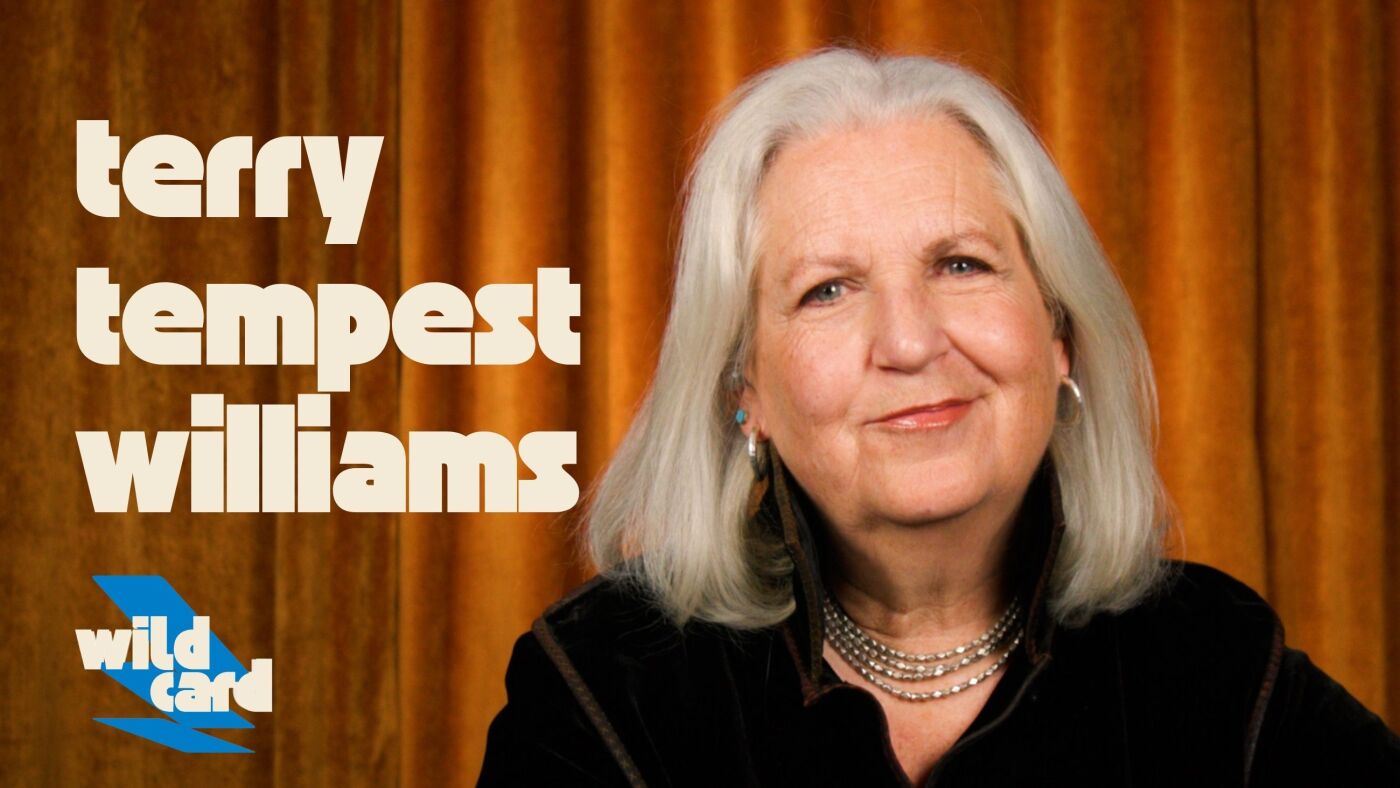
Terry Tempest Williams on why women with big ideas get labeled ‘crazy’ : Wild Card with Rachel Martin
-

 Technology1 hour ago
Google’s Nest Thermostat has hit its best price of the year
-

 World1 hour ago
Argentinian flight instructor jumps to death from plane, 22-year-old student forced to land alone
-

 Politics1 hour ago
Omar’s disclosures erased millions, leaving her with potential negative net worth. She won’t explain why.
-

 Health1 hour ago
Dr Oz links obesity to chronic disease surge, says GLP-1s can ‘jumpstart’ better health
-

 Sports1 hour ago
Pirates star pitcher makes unfortunate history after being taken out in middle of perfect game bid


