North Dakota
Franek provides example for other North Dakota wrestlers to follow


IOWA CITY – University of Iowa’s Jared Franek has said representation matters.
But, growing up in Harwood, N.D., and attending West Fargo High School, Franek didn’t have many examples of wrestlers blazing a trail from his area to the NCAA Division I level. He understands the impact he could have, filling that role for young wrestlers, especially from his home state.
“It’s always been super important for me,” Franek said during the team’s weekly media availability Tuesday at Carver-Hawkeye Arena. “Bigger than wins and losses is inspiring the next generation and trying to live the right lifestyle. Be a good example on and off the mat.”
Franek has produced a successful college career as a three-time NCAA qualifier and an All-American. He transferred to Iowa this season and has been a fixture in the top five of national rankings at 157-pounds.
No. 5 Franek will close the regular season when No. 4 Iowa faces No. 2 Oklahoma State Sunday at Gallagher-Iba Arena in Stillwater, Okla.
“Everyone of us has a good match, a big match,” said Franek, who is expected to wrestle No. 10 Teague Travis. “I’m excited. Nothing really changes in the approach besides being ready and continuing to make those little improvements and get ready for March.”
North Dakota hosts one of the nation’s top age-level freestyle and Greco-Roman tournaments – Junior Nationals in Fargo, N.D. The state doesn’t churn out a lot of NCAA D-I talent.
Franek was born after the storied competitive careers of Terry and Troy Steiner, who were from Bismarck, N.D. Terry was a three-time All-American and 1993 NCAA champion for the Hawkeyes and legendary coach Dan Gable. His twin brother, Troy, was a four-time All-American, two-time national finalist and 1992 NCAA champion.
Despite being before his time, Franek was exposed to their careers and accomplishments. He was inspired to be like them and was influenced by stories of their work ethic.
“I heard a lot of stories about them when I was younger,” Franek said. “They didn’t know much about wrestling and their first few matches they got beat up. It’s kind of crazy what hard work and dedication did for them.”
Former Minnesota three-time All-American and Big Ten Conference finalist Scott Schiller was much closer to his home and his age. Schiller also attended West Fargo and they were family friends.
“Scott Schiller was a really good example on and off the mat for me,” Franek said. “My dad grew up with his dad, so I got to know him pretty well. He was a class act on and off the mat. A lot of the way he approached the sport is the way he did it.
“Those were some good role models for me, growing up.”
Franek has produced a successful college career as well. He reached the round of 12 at two straight NCAA Championships and made placed fourth last year for North Dakota State.
As he contends for a national title and a second All-American finish, he wants to be a positive influence that might make a difference in an aspiring athlete. Franek has encouraged wrestlers at various camps and clinics and why he obliges young fans with autographs and pictures.
Those moments could propel a younger wrestler toward success, regardless of whether they reside in Iowa, North Dakota or elsewhere.
“Taking the time out to do that stuff is really important because at one point we were all that kid, wanting to achieve those goals and who knows what impact you might have,” Franek said. “That might be just enough to get a kid into it and they might have a great career out of it.”
Franek owns a 19-3 record, giving him 111 career victories. He immediately slid into the Hawkeyes lineup, climbing as high as No. 2 in the national rankings.
Franek has demonstrated stinginess in matches, allowing just 3.04 points per match. He is coming off a 17-point outburst in a technical fall over Wisconsin’s Luke Mechler last Sunday.
“It was big,” Franek said. “That’s how we want to wrestle. That’s how the guys on the team want to wrestle. Score points and dominate. It was good to get that flow back a little bit. I had a couple matches where I wasn’t scoring much, so get those points on the board and look to keep building that momentum.”
Iowa Coach Tom Brands said he possesses a strong “wrestling IQ” that likely blossomed under his dad, Shawn, a wrestling coach. Brands said Franek is not content or complacent, looking to consistently improve.
“I know that he knows there’s work to do,” Brands said. “That’s always good. He doesn’t rest. He’s ambitious. He’s energetic. He loves a challenge. He has thick skin.
“I wouldn’t say he’s never satisfied, but he knows that there’s always work to do.”
Franek described wrestling as a sport that can’t be perfected. Some aspect can always be tweaked, evolved and bettered. He was raised with that mentality, which is enhanced by a quest to be the best.
“I was always climbing for the next guy,” Franek said. “I was never the best at any age group. For me, that’s been a big motivation.
“I think there’s a lot left in my wrestling game to piece together here before March. I’m looking to keep improving on that and peak when it’s time.”
Comments: kj.pilcher@thegazette.com



MINOT, N.D. (KMOT) – We now know the entertainers who will round out this year’s North Dakota State Fair grandstand lineup.
In what is a first for the state fair, Zedd will put on an EDM show at the grandstand on Friday, July 24. He’s an award-winning artist and DJ, known for hits like ‘Clarity’ and ‘The Middle.’
The show will feature immersive production, sound and visuals. Tickets will be just over $58, including fees.
The fair wraps up on Saturday, July 25, with this year’s ‘Turn Up ND’ show. It features TI, Da-Baby and Waka Flocka Flame.
All three have made a name for themselves in the trap and hip-hop music genres.
Tickets for this show are just over $78, including fees.
So here’s a look at the full lineup, which is packed with some major stars, featuring Alex Warren, Jon Pardi, Jessie Murph, Niko Moon and Zach Top.
The fair will hold two days of the popular MHA Indian Horse Relays on July 20 and 21.
For information on tickets, dates and more, go to ndstatefair.com.
Copyright 2026 KFYR. All rights reserved.

Darlene Kay Struble was born April 11, 1946 in Valley City, ND to Frank and Ruby (Satreaas) Klima. She grew up in LaMoure, ND and graduated from LaMoure High School 1964. After graduation, Darlene continued her education at North Dakota State School of Science in Wahpeton before completing her LPN training in Grand Forks.
Darlene married the love of her life, Charles Struble, on October 25, 1969 at Trinity Lutheran Church. Together, they made their home in Jamestown where she began her career in the OB department at Jamestown Hospital. Her dedication to caring for others continued throughout her professional life, later leading her to Dakota Clinic in Jamestown. Her work was an extension of her compassionate spirit, and she touched many lives until her retirement in 2009.
She filled her days with many loves; her family above all, but also the quiet joys of gardening, flowers, sewing, crafts, and scrap booking. She had a special gift of preserving memories, and spent countless hours gathering family history. Darlene started her day at the Depot Cafe nearly every morning. It was a simple tradition, but one she shared with her children, friends, and eventually grandchildren. Not only were Depot mornings filled with love and laughter, but an abundance of Mickey Mouse shaped pancakes.
Darlene passed away peacefully on March 23rd 2026 at Eventide in Jamestown, surrounded by the love of her family. She leaves behind her husband Chuck, her sons; Cory (Deb) Struble and Dave (Leslie) Struble, two sisters; Linda (Gary) Kraft and Roberta (Karl) Wilhelm, six grandchildren; Jayden (Darsh), Allie, Jonah, Grace, Evyn, and Owen, and seven nieces and nephews. She has been reunited with her parents, her daughter, Tiffiney Dick, and her sister, Mary Lee Guffy.
In lieu of flowers, memorials are preferred to Jamestown Regional Medical Center Foundations, specifically to the OB ward.
Memorial Service- 3:30 PM Saturday, March 28, 2026 at Haut Funeral Home in Jamestown, ND, with Pastor Kristi Weber, officiating.
Interment- Highland Home Cemetery, Jamestown, ND (at a later date).

I spent the first day of spring, last Friday, weeding my back yard flower beds. Let that sink in, because this is North Dakota. We have April showers in May, and May flowers in June. We sometimes have snow in June, too. Weeding my tulips in March is a first.
The tulips have been up for a couple of weeks in my south-facing gardens. The six inches of snow last weekend did not deter their enthusiasm. According to the South Dakota State University Extension Service, tulips close to our shared border usually begin to appear in late March and early April. Mine are early risers this year. I blame the switch to Daylight Saving Time.
My yarrow and hollyhocks have been green and growing for four weeks. The yarrow was a little miffed at the one subzero night a week or so ago, but the hollyhocks merely flattened out and took it in stride. Our friends at the South Dakota Extension Service assure me both of those plant varieties normally sprout in mid-May. Maybe the frequent solar storms and northern lights displays have affected them.
Shortly after that subzero stretch in February, which Katie the Wonder Puppy and I called The Degrees of Despair, the pussywillow began to bud. I cut my first bouquet this past Friday the 13th. And did you know the blossoms are called catkins?
That shrub is only a couple weeks early in blooming. Obviously, like all cats, my pussywillow is indifferent to solar storms, the northern lights, and Daylight Saving Time. When its feet get warm enough, it stretches out and basks in the sun. Wild catnip has, however, sprouted near the pussywillow’s trunk. I suspect some deep-rooted drug dependency at work there.
But, weeds? There is wild horseradish marching across my tastefully scattered scoria chips. There is quackgrass strangling daylilies and yarrow. There are weeds of unknown name towering over my tulips. Actually, I have a name for those weeds, but that name is best kept to myself.
I pulled out one quackgrass clump, and I am pretty sure its far end stretched all the way to Gladstone. It was like pulling one of those string strips from the top of a fifty-pound sack of sunflower seeds. Not that I regularly buy fifty-pound bags of sunflower seeds for the neighborhood birds, or anything.
I was feeling pretty smug last Saturday after I finished all my weeding. I figured I would need to start mowing in a few more days. I began looking at seed catalogs and dreaming of Big Boy tomato plants.
Late Saturday evening Katie and I went outside to take in the fresh air. It was snowing. Gotta love North Dakota.
Jackie Hope is the longest running Dickinson Press contributor and columnist. Hope’s Corner is a weekly humorous column with a message of hope.

Another state bans ‘gas station heroin’ as officials warn of deadly risks

Tiger Woods involved in rollover crash in Florida less than 2 weeks before Masters: reports

Fox News AI Newsletter: Family turns down $26M from AI giant to keep farmland

Commentary: How a custody fight over an old dog showed why lawyers should never trust AI to tell the truth
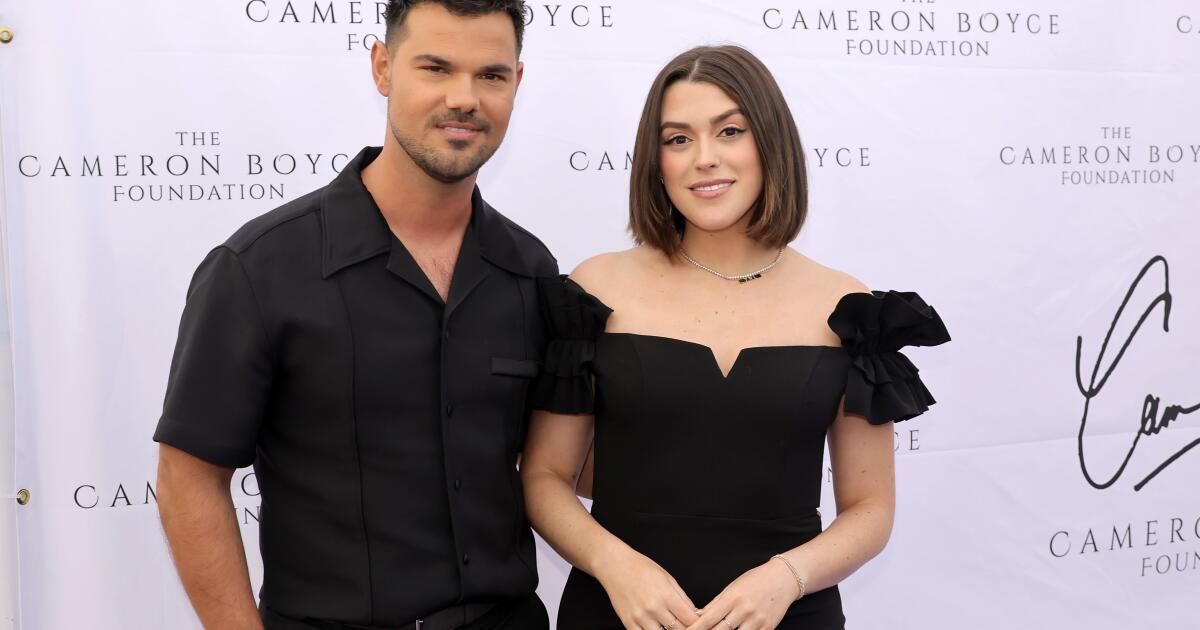
The two Taylor Lautners announce a baby Lautner is on the way

Florida High School Football Rankings: Top 25 teams – Oct. 21

How old is Bo Nix? What to know about Oregon quarterback ahead of 2024 NFL Draft

Cleary's 21 help Le Moyne down Central Connecticut State 69-64 in OT

99th annual Pony Swim held in Virginia

Indiana Members Credit Union announced as new anchor tenant at Bottleworks District

US diplomat Marco Rubio denounces settler violence, tolls in Hormuz strait

Iran-linked hackers have breached FBI Director Kash Patel’s personal emails | CNN Politics

Live: CPAC 2026 Day 2

Video: Will ICE Change Under Its New Leader?

DHS shutdown breakthrough comes at cost for Republicans as funding fights nears end
-

 Detroit, MI1 week ago
Drummer Brian Pastoria, longtime Detroit music advocate, dies at 68
-

 Movie Reviews1 week ago
‘Youth’ Twitter review: Ken Karunaas impresses audiences; Suraj Venjaramoodu adds charm; music wins praise | – The Times of India
-

 Sports6 days ago
IOC addresses execution of 19-year-old Iranian wrestler Saleh Mohammadi
-

 New Mexico5 days ago
Clovis shooting leaves one dead, four injured
-
 Business1 week ago
Disney’s new CEO says his focus is on storytelling and creativity
-

 Technology5 days ago
YouTube job scam text: How to spot it fast
-

 Tennessee4 days ago
Tennessee Police Investigating Alleged Assault Involving ‘Reacher’ Star Alan Ritchson
-

 Texas1 week ago
How to buy Houston vs. Texas A&M 2026 March Madness tickets