Missouri
Missouri lawmakers passed 48 bills this year. Here’s a guide to the potential new laws


Missouri lawmakers set their sights on new laws to make it easier for families to score tax credits on private school tuition, raise the minimum pay for teachers and launch new tax breaks for the nuclear weapons industry in Kansas City.
Lawmakers hoped to pass tax credits for child care providers, a resolution making initiative petitions harder to pass and a package of legislation reforming city and county jails.
But this year’s General Assembly session was defined by fighting among factions in the Republican Party amid campaigns for other offices ahead of the November general election. It resulted in a recent low for passing legislation. Lawmakers passed 48 bills total, 28 of which were non-budget bills.
Most potential new Missouri laws are still awaiting a signature, or possible veto, from lame-duck Gov. Mike Parson. Lawmakers come back for a veto session in September before wrapping up for the year.
The Beacon compiled a list of the bills passed by the Missouri General Assembly this year, which could become new Missouri laws.
Business and taxes
Banking and assets
This bill would ensure that breast and cervical cancer screenings are eligible for medical assistance.
The legislation is SB 1359.
Taxation for certain businesses
This bill changes how certain businesses, like partnerships or S corporations, are taxed. The legislation would let shareholders collect a tax credit for income that may be taxed in another state.
The legislation is HB 1912.
Tax exemptions for KC nuclear facility
This bill will grant state and local sales tax exemptions for the expansion of the nuclear weapons facility at the Honeywell-operated National Nuclear Security Administration campus. It produces non-nuclear parts for nuclear weapons.
The legislation is SB 1388.
The Kansas City National Security Campus
/
The Kansas City National Security Campus, Honywell
Business development and tax credits for rural investments
This bill would create a tax credit for some investments made in primarily agricultural businesses in rural Missouri.
The legislation is SB 802.
Another bill would establish the Regulatory Sandbox Act, which will identify state regulations that could be waived in the first years of establishing a business. It would also create an Office of Entrepreneurship to promote small businesses.
The legislation isSB 894.
Local government
Changes to local governance and property rights
This bill outlines a number of changes to property rights in Missouri. Under the legislation, no county or city will be allowed to enforce an eviction moratoriumunless authorized by state law. If a government shuts down a business for at least 14 consecutive days or 30 days total, the city must waive business fees and reduce property taxes for that time. It comes in the wake of government-ordered shutdowns during the pandemic.
The bill would also outline rules to allow property owners to remove people who are illegally staying on or occupying a residential property. It would create a Class A misdemeanor penalty for squatting.
The legislation would also exempt churches and nonprofits from local laws requiring electric vehicle charging stations.
It would also allow counties to establish land banks, which allow for cities to take control of vacant properties. And It would require more transparency for local land banks and create a tax credit program for rehabilitating historic buildings.
The legislation would also bar homeowners associations from prohibiting residents from owning chickens.
The legislation is HB 2062.

Tax credits for seniors
This bill would update a number of provisions included in2023’s property tax freeze for Missourians over 62.
The bill clarifies that Missourians 62 and older who own their homes are eligible for the freeze. It creates more clarity about guidelines counties need to follow.
The legislation is SB 756.
State government
Expanding the powers of the state auditor
This bill would give more powers to the state auditor by allowing the office to audit any local government if an investigation shows the government acted improperly. The bill would apply to fire and ambulance departments and counties and would allow the auditor to launch the audit without first getting voter approval.
The legislation is HB 2111.
Virtual schooling
This bill clarifies language from legislation passed in 2022 relating to Missouri’s virtual schooling program. The bill reworks how the state calculates average daily attendance, state aid to districts that run virtual programs, enrollment policies and accommodating students with disabilities.
Parson has signed this bill, HB 2287, into law.
Raising minimum teacher salary, expanding vouchers, charter schools in Boone County
This bill will raise the minimum starting salary for Missouri teachers to $40,000 and expand a tax-credit scholarship for private schools in Missouri.
Under the legislation, the tax-credit scholarship would give families tax credits for the cost of sending their children to private schools.
The bill did not come with funding for school districts to increase their starting teacher pay, so districts will have to come up with the money themselves.
The legislation will also allow charter schools to open in Boone County.
Parson has signed this bill, SB 727, into law.
Crime, warrants for traffic violations, celebratory gunfire
This bill would make a number of changes to the criminal justice system.
It would raise the minimum age a child can be tried as an adult for certain offenses from 12 to 14. The bill would also make the minimum prison term three years for a first offense of armed criminal action.
If it becomes a law in Missouri, the legislation would prohibit courts from issuing a warrant for arrest over unpaid traffic violations.

Carlos Moreno
/
KCUR 89.3
It would establish a state conviction review unit to investigate claims of innocence within the Missouri Office of Prosecution Services. It would also create a Cyber Crimes Task Force to research and recommend tools to limit cyberstalking and harassment.
It would establish “Blair’s Law,” which raises the penalty for recklessly discharging a gun within city limits. It would also establish “Max’s Law,” which raises the penalty for attacking or killing a police animal. It would also up the penalty for attempting to flee from a law enforcement officer in a high-speed chase.
The bill would put limits on local civilian review boards and create a Public Defender fund within the state treasurer’s office. It would also update some expungement provisions.
The legislation is SB 754.
Broadband incentives
This bill would allow an income tax deduction for federal, state and local grant money to expand broadband throughout Missouri.
The legislation is SB 872.
Efforts to prevent veteran suicide, veterans and military affairs
The bill would require the Missouri Veterans Commission to review a previously passed mental health care plan. After that review, the commission and the Department of Mental Health will be required to make recommendations for procedures, treatment options and any other assistance needed to assist in efforts to prevent veteran suicide.
The legislation is HB 1495.
Another bill would make a number of changes to veterans affairs in Missouri and expand educational assistance for members of the Missouri National Guard.
The legislation is SB 912.
Health care
Blocking funds for Planned Parenthood
This House bill prohibits state dollars from going to abortion providers or their affiliates, namely Planned Parenthood.
Parson has signed the legislation, HB 2634, into law.
Distribution of 340B drugs
This Senate bill prohibits drug manufacturers from blocking or limiting the supply of discounted drugs to pharmacies.
The legislation is SB 751.
Environment
Regulating wastewater and fertilizer storage
This bill would require industrial wastewater, meatpacking sludge or other waste to be regulated by a standard set by the Department of Natural Resources.
It would also require companies to meet design requirements in line with wastewater treatment facilities before they can obtain an operating permit. The bill would also put buffer zones in place between fertilizer storage and any public building or residential areas. It would require groundwater monitoring if storage is in an area that would increase the chance of groundwater contamination.
The legislation is HB 2134.
Blocking a landfill in south KC
This bill would give cities near Kansas City input on a previously proposed landfill site in south Kansas City. Under law, cities within a half-mile radius of a proposed landfill site are able to block a landfill from being built. If signed, the bill would increase the radius to one mile, allowing cities like Lee’s Summit, Raymore and Belton to weigh in and block the landfill.
The bill passed after the city of Raymore agreed to pay over $3.7 million to the landfill developers to allow the legislation to advance, essentially killing the proposed landfill. Gov. Parson signed this bill into law.
The legislation is HB 1751.

Allison Kite
/
Missouri Independent
Ballot measures
Salaries and benefits for law enforcement
This proposed constitutional amendment would allow for levying of costs and fees that support salaries and benefits for current and former sheriffs, prosecuting attorneys and circuit attorneys.
The resolution is SJR 71.
Ranked-choice voting and noncitizen voting
This proposed constitutional amendment would ask voters to approve that only U.S. citizens over 18 can vote in Missouri elections, which is already the law. The amendment would also bar ranked-choice voting in most elections.
The resolution is SJR 78.
Major bills that died
Making it harder to amend the state Constitution
This legislation would have placed a measure on the ballot asking voters to make it more difficult to pass constitutional amendments. Currently, amendments require simple-majority support to pass. If approved by voters, this measure would have required constitutional amendments to be approved by a simple majority statewide plus a majority in five of Missouri’s eight congressional districts.
The legislation would have also barred noncitizens from voting in Missouri elections and prohibited foreign governments from supporting or opposing ballot initiatives. Both are already illegal.
The legislation was SJR 74.
Raising the minimum age for marriage
This bill would have barred Missourians under 18 from getting married. Current law allows Missourians aged 16 and 17 to get married.
The legislation was SB 767.
Child care tax credits
This legislation would have offered tax credits to those who donate to child care providers in Missouri. It would also provide tax relief for businesses that provide or help pay for child care for their employees and provide tax credits for child care providers.
The legislation was HB 1488.
Task force for missing and murdered Black women
This bill would have created a state task force to author yearly a report that includes recommendations and measures ways to address violence against Black women and girls in Missouri.
The legislation was SB 890.
Modifying policies for jails
This bill would have made a number of changes related to city and county jails.
The legislation would have barred jails from restricting access to phone calls and would cap costs for a phone call at 12 cents per minute.
The legislation would have also barred jails from shackling pregnant inmates in their third trimester, except under certain circumstances. The bill would have required county and city jails to develop specific intake policies for pregnant inmates.
The bill would also require voters to approve a sales tax to establish a regional jail district for two or more counties that are right next to each other. It would also allow jails to lease their properties and would allow regional jails to impose a 1% sales tax, up from half a percent.
The legislation was SB 900.
This story was originally published by The Beacon Kansas City, a fellow member of the KC Media Collective.



Missouri
Kansas City, Missouri, City Council voted Thursday to approve the city’s $2.6 billion budget for 2026-27
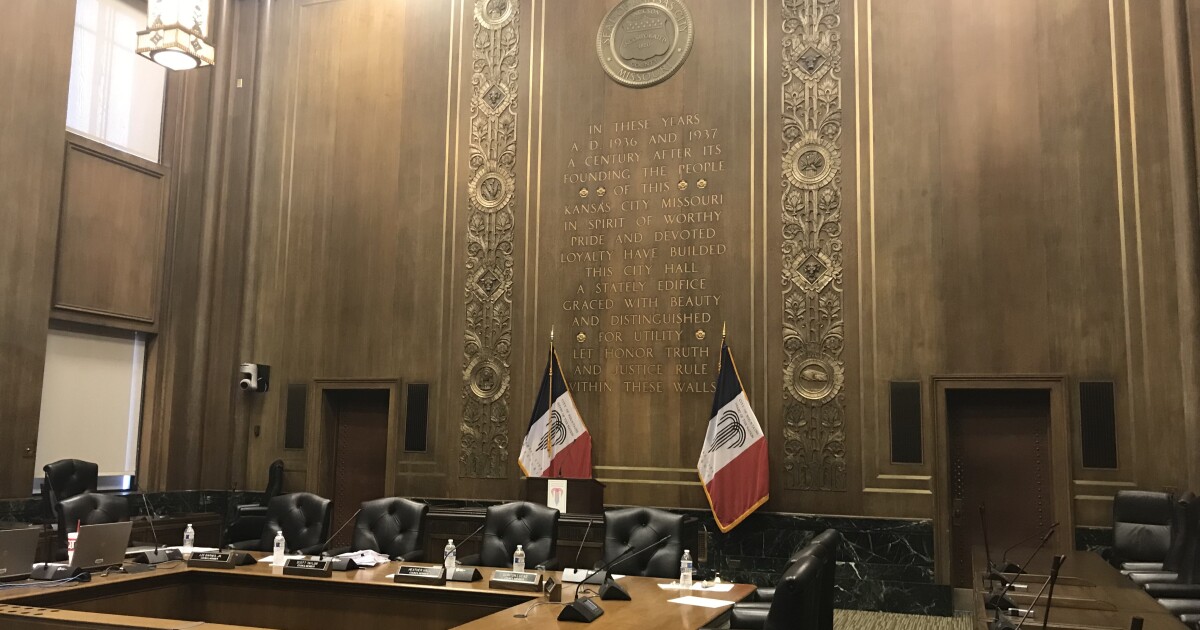
KANSAS CITY, Mo. — The Kansas City, Missouri, City Council voted Thursday to approve a $2.6 billion budget for the city’s fiscal year of 2026-27.
The budget includes $744 million in spending for public safety, including $26.3 million for a new Department of Community Safety and $4.2 million to hire 50 new KCMO Police Department officers, along with 10 call takers and 10 dispatchers.
“Our budget respects the strong fiscal foundation the taxpayers have helped Kansas City build, maintaining a rainy-day fund of over $200 million, increasing road resurfacing, hiring more public safety and city workers, and investing in all Kansas City neighborhoods,” Mayor Quinton Lucas said in a news release from the city. “In a city that can walk and chew gum, we are proud to welcome the world while delivering strong basic services for Kansas City’s families.”
The council voted to spend $83.8 million for the Kansas City Area Transportation Authority to provide bus services, but the KCATA may have to make cuts in bus services even with a $6 million boost in funding from the city.
In addition, the council approved spending $39.4 million for citywide street resurfacing and $1.5 million for tearing down dangerous buildings.
“This budget reflects a collaborative effort across the city, and provides a clear path for Kansas City to keep moving forward with discipline, accountability and a focus on service,” City Manager Mario Vasquez said in the news release. “Thank you to the council for its thoughtful deliberation and input in crafting this budget.”
More information on the fiscal year 2026-27 budget can be found on the city’s website.
—
The Missouri Lottery offers several draw games for those aiming to win big.
Here’s a look at March 25, 2026, results for each game:
Winning Powerball numbers from March 25 drawing
07-21-55-56-64, Powerball: 26, Power Play: 4
Check Powerball payouts and previous drawings here.
Winning Pick 3 numbers from March 25 drawing
Midday: 3-2-0
Midday Wild: 7
Evening: 0-0-5
Evening Wild: 5
Check Pick 3 payouts and previous drawings here.
Winning Pick 4 numbers from March 25 drawing
Midday: 2-6-3-9
Midday Wild: 4
Evening: 9-5-6-8
Evening Wild: 1
Check Pick 4 payouts and previous drawings here.
Winning Cash Pop numbers from March 25 drawing
Early Bird: 07
Morning: 09
Matinee: 04
Prime Time: 14
Night Owl: 07
Check Cash Pop payouts and previous drawings here.
Winning Show Me Cash numbers from March 25 drawing
12-14-22-26-28
Check Show Me Cash payouts and previous drawings here.
Winning Powerball Double Play numbers from March 25 drawing
35-38-41-43-62, Powerball: 08
Check Powerball Double Play payouts and previous drawings here.
Feeling lucky? Explore the latest lottery news & results
Are you a winner? Here’s how to claim your lottery prize
All Missouri Lottery retailers can redeem prizes up to $600. For prizes over $600, winners have the option to submit their claim by mail or in person at one of Missouri Lottery’s regional offices, by appointment only.
To claim by mail, complete a Missouri Lottery winner claim form, sign your winning ticket, and include a copy of your government-issued photo ID along with a completed IRS Form W-9. Ensure your name, address, telephone number and signature are on the back of your ticket. Claims should be mailed to:
Ticket Redemption
Missouri Lottery
P.O. Box 7777
Jefferson City, MO 65102-7777
For in-person claims, visit the Missouri Lottery Headquarters in Jefferson City or one of the regional offices in Kansas City, Springfield or St. Louis. Be sure to call ahead to verify hours and check if an appointment is required.
For additional instructions or to download the claim form, visit the Missouri Lottery prize claim page.
When are the Missouri Lottery drawings held?
- Powerball: 9:59 p.m. Monday, Wednesday and Saturday.
- Mega Millions: 10 p.m. Tuesday and Friday.
- Pick 3: 12:45 p.m. (Midday) and 8:59 p.m. (Evening) daily.
- Pick 4: 12:45 p.m. (Midday) and 8:59 p.m. (Evening) daily.
- Cash4Life: 8 p.m. daily.
- Cash Pop: 8 a.m. (Early Bird), 11 a.m. (Late Morning), 3 p.m. (Matinee), 7 p.m. (Prime Time) and 11 p.m. (Night Owl) daily.
- Show Me Cash: 8:59 p.m. daily.
- Lotto: 8:59 p.m. Wednesday and Saturday.
- Powerball Double Play: 9:59 p.m. Monday, Wednesday and Saturday.
This results page was generated automatically using information from TinBu and a template written and reviewed by a Missouri editor. You can send feedback using this form.

KANSAS CITY, Mo. (KCTV) – Dozens of dispensaries have been ordered to close after Missouri Attorney General Catherine Hanaway said they are selling without licenses.
The AG’s office sent cease-and-desist letters to 33 dispensaries. Of those, 13 are in the Kansas City area, according to information provided by the state.
Each location is accused of selling cannabis or marijuana products without a state license, or selling other products deceptively marketed as marijuana, according to Hanaway.
Hanaway’s office also said testing found some products contained things such as lead, arsenic, and ethanol. They also used deceptive labeling and packaging, including designs that may target children, according to a news release.
Here are the locations named by the AG’s office:
- Big Chiefs Kush Waldo (Kansas City)
- Dr. Smoke (Kansas City)
- It’s A Dream (Kansas City)
- KC Kush (Kansas City)
- Main Smoke Shop KC (Kansas City)
- Mr. Niceguy (Kansas City)
- Prohibition Cannabis (Kansas City)
- Center Smoke Shop (Independence)
- Gray Area Cannabis (Independence)
- Herb Depot (Independence)
- Sacred Leaf (Independence)
- Super E Cig Smoke Shop (St. Joseph)
- Vapor Maven (Cameron)
The letters demand each of the above the businesses stop selling the products in question.
The full letter sent to the businesses is below.
Copyright 2026 KCTV. All rights reserved.

Oklahoma City Comets preliminary 2026 roster

Merkley Announces Additional Oregon Town Halls April 2-4

Pennsylvania-born indie rockers Tigers Jaw return with new album release

A new safety role at Rhode Island College comes into sharper focus after Brown shooting – The Boston Globe

NFL Draft Injury Analysis: Jalon Kilgore, S – South Carolina

Florida High School Football Rankings: Top 25 teams – Oct. 21

How old is Bo Nix? What to know about Oregon quarterback ahead of 2024 NFL Draft

Cleary's 21 help Le Moyne down Central Connecticut State 69-64 in OT

99th annual Pony Swim held in Virginia

Indiana Members Credit Union announced as new anchor tenant at Bottleworks District

Video: Will ICE Change Under Its New Leader?

DHS shutdown breakthrough comes at cost for Republicans as funding fights nears end

Rubio joins crucial G7 talks as Iran war set to dominate second day

A surprise resignation could open the door for an independent to win a Montana Senate seat

Video: Savannah Guthrie Says She Believes Her Mother Was Taken for Ransom
-

 Detroit, MI1 week ago
Drummer Brian Pastoria, longtime Detroit music advocate, dies at 68
-

 Science1 week ago
How a Melting Glacier in Antarctica Could Affect Tens of Millions Around the Globe
-

 Movie Reviews1 week ago
‘Youth’ Twitter review: Ken Karunaas impresses audiences; Suraj Venjaramoodu adds charm; music wins praise | – The Times of India
-
 Science1 week ago
I had to man up and get a mammogram
-

 Sports6 days ago
IOC addresses execution of 19-year-old Iranian wrestler Saleh Mohammadi
-

 New Mexico5 days ago
Clovis shooting leaves one dead, four injured
-
 Business1 week ago
Disney’s new CEO says his focus is on storytelling and creativity
-

 Texas1 week ago
How to buy Houston vs. Texas A&M 2026 March Madness tickets