Missouri
Missouri AG to investigate Christian boarding schools


ST. LOUIS (AP) — Advocates for victims of abuse at Missouri boarding schools on Monday urged the state’s attorney general to launch an investigation, work with local prosecutors and take other steps aimed at stemming the tide of abuse.
Three Christian boarding schools in southern Missouri have shut down since 2020 amid wide-ranging abuse allegations levied by current and former students. Several people affiliated with those schools are facing criminal charges. Advocates who worry that more abuse is going unpunished gathered Monday outside Republican Attorney General Andrew Bailey’s St. Louis office to demand action.
“This is a structural problem,” said David Clohessy, a longtime advocate for abused children and former leader of the Survivors Network of those Abused by Priests. “These are facilities that are remote, independent, private, sometimes for-profit, largely under the radar with little or no scrutiny, state oversight, monitoring or supervision. It’s a recipe for disaster.”
A spokeswoman for Bailey said in an email that the attorney general’s office does not have jurisdiction to prosecute criminal cases, except when appointed as special prosecutor by the governor or a court.
“As a former prosecutor, Attorney General Bailey takes crime very seriously,” spokeswoman Madeline Sieren said, adding that Bailey “has taken substantive action to combat human trafficking where the law allows.”
Amanda Householder, now 33, is among the former students who claimed she was abused. Her story was different than most, though: Her parents, Boyd and Stephanie Householder, owned Circle of Hope Girls Ranch in remote southern Missouri until it closed in 2020 after investigators removed about two dozen girls.
Boyd and Stephanie Householder are scheduled to go to trial in November on a combined 100 charges accusing them of abusing girls at Circle of Hope. Boyd Householder, 74, was charged with 22 counts of having sexual contact, including sexual intercourse, with one girl who was younger than 17 at the time.
Sieren said the Attorney General’s office is handling prosecution of the Householders — proof that Bailey and the office are taking the issue seriously, she said. Three prosecutors are working on the case, she said.
Also, 16 former residents said the Householders frequently restrained them with handcuffs, whipped them with belts, taped their mouths shut and struck or punched them for minor offenses such as singing.
Messages were left with attorneys for the Householders. Phones listed as those of the couple have been disconnected.
Amanda Householder sued her parents, accusing them of beating her and forcing her to impose harsh punishments on other girls at Circle of Hope. She announced Monday that the lawsuit was settled but declined to discuss details.
Amanda Householder said she is forming a new nonprofit aimed at helping those victimized at boarding and reform schools.
“We have to be the voices for kids that are going through what we went through years ago,” Householder said.
Other Missouri facilities operating as Christian boarding schools also have come under intense scrutiny in recent years.
Agape Boarding School in Stockton closed in 2023 after abuse allegations. In 2021, Agape’s longtime doctor was charged with child sex crimes and five employees were charged with low-level abuse counts.
In March, ABM Ministries’ Lighthouse Christian Academy in Piedmont shut down after kidnapping charges were filed against the husband-and-wife owners, who were accused of locking a student in a room. A teacher also was charged with abuse for allegedly injuring a 15-year-old boy while boxing.
For decades, Missouri had among the most lax boarding school regulations of any state in the nation. A 1982 state law gave religious boarding schools free rein and the state no way to monitor how kids were educated. Even the state Health Department had no oversight, including for schools that claimed to address mental health, behavioral and addiction issues.
A new law was adopted in 2021 after extensive reporting from The Kansas City Star found that several faith-based boarding schools, including Agape, relocated to Missouri after being investigated or shut down for abuse or neglect elsewhere.
The new law sets minimum health and safety requirements for boarding schools, which still don’t have to be licensed. It mandates background checks for employees; requires adequate food, clothing and medical care for students; and says parents must be allowed access to their children at any time without prior notice.
Several students have run away from southern Missouri boarding schools in recent years, often claiming abuse. Two 15-year-olds went missing Saturday at a boarding school near Ava but were found safe Monday at a nearby cabin. Messages were left with the sheriff. A school official said it isn’t yet clear what prompted the boys to leave.



Missouri
Missouri bill that would split Jackson County and Kansas City gets little support from lawmakers

A Missouri House committee had its first hearing this week on a proposed constitutional amendment that would split Kansas City and Jackson County upon approval by voters.
The legislation is nicknamed “Jackxit,” a nod to Brexit, the withdrawal of the United Kingdom from the European Union in 2020.
Republican state Rep. Mike Steinmeyer is sponsoring the bill. He said eastern Jackson County voters feel underrepresented in the county government, and this legislation would give them the power to change that.
At the hearing, committee members listened to Steinmeyer’s presentation of the bill before asking questions and sharing their thoughts.
Democratic state Rep. Bridget Walsh Moore compared what the bill proposes to “The Great Divorce” that saw the legal separation of the city of St. Louis from St. Louis County in 1876.
Several committee members criticized a part of the bill that says if it’s signed into law, the question of whether to split the county in two would appear on the Missouri ballot every 10 years.
Moore called it a “never-ending clause.”
“There’s a provision that says every 10 years this has to go back on the ballot, whether you like it or not,” Moore said. “And we’re going to keep voting on it, until you vote the way we think you should.”
Democratic state Rep. Jeff Hales said the bill’s language suggests the question would reappear on the ballot every 10 years until it’s approved by voters.
“Why does it end when it’s approved if the importance and the value here is giving the voters of Jackson County a right to weigh in on their charter and their government?” Hales said.
Steinmeyer said that clause exists to give Jackson County voters the opportunity to weigh in on their form of government.
“It gives them the right to speak and say we want change, or we want to abolish and start over,” Steinmeyer said. “That’s all we’re asking for.”
Democratic state Rep. Ashley Aune questioned how the ballot question would protect the right of voters. Steinmeyer said it protects their right to vote and be heard, specifically on their governance.
Lobbyist Shannon Cooper testified on behalf of the city of Kansas City, the Greater Kansas City Chamber of Commerce and the Civic Council of Greater Kansas City. He said during a public comment period that the bill was “the most befuddling piece of legislation” that he’s had to testify for or against.
Cooper brought up the historic recall election of County Executive Frank White Jr. and said the recall showed the system Steinmeyer is trying to fix with this bill can work.
“If the voters are not happy, they can deal with their problems,” Cooper said. “They’ve proven that in the last year.”
No action was taken on the bill, and it is not yet scheduled for a future hearing.
Missouri
Kansas City, Missouri, City Council voted Thursday to approve the city’s $2.6 billion budget for 2026-27
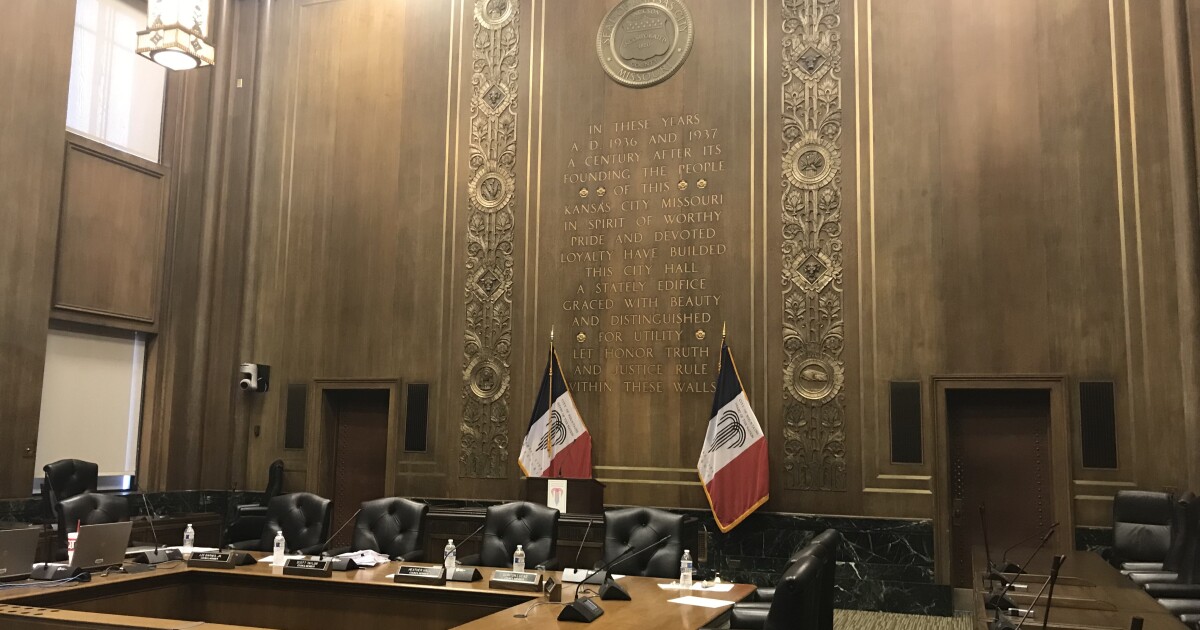
KANSAS CITY, Mo. — The Kansas City, Missouri, City Council voted Thursday to approve a $2.6 billion budget for the city’s fiscal year of 2026-27.
The budget includes $744 million in spending for public safety, including $26.3 million for a new Department of Community Safety and $4.2 million to hire 50 new KCMO Police Department officers, along with 10 call takers and 10 dispatchers.
“Our budget respects the strong fiscal foundation the taxpayers have helped Kansas City build, maintaining a rainy-day fund of over $200 million, increasing road resurfacing, hiring more public safety and city workers, and investing in all Kansas City neighborhoods,” Mayor Quinton Lucas said in a news release from the city. “In a city that can walk and chew gum, we are proud to welcome the world while delivering strong basic services for Kansas City’s families.”
The council voted to spend $83.8 million for the Kansas City Area Transportation Authority to provide bus services, but the KCATA may have to make cuts in bus services even with a $6 million boost in funding from the city.
In addition, the council approved spending $39.4 million for citywide street resurfacing and $1.5 million for tearing down dangerous buildings.
“This budget reflects a collaborative effort across the city, and provides a clear path for Kansas City to keep moving forward with discipline, accountability and a focus on service,” City Manager Mario Vasquez said in the news release. “Thank you to the council for its thoughtful deliberation and input in crafting this budget.”
More information on the fiscal year 2026-27 budget can be found on the city’s website.
—
The Missouri Lottery offers several draw games for those aiming to win big.
Here’s a look at March 25, 2026, results for each game:
Winning Powerball numbers from March 25 drawing
07-21-55-56-64, Powerball: 26, Power Play: 4
Check Powerball payouts and previous drawings here.
Winning Pick 3 numbers from March 25 drawing
Midday: 3-2-0
Midday Wild: 7
Evening: 0-0-5
Evening Wild: 5
Check Pick 3 payouts and previous drawings here.
Winning Pick 4 numbers from March 25 drawing
Midday: 2-6-3-9
Midday Wild: 4
Evening: 9-5-6-8
Evening Wild: 1
Check Pick 4 payouts and previous drawings here.
Winning Cash Pop numbers from March 25 drawing
Early Bird: 07
Morning: 09
Matinee: 04
Prime Time: 14
Night Owl: 07
Check Cash Pop payouts and previous drawings here.
Winning Show Me Cash numbers from March 25 drawing
12-14-22-26-28
Check Show Me Cash payouts and previous drawings here.
Winning Powerball Double Play numbers from March 25 drawing
35-38-41-43-62, Powerball: 08
Check Powerball Double Play payouts and previous drawings here.
Feeling lucky? Explore the latest lottery news & results
Are you a winner? Here’s how to claim your lottery prize
All Missouri Lottery retailers can redeem prizes up to $600. For prizes over $600, winners have the option to submit their claim by mail or in person at one of Missouri Lottery’s regional offices, by appointment only.
To claim by mail, complete a Missouri Lottery winner claim form, sign your winning ticket, and include a copy of your government-issued photo ID along with a completed IRS Form W-9. Ensure your name, address, telephone number and signature are on the back of your ticket. Claims should be mailed to:
Ticket Redemption
Missouri Lottery
P.O. Box 7777
Jefferson City, MO 65102-7777
For in-person claims, visit the Missouri Lottery Headquarters in Jefferson City or one of the regional offices in Kansas City, Springfield or St. Louis. Be sure to call ahead to verify hours and check if an appointment is required.
For additional instructions or to download the claim form, visit the Missouri Lottery prize claim page.
When are the Missouri Lottery drawings held?
- Powerball: 9:59 p.m. Monday, Wednesday and Saturday.
- Mega Millions: 10 p.m. Tuesday and Friday.
- Pick 3: 12:45 p.m. (Midday) and 8:59 p.m. (Evening) daily.
- Pick 4: 12:45 p.m. (Midday) and 8:59 p.m. (Evening) daily.
- Cash4Life: 8 p.m. daily.
- Cash Pop: 8 a.m. (Early Bird), 11 a.m. (Late Morning), 3 p.m. (Matinee), 7 p.m. (Prime Time) and 11 p.m. (Night Owl) daily.
- Show Me Cash: 8:59 p.m. daily.
- Lotto: 8:59 p.m. Wednesday and Saturday.
- Powerball Double Play: 9:59 p.m. Monday, Wednesday and Saturday.
This results page was generated automatically using information from TinBu and a template written and reviewed by a Missouri editor. You can send feedback using this form.

Ski Maine, Where Skiing’s Main Street Ends

Showers and falling temperatures across Maryland Friday

Woman struck, fatally injured, while walking on the Lodge Freeway, state police say

Think you’re middle class in Massachusetts? Here’s the income range

Over 840,000 Minnesotans Assist Aging Loved Ones, Shaping Their Daily Lives

Florida High School Football Rankings: Top 25 teams – Oct. 21

How old is Bo Nix? What to know about Oregon quarterback ahead of 2024 NFL Draft

Cleary's 21 help Le Moyne down Central Connecticut State 69-64 in OT

99th annual Pony Swim held in Virginia

Indiana Members Credit Union announced as new anchor tenant at Bottleworks District

Video: Will ICE Change Under Its New Leader?

DHS shutdown breakthrough comes at cost for Republicans as funding fights nears end

Rubio joins crucial G7 talks as Iran war set to dominate second day

A surprise resignation could open the door for an independent to win a Montana Senate seat

Video: Savannah Guthrie Says She Believes Her Mother Was Taken for Ransom
-

 Detroit, MI1 week ago
Drummer Brian Pastoria, longtime Detroit music advocate, dies at 68
-

 Science1 week ago
How a Melting Glacier in Antarctica Could Affect Tens of Millions Around the Globe
-

 Movie Reviews1 week ago
‘Youth’ Twitter review: Ken Karunaas impresses audiences; Suraj Venjaramoodu adds charm; music wins praise | – The Times of India
-
 Science1 week ago
I had to man up and get a mammogram
-

 Sports6 days ago
IOC addresses execution of 19-year-old Iranian wrestler Saleh Mohammadi
-

 New Mexico5 days ago
Clovis shooting leaves one dead, four injured
-
 Business1 week ago
Disney’s new CEO says his focus is on storytelling and creativity
-

 Texas1 week ago
How to buy Houston vs. Texas A&M 2026 March Madness tickets