Minnesota
Minnesota Legislature during special session passes next state budget to avert government shutdown


The Minnesota Legislature approved the remaining pieces of the next state budget on Monday during a special session, after lawmakers failed to complete their work in May.
The House adjourned around 10:40 p.m., and the Senate was on track to do the same around midnight or early on Tuesday. They had 14 bills on their to-do list; most were spending plans that made up the roughly $66 billion budget for the next two years.
The political make-up of the Capitol is unique, with a tied House for only the second time in state history, and is as closely divided as a Legislature can be in Minnesota, with 100 Republicans and 101 Democrats. That made negotiations challenging and forced compromise.
“The tie forced us to work together, and I think that’s something that people outside of the bubble here in St. Paul are looking for people to do,” said House Speaker Lisa Demuth, R-Cold Spring. “They want representation in the state that can work together and do the best things for our state.”
A delayed start in the House, after DFL lawmakers boycotted the first few weeks over a power dispute, ended in overtime. But a divided Legislature is not unique in Minnesota. Four of the last five budget-writing sessions, including this one, have ended with special sessions because they didn’t finish the budget on time when Republicans and Democrats shared power.
“We prevented a duly elected member of the Minnesota House from being kicked out for no reason whatsoever other than political expediency. And I think in the end, fighting for that equal shared power made this a better session,” said former DFL House Speaker Melissa Hortman. “And I think the way that today unfolded was about cooperation and collaboration, we could have had that from the word go. I’m really happy that we did finally get there.”
Finishing their work on Monday prevented nearly 30,000 state workers from getting layoff notices on Tuesday in advance of a partial government shutdown on July 1 if they failed to approve a budget.
As of 11:30 p.m. Monday, the Senate had to pass a tax bill and a bonding proposal funding infrastructure projects before they adjourned, but had approved the budget bills. The legislation made significant cuts to stave off a projected $6 billion deficit in future years.
Most of the day was smooth sailing after lawmakers in the House began by passing the most contentious bill of the year that will remove undocumented immigrant adults from MinnesotaCare, a state health care coverage program, by the year’s end.
The debate in that chamber lasted for four hours and at times was emotional. The change was a top priority for Republicans who are concerned that growing enrollment would balloon costs in an unsustainable way.
Democrats in both chambers are deeply opposed to the measure, which will preserve coverage for children despite the rollback for adults.
Through tears, Senate Majority Leader Erin Murphy, DFL-St. Paul, said approving it, which she agreed to in a larger budget compromise among legislative leaders, was among the most “painful” votes she ever had to take.
She and three other Democrats supported it in the Senate. Hortman was the sole DFL vote alongside Republicans in the House.
Hortman was similarly emotional when reflecting on that moment.
“What I worry about is the people who will lose their health insurance. I know that people will be hurt by that vote,” she said. “We worked very hard to try to get a budget deal that wouldn’t include that provision, and we tried any other way we could to come to a budget agreement with Republicans, and they wouldn’t have it. So I did what leaders do, I stepped up and I got the job done for the people of Minnesota.”
This story will be updated.



Minneapolis police are investigating a shooting that seriously injured a man on the city’s north side Wednesday afternoon.
The shooting happened just before 2 p.m. on the 1200 block of 36th Avenue North, according to the Minneapolis Police Department.
Upon arrival, officers found a man inside the living room of a residence suffering from a life-threatening gunshot wound. Police provided medical aid to the victim before he was transported by ambulance to an area hospital.
Officers are working to determine what led up the shooting, including if it was accidental, according to officials.
No arrest have been made so far.

The National Weather Service (NWS) has confirmed that the tornado that struck the Detroit Lakes area of northwestern Minnesota on July 6 was rated EF2, with estimated peak winds of 185 km/h (115 mph).
The tornado touched down at 19:47 local time (LT), approximately 3 km (2 miles) south-southwest of Westbury, according to the NWS.
It remained on the ground for about 10 minutes. The tornado had a path length of 10.93 km (6.79 miles) and reached a maximum width of more than 730 m (2 400 feet). It dissipated approximately 6 km (4 miles) northeast of Detroit Lakes at 19:57 LT.
The Becker County Sheriff’s Office (BCSO) said deputies and other emergency responders began monitoring the severe weather around 19:30 LT after receiving reports of a possible funnel cloud north of Lake Park.
At approximately 20:14 LT, the Sheriff’s Office received a report of a tornado near the Oakland Beach area, where it caused extensive damage to homes, buildings, and trees.
The NWS confirmed two injuries associated with the event, one of which was directly caused by the tornado.
“1 injury can be directly attributed to the tornado, as a homeowner was injured in their home when their roof was removed by the tornado. The second injury was after the tornado during the cleanup stage and could be due to shock or trauma, according to the county emergency manager,” the NWS reported.
“Responders went from home to home looking for residents and checking for the injured. Two individuals were transported to Essentia St. Mary’s Hospital with non-life-threatening injuries. One other patient went to the hospital by private vehicle,” the BCSO said.
-

Tornado damage in Detroit Lakes, Minnesota on July 6, 2026. Credit: Becker County Sheriff’s Office
-
Tornado damage in Detroit Lakes, Minnesota on July 6, 2026. Credit: Becker County Sheriff’s Office
-
Tornado damage in Detroit Lakes, Minnesota on July 6, 2026. Credit: Becker County Sheriff’s Office
-
Tornado damage in Detroit Lakes, Minnesota on July 6, 2026. Credit: Becker County Sheriff’s Office
-
Tornado damage in Detroit Lakes, Minnesota on July 6, 2026. Credit: Becker County Sheriff’s Office
-
Tornado damage in Detroit Lakes, Minnesota on July 6, 2026. Credit: Becker County Sheriff’s Office
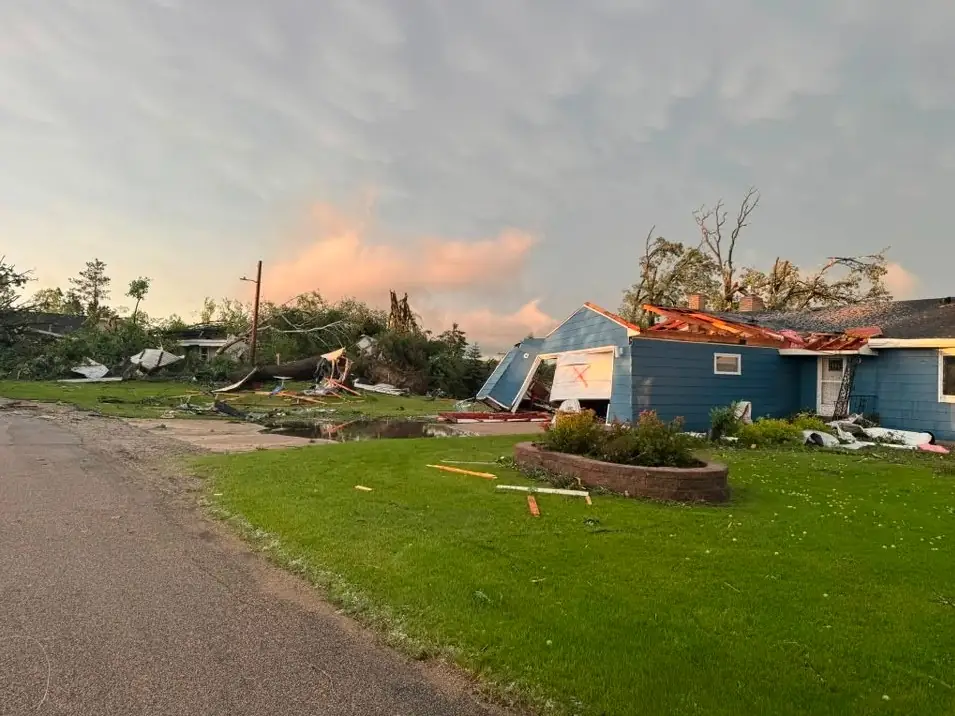
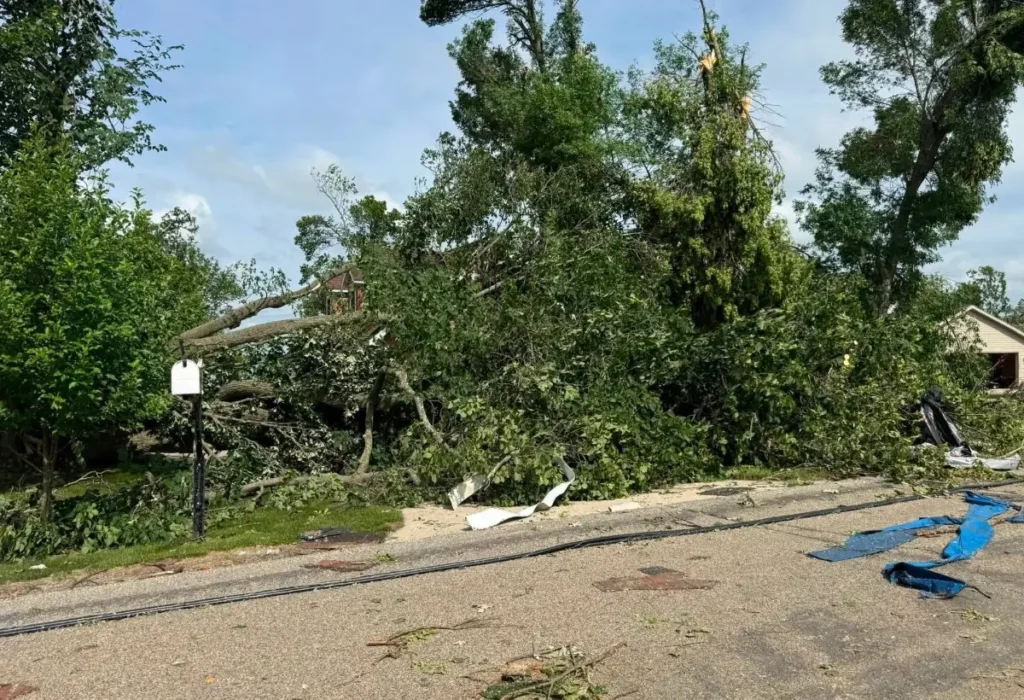
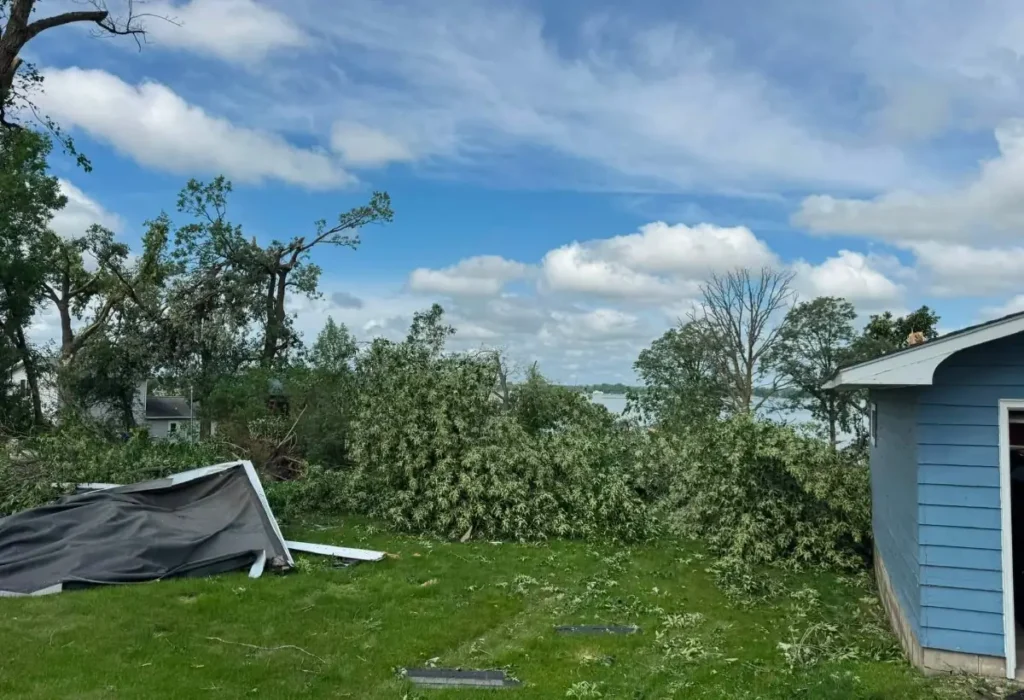
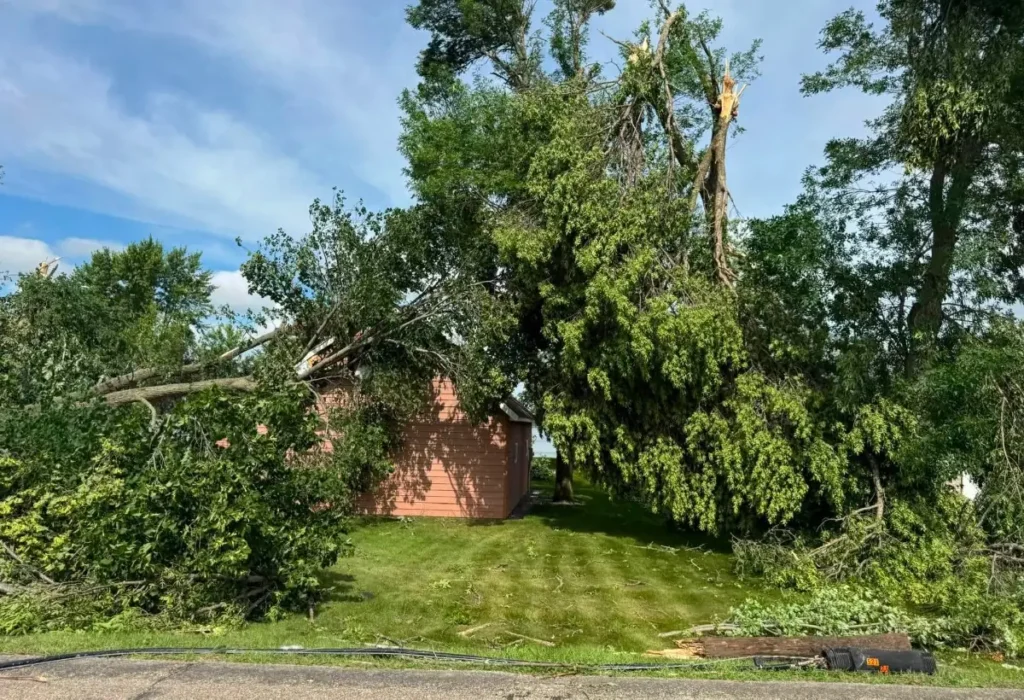
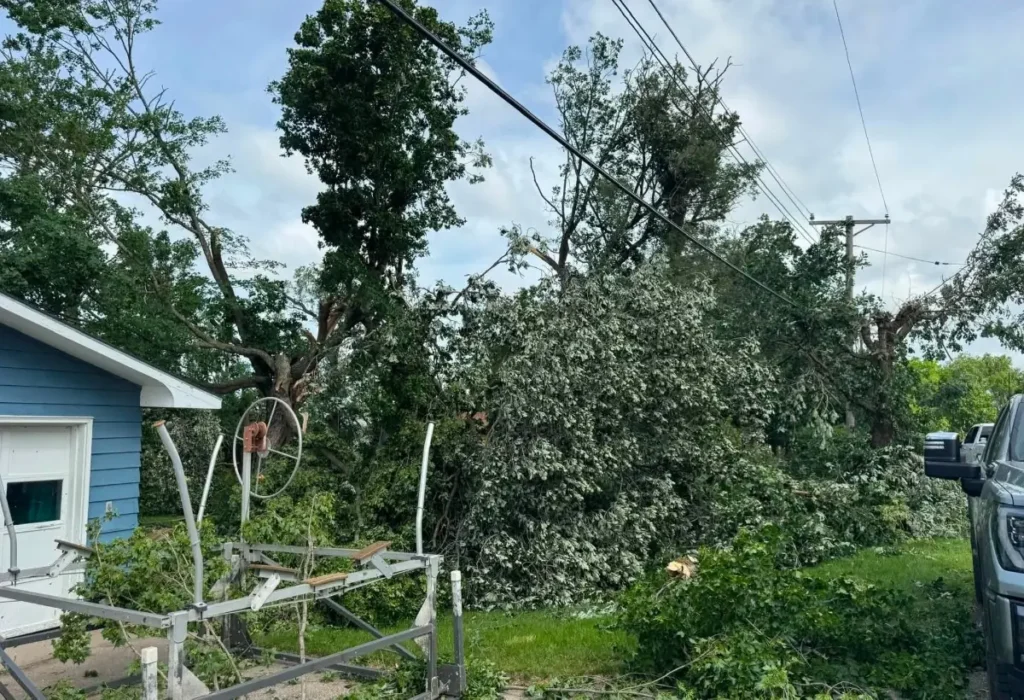
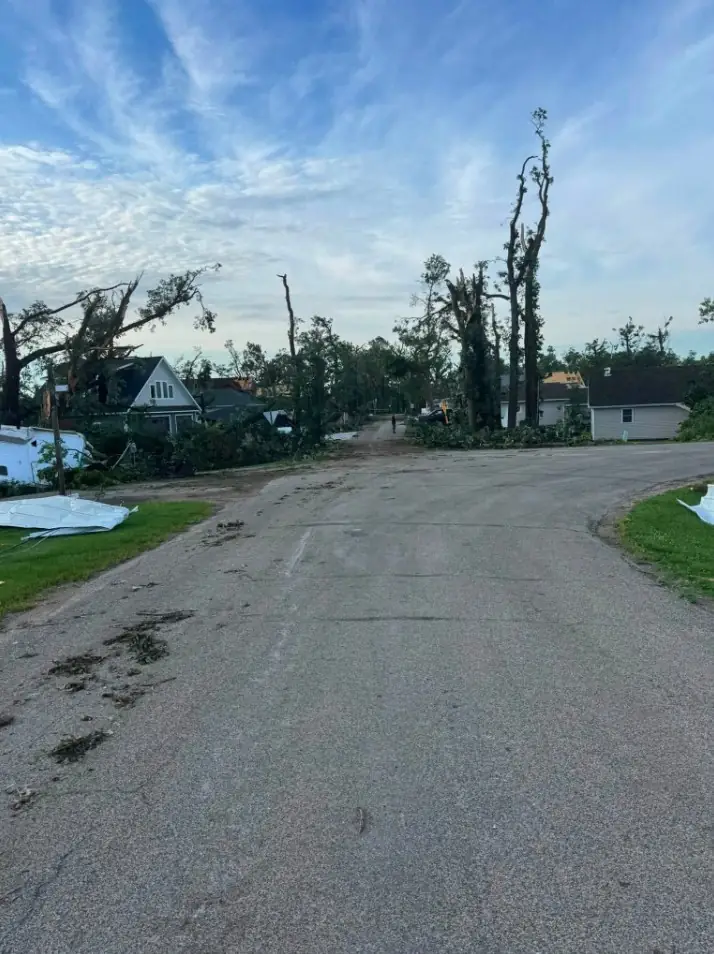
The tornado began about 2 km (1 mile) northwest of Wheeler Lake before crossing the lake, where it damaged the roofs of several homes and snapped the trunks of large oak and poplar trees.
It reached its maximum width near the western shore of Big Floyd Lake, with the Oakland Beach neighborhood sustaining the most severe damage.
Multiple garages and lighter outbuildings were swept away, while widespread roof and tree damage was reported. A 2 x 4 m (6 x 12-foot) horse trailer was lofted and carried about 200 m (656 feet) before the tornado crossed Big Floyd Lake and continued east. The last visible damage was identified near the intersection of County Highway 25 and Anchor Road.
More than 500 customers lost power as a result of the storms, according to Detroit Lakes Public Utility.
As the storm tracked east-southeast, strong winds, hail, and heavy rain affected areas north of Audubon before a tornado warning was issued for the Callaway and Rochert areas. Reports of downed trees, power lines, and debris soon followed from Detroit Township between U.S. Highway 59 and County Highway 21.
References:
1 Public Information Statement – NWS – July 7, 2026

Giordano’s, the famous pizzeria known for their deep-dish style Chicago pizza, is opening a second location in Minnesota at the Mall of America.
The pizza chain also has a location in Richfield, and previously had a location some years ago in Minneapolis in Uptown.
The grand opening of the Mall of America location will be on Thursday, July 16. The restaurant there will be unique, with the restaurant’s first self-service kiosk ordering. It will also have a grab-and-go area and a normal seated restaurant experience.
The Chicago deep-dish chain has been around since 1974, with the vast majority of locations in the Chicagoland area. They have 60 restaurants in nine states and are currently expanding nationwide.
-
Business1 minute ago
Commentary: Trump wants to let companies make fewer disclosures, thus keeping investors in the dark
-
 Entertainment8 minutes ago
Justin Baldoni and wife break silence after ‘It Ends With Us’ legal battle with Blake Lively
-
 Lifestyle11 minutes ago
A meal with an animated Mona Lisa? Immersive dining goes high tech — but will L.A. eat it up?
-
 Politics16 minutes ago
Nexstar launches its first digital subscription service with The Hill Insider, aimed at political junkies
-
 Science23 minutes ago
Not everyone is leaving California. A new commercial battery maker just landed in Sacramento
-
 Sports26 minutes ago
Mookie Betts’ eighth-inning single gives Dodgers the win over the Rockies
-
World38 minutes ago
From sewers to swimming sites: how Europe's cities reclaim their rivers
-

 News1 hour ago
Three more people charged with damaging Reflecting Pool after Trump’s multimillion-dollar restoration | CNN Politics


