Minnesota
Giving birth in rural Minnesota? Be prepared for a long drive – Minnesota Reformer


Essentia Health Services recently announced that it plans to end labor and delivery services at its hospital in Fosston, a town of 1,400 people in northwest Minnesota.
The closure of the delivery ward means that mothers in Fosston and surrounding towns will now have to travel 45 minutes west to Crookston or east to Bemidji to find an obstetric unit that delivers babies.
It’s the latest in a longstanding trend of rural hospitals shuttering their obstetrics departments in the face of staffing and other challenges. Twenty years ago, more than 110 hospitals in the state offered birth services, according to the Minnesota Department of Health. Today that number stands at 76, with the closures hitting especially hard in communities in the rural northern reaches of the state.
In Grand Marais, on the North Shore, women face a two-hour drive to get to the nearest birthing center in Duluth. Mothers in Ely (pop. 3,200) need to drive an hour to get to Virginia after the local hospital ended delivery services in 2014. Virginia is also the nearest delivery hospital for residents of International Falls, a city on the Canadian border with a population of more than 5,000 people. It’s one hour and 45 minutes away by car.
Minnesotans living on reservations and tribal lands are especially likely to face difficulties in finding a nearby birthing hospital, as the map above shows. Infant mortality rates for Indigenous Minnesotans are more than double what they are for white babies, according to state data, and the maternal mortality rate is nearly 8 times higher.
Chartis, a private health care consulting firm, recently found that Minnesota had the nation’s highest number of rural obstetrics closures from 2011 through 2021, although this is partly because it has more rural hospitals than other states. A March of Dimes report found that 14% of Minnesota moms have to drive a half hour or more to reach a birthing hospital, compared to 10% nationwide.
When rural delivery wards close, “our research has shown increased risks of emergency room births as well as preterm births, especially in the more remote rural communities which are not adjacent to urban areas,” said Katy Kozhimannil, a University of Minnesota health policy professor. “We have also found that rural communities that lose obstetrics are less likely to offer other evidence-based services and supports for families, like childbirth education or lactation support.”
Rural hospitals in Minnesota have often cited staffing challenges as a driver of maternity ward closures. It can be expensive to keep staff and supplies on hand for procedures that happen infrequently.
“For obstetric services the fixed costs of staffing, equipment, and facilities are difficult to cover with volume based revenues when facilities and clinicians have few pregnant patients,” Kozhimanill explained in an opinion published in BMJ last year. “This leads to workforce shortages and unit closures in more remote, less populated areas.”
Essentia Health in Fosston, for instance, only delivered 38 babies in the 12-month period ending in June of 2022, according to state data. The hospitals in the communities of Olivia and Granite Falls saw fewer than 20 deliveries in their most recently reported years. Both have since ceased offering those services.
Kozhimanill also noted that nearly half of American births are financed by Medicaid, which “reimburses at substantially lower rates than private insurers, so facilities and clinicians caring for lower income patients in remote rural areas face exceptional challenges in generating revenue for obstetric services.”
The closure of an obstetrics unit can become part of a self-perpetuating cycle of rural decline. Young families in need of maternal and infant care may decide to move elsewhere, shrinking the local economy and making it harder for the community to fund services for those who remain.
The March of Dimes recommends expanding Medicaid eligibility and coverage as a way to reverse these trends, but Kozhimanill says policymakers should think bigger and consider ambitious investments in community public health.
“Policy solutions need to focus squarely on the structural injustices and systemic failures that have created and reproduced the statistics that alarm us,” she wrote last year. “As the closest place to give birth becomes further and further away for many people, these facts should no longer be surprising.”



Minneapolis police are investigating a shooting that seriously injured a man on the city’s north side Wednesday afternoon.
The shooting happened just before 2 p.m. on the 1200 block of 36th Avenue North, according to the Minneapolis Police Department.
Upon arrival, officers found a man inside the living room of a residence suffering from a life-threatening gunshot wound. Police provided medical aid to the victim before he was transported by ambulance to an area hospital.
Officers are working to determine what led up the shooting, including if it was accidental, according to officials.
No arrest have been made so far.

The National Weather Service (NWS) has confirmed that the tornado that struck the Detroit Lakes area of northwestern Minnesota on July 6 was rated EF2, with estimated peak winds of 185 km/h (115 mph).
The tornado touched down at 19:47 local time (LT), approximately 3 km (2 miles) south-southwest of Westbury, according to the NWS.
It remained on the ground for about 10 minutes. The tornado had a path length of 10.93 km (6.79 miles) and reached a maximum width of more than 730 m (2 400 feet). It dissipated approximately 6 km (4 miles) northeast of Detroit Lakes at 19:57 LT.
The Becker County Sheriff’s Office (BCSO) said deputies and other emergency responders began monitoring the severe weather around 19:30 LT after receiving reports of a possible funnel cloud north of Lake Park.
At approximately 20:14 LT, the Sheriff’s Office received a report of a tornado near the Oakland Beach area, where it caused extensive damage to homes, buildings, and trees.
The NWS confirmed two injuries associated with the event, one of which was directly caused by the tornado.
“1 injury can be directly attributed to the tornado, as a homeowner was injured in their home when their roof was removed by the tornado. The second injury was after the tornado during the cleanup stage and could be due to shock or trauma, according to the county emergency manager,” the NWS reported.
“Responders went from home to home looking for residents and checking for the injured. Two individuals were transported to Essentia St. Mary’s Hospital with non-life-threatening injuries. One other patient went to the hospital by private vehicle,” the BCSO said.
-

Tornado damage in Detroit Lakes, Minnesota on July 6, 2026. Credit: Becker County Sheriff’s Office
-
Tornado damage in Detroit Lakes, Minnesota on July 6, 2026. Credit: Becker County Sheriff’s Office
-
Tornado damage in Detroit Lakes, Minnesota on July 6, 2026. Credit: Becker County Sheriff’s Office
-
Tornado damage in Detroit Lakes, Minnesota on July 6, 2026. Credit: Becker County Sheriff’s Office
-
Tornado damage in Detroit Lakes, Minnesota on July 6, 2026. Credit: Becker County Sheriff’s Office
-
Tornado damage in Detroit Lakes, Minnesota on July 6, 2026. Credit: Becker County Sheriff’s Office
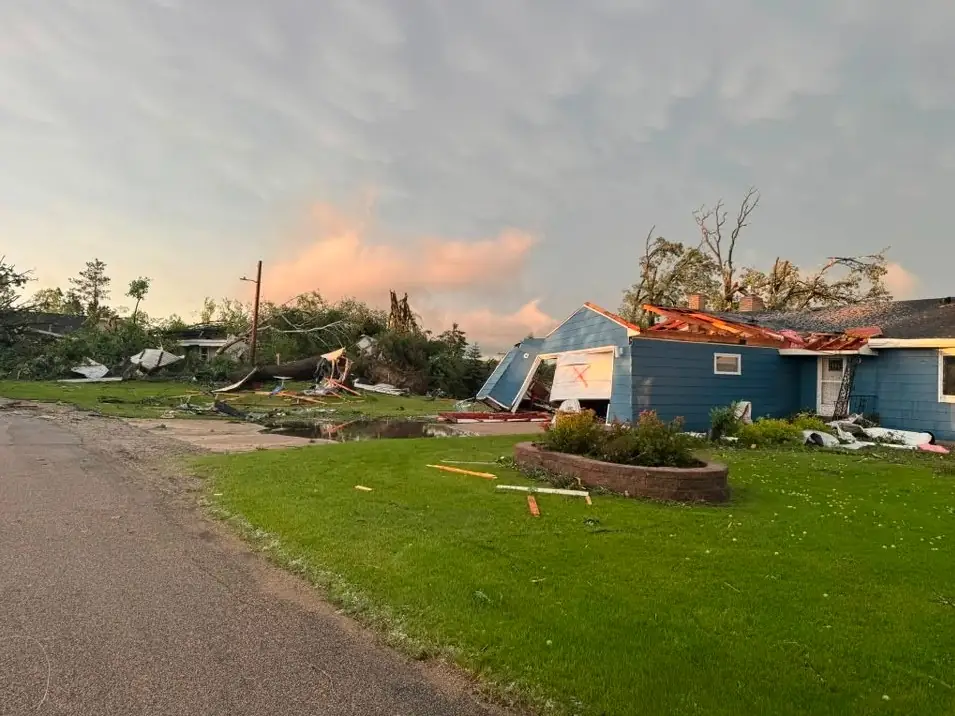
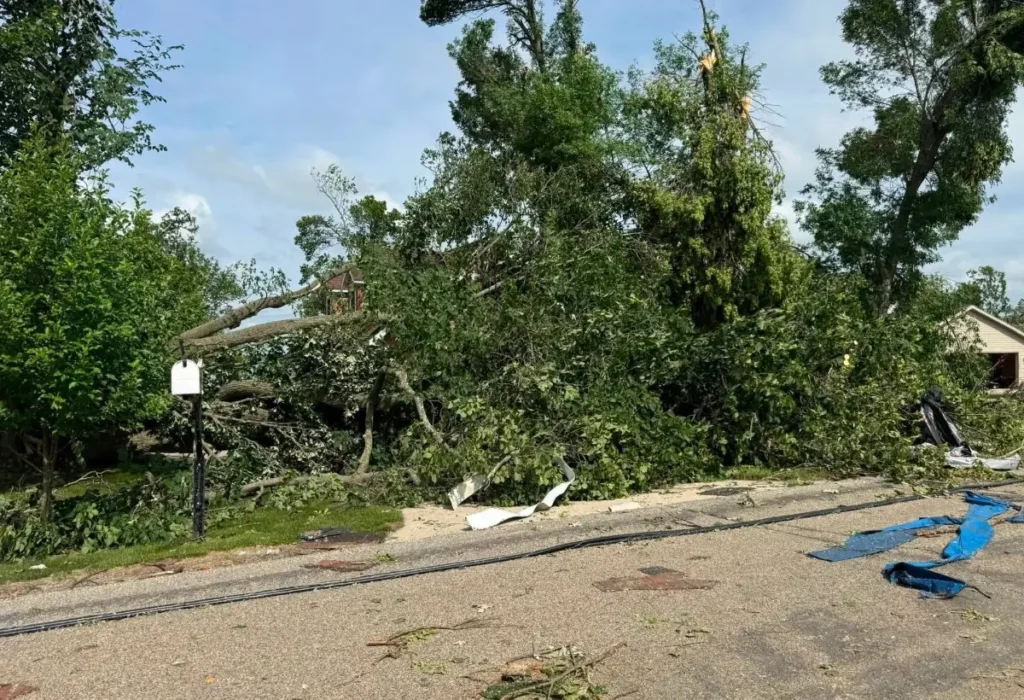
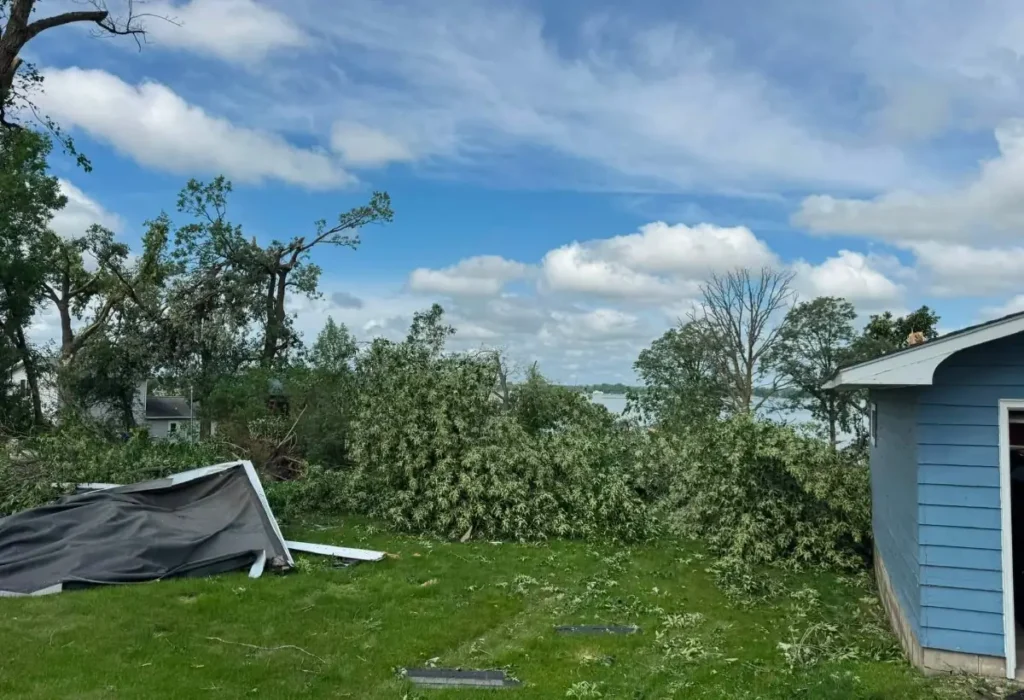
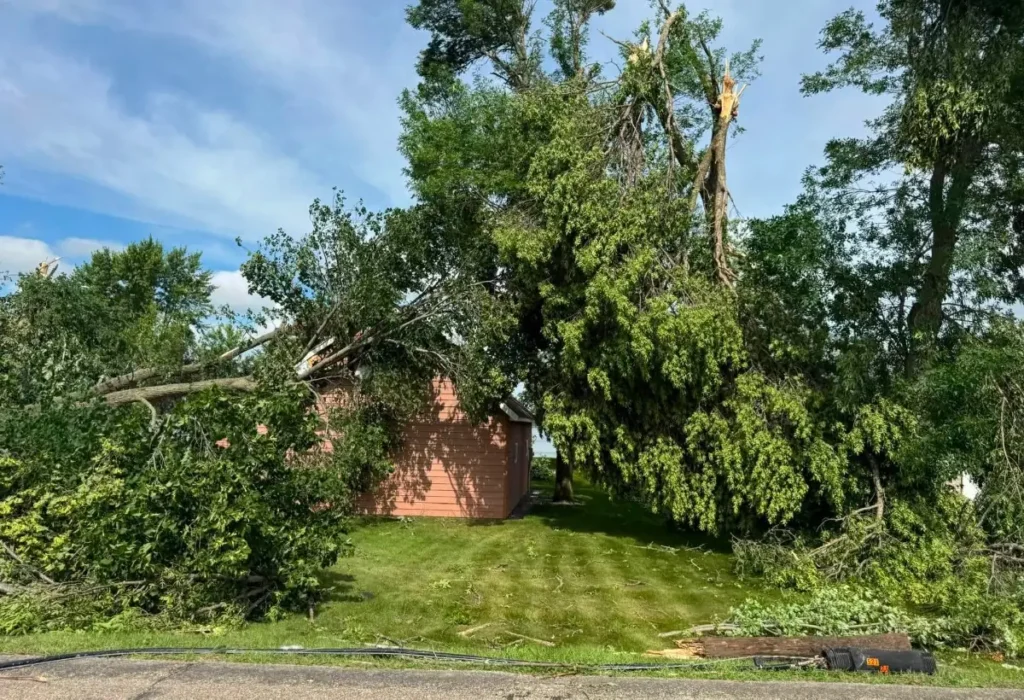
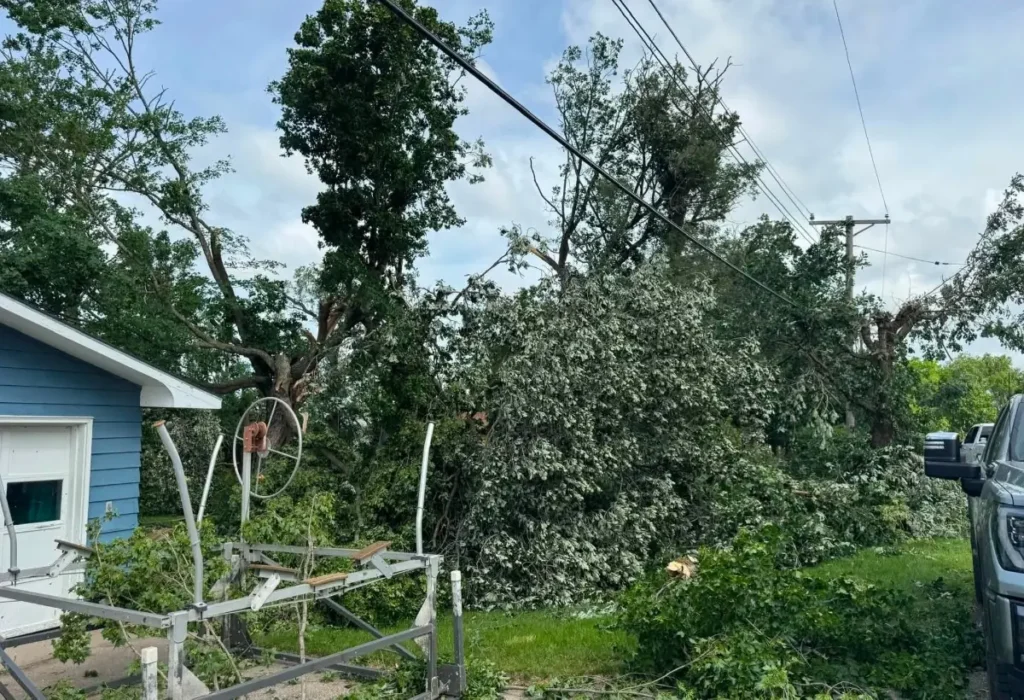
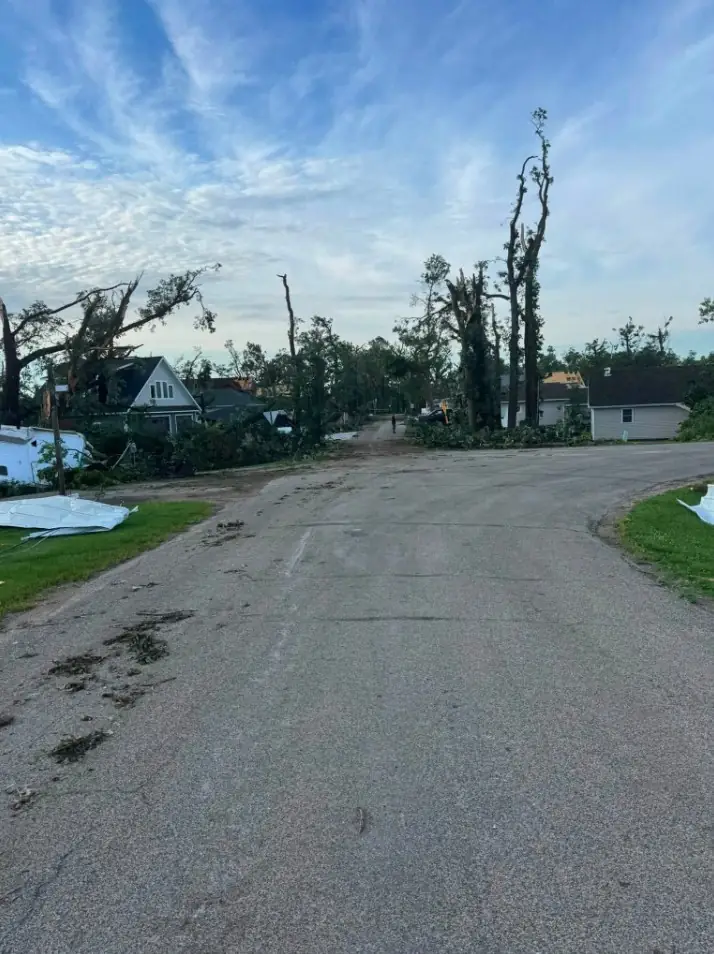
The tornado began about 2 km (1 mile) northwest of Wheeler Lake before crossing the lake, where it damaged the roofs of several homes and snapped the trunks of large oak and poplar trees.
It reached its maximum width near the western shore of Big Floyd Lake, with the Oakland Beach neighborhood sustaining the most severe damage.
Multiple garages and lighter outbuildings were swept away, while widespread roof and tree damage was reported. A 2 x 4 m (6 x 12-foot) horse trailer was lofted and carried about 200 m (656 feet) before the tornado crossed Big Floyd Lake and continued east. The last visible damage was identified near the intersection of County Highway 25 and Anchor Road.
More than 500 customers lost power as a result of the storms, according to Detroit Lakes Public Utility.
As the storm tracked east-southeast, strong winds, hail, and heavy rain affected areas north of Audubon before a tornado warning was issued for the Callaway and Rochert areas. Reports of downed trees, power lines, and debris soon followed from Detroit Township between U.S. Highway 59 and County Highway 21.
References:
1 Public Information Statement – NWS – July 7, 2026

Giordano’s, the famous pizzeria known for their deep-dish style Chicago pizza, is opening a second location in Minnesota at the Mall of America.
The pizza chain also has a location in Richfield, and previously had a location some years ago in Minneapolis in Uptown.
The grand opening of the Mall of America location will be on Thursday, July 16. The restaurant there will be unique, with the restaurant’s first self-service kiosk ordering. It will also have a grab-and-go area and a normal seated restaurant experience.
The Chicago deep-dish chain has been around since 1974, with the vast majority of locations in the Chicagoland area. They have 60 restaurants in nine states and are currently expanding nationwide.
-

 Austin, TX1 minute ago
Texas’ Goosby hosts camp to benefit heart research
-

 Alabama6 minutes ago
Alabama teen charged with stabbing mom to death issued vile threat to dad — as new pic shows bloodbath left behind
-

 Alaska14 minutes ago
Outmigration, inflation, choice schools: Alaska school closures likely to continue without changes
-
 Arizona16 minutes ago
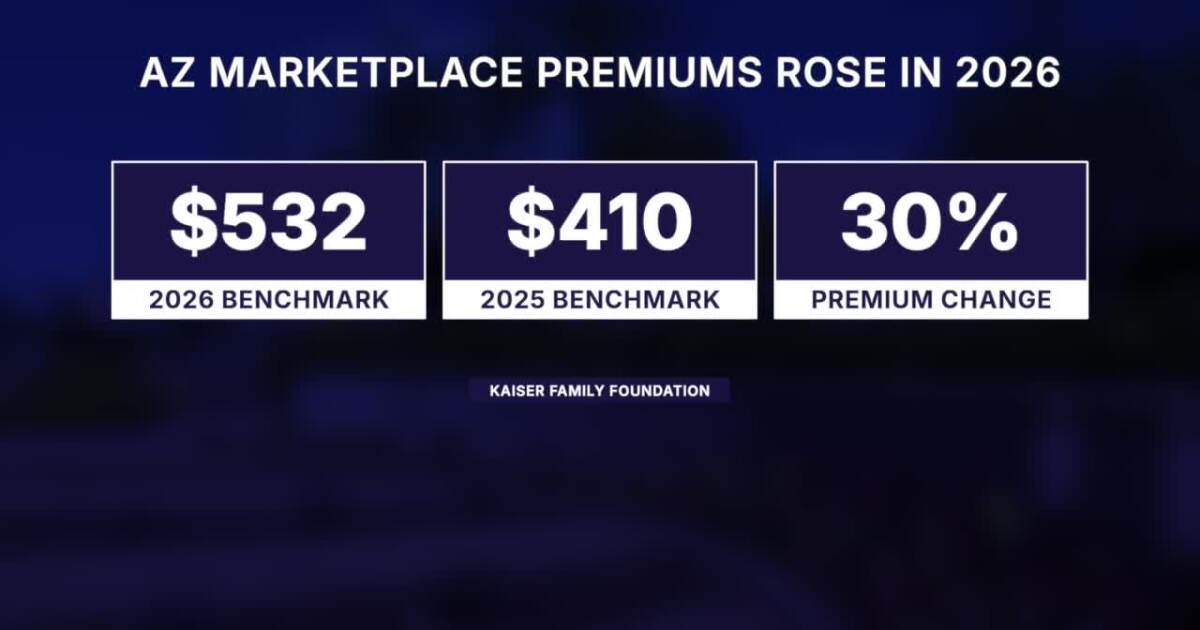
WATCH: Arizona’s health insurance marketplace is seeing dropping enrollment
-

 Arkansas21 minutes ago
ARKANSAS SIGHTSEEING: Randolph County can claim many firsts in Arkansas | Northwest Arkansas Democrat-Gazette
-

 California29 minutes ago
Toddler sustains brain injury in fall after California childcare worker threw him into the air, lawsuit says
-

 Colorado31 minutes ago
‘Saleabration’ comes back to Colorado Springs for third year
-

 Connecticut37 minutes ago
‘It’s a neighborhood effort’: Improvements made to Quinnipiac River Park

