Minneapolis, MN
‘He was just the best kid’: Grandparents grieve 16-year-old shot and killed in north Minneapolis


“He was just the best kid, he was so loving, that’s the biggest thing about him, he loved his family, that was everything to him,” said James Nelson.
Homicide investigation underway in north Minneapolis after double shooting leaves 16-year-old dead
James was referring to his 16‑year‑old grandson, Cordero Montgomery Jr., also known as “Junior,” who family identified as the teen shot and killed Thursday in north Minneapolis.
James and Wendy Nelson are Junior’s father’s foster parents, and consider Junior their grandson.
James said the last text message they exchanged with him is something the couple keeps replaying. “The last thing he said was ‘I love you,’ and he said, ‘I love you more.’”
They are remembering him as a loving teenager who constantly told them how much he cared.
They said the day of the incident, Junior had been visiting a friend in north Minneapolis and was supposed to take the bus to their home in St. Paul afterward.
“All I know is they were walking, and I guess he, somebody got out of a car and started shooting, and then he ran. Junior ran down the sidewalk a ways,” Wendy said.
Advocates sound alarm after teen is shot and killed in north Minneapolis
The family said he was shot 11 times.
“They must have been really mad at him, or who knows. We don’t know. We got to wait till the detectives find out. It just doesn’t make sense,” he said.
Wendy said she learned about the shooting through a text message.
“All I got was ‘Please call, Junior is dead.’ So I immediately ran out of the bedroom. I was very upset, kind of uncontrollably upset, and gave the phone to James, but [it] didn’t feel real, not until I got there,” she said.
Minneapolis police said officers found Junior outside on 18th Avenue North and performed life‑saving measures, but he later died at the scene. The family said they cannot understand why anyone would do something so violent.
“Why? He’s 16, you know. He’s 16,” Wendy said. “What would he have done that deserved to die for, and get rid of the guns?”
“He was just a kid,” James said.
Flowers now lay near the space where he took his last breath.
“It’s so senseless,” Wendy said.
The grandparents said they later learned people were recording video of Cordero’s body at the scene. Wendy said they wish people would think about how they would feel if it were their own family.
James also said they were hurt by comments online.
“Yeah, somebody on Facebook said, ‘Ho hum, just another day in north Minneapolis,’ and I said, ‘That’s my grandson, and right now it is all everything, but ho hum.’” He added, “I wanted to put a name to my grandson’s death.”
James said he needed to see an image of Junior to accept what happened. When asked if he saw an image of him on the ground, he said, “I did,” and added, “I just said, I have to see my boy.” After he saw the image, he thought, “Yeah, this is real.”
Minneapolis police said a 44‑year‑old man was also shot and injured with non‑life‑threatening injuries. The grandparents said they don’t know who he is or what connection, if any, there is to Junior.

They described Junior as a smart, respectful teenager who was thriving in a school where he received one‑on‑one attention. They said he was going to be a sophomore next school year.
“He was getting straight A’s. I mean, he is really smart and very respectful. People always tell me, ‘Man, that’s a really respectful young man you have there,’ all the time, because he was just the best,” James said.
He also said Junior loved video games and was preparing to apply for a job.
Junior often stayed with them for days at a time.
“He’d come over for weekends. Yeah, he’d stay for days. He loved it so quiet over here,” Wendy said.
She said he was also affectionate. “We were leaving one day, we dropped him off, and he goes, ‘Oh no, Grandma, you need to give me a hug,’ that’s, I mean, a 16-year-old, you know, and he always hearted with a text, you know, just amazing,” Wendy said.
The family is also carrying an older grief. The Nelsons said Junior’s mother previously lost a young daughter during a surgery.
They say Junior’s mother is too devastated to speak publicly right now, and part of why they agreed to talk was to take pressure off of her.
“We have a GoFundMe for Support Cordero to help a single mother, and she’s already lost one child, James said. “It’s really, really tough,” James said.
The grandparents also spoke about mental health and the need for more support in the community.
“People need to treat mental health like physical health. That’s what I would like to get out of this, that our community would wake up and deal with mental health,” James said.
He said he wishes people would think about consequences before tragedy.
“Try and be a better person before a tragedy happens. Just think, look at other people’s consequences, look at other families’ consequences, and just try and put yourself in their place. That could be you if you keep up this on this road,” James said.

The couple also said they moved out of north Minneapolis after gunfire near their home years ago; they said they have seen firsthand how violence affects families.
For the person who pulled the trigger, Wendy had a direct message.
“Whoever you are, you, you took a 16-year-old’s life over something probably really stupid, and there’s no reason for it, you know, get rid of the guns.”
Now, they hope justice comes soon.
Minneapolis police said there have not been any arrests or updates in the case.
MPD juvenile shooting numbers
Minneapolis police data provided to KSTP shows 12 juvenile shooting victims so far in 2026, making up 17% of all shooting victims (the percentage represents the share of all shooting victims who were juveniles).
A year‑to‑date comparison shows:
- 2026: 12 juvenile victims (17%)
- 2025: 6 juvenile victims (7%)
- 2024: 13 juvenile victims (15%)
- 2023: 17 juvenile victims (14%)
- 2022: 14 juvenile victims (8%)
Annual totals from MPD show:
- 2025: 52 juvenile victims (17%)
- 2024: 41 juvenile victims (11%)
- 2023: 62 juvenile victims (15%)
- 2022: 58 juvenile victims (11%)



Minneapolis, MN
Minneapolis, Hamel women accused of stealing millions in federal funds due in court Thursday

5 EYEWITNESS NEWS continues to track the latest fraud developments.
Two of the 15 defendants accused of stealing federal program money back in May are due in court on Thursday morning, and a deal with prosecutors could be taking shape.
Fahima Egeh Mahamud, 50, of Minneapolis, and Jillaine Mertens, 42, of Hamel have plea agreement hearings at the Minneapolis federal courthouse.
Prosecutors say Mertens collected more than $400,000 in fraudulent claims across three childcare centers in Ramsey, Rochester and Kasson.
Mahumud is accused of taking $5.5 million in taxpayer money through her daycare, Future Leaders.
Both cases are set for plea agreement hearings Thursday morning in federal court.
Top federal officials came to Minnesota in May to announce the charges against the 15 defendants.
PREVIOUS: DOJ charges 15 defendants accused of collectively defrauding $90 million
They are alleging that fraudsters exploited programs meant to help vulnerable populations — including the now-defunct Housing Stabilization Services program, which was designed to connect homeless Minnesotans with housing, and the Early Intensive Behavioral Development Intervention (EIDBI) program for children with autism.
This is a developing story. Download the KSTP app below to get the latest updates.


Dozens of community members flooded Minneapolis City Hall Wednesday to express concerns about a proposed drone program for Minneapolis police.
Nearly 50 people signed up to speak at the City Council’s public health, safety and equity committee meeting. Residents filled all of the seats in the council chambers reserved for the public, and an overflow room next door.
“We just spent months enduring a brutal winter of military-equipped federal occupation and terrorization, and on the heels of that, you wish to provide military-grade drone tech to the cops in our already over-surveilled neighborhoods?” said north Minneapolis resident Will Reely, referring to federal immigration enforcement during Operation Metro Surge. “You can’t be serious.”
Speakers said they don’t trust how the police would use drones, and are concerned the technology could be used as surveillance and lead to invasion of privacy.
Several people also sat in the hallway outside of the council chambers and streamed the hearing. The 1:30 p.m. meeting began with Minneapolis police officials outlining a free, 75-day pilot program that would allow the police department to use drones as “first responders.”
The committee moved to put the pilot program for a vote before the full council on July 16, which will not feature an additional public comment period on the issue. Should the council approve the program, the trial period would begin as soon as July 20.
The project would be conducted in the police department’s Fourth Precinct on the city’s north side, and hopes to reduce 911 response times by using drones to livestream video of potential crime scenes before officers arrive. The drones, which would be equipped with parachutes, police markings and lights, would be provided by Skydio, a California company.
Several community members noted that Skydio is known to supply drones to the Israeli government, which has used the technology during their military campaign against Palestinian civilians in Gaza.
“We see them as weapons of war and mass surveillance, and do not want them to be used to kill or control people at home or abroad,” Minneapolis resident Meredith Aby said of Skydio drones. “The people of Minneapolis do not want Skydio’s blood on its hands.”
More speakers questioned whether Minneapolis police would use the drones for the intended purpose, and questioned whether their use would actually improve safety.
“What I don’t understand is why we would implement a drone program under the guise of public safety,” Avery Winters told council members. “We the people don’t trust the people or the system administering this.”
Before the public comment period, Minneapolis police officials presented the pilot program to the City Council committee, saying that it would improve officer and community safety and help with staffing challenges. Andy Skoogman, chief of staff for the city’s Office of Community Safety, said officers can use drones to determine whether they need to report to a scene, improving the department’s efficiency.
“Drones are not a replacement for police officers, for firefighters, for EMS [Emergency Medical Services] personnel or other first responders,” Skoogman, who is not a police officer, told council members. “They’re simply a tool that helps ensure the right resources are sent to the right call at the right time.”
Thomas Campbell, deputy chief of patrol in Minneapolis police’s special operations division, said the drones would be operated remotely, would only be activated at potential crime scenes, and that their cameras would be pointed away from private property. Footage that isn’t considered evidence would be deleted after seven days, he said.
Minneapolis police have been using drones for other purposes since 2022, and have a fleet of 29 drones. Officers currently launch drones from the trunks of their squad cars, and deploy them after they’ve been requested by officers who are already present at a scene. The proposed program would allow drones to scope out a scene before officers arrive.
Minnesota law allows local police departments to use drones without a search warrant in specific cases:
- during or in the aftermath of an emergency situation that involves the risk of death or bodily harm to a person;
- at a public event where there is heightened risk to the safety of attendees;
- to collect information from a public area if there is reasonable suspicion of criminal activity, among other situations;
- to document evidence that is at imminent risk of destruction;
- to search for a missing person;
- to counter the risk of a terrorist attack by a specific individual or organization if the agency determines that credible intelligence indicates a risk;
- to prevent the loss of life and property in natural or man-made disasters and to facilitate operational planning, rescue, and recovery operations in the aftermath of these disasters;
- over a private area with the written consent of the occupant or a public area, for officer training or public relations purposes;
- to collect information for crash reconstruction purposes after a serious or deadly collision occurring on a public road;
- to conduct a threat assessment in anticipation of a specific event;
- for purposes unrelated to law enforcement at the request of a government entity provided that the government entity makes the request in writing to the law enforcement agency and specifies the reason for the request and proposed period of use.
Ward 4 City Council Member LaTrisha Vetaw, who represents the area where the pilot program would occur, wrote a legislative directive this spring that prompted the program. At the end of Wednesday’s meeting, she reassured community members that the goal is to reduce response times and limit police interactions with the public.
“This is not surveillance,” Vetaw said. “Someone has to call in for the drone to be dispatched, and the dashboard will be set up where people can track how the drone was being used and what for during the service.”
Committee members asked a few technical questions during the hearing about how the drone program would work, but several of them said they were saving more discussion and personal views of the program for the full council vote next week.

-

 South Dakota6 minutes ago
Petition to clarify South Dakota proof of citizenship law shot down over technicality
-

 Tennessee9 minutes ago
Tennessee State men’s hockey cancels 2026-27 inaugural season for second straight year
-

 Texas14 minutes ago
Ted Cruz warns Talarico has ‘real chance’ to flip Texas’ U.S. Senate seat
-

 Utah21 minutes ago
Man suspected in 2006 Utah murder left suicide note in Las Vegas jail cell: police
-
 Vermont24 minutes ago
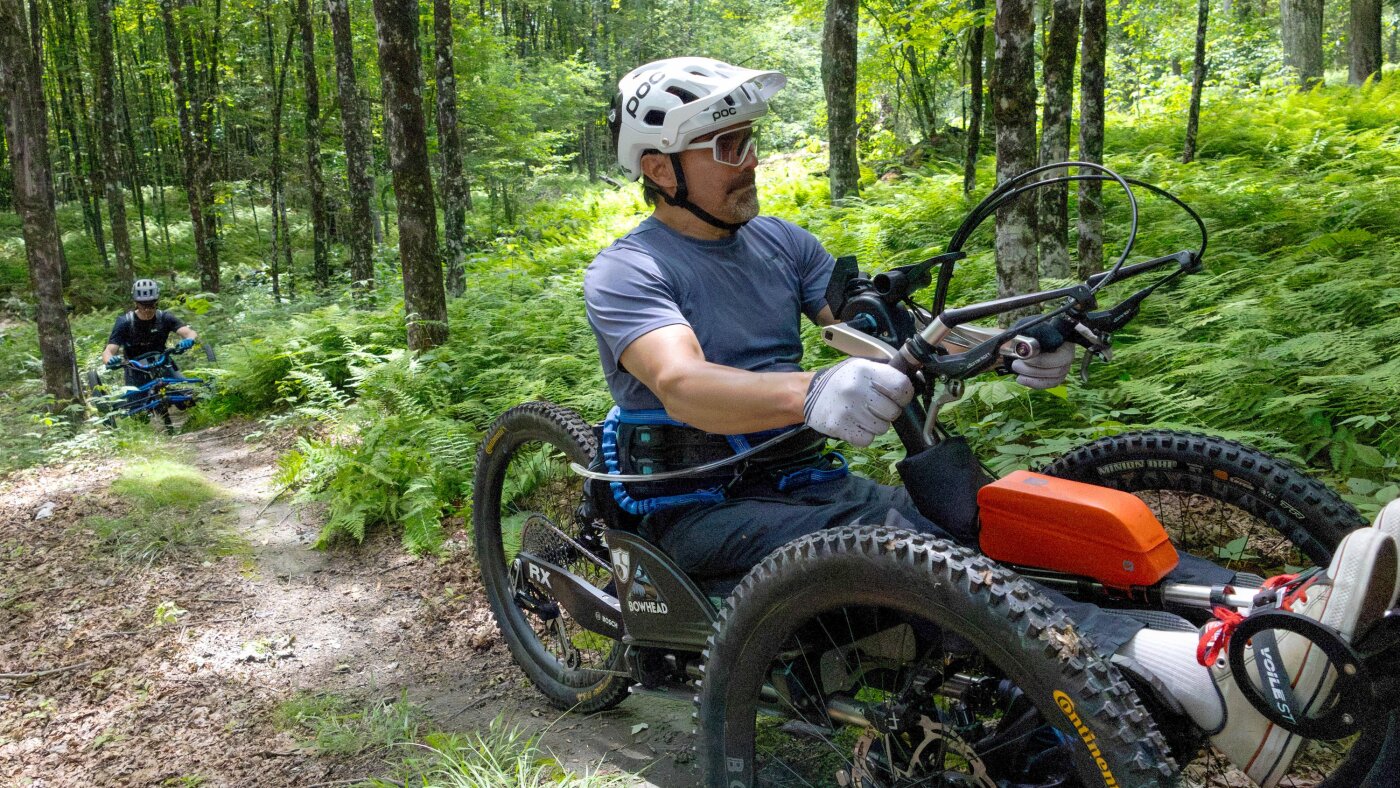
OUTDOOR ACCESS FOR DISABLED IN VERMONT
-
 Virginia29 minutes ago
4 indicted in Virginia double homicide; second victim ID’d as grandmother of 6
-

 Washington36 minutes ago
Washington Commanders are retiring Hall of Famer John Riggins’ No. 44
-

 Wisconsin39 minutes ago
Wisconsin State Patrol rides with truck and bus drivers to spot violations in five areas

