


The remainder of the bracket is going to be tough for the Michigan Wolverines, including Sunday’s tilt against the Tennessee Volunteers, but of the two options for the Elite Eight, this was the preferrable opponent. Analytics believe this squad is underseeded (No. 11 overall per Kenpom), but compared to the swarming defense of Iowa State, the Wolverines have to feel great about their chances of advancing to the Final Four.
Michigan
Study finds Michigan lags behind in childhood well-being, education

Michigan ranked in the bottom half of the country in terms of childhood well-being and education, according to data from the 2024 Kids Count Data Book, a nationwide analysis of childhood-related data from the Annie E. Casey Foundation. The state report placed Michigan 41st in education and 34th in overall well-being.
The report used a collection of nationwide data from the 2021-2022 school year and ranked every state in health, education, economic well-being, and community.
Key Findings
The report found that in Michigan,
- 56% of children aged 3 and 4 were not enrolled in preschool.
- 72% of fourth-graders scored below proficient in reading, and 75% of eighth-graders scored below proficient in math.
- 20% of Michigan high school students were not graduating on time, including 32% of Black students, 25% of Latino students, and 26% of multiracial students
- 40% of students were chronically absent, with 63% of Black, 50% of American Indian, and 46% of Latino children being chronically absent
- Child and teen deaths per 100,000 increased to 28 from 22 in 2019.
- 9.2% of babies were low-weight in 2021.
- 35% of those aged 10-17 were overweight.
- 7% of teens (33,000) weren’t in school or working.
- 18% of children lived in poverty, including 39% of Black children and 24% of Latino children.
- 25% of children lived in households spending 30% or more of pretax income on housing costs, including 43% of Black children
Anne Kuhnen is the Kids Count Policy Director for Michigan. She said there are economic and racial disparities that create gaps. “For example, the fourth-grade reading scores that (declined) during the pandemic really exacerbated both racial and economic disparities,” she said. “The greatest declines we’re seeing among Black and multi-racial children as well as children who are economically disadvantaged, so you can see how those factors contribute to each other and make the overall declines a lot worse.”
Still, she emphasized the problems started long before the pandemic. She suggested funding programs like the State Opportunity Index could be key to addressing gaps and drop-offs. “We need to make sure that we have that funding available so that schools can both address academic needs, literacy and numeracy instruction as well as provide for non-instructional needs,” Kuhnen said.


Jim Harding has landed his first commitment on the recruiting trail as offensive line coach in Ann Arbor, as 2027 four-star Sidney Rouleau announced on Sunday night that he will be playing college football for at Michigan.
Rouleau — a native of Canada but now playing high school football at The Brook Hill School in Bullard, Texas — is coming off an unofficial visit to Michigan this weekend. That was his third time in Ann Arbor, as he also visited for the Purdue game last fall and another time a couple summers ago.
Understandably so, Rouleau had great things to say after his most recent trip.
“My visit to Michigan was awesome,” Rouleau told Rivals’ Steve Wiltfong ($). “The energy around the program is contagious, and I really connected with the coaches and players. What excites me most about playing for coach (Kyle) Whittingham and the Wolverines is the chance to be part of building something special. Their vision for the future, combined with the tradition and passion of the fanbase, makes it an opportunity I couldn’t pass up. I’m excited to contribute to their success and also being able to play for coach Harding!”
Rouleau is listed at 6-foot-5 and 240 pounds, per Rivals, but 247Sports has him listed at 6-foot-7 and 269 pounds, so he may be a bit bigger than Rivals’ last update on him. Regardless, the expectation is that he will eventually play one of the tackle positions at Michigan.
Other than the Wolverines, Rouleau also earned offers from Ohio State, Clemson, Penn State, Oregon, Georgia, USC, Wisconsin, Texas, Alabama, Oklahoma Miami, Washington, Florida, Florida State and many others.
Michigan is now up to six total commitments in the 2027 recruiting class, and three of them are offensive linemen — Rouleau, and three-stars Louis Esposito and Tristan Dare. Rouleau also joins four-star edge rusher Recarder Kitchen, four-star safety Darrell Mattison and three-star safety Maxwell Miles in the class.
Rouleau is ranked No. 300 overall on the Rivals Industry Ranking. Check out some of his junior year highlights down below.

The Vols lost four of their last six games heading into the NCAA Tournament, though were impressive against Miami (OH), Virginia, and Iowa State. Their defense is solid (11th) while the offense is productive (31st), perhaps making their No. 6 seed a little misleading. Still, Michigan is the better overall team here, and unfortunately the odds of a third straight year of losing to a No. 1 seed in the Elite Eight are quite high for Rick Barnes and company.
Elite Eight: No. 1 Michigan (34-3) vs. No. 6 Tennessee (25-11)
Date & Time: Sunday, March 29, 2:15 p.m. ET
Location: United Center, Chicago, IL
TV/Streaming: CBS
Oddly, this is the fourth Tournament meeting between these schools since 2010-11, with the prior three favoring the maize and blue. That first contest was a 30-point First Round blowout, followed by a narrow Michigan win in the 2013-14 Sweet Sixteen. The most recent edition was also a close one, with Hunter Dickinson and Eli Brooks each topping 20 points as the No. 11 Wolverines upset No. 3 Tennessee in the Second Round in 2021-22.
Tennessee 2PT Defense: 49.0% (63rd)
The most obvious path to victory for Michigan over Alabama was using its huge size advantage in the paint, yet both Aday Mara and Morez Johnson had games to forget. The bigs will get their chance for redemption on Sunday against a Tennessee defense that is much better than its SEC rival’s, yet is beatable down low. Weak hands and poor finishing will not work against this frontcourt, but the Wolverines have proven they can win physical battles all year.
As fun as March Roddy (Gayle) is, or the rapid emergence of Trey McKenney, Michigan will not win a national championship if it does not get substantial production from the Mara-Johnson duo. Enough others contributed against the Tide to still claim the win, and perhaps that could be possible again in the Elite Eight, but it would give a lot more confidence heading into the final weekend if these two could bounce back in a big way. The Vols have had issues fouling too, so being aggressive at the rim is a must.
Tennessee Offensive Rebounding: 45.1% (1st)
Yes, that is correct — Tennessee grabs nearly half of its own misses. With an effective field goal rate around 140th, this is less extreme than the Texas A&M gameplan last year, but surely no one will be caught sleeping after witnessing the Vols collect 53.3% (!!) of their opportunities against the Cyclones on Friday. Without basically any outside shooting, second-chance points are the only way this offense scores enough to keep it close.
However, since the Duke and Illinois games, the Wolverines have been pretty solid on the defensive glass and should feel capable of at least reducing the impact of Tennessee’s rebounding. The Michigan frontcourt can match up body-to-body, and this is another way Mara and Johnson can make huge contributions. Like Saint Louis and Alabama hitting threes, there will be frustrating stretches of elongated possessions, but the key is just getting enough rebounds to stop any torrent.
Tennessee Defensive 3PT Rate: 44.7% (33oth)
Few teams see more opposing three-point attempts than the Vols do, yet this rarely seems to burn them, as opponents connect on just 30.3% of their shots, which is 11th-best nationally. This resilience is going to be really tested by a Michigan offense that is making 47.3% of its threes in the Tournament thus far after a cold Big Ten Tournament. The touch could certainly cool off on Sunday, but is that a bet Tennessee really wants to take?
If the Wolverines can stay disciplined and keep taking the high-percentage looks, this should be a huge factor on Sunday. While I still would like to see the offense attack the paint, there are too many good shooters on the roster to not take advantage when the defense is passive. Should Barnes choose to start closing out on shooters, there will be paths open to the hoop. Though the metrics consider this a strong defense, it feels like there is an easy way Michigan blows this game open.
Tennessee Adj. Offense: 31st
As a whole, the Tennessee offense appears fine, but the analytics are actually kind of sour on most of the parts. Bad free throw shooting (286th) on modest attempts (103rd), too many turnovers (233rd), limited three-point attempts (329th), and a slow tempo (290th) make me wonder how anything actually happens aside from getting good second-chance looks on offensive rebounds.
Clearly that strategy has worked this year — and over the past two weekends — but the 24-point loss to Florida (with a 17.1% OReb rate) might tell the story of what happens against defenses with size. The best actual shooter is Ja’Kobi Gillespie, who has improved since his combined 6-for-22 effort in two games against Michigan last season, but aside from him and Nate Ament, there is little outside threat.
I do think there will be enough offensive rebounds and tough makes to avoid an instant blowout (though not off the table for the final score), and maybe the Vols’ three-point defense is real, but the ways Michigan can win are so much more numerous than the ways it can lose. Trust the better team to take care of business and move on to Indianapolis next weekend.

In the middle of what’s been an incredible season for the Michigan men’s basketball team, Dusty May and the program are now confirmed to be bringing back a big contributor for next season. According to a report from Tony Garcia of the Detroit Free Press, freshman guard Trey McKenney is set to be back with the Wolverines next year.
“We’re going to have a really talented team next year,” McKenney told Garcia. “I came in with a role this year and I think my role would definitely expand next year, so I’m definitely looking forward to coming back.”
McKenney joined the program this offseason as a prized five-star recruit in the Wolverines’ 2025 recruiting class. So far he’s lived up to the billing, coming off the bench to average 9.7 points per game, but shooting an impressive 38.5 percent from three-point range this year. He has already asserted himself as one of the team’s best shooters.
In addition to his offensive game, he’s gotten after it on the defensive end as well and has been regularly on the floor to close games this season. We’ve seen McKenney’s role slowly grow, especially in the absence of fellow guard L.J. Cason, who has missed the last month and is set to miss all of next season with an ACL tear.
By cementing his status with the program, McKenney is a great foundation for what the team hopes to build next season. He’ll likely step into a starting role as the Michigan’s shooting guard, while May and company also look to get players like Elliot Cadeau, Morez Johnson Jr. and Aday Mara back in the fold.
Michigan will get a shot to fill out the rest of its roster when the transfer portal opens up on April 7, just one day after the National Championship.
For now though, McKenney and the Wolverines will focus on punching their ticket to the Final Four for the first time since 2018 by defeating Tennessee on Sunday afternoon.

Texas3 minutes ago
Scouting the women’s NCAA Elite 8 contest between Michigan and Texas

Utah9 minutes ago
Rockslide caught on camera during Southern Utah wedding

Vermont15 minutes ago
Star bartender raised in VT hunts the ‘big shebang’ of a James Beard

Virginia21 minutes ago
Goochland residents sue county over Technology Overlay District approval

Washington27 minutes ago
Rivian secures direct-sales win in Washington

Florida1 year ago
Florida High School Football Rankings: Top 25 teams – Oct. 21

Oregon2 years ago
How old is Bo Nix? What to know about Oregon quarterback ahead of 2024 NFL Draft

Connecticut2 years ago
Cleary's 21 help Le Moyne down Central Connecticut State 69-64 in OT

Virginia2 years ago
99th annual Pony Swim held in Virginia

Indiana2 years ago
Indiana Members Credit Union announced as new anchor tenant at Bottleworks District

News2 hours ago
Video: Iran to Allow More Oil Ships Through Strait of Hormuz, Trump Says

Politics3 hours ago
Dem senator warns deportation could let Virginia woman’s illegal immigrant killer ‘escape accountability’

World4 hours ago
Newsletter: G7 ministers to hold talks on war’s economic fallout
News4 hours ago
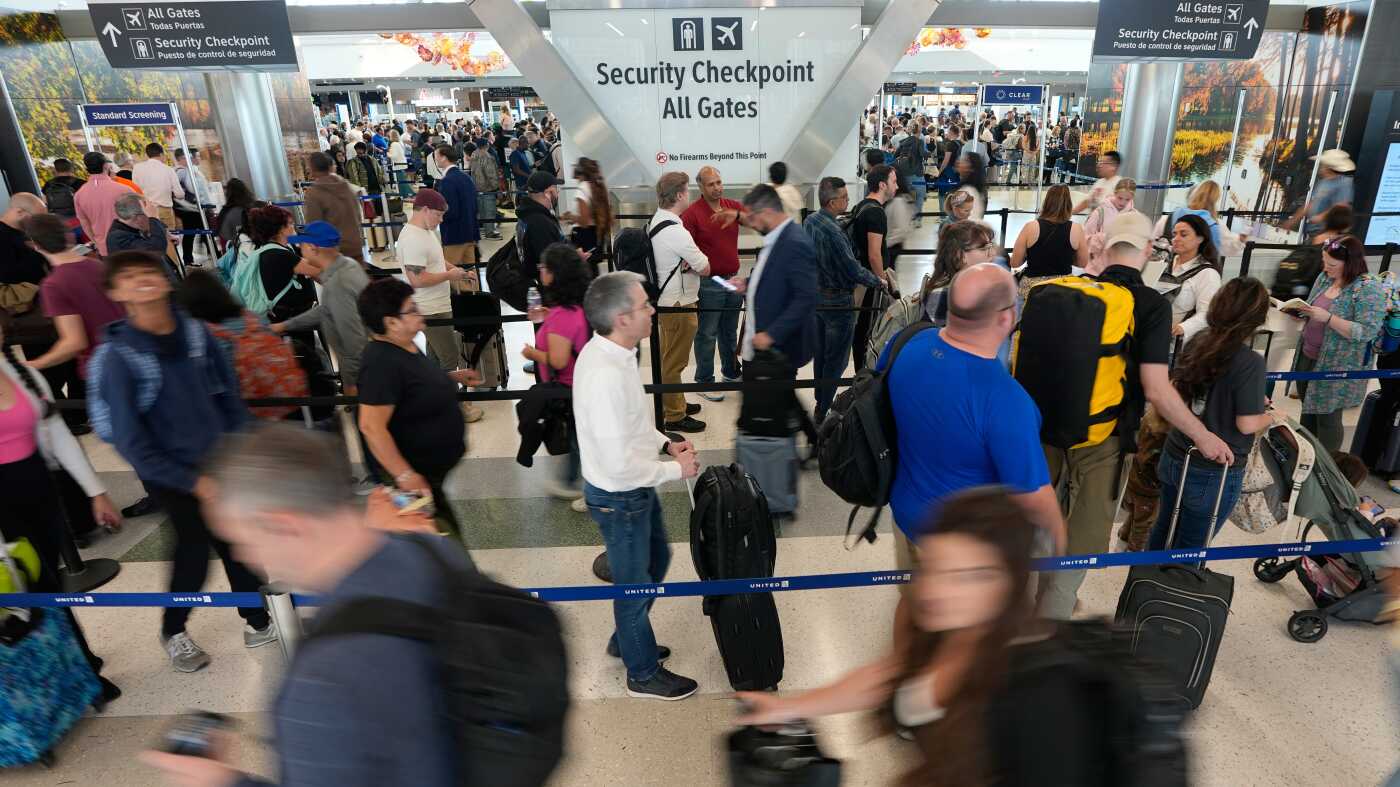
ICE officers could remain at airports after TSA workers are paid

Politics15 hours ago
Scathing report claims nation’s oldest labor union ‘betrayed’ MAGA members through ‘shocking’ spending
-

 Sports1 week ago
IOC addresses execution of 19-year-old Iranian wrestler Saleh Mohammadi
-

 Miami, FL4 days ago
Jannik Sinner’s Girlfriend Laila Hasanovic Stuns in Ab-Revealing Post Amid Miami Open
-

 New Mexico1 week ago
Clovis shooting leaves one dead, four injured
-

 Tennessee7 days ago
Tennessee Police Investigating Alleged Assault Involving ‘Reacher’ Star Alan Ritchson
-

 Minneapolis, MN4 days ago
Boy who shielded classmate during school shooting receives Medal of Honor
-

 Politics1 week ago
Schumer gambit fails as DHS shutdown hits 36 days and airport lines grow
-

 Science1 week ago
Record Heat Meets a Major Snow Drought Across the West
-

 Technology1 week ago
YouTube job scam text: How to spot it fast