Midwest
Michigan man dies of rabies after receiving kidney from infected donor who saved kitten from skunk: CDC

NEWYou can now listen to Fox News articles!
A tragic series of events led to a fatal case of transplant-related rabies earlier this year.
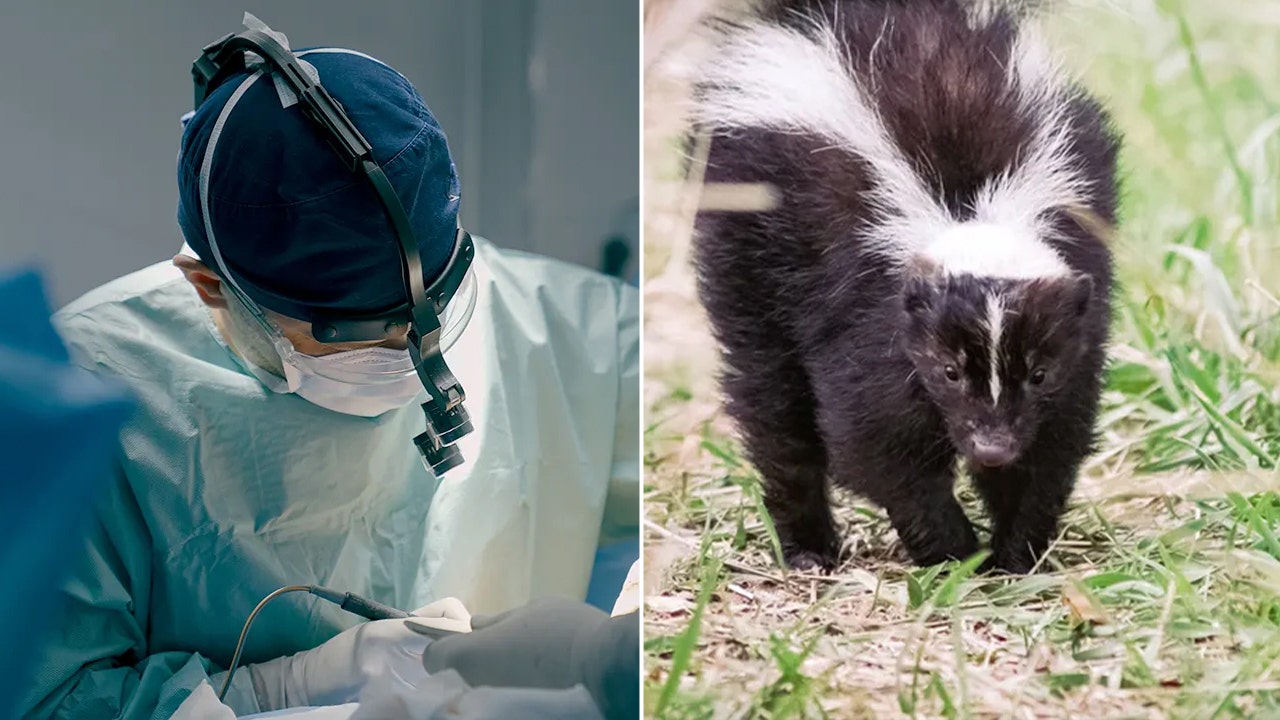
Health officials announced Thursday that an organ recipient who underwent transplant surgery in Ohio died of rabies in February. Further investigation revealed that the donor had become infected with the fatal virus after saving a kitten from a skunk.
The unnamed patient, from Michigan, received the donor’s kidney in December 2024, and later developed severe symptoms that prompted hospitalization and “invasive” procedures, the Centers for Disease Control and Prevention (CDC) said.
He reportedly experienced fever, tremors, difficulty swallowing and fear of water and died 51 days after the transplant.
‘SILENT KILLER’ PARASITIC DISEASE SPREADING ACROSS MULTIPLE US STATES, EXPERTS WARN
An Idaho man reportedly died from rabies after getting scratched by a skunk. (iStock)
The CDC said the donor, whose donated tissue went to three other recipients, was infected with the silver-haired bat variant of rabies, suggesting the skunk had been infected by a bat.
Records revealed that the organ donor, from Idaho, was scratched on the shin while fending off a skunk that displayed “predatory aggression” six weeks before his death.
“In late October 2024, a skunk approached the donor as he held a kitten in an outbuilding on his rural property,” the CDC said. “During an encounter that rendered the skunk unconscious, the donor sustained a shin scratch that bled, but he did not think he had been bitten. According to the family, the donor attributed the skunk’s behavior to predatory aggression toward the kitten.”
FLESH-EATING PARASITE CASE DETECTED IN US TRAVELER RETURNING FROM CENTRAL AMERICA
A donor recipient reportedly died several weeks after a transplant operation in Ohio. (iStock)
In the following five weeks, the donor began experiencing hallucinations, trouble swallowing, difficulty walking and a stiff neck, the agency said.
Two days later, he was discovered unresponsive at home after a suspected heart attack, according to health officials. He was reportedly revived at a hospital but was declared brain-dead and removed from life support.
The CDC said his organs were donated after the family documented the skunk encounter in a donor risk assessment. However, health officials noted that the form did not screen for rabies, citing its “rarity in humans.”
“In the United States, potential donors’ family members often provide information about a donor’s infectious disease risk factors, including animal exposures,” the CDC said. “Rabies is excluded from routine donor pathogen testing because of its rarity in humans in the United States and the complexity of diagnostic testing. In this case, hospital staff members who treated the donor were initially unaware of the skunk scratch and attributed his pre-admission signs and symptoms to chronic comorbidities.”
Health officials added that three other patients received corneal tissue from the same infected donor. They all underwent graft removal, received rabies treatment and remained asymptomatic, the CDC reported.
Health officials also reached out to 370 people who could have been in contact with the donor, according to the agency. Forty-six of them were recommended to undergo rabies procedures.
ORGAN TRANSPLANT RECIPIENT DIES OF RABIES AFTER SURGERY
A Michigan man was scratched by a skunk while saving a kitten on his rural property. (Peter Bischoff)
Health officials said the kidney recipient’s death marks the fourth documented case of rabies transmission through an organ transplant in the U.S. since 1978, emphasizing that the risk of such infections remains extremely low.
Transplant teams are now advised to consult public health officials if a potential donor has recent bites or scratches from rabies-susceptible animals, especially if the donor has had unexplained neurological symptoms.
CLICK HERE TO DOWNLOAD THE FOX NEWS APP
However, “no standard guidance currently exists for addressing reported donor animal exposures by transplant teams,” the CDC said.
About 1.4 million Americans receive care for possible rabies exposure annually, and fewer than 10 die from the disease due to effective prevention efforts, according to the agency.
Fox News Digital reached out to the CDC for more information.
Read the full article from Here



Illinois
Illinois waives tax penalties for 11 counties hit by storms, including Stephenson and Winnebago

(WIFR/WREX) – Illinois leaders announce disaster tax relief for individuals and businesses in 11 counties affected by severe thunderstorms earlier this year.
The relief waives penalties and interest for taxpayers who cannot file returns or make payments on time because of the severe weather. It covers income, withholding, sales, specialty and excise taxes.
The tax relief applies to any area included in Gov. JB Pritzker’s state disaster proclamation.
Locally, this includes Stephenson and Winnebago Counties. Other counties across the state included in the proclamation are:
- Coles
- Cook
- Effingham
- Jefferson
- Kankakee
- LaSalle
- McLean
- Warren
- Woodford
The proclamation covers severe weather in these counties between March 10 and June 21.
“In the wake of these devastating storms, my administration is ensuring that impacted residents and businesses have the support they need to recover,” Pritzker said. “By offering temporary tax relief to individuals and businesses in 11 counties, we’re giving impacted communities the time and breathing room necessary to focus on recovery.”
Individuals and businesses located in those counties qualify for state tax relief. Any counties added later will also be eligible, according to the governor’s office.
Taxpayers seeking a waiver of penalties and interest should send a brief written explanation to the Illinois Department of Revenue regarding why they cannot file timely or pay. They should provide their full name, account number, mailing address and an estimate of when they believe they can file or pay their taxes. If using a Social Security number, include only the last four digits.
Requests may be submitted electronically to REV.DisasterRelief@illinois.gov or by postal mail using the address on the return. When submitting by mail, taxpayers should write “Severe Storms – Summer 2026” at the top of the return in red ink and attach or include the explanation for requesting abatement of penalties and interest.
Taxpayers who have already been billed for penalties should email REV.DisasterRelief@Illinois.gov and provide their name, business name, account numbers and the periods for which they filed late due to the storms to request penalty abatement. Taxpayers should also include “Severe Storms – Summer 2026” in any communications with the department when requesting relief.
Property owners who experienced damage should contact their county supervisor of assessments if they wish to apply for reassessment due to any property damage. The Motor Fuel Use Tax is not included in this disaster tax relief.
Copyright 2026 WIFR. All rights reserved.

BLOOMINGTON, Ind. (WISH) — A Bloomington man was arrested Wednesday in Indianapolis on an attempted murder charge after police say he fired seven to eight rounds into a white GMC SUV occupied by three adults and four children last month in Bloomington before fleeing the area.
A news release issued Thursday from the Bloomington Police Department said members of the Indianapolis Metropolitan Police Department’s special weapons and tactics team took Kafern P. Johnson, 32, into custody near the intersection of West 84th Street and Allison Avenue in Indianapolis without incident.
The arrest came more than two weeks after the June 23 shooting in the 1000 block of North Summit Street. That’s in a residential area next to Crestmont Park in Bloomington.
Monroe County Central Emergency Dispatch received 911 calls at 7:41 p.m. June 23 reporting gunfire in the area.
Responding patrol officers and detectives determined Johnson had fired into the SUV following a verbal fight with the vehicle’s driver. Police said the dispute stemmed from an argument over a relationship.
No injuries were reported despite the number of people inside the vehicle.
Following his arrest, Johnson was taken to an IMPD facility for questioning and later booked into the Marion County jail. On Thursday morning, he was booked into the Monroe County jail.
The release said Johnson could face felony charges of attempted murder, criminal recklessness with a firearm, and pointing a firearm. No formal charges have yet been filed, according to online court records.
Bloomington police asked anyone with additional information to call 812-349-3324.
This story was formatted for WISHTV.com using AI-assisted tools. Our editorial team reviews and edits all content published to ensure it meets our journalistic standards for accuracy and fairness.

CEDAR RAPIDS, Iowa (KCRG) – World War II veteran Laverne Severson turns 100 years old on July 14. On Thursday, family, friends and fellow veterans gathered at the Freedom Foundation in Cedar Rapids to honor and celebrate the milestone birthday.
The National World War II Museum says fewer than 1% of World War II veterans remain alive.
Laverne served as a line medic during the war and was stationed in the Philippines.
“As soon as I turned 18, it didn’t take me about a month until I was going overseas,” Laverne said.
His son, Boyd Severson, recalled stories his father shared about life at his base.
“His base over there, he told me they would get air raids every morning. The Japanese would do an air raid and they’d have to run and jump into their foxholes. And this is stuff you see in movies, and he actually lived through this,” Boyd said.
Eric Parker, assistant director of the Freedom Foundation, said veterans like Laverne deserve recognition.
“As long as we are allowed to still be graced with their presence, then we need to just soak that up and just be really thankful,” Parker said. “There needs to be a remembrance and there needs to be a legacy there that we can honor.”
Boyd said the number of surviving World War II veterans in Iowa underscores the importance of events like Thursday’s celebration.
“Slowly but surely we’re losing this generation that, from what I’ve seen, there’s 250 to 275 surviving World War II veterans remaining in Iowa, and my father’s one of them and they all should be recognized. It all should be honored,” Boyd said.
And we had to ask…what’s the secret to a century of life?
“Crackers and peanut butter in the morning for breakfast!” Laverne said.
Copyright 2026 KCRG. All rights reserved.
-

 Illinois51 seconds ago
Illinois waives tax penalties for 11 counties hit by storms, including Stephenson and Winnebago
-

 Indiana4 minutes ago
Attempted murder suspect arrested in Indianapolis for Bloomington shooting
-

 Iowa9 minutes ago
Iowa WWII veteran approaching 100th birthday honored in Cedar Rapids
-

 Kentucky14 minutes ago
Exantus may be subject to involuntary hospitalization due to Kentucky law
-

 Louisiana24 minutes ago
Parasitic stomach illness that can cause explosive diarrhea rises in Louisiana
-

 Maine31 minutes ago
Is prison in play for Graham Platner?
-

 Maryland34 minutes ago
Office building in Glen Burnie evacuated after shift in parking garage floor
-

 Michigan39 minutes ago
Menominee, Michigan man arrested on sexual assault charges involving a minor

