Kansas
Kansas State men’s golf clinging to final NCAA regional qualifying spot for nationals


Kansas State women’s golf coach Stew Burke on the NCAA Championship
Kansas State women’s golf coach Stew Burke talks about the upcoming NCAA Championship, which starts Friday in Carlsbad, California.
The Kansas State men’s golf team remains on track to qualify for its first NCAA Championship, but with zero margin for error.
With a score of 4-over-par 292 Tuesday the Wildcats held onto fifth place in the NCAA Bremerton Regional at Gold Mountain Golf Course in Bremerton, Washington. The tournament concludes Wednesday with the top five teams advancing to nationals May 23-28 in Carlsbad, California.
The 10th-seeded Wildcats, who were tied for fourth after one round, have just a one-shot cushion over sixth-place Charlotte with South Florida and Utah lurking two back at 8-under. Kansas is in 10th place at 16-over, 10 shots below the qualifying line.
K-State senior Cooper Schultz, the co-leader with Florida’s Luke Poulter at 4-under Monday, dropped into a three-way tie for sixth with an even-par 72 in the second round. Florida’s Matthew Kress tops the leaderboard heading into Wednesday’s final round at 10-under, one shot ahead of Poulter.
No. 2 seed Florida is comfortably in the team lead at 25-under, followed by top seed Arizona State in second at minus-16, South Carolina at 2-under and Colorado at 1-under.
Senior Kobe Valociek turned in K-State’s best round of the day at 1-under 71, moving up 11 spots into 21st place. Ian McCrary, who shot even par on Monday, dropped to 35th overall with a second-round 76, while Nicklaus Mason is tied for 48th at 7-under after a 3-over 75 on Tuesday.
K-State will go head-to-head in a group with Colorado and Charlotte in the final round on Wednesday behind leaders Florida, Arizona State and South Carolina, which tees off first at 8 a.m. Pacific (10 a.m. central).
Arne Green is based in Salina and covers Kansas State University sports for the Gannett network. He can be reached at agreen@gannett.com or on X (formerly Twitter) at @arnegreen.



LOWER SWATARA, Pa. (WHP) — Police are searching for a teenager from Kansas who was reported missing Monday while visiting family in the Middletown area.
Lower Swatara Township officials said Jamilian Jones,16, was last seen around 1 p.m. in Harrisburg near 18th and Forester streets after being dropped off by a family member.
Officials said Jones was last seen wearing a purple Ed Hardy sweatshirt and blue jeans.
Anyone with information regarding her whereabouts should contact Lower Swatara Township Police at 717-558-6900.

KSHB 41 reporter Megan Abundis covers Kansas City, Missouri, including neighborhoods in the southern part of the city. She also focuses on issues regarding scams. Share your story idea with Megan.
—
The Veterans Community Project completed its new outreach center in Kansas City, marking the latest milestone for the organization that began in 2016 with a vision to address veteran homelessness.
KSHB 41
Brandonn Mixon, chief project officer and co-founder of Veterans Community Project, said the growth reflects the support of the local community.
Veterans Community Project opens new, expanded Kansas City outreach center
“Going back to this just kind of a vision in 2016 with a group of combat veterans, to literally changing what veteran’s homeless looks like on a national scale, but it’s literally because of the Kansas City community,” Mixon said.
Mixon said the new building is already fulfilling its purpose of bringing veterans together.
“That’s what’s been great about this, Mixon said. “We’re seeing a big influx of veterans coming in and saying,’Hey I’m a veteran, how do I get involved? What can I do in KC? I want to be around other veterans.”‘ And that’s really what this building is doing,” Mixon said.
KSHB 41

The new outreach center evaluates and helps veterans with many things, including help at the center with military documentation, commissary, rent and bills, bus passes, resume writing, education, a Medicare broker and a workforce representative. In just a few months, the organization has helped 35 people find jobs.
Air Force veteran Terrion Lacy is a veteran with a new job. Lacy served from 1987 to 1994 as a radio communications analyst specialist.
Veterans’ Community Project helped him with his home and bills, a new car, and stable employment.
KSHB 41
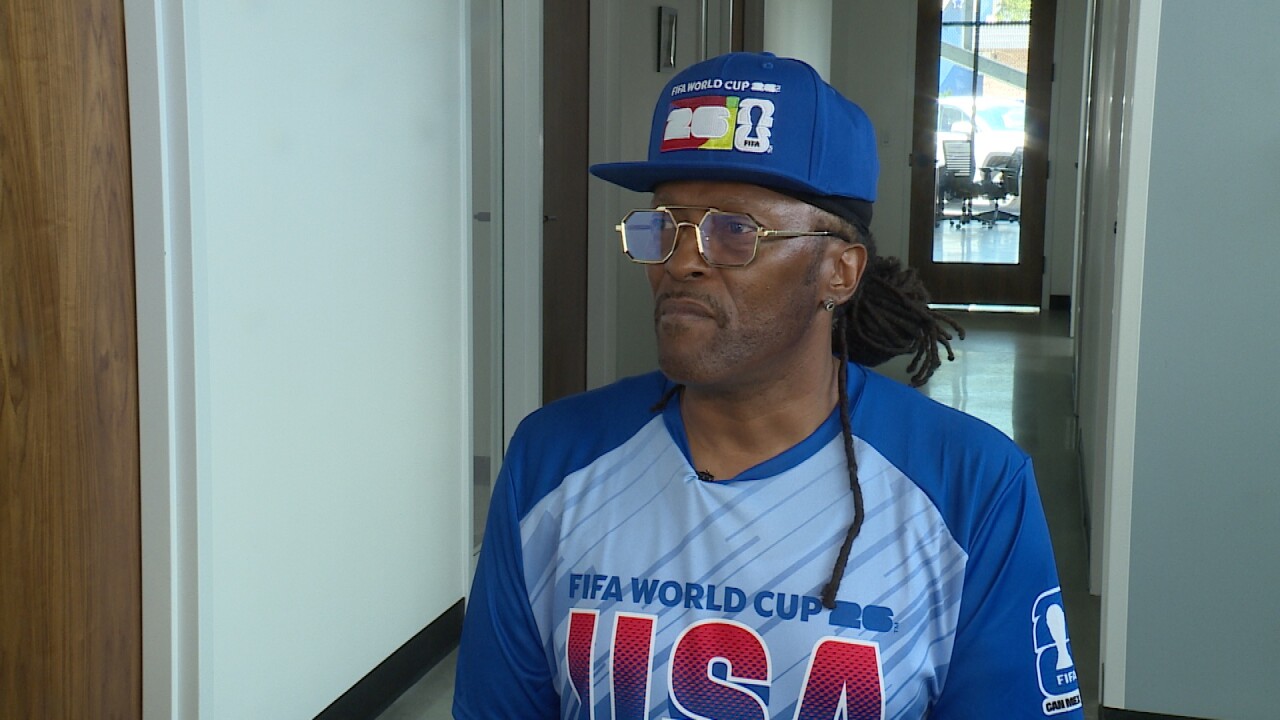
“I needed help with my rent,” Lacy said.
Since starting his new job, Lacy has earned a role connected to the World Cup.
“Since I have been in my job, I’ve gotten two promotions,” Lacy said. “That extra boost of confidence continues to help me keep the optimism I already have.”
Lacy encouraged other veterans to seek out help through the organization.
“I am always optimistic, and even if you’re not as optimistic as me, I’m going to tell you, you need to come down here, because they will help you find some,” Lacy said. “If the walk leads you here, you can really believe you’re going to get help.”
Veterans’ Community Project now operates tiny home communities in Kansas City, St. Louis, Glendale, Milwaukee, Sioux Falls, Longmont, and recently announced a new projet in Dallas.
The organization also is planning a $2.5 million expansion of its headquarters, which had been operating out of a former auto shop garage.
“When it gets hot in there, its 90 degrees,” Mixon said.
Mixon said the space has become inadequate.
“To be honest with you, we outgrew our original building a long time ago, but at the end of the day, it’s about serving veterans,” Mixon said.
KSHB 41

The expansion, funded through donations, will repair the roof and HVAC system and create new offices to support the organization’s continued national growth.
“We have to expand before we keep going into other markets,” Mixon said. “Thank you for believing in us, thank you for giving us the opportunity to change lives and have these stories and I look forward to doing more in the future.”
Lacy said the outreach center offers something essential for veterans looking to rebuild.
“Any veteran that wants to better themselves, wants to find the community, this is where you get that at,” Lacy said.
This story was reported on-air by a journalist and has been converted to this platform with the assistance of AI. Our editorial team verifies all reporting on all platforms for fairness and accuracy.
—


Kansas governor Laura Kelly and Kansas City Chiefs owner Clark Hunt stand outside the Kansas state capitol after an agreement was reached for a new state-of-the-art domed stadium in Wyandotte County.
Kansas City Chiefs
The Kansas City Chiefs are moving from Missouri to Kansas and into a glistening, $3 billion dome, which will be surrounded by an entertainment district.
“It will be a world-class facility,” Kansas governor Laura Kelly said, “the envy of professional sports.”
But going across state lines could have a potentially significant downside: Reduced income for both Chiefs players and staff as a result of the state’s different tax provisions.
The Chiefs are slated to play — and therefore work — in Missouri’s Arrowhead Stadium complex until moving into their Kansas digs in 2031.
Currently, Kansas Citians who work in Missouri instead of Kansas pay less income tax, but the difference is marginal.
The top income tax rate in Kansas is 5.58%, and one reaches that rate with a taxable income of $46,000, which NFL players obviously would exceed. In Missouri it is 4.7% once taxable income reaches $9,436, and those who work in Kansas City, Mo. — like the Chiefs — pay another 1% as an earnings tax.
Another difference between the states is the corporate tax rate, which impacts the Chiefs as a privately held C corporation.
Both states have a base rate of 4%, but only Kansas assesses a surtax of 3% on taxable income of more than $50,000.
That discrepancy, though it wouldn’t impact the players’ individual income, is likely why Jason Sudeikis said tax issues forced him to film scenes from his Ted Lasso show in Missouri instead of Kansas.
And legislation in August could more drastically shift things between the border states.
As part of a special election on Aug. 4, Missourians will vote on Amendment 5.
If the amendment passes, it would eliminate individual state income tax in Missouri. So staying put at Arrowhead Stadium’s GEHA Field would have had financial benefits.
“If you have that situation,” Kenneth Woodward, a Kansas City-area certified public accountant, exclusively shared, “it would have been a totally different ballgame.” To put the numbers in perspective: If the amendment passes and the Chiefs had stayed in Missouri, a Chiefs player making $20 million a year would save about $1 million in taxes. (Guard Trey Smith, for example, will make $19.75 million in base salary this season, though that does not include his bonuses.)
The Chiefs could still save money while playing in Missouri through the end of the decade but not once they leave the Arrowhead complex in 2030 — unless Kansas changes its tax provisions before then, and Congress approves them.
Amendment 5 would not only impact players currently on the roster, but also the entire Chiefs staff, including owner Clark Hunt.
Moreover, it could have helped lure free agents.
After his then-Raiders team moved from Oakland, Calif., to Las Vegas, Nev., tight end Darren Waller lauded the financial windfall because Nevada is one of eight states — along with Alaska, Florida, New Hampshire, South Dakota, Tennessee, Texas and Wyoming — to have no state income tax. To offset the loss of income tax revenue, states typically increase sales tax, but Texas and Alaska compensate with taxes on oil drilling.
“Each state kind of deals with it on their own,” Woodward said. “They’re all going to get their money from somewhere. It’s not like the states are operating without revenue streams.”
Since moving to Kansas City from Dallas in the 1960s, the Chiefs have played in the state of Missouri.
But moving to Kansas became attractive to the Chiefs because the state will pay for about 60% of the new stadium through its sales tax and revenue (STAR) bonds.
The Wyandotte County in Kansas, City, Kan., location also offers ample space for the stadium to be surrounded by an entertainment district, featuring hotels, bars, restaurants and shops. That will provide further revenue streams and capitalize on the NFL trend.
The New England Patriots have Patriot Place, an outdoor complex adjacent to Gillette Stadium, which has restaurants, hotels, a movie theater and shops. The Dallas Cowboys’ The Star District has a 12,000-seat practice facility also used by high school teams and 19 restaurants, a hotel, a cigar bar, a spa and multiple shops.
Having that kind of complex is the upside of moving to Kansas for the Chiefs.
The downside is they may have cost themselves some future income by staying in Missouri.
“That would have been a big motivator for the Chiefs to stay just to be able to avoid that state income tax,” Woodward said. “If they complete the move to Kansas, then there’s nothing they’re going to be able to do other than just complain to Kansas.”Amendment 5’s Potential Consequences
The Lure Of Kansas
-

 Alaska11 seconds ago
Kei to stay, new Alaska law makes import vehicles roadworthy
-

 Arizona7 minutes ago
Padres host Arizona Diamondbacks, look to stop home slide
-

 California10 minutes ago
Man arrested after woman dies in California fireworks explosion
-
Arkansas10 minutes ago
Arkansas Lottery Powerball, Cash 3 winning numbers for July 6, 2026
-

 Colorado22 minutes ago
3 firefighters killed in Colorado remembered for their bravery
-

 Connecticut25 minutes ago
Connecticut Forests Are Healthier, And The Porcupines Have Noticed
-

 Delaware30 minutes ago
Delaware lawmakers pass same-sex marriage bill after initial failure in the House
-

 Florida37 minutes ago
Miami ranks among top U.S. cities for debt collection calls as Florida places near top, study finds

