Indiana
Stephanie White says fans ‘or bots on social media’ are a problem, not Indiana Fever locker room


Fever press conference today: Caitlin Clark on technical, Stephanie White on bots
The Indiana Fever had a sparkplug late in the game to seal their win over the Connecticut Sun. Plus, Caitlin Clark and Stephanie White spoke on the game.
UNCASVILLE, CT — Caitlin Clark and Stephanie White are firmly shutting any rumors, social media speculation or reports on a divide between them or the Indiana Fever locker room. And it’s not the first time they’ve had to do it.
It started when the Fever coach and her star player got into a disagreement during a timeout when Indiana was down big to Portland on May 28. The two were strongly talking to each other, with Clark seeming to throw her arms up in frustration before getting off the bench and standing up, Raven Johnson replacing her in the lineup.
Social media flared with speculation that White and Clark did not like each other or could not work together, especially after that game ended in a 100-84 defeat — their worst loss of the season so far.
But that, of course, was not the case. Clark and White did have a disagreement, but it wasn’t anything more than a coach and a player pushing each other in a frustrating game.
Buy 2026 Indiana Fever tickets!
“It’s two people being competitive, two people who really want to win,” Clark said on June 1. “I think a lot of those things happen all the time, and I know there’s a camera on me, and that’s how it’s going to be, but there are a lot of people out there in the media or on TV who think they know a lot of things, and they’re just blatantly wrong about a lot of things.”
Two weeks later, Clark and White are shutting down rumors that there’s division in the locker room again.
Following an 85-75 win over Connecticut on Saturday night, both Clark and White looked confused when a reporter started a question with “I wanted to address the elephant in the room” about unsubstantiated reports that the two had another interaction on the sideline at the end of the game against the Sun.
Clark received a technical foul (one she said postgame that she “deserved” and that it was “worth it”) for waving goodbye to the Sun crowd. Then, she checked out with 22 seconds left in the game with the Fever up 10 points.
But no such interaction with White happened. And any reports that the Fever locker room is divided, Clark said, has no merit.
“I think it’s speculation,” Clark said with a laugh.
Clark emphatically nodded her head along as White added: “I don’t think you’re talking about journalism. If we’re going to create news from fans on social media, or bots on social media, or whatever it may be, then that’s a problem, right? I think legitimate news sources need to report legitimate news.”
Clark responded: “I like that. Period.”
Chloe Peterson is the Indiana Fever beat reporter for IndyStar. Reach her at chloe.peterson@indystar.com or follow her on X at @chloepeterson67. Get IndyStar’s Indiana Fever and Caitlin Clark coverage sent directly to your inbox with our Caitlin Clark Fever newsletter. Subscribe to IndyStar TV: Fever for in-depth analysis, behind-the-scenes coverage and more.



As many are celebrating America’s 250th birthday, a threat of severe weather looms, as watches and warnings have been issued for most Illinois and northwest Indiana counties for Saturday.
A Severe Thunderstorm Warning is in effect for Kane and Kendall counties in Illinois until 3:45 p.m.
A Severe Thunderstorm Watch has been issued for DuPage, Kane, Kankakee, Grundy, Kendall, and Will counties in Illinois and for Porter, Newton, Jasper, and Lake counties in Indiana until 7 p.m.
A Flash Flood Watch is in effect for Central Cook, De Kalb, DuPage, Eastern Will, Grundy, Kane, Kendall, La Salle, Northern Cook, Northern Will, Southern Cook, and Southern Will in Illinois and Lake in Indiana until 10 p.m.
A Flash Flood Warning is in effect for De Kalb, La Salle, and Lee counties in Illinois until 5 p.m.
Storm Prediction Center has areas along and south of I-80 at a Level 1 (out of 5) for severe chances. Strong-to-severe storms are expected around 2 p.m. and sunset. Frequent lightning, damaging winds and torrential downpours may accompany the strongest storms.
Be sure to stick with CBS News Chicago and the First Alert Weather team for the latest.

TODAY
Mostly sunny and very warm to start, then the storm chance rises later in the day. Highs reach the upper 80s to near 90, with a light southwest breeze. A Heat Advisory remains in effect through 9 p.m. Saturday, and the better chance for showers and thunderstorms develops after mid afternoon, with any stronger storm capable of heavy downpours, hail, and damaging wind gusts.
TONIGHT
Showers and thunderstorms remain likely early in the evening, then coverage gradually trends lower later at night. Lows fall into the low 70s, with light wind. It does not look like nonstop rain, but evening outdoor plans, including fireworks, will need a weather eye.
TOMORROW
Partly sunny, warm, and still somewhat unsettled, with storms becoming more likely as the day goes on. Highs reach the mid 80s, with light wind. Much of the first half of the day looks more usable, but the second half becomes less reliable as showers and thunderstorms become more common.
TOMORROW NIGHT
Showers and thunderstorms remain likely early, then fade back later in the evening and overnight. Lows settle near 70. It should turn quieter with time, and the air will feel a little less oppressive than the previous few nights.
MONDAY
Partly sunny and still hot, but not quite as extreme as the holiday weekend. Highs reach the mid 80s, with a more humid feel and at least a low-end thunderstorm chance around. This looks more manageable than Saturday, but not completely quiet from start to finish.
MONDAY NIGHT
Partly cloudy and seasonably mild, with lows in the mid 60s. Any leftover storm chance looks limited, and quieter weather should win out for most of the night.
TUESDAY
Clouds and sun mix with a stray thunderstorm chance, and highs recover into the mid 80s. Heat is still around, but not as punishing as the late-week surge, and much of the day still looks usable.
TUESDAY NIGHT
Partly cloudy and muggy again, with lows in the upper 60s. Quiet weather generally holds overnight, even if a completely dry forecast is not guaranteed.
WEDNESDAY
Mostly cloudy and humid with a thunderstorm possible in spots during the afternoon. Highs reach the mid 80s. This keeps the pattern a little unsettled, though it still does not look like an all-day rain setup.
7 DAY FORECAST
The main concerns are the late-day storm chance on the Fourth and then a hot, humid stretch that continues into next week. Saturday and Sunday both carry storm chances, with the Fourth looking more active later in the day and Sunday staying somewhat unsettled. After that, temperatures settle into the 80s with occasional storm chances lingering into midweek, so the pattern stays summerlike even though the worst of the heat eases back a bit.

WESTFIELD, Ind. (WISH) — Two women are facing criminal charges following a prostitution investigation at an apartment complex in Westfield.
According to a news release Thursday, the investigation began June 23, stemming from a Crime Stoppers tip about suspected prostitution and possible human trafficking at The Farmhouse at Lantern Commons Apartments, near the 16000 block of Gleam Way.
On June 25, detectives arranged a meeting, entered the residence and encountered two adult women. One of the women agreed to engage in sexual activity in exchange for $300. Both women were detained at the scene.
Detectives searched the apartment and found evidence of sexual activity and prostitution-related activity.
Yanyi Zhang faces five charges:
- Two counts of Promoting Prostitution, a Level 5 Felony.
- Identity Deception, a Level 6 Felony.
- Class A Misdemeanor for prostitution.
Linxia Shi was charged with a Class A Misdemeanor for prostitution.
Zhang and Shi were offered victim assistance resources during the investigation, Westfield Police said.
A jury trial for Zhang is scheduled for Nov. 2, according to online court records.
This case marks the second prostitution investigation by the Westfield Police in the past two months, both of which were initiated by tips submitted anonymously through Crime Stoppers. The department encourages residents to continue to report suspicious activity.
-

 Wyoming3 minutes ago
Casper residents get festive at Independence Day 250 celebration at Ford Wyoming Center
-

 Crypto6 minutes ago
Hyperliquid Helps VALR Launch Over 200 Perpetual Markets as Decentralized Liquidity Gains Ground
-

 Finance11 minutes ago
Las Cruces finance director gets national honor for ‘exceptional contributions’
-

 Fitness18 minutes ago
10 minutes of swimming might not sound worth it – but I tried it for 2 weeks and found the benefits of a quick dip
-

 Movie Reviews26 minutes ago
The Revisionist – Film Review – Eye For Film
-
World36 minutes ago
150 people from 50 countries become US citizens at Mount Vernon on America’s 250th birthday
-
 Lifestyle1 hour ago
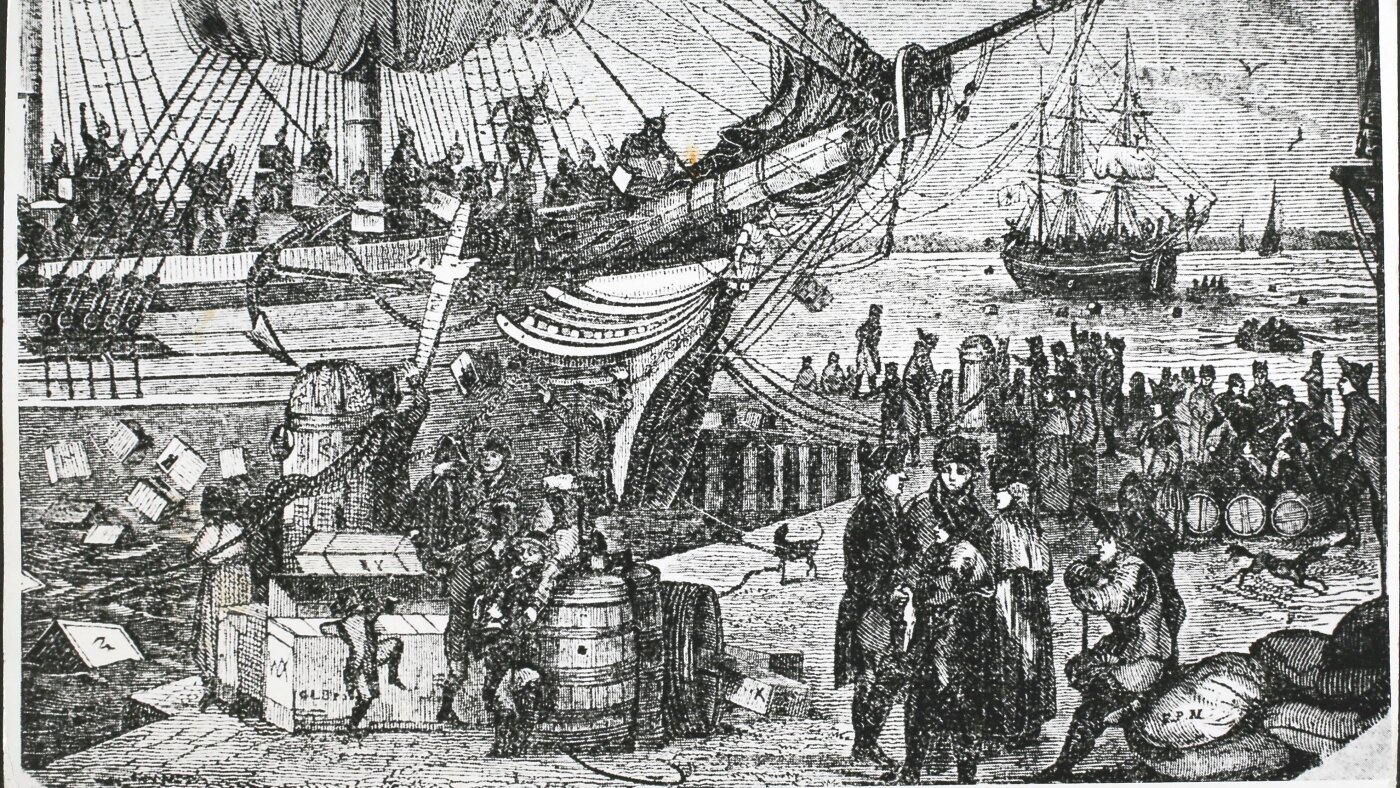
But first, coffee: The drink that energized the American Revolution
-

 Technology1 hour ago
NASA launched an emergency mission to stop the Swift Observatory from crashing to Earth


