Indiana
Private colleges bring students to Indiana. We need state support. | Opinion


Why not use incentives to encourage students to grow roots here and become Hoosiers for life?

Gotham, Marley, Sycamore––3 shipping containers made into rentals
Owner JB Rapp has turned old shipping containers into luxury short-term rentals. Look inside these homes in the 2700 block of N. College Ave.
IndyStar
Indiana and Indiana businesses — from the smallest not-for-profits and startups to the Fortune 500s — need talented college graduates who have the skills needed for today’s world.
Indiana is an attractive destination when it comes to recruiting students to its universities and colleges. But our advantage evaporates when it comes to retaining these graduates; we rank 40th in the country in terms of college graduate retention. Since the Indiana Commission for Higher Education started tracking this metric more than five years ago, this problem of brain drain among the best and brightest is not merely persistent, it is getting worse.
Somewhat surprisingly, this is not a new phenomenon. A landmark (and eye-opening) 1999 study conducted by the Indiana Fiscal Policy Institute found that Indiana retained its graduates at a rate almost 30% below the national average. Almost 25 years later, the National Bureau of Economic Research estimated Indiana was a net exporter of college graduates, the 11th worst state in the nation.
This trend is particularly troubling because business investment in Indiana is growing at a record pace, at least partly because of our business-friendly environment. According to the Indiana Economic Development Corp., 2024 marked the eighth consecutive record-breaking year bringing in more than $39 billion of capital investments. The question is whether Indiana can support the talent needs required to buttress and grow these investments in industries that increasingly require college level skills.
To its credit, Indiana retains 67% of Hoosier graduates who earn a bachelor’s degree at an Indiana college or university. However, that number is only 15% for non-residents, according to Indiana’s latest State of Higher Education report.
If you are looking for a silver lining, private institutions like the University of Indianapolis are far more successful in retaining their graduates. More than 90% of our college graduates last year had a positive career outcome — either by finding a relevant job in their field or going onto graduate school. And more than 91% of our undergraduates who chose the employment route remained in Indiana.
But it’s not just UIndy. Private institutions across Indiana retained 71% of their bachelor graduates after one year, and almost 70% five years after graduation, according to data from the Independent Colleges of Indiana. Compare that to Indiana’s public postsecondary institutions which retained 61% of baccalaureate graduates after one year from 2007 to 2018.
Much has changed since 2018 and there are some clear signs of progress, but the challenge remains. We are a net importer of students but a net exporter of those successfully completing their education. Private institutions, including UIndy, also attracted 44% of their freshmen from outside Indiana — which means they are net importers of out-of-state students. That statistic alone should make us think about how we might change the flow from a brain drain to a brain gain.
So what can be done to support private colleges that are bringing talented students to our state? I urge our state lawmakers to recognize the importance of all 29 independent colleges of Indiana: Include them in the conversation around talent development and support them with financial assistance and legislative decisions.
This is not an emotional argument. It is supported by the math. Consider this return on investment data: For every dollar that the state provides to ICI institutions, the state of Indiana gets $70 worth of economic impact. In addition, ICI institutions contribute $1.6 billion in salaries, wages and benefits for their employees.
Their graduates represent 29% of all Hoosier baccalaureate degrees and 36% of all STEM and nursing degrees — no small feat considering the well-earned respect Indiana’s public universities and colleges have in these fields. But while 31% of ICI students are eligible for a Pell grant based on financial need, just 21% of ICI students receive a state grant. Furthermore, the average cost to Indiana taxpayers for each public college bachelor’s degree is more than 10 times higher than an ICI bachelor’s degree ($56,524 vs. $5,436).
Would it not be a worthwhile investment to entrust additional appropriations with those who are bringing young minds to Indiana and keeping them here? Independent colleges and universities bring talent to Indiana, help them develop the skills needed by Hoosier employers and work intentionally to provide them experiential learning opportunities, many of them with our local employers, during their educational training.
There is ample evidence that if students are exposed to experiential learning opportunities such as internships, work-based learning and project-based learning with employers while in college, they are much more likely to stay engaged with the same employers beyond graduation.
We know that incentives like the Hoosier Business Investment Tax Credit or the Headquarters Relocation Tax Credit are attractive tools to encourage investment in Indiana. Why not use similar incentives to encourage people and students to grow roots here and become Hoosiers for life?
For example, Maine offers an Educational Opportunity Tax Credit for students and employers making educational loan payments at both in-state and out-of-state institutions. The Michigan Economic Development Corp. promotes its talent pipeline with the Michigander Scholars Program to meet the needs of the tech workforce with scholarships of up to $10,000 to students who commit to stay in-state for 12 months.
More investment is needed at the private institutions that are educating and training the future Hoosier workforce. Just like the long-lasting benefit brought by a tax incentive for a physical building, it only makes sense to support this with dollars and cents. It’s imperative for us to work together, public and private, to solve our ongoing brain drain problem to create a stronger Indiana for us all.
Tanuja Singh is the 10th President of the University of Indianapolis.



Fairfield native, David K. Wells, 69, and his wife Aileen, were found dead inside their home in Newburgh, Indiana, Monday night. Warrick County Sheriff Michael Wilder said that deputies responded to the residence just before 8:00 p.m. after dispatch received a call around 7:40 p.m. from a friend of the family requesting a welfare check. When officers didn’t get an answer at the door, they entered through the back of the home and found the couple deceased. Officers cleared the home and waited for detectives to arrive. Investigators also obtained a search warrant to do a further examination of the residence. Authorities were able to notify family members and conduct interviews to gather additional information. Sheriff Wilder said investigators believe the couple had been dead for less than 24 hours before they were found. He also said there is no indication of any forced entry or an intruder. Sheriff Wilder has not made a formal determination as to what happened. Autopsies for the couple were scheduled for yesterday morning to help determine a cause. David Wells grew up in Fairfield and graduated from Fairfield High School in 1975. He had a long career in television commercial production in Evansville and had more recently operated the Cigar! Cigar! tobacco store in Evansville.

INDIANAPOLIS (WRTV) — Indiana saw a significant decline in veteran homelessness last year, despite the total number of homelessness rising across the state.
According to the U.S. Department of Housing and Urban Development (HUD) annual estimation of the homeless population, known as the Point in Time (PIT) count, Indiana saw an 18.7% decline in veteran homelessness in 2025 compared to the year before.
That marked the second-largest decline of any state by percentage.
Helping Veterans and Families (HVAF) of Indiana specializes in assistance for veterans facing homelessness. CEO Emmy Hildebrand told News 8 the formula that’s finding success is the same that works with any at-risk group: housing and wrap-around services.
Hildebrand said that the formula needs support from the state.
“There is no state funding supporting homeless services in our state,” Hildebrand said. “And very little local funding outside Indianapolis.”
Safety net programs have faced budget cuts, with lawmakers eliminating funding for the Housing First program in 2025. It supported organizations helping people secure stable housing.
And housing advocates have criticized Indiana’s public camping ban as essentially making it illegal to be homeless.
HVAF client Terri Massey, a 34-year-old Navy veteran, said the stigma of being homeless was the most difficult challenge to overcome.
“I’m still trying to provide for my kids,” Massey said “I’m (not) out here being lazy or not trying to do better.”
Massey was working, supporting her children, but found herself sleeping in cars and hotel rooms because she didn’t have stable housing. “Going to that work, working 10 hours, leaving, going to sleep in my car.”
HVAF helped place Massey in a permanent apartment. HVAF also placed Massey in a different kind of “bootcamp” years after her time in the military, learning job skills. She’s looking for a job, but thankful to do it from a place she can call home.
“I am beyond grateful and thankful. I literally pray and thank God every day,” Massey said. “Because for the longest I felt like I was alone. And I had to figure everything out by myself. I didn’t.”
It’s estimated that seven percent of Indiana’s homeless are veterans. Hildebrand said there are federal funds for organizations working with veterans, which support HVAF’s programs.
Still, finding permanent housing is a struggle.
According to the National Low Income Housing Coalition, for every 100 extremely low-income households in Indiana, just 34 rental homes are affordable and available.
“There are so many people on the bubble that are just one emergency away from living in their car, staying with friends and family, or living on the streets because we don’t have the appropriate system here in Indiana,” Hildebrand said.
Hildebrand said lawmakers assured her they would work to support homeless services, but she hasn’t seen any drafted legislation that might be introduced in the next legislative session.
Across the country, about one in 25 people experiencing homelessness previously served active duty in the armed forces, according to numbers from HUD. Veteran homelessness declined 56% between 2009 and 2025.

The Indiana Department of Environmental Management has issued an Air Quality Action Day for July 8th in Northwest Indiana.
Ozone levels are expected to be in the Unhealthy for Sensitive Groups range, also known as the “orange” level. While not everyone will notice or be effected by the conditions, and while they may not be as severe as recent wildfire smoke events, individuals with asthma, COPD, and other health issues should proceed with caution when exercising outside.
Ozone levels are expected to be in the Unhealthy for Sensitive Groups range, also known as the “orange” level. (WSBT Photo)
The affected area is all of Northwest Indiana, including the cities of: Crown Point, Gary, Hammond, Kentland, LaPorte, Michigan City, Portage, Rensselaer, Valparaiso and all other cities in the region, especially those near Lake Michigan.
Warm temperatures, mostly sunny skies, and light and varied winds coming off of Lake Michigan are expected to contribute to elevated ozone levels.
To stay up to date on issuances and quality levels in Indiana, visit SmogWatch.IN.gov.
-
Culture27 minutes ago
Which Version of the ‘Odyssey’ Should You Read?
-
 Lifestyle30 minutes ago
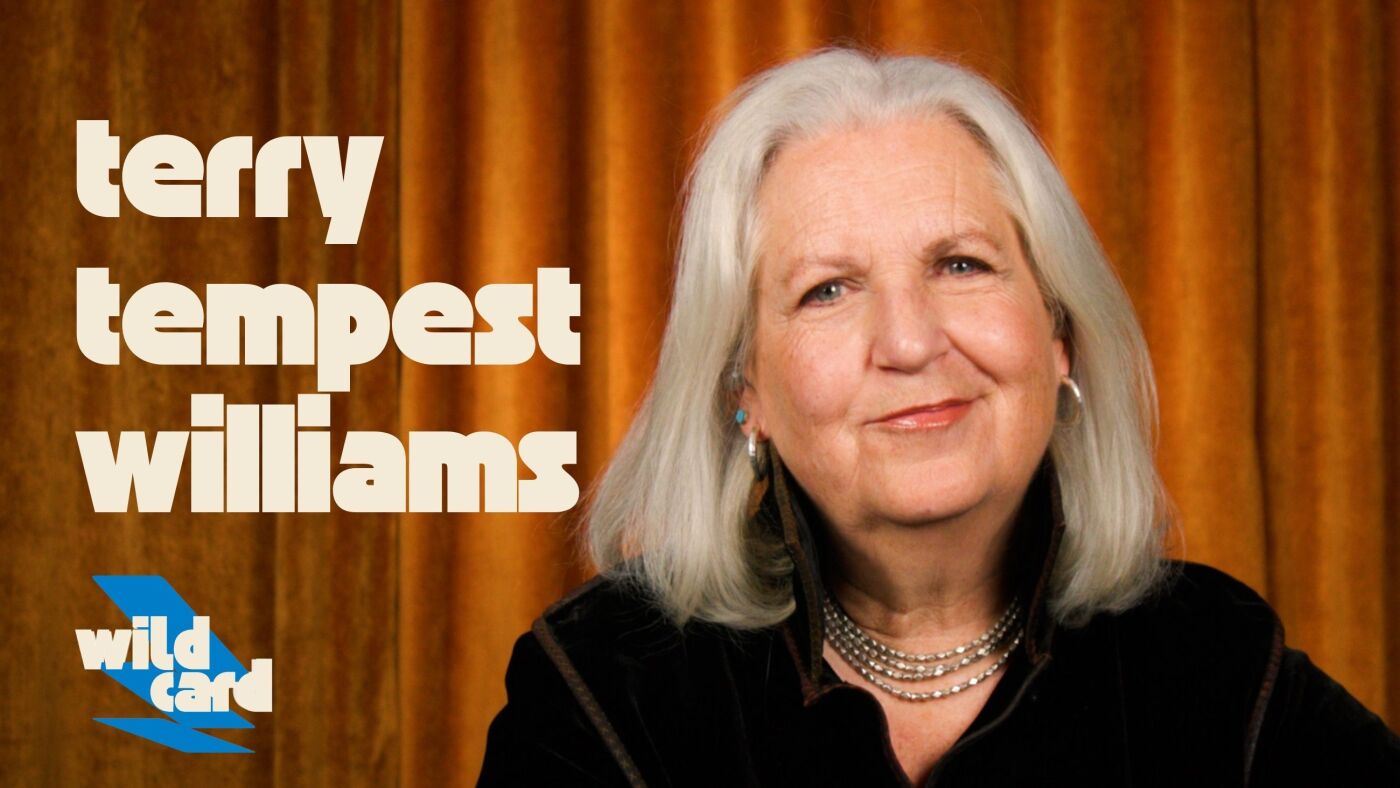
Terry Tempest Williams on why women with big ideas get labeled ‘crazy’ : Wild Card with Rachel Martin
-

 Technology42 minutes ago
Google’s Nest Thermostat has hit its best price of the year
-

 World45 minutes ago
Argentinian flight instructor jumps to death from plane, 22-year-old student forced to land alone
-

 Politics50 minutes ago
Omar’s disclosures erased millions, leaving her with potential negative net worth. She won’t explain why.
-

 Health57 minutes ago
Dr Oz links obesity to chronic disease surge, says GLP-1s can ‘jumpstart’ better health
-

 Sports60 minutes ago
Pirates star pitcher makes unfortunate history after being taken out in middle of perfect game bid
-

 Technology1 hour ago
Medical identity theft follows you into the doctor’s office

