Indiana
Political debates are strange contests, but occasionally make choices clear • Indiana Capital Chronicle


Americans expect more from political debates than we often get. This year is quite an exception.
I watched the first Indiana gubernatorial debate with great interest on Oct. 2. The hour-long event featuring Jennifer McCormick (D) and Mike Braun (R) was only a few minutes in when I could tell this was likely going to be a good night for Democrats. Only a few minutes later, I found myself disappointed because I knew this important moment was not going to be seen by as many Hoosier voters as it should have been.
Both presidential debates delivered, at a minimum, a clear contrast between the participants that should drive decision making for voters. President Joe Biden’s awful debate performance in late June led to a rallying cry from many in his own party for him to drop out of the race. The performance illustrated his greatest vulnerability; that he was just too old for the job.
Importantly though, polling data after that bad night didn’t move all that much. One could conclude it didn’t matter as much to voters as it did to the political class. More likely though, it confirmed pessimism about Biden’s ability to inspire movement in his already sagging position.
His eventual and historic withdrawal from the race, and the rallying around Kamala Harris drastically changed everything.
Debates can do that, though they rarely do. Usually, the contests are exercises in bias confirmation. Dr. Conor Dawling, professor of political science at the University of Buffalo wrote, “Debates can help solidify, or reinforce, choices for folks who are already fairly to very certain which candidate they intend to support.” Yes, this is what we normally get out of them.
However, this year’s battles have delivered more than that several times now.
Gubernatorial contest
The McCormick/Braun debate last week is one of them. Any objective viewer should have been able to see several things. McCormick had a better grasp of the details of the job. She was better prepared for the predictable questions, and she was confident in her delivery from start to finish.
Braun gave, at best, a lackluster performance that raised more questions than it answered. I first wrote that the Republicans were running a campaign about nothing in its quest for the governor’s office last October. This is the third time I will remind Hoosiers of that sad truth.
I have seen gubernatorial campaigns, and the governing strategies that followed, which seemed to be designed around a “don’t make any mistakes” sort of game plan. Former Gov. Evan Bayh was committed to the strategy, and it served him well. Former Gov. Mike Pence was also committed to it, though he did make a few large, damaging mistakes during his one term in office.
Braun’s biggest mistake last week, on admittedly a much smaller scale, was comparable to Biden’s June failure. He appeared unprepared for the predictable questions, and his lack of sharpness made him appear old, a critique that he has largely avoided so far. His non-answers to one specific item made it abundantly clear to me that he would not be defending recent comments made by his running mate, Republican lieutenant governor nominee, Micah Beckwith.
Vice presidential contest
Which leads me to the Oct. 1 vice presidential debate between Republican J.D. Vance and Democrat Tim Walz. This battle was mostly weird, to use one of Walz’s favorite descriptors, in that they were incredibly polite to each other. Walz was nervous and misspoke in a few cringe-worthy ways. Vance was slick and comfortable in the delivery of what amounted to a fact-checkers dream. Again, to the objective viewer, I would have to say that Vance appeared to “win,” if truth-telling didn’t matter.
But a funny thing happened in the post-debate polling. While many viewers saw it my way,
Walz’s favorability went up more than Vance’s did. Huh? The conclusion was that his every man persona was enhanced by his lack of comfort in that environment. So, did he win by losing, or was this a true exercise in a contest that had no prize to give?
I have never thought that the best arguer was a designation or talent that always equates to the best leader. If that were the case, I know some litigators who would thump every single person mentioned in this column like that giant bass drum the Purdue marching band drags around.
However, I am a believer that conversations are the best way to get to know a person. This belief drives my teaching philosophy to my speech students. I want them to connect with their audiences and make sure those audiences know them better, not just their topic, when they’re through.
With that goal in mind, the debates this year have been fantastic.
GET THE MORNING HEADLINES.



Indiana Fever win season series over Phoenix Mercury with late heroics
The game was up for grabs late, and without Caitlin Clark, it was Ty Harris delivering alongside the stars. IndyStar Fever insider Chloe Peterson details.
PHOENIX — The Indiana Fever barely eked out of Mortgage Matchup Arena with a 92-89 win over the Phoenix Mercury on Thursday night on the second night of a back-to-back.
Caitlin Clark (rest) did not play after making her return on a minutes restriction on Wednesday against Los Angeles. Aliyah Boston, who missed the game against L.A. for precautionary reasons, finished with 19 points and eight rebounds against the Mercury.
Kelsey Mitchell scored 29 points on 10-of-22 shooting, adding on eight assists. She hit the game-winning layup with 10 seconds left. Tyasha Harris finished with 15 points and five assists, including a stretch of nine of 11 Fever points to close the gap.
Phoenix’s Alyssa Thomas had 22 points, six rebounds and seven assists, Kahleah Copper added 22 points and five rebounds.
Here’s what I liked and disliked, and what the win means.
Buy 2026 Indiana Fever tickets!
What I liked in the Indiana Fever’s win vs Phoenix Mercury
- Early 3-point shooting: One of Boston’s main focuses this offseason was improving her 3-point shot, and it’s coming to fruition. She made two 3-pointers in the first quarter, helping lead the Fever to six total makes beyond the arc in the opening 10-minute period. Harris, starting in place of Clark, had two 3-pointers in the first quarter, as well, with Lexie Hull and Mitchell each making one. At the time, it was big for the Fever to maintain a lead.
- Roaring back in the third quarter: Basketball is a game of runs, and the Fever embodied that. They led by 12 in the first, then trailed by four at halftime, then went on a 20-9 run over seven minutes in the third quarter to take a one-point lead by the end of the third. Mitchell was the one to lead that comeback, scoring nine points on 3-of-6 shooting along with three assists in that quarter. The third was crucial for the Fever not just to get back into the lead, but, especially on a back-to-back, to try and have the mental fortitude to close the game out.
- Tyasha Harris coming in clutch: Harris’ role has expanded since Clark has been out (or limited), and she is making the most of her minutes. She scored nine points in the fourth quarter alone, including a 3-pointer with three minutes left to take the lead, then four straight points to give the Fever the lead again with 44 seconds left. She finished the game with 15 points and five assists, being the facilitator the Fever need while Clark recovers.
What I disliked in the Indiana Fever’s win vs Phoenix Mercury
- Second-quarter slide: For the second straight game, the Fever held a double-digit lead in the first quarter then were trailing by halftime. The Fever allowed the Mercury to shoot 12 of 20 from the field in the second quarter (and 5 of 8 from 3-point range), completely negating the Fever’s six 3-pointers from the first quarter. Phoenix went on a 12-2 run over the final three minutes of the quarter, too, taking advantage of the Fever’s off the mark shots.
- Silly mistakes: In a close game like this, every possession matters. And every mistake compounds. The Fever had a few in the second half, including a shot-clock violation from Harris where she wasn’t even in shooting motion yet, a defensive three-seconds foul from Aliyah Boston, a backcourt violation from Kelsey Mitchell, and another shot clock violation from Raven Johnson to start the fourth quarter. All of those mistakes gives Phoenix extra points or extra possessions. While the Fever ultimately won the game, it made it closer than it needed to be.
What the Indiana Fever’s win vs Phoenix Mercury means
Indiana (13-9) is a strong team offensively, but recently, the Fever haven’t been able to get out of their own way on defense. It showed in the runs they gave up to Phoenix, flip-flopping the lead and forcing the Fever to continue to play from behind. It worked out for Indiana this time around, finding what they needed when they needed it, but it won’t be sustainable long term.
Chloe Peterson is the Indiana Fever beat reporter for IndyStar. Reach her at chloe.peterson@indystar.com or follow her on X at @chloepeterson67. Get IndyStar’s Indiana Fever and Caitlin Clark coverage sent directly to your inbox with our Caitlin Clark Fever newsletter. Subscribe to IndyStar TV: Fever for in-depth analysis, behind-the-scenes coverage and more.

BLOOMINGTON, Ind. (WISH) — A Bloomington man was arrested Wednesday in Indianapolis on an attempted murder charge after police say he fired seven to eight rounds into a white GMC SUV occupied by three adults and four children last month in Bloomington before fleeing the area.
A news release issued Thursday from the Bloomington Police Department said members of the Indianapolis Metropolitan Police Department’s special weapons and tactics team took Kafern P. Johnson, 32, into custody near the intersection of West 84th Street and Allison Avenue in Indianapolis without incident.
The arrest came more than two weeks after the June 23 shooting in the 1000 block of North Summit Street. That’s in a residential area next to Crestmont Park in Bloomington.
Monroe County Central Emergency Dispatch received 911 calls at 7:41 p.m. June 23 reporting gunfire in the area.
Responding patrol officers and detectives determined Johnson had fired into the SUV following a verbal fight with the vehicle’s driver. Police said the dispute stemmed from an argument over a relationship.
No injuries were reported despite the number of people inside the vehicle.
Following his arrest, Johnson was taken to an IMPD facility for questioning and later booked into the Marion County jail. On Thursday morning, he was booked into the Monroe County jail.
The release said Johnson could face felony charges of attempted murder, criminal recklessness with a firearm, and pointing a firearm. No formal charges have yet been filed, according to online court records.
Bloomington police asked anyone with additional information to call 812-349-3324.
This story was formatted for WISHTV.com using AI-assisted tools. Our editorial team reviews and edits all content published to ensure it meets our journalistic standards for accuracy and fairness.

Fairfield native, David K. Wells, 69, and his wife Aileen, were found dead inside their home in Newburgh, Indiana, Monday night. Warrick County Sheriff Michael Wilder said that deputies responded to the residence just before 8:00 p.m. after dispatch received a call around 7:40 p.m. from a friend of the family requesting a welfare check. When officers didn’t get an answer at the door, they entered through the back of the home and found the couple deceased. Officers cleared the home and waited for detectives to arrive. Investigators also obtained a search warrant to do a further examination of the residence. Authorities were able to notify family members and conduct interviews to gather additional information. Sheriff Wilder said investigators believe the couple had been dead for less than 24 hours before they were found. He also said there is no indication of any forced entry or an intruder. Sheriff Wilder has not made a formal determination as to what happened. Autopsies for the couple were scheduled for yesterday morning to help determine a cause. David Wells grew up in Fairfield and graduated from Fairfield High School in 1975. He had a long career in television commercial production in Evansville and had more recently operated the Cigar! Cigar! tobacco store in Evansville.
-

 World5 minutes ago
Does more World Cup history beckon for Norway? England stand in their way
-
 News32 minutes ago
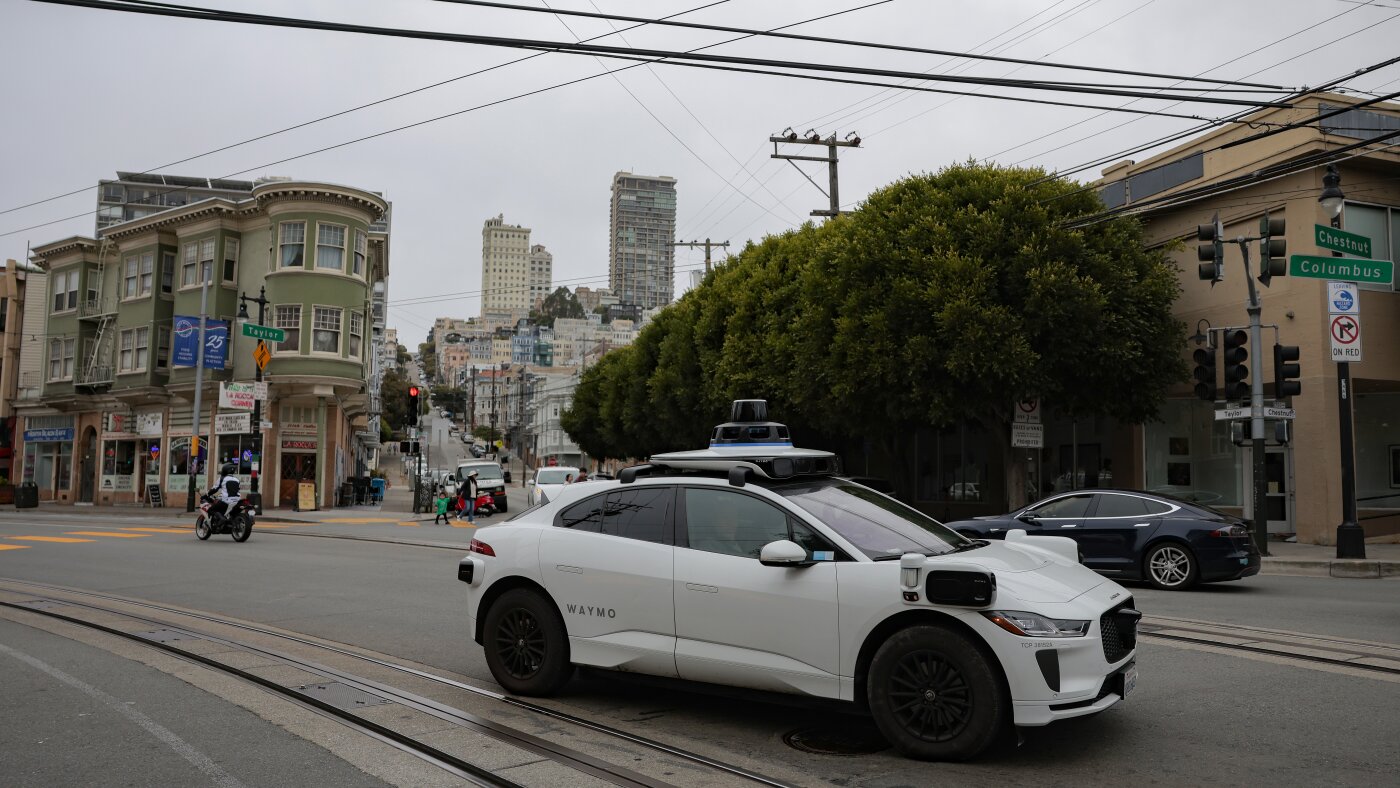
Waymo called the cops on teen riders, raising privacy concerns
-

 Los Angeles, Ca2 hours ago
O.C. police prep for beach, theme park ‘takeovers’ promoted on social media
-

 Detroit, MI2 hours ago
Detroit city leaders to DHS: Stop ICE pursuits which endanger the community
-

 San Francisco, CA2 hours ago
SF Supervisor Jackie Fielder hosts listening session after medical leave
-

 Dallas, TX3 hours ago
The Stewpot artists find healing, purpose and income through art in Dallas
-

 Miami, FL3 hours ago
Can Jason Marshall push for a starting spot – The Splash Zone 7/10/26
-

 Boston, MA3 hours ago
Police investigating shooting in Downtown Crossing – Boston News, Weather, Sports | WHDH 7News

