Indiana
Bennedict Mathurin Reminds Everyone What He Can Be For Indiana Pacers


MINNEAPOLIS, MINNESOTA – DECEMBER 16: Bennedict Mathurin #00 of the Indiana Pacers looks on against … [+]
DETROIT — The Indiana Pacers lost guard Bennedict Mathurin to an injury late last season. The Pacers crushed the Dallas Mavericks in early March, and Mathurin had a solid outing. But he suffered a torn labrum in his right shoulder — his shooting shoulder — that night. He didn’t play again in 2023-24.
That kept the young ball handler out for his team’s first winning campaign. He was also absent for the postseason, and Indiana made a run. They reached the Eastern Conference Finals as Mathurin rehabbed, and while the team had success, they were missing Mathurin’s dynamic abilities.
“I think [Mathurin] saw what it takes to play the way we really want to play, what it takes to be successful in a playoffs setting,” Pacers general manager Chad Buchanan said a few weeks ago. He added that Mathurin took all of that information in and processed it during the postseason. “I think you’ll see a different side to him this year that’s really playing and adapting to the way that we play.”
Mathurin is still blending his game with the unique way the Pacers operate. But he’s a low-turnover ball handler who can get to the rim with ease and make plays in a slowed-down setting. That’s the makeup of a player who could add value in the playoffs. And the Pacers happened to play against two teams that Mathurin had success against during the regular season in Milwaukee and New York.
Indiana found ways to win two rounds, but their young ball handler was missed. He’s an emerging talent as a scorer and attacker — the Pacers had to look elsewhere for those skills for the final two months of the 2023-24 season.
Wednesday night, Mathurin returned to action in Detroit. The Pacers opened up the season against the Pistons, and it was Mathurin’s first game with consequences since March 5. 232 days had passed since he last hit the hardwood.
Onlookers weren’t able to tell. The Arizona product looked as good as ever. Mathurin was terrific in the fourth quarter and changed the makeup of the game with his ability to get off shots and pump energy into an otherwise flat Pacers offense. Indiana was down by eight with 10:38 to play, yet they were able to get a win thanks to Mathurin. He didn’t miss a beat upon returning.
“Performance? I don’t really care, to be honest. I’m just happy we got the win,” Mathurin said when asked if it meant anything to have a strong outing in Detroit after so much time off. That mindset is important, but the team wouldn’t have gotten the win without his play.
Indiana Pacers guard Bennedict Mathurin (00) brings the ball up court against the Detroit Pistons … [+]
Entering the fourth quarter, Mathurin had five points. His head coach, Rick Carlisle, shared that the young guard got pulled from the game after some rough defensive moments earlier in the second half. It was a mediocre night for the 2022 lottery pick to that point.
He owned the fourth quarter. Mathurin flicked in three foul shots in the first minute of the frame, and his ability to get to the free throw line is part of what makes him so special. With the benefit of hindsight, perhaps that should have been a signal of special things to come.
Less than two minutes later, the 22-year old cashed in another shot from the foul line. 19 seconds passed, then he embarrassed Jaden Ivey with a stepback jumper and drilled it. He had six points in about three minutes to open the fourth quarter, and the Pacers were now down by just two.
That was just the beginning. With seven minutes to go, Mathurin buried another jumper to give Indiana a lead. That edge felt flimsy until the shooting guard hit a key three with 2:55 remaining that extended his team’s advantage to four. Finally, the Pacers had some breathing room, and Mathurin created almost all of it.
“Time of the game,” Mathurin said when asked what changed for him in the final frame. “Just keeping the game simple. I know it’s the fourth quarter. We’ve got to make a run. Got to get a different perspective on the game. That’s when I thrive.”
He would score two more points down the stretch as the Pacers erased a double-digit deficit to earn their first win of the season. Mathurin’s late-game play made it all possible.
In just the fourth quarter, the young ball handler finished with 14 points, two rebounds, and one assist. He played the entire frame, and Indiana outscored Detroit 33-19 in the period. Mathurin took nine free throws in that quarter — his ability to get to the charity stripe has always been nearly elite.
Indiana Pacers guard Bennedict Mathurin, right, takes a shot against Detroit Pistons forward Ron … [+]
“[Bennedict] Mathurin was great in this game. He just has that attitude as an attacker and as a scorer,” Carlisle said during this postgame press conference. “I thought defensively, as the game went along, he got better.”
Mathurin finished the outing with 19 points and six rebounds. Indiana almost certainly wouldn’t have grabbed a victory without him. Going forward, the key takeaway is that the young guard reminded everyone of exactly who he is.
Even on a night where Mathurin was off for some stretches, he could take over the game with his offensive firepower. When a battle slows down, he thrives. On an Indiana team that tries to play fast and keep the ball moving constantly, that change of pace can be valuable.
For Mathurin, the next step is consistency. He saw his team make a postseason run without him, and it’s his job to fit into that system. Moving the ball, defending, and making quick decisions will be key in making that happen.
Yet he also has to blend those improvements with the gifts that make him a high-ceiling player. The third-year pro, who will be eligible for a rookie-scale contract extension next offseason, showcased how he can do that on nights where the Pacers are slowed for much of the game.
“Be myself. I work hard, I was out for a minute. So the main thing for me is just to come back into the team,” he said of what he focuses on when the game slows down and defenses are honing in on him. “I’m not trying to turn people around and say ‘I’m back’. I’m just making sure my teammates know I’m willing to do whatever it takes to win.”
Mathurin certainly did that on Wednesday. The Indiana Pacers are 1-0, and their young guard helped everyone remember exactly who he is to secure the victory.



Fairfield native, David K. Wells, 69, and his wife Aileen, were found dead inside their home in Newburgh, Indiana, Monday night. Warrick County Sheriff Michael Wilder said that deputies responded to the residence just before 8:00 p.m. after dispatch received a call around 7:40 p.m. from a friend of the family requesting a welfare check. When officers didn’t get an answer at the door, they entered through the back of the home and found the couple deceased. Officers cleared the home and waited for detectives to arrive. Investigators also obtained a search warrant to do a further examination of the residence. Authorities were able to notify family members and conduct interviews to gather additional information. Sheriff Wilder said investigators believe the couple had been dead for less than 24 hours before they were found. He also said there is no indication of any forced entry or an intruder. Sheriff Wilder has not made a formal determination as to what happened. Autopsies for the couple were scheduled for yesterday morning to help determine a cause. David Wells grew up in Fairfield and graduated from Fairfield High School in 1975. He had a long career in television commercial production in Evansville and had more recently operated the Cigar! Cigar! tobacco store in Evansville.

INDIANAPOLIS (WRTV) — Indiana saw a significant decline in veteran homelessness last year, despite the total number of homelessness rising across the state.
According to the U.S. Department of Housing and Urban Development (HUD) annual estimation of the homeless population, known as the Point in Time (PIT) count, Indiana saw an 18.7% decline in veteran homelessness in 2025 compared to the year before.
That marked the second-largest decline of any state by percentage.
Helping Veterans and Families (HVAF) of Indiana specializes in assistance for veterans facing homelessness. CEO Emmy Hildebrand told News 8 the formula that’s finding success is the same that works with any at-risk group: housing and wrap-around services.
Hildebrand said that the formula needs support from the state.
“There is no state funding supporting homeless services in our state,” Hildebrand said. “And very little local funding outside Indianapolis.”
Safety net programs have faced budget cuts, with lawmakers eliminating funding for the Housing First program in 2025. It supported organizations helping people secure stable housing.
And housing advocates have criticized Indiana’s public camping ban as essentially making it illegal to be homeless.
HVAF client Terri Massey, a 34-year-old Navy veteran, said the stigma of being homeless was the most difficult challenge to overcome.
“I’m still trying to provide for my kids,” Massey said “I’m (not) out here being lazy or not trying to do better.”
Massey was working, supporting her children, but found herself sleeping in cars and hotel rooms because she didn’t have stable housing. “Going to that work, working 10 hours, leaving, going to sleep in my car.”
HVAF helped place Massey in a permanent apartment. HVAF also placed Massey in a different kind of “bootcamp” years after her time in the military, learning job skills. She’s looking for a job, but thankful to do it from a place she can call home.
“I am beyond grateful and thankful. I literally pray and thank God every day,” Massey said. “Because for the longest I felt like I was alone. And I had to figure everything out by myself. I didn’t.”
It’s estimated that seven percent of Indiana’s homeless are veterans. Hildebrand said there are federal funds for organizations working with veterans, which support HVAF’s programs.
Still, finding permanent housing is a struggle.
According to the National Low Income Housing Coalition, for every 100 extremely low-income households in Indiana, just 34 rental homes are affordable and available.
“There are so many people on the bubble that are just one emergency away from living in their car, staying with friends and family, or living on the streets because we don’t have the appropriate system here in Indiana,” Hildebrand said.
Hildebrand said lawmakers assured her they would work to support homeless services, but she hasn’t seen any drafted legislation that might be introduced in the next legislative session.
Across the country, about one in 25 people experiencing homelessness previously served active duty in the armed forces, according to numbers from HUD. Veteran homelessness declined 56% between 2009 and 2025.

The Indiana Department of Environmental Management has issued an Air Quality Action Day for July 8th in Northwest Indiana.
Ozone levels are expected to be in the Unhealthy for Sensitive Groups range, also known as the “orange” level. While not everyone will notice or be effected by the conditions, and while they may not be as severe as recent wildfire smoke events, individuals with asthma, COPD, and other health issues should proceed with caution when exercising outside.
Ozone levels are expected to be in the Unhealthy for Sensitive Groups range, also known as the “orange” level. (WSBT Photo)
The affected area is all of Northwest Indiana, including the cities of: Crown Point, Gary, Hammond, Kentland, LaPorte, Michigan City, Portage, Rensselaer, Valparaiso and all other cities in the region, especially those near Lake Michigan.
Warm temperatures, mostly sunny skies, and light and varied winds coming off of Lake Michigan are expected to contribute to elevated ozone levels.
To stay up to date on issuances and quality levels in Indiana, visit SmogWatch.IN.gov.
-
 Science3 minutes ago
‘I’d rather my house burn down than get cancer’: Herbicide use upends California’s fight to save forests
-
 Sports8 minutes ago
Dodgers scheduled to visit White House in late July to celebrate 2025 World Series win
-

 World18 minutes ago
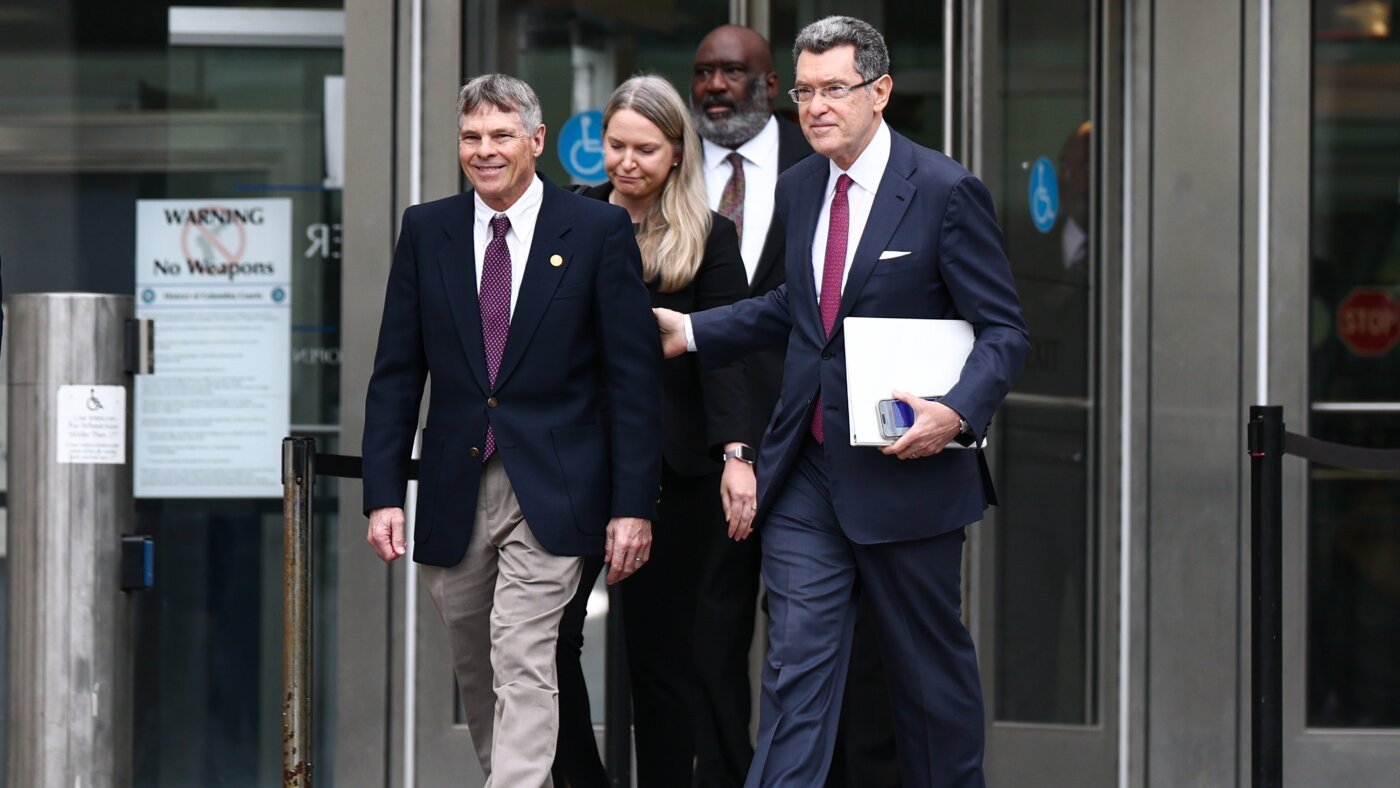
Former US Olympian pleads not guilty in DC reflecting pool vandalism case
-
 News45 minutes ago
Former Olympian pleads not guilty in reflecting pool vandalism charges
-

 Los Angeles, Ca2 hours ago
Heat advisory, beach hazards in effect as Southern California sizzles
-

 Detroit, MI2 hours ago
Teen on moped hit by car after cruising through stop sign in Detroit
-

 San Francisco, CA3 hours ago
Flight of fancy: San Francisco moves to build private luxury airport terminal
-

 Dallas, TX3 hours ago
Dallas’ digital creator economy is booming. Burnout is too.

