Indiana
4 Copperhead Snake Hotspots In Indiana


Just as Indiana Jones is scared of snakes, so too are some of the people of Indiana. Indiana is home to four native venomous snake species, but the most well-known is the copperhead snake or Agkistrodon contortrix. The reason the copperhead snake is misunderstood or feared is that it is Indiana’s only widely distributed venomous snake. Copperheads also typically avoid humans, but their population does overlap with popular outdoor recreation areas in Indiana. Understanding where copperheads are most commonly found and taking some basic safety measures can help residents and visitors enjoy Indiana’s natural areas safely and responsibly.
About Copperhead Snakes and Safety Tips
Copperheads are primarily found in southern and south-central Indiana, where forested landscapes, rolling hills, rocky terrain, and river corridors provide the best habitat for this species to thrive. These snakes prefer wooded environments with leaf litter, fallen trees, and rocky outcrops that allow them to remain hidden from predators and people. This type of environment also creates ideal hunting grounds full of small rodents. Their hourglass-shaped banding blends with dry leaves, making them difficult to spot. Copperheads are generally non-aggressive, relying on camouflage rather than confrontation. Due to their camouflaging ability, it is important to stay aware of your surroundings and know when you are in copperhead snake habitat. Most bites occur when a snake is accidentally stepped on or handled. Despite their venom, fatalities are extremely rare, especially with medical treatment. When exploring copperhead habitat in Indiana, simple precautions can greatly reduce the risk of an encounter. Wearing sturdy boots, long pants, and closed-toe shoes helps protect against accidental bites. Staying on marked trails where you can easily see the path, and avoiding tall grass or thick underbrush is also important, especially during warmer months when snakes are more active. Copperheads often hide near logs, rocks, woodpiles, and leaf litter, so staying aware of your surroundings and checking these areas before stepping or sitting down is a good way to avoid encounters. If a snake is encountered, calmly backing away and giving it space is the safest option. Copperheads rarely chase or strike unless threatened.
Hoosier National Forest

Hoosier National Forest in south central Indiana is right in the middle of prime copperhead snake territory. Due to its vast size and diverse terrain, copperheads call this park home. Covering more than 200,000 acres in southern Indiana, the forest contains rugged hills, sandstone outcroppings, and dense hardwood forests, all ideal copperhead habitat. The abundance of fallen logs, rocky ledges, and leaf-covered forest floors provides excellent concealment for these snakes.
Copperheads in Hoosier National Forest are most commonly encountered off the beaten path trails, backcountry campsites, and less-disturbed areas far from heavy foot traffic. Spring and early summer are peak activity periods, particularly on warm, sunny days. Staying on marked hiking, biking, and horseback trails greatly reduces the risk of encountering a copperhead. The US Forest Service also offers guided hikes in the park throughout the year, which is a good option if you’re very nervous about an encounter.
Brown County State Park
One of Indiana’s most popular outdoor destinations, Brown County State Park also supports a healthy copperhead population. The park’s steep ridges, deep ravines, and heavily forested slopes create favorable conditions for these snakes. Copperheads here, like in other locations, often remain hidden beneath dense leaf litter, which can make them difficult for hikers to notice.
Sightings are more likely along quiet trails, wooded hillsides, and in the woods off the main trails. Encounters tend to increase during late spring and summer when both snakes and hikers are most active. To avoid copperheads altogether, Brown County State Park offers the Abe Martin Lodge, a full-service hotel with a water park and a 90-ft fire tower that guests can climb.
Morgan-Monroe State Forest
Located north of Bloomington, Indiana’s second biggest state forest, Morgan-Monroe State Forest, is another stretch of wilderness where copperheads thrive. This forested area was previously farmland, but abandoned as the rocky terrain was too difficult for agriculture. Now these rocky ridges and deciduous trees offer an excellent habitat for copperhead snakes.
Compared to state parks, Morgan-Monroe sees less recreational traffic, which allows wildlife, including copperheads, to remain more active during daylight hours. Seasonal temperature changes influence activity levels, with sightings most common from April through September. Hikers exploring off-trail areas are more likely to encounter copperheads.
Charles C. Deam Wilderness
The Ohio River Valley, ranging up to the remote Charles C. Deam Wilderness, represents one of the southernmost and most biologically rich regions of Indiana. Floodplain forests, wetlands, wooded slopes, and less foot traffic than other parks provide the perfect conditions for copperheads to hunt and shelter. The Deam Wilderness, in particular, offers minimal development and limited trail maintenance, making it especially attractive to wildlife such as copperheads.
Copperheads in this region are often found near streams, fallen timber, and rocky embankments. Overnight primitive camping in this area is free, but must be done at least 200ft from a trail. By leaving a trail in an already quiet area of the wilderness, you’re more likely to encounter a copperhead. For this reason, it is very important to be aware of this. By doing this, the 36 miles of trail systems and backcountry camping opportunities can still be enjoyed safely. Just remember, in more remote locations such as these, it is especially important to be vigilant of your surroundings.
Awareness, Not Fear
Copperhead snakes are a natural and beneficial part of Indiana’s southern ecosystems. While their venomous status can cause concern, copperheads are generally calm, reclusive animals that prefer to avoid human interaction. By recognizing the habitats where copperheads are most likely to live, such as forests, river valleys, and rocky hillsides, and following basic safety tips, outdoor enthusiasts can greatly reduce their risk of not just a bite, but an encounter altogether. Awareness, not fear, is the key to safely sharing Indiana’s outdoor space with copperheads.


INDIANAPOLIS (WISH) — The Indiana Black Expo will present its Carolyn Brown Mosby Above and Beyond Award to Mathew Knowles on July 17 for his health advocacy work.
Knowles will receive the award during the Pacers Sports & Entertainment Corporate Luncheon. The Indiana Black Expo (IBE) website says the luncheon will be at 11 a.m. July 17 in the Sagamore Ballroom at the Indiana Convention Center in downtown Indianapolis. Knowles will be recognized for his work in health awareness and early detection.
Knowles will lead a fireside chat titled Beyond Pink: The Untold Story of Breast Cancer in Men at 10 a.m. July 18 on the Education Stage at the Summer Celebration.
An IBE news release issued Monday said Knowles has achieved global leadership in sales and marketing, brand development, entrepreneurship, and leadership. He has generated over $5 billion across multiple industries and managed over $100 million in sales and acquisitions. Knowles also developed, recorded, and distributed the careers of notable artists, including Beyoncé; Destiny’s Child; Earth, Wind & Fire; and Solange. The release also said he is a passionate advocate for health awareness and the importance of early detection.
Health Fair
In 2026, the nonprofit is celebrating 40 years of providing access-free health care through its Summer Celebration Health Fair, which will be July 16-19. IBE said it’s expanding its programming for the event on July 18, said a news release issued Monday.
IBE touts the fair as one of the Midwest’s premier community health events, bringing together more than 65 health-focused exhibitors, health care providers, and community organizations dedicated to improving health outcomes across Indiana.
Community Health Network, a platinum partner, will offer over $4,000 in free health screenings, resources, and education for each person at the Summer Celebration.
The Health Fair’s Education Stage will host discussions and activations on pressing health issues. These include digital health care access for older people through “Telehealth, Portals & Online Pharmacies: What Seniors Need to Know,” “Unfiltered: Real Conversations About Women’s Health,” and “Beyond Aesthetics: The Science of Beauty & Wellness.”
Cooking demonstrations focused on heart and kidney health will also happen.
The release also said A Mental Health Symposium, part of IBE’s educational series “Cherish Your Mind,” was scheduled for noon Saturday in rooms 130–132 of the Indiana Convention Center. The symposium will feature Sheryl Swoopes, a former WNBA player; Leon, an American actor, producer and singer who’s real name is Leon Preston Robinson; Dr. Russell J. Ledet, a physician, U.S. Navy veteran and triple-board resident; Amp Harris, a promoter and athlete consultant; and Executive Director Barbara Thompson of NAMI Indiana.
Dr. Lauren Dungy-Poythress and Dr. Ruemu Birhiray are co-chairs of the Health Fair.
This story was formatted for WISHTV.com using AI-assisted tools. Our editorial team reviews and edits all content published to ensure it meets our journalistic standards for accuracy and fairness.
Indiana
Indiana gov to Porter County: If you want to miss out on fun of giving $250m in tax money to Bears, your loss
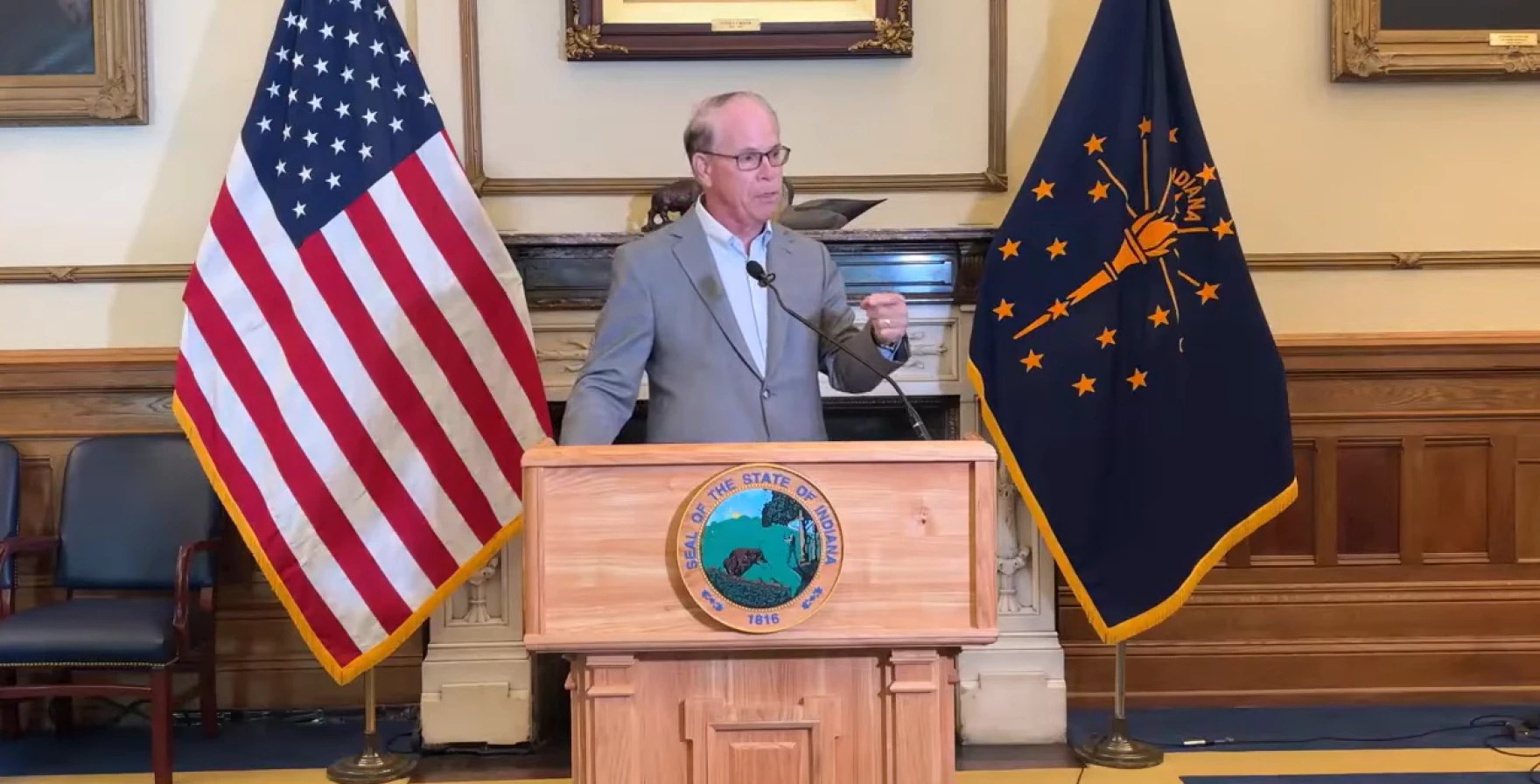
Indiana Gov. Mike Braun says he isn’t sweating Porter County leaders’ opposition to raising food and beverage taxes for a new Chicago Bears stadium the next county over, because really it’s Porter County that would be missing out on all the fun of taking part in shoveling money at the Bears owners:
Under the law, Porter County would have to approve a one-percent food and beverage tax to have representation on the stadium authority. The governor said if it doesn’t get approved, the biggest impact would be on Porter County itself.
“If they choose not to put any skin in the game, they’re not going to have any say-so for what happens from all the economic benefits we’re going to get from it,” Braun said.
Maybe you’re the one up a stump, Porter County! Does a county get a chance to fund a stadium deal every day?
The whole Porter County kerfuffle points up one of the weirder things about the Indiana Bears stadium deal: Though it was passed by the legislature back in February, it didn’t precisely spell out who would be spending what on a stadium, or even where exactly it would be. A newly created sports authority will be able to offer the Bears owners money from a whole bunch of taxes, only some of which actually exist yet:
- All new property tax, income tax, and sales tax for the next 35 years from an omni-TIF district encompassing the stadium and an undetermined number of square miles around it. This could certainly amount to billions of dollars, much of it potentially cannibalized from spending that has nothing to do with the Bears, but just as we saw in Kansas, it’s impossible to say exactly how much without knowing the size of the district.
- A doubling of the Lake County hotel tax from 5% to 10%, which would provide at least $90 million.
- Those 1% food and beverage tax surcharges in Lake and Porter counties, which would be worth about $250 million each, if approved.
- A 12% ticket tax, which would be worth about another $200 million, though as established ticket taxes are unlike other taxes in that they tend to come out of team owners’ revenues.
The best guess at the total public cost is “easily past $4 billion,” but that could go up or down depending on what gets approved in terms of that tax diversion district plus the new taxes. And a quarter-billion dollars from Porter County seems like a significant amount of money, though I suppose Braun is right in that if county leaders balk at that, the state could always compensate by running the omni-TIF district all the way to the Ohio border.
All this makes Indiana’s bid for the Bears a bit of a moving target in the state’s bidding war with Illinois, which is no doubt very much to Bears owner George McCaskey’s liking. (“You’re willing to give us $1.5 billion in property tax breaks and infrastructure money, you say? Well, what if I told you Indiana was offering a TIF district the size of the entire Local Group?”) Right now you have a three-way — or more, given the various Illinois factions — game of chicken going on, and nobody’s showing each other their cards, and … okay, maybe it’s too early in the day for me to be writing extended metaphors. If anyone says they know how much money Bears execs could get out of either Indiana or Illinois, they’re lying, that’s the upshot here.

(WISH) — Coming off a week’s rest, the Indiana Fever traveled to Las Vegas and beat the defending champion Aces, 84-68. The Aces’ 68 points scored marked the fewest points Indiana has allowed in a game this season.
On Sunday, the Fever were without Caitlin Clark for the second straight game. In her absence, center Aliyah Boston and point guard Kelsey Mitchell powered the offense to secure Indiana’s second straight win.
Boston recorded her sixth double-double of the season, finishing with 18 points and 10 rebounds. She also knocked down three triples, matching a season high last set on June 4 against the Atlanta Dream.
Although Mitchell shot 39 percent from the field, the ninth-year Fever guard posted a game-high 27 points and hit three triples.
As a team, Indiana shot 43 percent from the floor and 39 percent from three. The Fever also handed out 18 assists, compared to the Aces’ 14.
Indiana controlled the glass as well, outrebounding the Aces 39-30, and forced 13 Las Vegas turnovers compared to the Fever’s 7. Sunday’s win also marked the Fever’s first-ever win in Las Vegas after 11 previous losses.
With the win, Indiana improves to 12-8. Sunday’s matchup was the first of four straight road games before the Fever return to Gainbridge Fieldhouse to face the Golden State Valkyries on July 15.
Indiana is back on the road Wednesday, July 8, against the Los Angeles Sparks at 10 p.m. ET.
-

 Indianapolis, IN4 minutes ago
Former Colts center Ryan Kelly opens up about life after retirement
-

 Pittsburg, PA7 minutes ago
Pittsburgh Public Safety responds to third teen takeover in 7 days on Fourth of July
-

 Augusta, GA19 minutes ago
Cushman & Wakefield Brokers $87M Sale of Apartment Community in Augusta
-

 Washington, D.C22 minutes ago
The hottest T-shirts in DC are from Metro – WTOP News
-

 Cleveland, OH27 minutes ago
Medical examiner identifies woman found dead in backyard of Cleveland home
-

 Austin, TX34 minutes ago
How much daylight are we losing in Texas this month?
-

 Alabama37 minutes ago
Sweet Home 250 draws thousands to Montevallo for Alabama’s o…
-

 Alaska42 minutes ago
A frozen ground under Alaska’s tundra looks like ordinary soil from above, but scientists have put a $43 trillion price tag on what happens when it thaws

