Illinois
What Bret Bielema said after No. 20 Illinois lost to No. 1 Oregon football


EUGENE — No. 1 Oregon defeated No. 20 Illinois 38-9 Saturday at Autzen Stadium.
Bret Bielema recapped the loss for Illinois (6-2, 3-2 Big Ten), which hosts Minnesota next week.
Below is a transcript of Bielema’s postgame press conference.
No. 1 Oregon (7-0, 4-0 Big Ten) vs. No. 20 Illinois (6-1, 3-1)
- When: Saturday, Oct. 26
- Time: 12:30 p.m. PT
- Where: Autzen Stadium, Eugene
- TV channel: CBS
- Stream: Watch this game live for FREE with Fubo (free trial) or with DirecTV Stream (free trial). If you already have a cable provider, use your login information to watch this game on cbssports.com.
- Oregon Ducks football 2024 season schedule, scores
- Sign up for The Ducks Beat newsletter
BRET BIELEMA
Opening Statement…
“Give credit to Oregon. Obviously a really good football team, and they played very, very well especially that first half. I was very disappointed in the results of the first half. I take ownership on that as a head coach. Obviously didn’t have enough preparation or execution. I really felt good about our work week and the energy from our guys going in. We talked all week about this crew…the way they want to play the game, offense, defense. When they strike, they strike hard and fast. We put ourselves into a position to be where we are. The first quarter was just too much to overcome. I went in at halftime and basically went in to both sides of the ball and the players and said, ‘Hey, I’m going to treat it like this: we won the coin toss, we’re taking the ball, we’re going to play the second half like we’re starting over.’ I thought our guys took that to heart and did some things. We just couldn’t capitalize on it in time. We had two or three opportunities where we walked away with zero points inside the red area. You’re not going to win many games, let alone (against) the No. 1 team in the country. Several guys got banged up. I don’t really know anything update wise. A couple guys with head issues, a couple guys with soft tissue things. I don’t think there’s anything significant or season ending, but we’ll see where we’re at when I have more information on that.”
On areas of disappointment in defense…
“Probably tackling. I think we have to leverage the ball and get the ball down. We knew No. 15 was an explosive player. We had to know where he was on every formation, and he was the guy that had that first score. Came all the way across from one sideline to the next. I think our preparation…we have to understand when we’re playing a player of that caliber we can’t give normal answers. We have to have a better understanding of what we’re trying to do to win the game. Some growing experience there for us on how we game plan. Then, obviously, with a quarterback of his stature, he was pretty much able to complete his passes at will. He was very efficient with the ball on early downs and third downs as well. So, a lot of things that hopefully we will hopefully make corrections for.”
On Luke Altmyer’s performance…
“Luke is a tremendous competitor. I would like to have come up with some points. I think that the interception was one he probably wishes he had back. I don’t know if he didn’t see the coverage there, but he’s been so steady for us. We’re here where we are today because of what he’s done and we will continue to move forward because of that but everybody has a lot to learn. I think we have to do a better job of protecting him, making sure we can give him the answers. If there’s breaks in pressure, we have to give him an answer so he doesn’t get hit. Also, if we can do anything with him to change the pocket or do some things right. He’s got very good feet, he’s very athletic and the guys can continue to play around him.”
On answering defensive pressure…
“I know they changed up one pressure today, what we call ‘pop a guy out.’ They brought a full man today, seven-man protection. In the answer, we weren’t there and [Altmyer] had to get rid of it in a hurry. Also, there was a couple of red-area sequences where we broke down on protection, as well as the delivery of the run game. It was frustrating but I was very happy that our guys responded in the second half. We’re not trying to get a consolation prize, but I told the guys at halftime that I needed them to show up, play and compete and they did that.”
On redzone breakdowns…
“In particular, there was some of that in the low red. Those are almost like two-point plays in execution. We have to look closely at what we’re doing there. We have to change the pocket. We have to do something to move them. The execution of the run game down low. A lot of teams will try to just run the ball in rather than have any chance of throw game. I think there was one time where we ran Josh McCray up inside and gained four or five. Maybe we need to take a closer look at the run game in the red area.”
On refocusing after loss…
“I think the things that got us to where we are now are what we have to go forward with. Whatever our record was. We were 6-1 last week. We’re trying to go 1-0 every week. Now we’re a 6-2 football team. Everybody is going to have opinions on what I need to do. I think our guys know that Minnesota is coming to town in a rematch game for us. That could mean a lot of things down the road. I think these guys enjoy playing together. It definitely hurt them today. You could see it at halftime. I liked the energy they gave coming out at the half. Obviously, a lot of long faces in there tonight, as they should be. We’ll have to make sure that Oregon doesn’t get us twice. We’re going to have to do what we have to do on Sunday, get a flush, take a jump heading into Minnesota like we do with every game. Monday will be a great day for our guys to reset and come back in on Tuesday and get a work week.”
On difficulty of Oregon’s speed…
“Especially at certain positions, you can tell on film, offense, defense, special teams. They take a lot of pride in that. They strike in all three phases. I think that was very apparent in the first quarter and even towards the end of the second. They put themselves in a position to make multiple scores. Defensively, we didn’t have the right answers putting pressure on. [Gabriel] was just getting the ball out so quickly, they weren’t going to let you get him. That is something we have to identify and make sure that we’re playing out of coverage.”
On secondary defense…
“Jaheim Clarke has been a guy that I would say has been continually impressive since fall camp. When Tyson Rooks went down, when Torrie Cox went out, and Kaleb Patterson went out…those three guys were out of the game before halftime. Those are difficult things to heal. Those guys came in by committee. Tyler Strain also went out, so our backup for Xavier Scott went down, so that’s what brought Rooks in there. I like the fact that he got that nice pick and made an advancement. Got the chance to change the game a little bit there. Obviously, we couldn’t capitalize on it offensively, but he did his part to make that moment.”
— James Crepea covers the Oregon Ducks and Big Ten. Listen to the Ducks Confidential podcast or subscribe to the Ducks Roundup newsletter.



Illinois
Illinois waives tax penalties for 11 counties hit by storms, including Stephenson and Winnebago

(WIFR/WREX) – Illinois leaders announce disaster tax relief for individuals and businesses in 11 counties affected by severe thunderstorms earlier this year.
The relief waives penalties and interest for taxpayers who cannot file returns or make payments on time because of the severe weather. It covers income, withholding, sales, specialty and excise taxes.
The tax relief applies to any area included in Gov. JB Pritzker’s state disaster proclamation.
Locally, this includes Stephenson and Winnebago Counties. Other counties across the state included in the proclamation are:
- Coles
- Cook
- Effingham
- Jefferson
- Kankakee
- LaSalle
- McLean
- Warren
- Woodford
The proclamation covers severe weather in these counties between March 10 and June 21.
“In the wake of these devastating storms, my administration is ensuring that impacted residents and businesses have the support they need to recover,” Pritzker said. “By offering temporary tax relief to individuals and businesses in 11 counties, we’re giving impacted communities the time and breathing room necessary to focus on recovery.”
Individuals and businesses located in those counties qualify for state tax relief. Any counties added later will also be eligible, according to the governor’s office.
Taxpayers seeking a waiver of penalties and interest should send a brief written explanation to the Illinois Department of Revenue regarding why they cannot file timely or pay. They should provide their full name, account number, mailing address and an estimate of when they believe they can file or pay their taxes. If using a Social Security number, include only the last four digits.
Requests may be submitted electronically to REV.DisasterRelief@illinois.gov or by postal mail using the address on the return. When submitting by mail, taxpayers should write “Severe Storms – Summer 2026” at the top of the return in red ink and attach or include the explanation for requesting abatement of penalties and interest.
Taxpayers who have already been billed for penalties should email REV.DisasterRelief@Illinois.gov and provide their name, business name, account numbers and the periods for which they filed late due to the storms to request penalty abatement. Taxpayers should also include “Severe Storms – Summer 2026” in any communications with the department when requesting relief.
Property owners who experienced damage should contact their county supervisor of assessments if they wish to apply for reassessment due to any property damage. The Motor Fuel Use Tax is not included in this disaster tax relief.
Copyright 2026 WIFR. All rights reserved.
Illinois
As Illinois enters 10th year under Evidence-Based Funding model, equity remains an elusive goal

Article Summary
- After nine years of funding schools under the Evidence-Based Funding model, wealth-based disparities in per-pupil spending have largely evened out, but residents of low-wealth districts still pay significantly higher property tax rates.
- Since the adoption of EBF, annual state funding of public schools has increased by more than $3 billion. But 63% of districts are still funded at less than 90% of their adequacy target.
- School district officials in both rich and poor districts credit the EBF system focusing resources where they are needed most and providing more certainty in funding.
This summary was written by the reporters and editors who worked on this story.
SPRINGFIELD — Illinois has made progress in recent years boosting funding for schools that serve some of the state’s poorest communities and leveling out some, but not all, of the wealth-based disparities in per-pupil instructional spending.
But as Illinois enters the 10th year of financing schools under the Evidence-Based Funding model — a formula adopted in 2017 that was supposed to improve both the adequacy and equity of the state’s school finance system — wide disparities still exist in the property tax system that funds more than half the cost of K-12 education.
An analysis of school finance data by Capitol News Illinois covering the nine-year period from 2017 to 2025 shows homeowners in the lowest-wealth districts pay tax rates that are double those in the wealthiest districts.
The findings are largely consistent with those of other researchers who follow school finance issues nationally.
“Given the design of EBF and the evidence basis on which it was built, this is about what I would expect. I mean, it’s actually a little better than I would have expected,” Bruce Baker, a school finance researcher at the University of Miami, said in an interview. “To a significant extent, it leveled out the resources, but it, by no stretch of the imagination, brought the state to equal educational opportunity.”
Evidence-Based Funding
The Evidence-Based Funding formula came about after years of negotiations among legislators and stakeholders who were searching for a way to reform what many considered to be the most inequitable school funding system in the country.
“I have always talked about Pennsylvania and Illinois as being kind of the equity trainwreck states,” Baker said. “Connecticut has taken Illinois’ place in that role.”
At that time, according to State Report Card data, Illinois was spending about $7 billion a year funding public schools, less than one-fourth of the total $28.4 billion being spent by the state’s public schools. Federal funding provided another $2.1 billion, or 7.5% of the total.
But more than two-thirds of the total, $19.3 billion, came from local revenues, primarily property taxes.
Meanwhile, there were vast disparities across the state’s school systems, both in terms of the taxes they levied on property within their boundaries and the money they spent educating their students.
The aim of the new formula was to improve both the adequacy and equity of school funding in Illinois. That involved establishing an “adequacy target” for each district, using research-based evidence to estimate the cost of educating each student in a district.
The formula was predicated on the idea that some students are more expensive to educate than others. That meant the adequacy target had to account for such things as the poverty rate within a district, the percentage of its students from non-English speaking backgrounds, the number of students receiving special education services and regional cost of living differences, among other factors.
“A district that’s 60% to 70% kids from low-income households, 20 to 30% non-English speaking kids, that school or district might need 40%, 50% or even 100% more in spending per pupil than a district that has no kids from low-income families and no kids who are English learners,” Baker said. “The per-pupil spending really needs to be differentiated based on the costs to achieve common outcomes.”
The law then called for increasing state funding each year by at least $300 million and earmarking the bulk of that money for the districts furthest below their adequacy target, with the goal of eventually getting all districts up to at least 90% of adequacy.
It also called for funding $50 million each year in property tax relief grants to reduce levies in certain high-tax districts. Districts are awarded grants based on a formula spelled out in statute. Districts are expected to use the grant funds to abate taxes they would otherwise levy.
At Gov. JB Pritzker’s urging, lawmakers did not fund the grants in the fiscal year that just ended June 30 but instead passed a bill calling for the Illinois State Board of Education’s Professional Review Panel to file a report assessing the impact of the program.
That report was released in March. It found that from 2015 through 2023, total property taxes collections grew in almost every district in the state, although the growth was slightly lower in districts that had received the grants than those that did not.
Lawmakers renewed the grant program for the fiscal year that began July 1 but extended the period in which districts must use the funds to abate taxes to three years.
In the years since the EBF formula was adopted, overall annual state funding for schools has increased more than $3 billion, to an estimated $10.8 billion in the fiscal year that just began.
Out of 850 elementary, high school and unit school districts in the state, according to ISBE’s EBF distribution data, the number of districts that are funded at or above 90% of their adequacy target has grown from 194 in fiscal year 2018 to 313 in 2026.
Open chart in a new tab
But after nine years under the EBF model, that still leaves 537 districts, 63% of the total, funded at less than 90% of adequacy. ISBE reported during this year’s budgeting process that it would take an additional $3 billion to get all districts up to at least 90% of adequacy.
“We need more, and I have tried very hard, as you know, in very tight budget circumstances,” Pritzker said during a recent news conference. “We nevertheless increased funding for K-12 schools.”
But an analysis of school finance data covering the first eight years of the EBF formula shows the state has made only modest progress to improve the equity of its school finance system, either in terms of the taxes people pay to fund their local schools and the amount of resources those districts devote to classroom instruction.
Tax inequity
One of the hopes of the new funding system was that as state funding for schools increased, local districts would become less reliant on local property taxes.
At the time EBF went into effect, there were vast disparities among districts in terms of their relative wealth and the tax rates they levied.
According to data from the Illinois Local Education Retrieval Network, or ILEARN, in fiscal year 2017, the year before EBF took effect, district wealth ranged from a low of $20,449.57 in taxable property valuation per pupil to a high of $2.47 million.
Property tax rates among the districts also varied widely, from a low of $1.14 per $100 of equalized assessed valuation, or EAV, to a high of $21.82.
According to the data, people in the poorest 10% of districts in the state paid an average tax rate of $5.39 per $100 of EAV. That was more than double the average tax rate in the wealthiest 10% of districts, which was $2.50 per $100 of EAV.
Using a statistical tool known as regression analysis, the data showed that for every $10,000 increase in a district’s per-pupil property wealth, there was a corresponding $0.028 decrease in its property tax rate. And while other factors also influenced a district’s tax rate, property wealth explained 21% of the variation.
By 2025, the eighth year of the EBF formula, data from school districts’ annual financial reports showed those disparities had eased only slightly.
There was still wide variation in tax rates among school districts, from a low of $19,580 to a high of $3.3 million.
From 2017 through 2025, the average tax rate among the poorest 10% of districts fell considerably, to $4.81 per $100 of EAV. But that was still more than twice as high as the average tax rate among the wealthiest 10%, which was $2.40 per $100.
Open chart in new tab

Differences in per-pupil property wealth still explained about 21% of the variation in tax rates but the relationship was not as severe. In 2025, for every $10,000 increase in property wealth, there was a corresponding $0.018 decrease in tax rates.
Spending inequity
One area where Illinois appears to have made more progress is in directing new resources to districts serving large numbers of high-needs students.
The EBF formula is predicated on the idea that some students are more expensive to educate than others. The additional cost of educating those students — including low-income students, English language learners and students receiving special education services, among others — is used as a factor in calculating each district’s adequacy target and, eventually, how much new money they receive each year.
To measure how effectively Illinois was directing resources to high-need districts, CNI compared each district’s instructional expenses per-pupil with its percentage of low-income students, as reported in the ISBE’s annual Report Card data.
ISBE defines instructional expenditures as “the direct costs of teaching pupils or the interaction between teachers and pupils.” Low-income students are defined as those “who receive or live in households that receive Supplemental Nutrition Assistance Program or Temporary Assistance for Needy Families benefits; are classified as homeless, migrant, runaway, Head Start, or foster children; or live in a household where the household income meets the U.S. Department of Agriculture income guidelines to receive free or reduced-price meals.”
In 2017, the year before EBF took effect, there were wide wealth-based gaps in instructional spending across all school districts in Illinois.
At that time, instructional spending averaged about $7,320 per pupil statewide. The average among elementary districts was below that level, at $6,822, while high school districts the average was $9,224.
Within elementary districts, however, the wealthiest 10% — those with the lowest percentage of low-income students — instructional spending per-pupil was 39% higher than it was among the poorest 10%.
Among high school districts, the wealthiest districts spent 29% more on average than the poorest districts.
Among unit districts, however, there was little difference in spending levels between wealthy and poor districts.
By 2025, the eighth year of the EBF program, the spending picture had changed considerably.
Open chart in new tab
First, the infusion of $3 billion in additional annual state funding boosted instructional spending across the board. That year, the statewide average was $10,601 per pupil, a 45% increase over 2017 levels.
In addition, many of the wealth-based disparities had been erased.
Among unit districts, the poorest 10% of districts actually spent about 29% more per-pupil on instruction than the wealthiest. Among elementary districts, spending levels were about even between rich and poor districts.
Among high school districts, however, wealth-based disparities persisted. There, the richest 10% of districts continued to spend about 29% more per-pupil on instruction than the poorest districts.
Chris Johnson, deputy superintendent at New Trier Township High School District in northern Cook County, one of the wealthiest districts in the state, acknowledged in an interview that his district is fortunate to have more than adequate resources. But he said that is not the fault of the EBF system.
“We were 91% funded by local property taxes, and so we have a long history of our community generously committing to support our schools,” he said.
In 2025, New Trier ranked third in the state among high school districts for per-pupil instructional spending, at just over $21,000. Its property tax base was also among the highest, at nearly $1.9 million per pupil, and it had one of the lowest property tax rates, at $1.92 per $100 of equalized assessed valuation.
As a result, New Trier receives very little state funding through EBF, which is designed to prioritize the neediest districts. But Johnson, who wrote his doctoral dissertation on the implementation of EBF, said he supports the system and believes it is performing as it was intended.
“It’s brought more money to Illinois school districts, and it’s done it in an equitable way that focuses on the districts that need the most support,” he said.
“What I found in my dissertation was that the function codes — the ways the district spent the money in their budgets — were aligned with the rationale for passing law,” Johnson said. “So, the categories in school district budgets related to instruction grew at a faster rate than expenditures related to some of the administrative and other expenses.”
One district official in a smaller rural school district said the EBF model was probably more useful in helping larger districts quantify their needs. “But like for ours,” he said, “it tells us that we need a 0.2 school psychologist and a 0.1 social worker. I can’t do a point one person.”
Overall, that official said the biggest benefit the EBF system has provided his district is greater certainty that state funding will arrive on time.
“I like the guaranteed money, you know. Making sure they’re gonna send us some money,” he said.
Some lawmakers, however, have expressed growing frustration with the slow progress being made in bringing all districts up to adequate funding levels.
Sen. Graciela Guzmán, D-Chicago, introduced legislation this year calling on the state to fund all districts at 100% of their adequacy target. Although the bill never advanced out of committee, it did receive serious discussion during one committee hearing in May.
“If the state says that a service is required, the state should fund it,” Guzmán said during that hearing. “And then if the state has defined what adequate education looks like, the state should also fund that. So, if we’re serious about equity, property tax relief and supporting public schools across Illinois, then we have to stop treating underfunding as if it is normal.”
How we reported this story
This story is based on analysis of publicly available data from several datasets maintained by the Illinois State Board of Education.
Information about school district property valuations and tax levies for fiscal year 2017 was obtained from the Illinois Local Education Agency Retrieval Network, or ILEARN. According to ISBE, there is a two-year lag in reporting that data. Therefore, the FY 2017 data was obtained from the FY 2019 report.
Property valuation and tax levy data for fiscal year 2025 was obtained from individual districts’ annual financial reports filed with ISBE. At the time this analysis was performed, data was available from 746 of the state’s 850 elementary, high school and unit districts.
Information about school districts’ instructional spending and low-income population was taken from annual report card data, available from ISBE’s Report Card Data Library.
Capitol News Illinois is a nonprofit, nonpartisan news service that distributes state government coverage to hundreds of news outlets statewide. It is funded primarily by the Illinois Press Foundation and the Robert R. McCormick Foundation.

Illinois will get $1.1 million of a $45 million, 45-state settlement with money transfer app Cash App’s parent company, which was accused of misleading customers about the app’s security.
Block Inc. will face $55 million in civil penalties and also have to pay customers nationwide somewhere from $75 million to $120 million as part of the settlement, which includes the Consumer Financial Protection Bureau.
In a statement, Illinois Attorney General Kwame Raoul said the settlement holds the company accountable and requires it to “change its harmful practices.”
“Block told Cash App users their money was safe and falsely implied that the app worked like a bank, with the same protections,” Raoul said. “Block was aware that fraud on its platform was rising sharply and failed to warn users, strengthen protections or provide real help to users when things went wrong.”
A company spokesperson confirmed the settlement and said the company has made “significant investments in consumer protection, customer service, and compliance.”
“We share the commitment of the attorneys general to addressing industry challenges and continue to invest in operations and technology to promote a safe and healthy financial ecosystem,” the spokesperson said in a statement provided to the Sun-Times Wednesday night.
The lawsuit accused the company of not preventing fraud, and even of having systems that made it easier to commit that fraud. Minimal identity verification allowed someone to create fake or multiple accounts, and the company had no phone support line. Instead, customers who had been defrauded often were provided by those fraudsters with fake online customer support phone numbers, the suit alleged.
As part of the agreement, the company must offer at least 13.5 hours of human-staffed phone lines per day as part of 24-hour support, as well as reimburse customers for fraudulent transactions, stop marketing the app as safe and educate users about the dangers of fraud.
-

 Indiana2 minutes ago
Kelsey Mitchell winner completes Fever comeback against Mercury, without Caitlin Clark
-

 Iowa7 minutes ago
McKeever’s 7′3″ frame made Iowa the ‘obvious choice’ in the transfer portal
-
 Kansas14 minutes ago
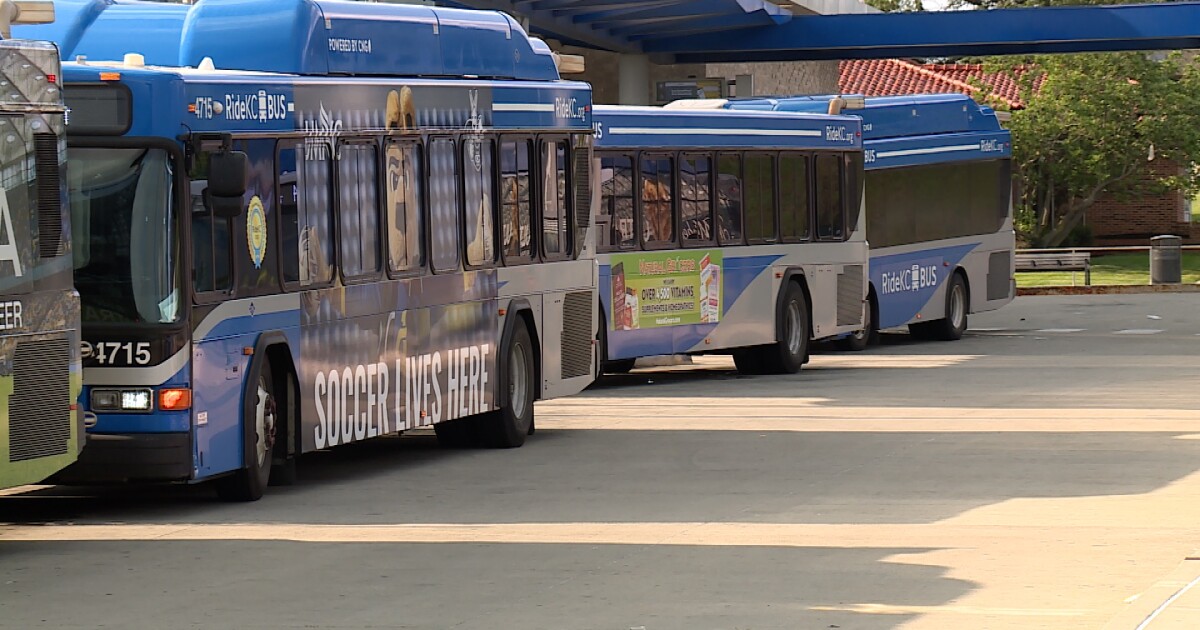
Kansas City to reduce bus transit frequency, extended hours after World Cup matches end
-

 Kentucky17 minutes ago
Public Health Student Hollie Hagan found her calling in rural Kentucky
-

 Louisiana22 minutes ago
Inside the lab at the heart of Louisiana’s mosquito-borne disease prevention network
-
 Maine29 minutes ago
Meet 16 obscure Maine Democrats shaping Graham Platner’s replacement
-

 Maryland31 minutes ago
Justice Department sues Maryland over immigration policies
-

 Michigan37 minutes ago
How two Michigan stamping plants power Stellantis turnaround plan

