Illinois
More than 900 now say they were abused at Illinois youth prisons


Attorneys say more than 900 survivors have now come forward alleging they suffered child sexual abuse at juvenile detention centers in Illinois between 1995 and 2022.
A new batch of complaints were filed Tuesday, and lawyers say they include 107 new cases of abuse. Plaintiffs claim they were raped, groped, and threatened—all while in the custody of an Illinois Youth Center or the Cook County Juvenile Temporary Detention Center, formerly known as the Audy Home.
“These survivors want justice, and they want accountability and they want sexual abuse in the Illinois juvenile justice system to end,” said attorney Jerome Block.
At a press conference Wednesday, adult survivors shared stories of what they experienced as teenagers at youth detention facilities. One woman, who prefers to go by her first name Kate-Lynn, recounted an alleged incident at Illinois Youth Center Warrenville where at least five staff members entered her cell and took off her clothes. Then, she said, a male staff member sat on her naked body and touched her inappropriately.
Charles Graves, 39, speaks about what can be changed to prevent sexual abuse in juvenile lockups.
Anthony Vazquez/Sun-Times
“My life has been severely impacted by the trauma I experienced at the hands of these state employees at IYC Warrenville,” said Kate-Lynn.
Another speaker, Charles Graves, said he was sexually assaulted by three officers in Illinois. Graves also said he encountered one of his alleged abusers again while visiting his nephew in the juvenile system.
“She didn’t remember me, but I remembered her. And I talked to my nephew, and I asked him, are you okay?” said Graves. “…They need to understand what took place, and they need to do something to start helping prevent it.”
The alleged victims are represented by the law groups Bailey & Glasser, Levy Konigsberg, DiCello Levitt, and Anapol Weiss.
In a statement, the Illinois Department of Juvenile Justice said it is aware of the recently filed lawsuits and cannot comment on active litigation.
“IDJJ has enacted policies and protocols to ensure the safety of youth and staff and identify any possible instances of abuse or misconduct,” spokesperson Dominique Newman wrote.

Attorney Jerome Block speaks during a press conference on Wednesday.
Anthony Vazquez/Sun-Times
Cook County and the Illinois Department of Corrections are also named in the complaints; the Office of the Chief Judge in Cook County said it could not comment, and an IDOC spokesperson did not respond to WBEZ’s request.
Block said his clients deserve compensation, though there is “no amount of money that can fully make these survivors whole.”
“This is something that is going to be very expensive for the state, and it should be,” said Block. “Because these are horrific, horrific traumas and horrific injuries inflicted on these men and women when they were children.”



A volunteer firefighter is facing arson charges after he allegedly set a fire in a Lee County wildlife preserve, scorching hundreds of acres.
According to authorities, 21-year-old Trent Schaefer, a volunteer firefighter in Ohio, Illinois, was charged with one count of arson in connection to a fire that occurred in the Green River State Wildlife Management Area Friday.
On that date, temperatures had soared into the 60s, winds were whipping at more than 30 miles per hour, and humidity plunged below 30%, leading the National Weather Service to issue warnings on the danger of wildfires in Illinois.
It is alleged that Schaefer was seen by witnesses getting out of a vehicle and igniting multiple small fires within the nature preserve, which then coalesced into a larger blaze.
Those witnesses were able to restrain the suspect until Lee County sheriff’s deputies arrested him.
Image taken by Lee County Sheriff’s Office
By the time firefighters arrived on scene the blaze had already spread, and multiple departments were called in to assist with the fire, including the Illinois Department of Natural Resources.
Firefighters were able to bring the blaze under control by the late afternoon, but not before it burned more than 700 acres, according to authorities.
Schaefer is also a suspect in several other arsons around Lee County, but he has not been charged in any other fires at this time.
Illinois State Police are assisting with the investigation, and no further information was immediately available.
Illinois
Who is running for Illinois governor in 2026? What to know as primary Early Voting sites open

With Election Day for the 2026 Primary quickly approaching, many voters are considering who to mark their support for when they cast their ballot.
There are several big races on the ballot, including the gubernatorial race that has the potential to make history.
Though rumors are swirling that sitting Governor J.B. Pritzker has his eyes on a potential run for president in 2028, he’s still in the running for re-election. If he retains his seat, he’ll be the first Democratic governor to secure a third term in office in Illinois history.
While Pritzker is the only Democrat aiming for governor on the ballot, there is a slew of Republican candidates vying for a face-off with the incumbent in November.
Voters with their mind made up on which candidate they support can head to their local early voting site to cast their ballot before Election Day.
Though downtown sites and some across the suburbs have been open since early February, early voting sites will open in all 50 of Chicago’s and in several suburb on Monday, March 2.
For those still deciding how to mark their ballot, here’s a look at the gubernatorial candidates.
Democrats:
Governor J.B. Pritzker and Christian Mitchell
Current Governor of Illinois J.B. Pritzker is taking aim at a third term, promising to continue building on the work of his first two terms. According to his campaign website, some of his intentions for a third term include “[tackling] the affordability crisis,” continuing to protect access to reproductive health care in Illinois, and investing in education.
Chrisitan Mitchell is running alongside Pritzker for lieutenant governor. After representing the 26th District in the Illinois House of Representatives from 2013 to 2019, Mitchell served as deputy governor to Pritzker from 2019 to 2023. Mitchell led efforts to ban assault weapons, make Illinois a leader in clean energy and create jobs through infrastructure projects as deputy governor, according to his campaign bio.
Republicans:
Ted Dabrowski and Dr. Carrie Mendoza
Ted Dabrowski is a Wilmette resident and former president of Wirepoints, a media outlet focused on conservative economic policies and financial data. From 2011 to 2017, Dabrowski worked as a spokesperson and Vice President of Policy at the Illinois Policy Institute, a right-leaning think tank.
Dabrowski, who has never previously held political office, aims to cut and cap property tax rates, veto any and all tax increases, and repeal both Illinois’ sanctuary laws and zero-emissions energy policy, according to his campaign website.
“We must return power to the people, remove barriers to prosperity, embrace educational freedom, push political power down to its lowest level and restore the rule of law,” his campaign website says.
Dr. Carrie Mendoza, a Chicago-native with more than 25 years of experience as a physician, is running to be Dabrowski’s lieutenant governor, according to her campaign biography. Like Dabrowski, Mendoza has never held political office. Her campaign biography says she is “driven by innovation and a passion for justice.”
James Mendrick and Dr. Robert Renteria
The first Republican candidate to enter the race, DuPage County Sheriff James Mendrick is campaigning on a push for public safety initiatives.
Sheriff since 2018, Mendrick has partnered with DuPage County Health Department to provide Medicated Assisted Treatment to inmates fighting opioid addiction and advocated for the use of a drug deactivation pouch system to protect people and the state’s waterways from dangerous medications, according to his campaign website.
“He is committed to ending soft-on-crime policies, defending parental rights, and delivering quality education to every child in the state,” his campaign website says.
Dr. Roberta Renteria veteran of the U.S. Army and is a prolific author and activist, according to his campaign biography.
“Dr. Renteria uses his personal story, business acumen and leadership skills to address bullying, gangs, violence, drugs, suicides and school dropout,” his campaign biography says. His books and curriculums are taught in 25 countries around the world, and he has given many Ted Talks.
Darren Bailey and Aaron Del Mar
Former state senator Darren Bailey, who unsuccessfully ran for governor of Illinois in 2022, is giving another go at assuming the political seat. A third-generation downstate farmer, Bailey’s campaign is focused on reducing government spending, cutting taxes, and cracking down on crime, according to his campaign website.
In addition to his farm work, Bailey founded a private Christian school with his wife Cindy.
He fought against spending, raising taxes and sanctuary state policies while in the Illinois House and later in the State Senate.
Aaron Del Mar is an entrepreneur who became the youngest-ever Councilman for the Village of Palatine at 29 years old in 2016. He oversees public safety and infrastructure and guides community organizations in the position, according to his campaign biography.
Rick Heidner and Christina Neitzke-Troike
Though businessman Rick Heidner has never held office, he has led several notable companies, including Gold Rush Gaming, Ricky Rocket’s Fuel Centers, Prairie State Energy, and Heidner Properties, according to his campaign website.
A lifelong Illinoisian, Heidner is “running to make Illinois safe again, affordable again, and full of opportunity again,” his website says.
Christina Neitzke-Troike is looking to step up into the lieutenant governor seat from her current role as Mayor of Homer Glen after nearly two decades in several elected positions.
Neitzke-Troike hopes to bring her “unparalleled understanding of how state mandates affect local budgets, property taxes, and public services” to Springfield, according to her campaign biography.
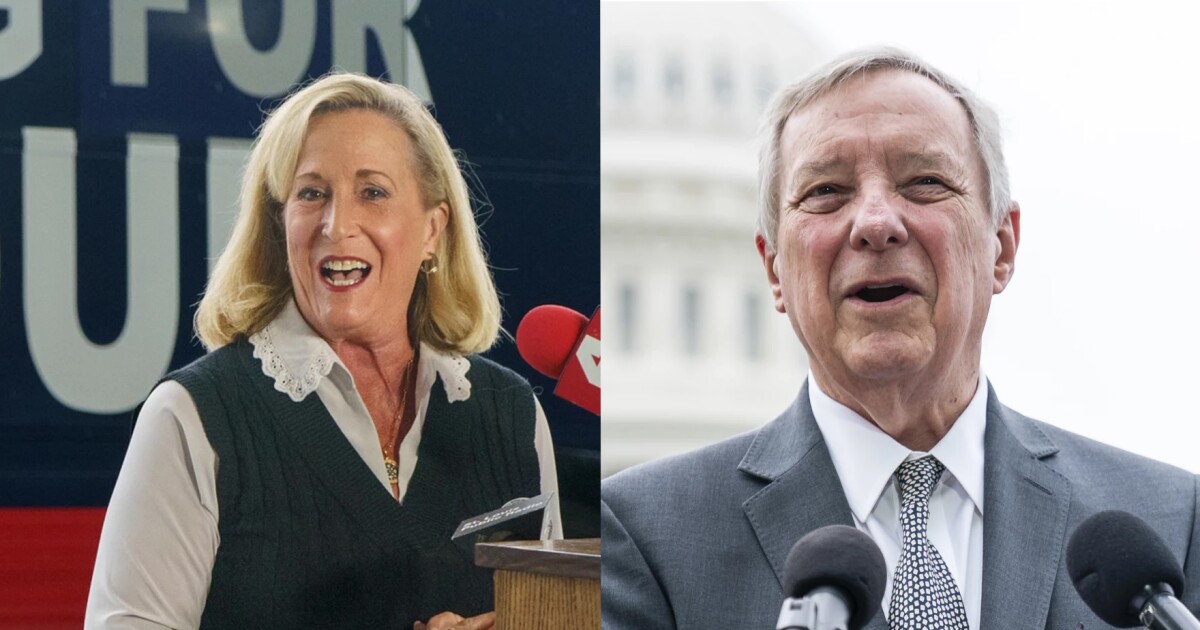
Members of the Missouri and Illinois congressional delegations are split over President Donald Trump’s decision to attack Iran.
And some Democrats are criticizing Trump for launching the attack without conferring with Congress — and before lawmakers could vote on a war powers resolution that would have restricted the president from using force against Iran.
American and Israeli troops launched airstrikes around Iran on Saturday. In a statement posted on Truth Social, Trump cited Iran’s refusal to abandon its nuclear weapon and ballistic missile programs as rationale for the attack. The Republican chief executive added that “the lives of courageous American heroes may be lost and we may have casualties that often happens in war, but we’re doing this not for now.”
“We’re doing this for the future, and it is a noble mission,” Trump added.
Early reaction to Trump’s decision among Missouri and Illinois political figures broke down along party lines.
Jason Rosenbaum
/
St. Louis Public Radio.
Congresswoman Ann Wagner, R-Missouri, said in a statement that “for nearly fifty years, the Islamic Republic of Iran has proven itself to be utterly committed to violence, chaos, and instability.” Wagner, a member of the House Intelligence Committee, added that “the United States, along with the support from many of our allies around the world, will no longer allow this regime to wreak havoc at will.”
“As the President stated, Operation Epic Fury is a clear and necessary action to raze the Iranian ballistic missile industry to the ground, annihilate the Ayatollah’s navy, and ensure Iranian terrorism and nuclear threats can no longer destabilize the globe,” Wagner said. “The multiple statements of support from across the Western world illustrate the importance of this action.”
Wagner is alluding to how the leaders from a number of countries, including Canada, Australia and Ukraine, backed Trump’s decision to attack Iran.
U.S. Rep. Mark Alford, R-Missouri, said in a statement on X that he backed Trump’s “swift and bold action to finally hold the regime accountable.”
“The Iranian regime is the world’s leading state sponsor of terror, a destabilizing force across the region, and a threat to U.S. allies, interests, and bases in the Middle East,” Alford said. “Tehran is directly responsible for the deaths of countless Americans over the years.”
“As I’ve said for weeks, through either the easy way or the hard way, the Ayatollah needs to go,” Alford added.
Missouri Congressman Sam Graves said in a statement that Trump “took decisive action to protect our service members, our homeland, and our national security before that threat could grow.” And Congressman Mike Bost, R-Illinois, applauded President Trump acting decisively to protect America’s national security interests.
“God bless our military men and women in harm’s way; may the uncertain days ahead lead to a lasting peace for years to come,” Bost said.
U.S. Rep. Mary Miller, R-Illinois, said Trump has “taken decisive action to defend America’s interests and confront those who threaten our security.”
“As our elite Armed Forces carry out Operation Epic Fury in Iran, we lift up our brave service members and the allies standing beside them in prayer for their safety and success in the mission,” Miller said in a statement on X.

Eric Lee
/
St. Louis Public Radio
Durbin, Pritzker decry decision
Democrats representing Illinois and Missouri roundly condemned Trump’s decision to attack Iran, including Illinois Sens. Dick Durbin and Tammy Duckworth.
Duckworth said in her statement that “too many Americans believed him when he promised that he would get our nation out of foreign wars and bring prices down for families.” The Democratic lawmaker added Americans “can clearly see with their own eyes that he was lying”
“Instead, Donald Trump chose to put American lives and national security at risk while threatening to draw us into yet another expensive, taxpayer-funded forever war without Constitutionally-required authorization, a defined end-state or a real plan to prevent the instability that could come next,” Duckworth said. “He is making that choice while his chaotic policies here at home continue driving costs for middle-class Americans to record highs.”
While noting “there is bipartisan support for stopping the development of nuclear weapons in Iran, there is no consensus for another interminable war in the Middle East.”
Durbin, who is not seeking reelection this year, pointed out he was one of 23 senators to vote against authorizing military force in Iraq in 2002. Trump attacked Iran without receiving any authorization from Congress — and before lawmakers could vote on a war powers resolution aimed at restricting military force without permission from the country’s legislative branch.
“A war in Iran with the goal of regime change could be another long-term military commitment with deadly consequences for thousands of American troops,” Durbin said. “The rash and unpredictable conduct of President Trump is a well-established worry in many ways but an impulsive commander in chief is a deadly combination.”

Brian Munoz
/
St. Louis Public Radio
Democratic Reps. Wesley Bell and Nikki Budzinski both released statements criticizing Trump’s decision to strike Iran. Budzinski, an Illinois Democrat, said “the Constitution is clear: only Congress has the power to send our nation to war.”
“This is a grave responsibility — one we take with the utmost seriousness. But the same cannot be said for President Trump,” said Budzinski, who added she would support a War Powers resolution. “Once again, he has disregarded the principle of coequal branches of government. And now, the consequences could be profound and dangerous.”
Bell said in his statement that “no one should mistake opposition to this war for sympathy toward that government.” But the Missouri Democrat added “launching a regime change campaign without a clear strategy, a defined end goal, or honest preparation for the costs is dangerous and shortsighted”.
“Military force is the most serious power our country can exercise,” Bell said. “It requires clarity of purpose, clearly defined objectives, and a credible plan for what comes next. War is not something you enter lightly, and it is not something you get to redo if it goes wrong. The American people and their Representatives deserve to know that every diplomatic option was fully exhausted before we put our troops in harm’s way.”
Illinois Gov. JB Pritzker, a potential presidential candidate in 2028, also blasted Trump’s decision for having “no justification, no authorization from Congress, and no clear objective.”
“But none of that matters to Donald Trump — and apparently neither do the safety and lives of American service members,” Pritzker said in a statement on BlueSky. “Donald Trump is once again sidestepping the Constitution and once again failing to explain why he’s taking us into another war. Americans asked for affordable housing and health care, not another potentially endless conflict. God protect our troops.”
Schmitt and Hawley mum for now
As of Saturday morning, Missouri Sens. Eric Schmitt and Josh Hawley had not released statements about Trump’s decision to attack Iran.
Both Missouri Republican senators were critical of Democratic President Joe Biden’s push to provide Ukraine with weapons to repel Russia’s invasion.
But they’ve been largely supportive of Trump’s foreign policy moves, even as some elements of the president’s political coalition have been fiercely critical of his interventionist decisions in Venezuela and Iran.
When asked about potential military action last week in Springfield, Hawley called Iran “a huge threat to the region, to our ally Israel — but also to our interests.”
“Iran absolutely cannot be allowed to have a nuclear weapon and needs to be put in their box and kept in their box,” Hawley said. “And we need our allies in the region, particularly Israel, to be strong, to keep them deterred, and contained long term.”
This story has been updated with additional comment.

Michigan State Police patrol car damaged in hit-and-run on Lodge Freeway in Detroit

Body camera video shows Massachusetts police officer save 78-year-old man from burning truck – East Idaho News

U.S.-Israeli strikes spark dueling rallies in Twin Cities

CBSB: Southern Miss sweeps again, Mississippi State shines in Texas, Ole Miss struggles – SuperTalk Mississippi
Missouri Lottery Pick 3, Pick 4 winning numbers for March 1, 2026

Florida High School Football Rankings: Top 25 teams – Oct. 21

Cleary's 21 help Le Moyne down Central Connecticut State 69-64 in OT

How old is Bo Nix? What to know about Oregon quarterback ahead of 2024 NFL Draft

99th annual Pony Swim held in Virginia

Indiana Members Credit Union announced as new anchor tenant at Bottleworks District

House Republicans push Johnson to go to war with Senate over SAVE Act

Israel FM says Europe too divided, slams Spanish PM

Satellite images provide view inside Iran at war

Video: What the Texas Primary Battle Means for the Midterms

Dems’ potential 2028 hopefuls come out against US strikes on Iran
-

 World4 days ago
Exclusive: DeepSeek withholds latest AI model from US chipmakers including Nvidia, sources say
-

 Massachusetts5 days ago
Mother and daughter injured in Taunton house explosion
-

 Denver, CO4 days ago
10 acres charred, 5 injured in Thornton grass fire, evacuation orders lifted
-

 Louisiana1 week ago
Wildfire near Gum Swamp Road in Livingston Parish now under control; more than 200 acres burned
-

 Technology1 week ago
YouTube TV billing scam emails are hitting inboxes
-

 Politics1 week ago
OpenAI didn’t contact police despite employees flagging mass shooter’s concerning chatbot interactions: REPORT
-

 Technology1 week ago
Stellantis is in a crisis of its own making
-

 News1 week ago
World reacts as US top court limits Trump’s tariff powers