Illinois
Illinois driver leads from start to finish in winning WoO Late Model Series race


GRAND FORKS — It hasn’t been the easiest season for World of Outlaws Late Model Series driver Brian Shirley.
But a win and a $12,000 check late Sunday night will make things a little easier as the Illinois driver moves forward with the WoO LMS season.
Shirley started on the pole and led all 40 laps in winning his first WoO LMS win of the season at River Cities Speedway, It was a rare Sunday night of racing at The Bullring as Friday’s original WoO LMS race was postponed due to wet grounds.
The wait was worth it to Shirley, who held a comfortable lead much of the race until Devin Moran staged a late challenge with 10 laps to go.
“It’s been a roller coaster year,” said Shirley. “We’ve had a lot of downs. It’s a little emotional because we’ve put in so much work.”
“Obviously, starting up front was the key, getting the lead and controlling where I was going. I was a little nervous (in the closing laps) but I knew clean air was going to be huge so I could make own lines.”
Shirley hit lapped traffic with 32 laps to go but he smoothly maneuvered through it. With just under 10 laps to go, Moran made a surge closing to within a couple of car lengths. But Shirley had his own little spurt and held a comfortable lead with five laps to go.
However, with two laps to go, the second caution flag of the race was waved, wiping out Shirley’s 1.8-second lead. But Moran couldn’t make a push in the final two laps.
“I was watching the scoreboard and with 10 laps to go I tried to run the top in (Turns) 3 and 4 but there was nothing there,” said Moran. “With all the rain they’ve had here, they had the bottom pretty saturated so we kind of got stuck around the bottom. But that’s part of it. Can’t complain about a second-place finish.
“I’m just glad we got the show in on a Sunday evening. It looked like an all-right crowd.”
Shirley beat Moran to the flagstand by 0.905 seconds. Max McLaughlin was third followed by Brandon Sheppard and Ryan Gustin.
Overall, it was Shirley’s eighth WoO LMS win. He was been racing late models for roughly 20 years.
Jason Strand was the top local finisher in the field of 34 cars. He finished 11th.
Two other classes raced Sunday, with Trey Hess winning the streets feature and Austin Hunter taking the 20-lap Midwest modifieds main event.
Hess took the lead with 10 laps to go and he edged Cole Greseth by 1.579 seconds. John Halvorson was third, followed by Seth Klostreich and Rodney Hulst.
Hunter survived a wild Midwest modified feature, which was marred by an eight-car pileup five laps into the race.
Hunter grabbed the top spot with 10 laps to go and won by 0.671 seconds over Jory Berg. Cylen Vargason, Joseph Thomas and Connor Drewry rounded out the top five.
Racing resumes at RCS on Tuesday night. Double sprint features are scheduled. There will be no races Friday, July 5.
River Cities Speedway
Sunday’s results
Streets
First heat — 1. Greg Jose, 2. Wes Ramsrud, 3. Royce Jawaski
Second heat — 1 Cole Greseth, 2. Trey Hess, 3. Bryce Reimer
Feature — 1. Trey Hess, 2. Greseth, 3. John Halvorson, 4. Seth Klostreich, 5. Rodney Hulst
Midwest modifieds
First heat — 1. Chris Edmonds, 2. Lance Schill, 3. Ryan Schow
Second heat — 1. Jory Berg, 2. Makenna Romuld, 3. Aaron Blacklance
Third heat — 1. Cylen Vargason, 2. Austin Hunter, 3. Matt Schow
Feature — 1. Hunter, 2. Berg, 3. Vargason, 4. Joseph Thomas, 5. Connor Drewry
WoO LMS
First heat — 1. Devin Moran, 2. Cody Overton, 3. Brandon Sheppard, 4. Brent Larson
Second heat — 1. Ryan Gustin, 2. Bobby Pierce, 3. Nick Hoffman, 4. Dennis Erb Jr.
Third heat — 1. Max McLaughlin, 2, Dustin Sorenson, 3. Jason Strand, 4. Dustin Strand
Fourth heat — 1. Brian Shirley, 2. Tyler Bruening, 3. Sam Mars, 4. Chad Mahder
B main 1 — 1. Kyle Bronson, 2. Cade Dillard, 3. Tristan Chamberlin
B main 2 — 1. Tyler Peterson, 2. Brad Seng, 3. Cole Schill
Feature — 1. Shirley, 2. Moran, 3. McLaughlin, 4. Sheppard, 5. Gustin
Wayne Nelson / Grand Forks Herald
“



A major overhaul to the Illinois justice system could be officially underway.
House Bill 3363 lays the foundation for a brand new agency, the state public defender office.
The goal is to bring more consistent legal representation for Illinois residents who can’t afford an attorney.
Joining us now to discuss the rolled-out timeline is the bill’s sponsor, State representative Dave Vella, who actually started his legal career as a public defender, before heading to Springfield.
Illinois
Illinois Democrats face backlash after blaming Trump in Chicago cross-burning case | Fox News Video

‘Outnumbered’ reacts to Illinois Gov. JB Pritzker and Chicago Mayor Brandon Johnson blaming President Donald Trump for a cross-burning incident in Grant Park.
Illinois Democratic leaders Governor JB Pritzker and Chicago Mayor Brandon Johnson are slammed for weaponizing a Chicago cross burning incident by blaming former President Trump. Despite the suspect, Murlin Lue, admitting his motive was to protest Trump, not racism, Pritzker and Johnson doubled down. Critics, including Illinois GOP State Rep. Chris Miller, accuse them of playing politics and fostering division rather than seeking truth.

ROCKFORD, Ill. (WIFR) – November ballots will feature a repeat of top billing in the race for governor. Illinoisans can once again choose between Governor JB Pritzker or Darren Bailey to lead the Land of Lincoln.
But beside their spots, new names will appear for voters.
The Democratic and Republican candidates for governor picked new running mates for their rematch. With Lieutenant Governor Julianna Stratton running for U.S. Senate, Pritzker picked Christian Mitchell to join his ticket. On the Republican side, Aaron Del Mar joins Bailey, who previously ran with Stephanie Trussell in 2022.
Mitchell and Del Mar spoke Thursday with WIFR on what inspires them to run, their campaign priorities and ideas to improve the Rockford region.
Backgrounds
Starting with the Democratic ticket, Mitchell joins the race as a former state representative from Chicago as well as a deputy governor with the Pritzker administration.
“Before anything else, I’m Debbie’s son, and I’m James’s grandson,” Mitchell introduced. “They’re the ones who really instilled in me the value of hard work and made sure that I was going to have a very bright future.”
Mitchell sees the role of lieutenant governor as a partner to the state’s executive.
“I’m really lucky to be running with somebody who I respect, and who I think is the best governor in the nation… Governor JB Pritzker,” he said.. “My first thing is going to be supporting his agenda, which right now is all about lowering costs and raising wages.”
On the Republican side, Del Mar hails from suburban Chicago and considers his first priority to be raising his family.
“I wanted nothing to do with politics, did not want to be involved — wanted just to raise my kids and work my job,“ said Del Mar. He described his start in public service as something he ”kind of got pulled into.”
The Republican worked his way from a city council member in Palatine, at 29-years-old, to co-chair of the Illinois GOP. Although he says he “wanted nothing to do with being on” Bailey’s campaign, Del Mar sees strength in unity — offering a Chicago area perspective alongside Bailey’s southern Illinois roots.
“How about everybody in the state of Illinois, regardless of where you come from, has a seat at the table. If you’re from a southeast farming community, or you’re from the city of Chicago, where I grew up, everybody has a stake in the game.”
Priorities
Mitchell points to economic development as his focus for the gubernatorial campaign.
“I see vacancies on State Street in Chicago. I see vacancies on Main Street in Belleville and Alton and in Carbondale,” he recounted. “I want to make sure that we’ve got the kind of amenities and economic development, that kind of affordability, that allow us to make sure that folks want to stay in the towns that they’re born in if they want to.”
The Democratic candidate also eyes long-term planning for the state, including an “Illinois 2050 Plan.”
“How do we have the kind of educational undergirding that means that no matter where you’re from, you have a chance to have one of those jobs, whether it’s in new agriculture technology and new farming techniques or biotech, quantum.”
When asked how to achieve these priorities, Mitchell turned to investing in public education, retaining residents with better wages and improving health care.
“Making sure that we are able to protect our health care system, so that folks aren’t going broke when they get sick, that’s another big way that we can make an impact.”
Del Mar outlined a cost-of-living focus as central to his campaign.
“You wanna succeed, you do the basics really well, and the basics are affordability,” he contended.
The Republican repeatedly highlighted the state’s property taxes — reportedly the highest in the nation — as an issue to tackle. He suggested redirecting Illinois’s budget as one measure to ease the burden on homeowners.
“Number one is fully funding the state’s portion of local taxes, because that will offer people property tax relief.” Del Mar clarified this wouldn’t mean redirecting funds for public education.
“We’re looking at how we fund schools, how we make sure to empower teachers to have the best educational outcomes that we can have here in Illinois, regardless of what your zip code is, regardless of what your parents do for a living or how much money they make,” added Del Mar.
Reflecting on Rockford
Each candidate provided their vision for boosting the Rockford region.
For Mitchell, improvements continue with infrastructure funding, building on the state’s roughly $500 million investment in the area.
“The things that we have already worked on, through the capital plan that I helped lead as deputy governor, that the governor signed and is implementing, are already having benefits that the people of Rockford can see.”
The Democrat also pointed to the Chicago Rockford International Airport as an opportunity.
“Investing in that regional airport where we’ve already helped with a matching grant to get additional funds, that helps build out the economy,” said Mitchell. “There’s so much that’s happening there that it is really good for the economy and bringing more people back to Rockford.”
Del Mar shared his local priority as supporting unionization in the area.
“Union families deserve to be able to have a livable wage, and that’s something that’s important to Darren and I,” said Del Mar. He mentioned pensions were another item that a Republican executive wouldn’t touch for the public and private sector unions.
“I know that area up there has strong union backbone,” described Del Mar. “We want to make sure they know that they’re not going to have a bigger supporter in the governor’s mansion than Darren and I.”
Election Day
When asked for thoughts on their opponent, Mitchell criticized the Bailey campaign as a “repacking” of his 2022 run.
“The only record that they have to run on is extremism,” he exclaimed.
The Republican candidate also reflected on records, pointing to Pritzker’s years in office.
“Why are we underfunding education? Why are property taxes at all-time high? Why are businesses leaving?” asked Del Mar.
Voters can decide on who will lead Illinois November 3. Early voting starts September 24, with applications for voting by mail opening August 5.
Extended Interviews
Copyright 2026 WIFR. All rights reserved.
-

 Technology10 minutes ago
It’s the last day of Prime Day — here are over 140 great deals to choose from
-

 World15 minutes ago
Rubio announces framework deal between Israel and Lebanon as experts warn Iran will fight to sabotage it
-

 Politics22 minutes ago
Lawyer who beat Hawaii gun law calls state’s reliance on Black Code ‘disgraceful’
-

 Sports30 minutes ago
2026 World Cup Group Scenarios: What Remaining Teams Need To Advance To Round of 32
-

 Technology37 minutes ago
Ohio robot cop retires after zero arrests
-
 Business40 minutes ago
Commentary: Puncturing the myth of Alan Greenspan, whose policies gave us the Great Recession
-
 Entertainment45 minutes ago
On 10th anniversary, Boleros de Noche’s legacy is celebrated by L.A. City Hall
-
 Lifestyle52 minutes ago
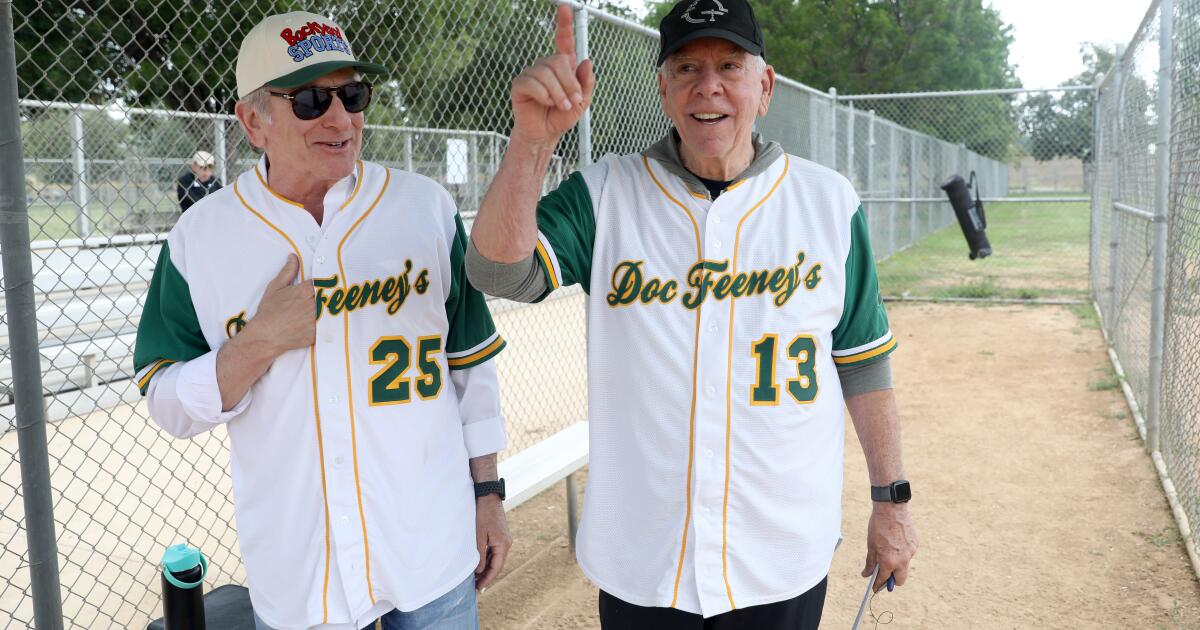
They started playing L.A. Municipal softball 50 years ago. They’re still at it

