Illinois
‘Hitting kids should never be allowed’: Illinois bans corporal punishment in all schools


SPRINGFIELD, Ill. (AP) — This school year, Illinois will become just the fifth state in the nation to prohibit corporal punishment in all schools.
Legislation that Gov. JB Pritzker signed into law this month bans physical punishment in private schools while reiterating a prohibition on the practice in public schools implemented 30 years ago.
When the ban takes effect in January, Illinois will join New Jersey, Iowa, Maryland and New York in prohibiting paddling, spanking or hitting in every school.
State Rep. Margaret Croke, a Chicago Democrat, was inspired to take up the issue after an updated call by the American Association of Pediatrics to end the practice, which it says can increase behavioral or mental health problems and impair cognitive development. The association found that it’s disproportionately administered to Black males and students with disabilities.
“It was an easy thing to do. I don’t want a child, whether they are in private school or public school, to have a situation in which corporal punishment is being used,” Croke said.
Croke was also disturbed by the Cassville School District in southwest Missouri. After dropping corporal punishment in 2001, it reinstated it two years ago as an opt-in for parents. Croke wanted to send a clear message that “it never was going to be OK to inflict harm or pain on a child.”
Much of the world agrees.
The World Health Organization has decreed the practice “a violation of children’s rights to respect for physical integrity and human dignity.” In 1990, the United Nations Convention on the Rights of the Child established an obligation to “prohibit all corporal punishment of children.”
The U.S. was the convention’s lone holdout. Americans seemingly take a pragmatic view of the practice, said Sarah A. Font, associate professor of sociology and public policy at Penn State University.
“Even though research pretty consistently shows that corporal punishment doesn’t improve kids’ behavior in the long run — and it might have some negative consequences — people don’t want to believe that,” Font said. “People kind of rely on their own experience of, ‘Well, I experienced corporal punishment. I turned out fine.’ They disregard the larger body of evidence.”
U.S. Sen. Chris Murphy, a Connecticut Democrat, last year introduced legislation, co-sponsored by Senate Majority Whip Dick Durbin of Illinois, to ban corporal punishment in any school receiving federal funds. It was assigned to a Senate committee for a public hearing in May 2023 but has seen no further action.
The U.S. Supreme Court has also rejected constitutional claims against the practice. When junior high pupils in Dade County, Florida, filed a lawsuit challenging physical discipline, the court ruled in 1977 that Eighth Amendment protection against cruel and unusual punishment was reserved for people convicted of crimes; it did not apply to classroom discipline.
Today, 17 states technically allow corporal punishment in all schools, although four prohibit its use on students with disabilities. North Carolina state law doesn’t preclude it but every school district in the state blocked its use in 2018. Illinois lawmakers in 1994 stopped the practice in public schools.
Among states that have completely outlawed it, New Jersey took the unusual step of barring corporal punishment in all schools in 1867. Iowa eliminated it in private schools in 1989. Maryland and New York stopped private school use in 2023.
Private school advocates, who vehemently oppose state intervention, did not oppose the new law.
Schools in the Catholic Conference of Illinois do not use corporal punishment, executive director Bob Gilligan said.
“It’s an anachronistic practice,” he said.
Ralph Rivera, who represents the Illinois Coalition of Nonpublic Schools, said he’s unaware of any member school that uses the practice. While the group usually opposes state meddling in its classrooms, Rivera said, objecting to a corporal punishment ban on principle is a tough sell.
“Even if they don’t do it, they told us to stay out of it, because it doesn’t look good when you say, ‘No, we want to be able to spank children,’” Rivera said.
The law does not apply to home schools. Home-schooled students are subject to the same rules during school hours as those they face after school.
For student athletes, discipline or correction on the football field or the volleyball court would have to go beyond the pale to qualify as corporal punishment, Croke explained during floor debate on the measure last spring.
“We talked in committee about a situation in which maybe a coach said, ‘Run laps,’” Croke said. “I do not believe this would apply by any means because when we tell a kid to run laps, the goal is not necessarily to inflict pain.”
Legislative debate, nonetheless, included Republican concern that imposing the requirement on private schools could facilitate rules affecting, for instance, curriculum or religious teachings.
Croke, whose school-age child attends Catholic school, said her intent was not to open the door to state regulation of private education but rather to “keep kids out of harm’s way.”
“There’s a red line there, that hitting kids should never be allowed,” Croke said.



Illinois
As Illinois enters 10th year under Evidence-Based Funding model, equity remains an elusive goal

Article Summary
- After nine years of funding schools under the Evidence-Based Funding model, wealth-based disparities in per-pupil spending have largely evened out, but residents of low-wealth districts still pay significantly higher property tax rates.
- Since the adoption of EBF, annual state funding of public schools has increased by more than $3 billion. But 63% of districts are still funded at less than 90% of their adequacy target.
- School district officials in both rich and poor districts credit the EBF system focusing resources where they are needed most and providing more certainty in funding.
This summary was written by the reporters and editors who worked on this story.
SPRINGFIELD — Illinois has made progress in recent years boosting funding for schools that serve some of the state’s poorest communities and leveling out some, but not all, of the wealth-based disparities in per-pupil instructional spending.
But as Illinois enters the 10th year of financing schools under the Evidence-Based Funding model — a formula adopted in 2017 that was supposed to improve both the adequacy and equity of the state’s school finance system — wide disparities still exist in the property tax system that funds more than half the cost of K-12 education.
An analysis of school finance data by Capitol News Illinois covering the nine-year period from 2017 to 2025 shows homeowners in the lowest-wealth districts pay tax rates that are double those in the wealthiest districts.
The findings are largely consistent with those of other researchers who follow school finance issues nationally.
“Given the design of EBF and the evidence basis on which it was built, this is about what I would expect. I mean, it’s actually a little better than I would have expected,” Bruce Baker, a school finance researcher at the University of Miami, said in an interview. “To a significant extent, it leveled out the resources, but it, by no stretch of the imagination, brought the state to equal educational opportunity.”
Evidence-Based Funding
The Evidence-Based Funding formula came about after years of negotiations among legislators and stakeholders who were searching for a way to reform what many considered to be the most inequitable school funding system in the country.
“I have always talked about Pennsylvania and Illinois as being kind of the equity trainwreck states,” Baker said. “Connecticut has taken Illinois’ place in that role.”
At that time, according to State Report Card data, Illinois was spending about $7 billion a year funding public schools, less than one-fourth of the total $28.4 billion being spent by the state’s public schools. Federal funding provided another $2.1 billion, or 7.5% of the total.
But more than two-thirds of the total, $19.3 billion, came from local revenues, primarily property taxes.
Meanwhile, there were vast disparities across the state’s school systems, both in terms of the taxes they levied on property within their boundaries and the money they spent educating their students.
The aim of the new formula was to improve both the adequacy and equity of school funding in Illinois. That involved establishing an “adequacy target” for each district, using research-based evidence to estimate the cost of educating each student in a district.
The formula was predicated on the idea that some students are more expensive to educate than others. That meant the adequacy target had to account for such things as the poverty rate within a district, the percentage of its students from non-English speaking backgrounds, the number of students receiving special education services and regional cost of living differences, among other factors.
“A district that’s 60% to 70% kids from low-income households, 20 to 30% non-English speaking kids, that school or district might need 40%, 50% or even 100% more in spending per pupil than a district that has no kids from low-income families and no kids who are English learners,” Baker said. “The per-pupil spending really needs to be differentiated based on the costs to achieve common outcomes.”
The law then called for increasing state funding each year by at least $300 million and earmarking the bulk of that money for the districts furthest below their adequacy target, with the goal of eventually getting all districts up to at least 90% of adequacy.
It also called for funding $50 million each year in property tax relief grants to reduce levies in certain high-tax districts. Districts are awarded grants based on a formula spelled out in statute. Districts are expected to use the grant funds to abate taxes they would otherwise levy.
At Gov. JB Pritzker’s urging, lawmakers did not fund the grants in the fiscal year that just ended June 30 but instead passed a bill calling for the Illinois State Board of Education’s Professional Review Panel to file a report assessing the impact of the program.
That report was released in March. It found that from 2015 through 2023, total property taxes collections grew in almost every district in the state, although the growth was slightly lower in districts that had received the grants than those that did not.
Lawmakers renewed the grant program for the fiscal year that began July 1 but extended the period in which districts must use the funds to abate taxes to three years.
In the years since the EBF formula was adopted, overall annual state funding for schools has increased more than $3 billion, to an estimated $10.8 billion in the fiscal year that just began.
Out of 850 elementary, high school and unit school districts in the state, according to ISBE’s EBF distribution data, the number of districts that are funded at or above 90% of their adequacy target has grown from 194 in fiscal year 2018 to 313 in 2026.
Open chart in a new tab
But after nine years under the EBF model, that still leaves 537 districts, 63% of the total, funded at less than 90% of adequacy. ISBE reported during this year’s budgeting process that it would take an additional $3 billion to get all districts up to at least 90% of adequacy.
“We need more, and I have tried very hard, as you know, in very tight budget circumstances,” Pritzker said during a recent news conference. “We nevertheless increased funding for K-12 schools.”
But an analysis of school finance data covering the first eight years of the EBF formula shows the state has made only modest progress to improve the equity of its school finance system, either in terms of the taxes people pay to fund their local schools and the amount of resources those districts devote to classroom instruction.
Tax inequity
One of the hopes of the new funding system was that as state funding for schools increased, local districts would become less reliant on local property taxes.
At the time EBF went into effect, there were vast disparities among districts in terms of their relative wealth and the tax rates they levied.
According to data from the Illinois Local Education Retrieval Network, or ILEARN, in fiscal year 2017, the year before EBF took effect, district wealth ranged from a low of $20,449.57 in taxable property valuation per pupil to a high of $2.47 million.
Property tax rates among the districts also varied widely, from a low of $1.14 per $100 of equalized assessed valuation, or EAV, to a high of $21.82.
According to the data, people in the poorest 10% of districts in the state paid an average tax rate of $5.39 per $100 of EAV. That was more than double the average tax rate in the wealthiest 10% of districts, which was $2.50 per $100 of EAV.
Using a statistical tool known as regression analysis, the data showed that for every $10,000 increase in a district’s per-pupil property wealth, there was a corresponding $0.028 decrease in its property tax rate. And while other factors also influenced a district’s tax rate, property wealth explained 21% of the variation.
By 2025, the eighth year of the EBF formula, data from school districts’ annual financial reports showed those disparities had eased only slightly.
There was still wide variation in tax rates among school districts, from a low of $19,580 to a high of $3.3 million.
From 2017 through 2025, the average tax rate among the poorest 10% of districts fell considerably, to $4.81 per $100 of EAV. But that was still more than twice as high as the average tax rate among the wealthiest 10%, which was $2.40 per $100.
Open chart in new tab

Differences in per-pupil property wealth still explained about 21% of the variation in tax rates but the relationship was not as severe. In 2025, for every $10,000 increase in property wealth, there was a corresponding $0.018 decrease in tax rates.
Spending inequity
One area where Illinois appears to have made more progress is in directing new resources to districts serving large numbers of high-needs students.
The EBF formula is predicated on the idea that some students are more expensive to educate than others. The additional cost of educating those students — including low-income students, English language learners and students receiving special education services, among others — is used as a factor in calculating each district’s adequacy target and, eventually, how much new money they receive each year.
To measure how effectively Illinois was directing resources to high-need districts, CNI compared each district’s instructional expenses per-pupil with its percentage of low-income students, as reported in the ISBE’s annual Report Card data.
ISBE defines instructional expenditures as “the direct costs of teaching pupils or the interaction between teachers and pupils.” Low-income students are defined as those “who receive or live in households that receive Supplemental Nutrition Assistance Program or Temporary Assistance for Needy Families benefits; are classified as homeless, migrant, runaway, Head Start, or foster children; or live in a household where the household income meets the U.S. Department of Agriculture income guidelines to receive free or reduced-price meals.”
In 2017, the year before EBF took effect, there were wide wealth-based gaps in instructional spending across all school districts in Illinois.
At that time, instructional spending averaged about $7,320 per pupil statewide. The average among elementary districts was below that level, at $6,822, while high school districts the average was $9,224.
Within elementary districts, however, the wealthiest 10% — those with the lowest percentage of low-income students — instructional spending per-pupil was 39% higher than it was among the poorest 10%.
Among high school districts, the wealthiest districts spent 29% more on average than the poorest districts.
Among unit districts, however, there was little difference in spending levels between wealthy and poor districts.
By 2025, the eighth year of the EBF program, the spending picture had changed considerably.
Open chart in new tab
First, the infusion of $3 billion in additional annual state funding boosted instructional spending across the board. That year, the statewide average was $10,601 per pupil, a 45% increase over 2017 levels.
In addition, many of the wealth-based disparities had been erased.
Among unit districts, the poorest 10% of districts actually spent about 29% more per-pupil on instruction than the wealthiest. Among elementary districts, spending levels were about even between rich and poor districts.
Among high school districts, however, wealth-based disparities persisted. There, the richest 10% of districts continued to spend about 29% more per-pupil on instruction than the poorest districts.
Chris Johnson, deputy superintendent at New Trier Township High School District in northern Cook County, one of the wealthiest districts in the state, acknowledged in an interview that his district is fortunate to have more than adequate resources. But he said that is not the fault of the EBF system.
“We were 91% funded by local property taxes, and so we have a long history of our community generously committing to support our schools,” he said.
In 2025, New Trier ranked third in the state among high school districts for per-pupil instructional spending, at just over $21,000. Its property tax base was also among the highest, at nearly $1.9 million per pupil, and it had one of the lowest property tax rates, at $1.92 per $100 of equalized assessed valuation.
As a result, New Trier receives very little state funding through EBF, which is designed to prioritize the neediest districts. But Johnson, who wrote his doctoral dissertation on the implementation of EBF, said he supports the system and believes it is performing as it was intended.
“It’s brought more money to Illinois school districts, and it’s done it in an equitable way that focuses on the districts that need the most support,” he said.
“What I found in my dissertation was that the function codes — the ways the district spent the money in their budgets — were aligned with the rationale for passing law,” Johnson said. “So, the categories in school district budgets related to instruction grew at a faster rate than expenditures related to some of the administrative and other expenses.”
One district official in a smaller rural school district said the EBF model was probably more useful in helping larger districts quantify their needs. “But like for ours,” he said, “it tells us that we need a 0.2 school psychologist and a 0.1 social worker. I can’t do a point one person.”
Overall, that official said the biggest benefit the EBF system has provided his district is greater certainty that state funding will arrive on time.
“I like the guaranteed money, you know. Making sure they’re gonna send us some money,” he said.
Some lawmakers, however, have expressed growing frustration with the slow progress being made in bringing all districts up to adequate funding levels.
Sen. Graciela Guzmán, D-Chicago, introduced legislation this year calling on the state to fund all districts at 100% of their adequacy target. Although the bill never advanced out of committee, it did receive serious discussion during one committee hearing in May.
“If the state says that a service is required, the state should fund it,” Guzmán said during that hearing. “And then if the state has defined what adequate education looks like, the state should also fund that. So, if we’re serious about equity, property tax relief and supporting public schools across Illinois, then we have to stop treating underfunding as if it is normal.”
How we reported this story
This story is based on analysis of publicly available data from several datasets maintained by the Illinois State Board of Education.
Information about school district property valuations and tax levies for fiscal year 2017 was obtained from the Illinois Local Education Agency Retrieval Network, or ILEARN. According to ISBE, there is a two-year lag in reporting that data. Therefore, the FY 2017 data was obtained from the FY 2019 report.
Property valuation and tax levy data for fiscal year 2025 was obtained from individual districts’ annual financial reports filed with ISBE. At the time this analysis was performed, data was available from 746 of the state’s 850 elementary, high school and unit districts.
Information about school districts’ instructional spending and low-income population was taken from annual report card data, available from ISBE’s Report Card Data Library.
Capitol News Illinois is a nonprofit, nonpartisan news service that distributes state government coverage to hundreds of news outlets statewide. It is funded primarily by the Illinois Press Foundation and the Robert R. McCormick Foundation.

Illinois will get $1.1 million of a $45 million, 45-state settlement with money transfer app Cash App’s parent company, which was accused of misleading customers about the app’s security.
Block Inc. will face $55 million in civil penalties and also have to pay customers nationwide somewhere from $75 million to $120 million as part of the settlement, which includes the Consumer Financial Protection Bureau.
In a statement, Illinois Attorney General Kwame Raoul said the settlement holds the company accountable and requires it to “change its harmful practices.”
“Block told Cash App users their money was safe and falsely implied that the app worked like a bank, with the same protections,” Raoul said. “Block was aware that fraud on its platform was rising sharply and failed to warn users, strengthen protections or provide real help to users when things went wrong.”
A company spokesperson confirmed the settlement and said the company has made “significant investments in consumer protection, customer service, and compliance.”
“We share the commitment of the attorneys general to addressing industry challenges and continue to invest in operations and technology to promote a safe and healthy financial ecosystem,” the spokesperson said in a statement provided to the Sun-Times Wednesday night.
The lawsuit accused the company of not preventing fraud, and even of having systems that made it easier to commit that fraud. Minimal identity verification allowed someone to create fake or multiple accounts, and the company had no phone support line. Instead, customers who had been defrauded often were provided by those fraudsters with fake online customer support phone numbers, the suit alleged.
As part of the agreement, the company must offer at least 13.5 hours of human-staffed phone lines per day as part of 24-hour support, as well as reimburse customers for fraudulent transactions, stop marketing the app as safe and educate users about the dangers of fraud.

SERENA, Ill. – An 8-year-old girl has died after she was struck by lightning while outside in the backyard of her home in LaSalle County over the Fourth of July weekend.
Girl killed by lightning strike
What we know:
The LaSalle County Coroner’s office said it was called to emergency department at OSF St. Elizabeth Hospital in Ottawa on the evening of July 3 after the child was brought in following the lightning strike.
A forensic autopsy was conducted on Sunday. Preliminary findings determined the girl died from injuries caused by the lightning strike.
What we don’t know:
Officials have not yet released the child’s identity.
The incident remains under investigation by the LaSalle County Coroner’s Office and the LaSalle County Sheriff’s Office.
The Source: The information in this report came from the LaSalle County Coroner’s Office.
-
 Science2 minutes ago
‘I’d rather my house burn down than get cancer’: Herbicide use upends California’s fight to save forests
-
 Sports7 minutes ago
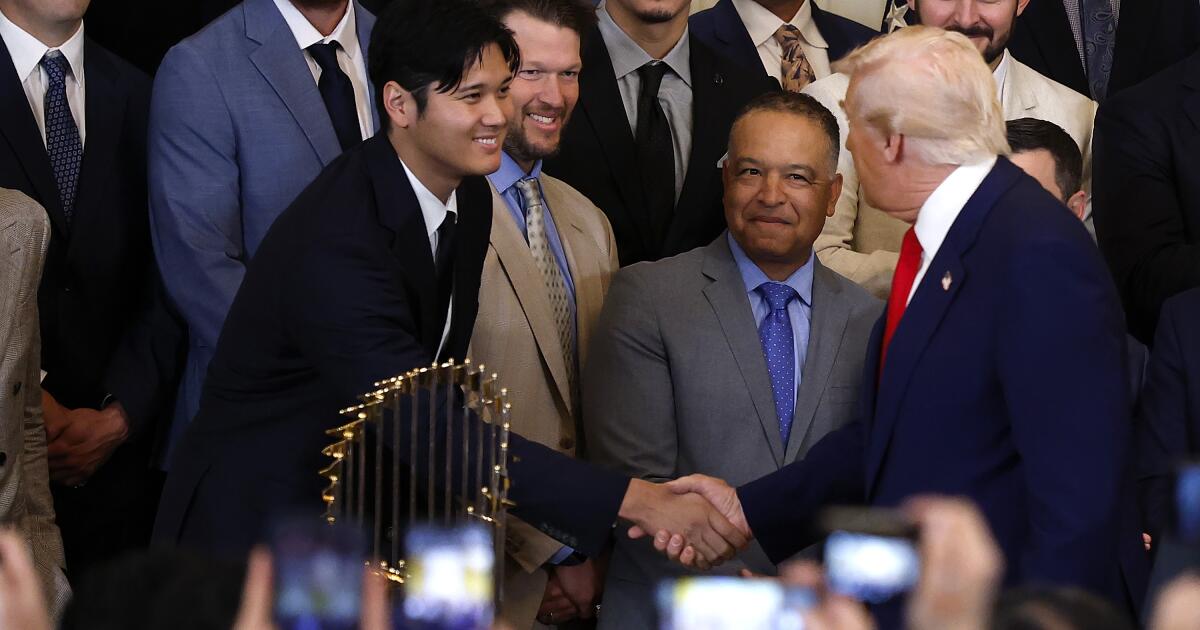
Dodgers scheduled to visit White House in late July to celebrate 2025 World Series win
-

 World17 minutes ago
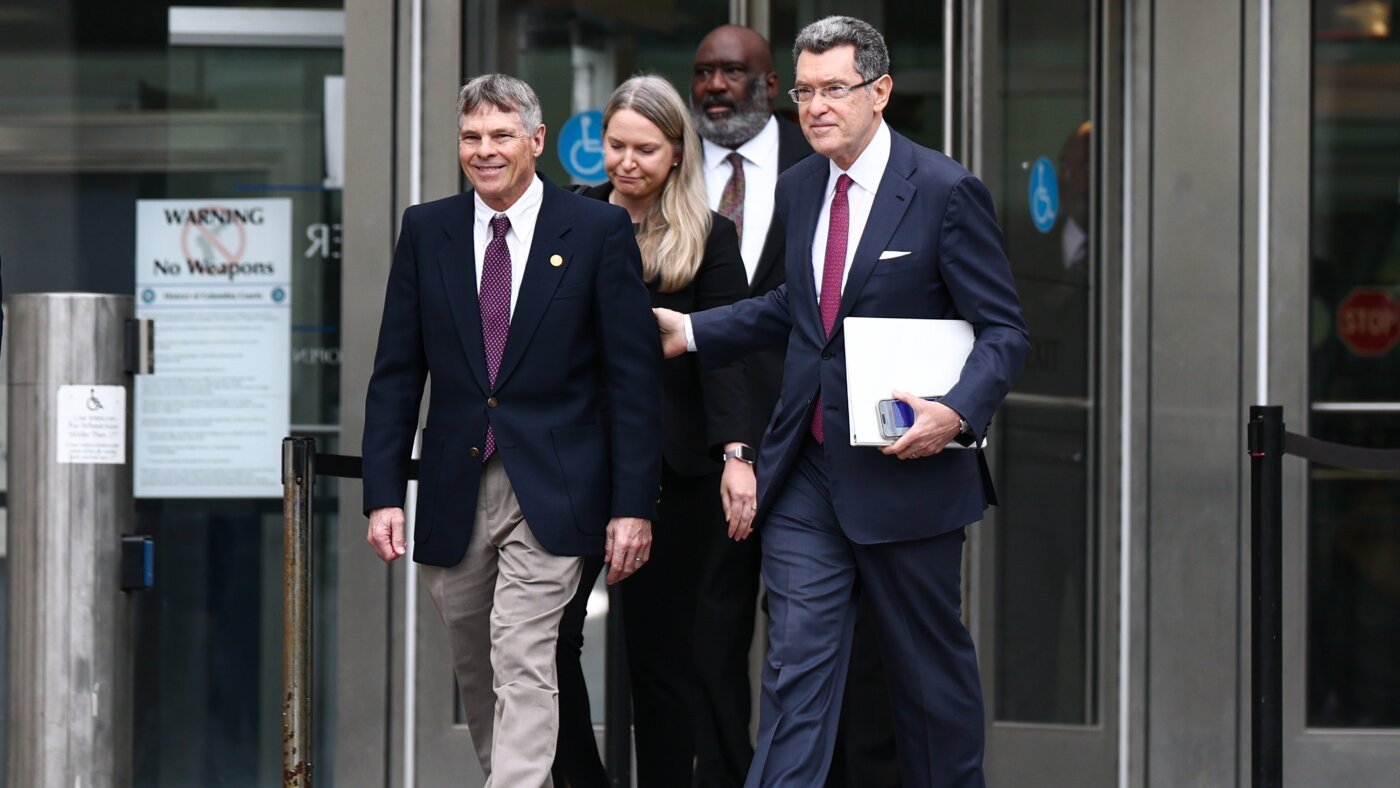
Former US Olympian pleads not guilty in DC reflecting pool vandalism case
-
 News44 minutes ago
Former Olympian pleads not guilty in reflecting pool vandalism charges
-

 Los Angeles, Ca2 hours ago
Heat advisory, beach hazards in effect as Southern California sizzles
-

 Detroit, MI2 hours ago
Teen on moped hit by car after cruising through stop sign in Detroit
-

 San Francisco, CA3 hours ago
Flight of fancy: San Francisco moves to build private luxury airport terminal
-

 Dallas, TX3 hours ago
Dallas’ digital creator economy is booming. Burnout is too.

