Detroit, MI
Fans chant ‘U-S-A!’ while George Strait honors law enforcement at Ford Field concert


The country music legend performed Saturday night in Detroit.
Chants of “U-S-A! U-S-A!” broke out Saturday night during George Strait’s concert at Ford Field, as the country legend introduced “The Weight of the Badge,” his tribute to law enforcement from his 2019 album “Honky Tonk Time Machine,” just hours after the apparent assassination attempt on former president Donald Trump at a Pennsylvania campaign rally.
On stage, the 72-year-old stalwart was thanking law enforcement for their hard work during the lead up to the song. “We appreciate you very much,” Strait said, adding, “especially after today.” That sparked a roar from the crowd, as Strait paused and let the moment take hold.
News of the shooting had spread slowly through the Ford Field crowd during the lead up to opener Chris Stapleton’s set, as some fans flashed headlines to one another on their phones. Strait never mentioned Trump by name, but at the conclusion of the song he held his hand over his heart, as photos of Bradley Reckling, the Oakland County deputy killed last month in what was described as an ambush, flashed on the stage’s video screens at the close of the song.
Those were heavy moments in what was otherwise a jovial celebration of Strait’s 40-plus year career in country music. It was his first local concert since a 2014 visit to the Palace of Auburn Hills, and it’s not necessarily his last in the Motor City: While he put a bow on his touring career a decade ago, he’s been touring steadily since his return to live music over the last few years, and he played to a packed audience of 47,065 fans on Saturday night.
His 30-song set, which lasted two hours and 10 minutes, included classics from his catalog, covers of songs by country music Mount Rushmore candidates Waylon Jennings (“Waymore’s Blues”), Merle Haggard (“Are the Good Times Really Over (I Wish a Buck was Still Silver)”), Willie Nelson (the Merle Haggard duet “Pancho and Lefty”) and Johnny Cash (“Folsom Prison Blues”), and songs from his forthcoming new album “Cowboys and Dreamers,” which is due in September.
Then there was a song dedicated to the tequila brand Strait is invested in (“if it’s not your favorite, you just haven’t tried it,” Strait told the audience prior to “Codigo”) and a piece of Jimmy Buffett-adjacent vacation-baiting (“MIA Down in MIA”), so it was even a little crass, but Strait stood his ground and gave Detroit a serenade to remember.
“Ooh, what a crowd!” Strait said early in the show, following “The Fireman.” “I love Detroit. I’m thinking about moving up here maybe, I don’t know!” It’s a nice sentiment, but Strait is a Texas guy through and through, and on stage in his black hat, blue jeans and tucked in button up shirt, he looked like he was still in Texas. (Strait is so Texas that eight of the 11 members of his backing band also hail from the Lone Star state; give him credit for staying on brand.)
Strait, who hit the stage at just before 9 p.m. and was introduced to the stage as “MCA recording artist George Strait,” which gave him the feel of a rookie artist just getting his legs underneath him. He kicked things off with “Stars on the Water,” his cover of the Rodney Crowell song from his 2001 album “The Road Less Traveled,” and he then rolled through a list of crowd pleasers — “I Got a Car,” “Here for a Good Time,” “Check Yes or No,” “Run” — that were comfortable and familiar, and fit like a favorite coat.
He was joined by Stapleton for a trio of songs, and the pair went back and forth with each other before launching into “Honky Tonk Hall of Fame,” a Stapleton-penned song from Strait’s upcoming album. “I’ve been trying to get you to cover it for 15 years,” Stapleton told Strait, to which Strait replied, “the only reason I did is because you sang it with me.” “Fair enough!” Stapleton said. Earlier in the evening, the country Southern rocker blazed through his own 80-minute set, ripping through his hits “Nobody to Blame,” “Starting Over” and “Tennessee Whiskey” and showing off his electrifying blend of rock and roll, soul and blues.
Strait’s sound is more classically country, and he plays the troubadour role on songs like “I Can Still Make Cheyenne” and “Amarillo by Morning,” songs which invoke images of lonely cowboys, dusty highways and broken hearts. Strait hasn’t lost a step in his delivery and he sells these stories with conviction, the same way he still lands the punchline at the close of “All My Ex’s Live in Texas”: you know it’s coming, but you can’t wait until it gets there.
Strait’s production on the massive stadium stage included a couple of giant video screens on either side of the stage, and a couple of video screens behind him and his band. Nothing fancy, but then neither is Strait. He’s straight down the middle.
While working Haggard’s “Are the Good Times Really Over,” Strait did manage to get a dig in on Ford, in the stadium that bares the company’s name, no less. “I wish a Ford and a Chevy would still last ten years, like they should,” Strait sang, adding a bonus zing at the end, “… and maybe run on gasoline.” Strait isn’t trying to rock the boat, he just calls ’em like he sees ’em, and it’s gotten him this far, so there’s no sense stopping now.
agraham@detroitnews.com



Photos by FOX 2 Photog Scott Federspiel
DETROIT (FOX 2) – A 16-year-old moped driver was hospitalized after a crash on Detroit’s west side on Wednesday night.
The backstory:
Detroit police say the teen disregarded a stop sign while going east on Vassar when he collided with a vehicle turning south on Outer Drive at about 9:30 p.m.

Photos by FOX 2 Photog Scott Federspiel
The boy was taken to a nearby hospital where he is listed in critical condition. The driver of the car, a woman in her 30s, was not injured.
The Source: Information for this report is from Detroit police.
Watch FOX 2 Detroit Live:

Chickens and geese that went missing from a local nonprofit’s Detroit site were found in the backyard of a nearby home, the director of operations said Wednesday.
The Full Circle Foundation, a Grosse Point Park-based nonprofit, said more than a dozen chickens and geese were believed stolen from a chicken coop on Detroit’s east side that also features the Full Circle Edible Garden.
The nonprofit provides training and job opportunities for young people with special needs.
Neighbors who learned from news reports about the missing flock found the “chickens were being held in the backyard of a vacant home not far from the Full Circle Edible Garden,” said Stephanie DiVirgil, director of operations. She said Ribbon Farm 4-H owns the flock.
“The homeowner was contacted, and she reached out to Full Circle to confirm,” said DiVirgil. “We were able to retrieve all of the chickens and geese that were found on the property, 19 in total.”
The foundation and Ribbon Farms 4-H are working to secure the site, including cameras, fencing and lights.
“We will likely start a fundraising campaign to have these items installed,” DiVirgil said. “We’ve gotten amazing support from the community, including offers to help pay for these additional security measures.”

DETROIT (WXYZ) — Human remains were found in a furnace of an home on Detroit’s west side, the Detroit Police Department tells us.
The remains was found by an individual working on the home in the 5200 block of S Clarendon just after 11 a.m.
Anyone with information can call 313-596-2260 or CrimeStoppers at 1-800-SpeakUp.
Stay with WXYZ.com for updates on this developing story.
-
 Business6 minutes ago
California soccer fans sue StubHub after it fails to deliver expensive World Cup tickets
-
 Entertainment9 minutes ago
Lucas Museum to give free annual passes to South L.A. neighbors, host community preview day
-
 Lifestyle14 minutes ago
Meow Wolf taps famed L.A. animation house for its new Los Angeles venue
-
Politics21 minutes ago
Column: Trump decries ‘communism’ while his government takes ownership of companies
-
 Science24 minutes ago
‘I’d rather my house burn down than get cancer’: Herbicide use upends California’s fight to save forests
-
 Sports29 minutes ago
Dodgers scheduled to visit White House in late July to celebrate 2025 World Series win
-

 World39 minutes ago
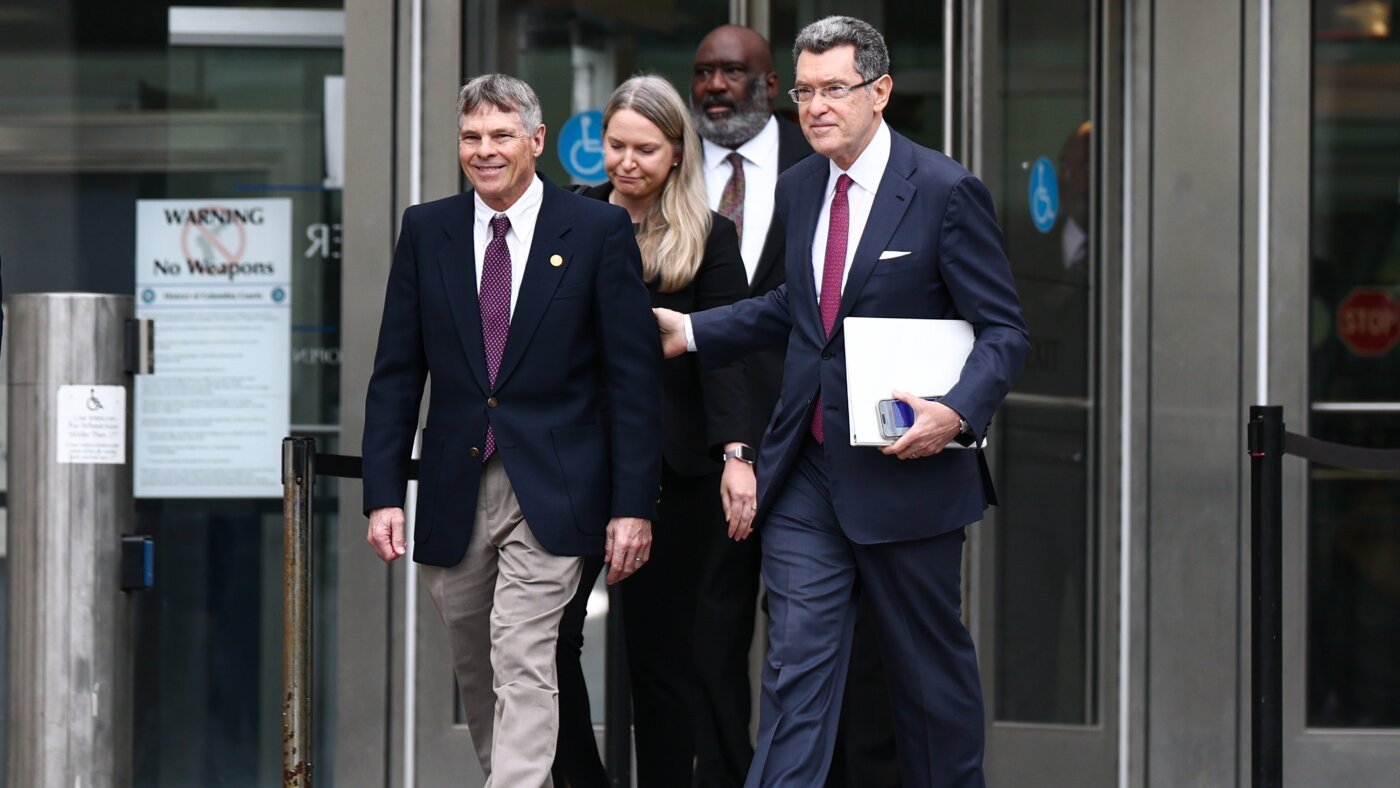
Former US Olympian pleads not guilty in DC reflecting pool vandalism case
-
 News1 hour ago
Former Olympian pleads not guilty in reflecting pool vandalism charges


