Midwest
Chicago removes largest homeless encampment, relocates tent residents into apartments and shelters: report

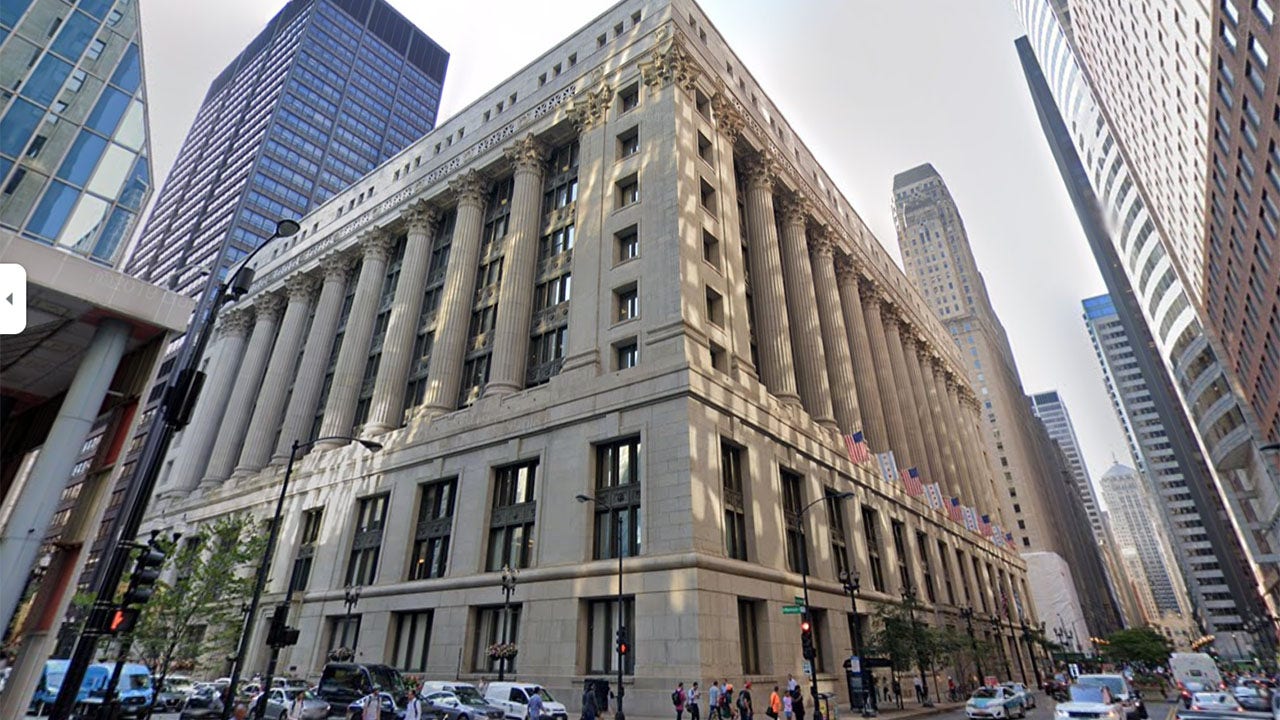
Chicago officials reportedly cleared the largest homeless encampment in the city after relocating some residents into apartments and shelter beds.
According to the Chicago Sun Times, the encampments in Humboldt Park, amounting to “roughly 90” per city data, were removed after nearby homeowners shared safety and health concerns and demanded action from city officials.
“Other neighbors have focused on providing food and necessities to the tent occupants,” the Times reported.
Many Chicago residents have been railing against housing an influx of migrants in their neighborhoods since the beginning of the year. (Screenshot/Fox 32 Chicago )
The effort has been a priority for Ald. Jessie Fuentes of the 26th Ward. He explained further to the Times that “the city had moved 39 residents into apartments and was working on apartments for 24 others.”
CHICAGO ALDERMAN SOUNDS ALARM ON MIGRANT SURGE AHEAD OF DNC: ‘WE CAN’T HANDLE ANY MORE’
“The encampment was more than three times bigger than the next largest Chicago tent city, according to a city count obtained by the Sun-Times through a request under Illinois’ open-records law,” the outlet reported.
“The city is offering shelter beds to about two-dozen others. At least one couple is lined up for a hotel room,” the outlet reported.
City officials reportedly recently began ramping up encampment clean up and posted “Notice of Enforcement” signs around Humboldt Park last month, warning “that overnight presence and unpermitted tents would not be allowed after Friday at 9 a.m.”
Chicago Mayor Brandon Johnson gives an update on migrant issues at City Hall on Jan. 29, 2024, in Chicago. (Terrence Antonio James/Chicago Tribune/Tribune News Service via Getty Images)
A family of occupants in the tent city had left their tent with hopes of getting help with shelter from a city staffer, only to return to find their tent removed by Park District personnel.
The family who requested anonymity was reportedly identified as Venezuelan and natives of the “central Venezuelan city of Valencia.” They told WBEZ that they had been living in the park for three months.
CHICAGO RESIDENT FUMES AT LIBERAL MAYOR OVER MIGRANT FUNDING AFTER FIERY MEETING: ‘AMERICA FIRST!’
“Reached hours later by WBEZ, the father said he did not know where they would sleep Friday night. By mid-afternoon, the family was in touch with city officials working on their shelter placement,” the Times reported.
The effort to relocate the tent dwellers into shelters and apartments is a first for city officials as they have not done that during tent removals in the past.
Sendy Soto, the city’s first chief homelessness officer who was appointed in April, said at a Friday news conference that “every single person has had all of their needs met.”
The growing encampments came after Texas Gov. Greg Abbott vowed at the Republican National Convention to continue bussing migrants from the southern border to sanctuary cities. (Getty Images)
“This really demonstrates this collective effort between the city of Chicago and the alderman’s office,” Soto said.
The latest notable encampment cleanup effort was around the last Democratic National Convention.
Chicago’s city council denied that the cleanup of homeless encampments containing migrants has anything to do with the DNC.
The growing encampments came after Texas Gov. Greg Abbott vowed at the Republican National Convention to continue bussing migrants from the southern border to sanctuary cities.
City officials did not immediately respond to a request for comment.
Read the full article from Here


An independent investigation initiated by the University of Michigan into “lewd” messages allegedly made by Regent Jordan Acker in a Slack channel has confirmed the authenticity of the comments.
In April, The Guardian reported that Acker made “obscene sexual comments about a Democratic strategist” in 2020 and 2021. Acker is also accused of making “lewd” comments about a female University of Michigan student and a picture of the student with her friends.
The Guardian said it received the messages just before the Michigan Democratic Party Convention in April, where the party voted on nominees for several key statewide races, including the University of Michigan Board of Regents, for the November 2026 general election. Acker lost to Amir Makled for one of the party’s two nominations.
Shortly after The Guardian’s report, the university hired New York-based firm Patterson Belknap to conduct an investigation.
During a June 25 Board of Regents meeting, Acker issued an apology, but did not directly mention the inappropriate messages.
“I’m sorry to my colleagues on this board, I’m sorry to our students, our faculty, our staff, alumni and everyone who cares deeply about this university. I’m sorry for the distraction, disappointment and the pain that this situation has caused,” Acker said while addressing the board.
“Regardless of legal outcomes, regardless of investigations, regardless of what anyone else concludes, I know that I failed my own standards.”
The Senate Committee on University Affairs previously called for Acker to resign if the allegations were proven true, but Acker said he would finish out his term, which ends on Jan. 1, 2027.
“I was elected to serve a term by the voters who are relying on me. I intend to fulfill the obligation by redoubling my efforts to support our community,” he said.
Acker, a partner at the Goodman Acker law firm, has not responded to CBS News Detroit’s request for further comment.
In response to the conclusion of the university’s investigation, the school issued the following statement, saying in part, “Upon due consideration of relevant factors and circumstances, the Board has determined that it is in the best interests of the University to close this matter without further action.”
During Thursday’s meeting, fellow regents Paul Brown and Denise Ilitch spoke after Acker’s remarks, with Ilitch saying she accepted his apology and calling the situation a “teachable moment.”
“It’s really a teachable moment for our students to be able to see that when you make a mistake, you own it, you’re accountable, you apologize, and you carry on with the work,” Ilitch said.
Acker, who is Jewish, was in the spotlight in May 2024 when he reported that pro-Palestinian protesters came to his house amid ongoing protests for campus investments in Israel.
Acker’s law office in Southfield was also vandalized that summer.
In December 2024, Acker claimed that his home was vandalized and his car was spray-painted with pro-Palestinian graffiti. Acker shared photos of his car and home, appearing to show the words “Divest” and “Free Palestine” spray-painted on the car.


Pittsburgh voted best Fourth of July celebration in America
In 2026, Pittsburgh gets the bragging rights for the nation’s Best Fourth of July Celebration, as determined by voters in USA Today 10BEST Readers’ Choice Awards.
Voting in Minnesota’s 2026 primary elections began Friday morning, 46 days before the official Aug. 11 Primary Election Day.
Minnesotans confront a hugely important midterm election in the fall, when all constitutional offices, an open U.S. Senate seat, a highly competitive congressional district and the Legislature will be on the ballot. Control of both state government and Congress are at stake.
Before then, however, the parties will choose their nominees in a bevy of competitive races that will shape the fall election.
We don’t have party registration in Minnesota, which means anyone can vote in the primary.
Following the sweep of a progressive slate in several New York primaries this week, political analysts will be closely watching voters’ preferences, which will set the stage for the second half of President Donald Trump’s second term.
Here’s what you need to know.
Which races are on the ballot in Minnesota?
Every Minnesota citizen will have the opportunity to vote for statewide offices including governor and lieutenant governor, secretary of state, attorney general, auditor and U.S. Senator.
For this primary election, you can only vote for candidates from one political party. Your ballot will have Democrats on one column, and Republicans on the other. Choose one! If you vote for candidates from more than one political party, your votes will not count. You decide when you vote which one of the parties you will vote for.
The governor’s race is wide open for the first time since 2018, when Gov. Tim Walz won his first term. Walz initially announced he would run for a third term before ending his campaign in early January following Republican attacks on his record on stopping fraud in Minnesota’s social safety net programs.
The Senate seat is open following Sen. Tina Smith’s retirement announcement last year. Democratic Sen. Amy Klobuchar, who is running for governor, still occupies the other Senate seat. (If Klobuchar were to win the governor’s race and resign her Senate seat, she would appoint a successor to hold the position until a special election.)
The entire state Legislature is up for reelection in 2026, but not every race has a competitive primary.
Voters may see other local races on their ballots, including county commissioners, county attorneys and school board members.
You can use this tool from the Secretary of State’s Office to preview your ballot.
How do I vote in Minnesota?
Friday, June 26, is the first day of absentee voting. You can request an absentee ballot be mailed to you, which you can return in-person or through the mail.
Alternatively, you can vote “in person absentee” by going to your local early voting location, where you can request your absentee ballot, receive it, fill it out and submit it on the spot.
Starting July 24, you can vote in-person at the early voting locations in a process similar to that of voting on Election Day.
Who’s running in Minnesota?
There are several competitive primaries in statewide races that will determine the matchups in the general election later this year.
For governor, Sen. Amy Klobuchar is expected to win the Democratic-Farmer-Labor nomination after winning the party’s endorsement on the first ballot, over a challenge from Kobey Lane, a 26-year old trans activist and former Republican legislative assistant.
The Republican primary is competitive; after Army veteran and former health care executive Kendall Qualls won the party’s endorsement in May, the other front-runners refused to drop out of the race, citing voting irregularities at the convention. House Speaker Lisa Demuth and MyPillow CEO Mike Lindell round out the three-way race.
In the race to replace Smith in the Senate, two Democratic powerhouses are facing off: U.S. Rep. Angie Craig and Lt. Gov. Peggy Flanagan. Flanagan won the endorsement after Craig dropped out of the endorsement process; Craig is gunning for votes outside of the party’s activist base.
On the Republican side, GOP-endorsed former Navy Seal Adam Schwarze will face off against former sports broadcaster Michele Tafoya, whose name recognition and well-financed campaign could boost her performance in a primary.
With Craig’s highly competitive south metro seat in the U.S. House coming open, three top-tier Democrats are vying to replace her: former state Sen. Matt Little, state Rep. Kaela Berg and state Sen. Matt Klein. State Sen. Eric Pratt is running unopposed for the Republican nomination.
Minnesota Reformer is part of States Newsroom, the nation’s largest state-focused nonprofit news organization.

Healthcare fraud: Hundreds charged by DOJ
Justice Department officials announced they are charging 455 defendants over schemes involving more than $6.5 billion in alleged false claims.
Fox – Fox 9
The U.S. Department of Justice has charged more than 450 people — including more than two dozen Missouri residents — in connection with global health care fraud schemes totaling a record $6.5 billion.
The DOJ wrote in a news release on June 23 that the alleged fraud and opioid abuse schemes involved 455 people across 45 states who submitted false claims to Medicare, Medicaid and other health care programs and “caused significant patient harm, including death.” Ninety doctors and other licensed medical professionals are among those charged in the schemes.
In all, 56 federal districts and 50 state Medicaid Fraud Control Units participated in the investigation ― the most in the DOJ’s history.
“Health care fraud steals from taxpayers, exploits vulnerable patients, and puts lives at risk,” U.S. Department of Health and Human Services Secretary Robert F. Kennedy, Jr. said. “Today’s historic enforcement action sends a clear message: if you use our health care system to enrich yourself at the expense of patients or the American people, we will find you, we will prosecute you, and we will hold you accountable.”
Luxury cars, fine art and a hotel in the Philippines
Since June 8, hundreds of defendants have been arrested in connection with the schemes, in what the DOJ is calling the 2026 National Health Care Fraud Takedown.
In one case in Arizona, Acting Attorney General Todd Blanche said a corporate executive allegedly took $1 billion in taxpayer funds after billing for wound grafts and charging more than $1 million per patient. The money was later allegedly used to buy million-dollar homes, luxury cars and even build a hotel in the Philippines.
In another case in Florida, three defendants were charged for their roles in an $118 million allograft fraud scheme where a nurse practitioner allegedly used the proceeds to fund their lavish lifestyle, including a luxury box at an NFL stadium and over $400,000 in fine art.
How many Missourians have been charged in the 2026 National Health Care Fraud Take Down?
Twenty-four Missourians have been charged in the state for their alleged participation in health care fraud, with three others being charged out of state. The most common charges include “false statement to receive a health care payment” and “stealing by deceit in connection with Medicaid fraud.”
Two of the complaints allege that the accused parties fraudulently pocketed more than $100,000.
- Michelle Terry, 48, of Saint Peters, was charged with Medicaid fraud and stealing. Terry, who owns an adult daycare center, is accused of submitting false claims for purported services to four Medicaid recipients from May 2023 to September 2024, collecting $114,480.32 in Medicaid funds in the process.
- Chontell Wilkes, 34, and Sandra Wilkes, 55, of St. Louis, were charged with Medicaid fraud and stealing. The pair owns Smiles Adult Day Care, and are accused of submitting 1,418 false claims for adult day care services that were not provided. Through this scheme, Medicaid paid the Wilkeses more than $121,362.20 for services not provided.
In total, the cases cost the state more than $613,000, Missouri Attorney General Catherine Hanaway said in a news release.
What is health care fraud?
The U.S. Federal Bureau of Investigation states that health care fraud is defined as intentionally deceiving the health care system to receive illegal benefits or payments. It can be committed by medical providers, patients and other individuals.
What are the most common types of health care fraud?
The FBI lists the following as some of the most common types of health care fraud committed by medical providers:
- Double-billing: Submitting multiple claims for the same service.
- Phantom billing: Billing for a service visit or supplies that the patient never received.
- Unbundling: Submitting multiple bills for the same service.
- Upcoding: Billing for a more expensive service than the patient actually received.
Common types of fraud committed by patients and other individuals include:
- Bogus marketing: Convincing people to provide their health insurance identification number and other personal information to bill for non-rendered services, steal their identity, or enroll them in a fake benefit plan.
- Identity theft/identity swapping: Using another person’s health insurance or allowing another person to use your insurance.
- Impersonating a health care professional: Providing or billing for health services or equipment without a license.
Common types of fraud involving prescriptions included:
- Forgery: Creating or using forged prescriptions.
- Diversion: Diverting legal prescriptions for illegal uses, such as selling your prescription medication.
- Doctor shopping: Visiting multiple providers to get prescriptions for controlled substances, or getting prescriptions from medical offices that engage in unethical practices.
-

 Maine4 minutes ago
Amtrak train strikes, kills man in Old Orchard Beach, Maine
-
Maryland12 minutes ago
Celebrate America 250 at Maryland State Parks with Fun Events Planned All Weekend
-

 Michigan14 minutes ago
University of Michigan Regent Jordan Acker apologizes after investigation confirms
-

 Massachusetts19 minutes ago
Crash disupts traffic on Interstate 195 in Seekonk
-

 Minnesota26 minutes ago
Minnesota primary voting starts for major 2026 races
-

 Mississippi29 minutes ago
Retirement savings gap hits seniors. How to avoid outliving your money
-

 Missouri34 minutes ago
24 Missourians charged in national health care fraud investigation
-

 Montana41 minutes ago
EXCLUSIVE: 2 ‘Exceptionally Rare’ Ski-In, Ski-Out Montana Mansions Head to Auction in Big Sky—and Could Sell for a Serious Steal

