Lifestyle
Will Trump's tariffs affect your travel plans to Mexico and Canada?


Is this the moment for a spring break in Mexico or Canada?
The idea might seem iffy as the Trump administration confounds its neighbors by toggling tariffs on and off and throwing countless jobs into doubt. Yet for travelers, industry veterans say, this seesaw experience won’t make an immediate difference to the cost of flights or lodgings in Mexico or Canada.
Because the tariffs are based on goods crossing borders, not people, they don’t directly affect airlines and hotels. But the tariff battle may also bring indirect effects that could bump up travelers’ costs, anxieties or both.
In all three countries, restaurants may soon be paying more for ingredients and passing along the expense. In the Canadian province of Ontario, Premier Doug Ford ordered government-run liquor stores to take American alcohol products off their shelves.
At the marketing organization Destination Vancouver, communications director Suzanne Walters said some U.S. groups “are putting a hold on their near-term events” in Vancouver — not because of tariffs but “because of job losses or cuts in government funding.”
When it comes to leisure travelers, “it’s business as usual,” she said. “Our focus remains on being open and welcoming to all our visitors and that certainly includes our American friends.”
People wait at Tom Bradley International Terminal at LAX. Last month, as the tariff conflict was heating up, Air Canada announced that it would reduce service to multiple U.S. cities.
(Luis Sinco / Los Angeles Times)
But the relationship is increasingly complicated. A March 5 “Trump Tariff Tracker” web survey by Canadian polling firm Leger found that while 60% of Americans surveyed said they considered Canada an ally, just 31% of Canadians said the same of the U.S. — and 30% said they now see the U.S. as an enemy.
Meanwhile in southern Baja California, “we have not seen any effect on bookings,” said Rodrigo Esponda, managing director of the Los Cabos Tourism Board. In fact, Esponda said, the number of flights from California into Los Cabos is due to rise with the addition of nonstop service from Oakland on March 20 and Ontario in June.
“Nobody,” Esponda said, “is connecting the ongoing [tariff] conversations with the hospitality element in the destination.”
March is the destination’s busiest month of the year, Esponda said, attracting more than 300,000 visitors. As annual tourism to Los Cabos has grown from 2.7 million in 2019 to 3.7 million in 2024, average hotel rates there have risen to $450 a night.
The tariff hostilities, simmering for weeks, escalated on Tuesday, when the Trump administration imposed a 25% tariff on imports from Mexico and Canada, alleging that those countries are both soft on drug smugglers, though statistics show Canada’s role in U.S. drug smuggling is minimal.
Canada then said it would phase in 25% tariffs on many U.S. goods over the next three weeks. Mexican President Claudia Sheinbaum, who warned that nobody would win under Trump’s proposal, said Mexico would retaliate and called Trump’s claims of Mexican drug-trade corruption “offensive, defamatory and without support.”
Next, Trump moved to exclude automobiles from the measures. And then on Thursday — two days into the new tariffs — Trump reversed course and said he would delay tariffs on many Canadian and Mexican goods until April 2. (Trump also has boosted tariffs on China by 10%, with retaliation by China expected in the coming days.)
Airfares and hotel rates aside, the posturing and rhetoric have already turned off some prospective travelers, especially in Canada.
Another Leger survey found that 16% of Canadian respondents had canceled trips to the U.S., while 1% of American respondents had canceled trips to Canada.
If higher tariffs are imposed and last several weeks or more, travel industry veterans say they would expect a slump in cross-border business travel, a key source of income for airlines and hotels. With fewer business travelers, airlines might reduce the number of flights, charge leisure travelers more or charge less and hope to stimulate demand.
“If they see that kind of drop-off, you’ll see smaller planes and less frequency and higher costs,” said John DiScala, publisher of the JohnnyJet.com newsletter and a frequent visitor to Canada. DiScala noted that last month, as the tariff conflict was heating up, Air Canada announced that it would reduce service to multiple U.S. cities.

A boat is framed by the Arch of Cabo San Lucas, a granitic rock formation at the southern end of Cabo San Lucas.
(Brian van der Brug / Los Angeles Times)
In the much longer term, higher tariffs would boost the cost of building, buying and leasing jets, putting stress on airlines to boost prices.
Even if the current standoff cools down, bad blood could linger, several industry-watchers have said — and not just in Canada. One snap survey, conducted the day after President Trump’s address to Congress, found that 72% of veteran travelers expect that Americans abroad “will be less welcome and perceived more negatively” as a result of Trump’s global trade policies.
The survey, conducted by Global Rescue, a provider of medical care, security and risk-management services to travelers, queried more than 1,100 travelers after President Trump’s speech to Congress Tuesday.
“The data is clear — travelers are expecting a shift in how they are received abroad,” said Dan Richards, CEO of the Global Rescue Companies, in a prepared statement. “This doesn’t mean Americans should cancel their travel plans, but they should be aware of their surroundings, practice cultural sensitivity, and take proactive steps to mitigate potential risks.”
On March 3, openjaw.com reported that FlightCentre Travel Group Canada had seen a 40% drop in Canadians booking leisure trips to the U.S.
Still, when it comes to Canadian hosts’ attitude toward American visitors, DiScala said he didn’t expect a lot of fireworks. “Will Americans be welcome? All my Canadian readers said they will be, unless they wear a MAGA hat or ‘51st state’ shirt,” he said. “They don’t think that’s funny at all. And I don’t blame them.”
Meanwhile in Mexico, there’s another tariff situation for travelers to keep in mind. In December 2024, Mexico’s Senate approved a $42-a-head tax on inbound foreign cruise passengers, to take effect July 1.
The move drew protests from cruise lines but is far from unique. Foreign tourists arriving in Mexico by air were already being assessed a comparable tax. Also, in the last two years, destinations in New Zealand, Greece and Iceland have imposed or boosted taxes on visiting cruise passengers.

Lifestyle
Terry Tempest Williams on why women with big ideas get labeled ‘crazy’ : Wild Card with Rachel Martin

A note from Wild Card host Rachel Martin: I met Terry Tempest Williams about 25 years ago at a writer’s conference in Yosemite Valley. I was a young reporter who was there to do a story about how literature was addressing climate change and she made such a huge impression on me. I had never heard someone talk about the natural world the way Terry did and she had a spiritual depth I hadn’t encountered in my life at that point.
To this day, Terry’s writing always reorients me towards what is good, what is beautiful, and what is true. Her newest book is called “The Glorians.”

For its upcoming Los Angeles venue, experiential art firm Meow Wolf will focus on the art of storytelling, with a specific eye toward skewering our city’s moviemaking magic. To help bring that vision to life, Meow Wolf has entered into a creative partnership with Titmouse, one of L.A.’s most renowned independent animation houses.
The Hollywood-based studio behind popular series such as “Big Mouth” and “Star Trek: Lower Decks” will create animation that will be shown throughout the West L.A. venue, which is on target for a late 2026 opening at the Howard Hughes entertainment complex.
It’s a move that represents a shift for Santa Fe, N.M.-based Meow Wolf. Over the last decade-plus, the art collective has grown beyond its anything-goes, punk-meets-psychedelic roots into an organization with full-scale, maximalist installations in its hometown, Denver, Las Vegas, Houston and the Dallas suburbs. In the past, Meow Wolf kept most of its media in-house.
As part of its larger-than-life participatory art installations, Meow Wolf L.A. will feature a mix of live action and animation, the former filmed by Meow Wolf in its Santa Fe studio. Meow Wolf’s James Stephenson, a senior VP with the company and its creative director of emerging media, said the degree to which the L.A. exhibition will lean into various animation styles necessitated an outside partner. Titmouse’s work, in development by a number of directors with contrasting tones, will be shown on a variety of formats, ranging from cinema screens to full-room projections.
“I really believe in animation as an art form, and I know the Titmouse folks do too,” Stephenson says. “Animation is made by artists. It’s made by artists with their own hands. It’s something that is still very rooted in craft.”
Meow Wolf’s L.A. space is set in a former cinema complex, and will champion its location, taking guests on a journey through a converted movie house and beyond, into a sci-fi-inspired fantasyland with sentient spaceships and a 30-foot-tall mushroom tower. Meow Wolf creatives have spoken of the fantastical movie theater as one that will feature animated, self-aware candy before attendees enter the main exhibition space, making Titmouse’s work some of the first art guests will encounter. Titmouse co-founder Chris Prynoski has said the studio has lined up at least six directors for the exhibit.
An in-progress art installation destined for Meow Wolf L.A. at the art collective’s Santa Fe, N.M., headquarters. The L.A. exhibition will feature animation from Titmouse.
(Gabriela Campos / For The Times)
Titmouse, says Stephenson, is the right partner because “they’re known less for a house style, and more for a house vibe.” Over the years, Titmouse has been behind such diverse shows as “Scavengers Reign,” owning a Jean Giraud influence rooted in French and Spanish surrealism, the lively “Jentry Chau vs. the Underworld,” with an unique color palette that took inspiration from anime and Chinese mythology, the exaggerated comic book feel of Adult Swim’s “Metalocalypse,” and the approachable yet expressive tone of “Star Trek: Lower Decks.”
“Meow Wolf’s vibe is similar to Titmouse’s vibe,” Stephenson says. “It’s artist-first, artist-driven, independent and kinda edgy. They are always trying to find the edge of what’s possible. They try to see how far they can go, and it’s done for fun and in the spirit of taking risks.”
Prynoski says working with Meow Wolf will give Titmouse a sense of artistic freedom it doesn’t always have when delivering content for more traditional Hollywood partners. He says the multi-director approach is a callback to the early days of Warner Bros. Animation, when individual creators put their own stamp on Looney Tunes material.
“I use Bugs Bunny as an example,” Prynoski says. “You’ve got a Friz Freleng Bugs Bunny short. You’ve got a Chuck Jones Bugs Bunny short. You’ve got a Tex Avery Bugs Bunny short. They’re all different versions of Bugs Bunny, and people who are really paying attention can tell which director directed each one. Even though to the layman, these are all Bugs Bunny, but if you lined them up, they are drawing in different styles, sensibilities and techniques.”
Prynoski says that was a centerpiece of his pitch to Meow Wolf, noting that characters will reappear in multiple installations, each handled by a different artist. Meow Wolf L.A., in fact, will be the firm’s most character-driven exhibition, as guests will follow the storylines of three main protagonists throughout the space.
In announcing the partnership, Meow Wolf and Titmouse released an image from an animated work directed by Luca Vitale. It features a key character having a moment with a hummingbird and it’s done in an elegant, slightly anime-influenced style. It’s an image full of movement, reflecting a character in transition with inviting pastels and bold dashes.
“I like that image because I think it captures some of the sense of wonder that we want people to feel,” Stephenson says. “The character is having an encounter with the elusive nature of creativity and reality in a way that makes them have a different perspective of what’s possible.”
Other contributing animation directors to Meow Wolf L.A. include Space Dawg, Felix Colgrave, Alexander Vanderplank and Phimémon Martin, and Jun Ioneda.
Titmouse’s partnership with Meow Wolf will extend beyond the L.A. exhibition. The two will be working on the development of Meow Wolf New York, which is slated to open some time after Los Angeles, and are collaborating on a planned animated series, which Prynoski is spearheading.
Meow Wolf exhibits are the result of sometimes hundreds of disparate artists coming together in a shared space. Distilling that into a signature, singular style for a series could be a challenge. Stephenson pinpoints some guiding principles.
“You really need to feel the hand of the artist,” he says. “You need to feel a DIY aesthetic. You need to feel the materiality. Those are very specific to what we are.”

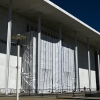
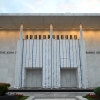
The Kennedy Center on June 28, with its facade signage still covered by a tarp and scaffolding.
Alex Wroblewski/AFP via Getty Images
hide caption
toggle caption
Alex Wroblewski/AFP via Getty Images
On Wednesday, a federal appeals court denied President Trump’s request to stop the removal of his name from Washington, D.C.’s Kennedy Center. The signage on the building has been covered with tarp and scaffolding since June 13, but in a court filing last month, the center’s current executive director said that Trump’s name has been removed.
In their decision, three judges from the U.S. District Court of Appeals for the District of Columbia Circuit said that the president had failed to prove that the arts center would be “irreparably injured” without Trump’s name attached to it.
NPR requested comment from the Kennedy Center, but did not receive an immediate reply.
This latest round of court decisions is part of the ongoing litigation filed by Rep. Joyce Beatty, D-Ohio, against President Trump and the board of the Kennedy Center. In a statement emailed Wednesday to NPR, Beatty said: “Today’s ruling again affirms that this administration’s efforts to rename the Kennedy Center were unlawful. His name no longer desecrates this sacred memorial, which belongs to the American people. Now it is time for the Trump administration to accept this, comply with the law, and take the tarps down.”
In previous court filings, Trump’s legal team had asserted that removing the president’s name from the arts complex, both on the physical building and in its digital materials, would inflict irreparable harm in both time and money already spent. In the denial, the three judges — Patricia Millett, Robert Wilkins and Gregory Katsas — wrote that since Trump’s name has already been removed, “a stay would not avert those harms.”
Furthermore, Trump had claimed that without his name attached, future fundraising would be threatened “and [will] contribute to the financial decline of the Center.” In response, the appeals judges wrote: “Appellants, however, have failed to support this assertion with any specific facts or evidence. They offer only the conclusory assertions of the Kennedy Center’s Executive Director that were made in a factually unsupported declaration.” The center’s current executive director, Matt Floca, specializes in physical plant management.
The presiding judge in the case, Christopher R. Cooper, has ordered that the center provide him a status report on the center’s operation and programming before the end of this month. As of Wednesday, the center’s calendar lists a small roster of programs, including outdoor free movie screenings, workshops for children, and five free live performances in July on its Millennium Stage. In the past, the Kennedy Center presented over 2,000 arts and education events each year, including free daily Millennium Stage performances.

-

 Minneapolis, MN5 minutes ago
Minneapolis chief communications officer Adam Fetcher out amid possible criminal charges
-

 Indianapolis, IN12 minutes ago
Indiana Workforce Pell Grant options limited so far
-

 Pittsburg, PA15 minutes ago
Pennsylvania leaders take new approach to cracking down on robocalls
-

 Augusta, GA20 minutes ago
Augusta domestic violence shelter faces shortfall after Georgia funding veto
-

 Washington, D.C27 minutes ago
Why Gov. Kim Reynolds turned down previous request to send National Guard to D.C.
-

 Cleveland, OH30 minutes ago
LGBTQ+ Ohio Nonprofit Guide
-

 Austin, TX35 minutes ago
Think tank says state education reforms have set up future of the ‘Texas Miracle’
-

 Alabama42 minutes ago
New Alabama women’s basketball coach Pauline Love credits late mentor for coaching career

