Lifestyle
Video game performers are on strike — and AI is the sticking point : Consider This from NPR


The character Aerith Gainsborough in Final Fantasy 7 Rebirth.
James Mastromarino/Square Enix
hide caption
toggle caption
James Mastromarino/Square Enix

The character Aerith Gainsborough in Final Fantasy 7 Rebirth.
James Mastromarino/Square Enix
If you’re not entrenched in the world of video games, you might not realize how much real actors have to do with modern gaming.
They provide everything from a few lines of dialogue for side characters in games, to recording hundreds or even thousands of very emotional lines, says Michigan State professor Amanda Cote, who studies the industry and culture of gaming.
“So really storyline-driven games, something like Mass Effect or a Far Cry, you’re recording hundreds of lines of dialogue to cover the many different storyline branches that a player could potentially encounter. And you’re trying to make sure that all of those make sense with the changing storyline,” she says.

“This isn’t like a movie where there’s one version of the script and you might do several takes of it, but the overall story is the same. This is recording potentially different endings, different storyline arcs, making sure that those all stay coherent with how your character might develop along those different lines.”
There are also performance capture artists – they wear bodysuits with sensors and their movements are captured digitally on camera, which later gets computerized.
Some of the biggest game studios rely on voice and performance capture artists, and all this adds up to big bucks. The video game industry made close to $185 billion last year.
But not everyone is happy.
You’re reading the Consider This newsletter, which unpacks one major news story each day. Subscribe here to get it delivered to your inbox, and listen to more from the Consider This podcast.
Generative AI is a sticking point
Video game performers are currently on strike.
Their union, SAG-AFTRA, had been in contract negotiations with major video game companies for more than a year and a half. Cote says performers are seeking things like clearer safety and protection measures — such as receiving a five minute break per hour of on-camera work, or having an on-set medic present when they’re performing stunts — and that it appears the union and video game producers have found good terms on most of those issues.
But those talks have stalled over artificial intelligence.
Veronica Taylor is one of the many video game actors who are worried that the companies they work for could replace them with artificial intelligence or use their voices and motions in ways they did not consent to. She says it’s already happening.

“I have found my voice in voice banks where people can take my voice and make it say things I’ve never said,” she told NPR.
The companies say they offered AI protections, but union members say they don’t extend to everyone.
Stunt performers and those whose motions are captured digitally are concerned that video game companies could create digital replicas of their physical work without their consent.
“What they are saying is that some of these performances, specifically for movement, is just data,” says Andi Norris, a member of SAG-AFTRA’s negotiating committee who has worked on games like Predator: Hunting Grounds. “I can crawl all over the floor and the walls as, you know, such-and-such creature, and they will argue that that is not performance, and so that is not subject to their AI protections.”
She argues her work is not just a data point, it’s done by her as a real person.
Performers who spoke to NPR say it’s important to recognize that they aren’t arguing that AI can never or should never be used in games — they just want to make sure that uses of AI are clear, understandable and compensated.
Members go on strike
Zeke Alton, who is also on the SAG-AFTRA negotiating committee, says performers are the canary in the coalmine of the new technology.
“We are setting a precedent for how the workforce in both the United States and around the world is going to be treated,” he says. “Are they going to use this new emergent technology as tools for creatives, and for workers, to create efficiency? Or is this tool going to be used by executives to remove the worker?”

SAG-AFTRA union video game performers strike outside Warner Bros. Games on Thursday.
Valerie Macon/AFP via Getty Images
hide caption
toggle caption
Valerie Macon/AFP via Getty Images
Cote says generative AI is potentially destabilizing to the creative industries in general, but specifically in gaming.
“When we look at something like AI in live action settings, we run into the issue of the ‘uncanny valley’ where the face of an AI character looks just a little bit odd to us,” he says. “But when we’re thinking about industries like voice acting or motion capture, the work that performers do in that context is then attached to digital avatars in animation. So we don’t get that ‘uncanny valley’ effect because the final result is a digital avatar. And so this may make the use of generative A.I. easier in games than other industries.”

Video game voice and motion actors, whose human performances become computer data, say they are especially vulnerable to being replaced by generative AI. And their collective bargaining now will inform the ways we think about this technology going forward.
A spokesperson for the video game companies involved in the negotiations released a statement saying the companies and the union have already found common ground on 24 out of 25 proposals — and that they are disappointed the union has chosen to walk away when they are close to a deal. The video game companies say they’re prepared to resume negotiations.
Editor’s note: Many NPR employees are members of SAG-AFTRA, but are under a different contract and are not on strike.
This episode was produced by Brianna Scott. It was edited by Patrick Jarenwattananon and Clare Lombardo. NPR’s Art Correspondent Mandalit Del Barco contributed reporting. Our executive producer is Sami Yenigun.


Once rivals on the tennis court, Martina Navratilova, left, and Chris Evert have become close friends in retirement. They are pictured above at the French Open in 1986.
Trevor Jones/Getty Images Europe
hide caption
toggle caption
Trevor Jones/Getty Images Europe
Chris Evert and Martina Navratilova were the most successful women’s tennis champions of their generation. Both were 18-time Grand Slam tournament winners — and each other’s greatest rivals.
Evert, a Florida native, became a tennis star in her teens. Navratilova was born in communist Czechoslovakia, and emerged as a player after Evert was established. They first faced off during a match in Akron, Ohio, in 1973, when Evert was 18, and Navratilova was 16. Evert won, but Navratilova left an impression.
“I remember thinking to myself, holy cow, when this young girl gets into better shape, she is going to be a force to be reckoned with,” Evert says. “She had so much talent. Her hands were quick, she had a big first serve, she had a big forehand, and she just was so powerful.”

Two years later, on the day she lost a semifinals match to Evert at the U.S. Open, Navratilova defected to the U.S. In the years that followed, her tennis game improved. Though she and Evert had initially been friendly, the friendship cooled as their rivalry heated up.
“Playing Chris was difficult because how can you not like Chris? What’s not to admire?” Navratilova says. “She was like the epitome of cool.”
The new Netflix documentary Chris & Martina: The Final Set tells the story of how Evert and Navratilova re-established their friendship and how they both faced cancer in retirement. Evert was diagnosed with ovarian cancer in 2021; Navratilova was diagnosed with throat and breast cancer in 2022.
“I can’t get away from her,” Evert jokes. “We had a 15-year career, and then we got cancer at the same time. It really is freaky, but I always say: If I want someone to be in the trenches with me, it’s Martina because she has been so supportive and so understanding.”

Navratilova agrees: “We have such a level of trust that we know whatever we say to each other, it stays there. We give each other the best advice we know how to. And there is no ulterior motive, no playing games.”
At the time that this interview was taped, Evert and Navratilova were both in remission from cancer. But late last week, Evert disclosed she’d recently been diagnosed with a recurrence of ovarian cancer.

“We know whatever we say to each other, it stays there,” Martina Navratilova says of her friendship with Chris Evert.
Netflix
hide caption
toggle caption
Netflix
Interview highlights
On supporting each other through cancer
Evert: There are a lot of phone calls between us. … I don’t cook, but Martina would bake bread for me, and her wife Julia would cook, make some chicken soup. … I got a lot of food from Martina. She got a necklace from me.
Navratilova: I get jewelry from Chris, she gets food from me.
Evert: Martina’s and my relationship — because we’ve had one for 50 years — is not the type where we have to talk to each other every day to maintain the closeness. I always knew she was there. She always knew I was there if we needed to talk, and that was that.
On the weakness they experienced with cancer
Navratilova: Chris’ diagnosis and treatment was much more life-threatening than mine, percentage wise, but my treatment was more difficult physically. … I was in New York for seven weeks and I literally sat on a yoga mat, maybe half an hour of the seven weeks, and did some stretching. I couldn’t even do the down dog pose because I would have fallen down. I had absolutely zero strength left.
Evert: The chemo kicked my butt, let’s put it that way. … It left me very weak, very, very weak. After chemo I would have three or four days of intense nausea and I just would feel tingling in my body and it just wasn’t nice. I didn’t have the energy. To walk six blocks was a big deal for me. And it was foreign. You know, it felt like it wasn’t my body, for sure.
On watching the old footage of their matches together for the documentary
Navratilova: For me, it was fun watching with Chris, because we had different reactions to what happened on the court. But what impressed me is how well we played with those wooden rackets. Because you know what? Those rackets are not easy to play with. But you try to put yourself in there physically, what it was like, mentally, what it is like. And it’s like, “Oh, I should have gone down the line,” or, “I can’t believe I missed that shot.” Or “Chris, you had such a great pass.” It was amazing. So it was impressive. … I wish I could still have that six-pack, but anyhow.

Evert: I remember feeling genuinely happy for her. I remember it was her first Wimbledon. That’s always been her dream since she defected. Her family couldn’t be there to watch her. She was all alone. And I just was happy for it. And I knew that this was gonna be one of many for her to win.
On defecting to the U.S. in 1975 when she was 18 years old
Navratilova: I was thrilled to be in the States. I always loved American cars. And when you ordered a ham sandwich, you got, like, two inches of ham and two slices of bread. Whereas growing up, you had thick bread and one slice of ham. So I thought I was in heaven. And it was $2.30 for that sandwich. I still remember it. I couldn’t believe how much ham I was getting.
Lauren Krenzel and Nico Gonzalez Wisler produced and edited this interview for broadcast. Bridget Bentz, Molly Seavy-Nesper and Beth Novey adapted it for the web.


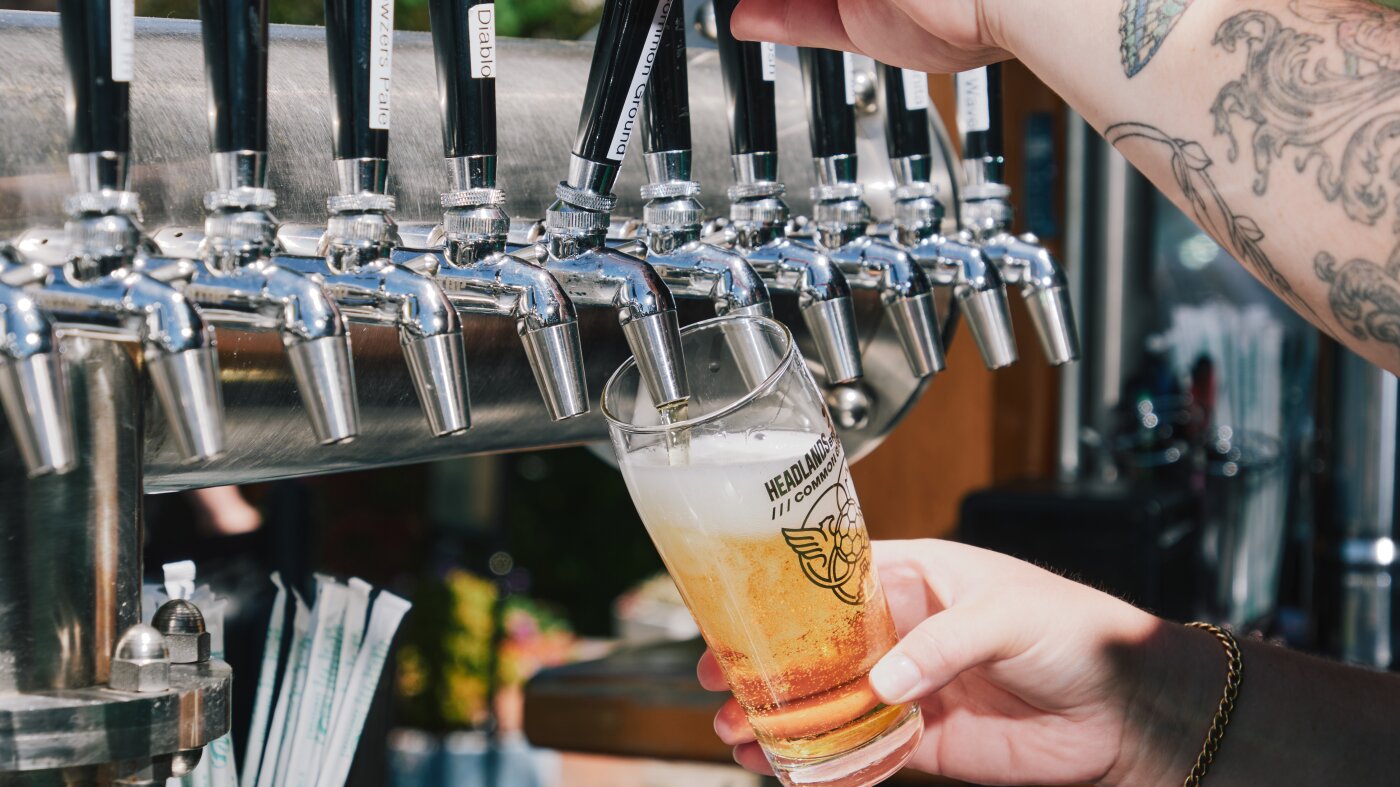
Headlands Brewing launched its World Cup-themed beer Common Ground ahead of the first World Cup game in June.
Justin Gellerson for NPR
hide caption
toggle caption
Justin Gellerson for NPR
The British betting company William Hill predicts that soccer fans will throw back more than 5 million pints of beer in stadiums and fan zones during this year’s World Cup. And that number doesn’t even account for the millions of pints being poured in bars as fans tune in to the global soccer event.
But while international soccer crowds are focusing on goals and penalties, a trio of craft breweries from the tournament’s three host nations are using the tournament to brew something increasingly rare: cross-border solidarity.

A shared recipe with local spin
The collaboration began months ago over a flurry of video chats and emails. The beermakers at Rey Árbol Brewing Co. in Mexico, Headlands Brewing in the United States, and Cabin Brewing Co. in Canada set out to design a single, unified recipe representing the brewing traditions of all three nations.
“It’s a Mexican lager,” said Alejandro Gomez, founder of Rey Árbol.
“That’s like a West Coast IPA,” said Ryan Frank, chief operating officer and brewmaster for Headlands.
“And up in Canada, most of our beers are hop driven,” said Haydon Dewes, co-founder of Cabin. “So we thought, let’s go for a dry-hopped Mexican lager.”
While all three breweries share the exact same recipe, each is giving the final product a distinct local spin, including unique, regionally designed labels. A four-pack of the U.S version costs $15.99. Frank said Headlands has produced about 130 cases of the limited-run brew.
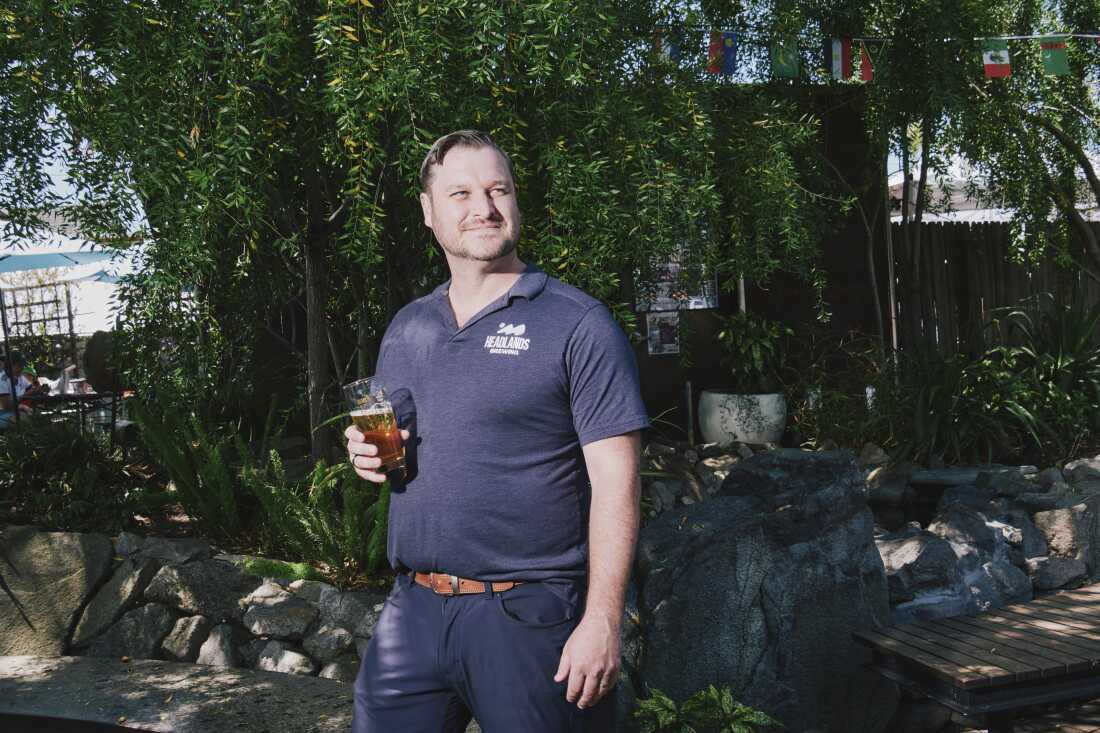
Headlands Brewing COO and brewmaster Ryan Frank drinks a Common Ground beer in Berkeley, Calif., on June 11.
Justin Gellerson for NPR
hide caption
toggle caption
Justin Gellerson for NPR
For the brewers, however, the project is less about marketing and more about connection: They named the multinational beer “Common Ground.”
“When I go to California or Canada, they will treat me like family,” Gomez said.
“It makes the world feel so much smaller,” said Dewes.
“It’s about building bridges and knowing what’s important in life,” said Frank. “And for us, that’s soccer and beer.”
Geopolitical friction in the taproom
The official rhetoric surrounding World Cup 2026 mirrors the brewers’ optimism, with promotional materials promising a tournament where billions are “united as individuals, united as billions.”
Yet this idealistic messaging stands in sharp contrast to a prickly geopolitical reality. Tensions between the U.S., Mexico and Canada have mounted over trade tariffs and auto manufacturing standards as the three nations renegotiate long-standing trade agreements.
The independent brewers behind Common Ground are feeling that friction firsthand through the rising costs of aluminum cans and raw ingredients.
“There are 15% tariffs slapped on any European-grown hops, which are really critical to some of our core brands,” Frank said.

Headlands Brewing brewmaster Ryan Frank and CEO Austin Sharp share a Common Ground beer in Berkeley, Calif., ahead of the first World Cup game on June 11.
Justin Gellerson for NPR
hide caption
toggle caption
Justin Gellerson for NPR
The political discord hasn’t just been confined to trade boards.
When signing an executive order to establish a White House Task Force for the World Cup in March 2025, President Trump suggested that cross-border hostilities might actually benefit the tournament. “Oh, I think it’s gonna make it more exciting,” the president said.
A bittersweet reminder
Tension on the soccer field is one thing; between nations, it’s another.
“It’s true that when it comes to the actual soccer, we’ve developed a very healthy, vibrant rivalry between the three countries,” said Andrés Martinez, the author of The Great Game: A Tale of Two Footballs and America’s Quest to Conquer Global Sport and co-director of Arizona State University’s Great Game Lab, which studies the intersection of sports, media and geopolitics. “But we’re also linked together in this very symbiotic relationship.”
Martinez said that when the U.S., Canada and Mexico initially launched their collaborative bid to host the World Cup back in 2017, the political climate was warmer.
“It was meant to showcase these tight bonds that had developed between the three countries,” Martinez said.

The makers of Common Ground used a shared recipe, but all created their own distinct packaging for the beer: Canada’s Cabin Brewing Co.; Mexico’s Rey Árbol Brewing Co.; the United States’ Headlands Brewing.
Cabin Brewing Company, Rey Árbol Brewing Company, Headlands Brewing
hide caption
toggle caption
Cabin Brewing Company, Rey Árbol Brewing Company, Headlands Brewing
But relations have soured since then, making cross-border business collaborations like Common Ground an anomaly rather than the norm for this tournament.
“To see craft beers across the three countries coming together like this, it’s a bittersweet reminder of what we were hoping to see a lot more of,” Martinez said.
Finding the real common ground
If trade wars and political posturing are looming large in Washington, D.C., Ottawa and Mexico City, they feel a world away at Headlands Brewing’s busy North Berkeley location.
As fans gathered to watch a crucial match between Mexico and South Africa at the start of the tournament, the sunny patio erupted into cheers and shrieks of “Goal!” when Mexico found the back of the net.

Headlands Brewing hosts a screening of the first World Cup game on June 11 in Berkeley, Calif.
Justin Gellerson for NPR
hide caption
toggle caption
Justin Gellerson for NPR
Hovering over a pint of the collaborative brew, soccer fan Roberto Mandujano reflected on the cross-border experiment.
“Three different ways, three different taste buds come together to make something cool,” he said.
When asked about the underlying political tensions between the host nations, Mandujano shrugged off the discord.
“We live in a world where everyone wants to make everything political,” Mandujano said. “But I think we’re all here for soccer. So I guess that’s the common ground.”
-

 Culture24 minutes ago
Test Your Knowledge of New York’s Algonquin Round Table
-
Lifestyle29 minutes ago
They were world-class tennis rivals. Now friends, they’ve teamed up against cancer
-

 Technology39 minutes ago
T-Mobile is booting customers from its oldest plans
-

 World44 minutes ago
Gunman kills 6 at youth welfare facility in suspected child custody dispute: reports
-

 Politics51 minutes ago
Emotion and feelings: How Democratic Socialists’ congressional insurgency could come back to bite them
-

 Health54 minutes ago
Rare tick-borne virus turns deadly fast as US cases reach record high, experts warn
-

 Sports59 minutes ago
Lions release Terrion Arnold after bond set at $1 million in armed robbery, kidnapping case
-

 Technology1 hour ago
Texas data breach hits 3M license customers

