Lifestyle
These SoCal vintage motels have found new life. But you can't sleep there


There were no vacancies beneath the old neon Farm House Motel sign last Saturday — no guest rooms at all, in fact. But the 1950s Riverside property, now known as the Farm House Collective, was busier than it has been for decades.
By 10 a.m., when a ribbon-cutting marked the Farm House’s rebirth as a mini-mall, food hall and music venue, the parking lot was full.
The motel’s old carports next to the guest rooms were enclosed and became indoor retail spaces.
(David Fouts / For The Times)
By midday, Steve Elliott of Smokey Steve’s barbecue had sold about 160 pounds of meat from his pop-up booth and there was a long line for $6 tacos at Bar Ni Modo.
By sundown, an audience of several hundred had gathered to see L.A. indie rock band Allah-Las take the outdoor stage.
Until this redesign, the Farm House Motel “was a homeless encampment for a long time,” said James Elliott, 29, standing by the pop-up market at the grand opening event. “As long as you have the vision, you can change anything.”
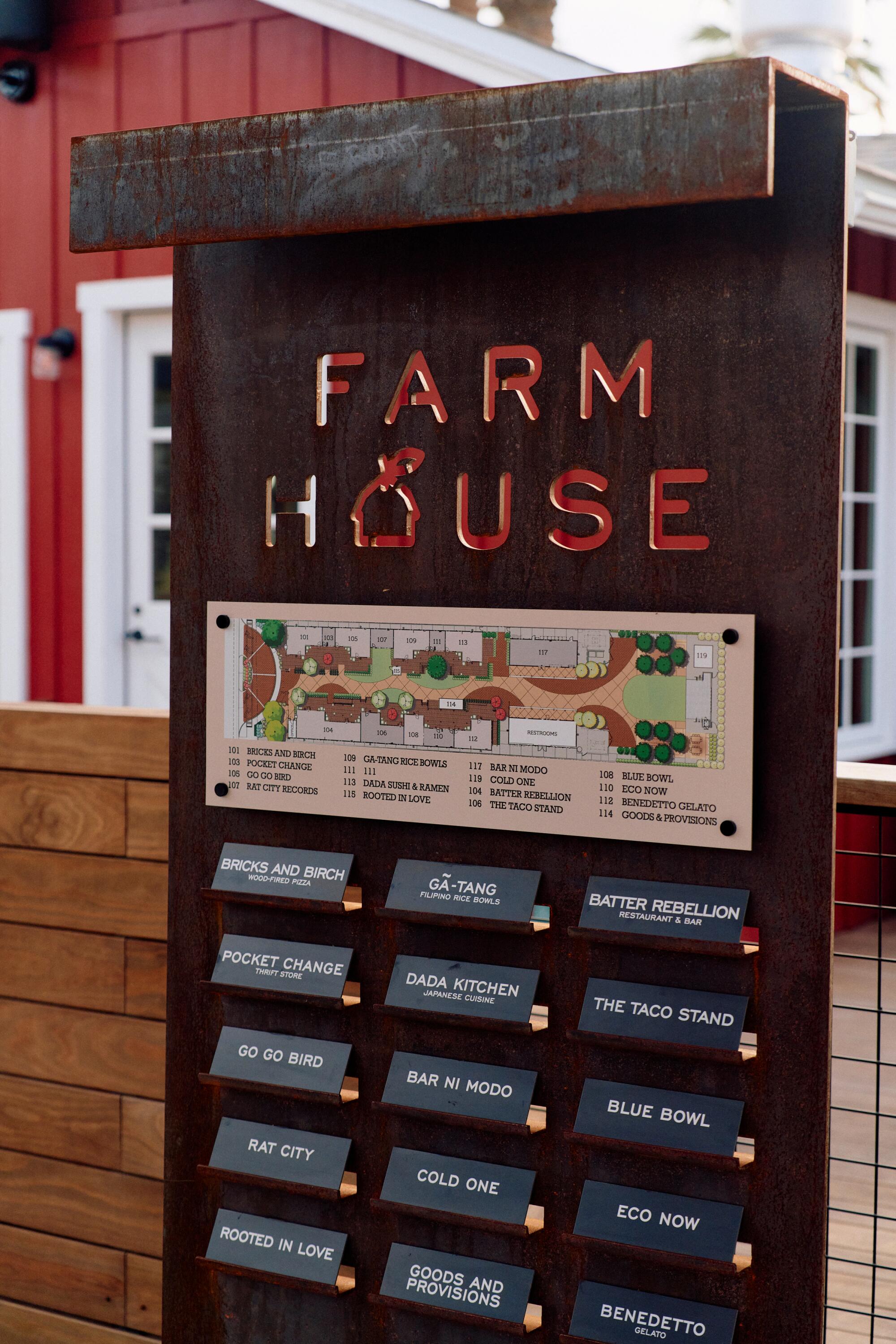
The Farm House Collective hasn’t reached full strength yet; about half of its tenants are yet to open.
(David Fouts / For The Times)
The renovation project — which has included more than $4 million in design and construction work — has held onto the old motel’s rural theme, the red buildings trimmed to evoke barns, a vintage Ford F-100 truck parked alongside the walkway. Next to the repainted, rewired Farm House sign stand a fiberglass horse and buggy, contributed by the Camou family, owners of the motel for decades.
As midcentury motels fade into history, some move upscale and become boutique hotels, some are leveled or acquired by government agencies as transitional housing. And a rare few in Southern California — including the Farm House, Roy’s Motel in Amboy and the Pink Motel in Sun Valley — have taken on new commercial afterlives that don’t involve sleepovers but do evoke the past. At each location, a vintage sign flickers, inviting guests to step into a throwback American scene or capture it with a camera.
The most dramatic nonprofit example of motel rebirth may be the Lorraine Motel in Memphis, Tenn., which was the site of the Rev. Martin Luther King Jr.’s 1968 assassination and reopened in 1991 as the National Civil Rights Museum. Recent commercial examples include Fergusons Downtown in Las Vegas, a 1940s motel reborn as a food and retail center in 2019. A shopping center project at the former La Hacienda Motel in Albuquerque is due to open this year.
“There are a lot of these midcentury buildings that still have possibilities if people want to get in there and save them,” said Beverly Bailey, co-founder and development director of the Farm House project. “They’re jewels, and it brings life to a city.”
Roy’s of Amboy, a desert icon
In the desert outpost of Amboy, along Route 66 about 210 miles east of Los Angeles, a small team of workers sustains California’s most iconic nonfunctional lodging: Roy’s Motel and Cafe. Its 1959 sign may be misleading (neither the motel nor the cafe has been open for at least 30 years), but the crew sells gas, souvenirs and snacks and sometimes hosts filming and special events.
Every day, Amboy manager Ken Large said, desert rats, lovers of Route 66 and many travelers on their way from Las Vegas to Joshua Tree converge beneath the red, blue, black and yellow sign, which rises 50 feet and is lighted nightly. About 80% of those who stop, Large said, have come from Europe.
“It’s shocking how many tattoos I’ve seen of that sign,” Large said. “I bet I’ve seen a thousand.”
The owner of Roy’s (and all of Amboy) is Kyle Okura, whose late father, entrepreneur and philanthropist Albert Okura, bought it in 2003. He relighted the sign in 2019, ending more than 30 years of darkness. The younger Okura and company have been upgrading infrastructure steadily and would like to reopen the motel — perhaps even get the six cottages open in time for the Route 66 centennial in 2026.
But as Large acknowledges, that “might be a stretch.” The groundwater in Amboy is about 10 times saltier than the sea, Large said, and for years, all drinking water has been trucked in. To grow substantially, Large said, Roy’s and Amboy need easier access to potable water, probably through a groundwater purification process.
For now the cottages stand idle by the glass-walled motel office and its rakishly tilted roof. The office includes an ancient Zenith TV, a typewriter, a grand piano and the switches that light up the sign — all the makings of a stage set for a play in the spirit of Sam Shepard or Samuel Beckett.
If there are travelers on hand at sunset, Roy’s assistant manager Nicole Rachel said, “We’ll invite them to come in and light the sign themselves. I’ve had people in tears.”
“I’m fascinated with this part of the country,” said Chris Birdsall, a 51-year-old trucker from Omaha who lingered as sunset neared one recent night. “I want to see the sign lit up. That big arrow. … It’s almost got an extraterrestrial connection.”
A few minutes later, Rachel invited Birdsall in to throw the switch, and the sign blinked to life over the windswept desert.
In Sun Valley, movies and midcentury grit
At the Pink Motel on San Fernando Road in Sun Valley, the last overnight guest checked out about 10 years ago. But the film crews keep coming.
The family-run 3.5-acre property, which includes a 20-room motel and the closed-to-the-public Cadillac Jacks Cafe, has entered a very L.A. afterlife as a filming and special event location. Instead of cash-strapped travelers and dangerous liaisons, the motel hosts music videos, dog shows, wedding photos, car club meetings, social media gatherings and skateboarding events in its empty pool.
To be sure, this is not what Maximillian Joseph Thomulka and his wife, Gladys Thomulka, imagined when they built and opened the place in the aftermath of World War II.
“It was built in 1946. But the vibe is like 1955, ’56,” said co-owner Tonya Thomulka, granddaughter of the founders, in early 2025. (Subsequent messages were not returned.)
The cafe was built in 1949, the pool in 1959, when San Fernando Road was part of Highway 99, seething with drivers heading to and from the San Joaquin Valley. Then came Interstate 5. The neighborhood went south.
By the late 1970s, the founders’ son, Monty Thomulka, was running the motel, restoring old cars and just beginning to rent the location out occasionally. In 1986, the restaurant closed. Then in 2015, the year Monty Thomulka died, the family stopped renting rooms overnight.
But production crews, lured by the midcentury style and gritty vibe, kept coming. Among the motel’s television credits: episodes of “Law & Order,” “The Incredible Hulk,” “Dexter,” “The O.C.” and “GLOW” (2017-19). Among its movie credits: “Drive,” “Grease 2,” “Pink Motel” and Stacy Peralta’s “The Search for Animal Chin,” a 1987 skateboarding film that features a teenage Tony Hawk.
Nowadays the property (not open to the public, but partially visible from the street) is full of throwback visuals, including its sign, the restaurant and seven rooms outfitted in ’50s and ’60s styles. The Los Angeles Conservancy calls it “a wonderful example of the mid-century roadside commercial resources that are so swiftly disappearing from the landscape.”
New life at Riverside’s Farm House

On the calendar of events at Farm House Collective: pop-up markets, Coachella watch parties and a gospel brunch.
(David Fouts / For The Times)
Before 1969, University Avenue in Riverside was a busy highway, part of U.S. 395, making the Farm House Motel a prime stop for travelers. But as that traffic moved to State Routes 60 and 91, commerce faded along that stretch of University Avenue, despite the growth of UC Riverside nearby. The neighborhood faded further, locals say, after the 1989 closing of nearby Riverside International Raceway (now the Moreno Valley Mall). Farm House Motel shut down in 2007, and a year later, the property passed to city ownership.
The Baileys, whose Perris-based family business, Stronghold Engineering, has been doing electrical, design and construction work for more than 30 years, bought the old motel from the city in 2018. Under that deal, the family paid the city $210,000 for the 1-acre Farm House property, which “we thought at the time was a great buy,” said Beverly Bailey.

The Farm House Collective on its opening day on Saturday, March 29, 2025.
(David Fouts / For The Times)
The family hired the Orange County consulting firm LAB Holding, which has worked on retails projects including the LAB Anti-Mall, the Camp and Anaheim Packing District (housed in a historic building complex). The old carports next to the guest rooms were enclosed and became indoor retail spaces — an acai bowl eatery, plant shop, artisan boutique and other spots have opened, with more to come.
An outdoor stage, which stands where the motel swimming pool was, is flanked by 10 elm trees and assorted kid-friendly games. The Baileys plan one or two music performances per month, perhaps more later, and the stage will also offer movie screenings, TV sports viewing and other events.
Not every motel is a strong candidate for a nonlodging afterlife, as developers elsewhere have learned the hard way. But with a university handy, local leaders in support and an encouraging start, several locals said the Farm House seems suited for the challenge.
“It’s a super cool place that you can just chill at,” said Amy Martinez, who grew up in Riverside, moved to Upland and returned to see the opening with her family. The neighborhood has come a long way, she said, and “to see the rest of the shops open up, that’ll be nice.”
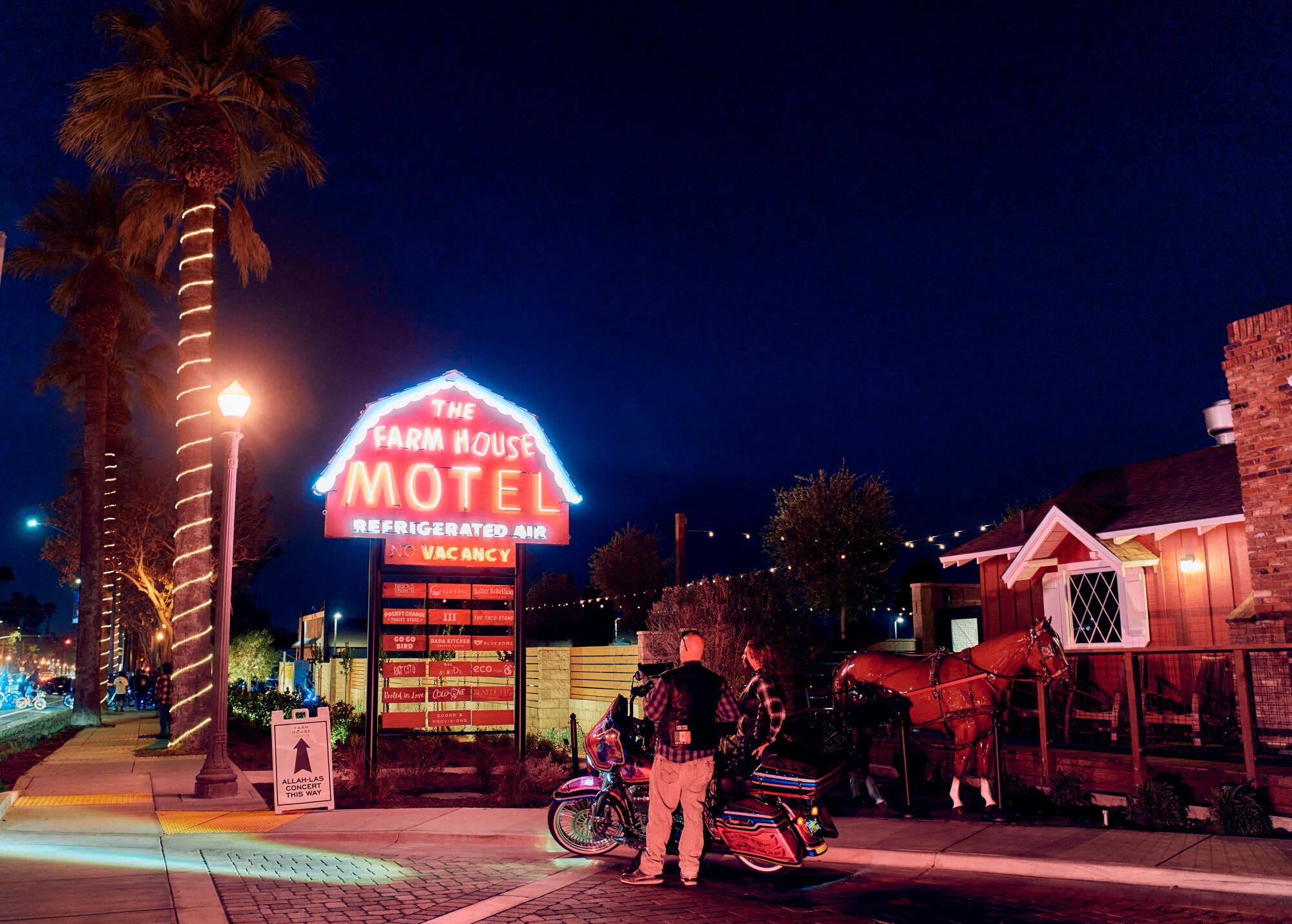
The Farm House Collective’s opening March 29 marked the end of a long idle spell after closure of Riverside’s Farm House Motel.
(David Fouts / For The Times)

Lifestyle
Terry Tempest Williams on why women with big ideas get labeled ‘crazy’ : Wild Card with Rachel Martin
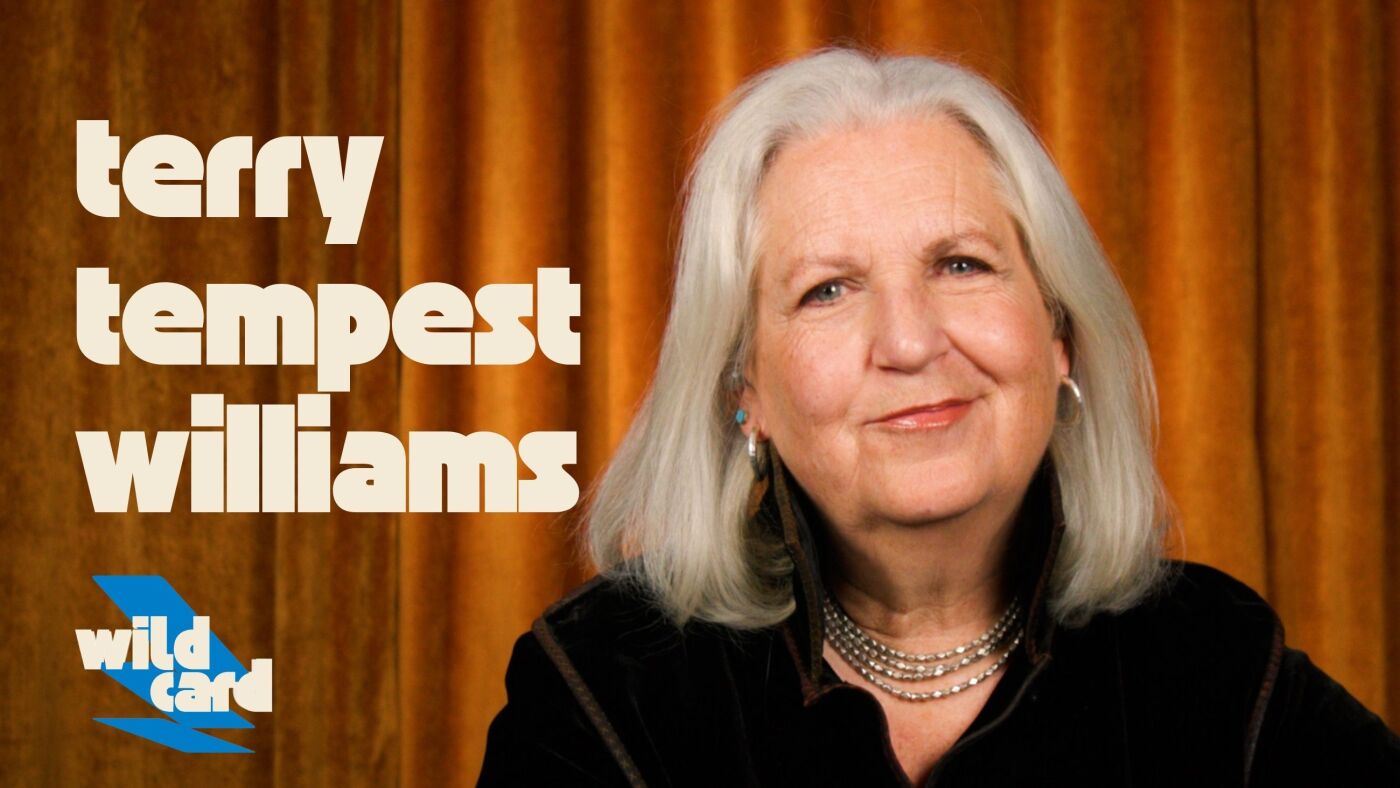
A note from Wild Card host Rachel Martin: I met Terry Tempest Williams about 25 years ago at a writer’s conference in Yosemite Valley. I was a young reporter who was there to do a story about how literature was addressing climate change and she made such a huge impression on me. I had never heard someone talk about the natural world the way Terry did and she had a spiritual depth I hadn’t encountered in my life at that point.
To this day, Terry’s writing always reorients me towards what is good, what is beautiful, and what is true. Her newest book is called “The Glorians.”

For its upcoming Los Angeles venue, experiential art firm Meow Wolf will focus on the art of storytelling, with a specific eye toward skewering our city’s moviemaking magic. To help bring that vision to life, Meow Wolf has entered into a creative partnership with Titmouse, one of L.A.’s most renowned independent animation houses.
The Hollywood-based studio behind popular series such as “Big Mouth” and “Star Trek: Lower Decks” will create animation that will be shown throughout the West L.A. venue, which is on target for a late 2026 opening at the Howard Hughes entertainment complex.
It’s a move that represents a shift for Santa Fe, N.M.-based Meow Wolf. Over the last decade-plus, the art collective has grown beyond its anything-goes, punk-meets-psychedelic roots into an organization with full-scale, maximalist installations in its hometown, Denver, Las Vegas, Houston and the Dallas suburbs. In the past, Meow Wolf kept most of its media in-house.
As part of its larger-than-life participatory art installations, Meow Wolf L.A. will feature a mix of live action and animation, the former filmed by Meow Wolf in its Santa Fe studio. Meow Wolf’s James Stephenson, a senior VP with the company and its creative director of emerging media, said the degree to which the L.A. exhibition will lean into various animation styles necessitated an outside partner. Titmouse’s work, in development by a number of directors with contrasting tones, will be shown on a variety of formats, ranging from cinema screens to full-room projections.
“I really believe in animation as an art form, and I know the Titmouse folks do too,” Stephenson says. “Animation is made by artists. It’s made by artists with their own hands. It’s something that is still very rooted in craft.”
Meow Wolf’s L.A. space is set in a former cinema complex, and will champion its location, taking guests on a journey through a converted movie house and beyond, into a sci-fi-inspired fantasyland with sentient spaceships and a 30-foot-tall mushroom tower. Meow Wolf creatives have spoken of the fantastical movie theater as one that will feature animated, self-aware candy before attendees enter the main exhibition space, making Titmouse’s work some of the first art guests will encounter. Titmouse co-founder Chris Prynoski has said the studio has lined up at least six directors for the exhibit.
An in-progress art installation destined for Meow Wolf L.A. at the art collective’s Santa Fe, N.M., headquarters. The L.A. exhibition will feature animation from Titmouse.
(Gabriela Campos / For The Times)
Titmouse, says Stephenson, is the right partner because “they’re known less for a house style, and more for a house vibe.” Over the years, Titmouse has been behind such diverse shows as “Scavengers Reign,” owning a Jean Giraud influence rooted in French and Spanish surrealism, the lively “Jentry Chau vs. the Underworld,” with an unique color palette that took inspiration from anime and Chinese mythology, the exaggerated comic book feel of Adult Swim’s “Metalocalypse,” and the approachable yet expressive tone of “Star Trek: Lower Decks.”
“Meow Wolf’s vibe is similar to Titmouse’s vibe,” Stephenson says. “It’s artist-first, artist-driven, independent and kinda edgy. They are always trying to find the edge of what’s possible. They try to see how far they can go, and it’s done for fun and in the spirit of taking risks.”
Prynoski says working with Meow Wolf will give Titmouse a sense of artistic freedom it doesn’t always have when delivering content for more traditional Hollywood partners. He says the multi-director approach is a callback to the early days of Warner Bros. Animation, when individual creators put their own stamp on Looney Tunes material.
“I use Bugs Bunny as an example,” Prynoski says. “You’ve got a Friz Freleng Bugs Bunny short. You’ve got a Chuck Jones Bugs Bunny short. You’ve got a Tex Avery Bugs Bunny short. They’re all different versions of Bugs Bunny, and people who are really paying attention can tell which director directed each one. Even though to the layman, these are all Bugs Bunny, but if you lined them up, they are drawing in different styles, sensibilities and techniques.”
Prynoski says that was a centerpiece of his pitch to Meow Wolf, noting that characters will reappear in multiple installations, each handled by a different artist. Meow Wolf L.A., in fact, will be the firm’s most character-driven exhibition, as guests will follow the storylines of three main protagonists throughout the space.
In announcing the partnership, Meow Wolf and Titmouse released an image from an animated work directed by Luca Vitale. It features a key character having a moment with a hummingbird and it’s done in an elegant, slightly anime-influenced style. It’s an image full of movement, reflecting a character in transition with inviting pastels and bold dashes.
“I like that image because I think it captures some of the sense of wonder that we want people to feel,” Stephenson says. “The character is having an encounter with the elusive nature of creativity and reality in a way that makes them have a different perspective of what’s possible.”
Other contributing animation directors to Meow Wolf L.A. include Space Dawg, Felix Colgrave, Alexander Vanderplank and Phimémon Martin, and Jun Ioneda.
Titmouse’s partnership with Meow Wolf will extend beyond the L.A. exhibition. The two will be working on the development of Meow Wolf New York, which is slated to open some time after Los Angeles, and are collaborating on a planned animated series, which Prynoski is spearheading.
Meow Wolf exhibits are the result of sometimes hundreds of disparate artists coming together in a shared space. Distilling that into a signature, singular style for a series could be a challenge. Stephenson pinpoints some guiding principles.
“You really need to feel the hand of the artist,” he says. “You need to feel a DIY aesthetic. You need to feel the materiality. Those are very specific to what we are.”

The Kennedy Center on June 28, with its facade signage still covered by a tarp and scaffolding.
Alex Wroblewski/AFP via Getty Images
hide caption
toggle caption
Alex Wroblewski/AFP via Getty Images
On Wednesday, a federal appeals court denied President Trump’s request to stop the removal of his name from Washington, D.C.’s Kennedy Center. The signage on the building has been covered with tarp and scaffolding since June 13, but in a court filing last month, the center’s current executive director said that Trump’s name has been removed.
In their decision, three judges from the U.S. District Court of Appeals for the District of Columbia Circuit said that the president had failed to prove that the arts center would be “irreparably injured” without Trump’s name attached to it.

NPR requested comment from the Kennedy Center, but did not receive an immediate reply.
This latest round of court decisions is part of the ongoing litigation filed by Rep. Joyce Beatty, D-Ohio, against President Trump and the board of the Kennedy Center. In a statement emailed Wednesday to NPR, Beatty said: “Today’s ruling again affirms that this administration’s efforts to rename the Kennedy Center were unlawful. His name no longer desecrates this sacred memorial, which belongs to the American people. Now it is time for the Trump administration to accept this, comply with the law, and take the tarps down.”
In previous court filings, Trump’s legal team had asserted that removing the president’s name from the arts complex, both on the physical building and in its digital materials, would inflict irreparable harm in both time and money already spent. In the denial, the three judges — Patricia Millett, Robert Wilkins and Gregory Katsas — wrote that since Trump’s name has already been removed, “a stay would not avert those harms.”
Furthermore, Trump had claimed that without his name attached, future fundraising would be threatened “and [will] contribute to the financial decline of the Center.” In response, the appeals judges wrote: “Appellants, however, have failed to support this assertion with any specific facts or evidence. They offer only the conclusory assertions of the Kennedy Center’s Executive Director that were made in a factually unsupported declaration.” The center’s current executive director, Matt Floca, specializes in physical plant management.

The presiding judge in the case, Christopher R. Cooper, has ordered that the center provide him a status report on the center’s operation and programming before the end of this month. As of Wednesday, the center’s calendar lists a small roster of programs, including outdoor free movie screenings, workshops for children, and five free live performances in July on its Millennium Stage. In the past, the Kennedy Center presented over 2,000 arts and education events each year, including free daily Millennium Stage performances.

-

 Ohio6 minutes ago
Feeling itchy? Ohio leads nation with 6 cities on Orkin’s 2026 bed bug list
-

 Oklahoma9 minutes ago
Oklahoma’s Brent Venables named to 2026 Dodd Trophy Preseason watch list
-

 Oregon14 minutes ago
Ryan Reynolds-backed Aviation Gin shutters Oregon distillery
-

 Pennsylvania21 minutes ago
PA state rep. wants to force the York State Fair to change its name
-

 Rhode Island24 minutes ago
R.I. leading multi-state lawsuit against Trump administration housing policy – The Boston Globe
-

 South-Carolina29 minutes ago
SC is at the top for food waste in the nation. How you can make changes
-

 South Dakota36 minutes ago
Petition to clarify South Dakota proof of citizenship law shot down over technicality
-

 Tennessee39 minutes ago
Tennessee State men’s hockey cancels 2026-27 inaugural season for second straight year

