Lifestyle
These films took home top awards at Sundance — plus seven our critic loved

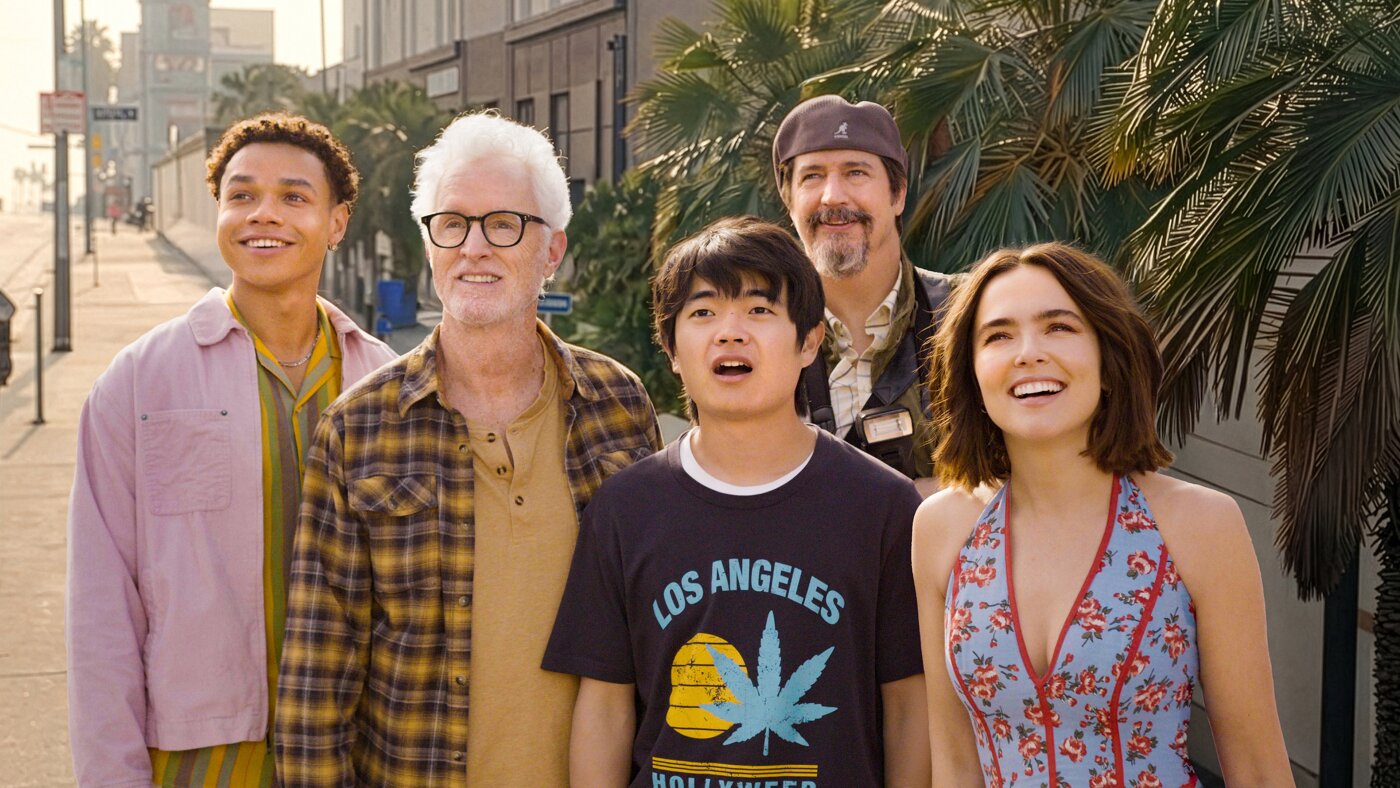
Miles Gutierrez-Riley, John Slattery, Ben Wang, Ken Marino, and Zoey Deutch in Gail Daughtry and the Celebrity Sex Pass, from director David Wain.
Sundance Institute
hide caption
toggle caption
Sundance Institute
2026 was an especially notable year for the Sundance Film Festival: it was the first without its legendary founder Robert Redford, who died last year, and it was the last to be held in Park City, Utah. Beginning next year, the fest will relocate to Boulder, Colo. for the foreseeable future.
As Sundance said goodbye to its home of over 40 years and honored Redford’s legacy, protests continued in Minnesota and across the country due to the escalated presence of Immigration and Customs Enforcement. Alex Pretti was killed by federal agents on day three of Sundance, and at least one protest against ICE took place in Park City afterward. A man was arrested for assaulting Florida Congressman Maxwell Frost at a Sundance party; on social media, Frost said the man yelled racist slurs and said President Trump was going to deport Frost.
And in the middle of it all: movies. Sundance awards were announced on Friday; Josephine, director Beth de Araújo’s intense family drama, won the U.S. Dramatic Grand Jury Prize (more on that below), and Nuisance Bear, Gabriela Osio Vanden and Jack Weisman’s film set in Churchill, Manitoba, the “Polar Bear Capital of the World,” won the U.S. Documentary Grand Jury Prize. (You can see the full list of winners here.)
I was on the ground for the first few days of the fest and then caught up with more films at home during the virtual portion. Here are a few of my favorites.
Once Upon a Time in Harlem

Aaron Douglas, Jean Blackwell Hutson, Nathan Huggins, Richard Bruce Nugent, Eubie Blake and Irvin C. Miller in Once Upon A Time In Harlem.
William Greaves Productions/Sundance Institute
hide caption
toggle caption
William Greaves Productions/Sundance Institute
Hands down, the best film I saw is simultaneously old and new: In 1972, groundbreaking filmmaker William Greaves convened an intellectual gathering of the living dignitaries of the Harlem Renaissance at the palatial home of Duke Ellington. The project remained unfinished until now; it’s finally been restored and completed by Greaves’ son David, who served as a cameraman all those years ago. (William died in 2014.) What was captured is a priceless, crucial, and riveting piece of history — notable figures like actor Leigh Whipper, journalist Gerri Major, visual artist Aaron Douglas, and activist Richard B. Moore engaging in vivid anecdotes and passionate debates about that cultural movement and how it should be remembered. The excavation of such history feels nothing short of monumental.
Josephine

Gemma Chan, Mason Reeves and Channing Tatum in Josephine from director Beth de Araújo.
Greta Zozula/Sundance Institute
hide caption
toggle caption
Greta Zozula/Sundance Institute
The buzziest film out of Sundance is probably Beth de Araújo’s sophomore feature starring Channing Tatum and Gemma Chan as the parents of Josephine (Mason Reeves), an 8-year-old girl who witnesses a horrific crime in San Francisco’s Golden Gate Park. And for good reason; while I have critiques of some of de Araújo’s filmmaking choices, she’s crafted a tense and mostly affecting drama with a very strong performance from Reeves, who carries much of the film’s emotional weight.
Gail Daughtry and the Celebrity Sex Pass
Some movies at the fest were exceptionally horny this year; two projects involving Olivia Wilde, The Invite and I Want Your Sex, were all about the pleasures and frictions of sexual expression. But the raunchy offering that worked best for me was David Wain’s silly and delightful tale of small-town hairdresser Gail Daughtry (Zoey Deutch), who sets out to even the scoreboard after her fiancé unexpectedly winds up using his celebrity “hall pass.” In her quest to track down and sleep with her celebrity crush, she picks up some new friends along the way, Wizard of Oz-style, including a paparazzi photographer (co-writer Ken Marino) and an overconfident, low-level employee at Creative Artists Agency (Ben Wang, the movie’s secret weapon). Jokes about Los Angeles and the cult of celebrity fly fast and free and fun cameos abound; look out for many of Wain’s frequent collaborators.
Filipiñana
Rafael Manuel’s feature debut is an incisive, slow-burning satire of capitalism and powerful men with far too much hubris — basically, a story for our times. It’s set almost entirely on a country club in the Philippines, where the shy and observant Isabel (Jorrybell Agoto) works as a tee girl and crosses paths with the club’s president Dr. Palanca (Teroy Guzman). Manuel’s visual eye is quirky and astute, with gorgeous shots of the pristine golf grounds and other amenities serving as the backdrop for far more sinister happenings.
Frank & Louis

Kingsley Ben-Adir and Rob Morgan in Frank & Louis, directed by Petra Biondina Volpe.
Rob Baker Ashton/Sundance Institute
hide caption
toggle caption
Rob Baker Ashton/Sundance Institute
Prison dramas are tough to pull off without veering too heavily into stereotypes and trauma porn, but director Petra Biondina Volpe and co-writer Esther Bernstorff find a unique and profound way in here. Kingsley Ben-Adir plays Frank, who’s serving a life sentence but is coming up for parole. He takes a job caring for other inmates who are experiencing cognitive decline, and is assigned to the prickly and unpredictable Louis (Rob Morgan). The premise is familiar, but the execution is refreshing; the script frankly interrogates the thorny concept of punishment and redemption, and the excellent Ben-Adir and Morgan find humanity within their morally fraught characters.
Carousel
Rachel Lambert’s latest plays like a loving throwback to the intimate, adult romantic melodramas that were in abundant supply before the 2000s. Chris Pine (giving serious Robert Redford in The Way We Were energy) and Jenny Slate play former childhood friends and one-time romantic partners who reconnect after many years and attempt to make it work again. The chemistry between these two is off the charts, whether they’re tentatively yet tenderly falling into an embrace or arguing about each other’s flaws.
The Gallerist
Your mileage may vary with Cathy Yan’s artworld farce, but I had a great time with this, in which Natalie Portman plays a struggling gallery owner who attempts to sell a dead body “disguised” as part of a sculpture, during Art Basel Miami. The ensemble is stacked — Jenna Ortega, Catherine Zeta-Jones, Da’Vine Joy Randolph, and Sterling K. Brown, just for starters — and they all seem to be having a blast. Layer in some commentary about art, commerce, and influencer culture (the increasingly ever-present Charli XCX also has a small role here), and there’s plenty here to take in.



Can you say no to a friend’s wedding?
Getty Images/Getty images
hide caption
toggle caption
Getty Images/Getty images
Are we spending too much on other people’s weddings?
Going to a friend’s weddings can be so fun and meaningful… but it can also really hurt your wallet. A survey by LendingTree found that 31% of people who had been to a wedding in the past five years had accrued debt to attend. So what’s driving up the cost of weddings for guests? And what makes it so hard to say no to these expenses?
Brittany breaks it down with Allyson Rees, senior analyst at trend forecasting firm WGSN, and Annie Joy Williams, assistant editor at The Atlantic.
This episode was produced by Liam McBain, with additional support from Corey Antonio Rose. It was edited by Neena Pathak. Our Supervising Producer is Cher Vincent. Our Executive Producer is Barton Girdwood. Our VP of Programming is Yolanda Sangweni.
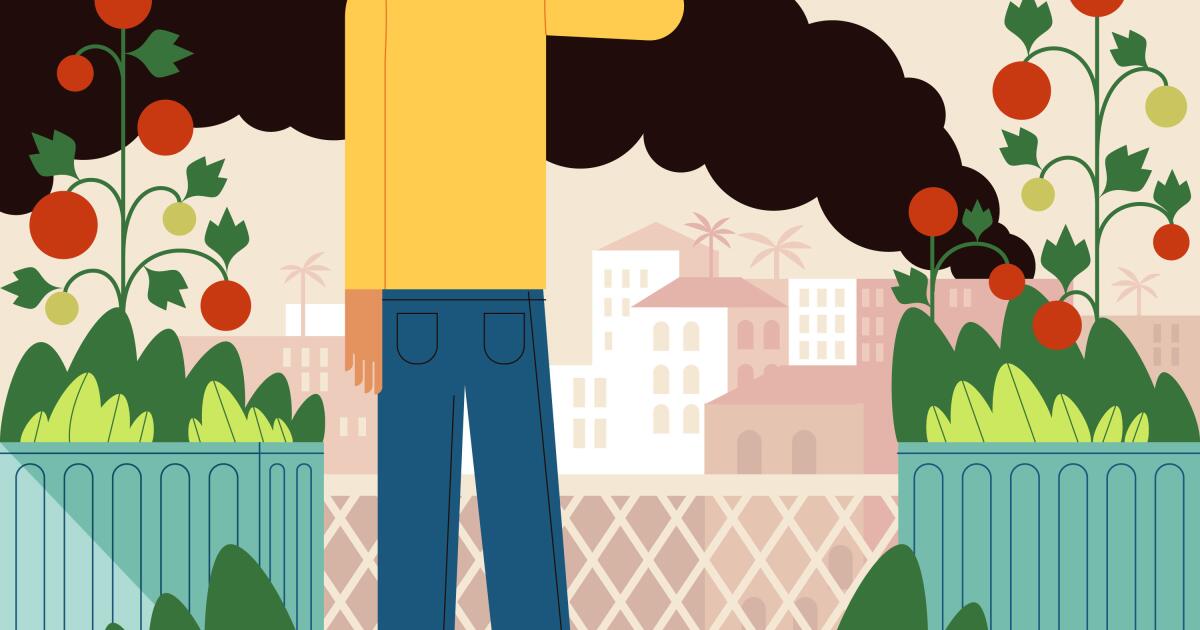
After the eight-day-long fire in a 500,000-square-foot Boyle Heights warehouse, eastern Los Angeles residents are contending with putrid smells, soot and potentially hazardous airborne chemicals after heavy plumes of smoke spread throughout the city. But those who grow food in nearby neighborhoods may also be wondering: How will the fires affect the plants and produce in my garden?
The Boyle Heights warehouse, owned by Lineage — a global temperature-controlled storage facility operator — housed 85 million pounds of frozen food and other products. In the days since the fire, local emergency visits for smoke inhalation and throat pain spiked while agencies still scramble to measure the amount of PM 2.5 — harmful fine particles — and heavy metals, like lead and arsenic, in the air.
According to researchers, any toxic airborne chemicals would likely stem from the charred foam insulation, metal exterior, burned solar panels and any lithium batteries that might have been present inside the warehouse.
After a fire, heavy metal particles can spread through ash and smoke over gardens and inhibit growth, said Olukayode Jegede, an agricultural toxicologist and assistant professor at UC Davis. Since the warehouse fire is so recent and cleanup has just begun, Jegede said the precise impact on gardens can’t be measured until comprehensive soil tests are conducted in the area.
While the L.A. city government hasn’t announced plans for soil testing, the Contaminant Level Evaluation and Analysis for Neighborhoods project at USC is offering free contaminant testing for Boyle Heights and East L.A. residents. Residents can collect soil samples and deliver them to Boyle Heights City Hall and other locations for an evaluation of lead, arsenic, chromium and mercury levels.
The good news is produce, plants and roots can still be preserved. According to Jegede, many of the soil tests conducted last year in the Altadena area after the Eaton fire showed that gardens and poultry were not as contaminated as one might expect.
“Quite a number of the soils we tested [in Altadena] were not really contaminated,” Jegede said. “We weren’t seeing many soils with concerning elevated levels of metal, so gardeners should not be too alarmed when these things happen.”
Nevertheless, there are several measures that gardeners can take to keep themselves, their children, plants and produce safe from potentially harmful contaminants stemming from the fire. Researchers, gardening experts and horticulturists offered some guidance on the handling, recultivation and cleanup that can keep you and your garden in good health.
How do I remove ash and contaminants from my garden?
Altadena horticulturist Leigh Adams said Boyle Heights plants and produce already live in a difficult environment, surrounded by industrial warehouses that spread contaminants daily.
“That area has been used industrially for 100 years, and the soil is impacted by many, many, many things,” Adams said. “Low-income neighborhoods and gardens usually don’t have a lot of resistance against dominant manufacturing.”
This means that the contamination of gardens in eastern L.A. won’t be as catastrophic as compared with those in Altadena, a more suburban environment, Adams said. But fallen ash still poses major health risks if ingested or inhaled.
An advisory from University of California Agricultural and Natural Resources last year recommended suiting up in an N95/KN95 mask, long sleeves, pants, close-toed shoes and gloves before attempting to deal with ash in the garden to limit exposure to potentially toxic contaminants. The advisory added that individuals should make sure all of this gear is cleaned thoroughly before bringing it back inside.
Once in the proper gear, Adams recommends removing the top two inches of topsoil from gardens, where the highest concentration of contaminants will settle after a fire. Using a plastic bag to collect the soil and disposing of it in the garbage — not green yard waste bins — will help to reduce the spread of airborne chemicals.
Gardeners with raised beds are advised to remove approximately six inches of soil, because excess ash can raise the pH level and prevent nutrients from soaking into the soil bed.
After this, watering the garden gently but plentifully will help to promote soil health and get rid of most of the ash present on plant leaves and stems. Adams said replacing the top two inches of soil with store-bought mulch or straw will help to contain any remaining ash and prevent it from spreading any further.
Experts say to avoid using leaf blowers if ash is present in the garden because they can send particles airborne. Doing so will increase the likelihood of heavy metal particles, which can carry lung irritants and carcinogens, being spread and inhaled.
A Boyle Heights resident keep a watchful eye on the fire at the 5,000-square-foot commercial building, which stores 85 million pounds of frozen food.
(Genaro Molina / Los Angeles Times)
Is it safe for me to eat produce from my garden?
Several studies, including one from the UC Cooperative Extension of Sonoma County, have shown that consuming produce in a fire-affected area poses minimal health risks.
Jegede said most root vegetables like potatoes and carrots, along with any fruit that has an outer layer, can be washed to remove potential contaminants, even if they were covered in ash. Peeling the outer layer of your produce can also help to reduce potential risks, he said.
Lettuce and other leafy foods with multiple layers pose a higher risk of contamination, but with a vigorous wash and peeling the outer layers, even the greens can be saved. The County of Los Angeles Department of Public Health recommends soaking leafy produce and fuzzy fruits like peaches in a 10% white vinegar and 90% water mixture.
Jegede said if the leaves or fruit are too delicate to wash or ash is still visible, it would be best to dispose of the produce.
How can I tell if my soil is contaminated?
After ridding your garden of visible ash, you might wonder how to tell if your plants will still thrive in the soil.
At-home soil tests that measure for alkaline, fertility and pH levels are widely available and can be purchased for $15 to $100 (for more detailed results) online. But Jegede said these tests can’t tell the full story of soil health.
Comprehensive soil testing is “something you can’t do properly at home,” Jegede said. “In labs, we are testing for metals like lithium and zinc, stuff that an at-home test will not show … If it comes to the point that you’re worried about your soil, I would just send it out to a lab.”
Wallace Laboratories in El Segundo, Babcock Laboratories in Riverside, Waypoint Analytical in Anaheim and other labs offer more detailed soil tests that measure heavy metal particles in addition to other fertility factors. Prices at Wallace Laboratories can range from $115 to $295 for a complete compost test.
The soil below two inches should be unharmed, Adams said, so long as new compost is set and plants are watered plentifully, which will promote natural biological cycles.
“What you’re doing is capping the soil, so that moisture stays in there, and instead of being dirt, it’s a living system called soil,” Adams said. “The more carbon we can get into our soil, the better.”
What can I do to help my soil recover?
For the last 12 years, Adams has been working with Metabolic Studio, a Los Angeles-based art and research hub focused on environmentalism, on methods for bioremediation, the practice of using additional fungi, plants and compost to decontaminate ash and break down contaminants.
Adams said straw, mushrooms, corn, rye and sunflowers are great bioremediators that can help to repair damage to soils. She said certain samples she’s worked on with Metabolic Studio have gone from testing at high heavy metal levels to nearly contaminant-free.
But for a more immediate fix, wash your produce, water your plants and have a little patience during ash cleanups. Your garden should look better in no time, Adams and Jegede said.

Inde Navarrette and Michael Johnston in Obsession.
Focus Features
hide caption
toggle caption
Focus Features
Two big horror films, Obsession and Backrooms, just smashed all box office expectations. So much of their success has been driven by Gen Z, which is now the biggest moviegoing demographic. But what makes a movie a Gen Z movie? Today we’re bringing you an episode of NPR’s It’s Been a Minute. Host Brittany Luse talks about this trend with Sam Adams and Reanna Cruz.
If you want to hear more about these movies, check out these episodes:
In ‘Obsession,’ love hurts. It really, really, really hurts.
‘Backrooms’ brings YouTube horror to the big screen
Zendaya brings ‘The Drama,’ we bring the spoilers
Connect with Pop Culture Happy Hour:
Letterboxd / Facebook
Our weekly newsletter
Support Pop Culture Happy Hour+
-

 Crypto3 minutes ago
Residents question proposed crypto mining center
-

 Finance5 minutes ago
How Natura &Co Is Transforming Finance with Generative AI on SAP S/4HANA
-

 Fitness10 minutes ago
This 30-second walking habit can make every walk more effective and boost your fitness in less time
-

 Movie Reviews21 minutes ago
Film Review: ‘Gail Daughtry and the Celebrity Sex Pass’ Throws a Ton of Jokes at the Wall (and Enough Stick) – Awards Radar
-

 World36 minutes ago
‘The Kitchen’ Director Alonso Ruizpalacios at BAM: ‘We Need More Trojan Horses’
-

 News41 minutes ago
Manhattan Building’s Columns Buckled Beneath New Addition, Images Show
-
Lifestyle1 hour ago
Can you say no to a friend’s wedding? : It’s Been a Minute
-

 Technology1 hour ago
The robotaxi law that could ban Tesla

