Lifestyle
The working class gets stubbed out in Russell Banks' posthumous 'American Spirits'



The stories in Russell Banks’ new short-story collection, American Spirits, feel like the most erudite guy at the bar telling you a story he’d heard from a different guy at the bar the other night. Which makes sense considering Banks, who died in 2023, based these stories off gossip he heard living part-time in Keene, New York.
“He used to go down to the local roadhouse and drink beer and watch games with the local guys,” says Banks’ widow, Chase Twichell, who is a poet. “And people would tell their secrets and their stories to him.”
In American Spirits, those secrets and stories all take place in Sam Dent, a fictional small town in upstate New York. Developers poke around the land for possibilities. People come and go during the summer for vacation. And the locals try to figure out ways to get by, but it often doesn’t end well. Many of the characters in Sam Dent are frustrated and powerless, but they find some cold comfort in politics.

Author Russell Banks delivers a keynote address during the Hemingway & Winship Awards ceremony at John F. Kennedy Library and Museum in Boston, on April 4, 2004.
Chitose Suzuki/AP
hide caption
toggle caption
Chitose Suzuki/AP
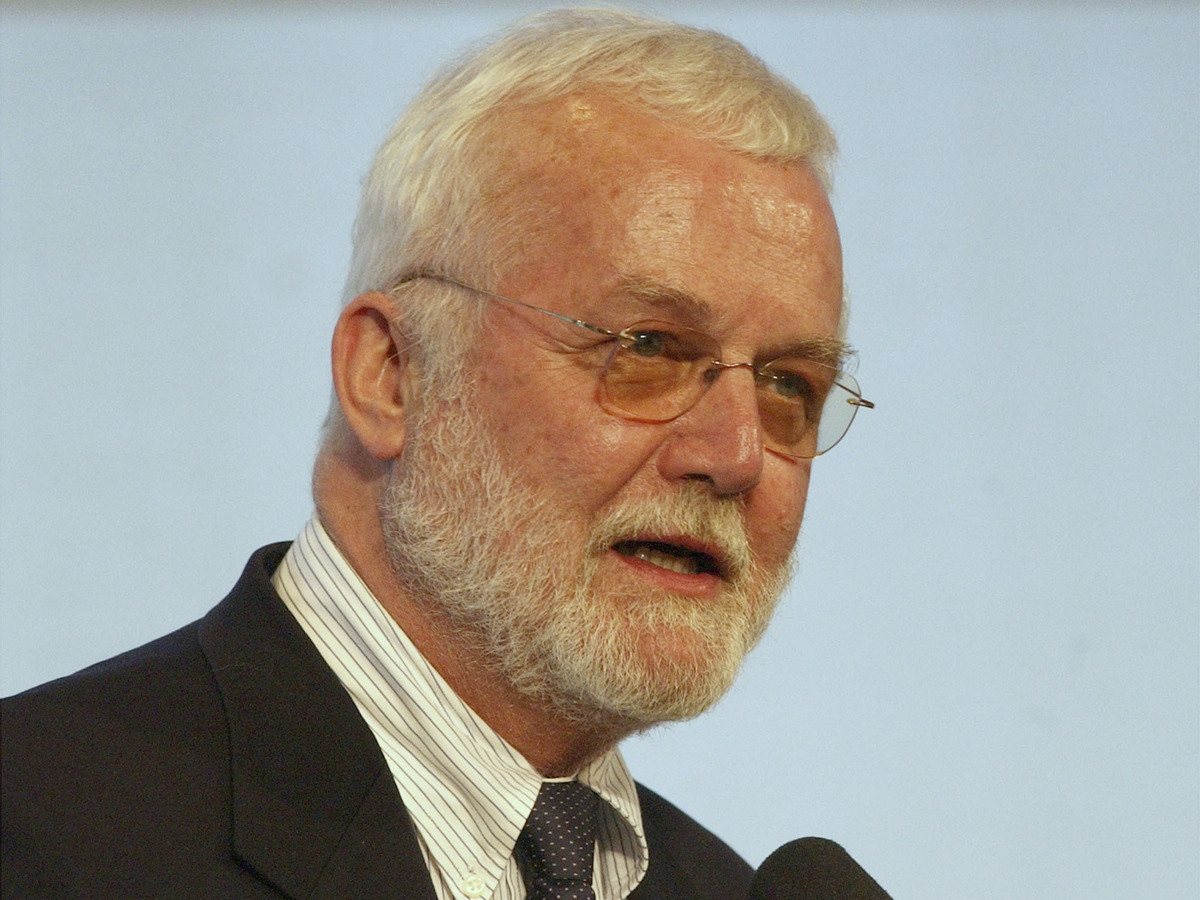
Author Russell Banks delivers a keynote address during the Hemingway & Winship Awards ceremony at John F. Kennedy Library and Museum in Boston, on April 4, 2004.
Chitose Suzuki/AP
Banks had a long career writing about people struggling with hard pasts and uneasy futures. He was twice nominated for the Pulitzer Prize in fiction. Two of his novels, Affliction and The Sweet Hereafter, were turned into movies, with a third on the way. But Banks’ editor, Daniel Halpern says American Spirits is the last of Banks’ writing, and that Banks went into it wanting to write about Trump voters beyond the usual talking points.
“He never made value judgments, as long as I knew him. Which is 50 years,” Halpern says. “He had a deep well of kindness and understanding. And he was someone who you felt comfortable talking to. And I think it’s one of the reasons that allowed him to write in such depth a variety of different characters.”

In the opening story, “Nowhere Man,” a Sam Dent local named Doug sells some of his land to a New Jersey businessman who builds a shooting range. The two butt heads, and Doug feels increasingly frustrated and untrustworthy of everyone except for President Trump. He tries to explain this to his wife, but can’t. Banks writes:
“It was like a ball of snakes, and he couldn’t separate the many strands of oppression and humiliation and identify their individual weaknesses and kill the snakes by cutting off their heads one by one and wake up one morning brimming with self-respect, a man among men admired by women and children and other men…”
In another story, an elderly man puts on his MAGA cap right before he and his wife are kidnapped by drug dealers. And in “Homeschooling,” a young family moves next door to a lesbian couple with four adopted Black children. Everyone gets along well enough, until they don’t. “In Sam Dent, race, as a meaningful social category, trumped both lesbianism and same-sex marriage,” Banks writes.
Inspired by Sherwood Anderson’s classic short story-cycle Winesburg, Ohio, Banks doesn’t present Sam Dent as a folksy idyllic place where everyone goes along to get along. The differences are apparent and impossible to ignore. And that’s true of Keene, too. “Our little town had a big summer population that would come in,” Twichell says.
“And so it was always wealthy summer people on the one hand, and the local people who were running the service industries and so forth. And they were the caretakers, and the waitresses, and the housekeepers and the snowplow guys and so forth,” she says. “And Russell definitely identified with the local people more than the summer people. He was very uncomfortable in that role as a summer person.”
In a 2013 NPR interview, Banks remarked that he spent the last quarter century writing about the widening gap between the rich and the poor, and was finding that his work was serving a more and more relevant function. “It’s important for me to preserve certain values so that they won’t be forgotten, ” he said. “And I think that’s what poetry and fiction, drama, art does anyhow – is preserve our essential human values.”

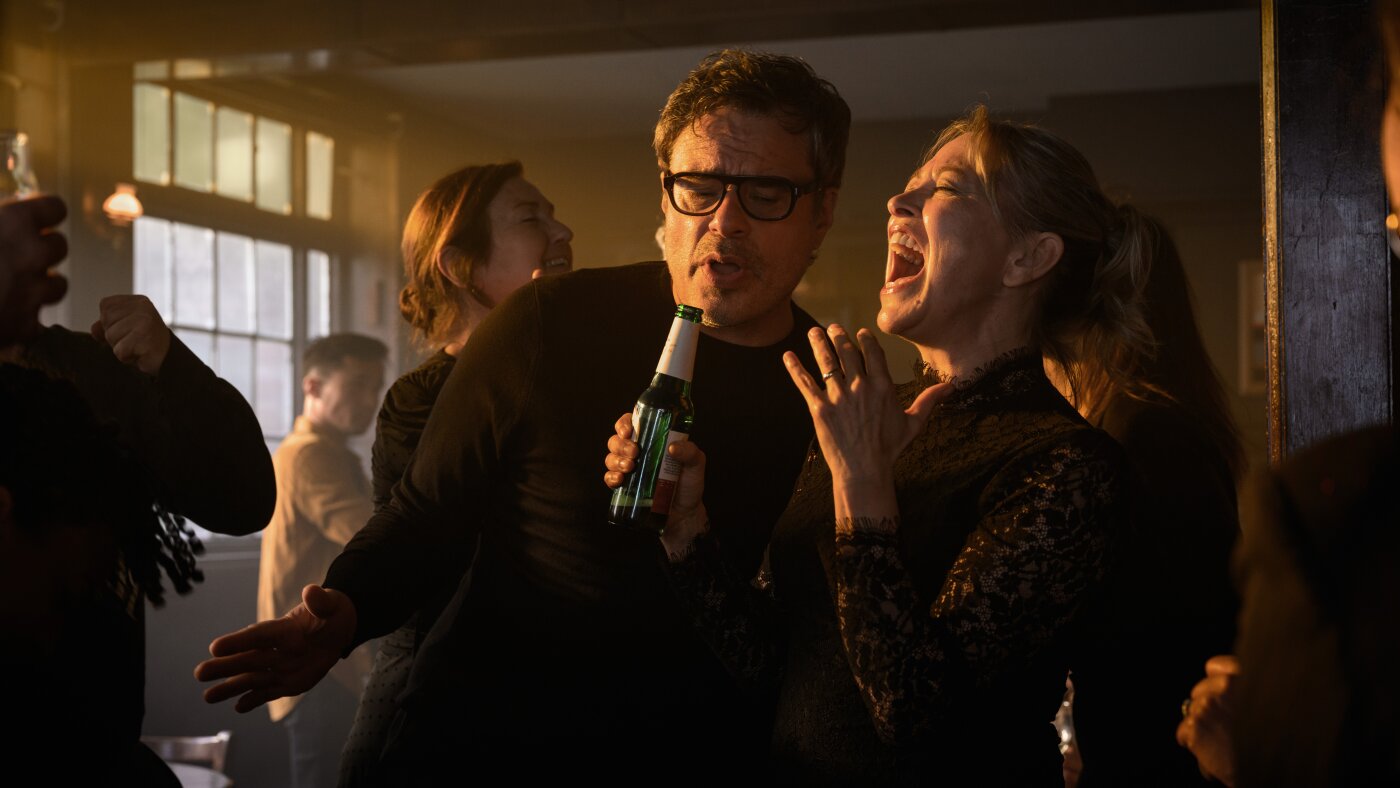
In Alice and Steve, Jemaine Clement and Nicola Walker play long-time friends who turn on each other after he gets involved with her 26-year-old daughter.
Lara Cornell/Disney+
hide caption
toggle caption
Lara Cornell/Disney+
I grew up watching episodic shows on network TV, nearly all of them formulaic but some indelibly great. Then, like everyone else, I moved into the days of what my colleague David Bianculli dubbed Platinum TV, where series like The Sopranos and The Wire and Fleabag aspired to something higher. What both these eras had in common was that their shows were carefully crafted — they had an internal logic, and a tone, that held them together.
In recent years, though, there’s been a proliferation of shows that, possibly obeying some algorithm, care less for coherence than sensation. They lurch among tones, from cuteness to sentimentality to meanness, stirring in random plot twists along the way. Bouncing all over the emotional map, these shows depend on compelling actors and a few memorable scenes to make us overlook their loose construction.
A great example is Alice and Steve, an entertaining but sometimes exasperating six-part British comedy on Hulu about two 50-something best friends who turn on each other after he gets involved with her 26-year-old daughter.


While the premise is juicy, it’s also a tad yucky, and I mainly tuned in because its title characters are played by performers Jemaine Clement from Flight of the Conchords and Nicola Walker, whom I’ve raved up on this show more than once.
The series starts poorly with Steve and Alice going on a cutesy bender after a friend’s funeral. Now, I always hate drunk scenes, which are an invitation to overact. As Clement and Walker bray their lines, we learn that Steve’s a divorced celebrity hair stylist who can’t find a girlfriend while Alice is a clothes designer with a doting younger husband, nicely played by Joel Fry, a sweetie-pie of a teenage son — that’s Tyrese Eaton-Dyce — and, of course, that 26-year-old daughter, Izzy, who has inherited her mother’s willfulness. Played by Yali Topol Margalith, Izzy kickstarts the plot by flirting with Steve. Predictably, he succumbs.

Almost immediately, they think they’re in love. While the weak-willed Steve wants to hide their romance — he knows it’s inappropriate — Izzy just blurts out the facts to her mom. Alice flips. And from hereon out in this series where the women are as alpha as the men are hangdog, Alice drives the action. Betrayed and violently angry, she’ll do whatever it takes to break them up — no matter who gets hurt. Her antics unleash Steve’s own malice. We’re in Beef territory.
At its core, Alice and Steve hinges on the way that platonic friendships are often richer and more powerful than romantic ones. It’s a fascinating subject, which may be why I found the script by Sophie Goodhart so frustrating. I wanted her to dig deeper. While the show’s got some very funny bits — Alice’s sharp-tongued mother is a blast — it’s often annoyingly lax.

If Steve really does the hair of Charli XCX, how come he’s a clueless older guy whose pop culture references are Willie Nelson and Woody Allen? If Izzy truly adores her mother as she claims, why does she keep rubbing her relationship with Steve in her mom’s face? Halfway through, one character nukes the other’s career, but this life-shattering event has no real weight: It’s barely even mentioned for the rest of the series.
That said, Alice and Steve is worth seeing for scenes like the one in which Steve spinelessly sells Izzy out or the lacerating discussion between Alice and her husband when he fully grasps that he adores a woman who views him as a reliable but dull concierge, not a man she likes hanging with. Most touching of all may be the lovely sequence when Alice, wise for once, smooths a romantic crisis between her son and his would-be girlfriend, a pair who are the show’s emblem of hope. For once, we understand why people love her.

While most viewers will find Steve more likable than Alice — the show takes pains not to make him appear predatory or creepy — the role doesn’t give Clement a whole lot to do except play variations on shambolic dread and discomfort. The show gets its galvanizing zing from Walker, a beloved star in England with amazing, luminous eyes. Her Alice is the kind of complicated, volcanic heroine that you don’t see in movies and rarely see on TV, one who shows her apocalyptic rage freely and in many different forms.
At least once in every episode, something would lead me to say, “Man, is this show a mess.” But that wasn’t a deal breaker. I kept watching. After all, life is messy, too.


How to enter your Sporty Spice era.
Getty Images/quantic69/Olga Kurbatova/Anastasiia Zvonary/Photo Illustration by NPR
hide caption
toggle caption
Getty Images/quantic69/Olga Kurbatova/Anastasiia Zvonary/Photo Illustration by NPR
Reality dating and professional sports are not as different as you’d think.
Brittany is in her Sporty Spice era – she watched the NBA playoffs, she’s following World Cup games, and she’s watching the New York Liberty play their WNBA season. These games are daily – and so is the reality dating show Love Island. And she noticed that the two formats are not very different at all. Defector.com staff writer and co-owner Kelsey McKinney came to the same conclusion – so the two of them discuss why these games of athleticism and love can bring us together… and why they get valued differently in our culture.
For more episodes on sports and reality TV, check out:
Get rich or die trying: how sports betting is changing our love of the game
Is this the end of reality TV?
The ugly truth of America’s expensive homes
Support Public Media. Join NPR Plus.
Follow Brittany on Instagram: @bmluse
This episode was produced by Liam McBain. It was edited by Neena Pathak. Our Supervising Producer is Cher Vincent. Our Executive Producer is Barton Girdwood. Our VP of Programming is Yolanda Sangweni.

-

 Austin, TX5 minutes ago
How much daylight are we losing in Texas this month?
-

 Alabama8 minutes ago
Sweet Home 250 draws thousands to Montevallo for Alabama’s o…
-

 Alaska14 minutes ago
A frozen ground under Alaska’s tundra looks like ordinary soil from above, but scientists have put a $43 trillion price tag on what happens when it thaws
-
 Arizona21 minutes ago
WATCH: Mesa teen builds free scam detection tool to protect seniors from fraud
-

 Arkansas24 minutes ago
Arkansas restaurants adapt as rising food costs change menus and dining habits
-

 California29 minutes ago
Activists demand Black English be pushed on kids in California preschools
-

 Colorado36 minutes ago
Showers and thunderstorms forecast for Colorado’s high country as wildfires rage across the state
-

 Connecticut38 minutes ago
Eversource crews work to restore power nearly 48 hours after Independence Day storm

