Lifestyle
'The Liquid Eye of a Moon' is a Nigerian coming-of-age story


Uchenna Awoke’s debut novel The Liquid Eye of a Moon is, on the surface, 15-year-old Dimpka’s coming of age story in the rural Nigerian village of Oregwu. But Dimpka’s story is bigger than this — as it takes place within the specific context of what Awoke calls “human tabooing.”
The novel delves into life in an Igbo family that is considered “unclean” because they fall on the lowest rung of the traditional Igbo caste system. There are varying explanations or “justifications” for these harsh social divisions, including a specific type of ancestor worship. One practice is to dedicate a child to an ancestor, thereby “enslaving” the child to that forebear.
Dimpka’s devotion to his deceased aunt may reflect this spirituality. He is a dreamer, and his most important desire is to build a proper tomb for his aunt Okike, who died by drowning. Although his memory is hazy, Dimpka knows this aunt was extremely close to him. It is not until the end of the book that we learn the details of her death, disclosing why Dimpka may be so driven to give her a proper burial.
This novel also takes place against a history of horrific ethnic cleansing. To vastly oversimplify: The Nigerian government undertook a 1966 pogrom that killed thousands of Igbo people. The Igbos rose up to declare the independent republic of Biafra. The Biafran war for liberation, often called the Nigerian civil war, evoked headlines around the world. It ended in 1970 with the crushing defeat of the nascent Biafran republic. Accounts of the Biafran war have been memorialized in Chimamanda Ngozi Adichie’s searing novel, Half of a Yellow Sun, Chinua Achebe’s iconic book, There Was a Country, Louis Chude-Sokei’s terrific memoir, Floating in a Most Peculiar Way, and elsewhere.
Awoke presumes the reader’s knowledge of this complex background. He declines to translate Igbo terms, sharpening his message that Igbo cultural and political history form the novel’s warp and weft.
Dimpka carries the weight of being the eldest son in his family. He narrates his story in the first person. His maturation is marked by increasing awareness of caste differences, and the grave disappointments and dangers they engender. His closest friend, Eke, cannot bring Dimpka to his home due to social divisions. But the boys’ friendship transcends these taboos, and they explore their village together and share adventures until fate intervenes.
Dimpka’s father fought for Biafran independence but remains in the lowest class, and, as such, is unfairly passed over to be village elder. Dimpka’s parents may have anticipated this injustice, but it wounds the family, especially Dimpka.
Dimpka experiences sharp divisions within his own family as well. His younger brother Machebe taunts him with his self-discipline and consequent generosity and success.
Their father follows a traditional Igbo religious practice that invokes punishing gods, including Ezenwanyi, a commanding queen. Awoke intersperses these ritual stories throughout the book, casting a shadow across Dimpka’s activities.
By contrast, Dimpka’s mother is Pentecostal, and at pains to ensure her children’s Christian salvation.
How can Dimpka contain these divisions and move forward in his life? Throughout his teens and early 20s he tries multiple schemes to lift himself up in society and earn enough to build his aunt’s tomb and bring his family out of poverty. He proceeds as a hopeful innocent, while the reader fears for him. He follows paths that result in his being defrauded, shamed, and beaten down physically and emotionally. His struggles lead to a growing sense of frustration and pessimism. We come to understand that his choices are painfully constricted by the caste system into which he was born.
The moon in the title figures prominently in many scenes. When Dimpka finally succeeds in building his aunt’s tomb, he lies on it beside her, and looks “into the big liquid eye of a moon.” “Liquid” in the title brings to mind the fluidity of life and the lack of control humans have over their fate.
My reading of this novel would have been greatly enhanced by a clearer understanding of Igbo culture and history. Nevertheless, I enjoyed being immersed in Dimpka’s life, the tastes and smells of his mother’s cooking, the description of his fellow villagers, and his travels to Lagos and elsewhere to improve his lot. We feel the dust in the streets and engage in the activity at the local market. These setting and atmospherics help illustrate the suffering imposed on members of Dimpka’s caste.
Awoke’s writing is impressive; his metaphors are refreshing and vivid. Sentences like “Eke lights his crackling bush-fire laughter,” make Dimpka’s friend Eke come alive. Dimpka gives this specific description of his brother Machebe: “Imagine a tiger incarnate with a hard orange-brown stare.”
The book ends on an affirmative, though abrupt, note, with insufficient lead up to its conclusion. If such an ending suggests a novelist new to his craft, the book itself suggests a writer of great promise. Dimpka’s meandering story carries a vital humanitarian message. I look forward to reading more of Uchenna Awoke’s work.
Martha Anne Toll is a D.C.-based writer and reviewer. Her debut novel, Three Muses, won the Petrichor Prize for Finely Crafted Fiction and was shortlisted for the Gotham Book Prize. Her second novel, Duet for One, is due out May 2025.



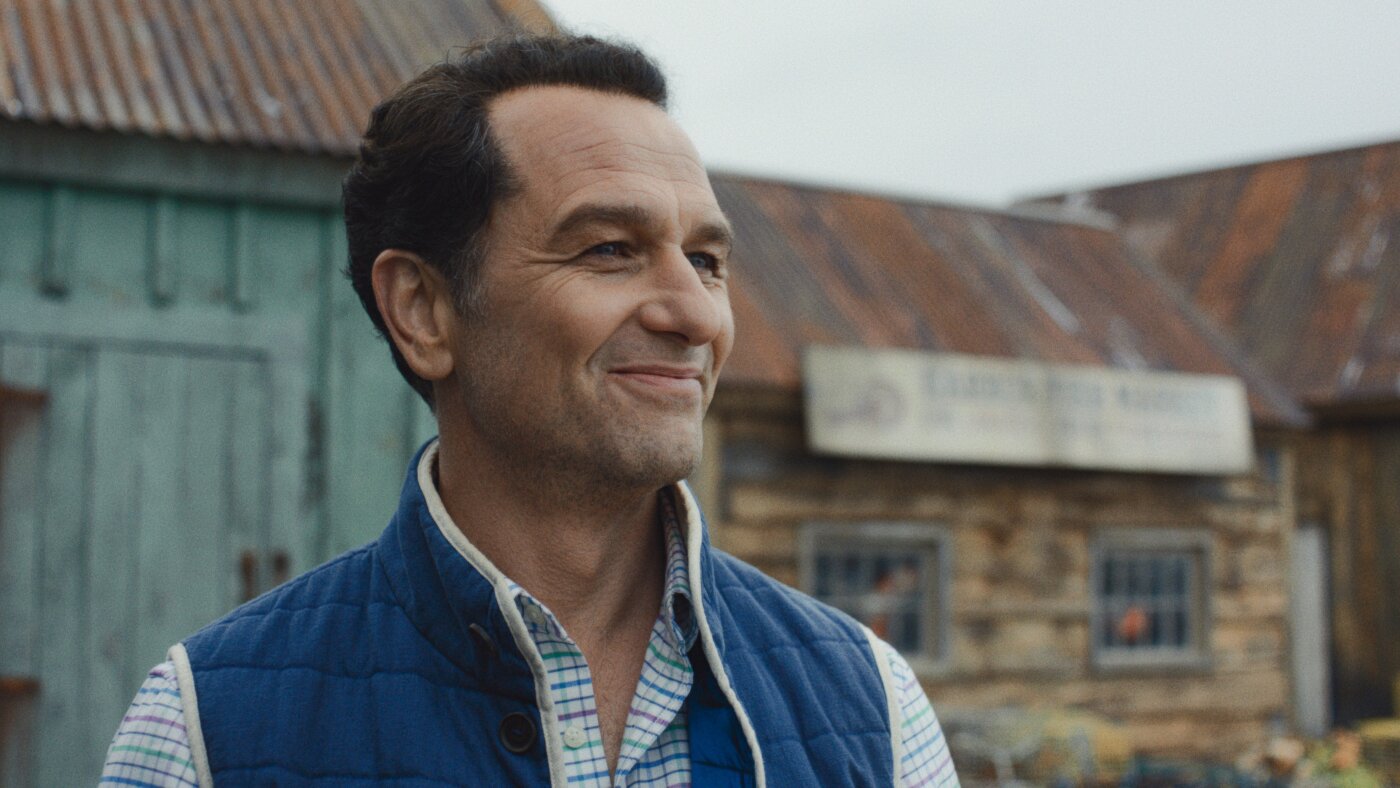
Matthew Rhys was nominated for his role in Widow’s Bay.
Apple TV
hide caption
toggle caption
Apple TV
The 2026 Emmy nominations are here. We’re unpacking the record-breaking nominations for Hacks, plus a big day for Widow’s Bay, The Pitt, and The Bear. We’ll also talk about the snubs and make some early predictions of who will win.
Connect with Pop Culture Happy Hour:
Letterboxd / Facebook
Our weekly newsletter
Support Pop Culture Happy Hour+


Can you say no to a friend’s wedding?
Getty Images/Getty images
hide caption
toggle caption
Getty Images/Getty images
Are we spending too much on other people’s weddings?
Going to a friend’s weddings can be so fun and meaningful… but it can also really hurt your wallet. A survey by LendingTree found that 31% of people who had been to a wedding in the past five years had accrued debt to attend. So what’s driving up the cost of weddings for guests? And what makes it so hard to say no to these expenses?
Brittany breaks it down with Allyson Rees, senior analyst at trend forecasting firm WGSN, and Annie Joy Williams, assistant editor at The Atlantic.
This episode was produced by Liam McBain, with additional support from Corey Antonio Rose. It was edited by Neena Pathak. Our Supervising Producer is Cher Vincent. Our Executive Producer is Barton Girdwood. Our VP of Programming is Yolanda Sangweni.
-

 Ohio5 minutes ago
Woman missing for more than 2 weeks found dead in Ohio
-
 Oklahoma7 minutes ago
LANZAMIENTO: Local organizations aiming to continue Tulsa’s food industry growth
-
Oregon13 minutes ago
Oregon Country Fair set to open Friday as crews finish preparations in Veneta
-

 Pennsylvania20 minutes ago
60th annual Central Pennsylvania Festival of the Arts now underway in State College
-

 Rhode Island23 minutes ago
Handshake Initiative instills confidence, motivation in students
-

 South-Carolina28 minutes ago
ESPN recruiting writers break down five-star Josh Dobson’s fit with South Carolina
-

 South Dakota35 minutes ago
South Dakota man faces abuse charges after authorities called to NW Iowa casino
-

 Tennessee37 minutes ago
Data centers driving up Tennessee power bills, report finds

