Lifestyle
The L.A. laundromat offers something special and rare: a home away from home

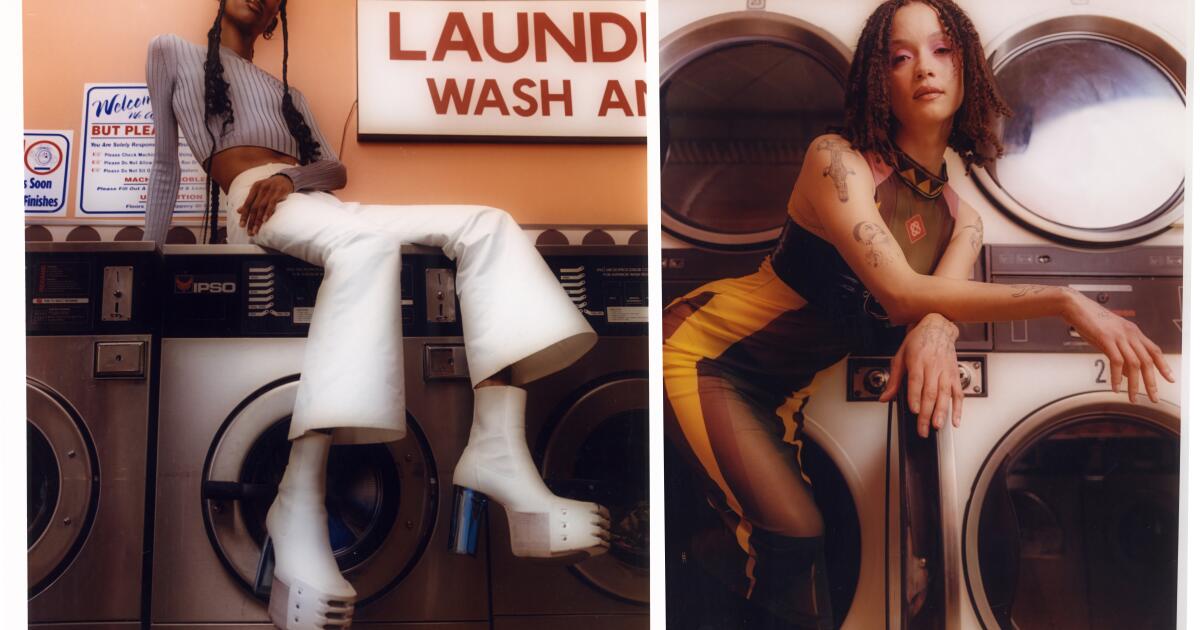
The laundromat is the perfect place to cry in public.
I’m here now, crying as I type this. I don’t care who sees me. I’m tucked away into one of the two-person benches between the silver three-load washers, tears welling up in my eyes near their tipping point. I make eye contact with a man who passes me by on his way to the sink. He looks slightly concerned. But even if I wasn’t partially hidden it wouldn’t matter. I feel safe here. It’s a place that puts intimacy on a rush order, past the point of faux social etiquette. I’m surrounded by people who see the color of my underwear as I pull it out of the dryer. What are a few tears at this point? We’re already well acquainted.
I’ve always been too internal for my own good. I cry in public often because of what’s happening in my imagination. And the laundromat — its familiar, sterile smell of cleaning products and metal, the constant chugging sound of water and hot air — is a place that feels particularly primed for me to slip into my subconscious mind, like sliding into a comfortable pool of Jell-O. I remember things I forgot. I romanticize the Krypto Villain stickers in the quarter vending machines. I sit and stare at people until it hurts. I fantasize about what their lives are like, or all the times they wore those nice faded jeans that they’re pulling out of the dryer while the static shocks their skin. I see a couple sitting under the food tent outside. Their knees point into each other’s while they’re eating, and by their body language alone I conclude that they are, of course, in love. I see a teenage boy shadow-boxing the washing machine in what I decide by a demeanor that I find all too familiar, is a bid for attention. I’m reminded of when I was 14 and needed attention.
An L.A. laundromat is always open, and always waiting for you.
The dryer whirs soft, the fluffy smell of chemical flora rises, the badass little kids with silver teeth run circles around their mom while she folds their Spiderman T-shirts. An image flashes in my mind of myself when I was small — curly hair, dirty Osirises and the fake tattoos I got from the quarter machine fading on my forearm, using the laundry cart like a bumper car or laying my head on a freshly baked mountain of clothes that was just piled into it from the dryer.
I love the laundromat. I’ll tell anyone who will listen. You will catch me at a party giving what might as well be a PowerPoint presentation about the joys of the laundromat. What most people see as an undesirable chore I see as a comfort zone. My own private version of the club, where fluorescent light floods from the ceiling and there’s always Amy Winehouse or Salt-N-Pepa playing over the loudspeaker. My local laundromat is open 24 hours — as all the good ones are — and any time of day or night, for the rest of my life, I know there is a place that is open and waiting for me (as long as I have a hoodie to wash). I’ve never had an in-unit washer and dryer in my many years of living on my own. And it never mattered. Because I have something rarer, more special: a home away from home.
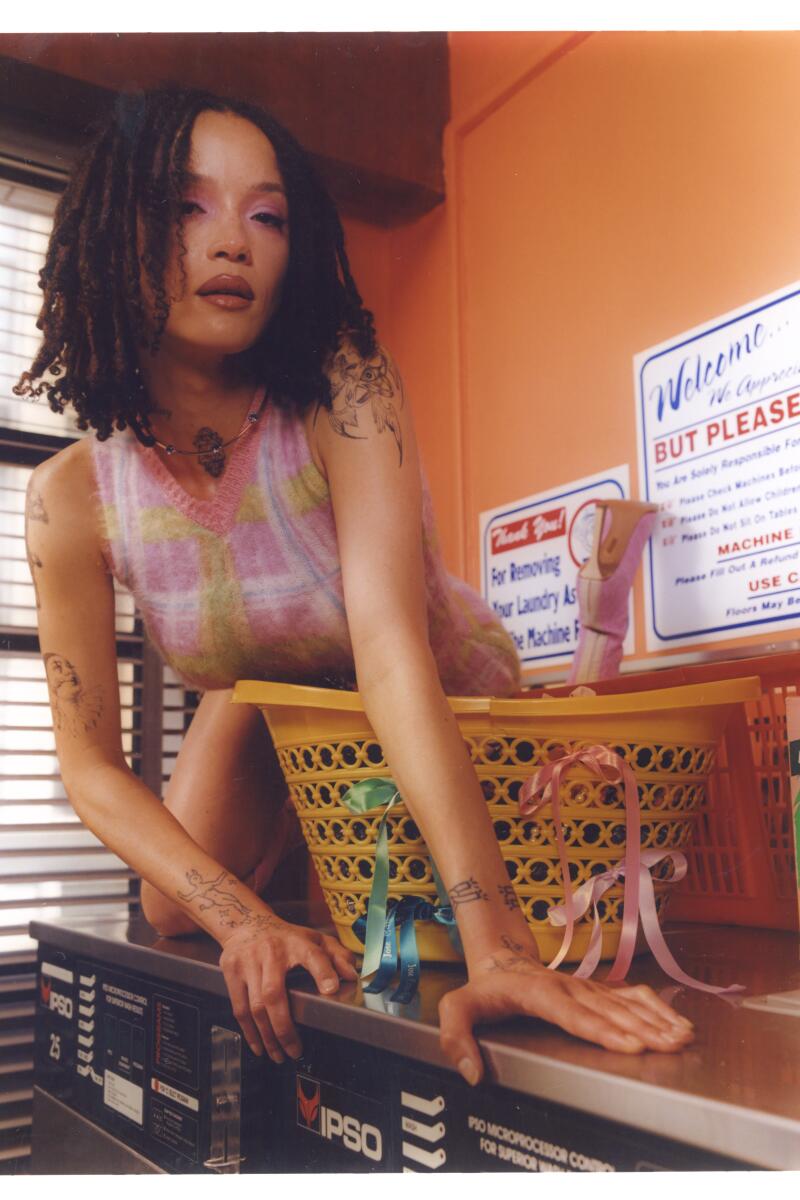
May wears Marni dress, Fendi pink boots.
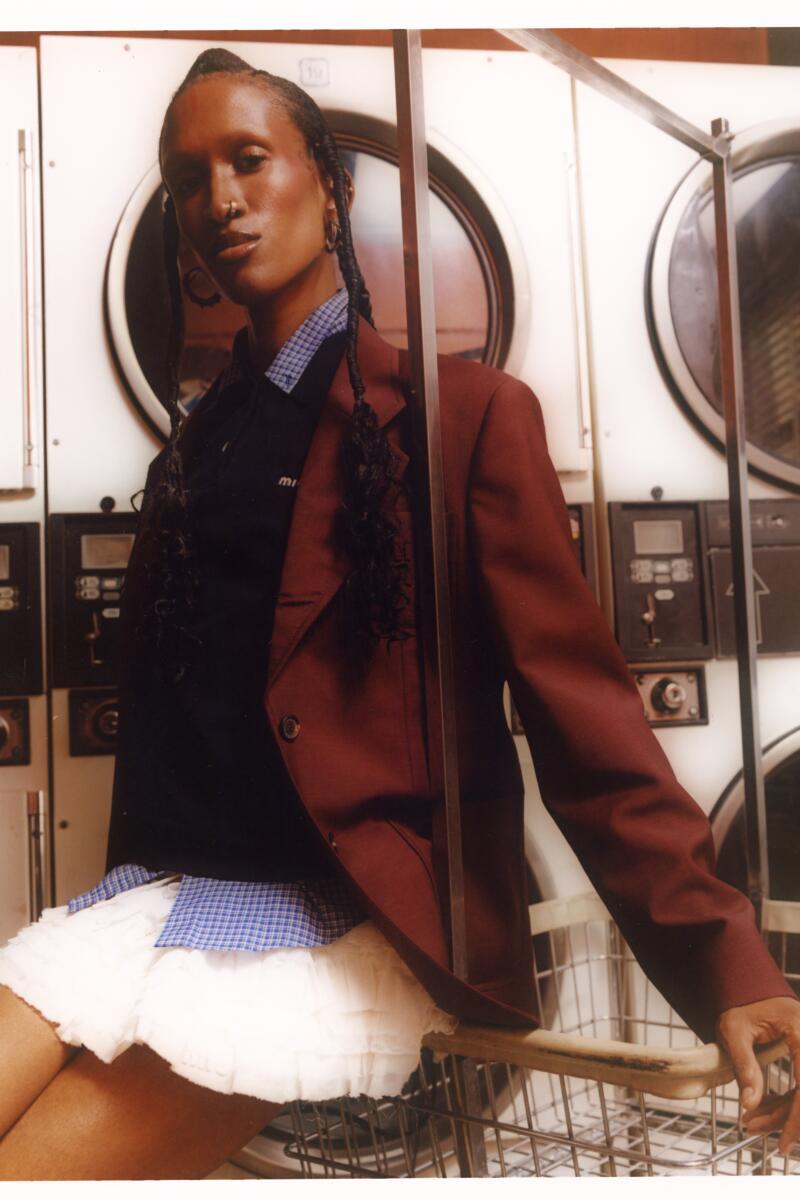
Maahleek wears Miu Miu, model’s own jewelry.
There’ve been rumblings on the internet lately about “third places” — spots people go to that are not their house, not their office, but a secret third thing. “These places are vanishing!” the TikTok feed will warn. Sociologist Ray Oldenburg coined the term “third place” in his 1989 book “The Great Good Place” and expanded on it in his 2001 book, “Celebrating the Third Place.” Oldenburg’s life’s work has been dedicated to explaining why informal gathering spaces matter, and in his writing he defined some characteristics of a true third place, including low barrier to entry, being a status leveler, somewhere that conversations happen and arguably most importantly, being a home away from home. This, Oldenburg writes, is the antidote to isolation, the lubricant of a healthy social balance. “Y’all got nowhere to hangout and it shows,” stated one TikTok creator, who made a series out of suggesting third places.
The experience of the laundromat spills beyond the confines of its walls into its surrounding areas. If you’re doing laundry in a neighborhood like mine, then you’re very lucky, and every single day there is someone selling food on the sidewalk out front. Last time I was there, it was the new-to-me Colombian spot, a Mexican empanada spot and a birria spot that sells it on top of pizza. The smell of soupy, red meat mixing with the unmistakable perfume of Suavitel and Zote shavings. On the weekends in winter, you’ll find the champurrado lady selling Styrofoam cups of the viscous, steaming drink out of the trunk of her minivan.
The parking lot is where all the good things happen. When I was in my early 20s, I used to put my load in and s**** a b**** with my bestie as I waited for the cycle to finish. It’s where I bought someone’s physical mixtape a couple months ago because I’m a recovering people-pleaser, and was in partial system shock from even seeing a physical mixtape. It’s where I can never find parking — even on a weekday evening — because as long as there are days to live there will be laundry to do.
The number of activities done there that have nothing to do with washing your clothes feels specific, in a lot of ways, to L.A. We do all of our photo shoots for our merch brands at laundromats (who among us?), throw experimental punk shows, come up with our best ideas. In my Notes app earlier this year I wrote: “Laundromat culture — places of business and life and love and food.”
I saw a post about a guy who lived in a renovated laundromat in Queens, which felt right to me — something to aspire to. In “The Great Good Place,” Oldenburg writes that third places should inspire the same fuzzy, warm glow of belonging as its inhabitants might find in their own homes. There should be a sense of ownership, of taking up space. I remember this when I Zelle the guy with the Colombian hat $6 for two potato and cheese empanadas. As I sit outside to eat them I notice a parked car with the driver and passenger seats reclined all the way back, two people with their feet up on the dash hold hands as they engage in a romantic, mutual endless scroll on their phones. “That’s beautiful,” I think. We make ourselves at home in places where we need to pass time. We find ways to be comfortable, to turn it into our living room.
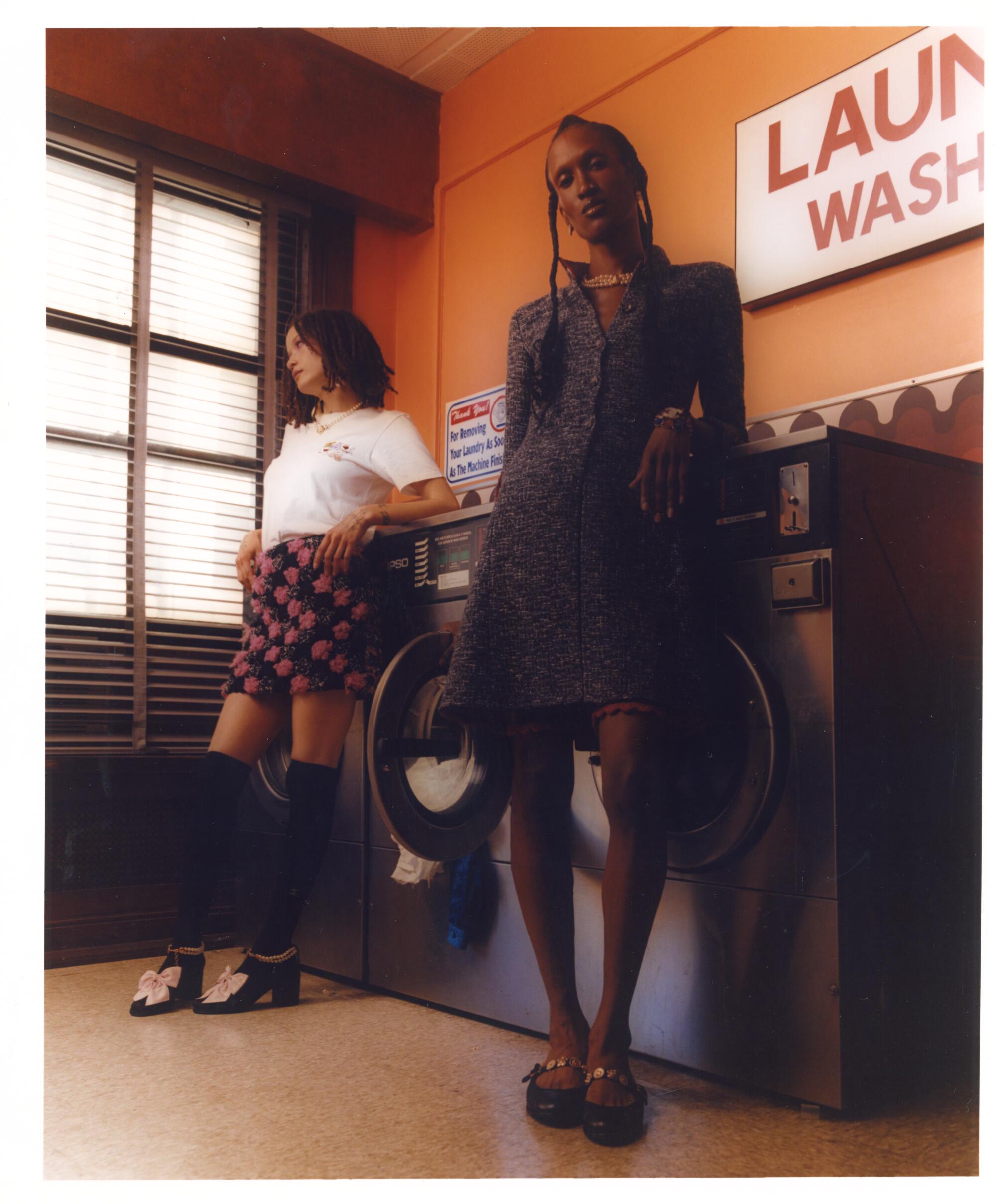
Maahleek and May wear Chanel.
When my mom comes to visit me she always takes a load of my laundry to wash at the laundromat I’m at now. (Yes, I’m 29, but her love language is “acts of service,” so sue me.) Every time, she comes back upstairs to my apartment with freshly folded T-shirts (and a blouse she shouldn’t have put in the dryer but did anyway) and regales me with a new story of an hourlong conversation she had with a stranger — the latest in her laundromat saga. I’m more the observant type. The interactions I usually have here are swift, but I still find them deeply meaningful. I notice a lady selling intricate gold-plated rings on one of the tables by the window, the natural light bouncing off the metal tray as the afternoon sun makes its descent. I ask her about them. All of these little moments fill me with the feeling of being human. There is so much talk about a need for connection, a need for community, but no one wants to spend an hour of their week philosophizing intense beauty in the mundane at their local laundromat, do they? That’s what I thought.
An important part of the laundromat experience is the massage chair. It’s the only spot that offers a soft surface to sit inside the actual building, and treating oneself feels right in a place like this. I sit in it long enough before it yells at me to put money in — I never get the actual massage, of course. I get up and relocate to a spot where I can watch the meticulous dance of a big family folding their clothes. They always have, like, 15 kids and 10 loads of laundry — an assembly line that communicates: We ain’t new to this. They quickly take up an entire counter and move with accuracy. I see one family bring a mega Tupperware container filled with hangers, attaching each of their nice button-up shirts like clockwork. It’s hypnotizing. I spot a long chartreuse dress with a flower detail that I would never wear but am deeply intrigued by. In the background, there are moments of intensity that bubble up and dissipate — a rush will be interspersed with serene moments — mimicking the flow of anything else in life.
And as soon as I slipped too deep, I’m jolted back to reality by two women arguing over a dryer, which is a normal interaction here. It went on for 15 minutes, each one of them throwing strays long after the initial confrontation was finished. Draaaaama, I thought. And I laugh to myself. Because that’s what happens when you’re comfortable, when you’re at home, when you’re with your family.
Production: Mere Studios
Models: Maahleek, May Daniels
Makeup: Selena Ruiz
Hair: Adrian Arredondo
Photo Assistant: Dillon Padgett
Styling Assistant: Deirdre Marcial



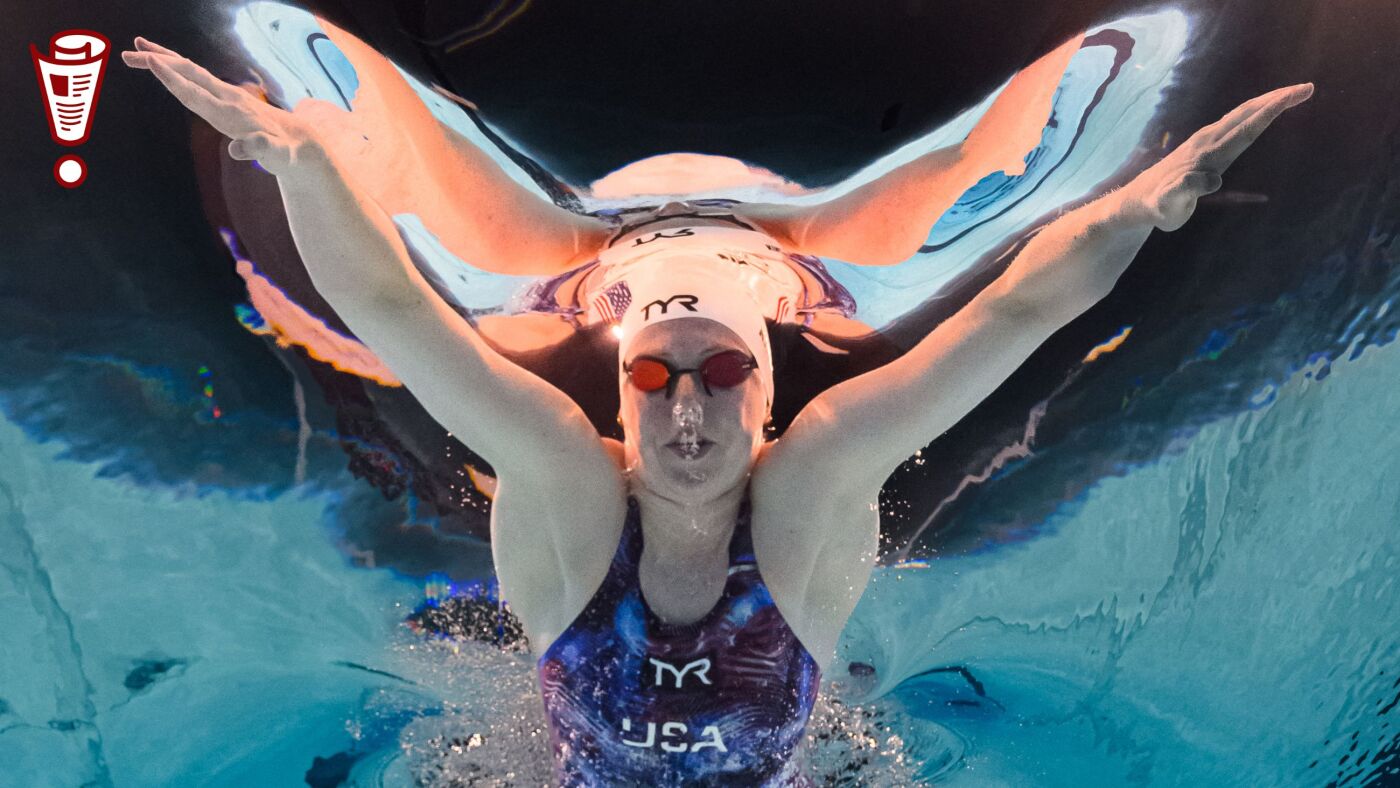
An underwater view shows US’ Lilly King competing in a heat of the women’s 200m breaststroke swimming event during the Paris 2024 Olympic Games at the Paris La Defense Arena in Nanterre, west of Paris, on July 31, 2024. (Photo by François-Xavier MARIT / AFP) (Photo by FRANCOIS-XAVIER MARIT/AFP via Getty Images)
François-Xavier Marit/Getty Images
hide caption
toggle caption
François-Xavier Marit/Getty Images
This week’s show was recorded in Bloomington, Indiana with host Peter Sagal, judge and scorekeeper Bill Kurtis, Not My Job guest Lilly King and panelists Alonzo Bodden, Josh Gondelman, and Faith Salie. Click the audio link above to hear the whole show.
Who’s Bill This Time
State of the Union is Hot; The Tribal Council Convenes Again; A Glow Up In the Doll Aisle
Panel Questions
The Toot Tracker
Bluff The Listener
Our panelists tell three stories about a travel hack in the news, only one of which is true.
Not My Job: Olympic Swimmer Lilly King answers our questions about Lil’ Kings
Olympic Swimmer Lilly King plays our game called, “Lilly King meet these Lil’ Kings” Three questions about short kings.
Panel Questions
Cleaning Out The Cabinet; Bedtime Stacking
Limericks
Bill Kurtis reads three news-related limericks: Getting Cozy With Cross Country Skiing; Pickleball’s New Competition; Bees Get Freaky
Lightning Fill In The Blank
All the news we couldn’t fit anywhere else
Predictions
Our panelists predict, after American Girls, what’ll be the next toy to get an update.

Law Roach
Zendaya and Tom’s Wedding Already Happened …
Y’all Missed It!!!
Published
Zendaya and Tom Holland are married … so claims her longtime stylist, Law Roach.
Here’s the deal … the celebrity stylist — who started styling Zendaya way back in 2011 — spoke to Access Hollywood on the Actors Awards red carpet where he sang out “The wedding has already happened, you missed it.”
Waiting for your permission to load the Instagram Media.
The AH reporter asks in shock if that’s true … and, Law responds by saying it’s “very true” before walking off.
This isn’t the first time Tom and Zendaya’s relationship status has made headlines on a red carpet … remember at the Golden Globes in 2025, Zendaya had a ring on that finger — and, the next day, we found out the two were engaged.

TMZ.com
Zendaya and Tom met on the set of “Spider-Man: Homecoming” in 2016, started dating a couple years later and went public with their relationship in 2021.
We’ve reached out to Tom and Zendaya’s teams … so far, no word back.

Online prediction market platforms allow people to place bets on wide-ranging subjects such as sports, finance, politics and currents events.
Photo Illustration by Scott Olson/Getty Images
hide caption
toggle caption
Photo Illustration by Scott Olson/Getty Images
The rise of prediction markets means you can now bet on just about anything, right from your phone. Apps like Kalshi and Polymarket have grown exponentially in President Trump’s second term, as his administration has rolled back regulations designed to keep the industry in check. Billions of dollars have flooded in, and users are placing bets on everything from whether it will rain in Seattle today to whether the US will take over control of Greenland. Who’s winning big on these apps? And who is losing? NPR correspondent Bobby Allyn joins The Sunday Story to explain how these markets came to be and where they are going.
This episode was produced by Andrew Mambo. It was edited by Liana Simstrom and Brett Neely. Fact-checking by Barclay Walsh and Susie Cummings. It was engineered by Robert Rodriguez.
We’d love to hear from you. Send us an email at TheSundayStory@npr.org.
Listen to Up First on Apple Podcasts and Spotify.

How the strikes on Iran could impact gas prices in northern Nevada

New photo released in unsolved 1997 homicide of a N.H. woman

Blizzard causes heavy damage to New Jersey animal refuge

3 thoughts: New Mexico 81, SDSU 76 … Kudos for the local kid, mid-majors getting the squeeze and European bigs

North Carolina father-to-be saved by quick-thinking pregnant wife after suffering sudden heart attack

Florida High School Football Rankings: Top 25 teams – Oct. 21

Cleary's 21 help Le Moyne down Central Connecticut State 69-64 in OT

How old is Bo Nix? What to know about Oregon quarterback ahead of 2024 NFL Draft

99th annual Pony Swim held in Virginia

Indiana Members Credit Union announced as new anchor tenant at Bottleworks District

House Republicans push Johnson to go to war with Senate over SAVE Act

Israel FM says Europe too divided, slams Spanish PM

Satellite images provide view inside Iran at war

Video: What the Texas Primary Battle Means for the Midterms

Dems’ potential 2028 hopefuls come out against US strikes on Iran
-

 World4 days ago
Exclusive: DeepSeek withholds latest AI model from US chipmakers including Nvidia, sources say
-

 Massachusetts5 days ago
Mother and daughter injured in Taunton house explosion
-

 Denver, CO4 days ago
10 acres charred, 5 injured in Thornton grass fire, evacuation orders lifted
-

 Louisiana1 week ago
Wildfire near Gum Swamp Road in Livingston Parish now under control; more than 200 acres burned
-

 Technology1 week ago
YouTube TV billing scam emails are hitting inboxes
-

 Politics1 week ago
OpenAI didn’t contact police despite employees flagging mass shooter’s concerning chatbot interactions: REPORT
-

 Technology1 week ago
Stellantis is in a crisis of its own making
-

 News1 week ago
World reacts as US top court limits Trump’s tariff powers