Lifestyle
Ted Danson has embraced the light, but he's still grateful for the dark : Wild Card with Rachel Martin


Ted Danson speaks onstage on June 5, 2024.
Jesse Grant/Getty Images for the Environment
hide caption
toggle caption
Jesse Grant/Getty Images for the Environment

Ted Danson speaks onstage on June 5, 2024.
Jesse Grant/Getty Images for the Environment
A note from Wild Card host Rachel Martin:
I started watching The Good Place with my kids. It was sort of born out of guilt that I didn’t take them to church, honestly. I decided that the very least – and I mean the very least – I could do to prevent complete moral decay, was to watch a show that sandwiched real ethical questions between jokes about frozen yogurt and the infinite nature of the universe.
What really captivated my kids was the idea throughout the show that people are both good and bad. We are both things all the time. Some of us are a little more of one than the other, but you get the point. Ted Danson is one of the best representations of this. He plays Michael, who’s a bad guy, playing a good guy, who actually becomes a good guy, who’s still a little bit bad.
Ted Danson’s character, Michael, introduces The Good Place and its scoring system.
YouTube
In that lies the real joy of a Ted Danson performance, because you can see this duality in so many of his roles. He’s a happy-go-lucky guy with a quick wit and a quicker smile, and then you start to see the cracks in that sunny demeanor. There’s a darkness underneath all that goodness that gives his characters depth.
You see this duality with Sam Malone on Cheers, Hank Larsson in Fargo and even when he played a version of himself in Curb Your Enthusiasm. He’s all light and fun, and then you see that little twinkle in his eye, that unforgettable smirk, how he literally skips into scenes and you have to wonder if everything is as it appears. So I invited him on Wild Card to find out.
Danson has a new podcast with his former Cheers co-star, Woody Harrelson, called Where Everybody Knows Your Name with Ted Danson and Woody Harrelson (sometimes).
This Wild Card interview has been edited for length and clarity. Host Rachel Martin asks guests randomly-selected questions from a deck of cards. Tap play above to listen to the full podcast, or read an excerpt below.
Question 1: What was your form of rebelling as a teenager?
Ted Danson: I’m not 100 percent sure I ever rebelled as a teenager. I brought my parents to their knees when I was 45. But, as a teenager, I smoked cigarettes.
Rachel Martin: That’s rebellious.
Danson: Yeah, my father’s museum in Arizona had this huge Hopi bowl full of sand right outside the door with a sign that said, “No smoking.” People would get out of their car, light a cigarette, walk five feet and have to stick it out. We’d watch them from our hiding place and we’d scamper up, grab the cigarette before it was put out and run back into the canyon and smoke.
I guess that’s rebellion. I’m milquetoast, I’m telling you, but it came later.
Martin: So now I have to go there. When you were 45, you brought your parents to their knees?
Danson: Well, I won’t be too specific, but I didn’t really grow up emotionally until I was in my 40s, and I was a bit of a liar in my relationship. I’ll leave it at that. And I started to work on myself very seriously around that time. I went to clinics and a psychologist and a mentor. I worked very hard to not be that person who hid his emotions and left out the back door.
So that was all kind of messily in the press, and my poor parents were going, “What?” And I finally called them and they were very sweet and they came to support me and everything. The press sounded horrible. But the work underneath the press was invaluable. I’m very glad for that time, even though it was messy – very messy.

Question 2: If you got a do-over for one decision in your life, what would it be?
Danson: I wouldn’t.
Martin: You wouldn’t?
Danson: I wouldn’t choose a do-over. You know, if I did something differently and I took a different path, I wouldn’t be with my wife, Mary Steenburgen. I am horribly embarrassed about many things in my past, things that are cringeworthy, but that’s my life.
Martin: Were you always so accepting of that, or has that been an evolution for you to look back at your life and those mistakes and embarrassments and errors and say, “It’s okay?”
Danson: Well, I wish I hadn’t become a liar and walked out the back door early in life. I wish that hadn’t been me, but even your wounds, you kind of have fondness for if you’ve gone through them and live through it and acknowledged it and made amends and all that stuff.

Martin: Did your wife, Mary, have a hard time accepting those wounds?
Danson: No. First of all, I’m one of those people that obnoxiously vomits their life out on people.
Martin: Like, on your first date?
Danson: Literally the day I met her.
Martin: She accepted you for all the things?
Danson: Yeah, from day one. I was like a convert to truth. And our life together is so empty of secrets. If there’s even a moment when I didn’t exactly tell the truth, it’s so devastating to me that I immediately grind to a halt and say, “I got to talk to you.” Being truthful, it greases the skids of life. But our life together is very full of laughter and joy. We’re very blessed.
Question 3: How often do you think about death?
Danson: Ooh, a lot. I don’t like living in fear, and I have tons of it, you know, it comes up. I just finished filming A Classic Spy and I was having so much fun doing it that halfway through I was going, “Oh, don’t die. Let me finish this.”
But then I went, “Wait a minute, what you’re really saying is that you are so happy to be doing what you’re doing, you’re so joyful, having so much fun, don’t take it away from me, life,” you know?
So instead of being fearful, just say thank you. Thank you for this blessing that I have. Thank you for this job. Thank you for whatever, because then I can live in gratitude, which is more joyful and I don’t have to live in fear.

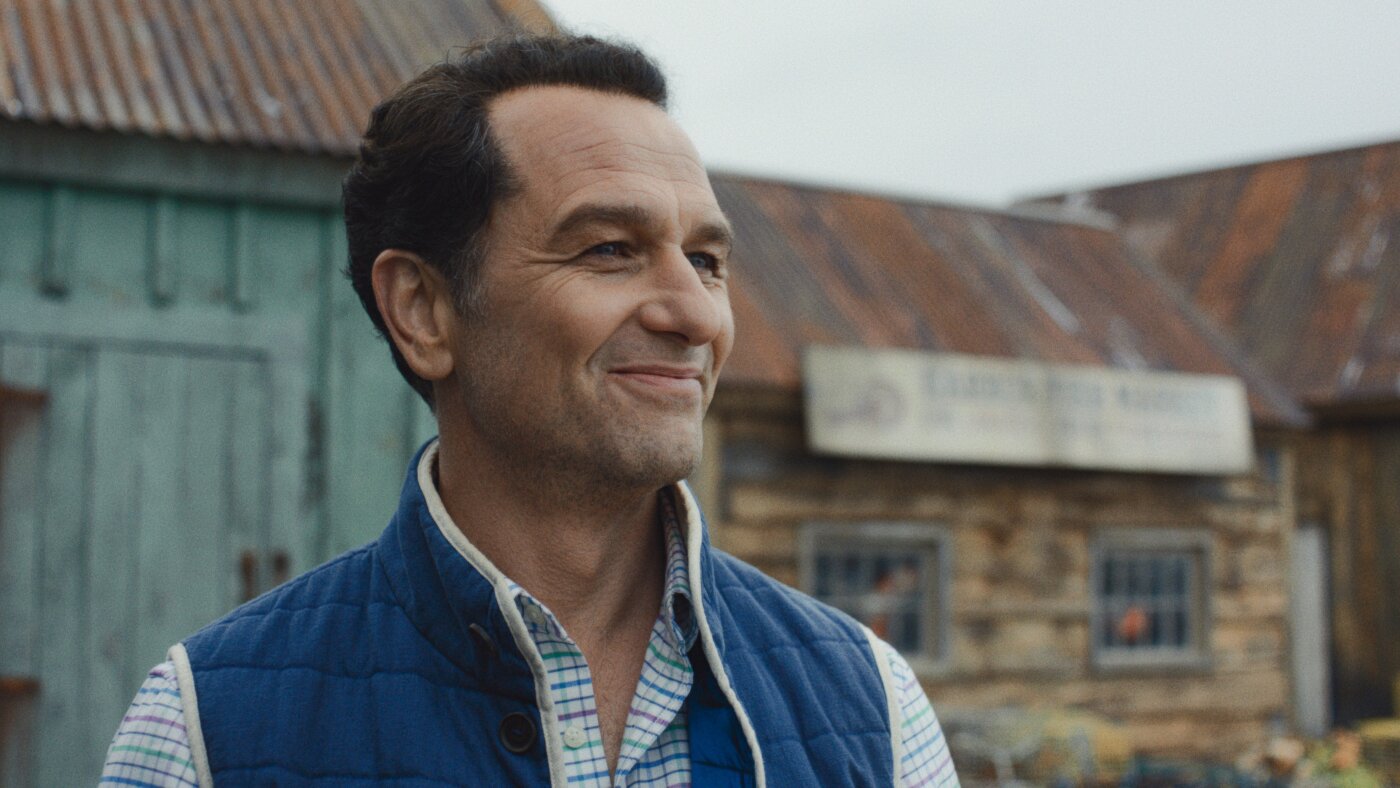
Matthew Rhys was nominated for his role in Widow’s Bay.
Apple TV
hide caption
toggle caption
Apple TV
The 2026 Emmy nominations are here. We’re unpacking the record-breaking nominations for Hacks, plus a big day for Widow’s Bay, The Pitt, and The Bear. We’ll also talk about the snubs and make some early predictions of who will win.
Connect with Pop Culture Happy Hour:
Letterboxd / Facebook
Our weekly newsletter
Support Pop Culture Happy Hour+


Can you say no to a friend’s wedding?
Getty Images/Getty images
hide caption
toggle caption
Getty Images/Getty images
Are we spending too much on other people’s weddings?
Going to a friend’s weddings can be so fun and meaningful… but it can also really hurt your wallet. A survey by LendingTree found that 31% of people who had been to a wedding in the past five years had accrued debt to attend. So what’s driving up the cost of weddings for guests? And what makes it so hard to say no to these expenses?
Brittany breaks it down with Allyson Rees, senior analyst at trend forecasting firm WGSN, and Annie Joy Williams, assistant editor at The Atlantic.
This episode was produced by Liam McBain, with additional support from Corey Antonio Rose. It was edited by Neena Pathak. Our Supervising Producer is Cher Vincent. Our Executive Producer is Barton Girdwood. Our VP of Programming is Yolanda Sangweni.
-

 Los Angeles, Ca34 minutes ago
Loved ones search for missing 34-year-old Southern California woman
-

 Detroit, MI54 minutes ago
Chickens, geese found at vacant home after nonprofit reports them stolen
-

 San Francisco, CA1 hour ago
What’s next for San Francisco Giants as MLB trade deadline approaches?
-
 Dallas, TX1 hour ago
Dallas millionaire files lawsuit against groundwater district
-

 Miami, FL1 hour ago
7 more women arrested at southwest Miami-Dade massage parlors, accused of prostitution in undercover sting
-

 Boston, MA1 hour ago
‘They’re my buddies’: 96-year-old Back Bay woman befriends French soccer team
-

 Denver, CO1 hour ago
Denver officers cited for separate incidents, 1 fired
-

 Seattle, WA2 hours ago
Study finds dangerous chemicals in the breast milk of Seattle moms

