Lifestyle
Tarot is everywhere. But her fresh decks are 'a little less caftan, a little more rock 'n' roll'


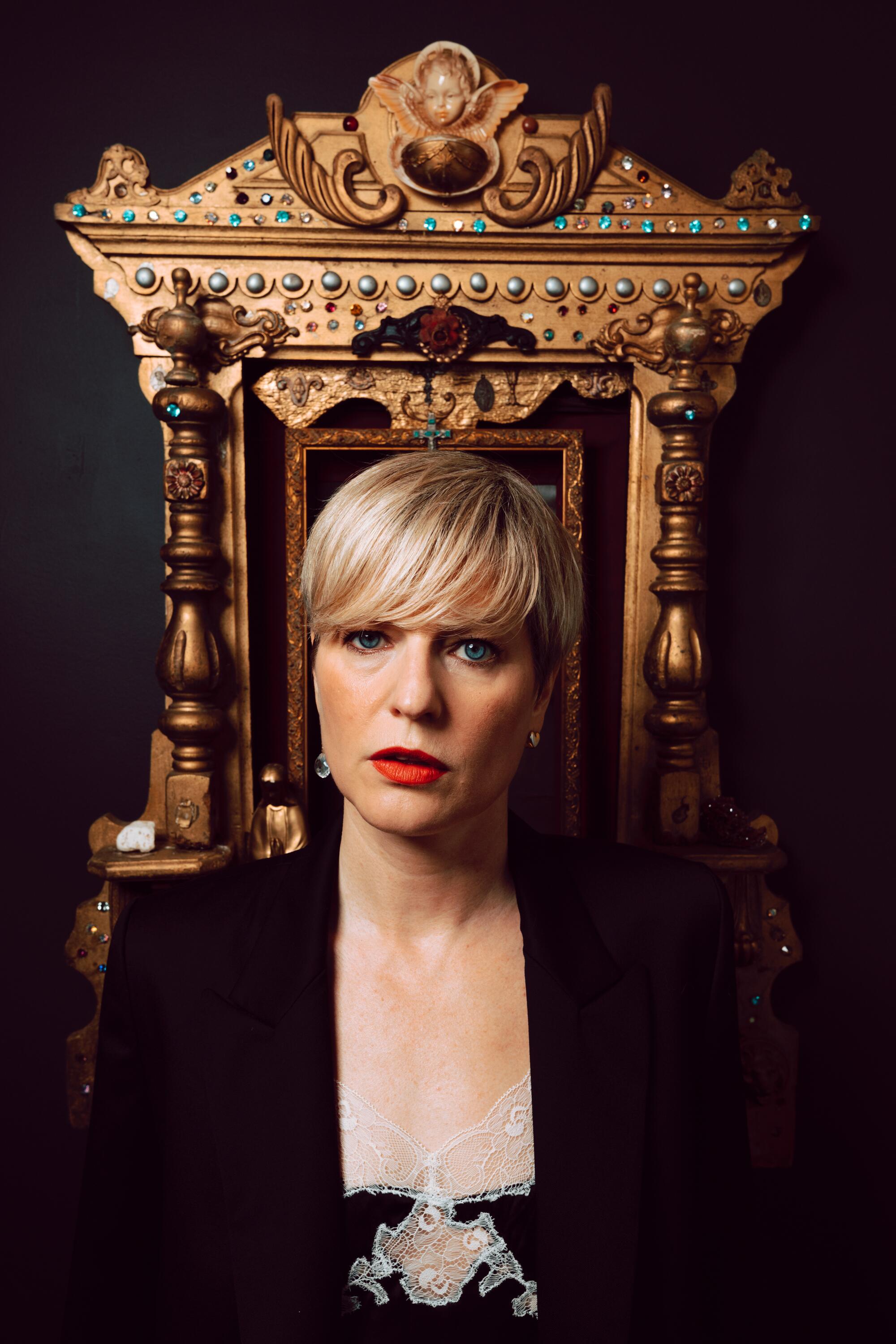
It’s the first Sunday morning of spring in the Wilshire-Montana neighborhood of Santa Monica and local artist Kim Krans, 43, is making the 10-minute pilgrimage from her apartment to her new favorite place on Earth: the Gloveworx boxing gym at 14th Street and Wilshire Boulevard (which has since moved a half-mile west). “There’s a community here that I just adore,” she says while walking in, wearing an oversized black hoodie and retro fire-red Jordans. Her voice is as soft and calm as it is commanding. She speaks a little like singer and poet Leonard Cohen used to: Each phrase rolls out like a careful mantra, a spell.
Krans can be found at Gloveworx nearly every day of the week, doing mitt work with trainers or going ham on a speed bag. This morning, pacing the floor with swagger as hip-hop blares, Krans looks like the frontwoman of a punk band: She’s tattooed and pixie-like, sporting a ripped muscle tank and a white-blond bowl cut that’s soon stringy with sweat, forming a shield for her ice-blue eyes. Her trainer, Gloveworx owner Leyon Azubuike, 37, is a former heavyweight competitor who has worked with stars like Jennifer Aniston and Cam Newton. He said he trains Krans like a “pro athlete.”
“She’s got the savage and serene.”
— Gloveworx owner Leyon Azubuike
When she first started coming in a year ago, Azubuike remembered thinking: “Oh, yeah. This is my person right here.” He sees boxing as an intensive “mental, physical and even spiritual” practice — and thinks Krans, a longtime student of various other artistic and yogic schools, was primed for it. “She’s got the savage and serene,” he said.
Beyond the boxing ring, Krans is better known as the creative powerhouse behind some of the most influential spiritual art of her generation: a series of tarot-style card decks, under the brand name the Wild Unknown (after the Bob Dylan lyric “wild unknown country”), that have sold more than 1.5 million copies in the U.S. over the last 12 years, according to her own records and those of her publishing company, HarperCollins. Those numbers don’t include all the decks that Harper allows overseas publishers to print and sell internationally in more than 50 countries — where Krans’ work has been translated into seven foreign languages.
Kim Krans shuffles tarot cards in her home.
(Annie Noelker / For The Times)
The first of Krans’ decks, her spin on the iconic Rider-Waite tarot deck of the early 1900s, hit the New York Times bestseller list in 2016. She has since created three sister decks — odes to the animal kingdom and the psychological concepts of “archetypes” and “alchemy,” respectively, deviating from the traditional tarot system and using other symbols as touchpoints for oracle-reading.
Krans now holds four of the top 15 spots on Amazon for bestselling tarot and oracle decks, in a field that has exploded since she entered the market just over a decade ago. This Michigan-born farm girl with classical training as a draftswoman and yogi has become an accidental titan within a larger global tarot and oracle card industry that peaked at a value of around $1.3 billion in 2023 and is expected to keep growing, according to recent market reports released by firms like Verified Market Research.
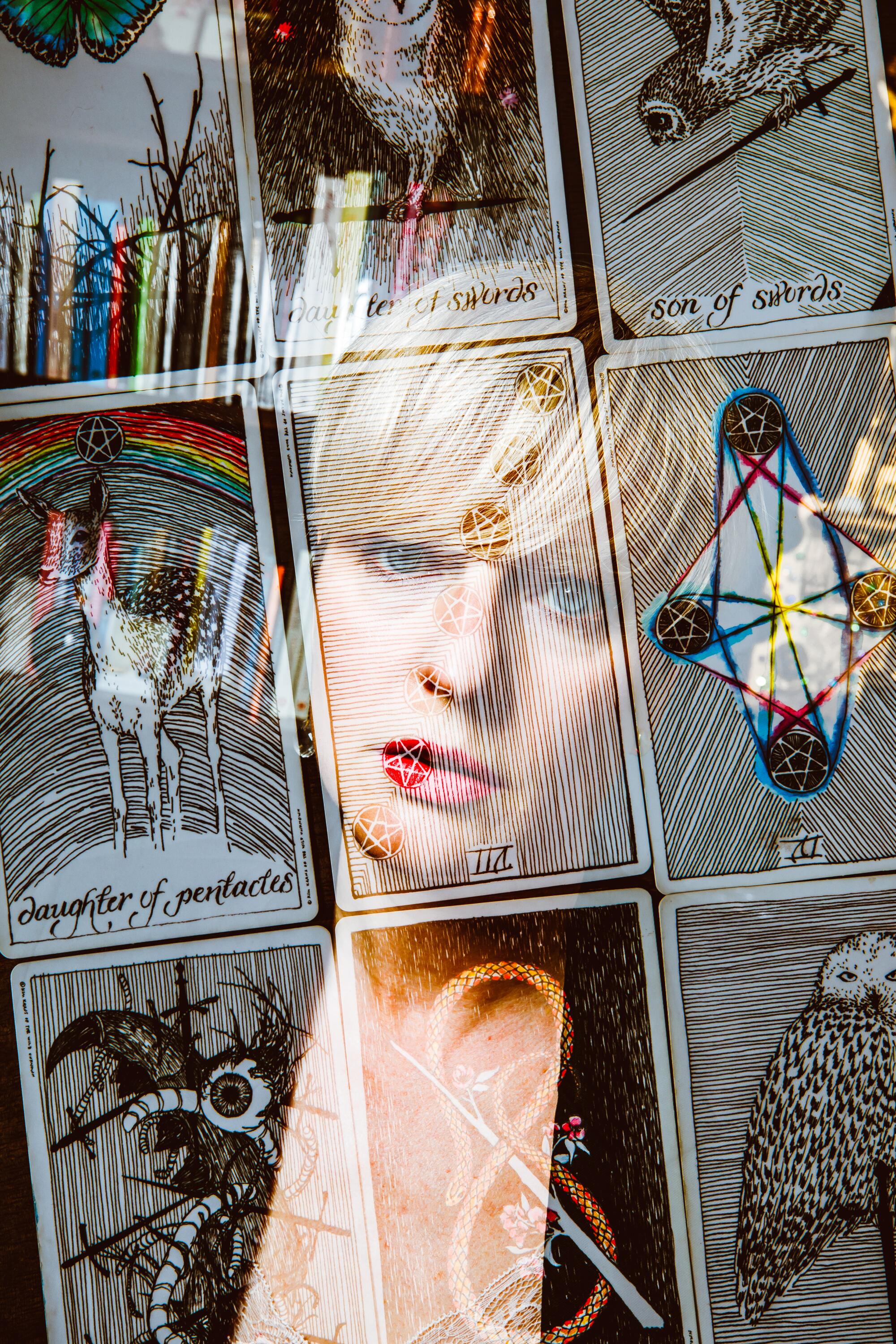
Tarot card reading, which began as a medieval Italian game and was for many centuries relegated to shadowy psychics’ dens and occult shops, has become a common tool for self-discovery — a ubiquitous part of the ballooning self-care and personal-growth movement, available at book, gift and grocery stores everywhere. The catchy words and images in Krans’ decks, in particular, have brought the practice alive for new generations as a fun, easy way to navigate one’s inner world. Now, after years as an icon of modern tarot, Krans has built a fandom that’s primed to follow her out of the bookstore and into ever-more-abstract realms of spiritual art.
The tarot boom
Old-school tarot decks like Rider-Waite have seen sales increase exponentially over the last decade, according to the deck’s publisher, U.S. Games Systems. Meanwhile, in that time, thousands more spinoff oracle decks like Krans’ have been published across the world, according to Jessica Hundley, 53, a Highland Park writer and editor who created Taschen’s “The Library of Esoterica” coffee-table book on tarot.
“It’s an esoteric renaissance for sure — a ‘new witch wave,’ so to speak,” Hundley said. “As people leave traditional religious structures, they are using different tools and resources to connect to spirit and to self.”
(Annie Noelker / For The Times)
The desire for spiritual discovery paired with the isolation of the pandemic created the perfect alchemy for a tarot boom. Alison Crowley, a spokeswoman for the publisher behind Rider-Waite and other popular tarot decks, said the start of the pandemic in early 2020 took the industry to another level, kicking off a “great uptick” in deck sales that has persisted for years now.
“People were discovering tarot as a self-inquiry tool, and not just this old-school thing to keep in the closet or not talk about,” she said. “It started to come into the mainstream.”
Within this booming ecosystem, Krans is the unlikely cover girl of 21st century fortune-telling. Barnes & Noble stocks her decks at most of its 600-plus U.S. locations and reports selling thousands of copies per year. Oregon chain Powell’s Books reports them to be “top sellers” that have “stood the test of time” compared with most of the other oracle options on the shelf. House of Intuition too — one of L.A.’s most popular spiritual gift shop chains, with nine locations across SoCal and Miami — carries the full Wild Unknown collection by popular demand, and it has become “quite a staple,” per a spokesperson.
[The Wild Unknown Tarot] has a great kind of witchy darkness to it that I think is missing from a lot of the new-age, more unicorn-and-rainbow decks. It feels … a little less caftan, a little more rock ‘n’ roll.
— Jessica Hundley, author of “Library of Esoterica”
Her tarot and oracle art has inspired legions of social-media tributes — at least 100,000, of the posts that are tagged on Instagram. Dozens of them show her art inked permanently onto fans’ skin.
“The first time that I saw a tattoo on Instagram, I had an out-of-body experience where I could see the trajectory of the deck,” said the artist, speaking to The Times from her black-and-gold sanctuary of a workspace, carved into the corner of her sunny, second-floor apartment.
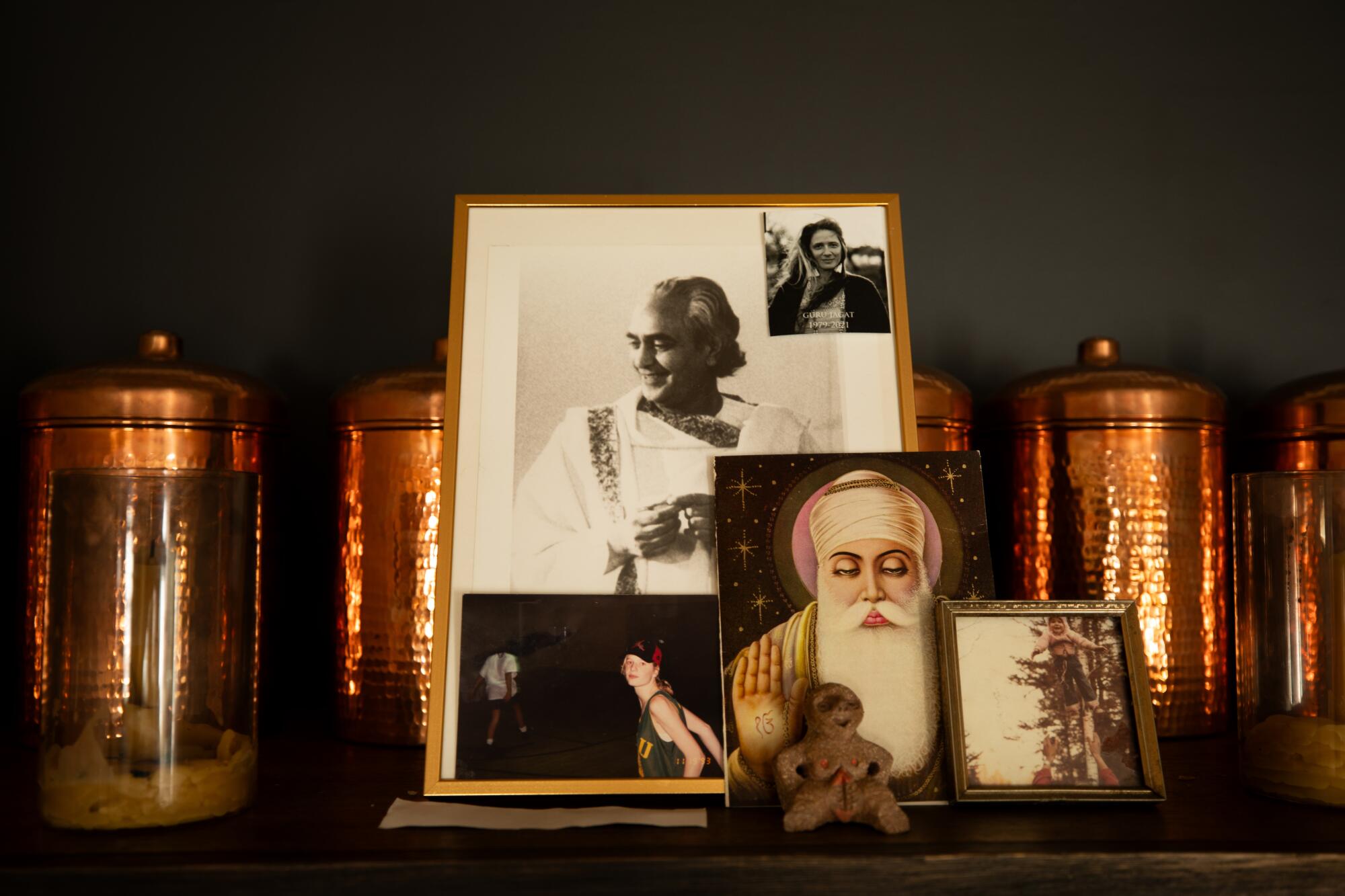
Memorabilia in Kim Krans’ Santa Monica apartment.
(Annie Noelker / For The Times)
Behind her is a row of copper urns with mystery objects inside (an old art project) and a bejeweled Mother Mary portrait she salvaged from a barn in rural Pennsylvania. Stacks and scrolls of Krans’ paintings and word art, many of them odes to the planets, are stuffed into every cranny of the office. Yet the only Wild Unknown deck on her bookshelf is the very first she printed — her “OG deck,” as she calls it, its box now lathered in black paint.
“I knew that someday it would be on Amazon, that someday it would be in multiple languages,” she said about that original deck. “And I knew that my job was to be its guardian.”
Art kid hits big
Krans’ fresh take on the tarot in 2012 launched a “new era” for the ancient art form, per tarot expert Hundley. Hundreds of other artists soon followed suit, emboldened by growing demand and the democratization of digital printing.
But the Krans aesthetic is unique for its rebellion against the typical perky, pastel look often used on yoga mats and reusable water bottles — even though her work can be spotted on the shelves and shrines of influencers across the wellness industry.
The Wild Unknown Tarot is “very punk and goth in some ways,” Hundley said. “It has a great kind of witchy darkness to it that I think is missing from a lot of the new-age, more unicorn-and-rainbow decks. It feels … a little less caftan, a little more rock ‘n’ roll.”
(Annie Noelker / For The Times)
Before she became the face of nouveau tarot, Krans spent years studying and creating visual art in Manhattan in the 2000s — then played music with the upstate indie band Family Band, opening for acts like Warpaint alongside her then-husband Jonny Ollsin, a heavy-metal guitarist. By 2012, broke and disenchanted with the New York scene, Krans moved into a renovated church in Philadelphia. She was craving something more, artistically and spiritually, and was drawn to the centuries-old tradition of tarot.
But Krans couldn’t quite connect to the major deck on the market, the Rider-Waite set from the turn of the 20th century. She decided to reimagine the harsh, human images in the traditional deck (think kings, queens and swords sticking out of bodies) as scratchy line drawings of plants, animals and other earthy symbols under moody skies, lit with pops of rainbow paint — her now-signature style. Krans said she used a $5,000 loan to print 1,000 copies on a local press.
“You’ll find no wrongs or rights inside this box, only mirrors for reflection,” she etched in loopy cursive inside the lid. “Open your mind, draw a card & have fun on your journey.”
The deck included a guidebook with simple instructions on how to do a handful of classic tarot readings — plus a page for each card, explaining in plain language what it might say about the psyche and reality of the person drawing it. Pull the dreaded “Death” card, and one was met with compassion, in the voice of a friend. This time she wrote her messages in a childlike sans serif that a designer friend of the artist later turned into a custom font, for more efficient printing. They called it “Krans Sans.”
Almost immediately, in the fall of 2012, Krans said a scout from the bohemian boutique Free People — a subset of the multibillion-dollar hipster emporium Urban Outfitters — reached out to her and placed an order for 100 units. Trendy NYC boutiques like Catbird starting stocking them that year too. “The deck appeared on New York Magazine’s ‘approval matrix’ and momentum snowballed,” Krans said.
By the following year, she said “it was just a matter of trying to keep them in stock.” In 2014, Krans moved to Topanga Canyon in L.A. — a period she calls her “botched Malibu dream” — and became a “highly pressurized kind of workaholic,” deep in the practice of self-publishing. By the time Krans handed off her tarot deck to HarperCollins in 2016, she said she had already moved a quarter million decks on her own, largely through 200-plus “specialty market stores” across the globe and the Urban Outfitters machine.
Around the same time, Wild Unknown Tarot hit the New York Times bestseller list — and, in the process, a businesswoman was born.
Commercial rebellion
Krans was initially embarrassed by this level of mainstream success. But as she began to see her decks’ impact on young fans, the burgeoning business owner, in her words, got “so psyched.” One of her mantras during the early days became something she’d heard Kurt Cobain say, early on in his success: That he wanted his CDs in Walmart, despite it being a corporate behemoth, because that’s the only place some kids could access his music. She began to see her commercial sales as a form of rebellion. She said in a recent podcast interview that she’d remind herself to “just be more like Kurt Cobain. F— the machine.”
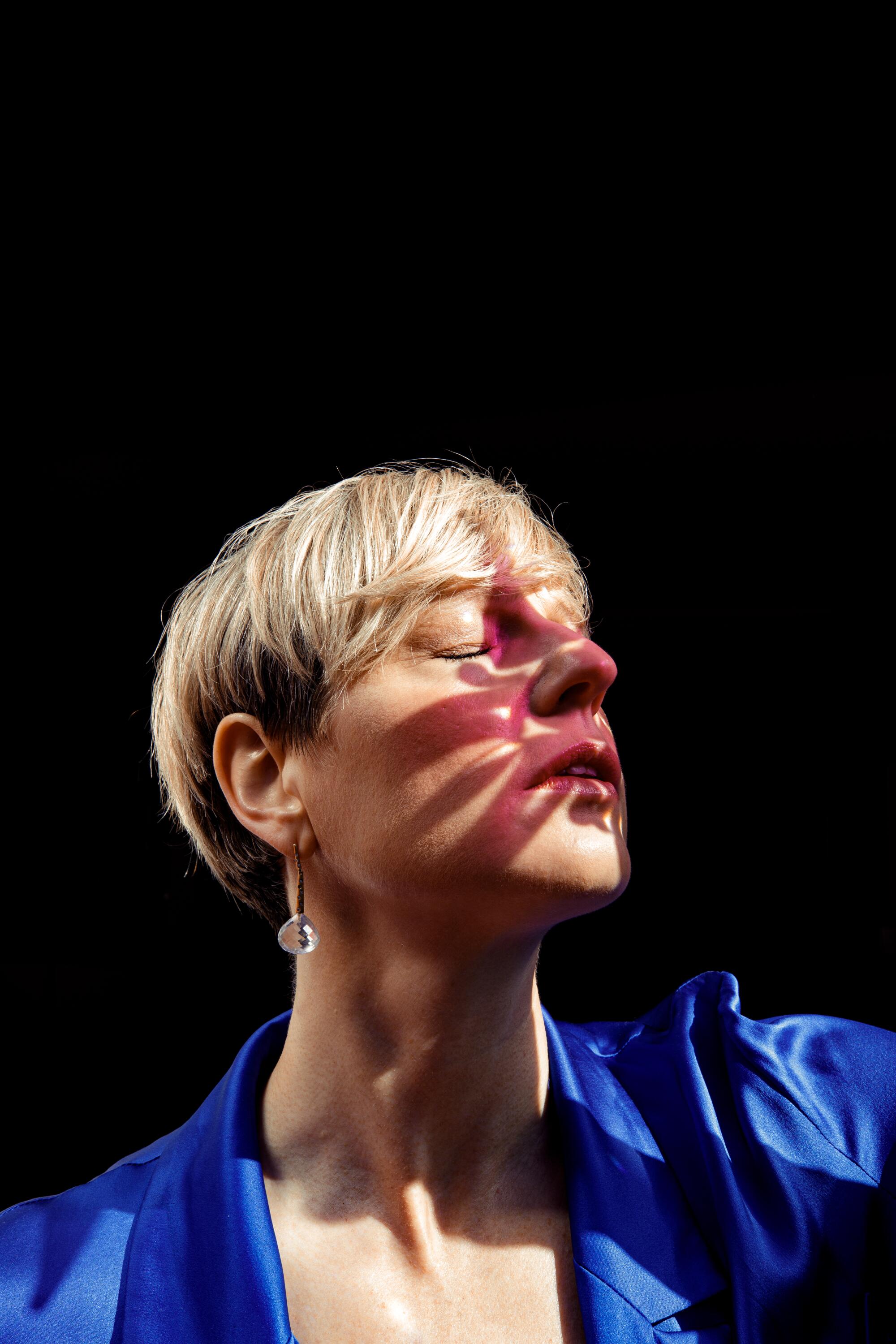
It follows then that Krans has done for the shadowy world of tarot what Nirvana did for the underground punk scene: make a dense art form relatable enough to bring its spirit alive for the masses.
(Annie Noelker / For The Times)
Her tarot “spoke to young people in a different way,” said Crowley of U.S. Games Systems. “She had her own voice. The other thing was that young people were just ready to come in. It was the right timing.”
A 2016 Buzzfeed article rounded up Tumblr posts from superfans who had inked Krans art onto their bodies. Many of them said that although her deck was often their first encounter with tarot, they felt immediately comfortable playing with it.
“I could not believe the response to it,” Krans said. “I was thinking, ‘Well, yeah, tarot is powerful. But what is going on here? Why is it speaking to people so universally, and so deeply and immediately?‘”
Krans developed a theory about the popularity of that first deck. Although she had modernized the depiction of tarot’s “archetypes” — or patterns that live in the human psyche and serve as a filter for reality — those ancient patterns remain as powerful as ever.
The 22 main archetypes within the tarot are called the major arcana (think characters like “The Magician” or “The Star”). And, per Hundley, each one is “contained within all humans and expressed through our emotions.” The 56 minor arcana cards — which mirror the pattern of common playing cards — represent “daily challenges and opportunities.” Together, she said the cards form a map of the “various influences and energies at play in our lives.”
By giving these archetypes the shape of animals, like “The Fool” as a duckling teetering on a twig, “The High Priestess” as a regal white tiger or “Justice” as two house cats — as opposed to the human characters of the classic Rider-Waite deck — Krans said she noticed her cards were helping people “get into the archetypes in a more universal, intuitive way.”
Honed by data
This intuition birthed a 2016 follow-up project that would become one of Krans’ top sellers: Animal Spirit, the second oracle deck of the now-four-part Wild Unknown series. Its box was cloaked in shimmering, hand-drawn reptile scales. A yellow dragon’s eye stared out from the center. Each animal in the guidebook came with a quick list of its light and dark qualities, plus some tips from Krans on how to play off their archetypal traits for better living. If you’re dealing with out-of-balance Bat energy like “refusing to let go,” for instance, you could “watch the sunrise.”
To find the right words and images for the deck, those which would be “most useful for people at this time,” Krans said she held multiple rounds of focus groups — a process she repeated for the two decks that followed. “I would have people over to the studio, and I would record their response to looking at the cards,” she said. “I was collecting data.”
Krans sees business instincts like these as her “Saturn energy” — a structured, disciplined side that stems from her blue-collar upbringing as the daughter of a truck driver and an elementary-school secretary in Skandia, a tiny Scandinavian farm town in the rugged Upper Peninsula of Michigan.
“A big priority for me is to stay really practical,” Krans said. “Everyone in L.A. wants to diss Saturn. It’s a conspiracy against Saturn. I’m like, first of all, you guys are crazy. Second of all, try to get a book done without some discipline.” She paused, then continued: “You have to have that side, as a creative and as a seeker, that is like, ‘OK, let’s hone it.’”
Everyone in L.A. wants to diss Saturn. It’s a conspiracy against Saturn. I’m like, first of all, you guys are crazy. Second of all, try to get a book done without some discipline
— Kim Krans, creator of the Wild Unknown oracle deck series
These days, the cards of Animal Spirit can be spotted in still lifes and spiritual flexes all over social media. This past holiday season, actor Jessica Biel shared a snapshot of two cards from the deck, Buffalo and Swan, with her 14 million Instagram followers. “More of this in 2024,” she wrote.
Much like the Wild Unknown Tarot deck, Animal Spirit began with a self-published release of 50,000 decks, Krans said. HarperCollins snatched that one up, too, and rereleased it in 2018, during a short stint when Krans was living in Venice Beach, newly divorced and “trying to be a single surfer and dancing.” Krans said that come 2021, Animal Spirit was neck-and-neck for sales with her original tarot deck for the first time — a trend that held in 2022 and 2023. Total sales are now approaching half a million, according to her records and HarperCollins’.
Once Animal Spirit was in the world, Krans kept creating. She knew there was more to learn about why her tarot and animal cards were flying off the shelves. So she enrolled in the Pacifica Graduate Institute (just south of Santa Barbara) and entered into formal study of “depth psychology and creativity” through the lens of Swiss psychologist Carl Jung.
“That’s when I found that, if tarot is a car that you’re riding in, archetypes are the engine,” Krans said.
Weirder and wilder
Just like that, a third Wild Unknown deck was born, the one she now considers the “mother” of the series: Archetypes, released by Harper in 2019. Its 78 circle-shaped cards expanded on the 12 archetypes outlined by Jung over the course of his career, as well as the 22 in the tarot tradition, to include places like “The River,” characters like “The Siren” and “initiations” like “Apocalypsis.” The deck’s whopping 223-guidebook included a full personal and historical rundown of the concept of archetypes, which by now had Krans obsessed.
In place of offering life advice like she did in her previous deck, she urged readers to explore art like Bruce Nauman’s neon sign “The True Artist Helps the World by Revealing Mystic Truths.”
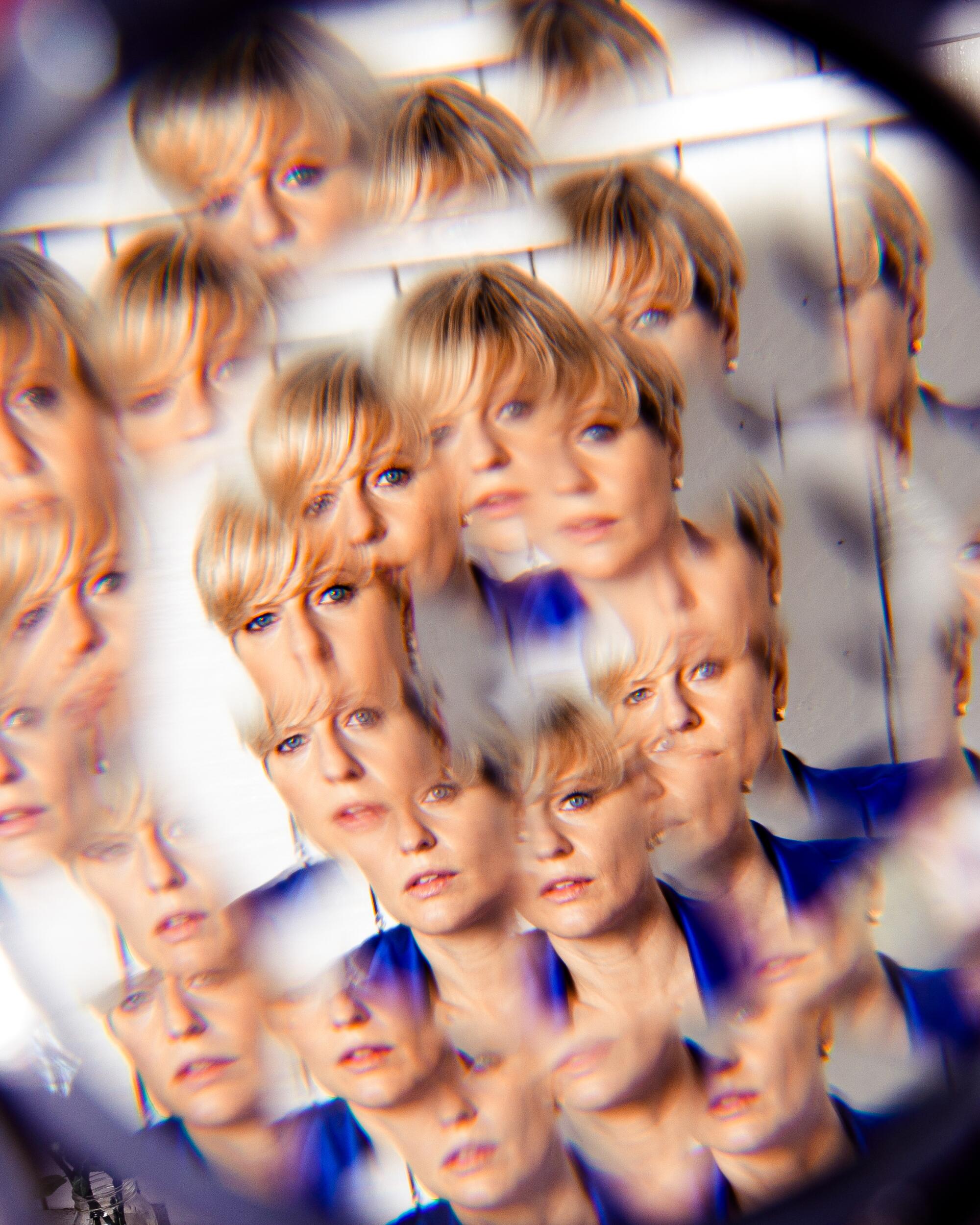
Kim Krans
(Annie Noelker / For The Times)
Web searches for the word “archetype” have been steadily rising in the United States since Google began tracking search trends around two decades ago, and appeared to reach an all-time high last summer. (Thanks in part to the word’s increased usage in pop culture and online conversation.)
Meanwhile, sales for Krans’ once-obscure Archetypes deck began to climb in 2023, according to numbers provided to the artist by her publisher, HarperCollins. The company also pushed a miniature “pocket” version of Archetypes in early April, as it had done for the tarot and animal decks in previous years . It feels like an indication, Krans said in a recent Instagram live, that “the concept of archetypes is starting to get mainstream.” In the video, she showed off the tiny new cards to followers, delighted: “You could bring this to Coachella. You’re like, ‘I have my phone, I have gum and I have Archetypes.’”
In 2022, Krans released the final and so-far least popular oracle deck in the Wild Unknown series, which she calls “the freaky one”: Alchemy. It drew on another of Jung’s central theories about the way the mind works, and served as the culmination of Krans’ own exploration of the Swiss psychoanalyst’s school of thought. The 71-card, 231-page Alchemy deck is a clear COVID project — a swirling study of the materials, both visible and invisible, that power our world, and how they might be better understood or even manipulated to serve.
It was the end product of “seven, eight years of drawing decks, and a lot of self-inquiry and scholarly pursuit of like, ‘What is this? What are these personal forces?’” Krans said. In her metaphor where tarot is a car and archetypes are its engine, she now thinks of the elements of alchemy as the engine’s fuel.
An industry skeptic
In recent months, the inadvertent queen of tarot has been shape-shifting through more iterations of artistry and identity. “I’m now entering Act 2,” she said, post-workout on her Santa Monica stoop.
Much of this new era involves movement, performance and sound. Krans leads occasional yoga nidra sessions at the kundalini-focused Ra Ma Institute on the Westside, where she guides followers into the same “slippery, lucid state” that births her own creations. She also returned to music this year with the hypnotic, harmonium-heavy album “Mirror Mirror” — picking up where she left off in the early 2010s. The album is filled with mantras and other sonic tools she uses in her own spiritual practice as a way to induce trance and lead people into the dreamworld.
“Drawing, although it’s like my home base, it’s not enough,” Krans said in a podcast interview. “I need the sound. I need the scale of the drawing to be able to grow and expand.”
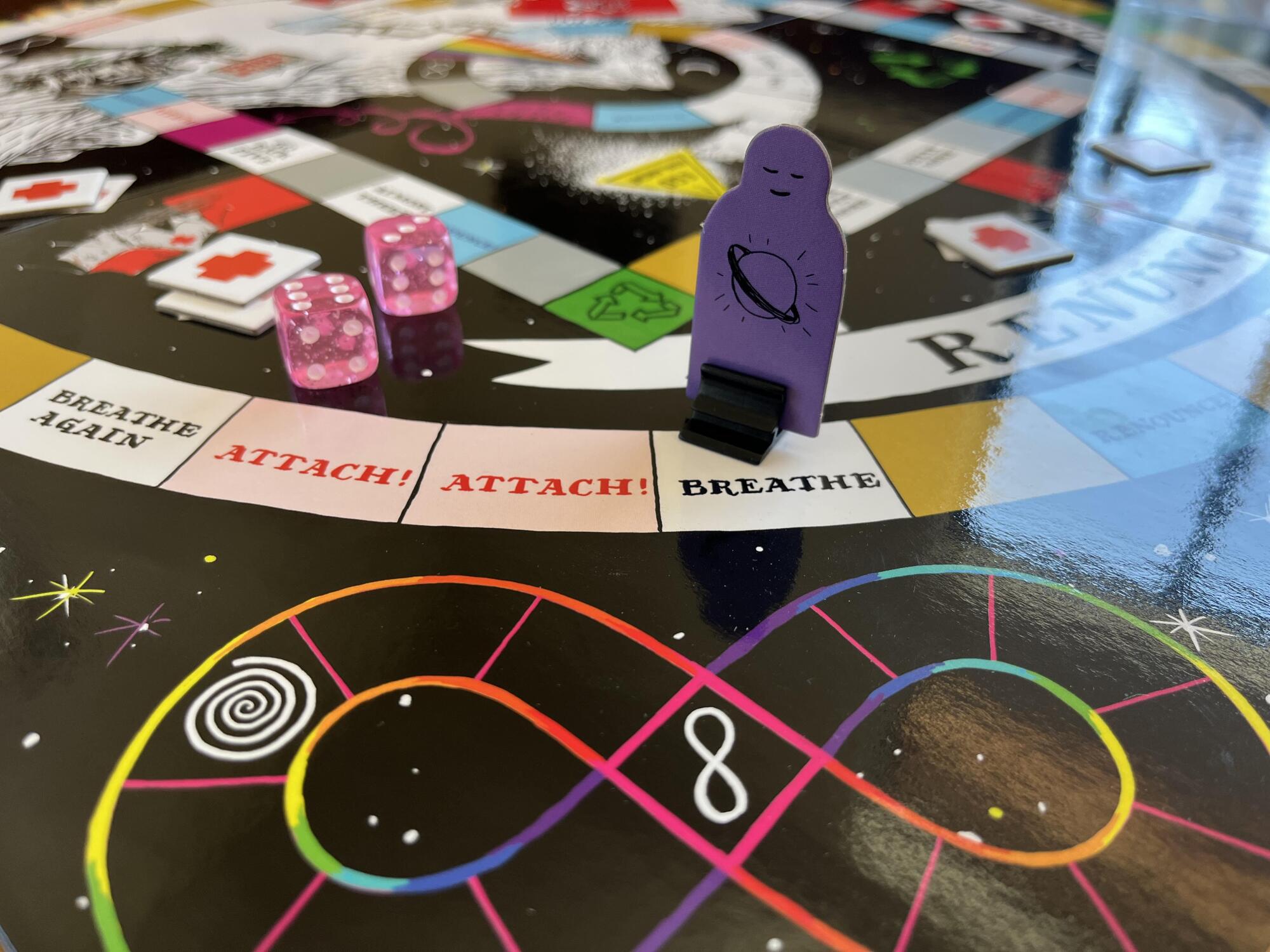
Kim Krans new board game, “Renunciation.”
(Simone Wilson)
Last fall, Krans also released a mandala-shaped board game called Renunciation after studying game design for more than a year with a group at New York University. The game pieces are archetypal characters like “pop star” and “school principal”; the setbacks, attachments like coffee and hairdos; the course, a trail to a Himalayan cave; the goal, enlightenment.
To win, players must rid themselves of all attachments and, eventually, their name and identity. Meanwhile, “you’re backstabbing all your enlightenment-seeking opponents on the way to enlightenment,” Krans explained — a riff on competitive spirituality. “So L.A.,” she said.
Recently, Krans has turned to comedy as an outlet for her disillusionment with the wellness industry, which she feels can get “so freaking serious” — and in many ways stay surface level — about things like personal growth, astrology (“people use it to evade so much stuff”) and reaching higher states of consciousness. She said she’s celebrating a resurgence of the “prankster and performer” in her, a side she said was shut down during her time both in art school and the new-age wellness industry. In May, she’ll poke fun at the scene with an “interstellar” stand-up show at the Culver City Comedy Club, under the stage name Kimmy K — a nickname given to her by her boxing coach.
“I feel like in some ways, there’s nowhere left to go but comedy,” she said.
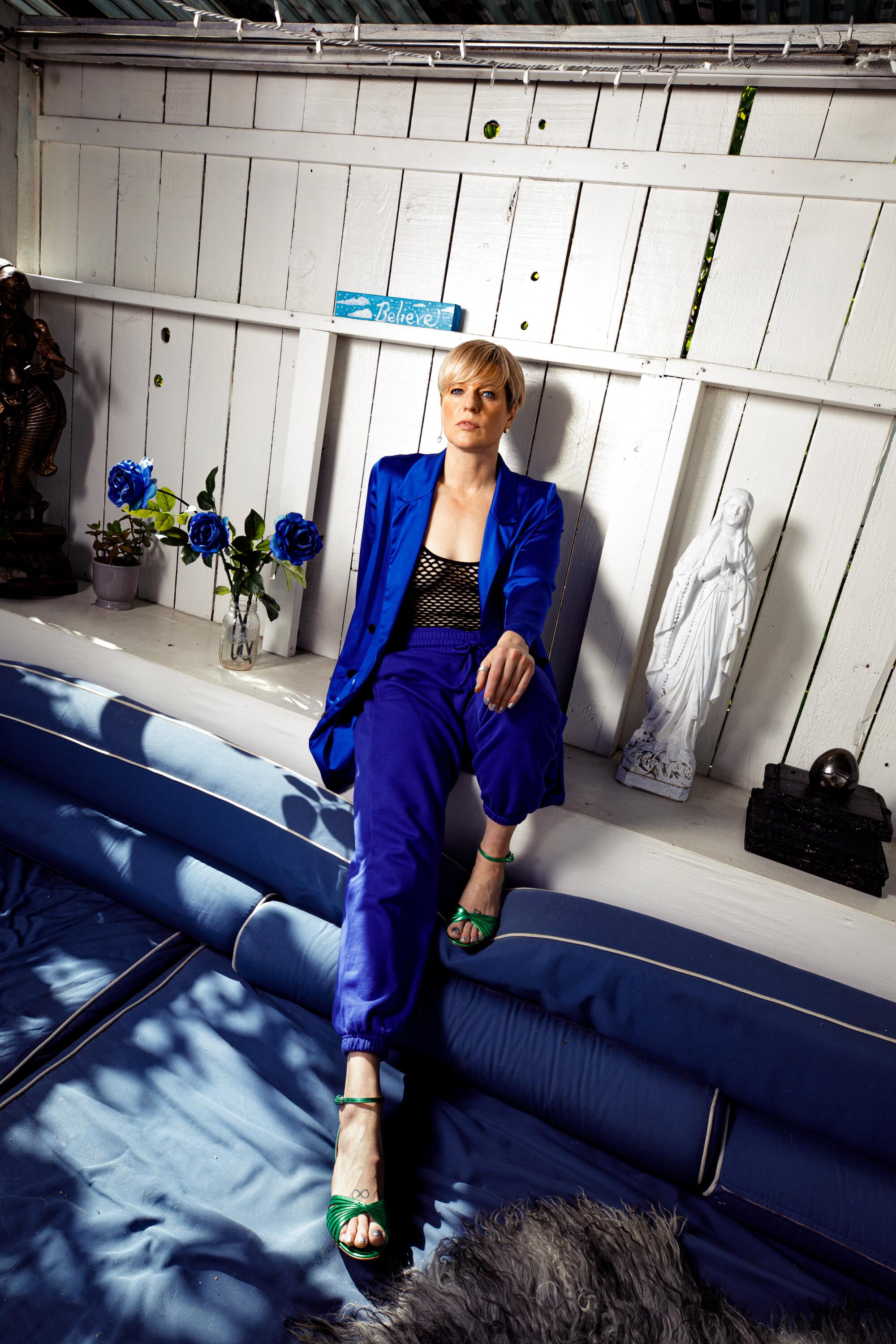
Kim Krans
(Annie Noelker / For The Times)
During an L.A. Times photo shoot in her Santa Monica home, the artist — dressed in bright-blue sweatpants and stilettos — practiced some material, adopting the role of a TV psychic by play-hosting a “tarot dial-in” during which she took fake calls on a shiny red telephone.
One of the bits she’s been chewing on is called “leave your oracle alone.” It’s about “not doing a tarot reading when you already know the answer to the question,” she said. “Like, if you know the guy is a douchebag … if everyone in the room could answer but you … leave the oracle alone.”
Watching her play, humor starts to feel like an end stage of study for the punky L.A. yogi who made her abstract, Carl Jung-inspired art — the weirdest stuff on the shelf at Urban Outfitters — just accessible enough, at just the right moment, to infiltrate popular culture and give spiritual dabblers a doorway to follow her deeper down the spiral of the psyche.


The Kennedy Center, the facade of which remains covered with a tarp, is seen in Washington, DC, on June 28, 2026. A US federal judge asked on June 24 for an explanation for why a tarpaulin continues to cover the facade of the Kennedy Center where President Donald Trump’s name was recently removed. District Judge Christopher Cooper gave the board of trustees of the performing arts venue until the end of July to explain “the purpose for and status of the tarp and scaffolding that Defendants have erected on the front portico of the Center.”
ALEX WROBLEWSKI/AFP via Getty Images
hide caption
toggle caption
ALEX WROBLEWSKI/AFP via Getty Images
More than two weeks ago, President Trump’s name was removed from the Kennedy Center facade though it is still covered by a tarp and the legal battle continues.
On Monday, a U.S. Department of Justice filing on behalf of the Kennedy Center included some surprises. The document was submitted in response to issues raised by lawyers for ex-officio board member Rep. Joyce Beatty of Ohio who is suing to remove President Trump’s name from the center and stop its closure for renovations.
Among the revelations, the Kennedy Center admitted that, during a board meeting on December 18, 2025, Beatty had been “muted and prevented from speaking.” It was at that meeting that the board voted to add President Trump’s name to the center. The filing later acknowledges the congresswoman was “prevented from voicing her opposition.”
The John F. Kennedy Center for the Performing Arts is a living memorial to its namesake. The guidelines for how the theatre complex spends federal dollars are very specific. Among other rules, it states that “no additional memorials or plaques shall be designated or installed.” Beatty argues adding Trump’s name runs afoul of those rules and that any change requires approval from Congress.
According to one of Beatty’s filings, “There was no advance notice in the agenda that the Board would be considering a name change,” a statement the Kennedy Center now does not deny. The center admits that, prior to voting, there was “no discussion about potential risks or downsides of the vote to adopt a secondary name for the Center.” Nor was there a board discussion “about any potential conflict of interest that might result from the vote.”
The center’s lawyers previously contended that if Trump’s name were to be removed, it would “lose money from donors who support” him and “impede the Center’s fundraising efforts.”
Closing for renovations
Earlier this year, Trump announced on social media that the Kennedy Center would close for two years for renovations. He wrote that he made the decision after “a one year review” with “Contractors, Musical Experts, Art Institutions, and other Advisors and Consultants.”
But, according to the center’s lawyers, Trump’s announcement “was made without presenting any plans, analyses, timelines, or funding information to his cotrustees and without any Board vote.”
The Kennedy Center has long denied reporting by The Washington Post that ticket sales plummeted after President Trump became the Center’s board chair. In Monday’s legal filing, the Center admits that, by October 2025, “nearly half of the Center’s tickets were going unsold.”


Paul Tremblay has made a career of pushing the horror genre – and the novel format – in strange and exciting new directions.
In his latest, Dead but Dreaming of Electric Sheep, the author offers an amalgamation of genre elements that can be best described as psychological-dystopian-science-fiction horror. It’s a mouthful, but the narrative does all of that and more in a way that defies categorization.
Julia Flang is a former semiprofessional gamer working two mediocre jobs she dislikes and living in a modest ranch house in a San Fernando Valley suburb with her retired uncle, whom she calls Uncle Fun. Julia likes movies and gaming but there’s little else going on in her life, so when her estranged mother, the CFO of a large tech company, contacts her with a possible job offer – a “once-in-a-lifetime thing” that pays handsomely just for doing the interview – she hesitantly agrees.

The job is relatively simple and perfect for someone with gaming skills: using a controller built into a phone to get a man, who is stuck in a vegetative state, from California to the East Coast. It will require her to learn how to control his body – walking, moving, sitting, standing, using his arms – so she can maneuver him out of the facility where he is located and into cars and planes and through crowded airports. A fan of movies, Julia decides to call the man Bernie – after the movie Weekend at Bernie’s. When the ethics of the job start to bother her, Julia realizes it’s too late and she must go through with it. However, she’s soon contacted by people interested in sabotaging the whole thing, people who, like her, don’t align with the shady interests of conglomerates and those set to make “gobs of money” from this new, somewhat inhuman technology.

As with every Tremblay novel, any synopsis barely scratches the surface. The novel’s chapters alternate between Julia and you (yes, you). Julia’s chapters are “normal” in the sense that they obey a chronological order and have action, basic descriptions of movement and places, and dialogue. The chapters in second person are like fever dreams from a shadow world; the desperate experiences of a man trapped inside his own body with no control of it, no clue what’s happening to him, and only a few fragmented memories of his life. Also, Tremblay uses a similarly fragmented style of storytelling (including words and sentences trapped in boxes and/or “moving” on the page) to keep things interesting but also confusing and creepy.
This novel operates on several different levels and – planes of existence? Bernie has a head full of AI that controls his body, but his consciousness is still there and struggling to regain control, struggling to remember things. There are monsters, leeches, mysterious rabbits, and eerie shadows in his world, but the true horror comes from the lack of control, from being moved around against his will and having no clue what comes next. Bernie is the embodiment of losing control to AI, and when taken together with the commentary of creativity and AI and the meta interludes in which the author takes a wrecking ball to the fourth wall and addresses readers, this is the best anti-Generative AI story horror has produced so far.
Despite the horror of it, this is a very funny novel. Julia is sarcastic and struggles to keep her comebacks in line, but the conversations she has and messages she writes are always entertaining. However, the humor is far from the crown jewel here. That title belongs to a plethora of big ideas Tremblay juggles. The nature of life, death, and consciousness, the evils of conglomerates, inhuman practices in the name of capitalism, and AI, and even what it means to be human are all explored here: “Is Bernie alive? Is he feeling pain? Is he experiencing everything as a prisoner looking through the bars of his body? Has his consciousness been winnowed to a metaphysical keyhole? Where does consciousness begin or end?” There are no definite answers here, but the way Tremblay infuses humanity, love, the importance of relationships, and humor throughout the narrative provides the kind of answers that can’t and don’t need to be spelled out.
A genre-bender full of big ideas that constantly switches between a world full of real or uncomfortably plausible nightmares and a bizarre hellscape in which loss of self, memory, and autonomy are only the tip of the proverbial iceberg, Dead but Dreaming of Electric Sheep is a horrific and terrifyingly disorienting novel that invites readers to consider a future that already started. Tremblay has always been an innovator, but this beautifully written collection of real and imagined grotesqueries cements him not only as one of the most original and exciting voices in horror but also as one of the smartest, most engaging authors in contemporary fiction.
Gabino Iglesias is an author, book reviewer and professor living in Austin, Texas. Find him on X, formerly Twitter, at @Gabino_Iglesias.

-

 Oregon3 minutes ago
What the Supreme Court’s transgender sports ruling means for Oregon
-

 Pennsylvania6 minutes ago
10-year-old stabbed Dollar Tree employee during robbery in Pennsylvania, police say
-

 Rhode Island11 minutes ago
Three generations killed during driving lesson after car plunges into river
-

 South-Carolina18 minutes ago
South Carolina Lottery Mega Millions, Pick 3 results for June 30, 2026
-

 South Dakota21 minutes ago
Vermillion’s Reuvers commits to South Dakota
-

 Tennessee26 minutes ago
Tennessee’s heat wave flirting with records
-

 Texas33 minutes ago
Phoenix Merchant Partners and Texas Capital Alternative Asset Management Form Strategic Relationship
-

 Utah36 minutes ago
Therapy dogs offer a welcome break for firefighters battling Utah’s Iron, Cherry fires

