Connect with us

Lifestyle

Seeking a simpler life, he built an urban homestead. Now his family keeps it growing

Published

on

Seeking a simpler life, he built an urban homestead. Now his family keeps it growing
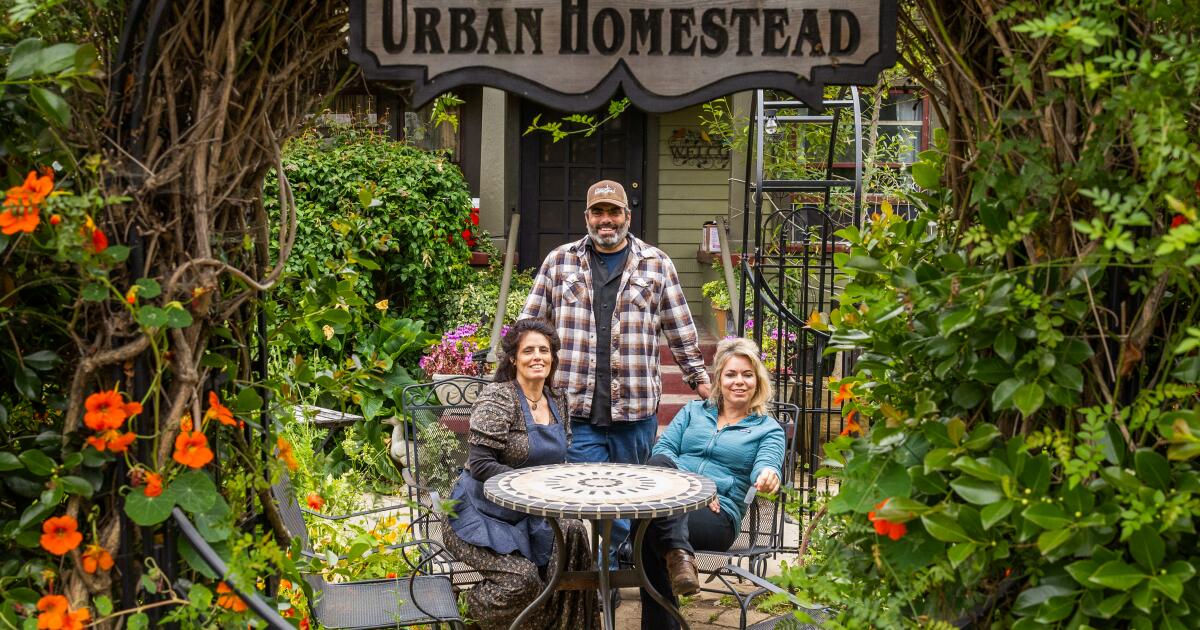
In 1984, a determined back-to-earther named Jules Dervaes Jr. brought his wife and children from a 10-acre farm in rural Florida to study theology in Pasadena but ultimately decided on a different ministry: creating a self-sufficient urban farm on a rundown residential property less than a block from the 210 freeway.

Jules Dervaes Jr. didn’t have a long-range plan when he started an organic farm in the front and back yards of his Pasadena home, but he did have a vision of creating a simpler life that his children continue today, nearly eight years after his death.

His wife left not long after — homesteading was not the life she signed up for — but his four children, now in their 40s, remained and today three of the four still work the farm known as the Urban Homestead, providing produce and flowers to more than 100 subscribing families every week, along with multiple restaurants and caterers.

“At first we were just gardening to grow food for our family, but then Dad took on organic gardening as a business,” said Anäis Dervaes, the eldest daughter. “In 1989, we took out our front yard — even the concrete — to grow more food, and our neighbors thought we were crazy, but the business took off, so you can make a living by removing your lawn.”

Advertisement

And, as all farmers know, working very hard.

Dervaes died in 2016 from a pulmonary embolism, but his children Anäis, 49, Justin, 46, and Jordanne, 41, keep building on his vision. Through the nonprofit Urban Homestead Institute established in 2001, they provide food boxes for needy families, offer internship positions to volunteers who want to help at the farm and welcome scores of schoolchildren to see how real food is grown — a program that started after Dervaes encouraged Anäis to try a new thing called blogging in 2000.

It was a time of big protests against genetically modified food, and Anäis wanted to join the demonstrators, “but Dad said, ‘What if we just write about what we’re doing here on a daily basis, living a simple life?’ And I think I said something like, ‘So I’ll write, ‘Today I harvested corn?’ Nobody is going to care about that.’”

But as it turned out, people did. The family got a following, and teachers from Compton High School wrote, asking if they could bring some students to tour their urban farm, “and we’ve been doing outreach with students ever since,” Anäis said.

Not as much as they’d like to, because space is at such a premium they can only accommodate small groups. The garage is now a small store and distribution center for food boxes. The covered patio is a place for classes, demonstrations and their homemade pizza oven. The driveway is lined with trays of plant and flower seedlings. Chickens and ducks live in a rustic L-shaped structure in the back and fruit trees line the property’s perimeter. The rest of the yard is filled with raised beds planted thickly with vegetables, herbs and flowers, accessible by narrow walking paths.
Advertisement
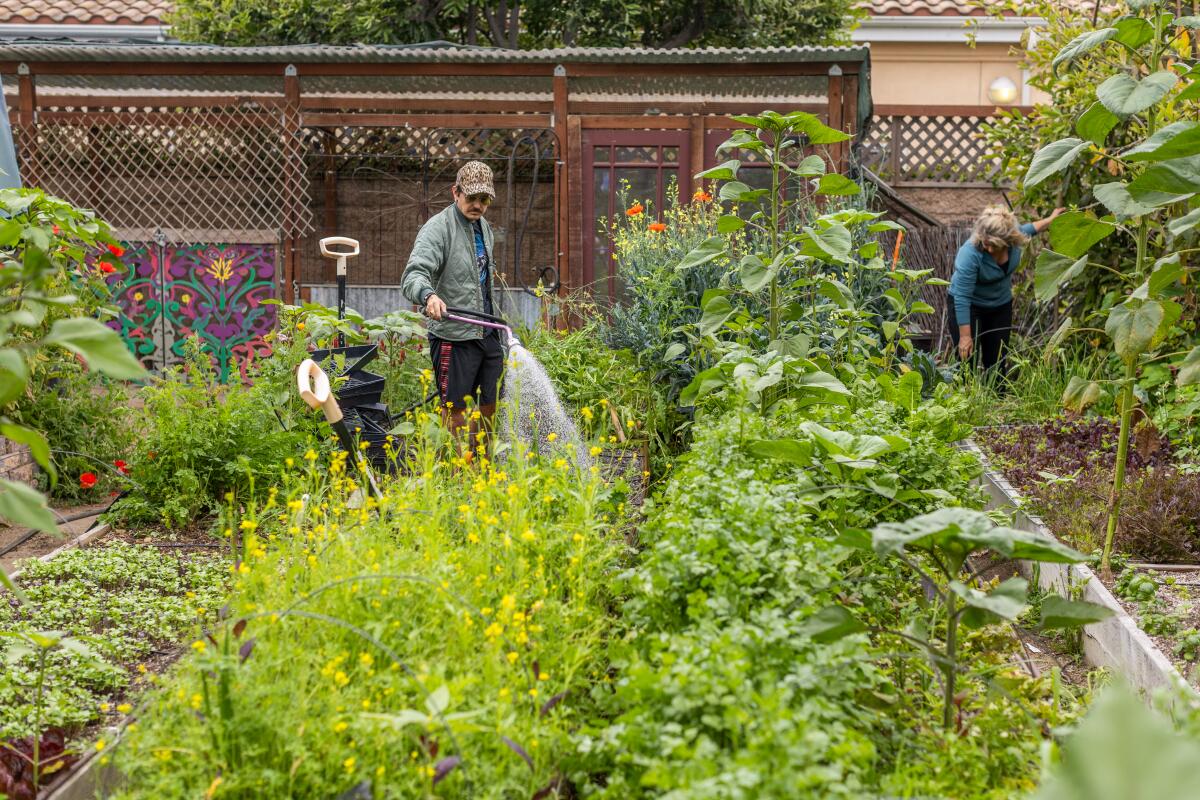
Two people standing among densely planted rows of vegetables at Urban Homestead.

Volunteer and customer Tristan Lahoz, left, and Jordanne Dervaes tend to the densely planted beds at Urban Homestead.
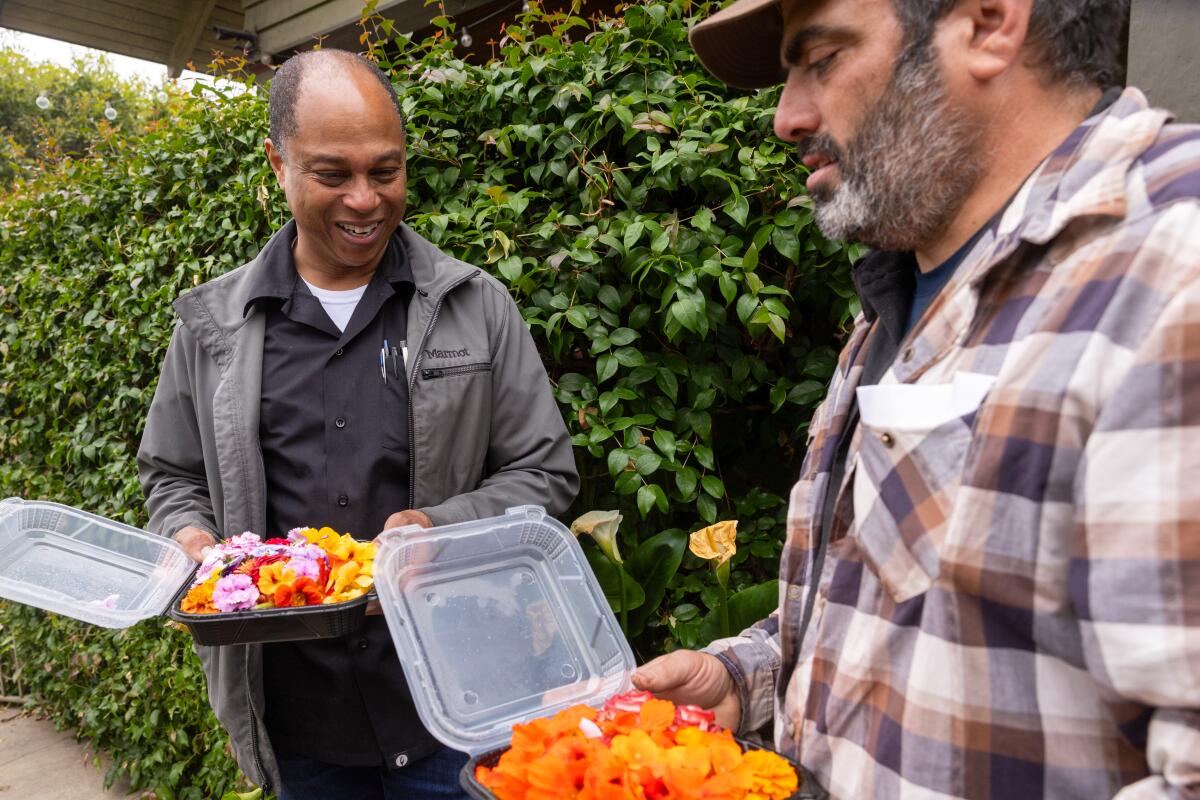
Chef Onil Chibas and Justin Dervaes hold to-go containers full of edible flowers and salad.

Chef Onil Chibas, left, picks up his order of edible flowers and salad greens from farmer Justin Dervaes.

But you don’t have to do much walking to see plenty at the Urban Homestead. Almost every bed has dense plantings of something — lettuces, spinach, arugula and red-stemmed dandelions (a zesty salad green) — embellished with sunflowers. There’s a big bin of compost-enriched soil where a handheld seed block contraption gets regular use, pressing out four uniform cubes of soil in one squeeze that can easily fill a tray and just as easily be planted once the seeds sprout and grow — a critical tool when you’re constantly harvesting and replanting.

The garden is busy with butterflies, bees and other beneficial insects, especially out front, where flowers are the predominant crop, a jungle of red Flanders poppies and fragrant sweet peas (for bouquets) and sunny nasturtiums, calendulas and roses (for eating).

Dervaes’ children aren’t getting rich, but they’re making a living, thanks to long hours, few expenses and the courage to experiment. The family installed solar panels back in 2003 and a greywater system that keeps their water bill under $1,000 a year. For a time they even recycled cooking oil from local restaurants to make their own biodiesel for their diesel truck, and in 2009, they made a short film called “Homegrown Revolution” that won awards at multiple film festivals.

Advertisement

A few years ago, they used a rent-to-buy plan to acquire a neighbor’s home two doors down and expanded their farm to its front yard. Jordanne, and Anäis live there now, while Justin lives in the main house, oversees the main farm operation and rents out a couple of the bedrooms.

Anäis calls herself the “cook and educator,” making products like jams and teaching workshops in knitting and other home skills. Jordanne, the youngest, oversees their bee hives (kept at another location) and their flock of chickens and ducks, a job she’s had since she was a child. All three do outside consulting on various aspects of gardening, homesteading and raising chickens, which led to Occidental College recruiting Jordanne to teach a popular class in regenerative gardening and sustainable animal care, with occasional input from her siblings. And just recently, Jordanne got her real estate license to pursue her interest in preserving old homes.
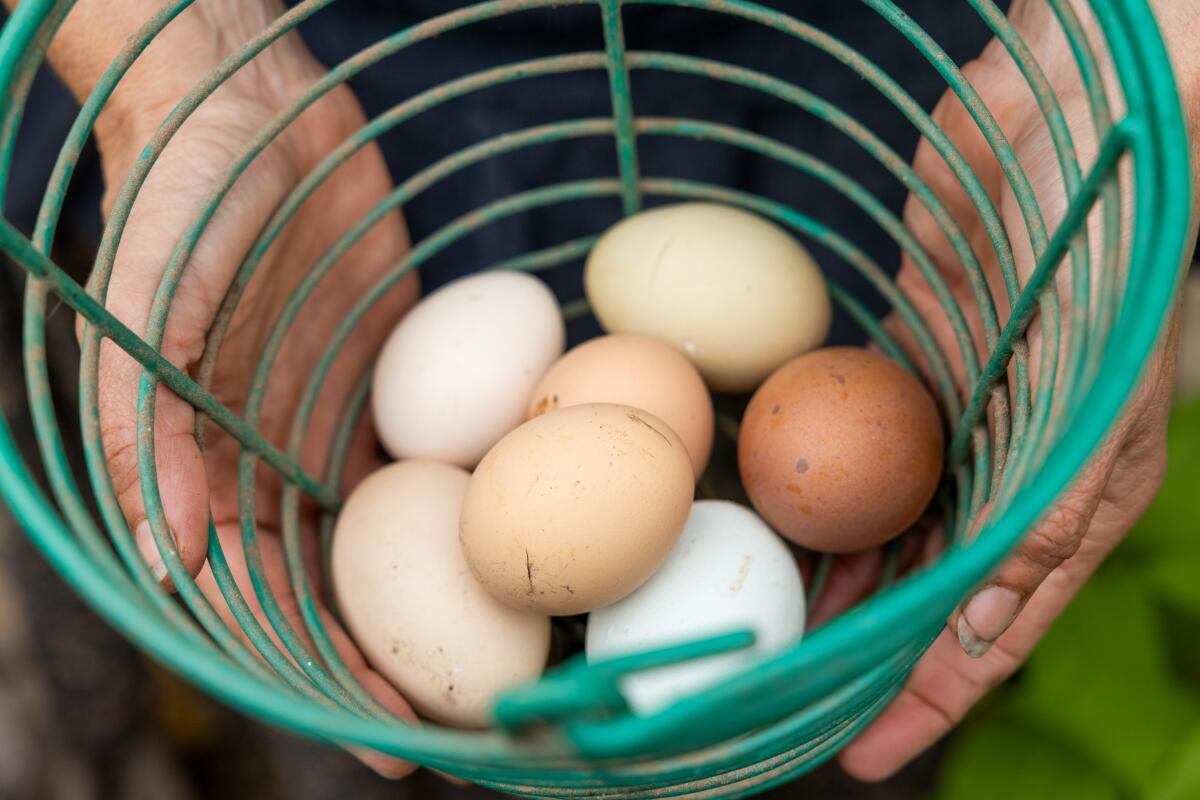
A circular wire basket holding seven eggs in colors ranging from white and pale yellow to light pink and brown.

The Urban Homestead’s poultry eat much of the farm’s garden waste and provide plenty of nutrient-rich poop to feed the soil. Their eggs are an added bonus for the family.
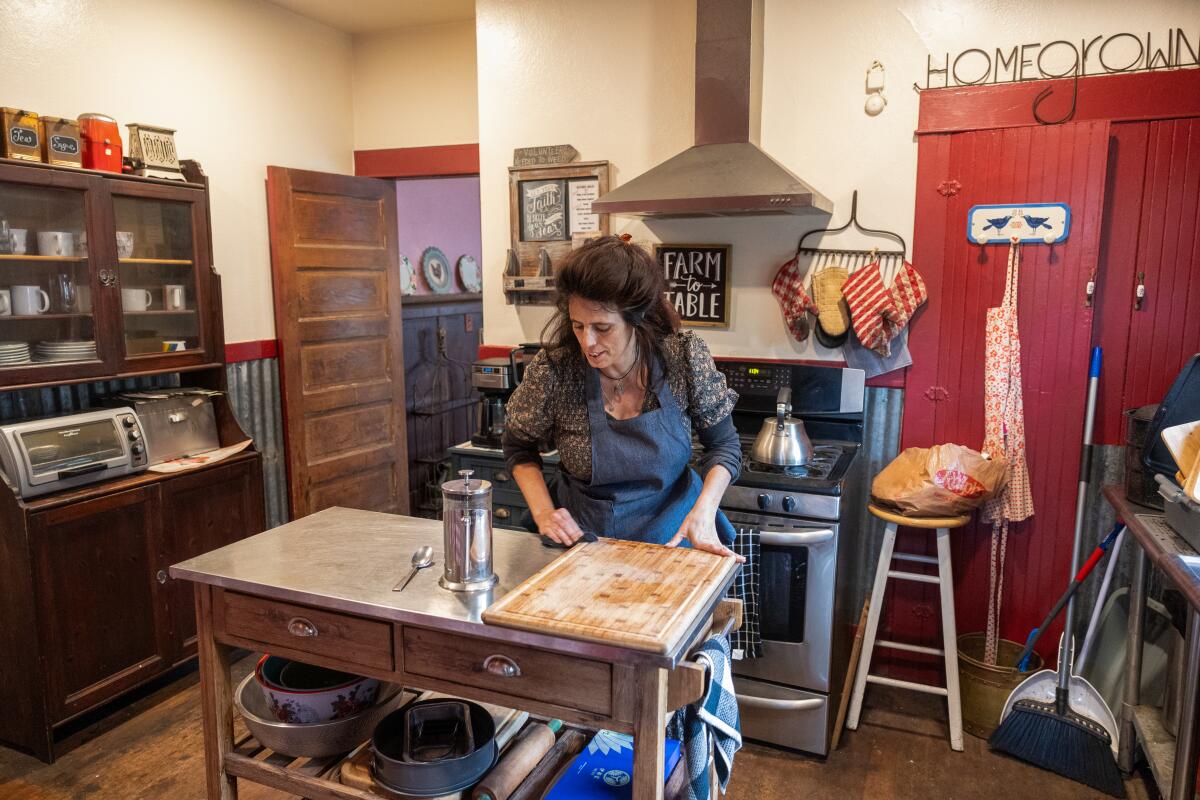
Anäis Dervaes tidies up the kitchen at her family's house.

Anäis Dervaes tidies up the kitchen at her family’s house, built in 1917.

But the family farm is still their main focus, and it keeps them so busy that it interferes with their dating lives, said Anäis. All three are single and would like long-term relationships someday, but it’s hard to find people who share their priorities.

Advertisement

“The dating life is just something we haven’t mastered yet,” said Jordanne, laughing. “I can take on any challenge, but this one baffles me.”

Partly it’s time and partly it’s priorities, Anäis said, like when she gets frost warnings on her phone and has to cut a date short so she can run home to cover crops to protect them from damage.

“We live a farming lifestyle in the city, so we look at things different than most city dwellers, and they don’t always understand,” Anäis said. “But this is our livelihood; this is our life.”

It wasn’t always wonderful, she said. They became a vegetarian household when they were all very young, and as teenagers they all had moments of rebellion. They were homeschooled, but neighborhood kids taunted them about what they were missing — Nikes and hamburgers and sodas in a can.

“We were just granola kids, running around barefoot on the street, and I was feeling like I didn’t fit in,” said Anäis. “I’d say, ‘Dad, why do we have to shop at thrift stores? Why do we only eat out of the garden? Why don’t we eat normal stuff instead of Swiss chard?’”
Advertisement
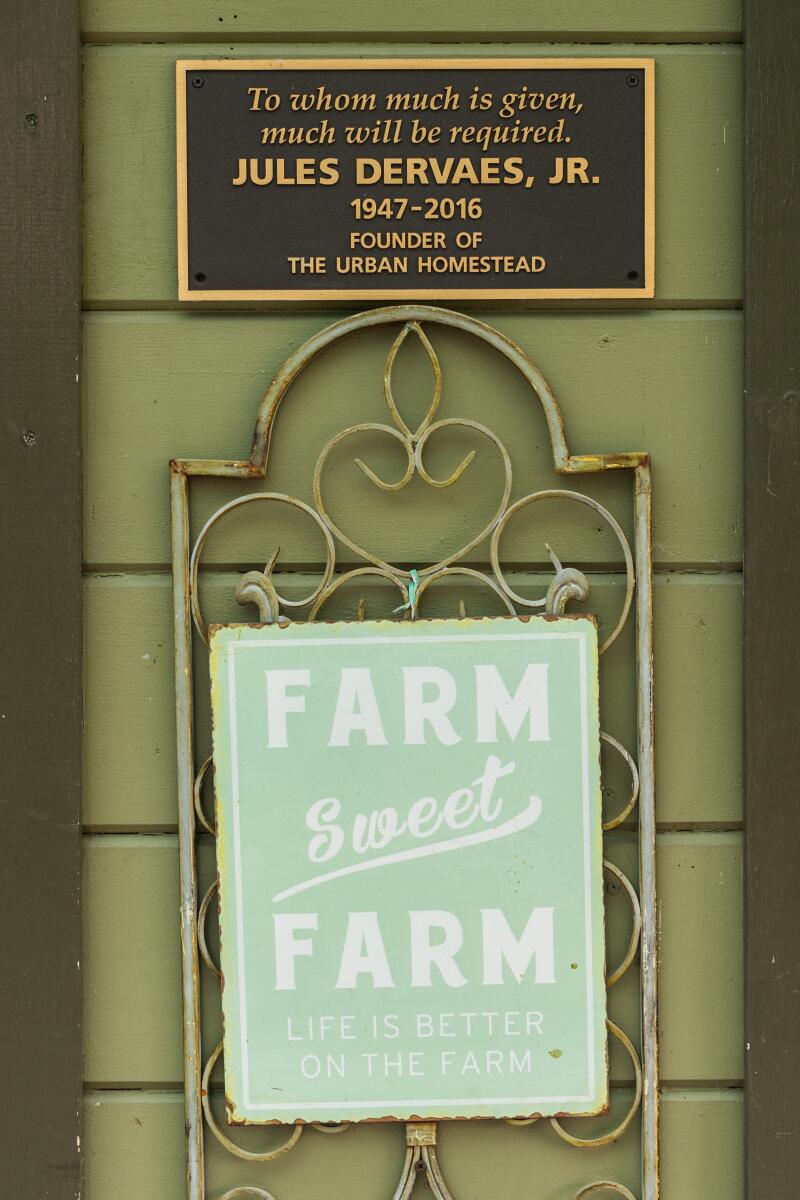
 A plaque memorializes Jules Dervaes Jr. above the words Farm Sweet Farm
A plaque memorializes Jules Dervaes Jr.

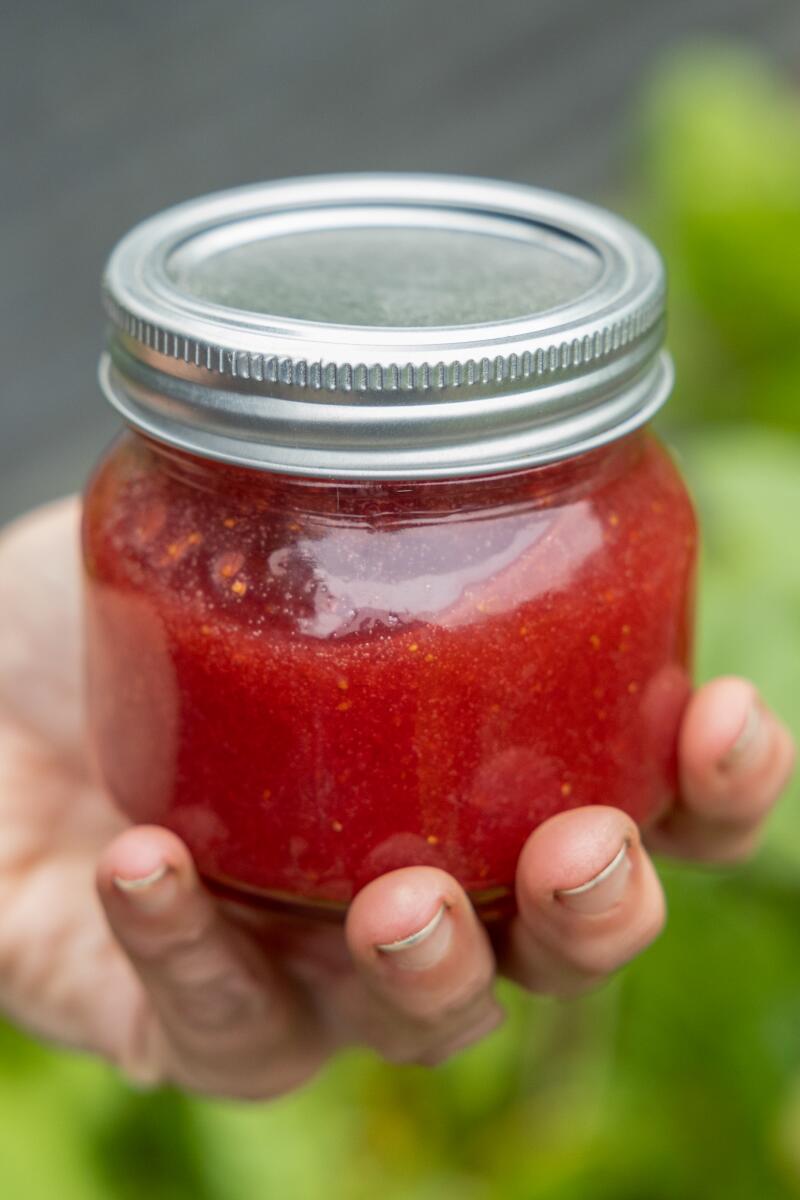
A hand holding a jar of red homemade jam.

Handmade jams are available at Urban Homestead.

But once she read the book that inspired her father’s vegetarianism, John Robbins’ ”Diet for a New America,” “It was like a light bulb went off,” she said, “and this lifestyle became mine.”

Advertisement

It wasn’t like their father forced them to do what they didn’t want to do, Jordanne said. “We had a lot of pushback, but he always encouraged us to question everything in our lives,” she said. “And we had responsibilities. There was a sense of pride in growing all these plants, and the business was ours. Dad would always say, ‘If you want to do it, read about it and go do it.’ He challenged us to learn and do our own problem solving.”

There were some limits — Jordanne’s desire to have a horse and a cow just wasn’t possible — but ultimately, it was the freedom to experiment that drew them back whenever they strayed, Anäis said. “There was a sense of identity here, and family survival. It gave us purpose and a passion. I would plant on the moon if I had to.”

The farm is open to visitors the second Sunday of every month, during two-hour “Learning Tours” (tickets are $75). But Justin has a few tips for people who want to remove their lawn and become urban microfarmers — or just landscape with food.
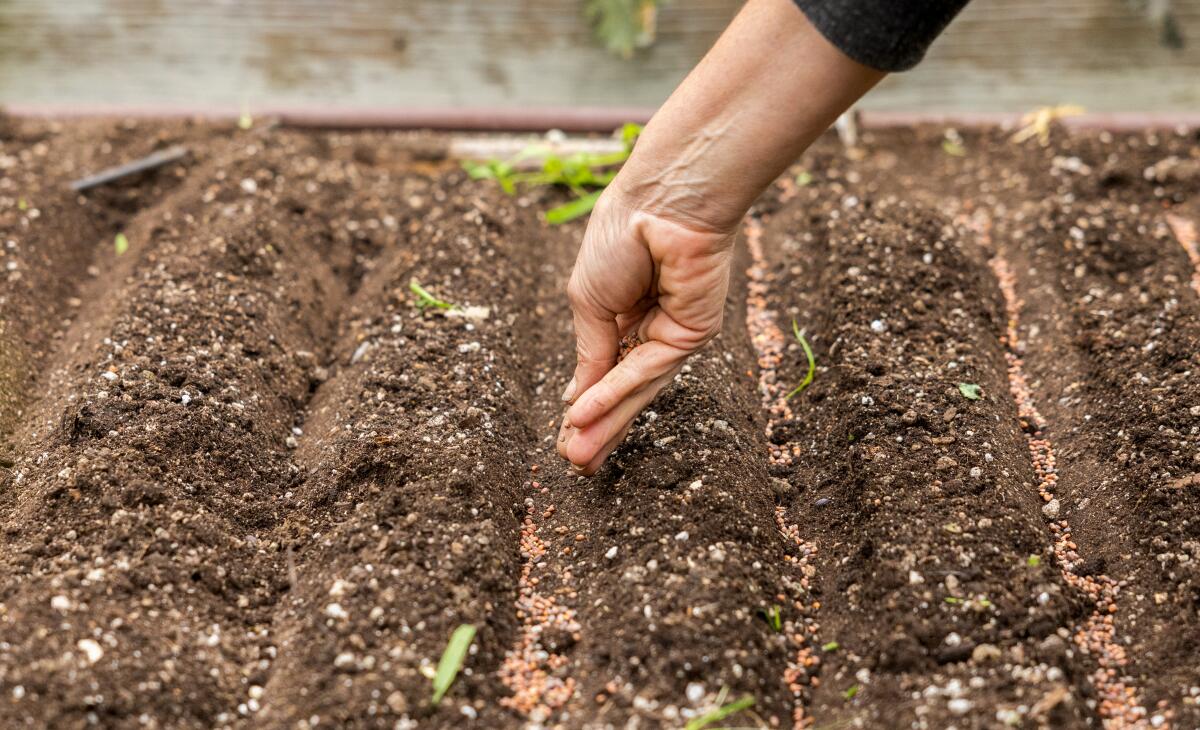
Salad mix seeds planted at Urban Homestead.

Salad mix seeds planted at Urban Homestead.

Advertisement

Lifestyle

With Highway 1 open, Big Sur braces for its busiest summer in years

Published

on

With Highway 1 open, Big Sur braces for its busiest summer in years

On a 75-mile cliff-hugging stretch of highway in California, traffic is way up, despite soaring gas prices. And locals expect the busiest summer in years.

The road is Highway 1 in Big Sur, which reopened in January after three years of repair and reconstruction following a pair of landslides. Drivers can once again embark on the state’s most famous road trip, covering the 100 miles between Cambria to the south and Carmel to the north without leaving the two-lane coastal highway. And they’re heading out in big numbers.

Caltrans estimates that as of May, Big Sur restaurant and retailer guest counts are up 40% from last year, and that northbound traffic at Ragged Point, the southern gateway to Big Sur, has risen 900% year-over-year.

People pose for photos near Bixby Bridge. Monterey County’s Board of Supervisors voted to explore a 12-month ban on parking around the bridge.

Advertisement
Safety cones prevent parking along Coast Road near the Bixby Bridge.

Safety cones prevent parking along Coast Road near the Bixby Bridge.

“Take your time,” said Kirk Gafill, co-owner of the popular Nepenthe restaurant and president of the Big Sur Chamber of Commerce, offering advice to travelers. “You’re going to be sharing the road with a number of people.”

As travelers rediscover the road, the cost of driving has been shooting skyward. California’s average gas price ($6.11 per gallon as of May 26) is up 26% from the year before. In early April, rates hit $9.99 at the isolated gas station in the Big Sur community of Gorda.

For spring and summer travelers, these numbers would seem to pose a stark question: Stay home and save money, or head for the coast because the road is finally open and it’s still cheaper than flying?

So far, the latter answer is winning big.

Advertisement
Fog lingers off the coast of Highway 1.

Fog lingers off the coast of Highway 1.

“We are definitely seeing a huge uptick in our reservations,” said Megan Handy, assistant general manager at the upscale Treebones resort. She estimated that bookings are 30% or more ahead of last year, and rates are unchanged since then. But “it’s still not feeling super crowded, which is nice. Everything still feels kind of calm.”

But added traffic has raised some anxiety. On May 19, Monterey County’s Board of Supervisors voted to explore a 12-month ban on parking at Bixby Bridge, one of the region’s top photo spots.

Over the years, the number of cars parking near the bridge — often illegally, sometimes impeding emergency vehicles — has risen. The proposed parking moratorium won’t take effect until the supervisors discuss it further.

Advertisement
  • Share via

Advertisement

Busy as things are, several business owners pointed out that many international travelers have not yet returned — perhaps because most make their plans more than six months ahead, perhaps because of global politics, perhaps a little of each.

The biggest challenge for businesses during this resurgence? “Restaffing and retaining,” said Handy at Treetops.

At Nepenthe, Gafill said his business has seen a 45% boost in guest volume since the road’s reopening. Gafill said he would have expected a 35% pickup, “simply by virtue of reopening the highway.” The additional 10%, he said, might be “all that pent-up demand,” aided by “a very beautiful and very dry winter,” followed by a mild spring.

Advertisement
A lunch crowd dines at popular restaurant Nepenthe.

A lunch crowd dines at popular restaurant Nepenthe.

Another possible factor: Nobody can be sure how long the road will remain open.

To cope with the influx of people, Gafill said, “everybody is trying to recruit and retain their existing staff.”

At the Ragged Point Inn, where rates dropped as low as $149 nightly last fall, rates are back over $200 and staffers are suggesting that customers book at least six months ahead. The inn has reopened its snack bar for the first time since early 2023, and management is investing in capital upgrades and staging live music on weekends throughout the summer.

Business “is up over 100%,” said Diane Ramey, whose family owns the inn. “I know not all of our neighbors are having the same lift, but everybody is doing better.”

Advertisement

Traffic approaching Bixby Bridge.

Advertisement
A visitor poses in an oversized chair at Big Sur River Inn.

A visitor poses in an oversized chair at Big Sur River Inn.

Even at the New Camaldoli Hermitage, a Benedictine monastery above Lucia, the road’s reopening and coming summer season have made a difference. Bookings are up an estimated 30% at the hermitage, which rent rooms and cottages (for two nights or more) to visitors who agree to its requirement of silence.

Big Sur business owners advise visitors to travel on weekdays for less traffic and the best hotel rates, and to get on the road as early as possible.

Since its opening in 1937, the highway has been vulnerable to landslides and shifting ground, operating on a longstanding cycle of landslide, closure, repair, reopening and then another landslide, or sometimes a fire. The U.S. Geological Survey has identified the Big Sur coastline as one of the most landslide-prone areas in the western United States. The 2023-2026 closure was the longest in the highway’s history.

Over time, road crews have used increasingly sophisticated strategies. In the most recent efforts, Caltrans said, it used drones to help survey the slopes and remotely operated bulldozers and excavators to reduce risks to workers.

Advertisement

During the closure, no traffic was allowed on 6.8-mile span from just north of Lucia until about a mile south of the Esalen Institute. Drivers detoured inland by way of U.S. 101.

Continue Reading

Lifestyle

Firings at CBS’ ’60 Minutes’ reflect the fight for media control in the age of Trump

Published

on

Firings at CBS’ ’60 Minutes’ reflect the fight for media control in the age of Trump

Correspondents of CBS’ 60 Minutes pose for a portrait in 2023. From left to right, they are Sharyn Alfonsi, L. Jon Wertheim, Bill Whitaker, Lesley Stahl, Scott Pelley, Cecilia Vega, and Anderson Cooper. Former Executive Producer Bill Owens sits on the far right. Only Wertheim, Whitaker and Stahl remain at the program.

CBS Photo Archive/CBS via Getty Images/CBS


hide caption

toggle caption

Advertisement

CBS Photo Archive/CBS via Getty Images/CBS

Stay up to date with our Up First newsletter sent every weekday morning.

When CBS fired Scott Pelley on Tuesday night, the new 60 Minutes executive producer, Nick Bilton, told Pelley it was for insubordination at a staff meeting the day before.

The veteran correspondent argues he was defending the DNA of 60 Minutes and the integrity of its journalism.

Advertisement

The battle royale over the network’s most prestigious and profitable news program is part of a broader fight over the direction of CBS News.

And given CBS’s acquisition by a billionaire family whose business interests have become intertwined with the political interests of President Trump, it reflects a larger war over control of the media in the current moment.

That father and son, Larry and David Ellison, bought CBS’ parent company, Paramount, last summer. In January, they became co-owners of TikTok’s U.S. operations. Now they’re seeking approval from Trump’s regulators to buy Warner Bros. Discovery, the parent company of CNN.

A glamorous show shorn, for now, of most its stars

CBS fired Cecilia Vega, a correspondent, and Tanya Simon, the executive producer, from 60 Minutes last week. They are shown in this photo at the 2026 White House Correspondents' Association Dinner on April 25, 2026 in Washington, D.C.

CBS fired Cecilia Vega, a correspondent, and Tanya Simon, the executive producer, from 60 Minutes last week. They are shown in this photo at the 2026 White House Correspondents’ Association Dinner on April 25, 2026 in Washington, D.C.

Kristina Bumphrey/Variety via Getty Images/Variety


hide caption

Advertisement

toggle caption

Kristina Bumphrey/Variety via Getty Images/Variety

But the specifics of this individual episode matter — for 60 Minutes, CBS, its audience of millions, and even the news business itself.

Advertisement

The program has been the most glamorous post in broadcast news. The correspondents are the stars of the show. And now, there are just three of them.

Anderson Cooper left last month, concerned over the direction of the network’s coverage. Last week was a virtual bloodbath: correspondents Cecilia Vega and Sharyn Alfonsi were fired. So were a producer and two show executives — including Tanya Simon, a longtime staffer who had stepped up as executive producer when her predecessor resigned in protest before the Ellisons’ takeover.

With Pelley’s ouster, only correspondents Lesley Stahl, Bill Whitaker, and Jon Wertheim remain. Now they are considering whether to resign, according to two associates with knowledge.

Their brand-new boss, Bilton, was previously a tech reporter for The New York Times and an investigative reporter for Vanity Fair. He executive-produced a documentary for Netflix about a couple accused of laundering Bitcoin and has been a producer on several other films.

Notably, he has no experience in television news.

Advertisement

Neither does Bari Weiss, whom David Ellison installed as the network’s editor in chief last October. The Ellisons also bought her center-right views-and-news site, The Free Press.

She has maintained that the network of Walter Cronkite needs a makeover for the digital moment. She has also contended for years that CBS, along with the rest of mainstream media, is too reflexively anti-Trump, anti-Israel, and too woke.

A rejection of CBS News executives’ overtures

The new executive producer of 60 Minutes, Nick Bilton, has been a tech journalist and documentary filmmaker, but lacks experience in broadcast news.

The new executive producer of 60 Minutes, Nick Bilton, has been a tech journalist and documentary filmmaker, but lacks experience in broadcast news.

Matt Winkelmeyer/Getty Images/Getty Images North America


hide caption

Advertisement

toggle caption

Matt Winkelmeyer/Getty Images/Getty Images North America

Bilton attempted to set a conciliatory tone at Monday’s meeting — his first with the show. Pelley, a formidable veteran correspondent and former CBS Evening News anchor, wasn’t having it.

Pelley called Bilton unwelcome and unqualified. And Pelley said that Weiss was attempting to “murder” the program.

Advertisement

In firing Pelley on Tuesday, Bilton said the journalist had hijacked the meeting and rejected overtures to work constructively through their differences. (NPR obtained a copy of the firing notice.) Bilton wrote that Pelley’s “antipathy to the future of the show came through loud and clear.”

In his own statement late Tuesday evening, shared with NPR, Pelley accused CBS’s new news leadership of killing 60 Minutes‘ DNA and pushing him “to inject falsehoods and bias into a politically sensitive story” and “to include assertions that are unverified.”

The accusations, to which CBS has not yet responded, echo those made by Alfonsi and Vega, the two correspondents fired last week.

Earlier this year, Alfonsi publicly complained after Weiss held one of her stories at the last minute, and kept it frozen for weeks, demanding an on-camera interview with a Trump White House official that never played out. It ran, unchanged from the intended version, with additional statements from the administration tacked on to the end.

After being fired, Vega said in a statement obtained by NPR that her team had “experienced efforts to insert political bias into our stories.”

Advertisement

“Let’s call this what it is: censorship, both censorship and self-driven” Vega continued. “It is dangerous for the show and dangerous for democracy.”

Weiss previously rejected Alfonsi’s and Vega’s allegations. (CBS said Vega’s claims, for example, were “not based in reality” while expressing appreciation for her work.)

Weiss and Bilton say digital threat requires a 60 Minutes overhaul now

In a meeting this morning, Weiss said that Pelley chose his own path — that is, to be fired rather than to find a way to work through his concerns, according to attendees. The network and Weiss have not yet publicly addressed Pelley’s accusations of interference. 

Bilton and Weiss say they respect the show’s traditions, its accomplishments and its legacy of enterprise reporting, extended interviews and visual storytelling. It rose in the ratings 9% over the past season under Simon.

The two news leaders say, however, 60 Minutes needs to be overhauled before it becomes increasingly irrelevant in the era of streamers and other sources of news, information and entertainment in the digital age.

Advertisement

Interviews with 12 current and former CBS News staffers, from producers to executives, suggest great reservations and suspicions remain about Weiss’ judgment and her ability to handle the prominent and even famous journalists on whom her division relies.

Weiss had initially sought to reinvent the CBS Evening News, dropping a two-anchor format that had sagged in the ratings. Cooper turned down Weiss’ overtures to anchor it and left the network altogether, concerned about her approach, according to associates. (They spoke on condition of anonymity because Cooper has not chosen to speak publicly on the matter.)

David Ellison became chairman and CEO of CBS' parent company, Paramount, after buying it last year.

David Ellison became chairman and CEO of CBS’ parent company, Paramount, after buying it last year.

Noam Galai/Getty Images for Paramount/Getty Images North America


hide caption

Advertisement

toggle caption

Noam Galai/Getty Images for Paramount/Getty Images North America

The ratings have continued to sag under new anchor Tony Dokoupil. And some CBS journalists, including producers who have left the Evening News, have publicly accused Weiss of making editorial decisions driven by politics. She has rejected those claims.

The decision to take on overhauling two key shows — one listing, one highly profitable, both high profile — carries significant risks for Weiss and the network, even apart from other considerations.

Advertisement

But the Ellisons’ presence cannot be ignored.

When Shari Redstone was negotiating the sale of CBS’s parent company, Paramount, to the Ellisons’ Skydance Media last year, the network announced the end of Stephen Colbert’s late night show. He had been one of the president’s most biting and acerbic critics.

David Ellison also made a series of concessions directly to Trump’s chief broadcast regulator, Federal Communications Commission Chair Brendan Carr, gutting CBS’s diversity, equity and inclusion initiatives and appointing a conservative ombudsman to field complaints of bias against its news reporting.

Carr and other regulators approved the Paramount deal last summer.

The accommodations echo those made by other media titans.

Advertisement

Amazon and Blue Origin founder Jeff Bezos remade the editorial pages of the Washington Post, which he owns, into a far more hospitable zone for Trump at the outset of his second term. So did Los Angeles Times owner Dr. Patrick Soon-Shiong, a noted medical device inventor. Amazon and Blue Origin have multi-billion dollar contracts with the federal government. Soon-Shiong’s medical research firm routinely has patent applications up for review with federal regulators. One was approved Tuesday.

The Ellisons are hoping to win approval from federal regulators next month for their purchase of Warner Bros. Discovery in a deal valued at more than $110 billion. It would include Warner Bros. Studio, HBO and CNN, among other properties.

As Weiss routs CBS News’ old guard, the question of what role she might play at CNN — and what changes that portends at CBS — hangs over journalists at the two networks. The fate of 60 Minutes serves as a high-stakes case study for both.

Continue Reading

Lifestyle

We’re having a main character summer. Are you? : It’s Been a Minute

Published

on

We’re having a main character summer. Are you? : It’s Been a Minute
Are you ready for a whirlwind summer romance?Making plans to capitalize on summer can get overwhelming – from finding the right spot to hang or feeling comfortable in your clothes in the sweltering summer heat. So what does it mean to approach summer with a romantic joie de vivre?  Brittany is joined by Carly Olson, freelance journalist covering architecture and business, and Garrett Schlichte, writer and chef, to walk us through how to have a rom-com summer where you’re the star.Want more on how to be the best version of yourself? Check out these episodes:How to make friends & get good gossipIt only takes 30 minutes to be a good momSupport Public Media. Join NPR Plus.Follow Brittany on Instagram: @bmluseFor handpicked podcast recommendations every week, subscribe to NPR’s Pod Club newsletter at npr.org/podclub.
Continue Reading
Advertisement

Trending
