Lifestyle
San Francisco Symphony music director Esa-Pekka Salonen resigns


San Francisco Symphony music director Esa-Pekka Salonen.
Chris Pizzello/Chris Pizzello/Invision/AP
hide caption
toggle caption
Chris Pizzello/Chris Pizzello/Invision/AP

San Francisco Symphony music director Esa-Pekka Salonen.
Chris Pizzello/Chris Pizzello/Invision/AP
The San Francisco Symphony announced Thursday the resignation of its music director, Esa-Pekka Salonen.
The famed Finnish conductor and composer said he plans to leave when his contract expires at the end of the 2024-25 season.
“I have decided not to continue as music director of the San Francisco Symphony, because I do not share the same goals for the future of the institution as the Board of Governors does,” Salonen said in a statement shared by his publicist with NPR. “I am sincerely looking forward to the many exciting programs we have planned for my final season as music director, and am proud to continue working with the world-class musicians of the San Francisco Symphony.”
San Francisco Symphony board chair Priscilla Geeslin called Salonen’s decision “bittersweet” in a press release. “This has been an exciting era for the symphony and we’re so grateful for Esa-Pekka’s thoughtful leadership and collaborative approach,” Geeslin said.
The San Francisco Symphony hired Salonen in 2018, and he began his tenure with the orchestra in the 2020-21 season. Building on the work of his longtime predecessor Michael Tilson Thomas, Salonen solidified the group’s reputation as a major force in American classical music during his short directorship.
He brought on a diverse group of artistic advisors including Nico Muhly, Claire Chase and Esperanza Spalding, and mixed classics with innovative programming often fused with technology.
But like many arts organizations, the orchestra has been struggling financially in recent years. It lost millions of projected dollars in income during the Covid pandemic, and had also seen steep declines in subscribers and donations before the shutdown occurred.
The group recently canceled touring and made cuts to its experimental and educational programming.
Still, the orchestra has amassed one of the healthiest endowments in the business. It stood at roughly $315 million in 2023, up from $273 million in 2019.
Longterm symphony violist David Gaudry told NPR he was “saddened and surprised” by the news.
“We’ve had some inkling that things were not all well between the music director and the board based on the cancellation of our 2025 tour for next September to Europe,” Gaudry said. “To do a cancellation of an international tour was kind of a dramatic step. It was unprecedented.”
Gaudry expressed both his professional and personal admiration for Salonen. “He’s a great musician and just a really nice guy,” Gaudry said. He also said he sees the music director’s departure as a larger existential problem.
“The fact that we have spent all these decades sort of building up to a nationally recognized arts institution, this particular situation is a real threat to our position in the arts community,” Gaudry said.
“It’s a terrible development for this organization, for this city, for this entire, musical community,” said Joshua Kosman, classical music critic for the San Francisco Chronicle. “Esa-Pekka has been, or had promised to become, a force for experimentation, innovation and lively music-making of all kinds. I know he had a lot of plans going forward for things that the orchestra could do. And all of that will now be brought to a close.”


Universal Studios Hollywood has long been slated to have the biggest theme park opening of 2026 with its new high-speed coaster, Fast & Furious: Hollywood Drift. But with no officially announced opening date, questions have started to intensify and rumors have begun to swirl as to what may be causing the park to go radio silent on what is expected to be its centerpiece attraction.
According to Universal, there is no need for concern.
Yet speculation has zeroed in on the potential noise of the coaster as being a problem for residents of the nearby of Toluca Lake. Rumors were fueled Friday by Fox 11 Los Angeles reporting, via a since-deleted post on social media network X that Hollywood Drift’s opening had been delayed at least until the end of year due to neighborhood complaints. Videos of audible screams of riders on the coaster have gone viral in recent weeks.
A spokesperson for Universal said reports that the coaster’s opening is postponed until the end of 2026 are “not accurate” and disputed the notion that the coaster has been delayed. Fast & Furious: Hollywood Drift, the spokesperson said, is still on target to open before the end of summer.
“We expect to announce an opening date soon,” read an official statement from the company. “The information online is incorrect.”
The summer season lasts through the end of September. The park begins its popular fall Halloween Horror Nights on Sept. 3. Tickets for the latter are currently on sale, and Universal is promising access to Hollywood Drift for those who purchase its line-skipping express pass, which starts at $259.
Sources familiar with the coaster’s operations have also disputed the notion that noise is a cause for the coaster having not yet opened, instead pointing to more routine mechanical issues that have arisen during its test and adjustment phase. One theme park insider, however, stressed that when Hollywood Drift does open, it will likely be considered a “top-5, or top-10 coaster, in the world.”
The view of Fast & Furious: Hollywood Drift from Universal Studios Hollywood’s Wizarding World of Harry Potter.
(Todd Martens / Los Angeles Times)
Fast & Furious: Hollywood Drift is unique in that it is a 72 mph ride with vehicles created to rotate 360 degrees through multiple inversions. Designed to mimic the feel of stunt cars, its four-seated vehicles will twist and turn through banks in the track in an effort to create a drifting sensation.
Universal’s own website earlier this summer posted June 26 as an opening date, and while that was once the targeted launch, the date was quickly removed from the site. Universal began hosting media for walkthroughs of the coaster in May.
Fast & Furious: Hollywood Drift has been in the works for than a decade. Built essentially on a cliff between the park’s upper and lower lots, the ride’s existence is a feat of engineering, and Universal has described it as among the most intense attractions in its global park portfolio.
Before land was moved, Universal began a series of tests to track how noise would travel through the surrounding neighborhood. Universal placed speakers on the old special effects and stunt buildings to see how ride screams traveled down the hill.
Ultimately, the tracks would be complemented with multiple sound walls and shields, the latter clear structures designed to block coaster rumbles and audience screams. And because the cars can rotate 360 degrees, Universal can in theory direct rider yells away from the studio below and the neighborhood nearby. The actual track has been filled with pea gravel, designed to minimize noise from any reverberations.
“It’s incredibly quiet,” said Jon Corfino, the lead creative at Universal Studios Hollywood. “We were able to do that by putting materials inside portions of the track to deaden the sound. I’m not sure we would have needed it, but it was important to do the right thing. It’s pea gravel and rocks. It’s quieter than I ever thought it was going to be.”
Fast & Furious: Hollywood Drift isn’t the only notable coaster slated to open in Southern California this year. Buena Park’s Knott’s Berry Farm initially intended to launch its reimagined Montezooma’s Revenge, now known as Montezooma: The Forbidden Fortress, on Monday. Late last night, the park indefinitely delayed its public unveiling, with a spokesperson citing additional fine-tuning that surfaced during its final days of testing.
The delay is not expected to be a prolonged one.
“We appreciate everyone’s understanding and look forward to welcoming media and guests in the coming days when we can showcase the attraction exactly as intended,” read a statement from the park. Montezooma: The Forbidden Fortress has been in development for the past four years.
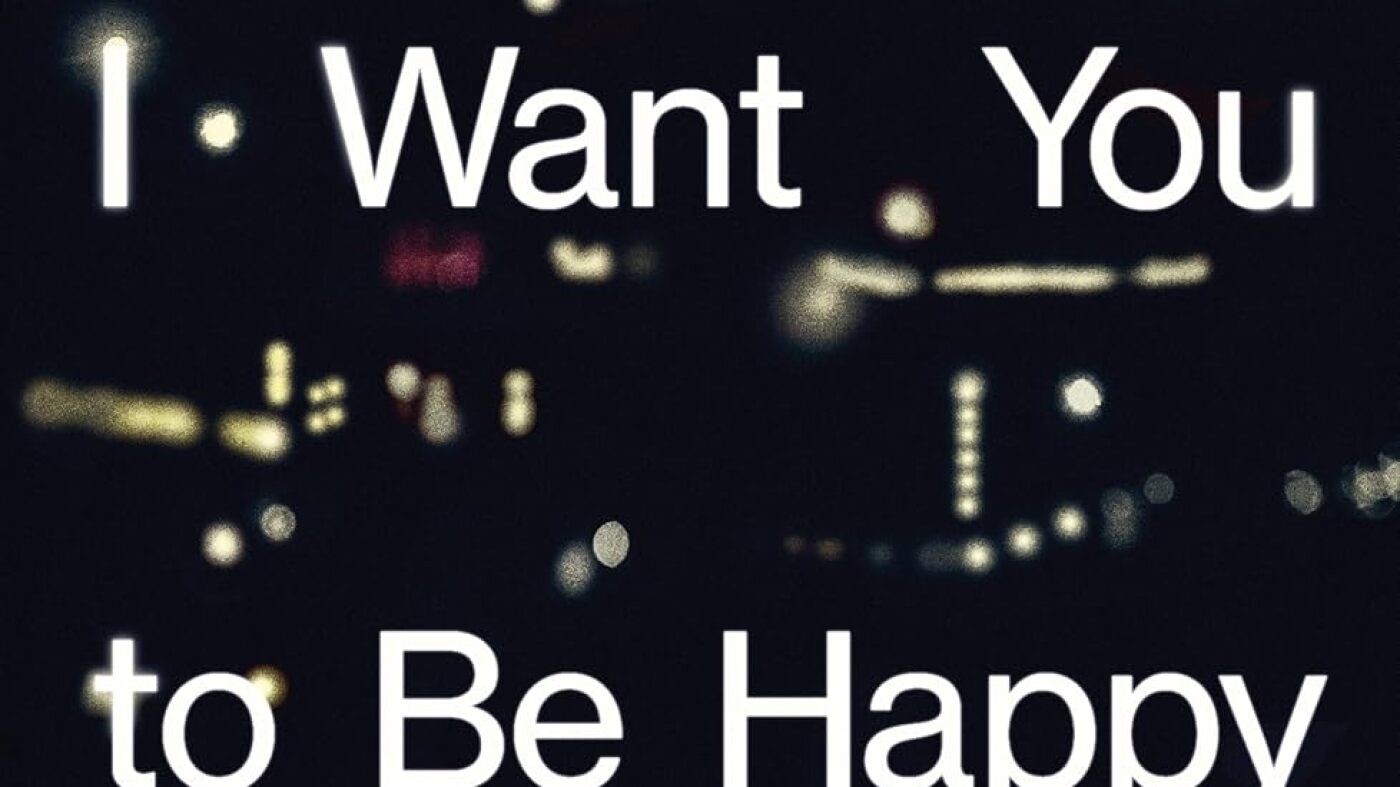
Farrar, Straus and Giroux
English writer Jem Calder’s debut novel, I Want You To Be Happy, reports from the frontlines of modern-day dating. His book is good – but the news is not.
A man in his mid-30s who recently broke off his engagement with his longtime girlfriend meets a young woman at a crowded London bar. He’s a copywriter, she’s a 23-year-old barista. Despite his intention not to talk about his breakup, he finds himself “shouting specific details directly in her ear.” “Pretty intense,” she yells back. He apologizes. “No-no, I like it,” she yells. “It’s like boarding a plane. You go baggage first.”
Neither can think what to say next. After an “interpersonal silence containing all the bar-noise,” they share a few drinks, their first names (Chuck and Joey), some quips about their 12 year age gap and her lack of what he calls “a real job.” They end up at his luxury apartment, which is far nicer than her crowded shared flat.
In other words, Calder’s characters have boarded a plane, baggage first — with no idea where it will land. Will it lead to an actual relationship, nevermind happiness?

Calder made a splash with his first book, Reward System, a collection of six interconnected short stories about young adults linked by social media yet adrift and alienated in today’s fragmented digital world. The title of one story, “Distraction from Sadness is Not the Same Thing as Happiness,” could also work for this closely observed, sad-but-sympathetic novel about the cagey, jittery dance that characterizes the modern-day mating game.
Chuck and Joey are guarded and uncertain. We get to know them better than they get to know each other — their insecurities and disappointments with themselves as well as others. Their fundamental imbalances — age, financial, commitment levels — lead to a wobbly connection. The discovery that they share literary aspirations (poetry for her, prose for him) and write around their day jobs opens up the potential for some sort of bond. Their nascent relationship stirs “a dormant feeling of possibility” in both of them. But a talent gap opens up an abyss. (I won’t say who has more.)
Joey is hopeful, always on stand-by for texts: “A new person finding you interesting makes you feel new,” she ruminates in this tight, third person narrative that alternates between the male and female perspective. Interestingly, although the author is male, the female character comes across as far more sympathetic.
Joey understands that she needs to wait before replying to texts, because responding too quickly betrays “an underlying neediness and desperation.” Chuck is generally avoidant in all aspects of his life — with alcohol as his chosen support system. It’s important to both of them to convey nonchalance. Neither wants to come across as a “tryhard.”
There’s nothing new about this, of course: Self doubts, waiting by the phone, playing hard to get, “acting noncommittal in the hopes of gaming his desire.” It’s a tale as old as time, with updated electronic devices.
Both characters are addicted to instant gratification: brand name status items, cyclist-delivered meals, push notifications, Instagram scrolling, podcasts, alcohol, smoking, vaping, sex, screens. They are constantly plugged in and online, compulsively checking their media feeds. One night, trying to distract herself from “recursive worries” about her finances and future, Joey spends “twenty of her non-refundable life minutes researching the relationship timeline of an actor she liked and a musician she didn’t like as much.”
Calder writes with precision, channeling his generation’s activities with a mix of interiority and verbs fabricated to convey the mechanical rote of their daily activities. These are people who routinely “gaze-unlocked” their phones, “V-60-ed” some coffee, and “escalatored” up to open plan spaces at work, where, lacking assigned cubicles, they “hot-desked” and then “sense-checked the work.” And at the end of the day, they “cheersed” drinks.
I Want You to Be Happy would have packed more punch at novella-length. Yet readers of all generations should be able to relate to these characters’ waves of disconsolate loneliness, if not how they deal with it. Older readers might recall their own anxieties about the future — but mostly feel relief that they’re no longer out there.
Lifestyle
L.A. Affairs: After losing our spouses, we found love again. But were we cheating on our children?

We’d progressed from walking in the park to perching across from each other in my living room to sitting side by side on the family room sofa. It was grief that drew us. A year earlier we’d both lost our beloved, vibrant spouses to cancer. Though his wife and I had been in the same women’s book group, I’d known Eric only through the wry gripes we’d all made about our husbands.
Now he took my face in his hands. Here it comes, I thought. Was I ready for this? Looking deep into my eyes he asked, “Would you nap with me?”
Apparently, this was what dating looked like in one’s 60s. As he snored companionably, I wondered how I’d handle our next progression, whatever that would be. My husband had devotedly nursed me through my own illness, only to be hit by one far worse. We and our two sons had been the closest of families, their father their best friend. As much as I knew they needed me, I was racked by survivor’s guilt — ashamed still to be alive. If I was mortified just to breathe, how could I even think about loving another man?
For months, Eric and I lurked about. Although he lacked the sense I had that we were cheating on our spouses, we both felt we were somehow cheating on our children. That his one child and my two were often at our respective homes made for tricky logistics. So we leased new life from the city.
Guided by Eric, we watched planes from the viewing deck at the Santa Monica Airport, where he explained Bernoulli’s principle. We wandered the Mar Vista Farmer’s Market, where he introduced me to the vendors he’d known for decades and taught me to top berry trays with tiny nets he’d made to hold the fruit in place. We saw L.A. Theater Works record plays at UCLA’s Melnitz Hall, where the primal storytelling of actors reading lines and Foley artists adding sounds riveted me more than a Broadway spectacle. On these outings, I learned not just about flight, farm-to-table and fabulism, but about Eric. He was a man fully engaged in life.
Guided by me, we took classes at Santa Monica Yoga, Eric treating himself afterward to a sandwich at Bob’s Market from the deservedly self-proclaimed Deli Lama. We walked our way through my L.A.-on-foot book, from Castellammare and Leimert Park to Pasadena, delighting in the architectural mashup Nathanael West derided in “The Day of the Locust” as “Mexican ranch houses, Samoan huts, Mediterranean villas” and “Egyptian and Japanese temples.” Eric especially admired the Witch’s House in Beverly Hills, the Shakespeare Bridge in Franklin Hills and the stained glass windows in Carthay Circle. He learned not just about poses, pastrami and parapets, but about me. I was a woman fully engaged in life.
We also learned we were both determined to seize the day after seeing the rest of our spouses’ days seized from them. My guilt persisted. But this good man had found a route from the sofa to the city to my heart.
We finally met each other’s children. The days we seized became weeks, months and years. Our sons, though forever brokenhearted, thrived. Mine had children of their own, all with names that begin with “A” to honor their father. The oldest, at four, understands from photos that she has another grandpa, understands that the man in the picture is her daddy’s daddy. Her parents and I tell her about him: his kindness, grace, humor, wisdom. “I wish I could have known him,” she says.
“I do too,” I say, “more than anything.” When the others are old enough, we’ll tell them, too, about him. They’ll feel his essence because their fathers are just like him. He’ll stay, this way, in and around us.
Ever-gracious, Eric holds this space for him, as I try to do for his wife with their son. But becoming a grandmother only increased my guilt. My husband, consummate family man, was born to be a grandfather. Yet here I was, without him, flying high on the joy of grandparenting. What could I do besides love the children and grandchildren fiercely and be grateful for the privilege?
I could do this: recognize that if it takes a village to raise a child, the more villagers who love the child the better. My lucky grandchildren will feel their grandfather’s love by proxy and Eric’s love firsthand. They can even enjoy the love of Eric’s son, who patiently helps them build Lego worlds and cooks them their favorite soup.
Even as he holds space for my husband, Eric affectionately fills his own. He’s a tall man with a deep voice, an easy laugh and a warm embrace. He marvels at the latest evidence of the grandchildren’s genius, like any grandfather should, and spoils them with treats and toys. He’s so handy around their houses that my grandson greets him with, “What’re you gonna fix today?”
His most recent project involved the crib my husband and I had saved from our sons’ infancy with the hope that grandchildren would one day use it. Since the distance between slats was now deemed unsafe, Eric transformed the crib into blocks. “I wanted to honor the spirit of what you’d both wished for,” he said.
Then and now. Loss and gain. Selfless love.
For years now, Eric and I have both lived in my house. There are still naps, but more bustle. Our sons live close enough that we’re together a lot, and my house tends to be the happy hub. The grandchildren play near photos of their grandpa. Their “A” names ring out in this home where we raised their fathers. Meanwhile, Eric pulls them around on a rug he rigged as a magic carpet and helps stack the blocks into towers. When the grandchildren leave, he hugs them tight. My guilt remains, like pain in a phantom limb, but the sofa holds us all.
The author is a law school professor, researcher and author of an upcoming book on the scientifically proven neural superpowers of grandmothers. She lives on the Westside. She’s on Instagram @rondafoxwrites, and her website is rondafox.com.
L.A. Affairs chronicles the search for romantic love in all its glorious expressions in the L.A. area, and we want to hear your true story. We pay $400 for a published essay. Email LAAffairs@latimes.com. You can find submission guidelines here. You can find past columns here.
-

 Sports3 minutes ago
Raising Cane’s owner Todd Graves on how viral Tom Brady-Rob Gronkowski dunk tank came to be at Fanatics Fest
-

 Technology9 minutes ago
Fox News AI Newsletter: IBM’s AI warning sends ‘shockwave’
-
 Business15 minutes ago
Netflix is the king of streaming. So why is its stock down this year?
-
 Entertainment21 minutes ago
For Los Primos del Este, writing new album ‘Dulce Amargo’ felt like therapy
-
Lifestyle27 minutes ago
‘Fast & Furious’ coaster is not delayed by ‘noise complaints,’ Universal Studios says
-
 Politics33 minutes ago
Trump escalates election attacks, threatens California over voter data
-
 Science39 minutes ago
Rudolph Marcus, Caltech chemist who won Nobel Prize, dies at 102
-
 Sports45 minutes ago
Commentary: With Will Smith out indefinitely, Dodgers need to trade for a catcher

