Lifestyle
L.A. contractors razed a native plant garden for kids. What happens now?

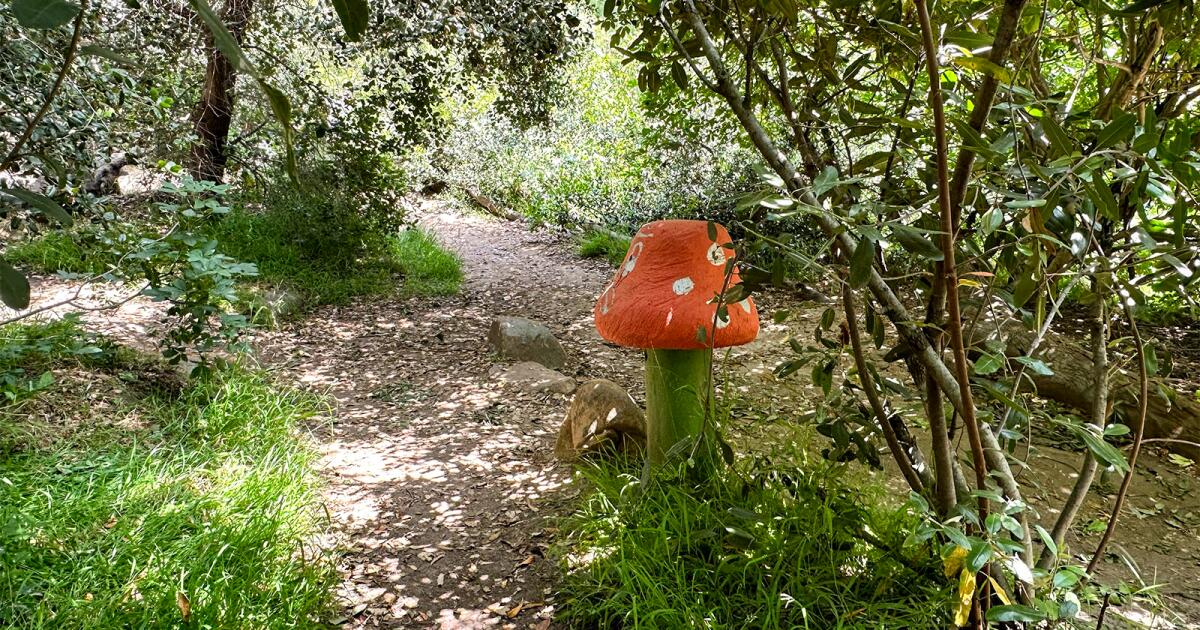
For more than a decade, visitors say the Children’s Garden at Elysian Park was a shady showcase for indigenous plants, with dense stands of mature native trees and shrubs lining the paths of the grounds just west of Grace E. Simon Lodge and creating a cool, restful places to walk, play and learn.
Then, in late June, all that lush undergrowth was leveled by a contractor hired by Los Angeles’ Department of Recreation and Parks to conform with the Los Angeles Fire Department’s brush clearance requirements. Since then, finger pointing and cries of “Ecocide” have reverberated on social media and during city meetings.
Update:
2:00 p.m. Aug. 9, 2024This story has been updated to include additional information provided by a Los Angeles Fire Department spokesperson.
“It was a magical environment,” said Shari Lee, a nearby resident who’s been walking the site for years. “Now it just seems sort of … blank.”
The Children’s Garden in Elysian Park after the brush clearance.
(Shari Lee)
These heated exchanges are all part of an ongoing and often contentious discussion about how a city like Los Angeles should manage urban wild lands with native plants. No one questions the need to remove such fast-growing invasives as black mustard, which becomes kindling for wildfires once it dries out in the summer.
But should green native shrubs like toyons and lemonade berry be treated the same way? Native plant enthusiasts say those plants control erosion, provide shade and habitat for wildlife and pose little fire danger.
Critics say that before the work was done, the city should have notified stakeholders, such as the Northeast LA Forest School, which pays to use the Children’s Garden (also known as the Children’s Arboretum) year round for outdoor instruction. They also believe there should have been an environmental evaluation of the site before Mariposa Landscapes Inc. of Irwindale did the work.
The trees and shrubs had been planted more than a decade earlier by the urban forestry nonprofit North East Trees, a project that included signage to identify the many native species added to the site, such as California buckeye, California black walnut and oaks.
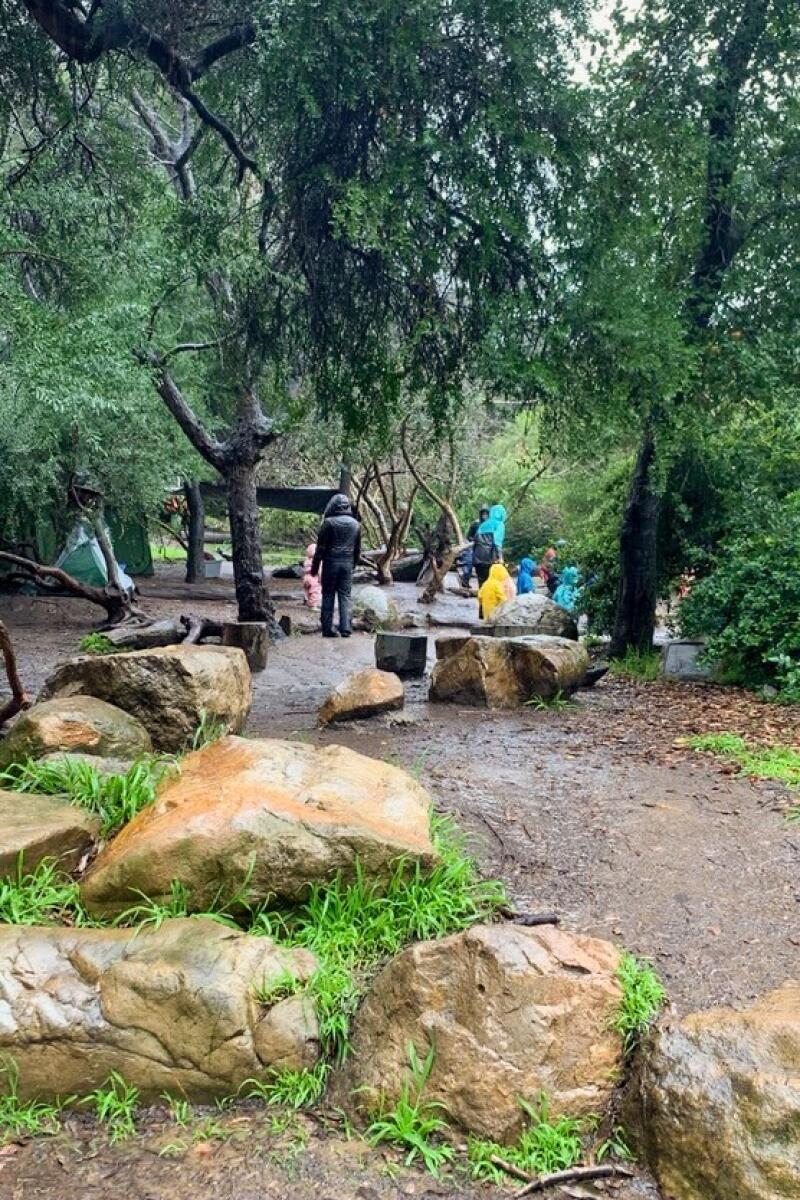
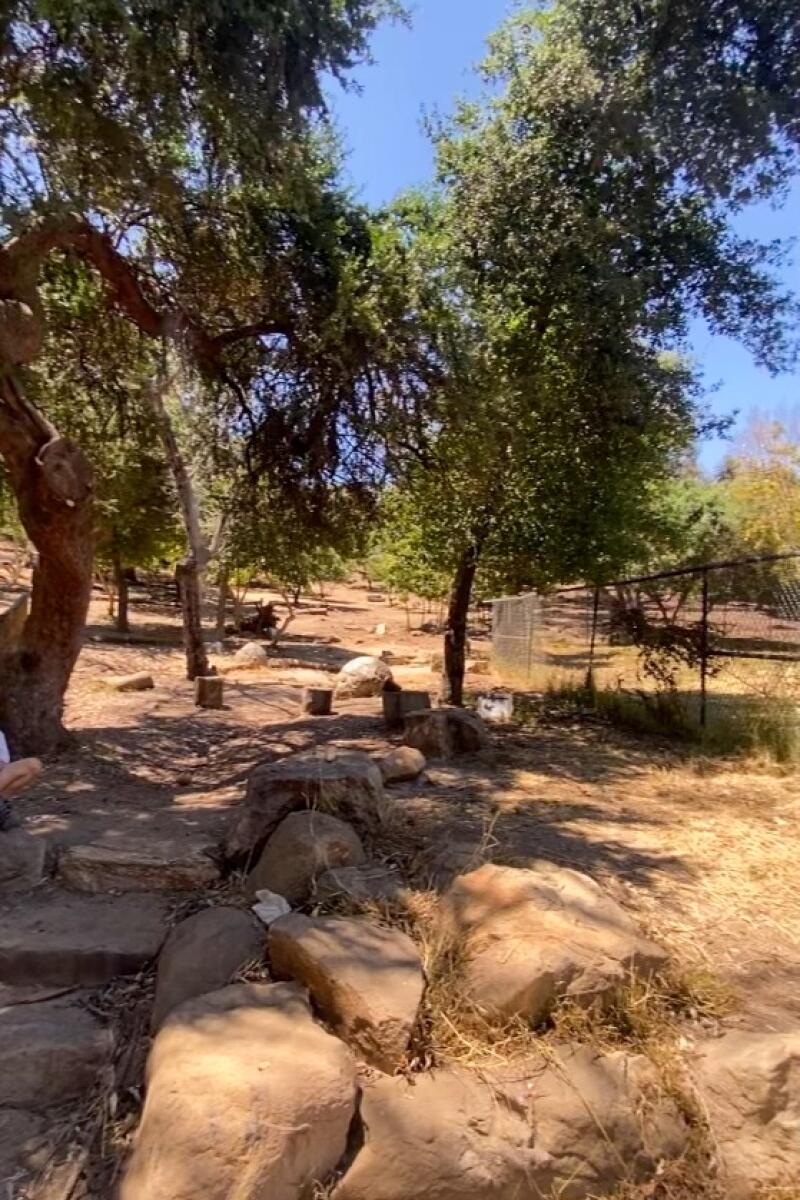
The Children’s Garden in Elysian Park on a rainy day in February, 2024 (top) and after the brush clearance on June 27, 2024. (Becca Hackett-Levy)
Today, the area looks denuded. The remaining trees have been trimmed so their limbs are at least 6 feet above the ground per fire prevention rules, some of the plant identification markers have been upturned and the dry, loose soil is covered with leaf debris.
Both Mariposa and North East Trees contract with the city on other projects. Neither was willing to be interviewed for this story.
The brush clearing was required by the Los Angeles Fire Department to protect a metal shed where the parks department stores fuel for lawn mowers, said Leon Boroditsky, principal ground maintenance supervisor for the forestry division of Recreation and Parks.
While fire inspectors issued a brush violation around the shed at the Children’s Garden in March, they would not have required those mature native shrubs to have been removed, Los Angeles Fire Department spokesperson Karla Tovar said Friday. Typically Recreation and Parks officials consult with fire inspectors about how the trimming should be conducted, Tovar said, but that didn’t happen this time.
LAFD is “saddened by the approach that was taken with this brush clearance,” Tovar said. “We look forward to collaborating with [Recreation and Parks] in future endeavors to make sure something like this doesn’t occur again.”
Boroditsky didn’t order the clearing; he was away when the project was contracted. He said that he didn’t know how long the shed had been at the site but that this appeared to be the first year the LAFD felt the building needed to be considered a structure under the brush-clearing rules.
The city is also trying to find out how and why North East Trees installed the native plant garden at the park in the first place. It happened about 20 years ago, said Rose Watson, public information director for Recreation and Parks, but the department can’t find any documents outlining the project or what plants were added to the site.
There are lots of unanswered questions, Boroditsky said, and the clearance has created so much uproar that the city plans to bring in an independent third-party “arboreal expert” to do their own evaluation.
“There have been a lot of knee-jerk reactions and inflammatory rhetoric happening,” Boroditsky said. The city doesn’t even have photos of what the area looked like before the clearing, he added, “which is why I’m saying they don’t have evidence to make some of those claims.”
The site is in what the fire department classifies as a “very high fire hazard severity zone,” Boroditsky said, and the rules for clearance in such spots are strict. For instance, in “areas within 200 feet of structures and/or 10 feet of roadside surfaces or combustible fence: Grass shall be cut to 3 inches in height. Native brush shall be reduced in quantity to three inches in height. This does not apply to individual native shrubs spaced a minimum of 18 feet apart, provided such shrubs are trimmed up from the ground to 1/3 of their height with all dead material being removed ….”
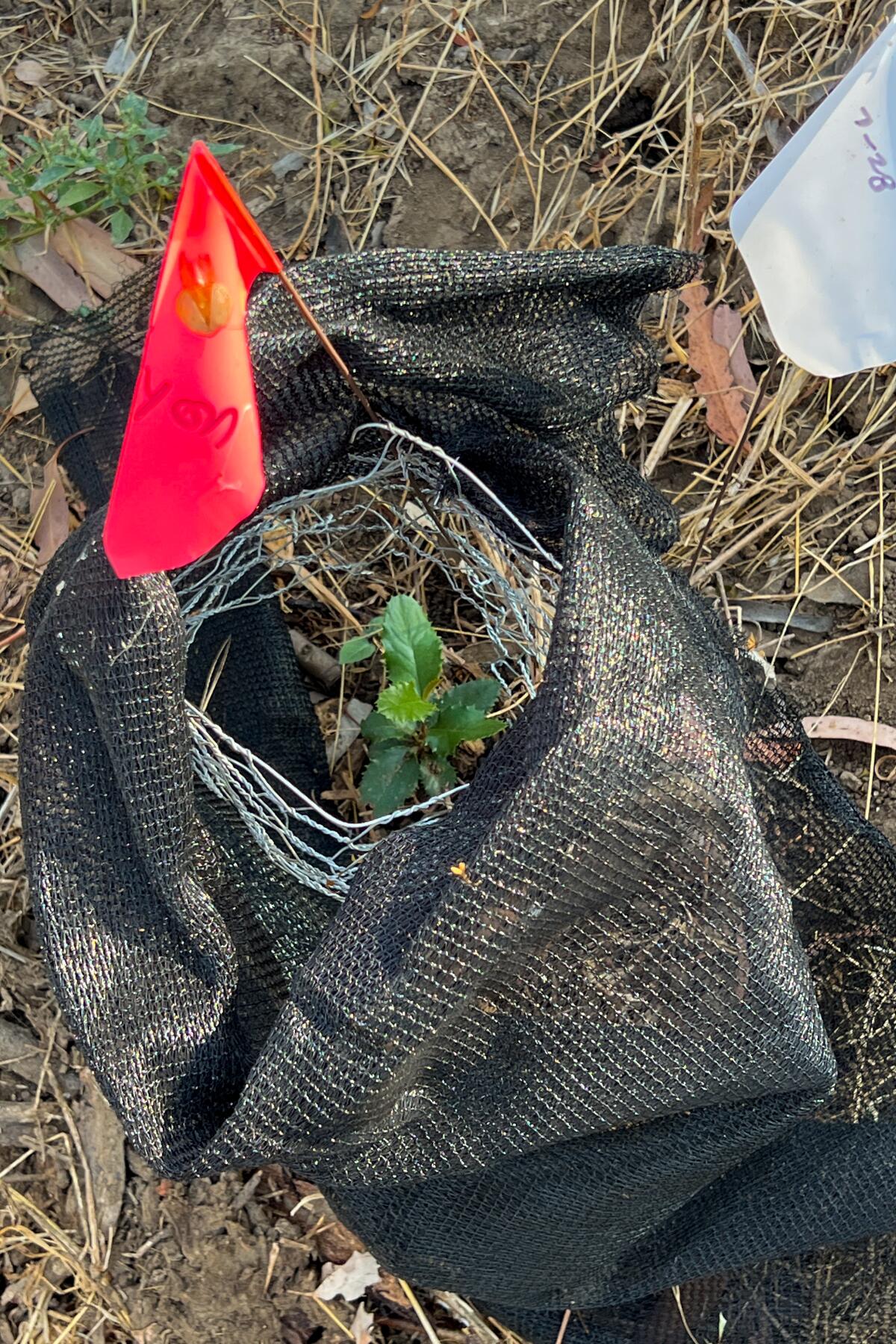
Volunteers located tiny native plants like this toyon that survived the brush clearing, wrapping them in shade cloth to protect them from the scorching sun.
(Jeanette Marantos / Los Angeles Times)
So basically, the city paid $12,500 for brush clearance to protect a metal storage shed. Critics question whether it would have been simpler and cheaper to just move the shed, say to the adjacent Grace E. Simon Lodge enclosure? “That’s really not something I can clarify now,” Boroditsky said. “That’s something we’re evaluating now.”
Becca Hackett-Levy, director of the Northeast LA Forest School, said the shed was at the Children’s Garden before she began using the location nearly eight years ago. She added that she was on maternity leave after the birth of her second child when she got panicked calls from parents saying the space she had paid the city to use for her year-round outdoor classroom had been devastated.
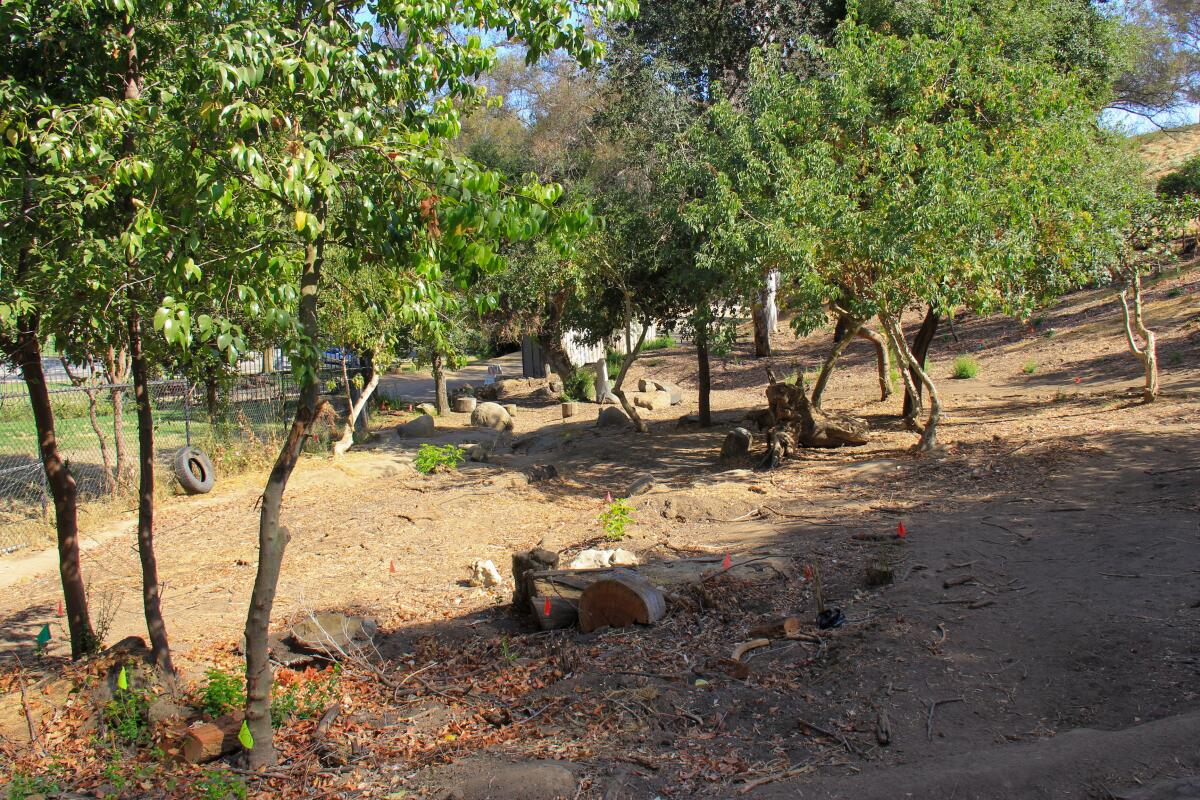
A storage shed at the edge of the Children’s Garden in Elysian Park reportedly triggered the brush clearance around the site. The Grace E. Simon Lodge is behind the fence to the left.
(Jeanette Marantos / Los Angeles Times)
After weeks of uncertainty, Hackett-Levy said she got a call from parks officials Tuesday who told her that they’d found some areas she might be able to use nearby. “They found some good spots in the area, and they’re even changing their mowing schedule to accommodate the school,” she said Wednesday. “I’m just so thankful and shocked, frankly.”
The other concerns won’t be so easily resolved.
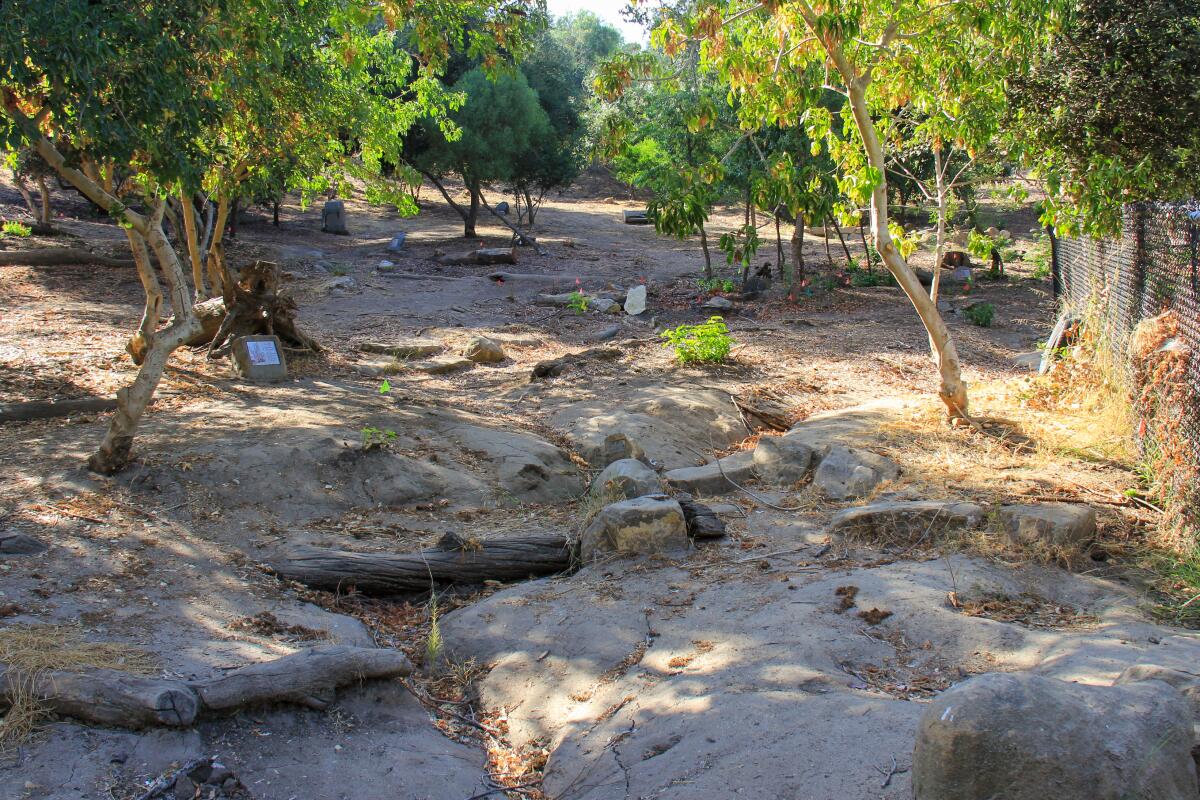
The Elysian Park Children’s Garden on Aug. 1, about a month after the brush clearance.
(Jeanette Marantos / Los Angeles Times)
Native plant supporters mobilized within hours of the clearing to locate and try to protect surviving baby native shrubs, dotting the area with small red and yellow flags to indicate their locations. Without shelter from the larger shrubs, they were vulnerable during the severe heat, said Brenda Contreras, director of the native plant and wildlife support group Coyotl wan Macehualli. So volunteers wrapped many of the plants in chicken wire and shade cloth for protection and carried in water to irrigate the survivors.
Elizabeth Birkenbuel, who lives above the site on Park Drive, was so distressed by volunteers lugging large containers of water on the slippery hill that she encouraged them to hook up hoses to her outdoor faucet so they could more easily fill their buckets.
The city typically does brush clearance in the area to remove invasive and highly flammable black mustard and castor bean plants, Birkenbuel said, “but it was really aggressively cleared this time, in a way I’ve never seen it done before. I was very shocked. I usually end my walks there in the summer because it was very shaded, lush and cool, but it’s vastly different now.”
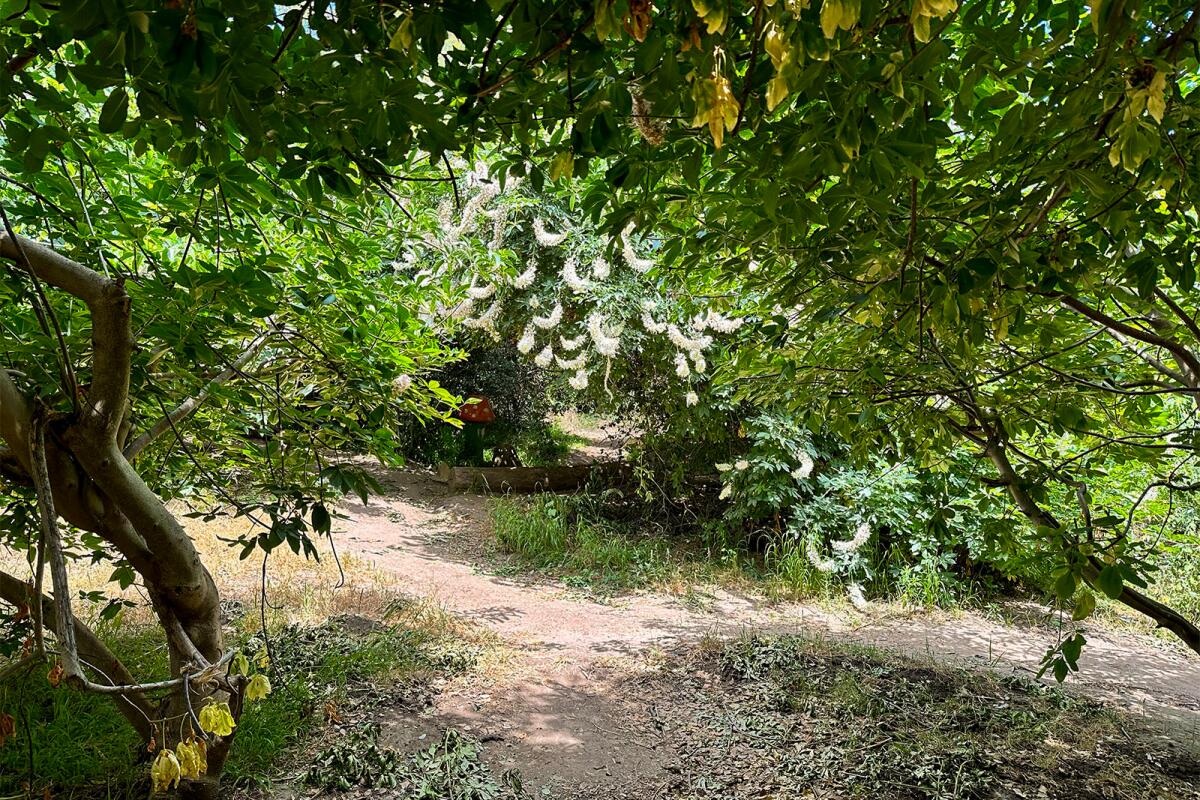
The Children’s Garden in Elysian Park, before the clearance of plants.
(Shari Lee)
Birkenbuel said she can’t afford to keep sharing her water; she’s hoping the city will provide an alternative source. That’s another thing Recreation and Parks is researching right now, Boroditsky said, along with why stakeholders weren’t given advance notice about the work, per usual, and whether the department needs to change its protocols for when it requires environmental review of a site before brush clearance can occur.
However, native plant advocates are still going to city meetings and onto social media to accuse the city of deception and “ecocide” by killing protected plants like California black walnut.
Boroditsky, a certified arborist, said the site still has lots of native trees, like buckeyes, walnut and oaks, that may have been trimmed to conform to clearance rules but that were not removed. “There is no evidence that protected trees were removed,” he said. Although he added that that’s partly because he didn’t have any photographs of the site before the clearance to confirm what plants were no longer there.
He accused community activists of guerrilla gardening in the area by planting more native plants before the city had time to assess what happened and what needed to change. Adding more plants before the city has a plan is a problem, he said, because similar brush clearing might have to be repeated in the future.
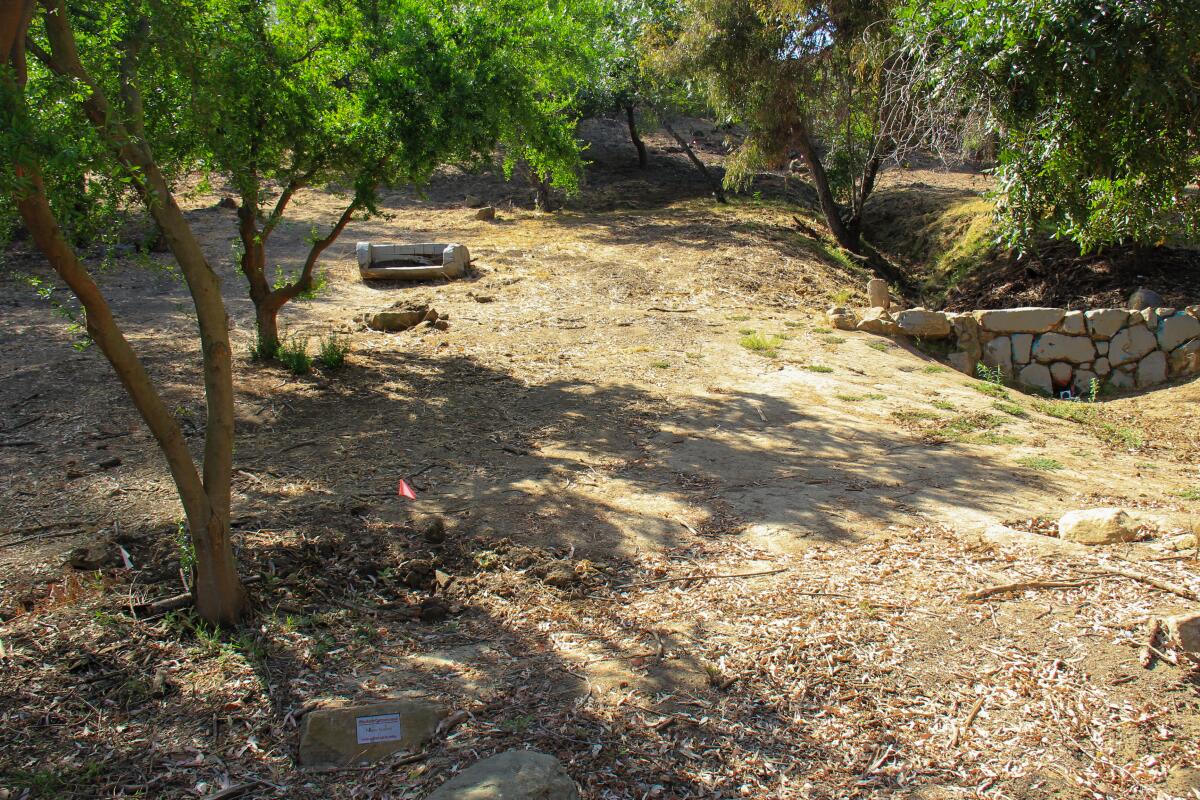
The Children’s Garden in Elysian Park on Aug. 1, about a month after the brush was cleared.
(Jeanette Marantos / Los Angeles Times)
However, Contreras and Flink say no one is putting new plants into the ground, especially in the heat of summer, when they would have little chance of surviving. All they’re doing, Contreras said, is trying to identify the plants that survived the clearance and keep them alive until the rains come this winter, which, they worry, could result in problematic erosion in that stripped area.
Meanwhile, Mason Flink and Max Kanter, co-founders of Garden City LA, are trying to build awareness of land management at the park by leading free, hour-long tours on the West Loop Trail from Aug. 10 through Sept. 1 to demonstrate the ways public lands can be managed and how the public can get involved. The tour includes the cleared Children’s Garden and the thriving native plant Test Plot gardens they help tend near the Marian Harlow Grove.
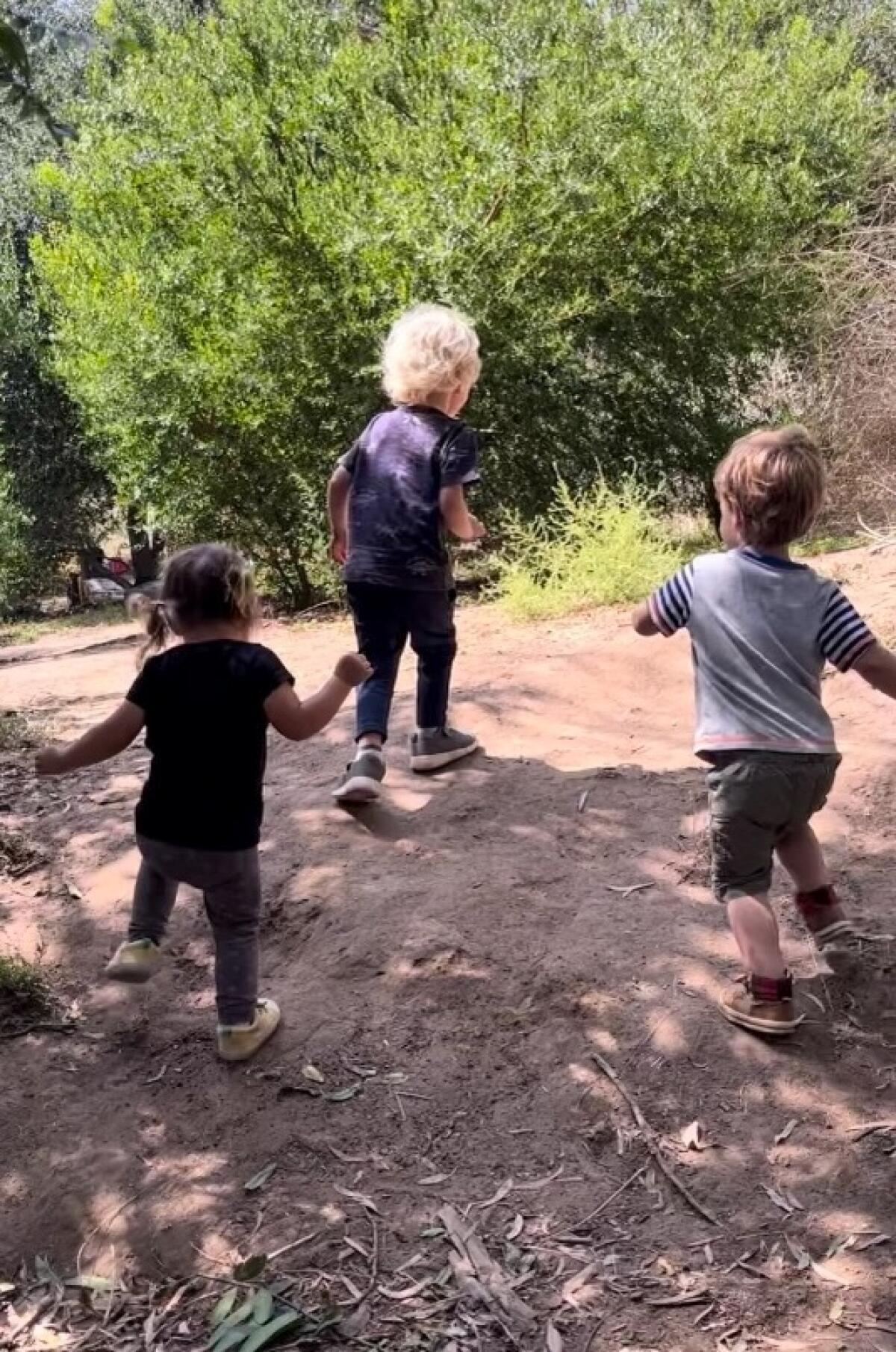
Preschoolers from the Northeast LA Forest School race up a path last fall toward the native shrubs in the Children’s Garden at Elysian Park.
(Becca Hackett-Levy)
“Before they cleared out all the native plants, our point of going through the Children’s Garden was to show how all this life was flourishing,” Flink said. “Now it will offer a stark visual contrast to the Test Plot native plant gardens to spark conversations among the participants.”
Los Angeles City Councilman Hugo Soto-Martinez, whose district includes that part of Elysian Park, has taken the role of mediator and hopes to bring everyone together to discuss what happened and how to avoid problems going forward.
The city “made a big mistake in not communicating with the community groups” who frequent that space, Soto-Martinez said in an interview. But Recreation and Parks “gave the correct instruction for the brush clearance,” he added, “because we don’t want a brush fire in that area with so many homes nearby.”
As for the storage shed that apparently triggered the $12,500 upset: “That’s one of the first things we thought about … couldn’t we have just moved it?” Soto-Martinez said. “I think that’s a very simple question to ask and a fair thing to keep asking.”




An underwater view shows US’ Lilly King competing in a heat of the women’s 200m breaststroke swimming event during the Paris 2024 Olympic Games at the Paris La Defense Arena in Nanterre, west of Paris, on July 31, 2024. (Photo by François-Xavier MARIT / AFP) (Photo by FRANCOIS-XAVIER MARIT/AFP via Getty Images)
François-Xavier Marit/Getty Images
hide caption
toggle caption
François-Xavier Marit/Getty Images
This week’s show was recorded in Bloomington, Indiana with host Peter Sagal, judge and scorekeeper Bill Kurtis, Not My Job guest Lilly King and panelists Alonzo Bodden, Josh Gondelman, and Faith Salie. Click the audio link above to hear the whole show.
Who’s Bill This Time
State of the Union is Hot; The Tribal Council Convenes Again; A Glow Up In the Doll Aisle
Panel Questions
The Toot Tracker
Bluff The Listener
Our panelists tell three stories about a travel hack in the news, only one of which is true.
Not My Job: Olympic Swimmer Lilly King answers our questions about Lil’ Kings
Olympic Swimmer Lilly King plays our game called, “Lilly King meet these Lil’ Kings” Three questions about short kings.
Panel Questions
Cleaning Out The Cabinet; Bedtime Stacking
Limericks
Bill Kurtis reads three news-related limericks: Getting Cozy With Cross Country Skiing; Pickleball’s New Competition; Bees Get Freaky
Lightning Fill In The Blank
All the news we couldn’t fit anywhere else
Predictions
Our panelists predict, after American Girls, what’ll be the next toy to get an update.

Law Roach
Zendaya and Tom’s Wedding Already Happened …
Y’all Missed It!!!
Published
Zendaya and Tom Holland are married … so claims her longtime stylist, Law Roach.
Here’s the deal … the celebrity stylist — who started styling Zendaya way back in 2011 — spoke to Access Hollywood on the Actors Awards red carpet where he sang out “The wedding has already happened, you missed it.”
Waiting for your permission to load the Instagram Media.
The AH reporter asks in shock if that’s true … and, Law responds by saying it’s “very true” before walking off.
This isn’t the first time Tom and Zendaya’s relationship status has made headlines on a red carpet … remember at the Golden Globes in 2025, Zendaya had a ring on that finger — and, the next day, we found out the two were engaged.

TMZ.com
Zendaya and Tom met on the set of “Spider-Man: Homecoming” in 2016, started dating a couple years later and went public with their relationship in 2021.
We’ve reached out to Tom and Zendaya’s teams … so far, no word back.

Online prediction market platforms allow people to place bets on wide-ranging subjects such as sports, finance, politics and currents events.
Photo Illustration by Scott Olson/Getty Images
hide caption
toggle caption
Photo Illustration by Scott Olson/Getty Images
The rise of prediction markets means you can now bet on just about anything, right from your phone. Apps like Kalshi and Polymarket have grown exponentially in President Trump’s second term, as his administration has rolled back regulations designed to keep the industry in check. Billions of dollars have flooded in, and users are placing bets on everything from whether it will rain in Seattle today to whether the US will take over control of Greenland. Who’s winning big on these apps? And who is losing? NPR correspondent Bobby Allyn joins The Sunday Story to explain how these markets came to be and where they are going.
This episode was produced by Andrew Mambo. It was edited by Liana Simstrom and Brett Neely. Fact-checking by Barclay Walsh and Susie Cummings. It was engineered by Robert Rodriguez.
We’d love to hear from you. Send us an email at TheSundayStory@npr.org.
Listen to Up First on Apple Podcasts and Spotify.

South Georgia honors Officer Caleb Abney

Hawaii County Weather Forecast for March 02, 2026 | Big Island Now
Idaho Lottery results: See winning numbers for Pick 3, Pick 4 on March 1, 2026

2 men shot, 1 fatally, outside bar in Morris, police say

What Tom Izzo said after Michigan State’s win over Indiana

Florida High School Football Rankings: Top 25 teams – Oct. 21

Cleary's 21 help Le Moyne down Central Connecticut State 69-64 in OT

How old is Bo Nix? What to know about Oregon quarterback ahead of 2024 NFL Draft

99th annual Pony Swim held in Virginia

Indiana Members Credit Union announced as new anchor tenant at Bottleworks District

House Republicans push Johnson to go to war with Senate over SAVE Act

Israel FM says Europe too divided, slams Spanish PM

Satellite images provide view inside Iran at war

Video: What the Texas Primary Battle Means for the Midterms

Dems’ potential 2028 hopefuls come out against US strikes on Iran
-

 World4 days ago
Exclusive: DeepSeek withholds latest AI model from US chipmakers including Nvidia, sources say
-

 Massachusetts5 days ago
Mother and daughter injured in Taunton house explosion
-

 Denver, CO4 days ago
10 acres charred, 5 injured in Thornton grass fire, evacuation orders lifted
-

 Louisiana1 week ago
Wildfire near Gum Swamp Road in Livingston Parish now under control; more than 200 acres burned
-

 Technology1 week ago
YouTube TV billing scam emails are hitting inboxes
-

 Politics1 week ago
OpenAI didn’t contact police despite employees flagging mass shooter’s concerning chatbot interactions: REPORT
-

 Technology1 week ago
Stellantis is in a crisis of its own making
-

 News1 week ago
World reacts as US top court limits Trump’s tariff powers