Lifestyle
L.A. Affairs: My roommate had sun-kissed skin and a movie-star smile. Was he my Romeo?


I grew up in Los Angeles a hopeless romantic with my head permanently tilted toward the sky and a copy of “Romeo and Juliet” worn from rereading. I devoured that book far too young and believed in it far too earnestly. Soulmates weren’t just an idea — they were a promise. I believed in love that defied reason and timing, in glances across rooms that changed the course of your life, in poetry etched into every heartbeat.
But by 21, the fairy tale had started to crack. A traumatic experience with a man I had trusted shattered my sense of safety and desire. For three years, I withdrew from dating entirely. I told people I was “focusing on myself,” which was true in part, but it was also a shield. I was afraid — afraid of being seen, of being wanted, of wanting back. I felt like a locked door that I didn’t even remember how to open.
Still, no matter how deeply I buried it, I couldn’t stop craving the very thing I feared most: love. The real kind. The sweeping, soul-consuming kind I had always dreamed of. The kind that felt like coming home.
Then I moved into an actors’ house in Los Feliz — a beautiful kind of chaos only L.A. could produce. Four roommates, each chasing a different dream, all of us messy, creative and trying to make something of ourselves. One of them had just arrived from Australia. I still remember the first time I saw him — tall, sun-kissed skin, dark golden curls, movie-star smile and a voice that made everything sound like a love song. Even “pass the almond milk” felt flirtatious coming from him.
He had that magnetic energy — the kind that makes you turn your head in a crowded room without even knowing why. He was already well-known back home, but here he was starting from scratch. That vulnerability, mixed with his charm, made him impossible not to notice. I didn’t just notice. I was drawn in like a tide to the moon.
We started spending time together, at first just casually, but then constantly. Hikes through Griffith Park, conversations that started over coffee and lasted until 2 a.m. in the kitchen. Walks through Silver Lake where our hands brushed just slightly too long. He listened intently. He remembered little details I’d said in passing. He looked at me like I was a story he wanted to read slowly.
And somewhere in the middle of all of that, I started to feel it — those soft, fluttering butterflies that made it hard to breathe around him. The kind of feeling I thought I’d lost forever. I’d catch myself staring at him, not even trying to hide it. My heart would do this little skip when he laughed at my jokes or looked at me too long. I started to wonder: Is this it? Could he be the one?
I couldn’t even see other guys anymore. He had warped my radar. Every song reminded me of him. My mind raced ahead, imagining a future that didn’t even exist yet — a montage of quiet mornings, long walks, maybe even moving back to Australia with him. It was completely unhinged and yet felt undeniably real.
One night, we were sitting on the couch after everyone else had gone to bed. A movie played softly in the background, something neither of us were really watching. There was a long silence — not awkward, just full — and then he turned to me, his eyes searching mine.
“I really like you,” he said, barely above a whisper.
I felt my heart seize up. I didn’t move. I didn’t breathe.
He leaned in slowly, giving me time to meet him halfway.
But I couldn’t. I froze.
Just before our lips touched, I gently pulled back and looked away.
“Sorry,” I said, barely audible.
He paused for a second, then gave me the softest smile. “It’s OK,” he said without missing a beat. “No pressure, all right? Let’s just pretend that didn’t happen.”
And just like that, we moved on. No awkwardness. No pressure. He handled it with such grace that, if anything, I liked him more. It felt like confirmation that he really saw me — not just as someone to conquer, but someone worth being patient with.
But a few days later, the shine started to fade.
We were sitting on the back steps one afternoon when he mentioned, almost in passing, “There’s something I should probably tell you. I have a girlfriend.”
I blinked. “Wait … what?”
“She lives in Germany,” he said, voice quiet. “It’s been four years. We’ve been long-distance for a while. It’s kind of on the rocks, but … we’re still technically together.”
Technically.
I felt the bottom drop out of my chest. My mind scrambled to connect dots, rearranging every sweet moment under this new light.
I tried to process it, but I wasn’t angry — not yet. Just stunned. Numb. I nodded, said something like, “Thanks for telling me,” and excused myself to my room.
But then the nights started to change.
At first, I thought I was imagining it. But after that conversation, the energy in the house shifted. Almost every night, I’d hear new voices. Laughter. Sometimes flirtatious whispers in the hallway. One night, I passed a girl in the kitchen making toast at 1 a.m. in his hoodie. She smiled politely. I didn’t ask questions.
It became a pattern. A different girl, almost every night. He’d meet them on Raya or Tinder. Beautiful, charismatic women, most of them aspiring actors or models. I never heard him brag about it. He wasn’t showy. But it was unmistakable — he was spiraling into something.
And I couldn’t stop watching.
Part of me was devastated, even though I had no claim to him. I’d been imagining a future. I had started to believe he was my soulmate. But this wasn’t what soulmates did. Soulmates didn’t treat people like rotating doors.
Eventually, during one of our rare quiet nights alone, I brought it up.
“Hey,” I said gently. “Are you OK?”
He paused, staring at his hands. Then, with surprising openness, he admitted, “I think I have a problem.”
He explained that sex was like a compulsion for him. That he’d been using it to cope with anxiety, loneliness, the chaos of this city. That it made him feel better — for a moment. But never for long. He looked up at me, eyes raw.
“I’m trying to get a handle on it,” he said. “But it’s hard.”
I sat beside him, silent. Not judging. Just listening.
He wasn’t cruel. Just deeply lost. One of the many people in this city chasing something they couldn’t quite name. He wanted to be loved, just like me. He just didn’t know how to be safe with it.
I was relieved we hadn’t crossed that line. That I’d kept one piece of myself intact. But it also marked something final. The moment I stopped seriously considering dating a man in Los Angeles.
I still love this city. I still take the same walks. Still linger in cafes, hoping for something soft and sincere to cut through the noise. But I don’t fall for fantasies anymore, especially not the kind wrapped in accents and charisma.
The charming, sex-addicted Australian man? He’s still one of my closest friends. We never kissed. We never even talked about it much.
Experiencing romance is without a doubt one of the finer things in life, but it’s not always the most fulfilling. Soulmates show up in many forms, and sometimes the realest love one will experience is with a dog or a family member or a platonic friend and that’s OK. All love is great love.
The author is an actor and writer living in Los Angeles. She grew up in the city, still believes in love (sometimes) and takes too many long walks through Silver Lake and Los Feliz.
L.A. Affairs chronicles the search for romantic love in all its glorious expressions in the L.A. area, and we want to hear your true story. We pay $400 for a published essay. Email LAAffairs@latimes.com. You can find submission guidelines here. You can find past columns here.

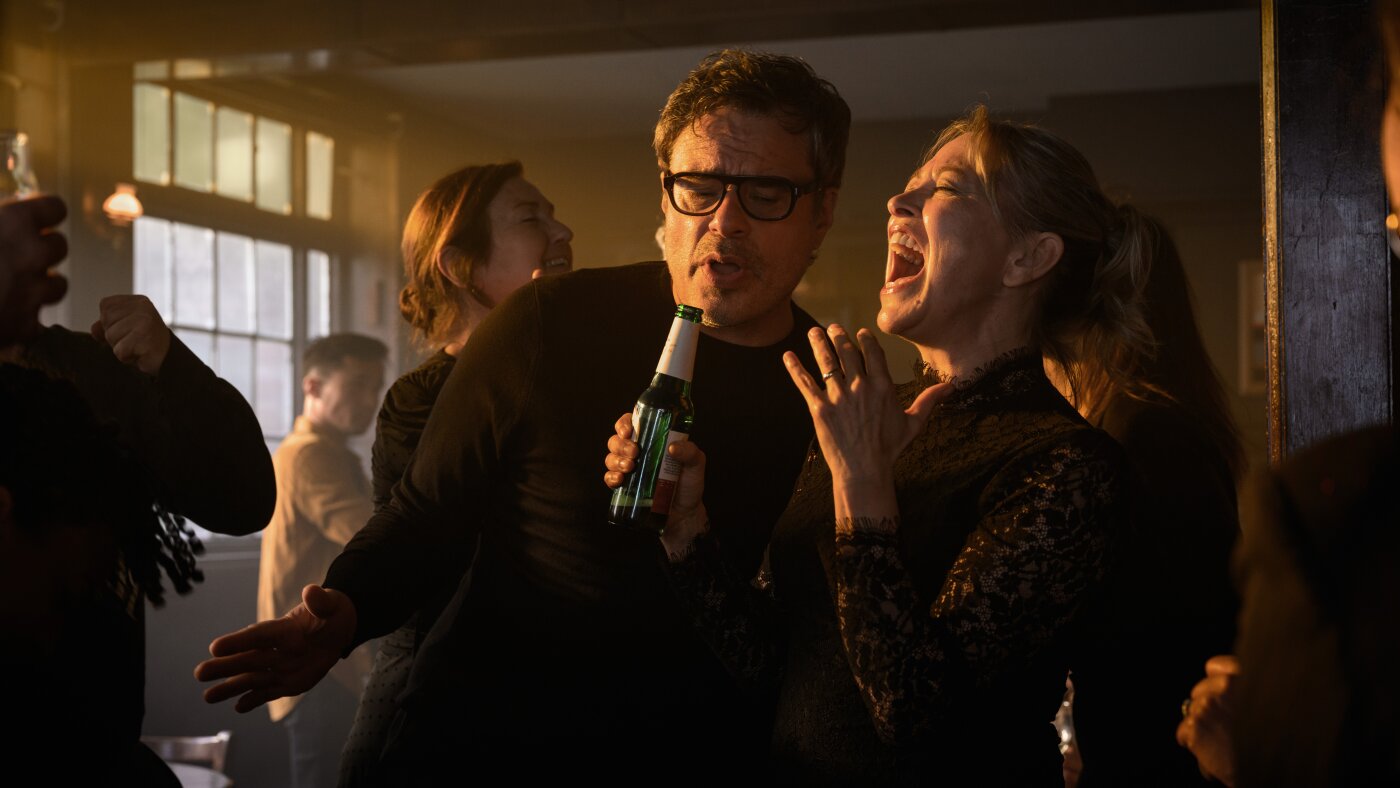
In Alice and Steve, Jemaine Clement and Nicola Walker play long-time friends who turn on each other after he gets involved with her 26-year-old daughter.
Lara Cornell/Disney+
hide caption
toggle caption
Lara Cornell/Disney+
I grew up watching episodic shows on network TV, nearly all of them formulaic but some indelibly great. Then, like everyone else, I moved into the days of what my colleague David Bianculli dubbed Platinum TV, where series like The Sopranos and The Wire and Fleabag aspired to something higher. What both these eras had in common was that their shows were carefully crafted — they had an internal logic, and a tone, that held them together.
In recent years, though, there’s been a proliferation of shows that, possibly obeying some algorithm, care less for coherence than sensation. They lurch among tones, from cuteness to sentimentality to meanness, stirring in random plot twists along the way. Bouncing all over the emotional map, these shows depend on compelling actors and a few memorable scenes to make us overlook their loose construction.
A great example is Alice and Steve, an entertaining but sometimes exasperating six-part British comedy on Hulu about two 50-something best friends who turn on each other after he gets involved with her 26-year-old daughter.


While the premise is juicy, it’s also a tad yucky, and I mainly tuned in because its title characters are played by performers Jemaine Clement from Flight of the Conchords and Nicola Walker, whom I’ve raved up on this show more than once.
The series starts poorly with Steve and Alice going on a cutesy bender after a friend’s funeral. Now, I always hate drunk scenes, which are an invitation to overact. As Clement and Walker bray their lines, we learn that Steve’s a divorced celebrity hair stylist who can’t find a girlfriend while Alice is a clothes designer with a doting younger husband, nicely played by Joel Fry, a sweetie-pie of a teenage son — that’s Tyrese Eaton-Dyce — and, of course, that 26-year-old daughter, Izzy, who has inherited her mother’s willfulness. Played by Yali Topol Margalith, Izzy kickstarts the plot by flirting with Steve. Predictably, he succumbs.

Almost immediately, they think they’re in love. While the weak-willed Steve wants to hide their romance — he knows it’s inappropriate — Izzy just blurts out the facts to her mom. Alice flips. And from hereon out in this series where the women are as alpha as the men are hangdog, Alice drives the action. Betrayed and violently angry, she’ll do whatever it takes to break them up — no matter who gets hurt. Her antics unleash Steve’s own malice. We’re in Beef territory.
At its core, Alice and Steve hinges on the way that platonic friendships are often richer and more powerful than romantic ones. It’s a fascinating subject, which may be why I found the script by Sophie Goodhart so frustrating. I wanted her to dig deeper. While the show’s got some very funny bits — Alice’s sharp-tongued mother is a blast — it’s often annoyingly lax.

If Steve really does the hair of Charli XCX, how come he’s a clueless older guy whose pop culture references are Willie Nelson and Woody Allen? If Izzy truly adores her mother as she claims, why does she keep rubbing her relationship with Steve in her mom’s face? Halfway through, one character nukes the other’s career, but this life-shattering event has no real weight: It’s barely even mentioned for the rest of the series.
That said, Alice and Steve is worth seeing for scenes like the one in which Steve spinelessly sells Izzy out or the lacerating discussion between Alice and her husband when he fully grasps that he adores a woman who views him as a reliable but dull concierge, not a man she likes hanging with. Most touching of all may be the lovely sequence when Alice, wise for once, smooths a romantic crisis between her son and his would-be girlfriend, a pair who are the show’s emblem of hope. For once, we understand why people love her.

While most viewers will find Steve more likable than Alice — the show takes pains not to make him appear predatory or creepy — the role doesn’t give Clement a whole lot to do except play variations on shambolic dread and discomfort. The show gets its galvanizing zing from Walker, a beloved star in England with amazing, luminous eyes. Her Alice is the kind of complicated, volcanic heroine that you don’t see in movies and rarely see on TV, one who shows her apocalyptic rage freely and in many different forms.
At least once in every episode, something would lead me to say, “Man, is this show a mess.” But that wasn’t a deal breaker. I kept watching. After all, life is messy, too.


How to enter your Sporty Spice era.
Getty Images/quantic69/Olga Kurbatova/Anastasiia Zvonary/Photo Illustration by NPR
hide caption
toggle caption
Getty Images/quantic69/Olga Kurbatova/Anastasiia Zvonary/Photo Illustration by NPR
Reality dating and professional sports are not as different as you’d think.
Brittany is in her Sporty Spice era – she watched the NBA playoffs, she’s following World Cup games, and she’s watching the New York Liberty play their WNBA season. These games are daily – and so is the reality dating show Love Island. And she noticed that the two formats are not very different at all. Defector.com staff writer and co-owner Kelsey McKinney came to the same conclusion – so the two of them discuss why these games of athleticism and love can bring us together… and why they get valued differently in our culture.
For more episodes on sports and reality TV, check out:
Get rich or die trying: how sports betting is changing our love of the game
Is this the end of reality TV?
The ugly truth of America’s expensive homes
Support Public Media. Join NPR Plus.
Follow Brittany on Instagram: @bmluse
This episode was produced by Liam McBain. It was edited by Neena Pathak. Our Supervising Producer is Cher Vincent. Our Executive Producer is Barton Girdwood. Our VP of Programming is Yolanda Sangweni.

-

 South Dakota3 minutes ago
South Dakota native lived near Iranian missile & drone attacks
-

 Tennessee8 minutes ago
The Recipient of Taylor Swift’s Bouquet Toss Has Strong Tennessee Football, Lady Vols Basketball Ties | Rocky Top Insider
-

 Texas15 minutes ago
Texas Rescuers Save Woman From Sewage-Filled Ravine
-

 Utah18 minutes ago
Fireworks ban expires as Utah weighs Pioneer Day restrictions
-

 Vermont23 minutes ago
Authorities ID girl who died in Vt. river, older brother who died trying to save her
-

 Virginia30 minutes ago
How Virginia became the world’s data center capital and how it’s going – WTOP News
-
Washington33 minutes ago
Question of the week: What does Santana Moss think of Washington’s WR depth?
-

 Wisconsin38 minutes ago
Wisconsin Supreme Court puts ICE detainers suit on hold pending appeal


