Lifestyle
'Interpretations of Love' is debut novel for 82-year-old author

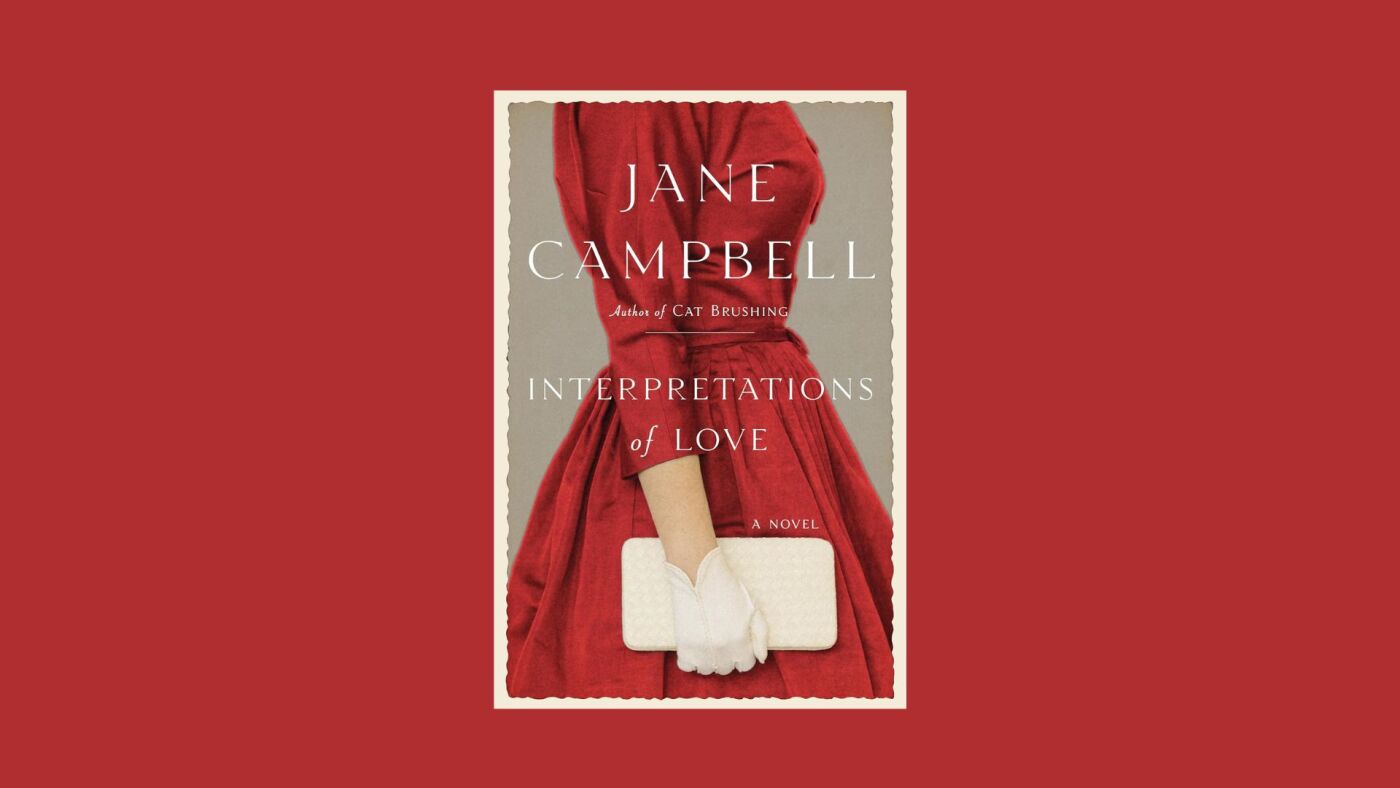
Jane Campbell made a splash with her first book, Cat Brushing, a collection of provocative stories about older women still very much in touch with the sensual side of life. It was published two years ago, when she was 80.
Her follow-up, a first novel called Interpretations of Love, is a decidedly less sumptuous book involving a long-buried family secret and moral conundrum that dates back to WWII. At its heart are several characters trying to come to terms with the holes in their lives.
Malcolm Miller’s life seems to have shriveled prematurely. In 1946, as a 20-year-old, he promised to mail a letter for his vivacious older sister. Sophy had written to Joseph Bradshaw — the young doctor with whom she spent a passionate night while sheltering from the Blitz — because she believes he might be the father of her four-year-old daughter, Agnes. Shortly after entrusting Malcolm with the letter, both Sophy and her kind husband Kurt, whom she had married soon after her “dramatic encounter” with Joe, die in a car accident. On her deathbed, Sophy asks her brother whether he’s delivered her letter. Wanting to reassure her, Malcolm lies and says yes. Agnes is raised by her emotionally distant grandparents, with occasional visits from “Uncle Mally.”
Some 50 years later, Malcolm, emeritus professor of Old Testament Studies at Oxford, still has the letter. ( I’ll leave the “why” for you to discover in reading.) In fact, he held onto it even when Joe, in an unlikely twist, had unwittingly become an important figure in Agnes’ life during a crisis in her marriage. Malcolm is consumed with remorse over his dereliction of duty, and hopes to settle the matter and ease his conscience before he dies.
Self-excoriating to a fault, Malcolm is a hard character to love. Part of the generation shaped by the strictures of war and tight social mores, he is a self-declared “crusty old bachelor with a dicky heart” who lives “in a sort of tepid slurry of dissatisfaction with myself and my life.”
Campbell, who studied at Oxford and worked as a group psychoanalyst for 40 years, weaves a dilly of a plot that brings her characters together for a wedding, a christening, and a funeral. Many of the guests at each event are related by marriage or love affairs. The narration alternates between stodgy Malcolm, troubled Agnes, and Joe, a psychotherapist who claims to be more of a scoundrel than we ever see. Along the way, there’s plenty of soul-searching, confessionals, and picking apart of the proceedings. The ramifications of Sophy’s letter are analyzed from multiple angles, teasing out Malcolm’s sad reasons for having withheld it. But because the narrators’ points of view are not distinct enough, the book feels repetitive.
At its best, Interpretations of Love recalls the work of 20th century British writer Mary Wesley. Beginning in her 70s, Wesley brilliantly channeled the social liberation catalyzed by the war years in lusty novels such as The Camomile Lawn and Not That Sort of Girl.
Interpretations of Love is a heavier, more constrained affair, weighted by loss, haunting memories, and a sense of missed opportunities. Gorgeous descriptions of Agnes’ rich ex-husband’s garden alternate with flat lines like “Agnes grew up to be as clever as anything and went off to university.”
One of the hazards of book reviewing is that you can’t help but trip over familiar plots. Just this past spring, Valerie Perrin’s Forgotten on Sunday, for example, involved a young French girl who lost both her parents in a car accident, was raised by her dour grandparents, and as an adult, finally learned the truth about what really happened.
Of course it’s what a writer does to make these classic stories their own that matters. In Interpretations of Love, Campbell brings her analytic background to bear on an extended exploration of ambiguity — in love, in questions about free will, and in the unfathomability of both past and future.
Towards the end of the novel, Agnes reminds herself — and readers – that “You will have to wait to see what the uncertain future brings…Accept the uncertainty. Do not yet try to resolve it. The dynamics of the provisional. The end is written into the beginning.” It’s quite a lead-in to the novel’s disturbing climax, which certainly commands our attention — and upends any sunnier views of this family’s future we might have been harboring.



Once rivals on the tennis court, Martina Navratilova, left, and Chris Evert have become close friends in retirement. They are pictured above at the French Open in 1986.
Trevor Jones/Getty Images Europe
hide caption
toggle caption
Trevor Jones/Getty Images Europe
Chris Evert and Martina Navratilova were the most successful women’s tennis champions of their generation. Both were 18-time Grand Slam tournament winners — and each other’s greatest rivals.
Evert, a Florida native, became a tennis star in her teens. Navratilova was born in communist Czechoslovakia, and emerged as a player after Evert was established. They first faced off during a match in Akron, Ohio, in 1973, when Evert was 18, and Navratilova was 16. Evert won, but Navratilova left an impression.
“I remember thinking to myself, holy cow, when this young girl gets into better shape, she is going to be a force to be reckoned with,” Evert says. “She had so much talent. Her hands were quick, she had a big first serve, she had a big forehand, and she just was so powerful.”

Two years later, on the day she lost a semifinals match to Evert at the U.S. Open, Navratilova defected to the U.S. In the years that followed, her tennis game improved. Though she and Evert had initially been friendly, the friendship cooled as their rivalry heated up.
“Playing Chris was difficult because how can you not like Chris? What’s not to admire?” Navratilova says. “She was like the epitome of cool.”
The new Netflix documentary Chris & Martina: The Final Set tells the story of how Evert and Navratilova re-established their friendship and how they both faced cancer in retirement. Evert was diagnosed with ovarian cancer in 2021; Navratilova was diagnosed with throat and breast cancer in 2022.
“I can’t get away from her,” Evert jokes. “We had a 15-year career, and then we got cancer at the same time. It really is freaky, but I always say: If I want someone to be in the trenches with me, it’s Martina because she has been so supportive and so understanding.”

Navratilova agrees: “We have such a level of trust that we know whatever we say to each other, it stays there. We give each other the best advice we know how to. And there is no ulterior motive, no playing games.”
At the time that this interview was taped, Evert and Navratilova were both in remission from cancer. But late last week, Evert disclosed she’d recently been diagnosed with a recurrence of ovarian cancer.

“We know whatever we say to each other, it stays there,” Martina Navratilova says of her friendship with Chris Evert.
Netflix
hide caption
toggle caption
Netflix
Interview highlights
On supporting each other through cancer
Evert: There are a lot of phone calls between us. … I don’t cook, but Martina would bake bread for me, and her wife Julia would cook, make some chicken soup. … I got a lot of food from Martina. She got a necklace from me.
Navratilova: I get jewelry from Chris, she gets food from me.
Evert: Martina’s and my relationship — because we’ve had one for 50 years — is not the type where we have to talk to each other every day to maintain the closeness. I always knew she was there. She always knew I was there if we needed to talk, and that was that.
On the weakness they experienced with cancer
Navratilova: Chris’ diagnosis and treatment was much more life-threatening than mine, percentage wise, but my treatment was more difficult physically. … I was in New York for seven weeks and I literally sat on a yoga mat, maybe half an hour of the seven weeks, and did some stretching. I couldn’t even do the down dog pose because I would have fallen down. I had absolutely zero strength left.
Evert: The chemo kicked my butt, let’s put it that way. … It left me very weak, very, very weak. After chemo I would have three or four days of intense nausea and I just would feel tingling in my body and it just wasn’t nice. I didn’t have the energy. To walk six blocks was a big deal for me. And it was foreign. You know, it felt like it wasn’t my body, for sure.
On watching the old footage of their matches together for the documentary
Navratilova: For me, it was fun watching with Chris, because we had different reactions to what happened on the court. But what impressed me is how well we played with those wooden rackets. Because you know what? Those rackets are not easy to play with. But you try to put yourself in there physically, what it was like, mentally, what it is like. And it’s like, “Oh, I should have gone down the line,” or, “I can’t believe I missed that shot.” Or “Chris, you had such a great pass.” It was amazing. So it was impressive. … I wish I could still have that six-pack, but anyhow.

Evert: I remember feeling genuinely happy for her. I remember it was her first Wimbledon. That’s always been her dream since she defected. Her family couldn’t be there to watch her. She was all alone. And I just was happy for it. And I knew that this was gonna be one of many for her to win.
On defecting to the U.S. in 1975 when she was 18 years old
Navratilova: I was thrilled to be in the States. I always loved American cars. And when you ordered a ham sandwich, you got, like, two inches of ham and two slices of bread. Whereas growing up, you had thick bread and one slice of ham. So I thought I was in heaven. And it was $2.30 for that sandwich. I still remember it. I couldn’t believe how much ham I was getting.
Lauren Krenzel and Nico Gonzalez Wisler produced and edited this interview for broadcast. Bridget Bentz, Molly Seavy-Nesper and Beth Novey adapted it for the web.

-

 Los Angeles, Ca35 minutes ago
LeBron James informs Lakers he will play elsewhere next year
-

 Detroit, MI50 minutes ago
5 realistic cornerback trade targets for the Detroit Lions after Terrion Arnold’s release
-

 San Francisco, CA1 hour ago
Headlines, June 30 – Streetsblog San Francisco
-

 Dallas, TX1 hour ago
LIVE | Ivory Coast, Norway meet for World Cup knockout match at Dallas Stadium
-

 Miami, FL1 hour ago
Every Dolphins head coach’s start in Miami from worst to best
-

 Boston, MA1 hour ago
Historian clears up one of the biggest myths about the Boston Tea Party
-
Denver, CO1 hour ago
Nemanja Jokic, the older brother of\u00a0Denver …
-

 Seattle, WA1 hour ago
3 Seahawks Rookies Who Must Step Up Right Away

