Lifestyle
'Intermezzo' is Sally Rooney's most moving novel yet

Farrar, Straus and Giroux
Sally Rooney, who made such a splash with her first novel, Conversations with Friends, back in 2017, has made it clear with each succeeding book that she is no flash in the pan. Intermezzo, her fourth novel, is her most fully developed and moving yet.
It’s about two Irish brothers, 32-year-old Peter Koubek, a Dublin lawyer, and 22-year-old Ivan, a chess prodigy, and their troubled relationships with each other and the women in their lives. After their mother moved in with another man when Ivan was small, they were raised mainly by their father, an engineer who immigrated to Ireland in the 1980s from Slovakia. We meet them soon after their father’s death following years battling cancer. Both brothers, at loose ends, are struggling with the question, “Under what conditions is life endurable?”
The simple answer, consistent throughout Rooney’s work, is that what makes life not just endurable but rich and meaningful is connecting with others, romantically and platonically, through deep conversations and love, which is easier said than done. Her novels take us down long and winding roads in search of often elusive fulfillment.

Intermezzo, although filled with plenty of grief and strife, is less disturbing (and ultimately happier, if never exactly sunny) than the early novels, including Normal People (2018) and Beautiful World, Where Are You (2021). The ever-resonant conversations, often about delicate subjects, are still alternately soul-baring and couched, plaintive and meandering. The sex scenes — physical expressions of her characters’ emotional communions — are as beautiful as ever. But Intermezzo is focused less on topical questions about how to live in a troubled, increasingly unviable world and more on the psychological ramifications of love, loss and heartache.
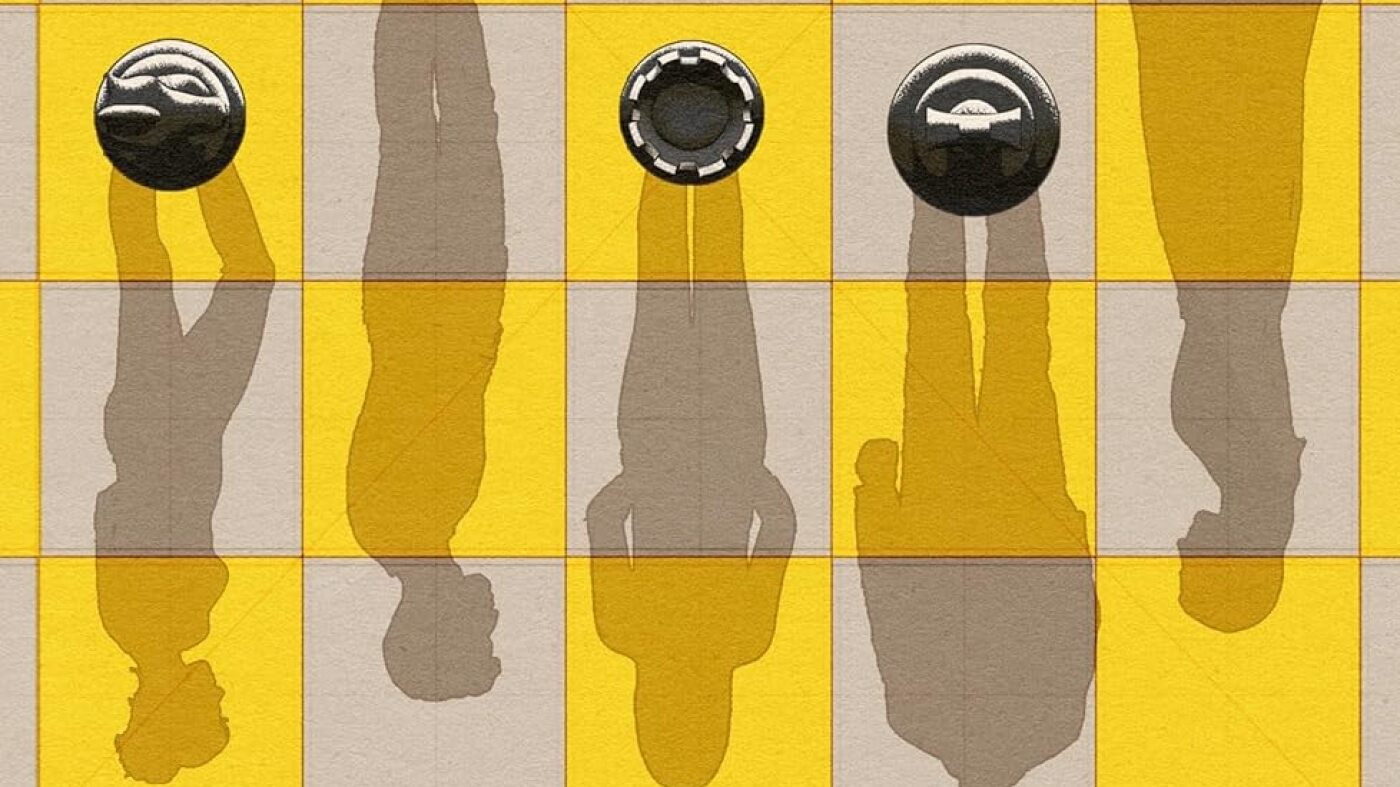
About the title: The word intermezzo, meaning an interlude in a drama, opera, or musical work, can also refer to a light palate cleanser between courses in a rich meal. Amusingly, Intermezzo is also the brand name of a form of the insomnia medication, zolpidem. But more relevant to Rooney’s novel is its sense as an unexpected move in chess. The narrative of Intermezzo, in which Rooney continually rearranges her characters like pieces on a chessboard, features many game-changing surprise moves.
It wouldn’t be a Rooney novel without romantic entanglements. Peter’s are complicated. For months, he has been involved in an “ongoing sexual and also quietly financial relationship” with Naomi, a university student who supports herself with occasional sex work. He’s fond of her, but is haunted by his abiding love for his college girlfriend, Sylvia Larkin, now a professor of modern literature. Sylvia broke up with him six years earlier after a debilitating accident, insisting that she didn’t want to ruin his life. Peter has never gotten over her, which makes him feel guilty about leading Naomi on. Rooney conveys Peter’s desperate, suicidal state with a Joycean staccato, jangled stream-of-consciousness: “Thoughts rattling and noisy almost always and then when quiet frightening unhappy. Mental not right maybe. Never maybe was.”
While Peter sees Naomi mainly in her grungy, noisy, illegal shared flat, he and Sylvia meet regularly for civilized meals and arm-in-arm strolls through familiar streets in the rain. (It’s always raining in this novel.) They talk easily about her lectures and a big discrimination case he has won against a business with a demeaning dress code for its female employees. Rooney conveys the enormous comfort Peter finds in Sylvia so well that we share “the deep replenishing reservoir of her presence.”
Ivan is as socially awkward and reticent as his brother is dominant and ambitious. Despite a degree in theoretical physics, he barely supports himself, taking on just enough freelance data analysis work to enable him to focus on competitive chess. After a weekend chess exhibition where he plays 10 people at once at a local arts council several hours outside Dublin, the program director gives him a lift to his rented lodging for the night. Margaret, 14 years Ivan’s senior, is guiltily separated from her alcoholic husband. The tentative but intense connection that unfolds between these two sidelined people is one of the great pleasures of this novel.
When the brothers get together for dinner at Sylvia’s urging, Ivan cautiously opens up about his new relationship. Peter’s kneejerk reaction is disparaging, which causes Ivan to hit back: “I’ve hated you my entire life.” With its fraught fraternal dynamic, Intermezzo taps into a classic literary theme — think Cain and Abel, Dostoyevsky’s The Brothers Karamazov, Elizabeth Strout’s The Burgess Boys, Sam Shepard’s True West, and even James Herriot’s All Creatures Great and Small.

The novel is also sprinkled with fragmented quotes from various literary classics, including Hamlet, The Waste Land, The Golden Bowl, and Ulysses — which Rooney duly cites in her endnotes. But don’t let the erudition put you off. Embedding quotes from beloved texts has become popular with writers, at once a way of paying homage and adding layers of meaning.
Intermezzo propels you to its well-earned, moving climax with nary a false move. This story about learning how to accept loss and pain ultimately involves the exhilaration of flinging all the windows and doors of life wide open: “Everything exposed to light and air. Nothing protected, nothing left to be protected anymore.”
Another question Rooney’s characters ponder: “What can life be made to accommodate, what can one life hold inside itself without breaking?” Apparently — like this novel — quite a lot.

Lifestyle
Terry Tempest Williams on why women with big ideas get labeled ‘crazy’ : Wild Card with Rachel Martin

A note from Wild Card host Rachel Martin: I met Terry Tempest Williams about 25 years ago at a writer’s conference in Yosemite Valley. I was a young reporter who was there to do a story about how literature was addressing climate change and she made such a huge impression on me. I had never heard someone talk about the natural world the way Terry did and she had a spiritual depth I hadn’t encountered in my life at that point.
To this day, Terry’s writing always reorients me towards what is good, what is beautiful, and what is true. Her newest book is called “The Glorians.”

For its upcoming Los Angeles venue, experiential art firm Meow Wolf will focus on the art of storytelling, with a specific eye toward skewering our city’s moviemaking magic. To help bring that vision to life, Meow Wolf has entered into a creative partnership with Titmouse, one of L.A.’s most renowned independent animation houses.
The Hollywood-based studio behind popular series such as “Big Mouth” and “Star Trek: Lower Decks” will create animation that will be shown throughout the West L.A. venue, which is on target for a late 2026 opening at the Howard Hughes entertainment complex.
It’s a move that represents a shift for Santa Fe, N.M.-based Meow Wolf. Over the last decade-plus, the art collective has grown beyond its anything-goes, punk-meets-psychedelic roots into an organization with full-scale, maximalist installations in its hometown, Denver, Las Vegas, Houston and the Dallas suburbs. In the past, Meow Wolf kept most of its media in-house.
As part of its larger-than-life participatory art installations, Meow Wolf L.A. will feature a mix of live action and animation, the former filmed by Meow Wolf in its Santa Fe studio. Meow Wolf’s James Stephenson, a senior VP with the company and its creative director of emerging media, said the degree to which the L.A. exhibition will lean into various animation styles necessitated an outside partner. Titmouse’s work, in development by a number of directors with contrasting tones, will be shown on a variety of formats, ranging from cinema screens to full-room projections.
“I really believe in animation as an art form, and I know the Titmouse folks do too,” Stephenson says. “Animation is made by artists. It’s made by artists with their own hands. It’s something that is still very rooted in craft.”
Meow Wolf’s L.A. space is set in a former cinema complex, and will champion its location, taking guests on a journey through a converted movie house and beyond, into a sci-fi-inspired fantasyland with sentient spaceships and a 30-foot-tall mushroom tower. Meow Wolf creatives have spoken of the fantastical movie theater as one that will feature animated, self-aware candy before attendees enter the main exhibition space, making Titmouse’s work some of the first art guests will encounter. Titmouse co-founder Chris Prynoski has said the studio has lined up at least six directors for the exhibit.
An in-progress art installation destined for Meow Wolf L.A. at the art collective’s Santa Fe, N.M., headquarters. The L.A. exhibition will feature animation from Titmouse.
(Gabriela Campos / For The Times)
Titmouse, says Stephenson, is the right partner because “they’re known less for a house style, and more for a house vibe.” Over the years, Titmouse has been behind such diverse shows as “Scavengers Reign,” owning a Jean Giraud influence rooted in French and Spanish surrealism, the lively “Jentry Chau vs. the Underworld,” with an unique color palette that took inspiration from anime and Chinese mythology, the exaggerated comic book feel of Adult Swim’s “Metalocalypse,” and the approachable yet expressive tone of “Star Trek: Lower Decks.”
“Meow Wolf’s vibe is similar to Titmouse’s vibe,” Stephenson says. “It’s artist-first, artist-driven, independent and kinda edgy. They are always trying to find the edge of what’s possible. They try to see how far they can go, and it’s done for fun and in the spirit of taking risks.”
Prynoski says working with Meow Wolf will give Titmouse a sense of artistic freedom it doesn’t always have when delivering content for more traditional Hollywood partners. He says the multi-director approach is a callback to the early days of Warner Bros. Animation, when individual creators put their own stamp on Looney Tunes material.
“I use Bugs Bunny as an example,” Prynoski says. “You’ve got a Friz Freleng Bugs Bunny short. You’ve got a Chuck Jones Bugs Bunny short. You’ve got a Tex Avery Bugs Bunny short. They’re all different versions of Bugs Bunny, and people who are really paying attention can tell which director directed each one. Even though to the layman, these are all Bugs Bunny, but if you lined them up, they are drawing in different styles, sensibilities and techniques.”
Prynoski says that was a centerpiece of his pitch to Meow Wolf, noting that characters will reappear in multiple installations, each handled by a different artist. Meow Wolf L.A., in fact, will be the firm’s most character-driven exhibition, as guests will follow the storylines of three main protagonists throughout the space.
In announcing the partnership, Meow Wolf and Titmouse released an image from an animated work directed by Luca Vitale. It features a key character having a moment with a hummingbird and it’s done in an elegant, slightly anime-influenced style. It’s an image full of movement, reflecting a character in transition with inviting pastels and bold dashes.
“I like that image because I think it captures some of the sense of wonder that we want people to feel,” Stephenson says. “The character is having an encounter with the elusive nature of creativity and reality in a way that makes them have a different perspective of what’s possible.”
Other contributing animation directors to Meow Wolf L.A. include Space Dawg, Felix Colgrave, Alexander Vanderplank and Phimémon Martin, and Jun Ioneda.
Titmouse’s partnership with Meow Wolf will extend beyond the L.A. exhibition. The two will be working on the development of Meow Wolf New York, which is slated to open some time after Los Angeles, and are collaborating on a planned animated series, which Prynoski is spearheading.
Meow Wolf exhibits are the result of sometimes hundreds of disparate artists coming together in a shared space. Distilling that into a signature, singular style for a series could be a challenge. Stephenson pinpoints some guiding principles.
“You really need to feel the hand of the artist,” he says. “You need to feel a DIY aesthetic. You need to feel the materiality. Those are very specific to what we are.”

The Kennedy Center on June 28, with its facade signage still covered by a tarp and scaffolding.
Alex Wroblewski/AFP via Getty Images
hide caption
toggle caption
Alex Wroblewski/AFP via Getty Images
On Wednesday, a federal appeals court denied President Trump’s request to stop the removal of his name from Washington, D.C.’s Kennedy Center. The signage on the building has been covered with tarp and scaffolding since June 13, but in a court filing last month, the center’s current executive director said that Trump’s name has been removed.
In their decision, three judges from the U.S. District Court of Appeals for the District of Columbia Circuit said that the president had failed to prove that the arts center would be “irreparably injured” without Trump’s name attached to it.

NPR requested comment from the Kennedy Center, but did not receive an immediate reply.
This latest round of court decisions is part of the ongoing litigation filed by Rep. Joyce Beatty, D-Ohio, against President Trump and the board of the Kennedy Center. In a statement emailed Wednesday to NPR, Beatty said: “Today’s ruling again affirms that this administration’s efforts to rename the Kennedy Center were unlawful. His name no longer desecrates this sacred memorial, which belongs to the American people. Now it is time for the Trump administration to accept this, comply with the law, and take the tarps down.”
In previous court filings, Trump’s legal team had asserted that removing the president’s name from the arts complex, both on the physical building and in its digital materials, would inflict irreparable harm in both time and money already spent. In the denial, the three judges — Patricia Millett, Robert Wilkins and Gregory Katsas — wrote that since Trump’s name has already been removed, “a stay would not avert those harms.”
Furthermore, Trump had claimed that without his name attached, future fundraising would be threatened “and [will] contribute to the financial decline of the Center.” In response, the appeals judges wrote: “Appellants, however, have failed to support this assertion with any specific facts or evidence. They offer only the conclusory assertions of the Kennedy Center’s Executive Director that were made in a factually unsupported declaration.” The center’s current executive director, Matt Floca, specializes in physical plant management.
The presiding judge in the case, Christopher R. Cooper, has ordered that the center provide him a status report on the center’s operation and programming before the end of this month. As of Wednesday, the center’s calendar lists a small roster of programs, including outdoor free movie screenings, workshops for children, and five free live performances in July on its Millennium Stage. In the past, the Kennedy Center presented over 2,000 arts and education events each year, including free daily Millennium Stage performances.

-

 Tennessee46 seconds ago
Tennessee State men’s hockey cancels 2026-27 inaugural season for second straight year
-

 Texas6 minutes ago
Ted Cruz warns Talarico has ‘real chance’ to flip Texas’ U.S. Senate seat
-

 Utah13 minutes ago
Man suspected in 2006 Utah murder left suicide note in Las Vegas jail cell: police
-
 Vermont16 minutes ago
OUTDOOR ACCESS FOR DISABLED IN VERMONT
-
 Virginia21 minutes ago
4 indicted in Virginia double homicide; second victim ID’d as grandmother of 6
-

 Washington28 minutes ago
Washington Commanders are retiring Hall of Famer John Riggins’ No. 44
-

 Wisconsin31 minutes ago
Wisconsin State Patrol rides with truck and bus drivers to spot violations in five areas
-

 West Virginia36 minutes ago
West Virginia town fires entire police force after chief resigns, sergeant alleges evidence room break-in

