Lifestyle
Inside the daring L.A. party that's like Studio 54 for 'the dreamers and the outcasts'


On the tip of Cahuenga Boulevard in Hollywood, beyond the vape-scented sidewalks and partygoers waiting for their ride-shares, there’s a velvet-roped portal to another dimension. Every first Saturday of the month, those in the know gather at the historic Spotlight nightclub for Simon Says, the city’s most daring, avant-garde LGBTQ+ party.
It’s a scene that defies easy description: Nipple tassels twirl beside kabuki-painted faces; “My Fair Lady” hats tilt above bodices constructed from yellow caution tape; liberty spike hairstyles collide with exposed flesh; and professional dommes in fishnet bodysuits playfully flog (with permission) their friends while goddesses with antlers sip drinks on velvet couches wedged between potted palms.
1
2

1. Daffne E. Cruz, left, and Daniella “Ellez” Herrera at Simon Says. 2. D’Mahdnes LaVaughn and Nathan Sierra. (Chiara Alexa / For The Times)
This isn’t Studio 54, though it shares the same spirit. It’s Hollywood reimagined. And if Simon Says, you’d better bring it.
Seductively clad dancers, including longtime host Love Bailey, flank the stage where DJs spin a fusion of New Wave, late-stage disco and early bloghouse that attracts L.A.’s queer creative underground. It’s not uncommon for celebrities like singer-songwriter Adam Lambert, electronic-pop star Slayyyter, queer streaming network co-founder Damian Pelliccione, contestants from “RuPaul’s Drag Race” and film director John Waters to pop by for a visit.
The vast majority of attendees identify as LGBTQ+, and while the door is technically open to all, it’s the ones who show up transformed — glistening, feathered, glammed out — who are whisked in the quickest. Founder and executive producer Andrés Rigal, part master of ceremonies and part fairy godmother, prowls the line, handpicking the most striking attendees and sending them past the bouncer with a nod and a smile.

Reese Rush and Andrés Rigal.
(Chiara Alexa / For The Times)
“We do run an old-school nightlife door, rewarding those who show up in stunning looks,” Rigal says. “If they’re wearing an elaborate costume they’ve been gluing together all week just to be at Simon or are a trans person all the way in the back by themselves in heels — ouch — I will give them that special moment and make them feel seen.”
Rigal is one of Los Angeles’ most prolific nightlife producers, with a reputation that precedes him. Numerous Simon Says attendees told The Times that they initially came to the party simply because they saw Rigal’s name on the flier.
Cassie Carpenter, an entertainment reporter who identifies as asexual, makes it a point to attend every event Rigal puts on. Dressed in a revealing keyhole dress and towering beehive wig, Carpenter comes to Simon Says for the ambience and the chance to dress in drag.

Cassie Carpenter.
(Chiara Alexa / For The Times)
“I hate to get in full glam for a subpar party; it’s a waste of lip gloss,” she says. “Simon Says is always worth it. I’ve met amazing people and ran into surprising old friends. Friendship is everything when you’re asexual.”
Mostly known for large-scale fêtes that attract the likes of Katy Perry, Kesha and Paris Hilton, Rigal has been a feature in the city’s queer party scene since the mid-2000s when he revamped Avalon’s former Spider Club into the boho-chic nightclub Bardot and unveiled one of the city’s longest-running and most popular Pride events, SummerTramp.
If Simon Says sounds familiar, it’s because it had a short-lived moment in 2012 when Rigal’s company, Andrés Rigal Presents, introduced it at the now-closed A-lister club Smoke & Mirrors.
Grasping onto the coattails of the waning mid-aughts, Simon Says failed to conjure much interest at the time. Rigal thinks it might have been too early to cash in on the hipster-indie-sleaze era, as “everyone was still coming out of their American Apparel hangover.” Simultaneously juggling a number of other events such as Evita, Rasputin and Mr. Black, Rigal decided to shelve Simon Says for the time being.
Toward the end of 2023, pining for a more intimate party that wouldn’t draw crowds in the thousands, Rigal discussed reviving Simon Says with his partners Daisy O’Dell, Sean Patrick and Mark Hunter. An opportunity to host it at the Spotlight, a new Hollywood club housed in the bones of one of L.A.’s oldest gay bars, presented itself, and the party kicked off at the beginning of last year.
1

2

1. A masked partygoer, left, with Drake James. 2. Wang Newton. (Chiara Alexa / For The Times)
On Saturday, Simon Says will celebrate its one-year anniversary, with music by Felix Da Housecat and house DJs Patrick and O’Dell.
The small-capacity venue sees around 700 partygoers through each night, each of whom pays $10 to dance from 10 p.m. to 2 a.m.
Motivation for guests to arrive early comes in the form of a limited-edition zine that may contain a photo of people from the previous month’s event.
Co-founder Hunter, better known as the photographer Cobrasnake, has compiled these tactile time capsules printed in black-and-white since Simon Says’ first iteration in 2012. The goal is to highlight the party’s best-dressed guests. As the back of the zines say: “Turn a look, get in the book.” Although the zine is free, only a handful are printed, scattered around the venue at the start of each night, and you won’t know if you’re in the zine until you look through it.
Queer fashion designer Drew Arvizu, 25, has attended all but two of Simon Says’ events in the last year. He’s become a party fixture not just due to his regular attendance but because of the over-the-top bespoke outfits he dons.
1

2

1. Drew Arvizu. 2. Colin Campbell, left, Drew Arvizu and Pat Posey holding a Simon Says zine. (Chiara Alexa / For The Times)
For the inaugural Simon Says, he wore a horned luchador mask and polka dot clown suit; in November 2024, he balanced a four-foot, 20- to 30-pound vintage Las Vegas showgirl headdress atop his head; and in March 2025, he flaunted one of his own creations: a floor-length yellow taxicab-checked tube dress with intentional cutouts across the breasts and groin area.
“Simon Says reminds me of why I love nightlife, and it’s definitely an incentive to pull out my sewing machine,” Arvizu says. “These zines are keepsakes from a moment in my life, and I hope I keep them forever.”
Christian Morris, a pansexual, nonbinary artist from Inglewood, attended his first Simon Says in March dressed in a tiger stripe suit, blond mullet wig and Aladdin Sane-inspired lightning bolt face makeup. Describing the event as “feeling plugged into a queer power source,” Morris noticed the partygoers didn’t just want to go to the event; they wanted to be the event.

Christian Morris.
(Chiara Alexa / For The Times)
“From the leather and chain looks to the queens in long black and yellow spiral dresses to the woman dancing on a speaker in a gold sequin romper outfit, everywhere I looked people felt hot and haute and danced with abandon,” he says.
And apparently, miracles can happen at Simon Says. Despite hardly ever meeting romantic partners on nights out, Morris left with the phone number of a “funny, super smart, sexy” crush he met on the dance floor, and the two scheduled a picnic date for the following week.
An element of romance permeates the Spotlight’s interior, with an intimate dance space and a sumptuous lounge area outfitted with Persian rugs, Victorian-style furniture and steam trunks that double as coffee tables. Also, there’s no need to leave your drink behind or grab your coat if you want a quick nicotine pick-me-up when you’re at Simon Says. Thanks to a grandfathered-in back patio, which includes the venue’s second bar, one can smoke indoors because the area doesn’t have a roof.
“Being in the space just makes me feel at home with the couches, the rugs on the dance floor and the fact that you can often find a place to sit even if you’re not paying for bottles,” says pop musician Morganne Yambrovich, 27, who came to Simon Says in March to celebrate her first night out after ending an eight-year relationship.
To mark this transformation and get back in touch with a creative side she’d kept dormant during her relationship, Yambrovich spent six hours wrapping craft wire around hair extensions to create her look for Simon Says. The resulting piece was a pair of butterfly wings braided into her hair intended to symbolize her recent metamorphosis.
“If you go out in certain neighborhoods, everyone’s going to look the same. But there’s no such uniform at Simon Says,” she says. “Most people show up in the most creative expressions of themselves. For instance, I would not wear a giant hair sculpture and butterfly makeup to Tenants of the Trees [a bar in Silver Lake].”
1

2

3

1. Carter Daniel. 2. Phoenix Lee. 3. A partygoer with Ian Lomas, center, and Francisco Alcazar. (Chiara Alexa / For The Times)
As the adage goes, those who turn a look probably will get into Simon Says’ book, but those who don’t quite turn a look will still get into the party. That’s because the event is about inspiring others as much as it is creating a safe space for self-expression. On any given night, you’re likely to find three generations of partygoers at the club — Gen Z, millennials and Gen X — and yes, straight people are welcomed with open arms.
“Once we gather under the disco ball, identities blur,” Rigal says. “On the dance floor, we become something shared, something bigger.”
Rigal and his team make a point of meeting with security and staff before every event to ensure that the ethos of welcoming all is maintained throughout the night. Although the bathrooms are divided by gender — and marked with Basquiat-style dinosaur imagery — on the nights when Simon Says takes over the Spotlight, those designations are ignored, and the toilets become unisex. There are no VIP sections either, and while it can get chaotic, everyone is allowed on the stage. When this reporter descended the stage stairs to the dance floor, a security guard offered their hand for support.
“It’s kind of like making a salad,” Rigal says. “The more ingredients touching one another, the better. I want all of my spaces, especially Simon, to be melting pots of interaction. When you allow the space to be free, you are more likely to have these really incredible moments, and I don’t want to rob anyone of that.”
In recent months, some Simon Says attendees have funneled political statements into their fashions. Longtime friends Colin Campbell, 63, and Pat Posey, 46, coordinated red and black looks for a recent party. Posey wore a mini dress featuring the colorway, while Campbell dyed his beard red and black and donned a red and black pigtail wig and shirt with the slogan “Resist Fascism.”
1

2

1. Colin Campbell’s colorful beard. 2. Pat Posey. (Chiara Alexa / For The Times)
After the November presidential election, the friends experienced their first hate crime in Hollywood when a car passing by shot them with airsoft pellets and yelled a gay slur. Now more than ever, Campbell and Posey stress the importance of being visible and fighting back, and fashion is their chosen vehicle for doing so.
“We dance to celebrate ourselves, to recharge our batteries, to have the energy to put up with the ignorance and hate that is spewed at us every day,” says Posey, who started cross-dressing after moving to L.A. six years ago. “At Simon Says, everyone is welcome. Bring your true freak, and let it fly.”
Inspired by Campbell and Posey, to whom he has grown close through Simon Says, Arvizu has started imbuing political messages into his clothing as well. For a recent red-carpet event, he wore a shirt with the message “Protect trans youth,” and at the December Simon Says party, he dressed in rainbow from head to toe.
As the 2001 Basement Jaxx tune “Where’s Your Head at” thumped through the speakers at the March event, one partygoer dressed as a cowboy initiated a spontaneous dance-off with another partygoer dressed in a vintage Vietnam War vet uniform.
1

2

1. Cocoa Rigal. 2. Omarr Herrera. (Chiara Alexa / For The Times)
“Work it out, work it out!” cheered the cowboy, Ricardo Logan, 36, who included light blue in his outfit for trans solidarity.
His dance partner, tax and accounting professional Omarr Herrera, 44, a stranger until this moment, gurgled back, “Ahhhh, I love you!”
It’s moments like these that remind Rigal why he created this party.
“Queer nightlife is a sanctuary,” he says. “For the kid arriving in L.A. from a conservative hometown, for someone pushed out of their family, for the dreamers and the outcasts — this is where they find kinship, voice and vision. That metamorphosis is the heartbeat of everything I do.”



Lonnie Bunch III is the 14th Secretary of the Smithsonian. He’s pictured above in September 2017.
J. Scott Applewhite/AP
hide caption
toggle caption
J. Scott Applewhite/AP
In a memo addressed to staffers sent Tuesday, the secretary of the Smithsonian, Lonnie G. Bunch III, defended the institution after the White House issued a 162-page report that characterizes the National Museum of American History as a place which has become “subject to institutional capture by a radical, activist ideology that is fundamentally opposed to telling the noble, honest story of the great country we know and love.”
In his email, which NPR has obtained, Bunch wrote in part: “While there will always be room for improvement, this report is not a fair characterization of the work and totality of the National Museum of American History. At the Smithsonian, our work is driven by scholarship, accuracy and an uncompromising commitment to tell the fullness of America’s story. As public servants and the keepers of this institution, we are charged with helping a nation find understanding, hope and clarity and as part of that duty, we are dedicated to excellence, reflection and growth.”

He continued: “We remain focused on what grounds us: a steadfast commitment to scholarship, nonpartisanship, independence, accuracy and integrity. For nearly 180 years, the Smithsonian has worked alongside partners across government — from the White House to Congress to our governing Board of Regents — guided by our enduring mission to increase and diffuse knowledge. That purpose remains: to pursue knowledge with rigor and to serve the American public with clarity and care.”
The White House report was issued on July 4 by the Domestic Policy Council under the title “Saving America’s Story: How Ideological Capture at the Smithsonian Institution’s National Museum of American History Erases Our Heritage.”

The council faults the National Museum of American History on a multitude of fronts, saying it underemphasized the Founding Fathers and early colonial and Revolutionary history; was not sufficiently celebratory of the country’s 250th anniversary; and that it engaged in “anti-white,” “illegal alien” and transgender activism.
It also accuses the museum of trying to “indoctrinate” teachers and students through its exhibitions, programming and teaching resources.
In the report, the council also specifically criticizes museum director Anthea Hartig, who has led the National Museum of American History since 2019 and is concurrently the president of the Organization of American Historians, calling her “an activist advancing an ideological agenda contradictory to the museum’s founding purpose of fostering patriotism.”

The Trump administration has made the Smithsonian museums one of its primary targets in its efforts to reshape cultural narratives to align with its viewpoints. In August 2025, the White House requested a “comprehensive internal review” of eight Smithsonian museums, including the National Museum of American History, following an executive order issued by President Trump in March 2025 in which he called for the removal of “improper ideology” from the Smithsonian’s offerings.
According to the Smithsonian’s charter, all of its 21 museums, 14 education and research centers, and the National Zoo are meant to be run independently of the federal government. The Smithsonian is overseen by Bunch and a board of regents, which includes Vice President Vance, Supreme Court Chief Justice John Roberts and other members appointed by Congress.
In an interview with NBC’s Meet the Press on Sunday, Bunch spoke about the Smithsonian’s 250th anniversary special exhibition at the Smithsonian Castle, which is called “American Aspirations.”
He told NBC: “It’s really important for people to understand that America is much an ideal as it is a place, that it’s a series of aspirations that have really shaped who this country is. And so for me, what is so powerful is to say, ‘Let us honor the words of Thomas Jefferson and the founders, but let us use those to challenge us to be better.’”
Jennifer Vanasco edited this story.

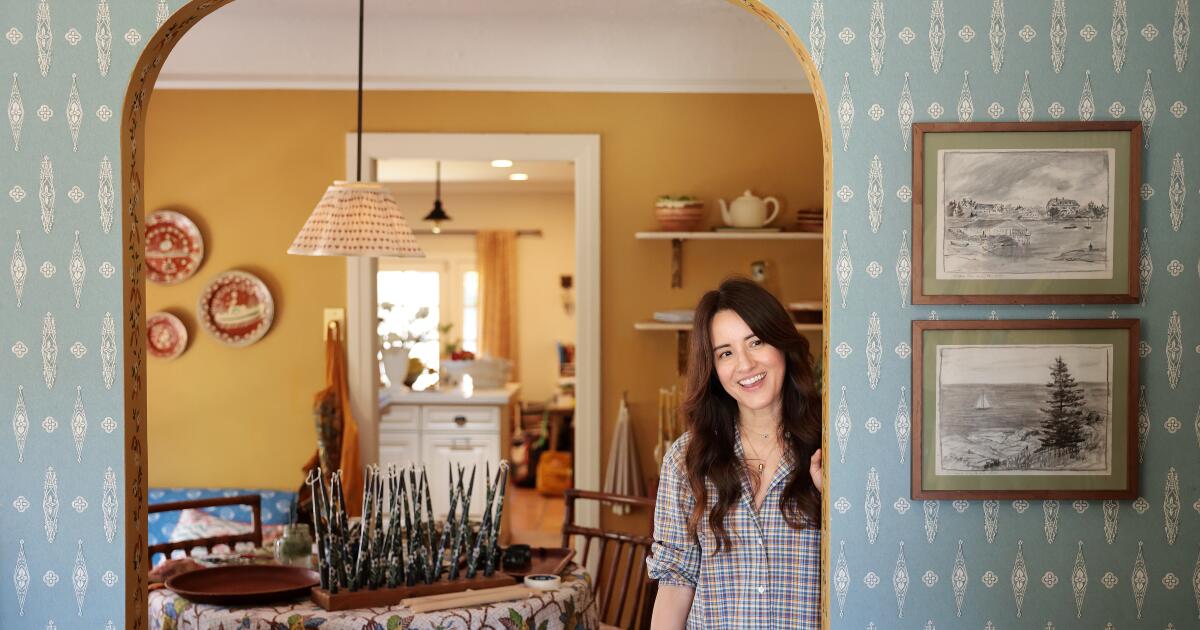
It was after the death of her son, Laith, that Esme Saleh decided to become a folk artist.
She had always been creative, experimenting with watercolors and learning to sew and embroider at a young age.
“I had a creative inkling,” she said, “but I never pursued it.”
Everything changed on Aug. 17, 2013.
In this series, we highlight independent makers and artists, from glassblowers to fiber artists, who are creating original products in and around Los Angeles.
When Saleh was nine months pregnant, she woke up with stomach pains and presumed she was in labor. She and her husband, Nasim, immediately went to the hospital, where doctors checked her and put the baby on a heart monitor. Saleh’s blood pressure was high, however, and the baby’s heart rate kept dropping. After about an hour, his heartbeat stopped. Doctors rushed her in for an emergency C-section, but it was too late. Laith did not survive.
Saleh lost a tremendous amount of blood and developed postpartum HELLP syndrome, a dangerous form of preeclampsia, but doctors were able to stabilize her.
When she woke up, the first thing she asked was, “How’s my baby?”

After losing her son in 2013, Esme Saleh left her job as a television producer. Since then, she has sold her hand-painted candles to local designers in Los Angeles and to LVMH in Paris.
“Aug. 17, 2013, was the most difficult day of my life, and Aug. 22 was the second most difficult, the day we drove home with an empty car seat,” she said of her and her husband’s new reality.
They named their son Laith Finn Saleh.
“His first name means ‘lion’ in Arabic. His middle name is an ode to Huckleberry Finn — sharp wit, kind heart, strong moral compass — all the attributes he’s imparted on us in spirit,” said Saleh, 45.
After such a devastating loss, she found it difficult to trust the world again. “It was hard to trust anything,” she said. “The medical system. Myself. It made me realize the fragility of bringing anything to life. We take so much for granted.”
So after years of working as a television producer, Saleh left broadcast journalism and leaned into her creative spirit.
She grew up in San Diego. Her mother was raised on a farm in Mexico, and her father moved from Tijuana to Los Angeles to be near her mother, who started working for a family in Sherman Oaks at 16. They eventually settled in San Diego, where Saleh’s father, now a church deacon, worked as a car salesman.


“The word Mystic has also become a driving force of what this journey means to me,” Saleh says. “A magical, otherworldly journey that has led me to some beautiful friendships, projects and unlimited well of curiosity. When I paint each pair of candles, it feels like I’m imparting a piece of that magic.”
“He always wanted to be a weatherman on TV,” she said, explaining how he hoped to get his big break on television by doing a weather report from the car lot.
Saleh wanted to be a broadcast journalist as her father had. After graduating from San Diego State, she interned in the sports department at CBS affiliate KFMB-TV although she didn’t know much about sports. She enjoyed sharing information with people, learned how to write plays of the week and felt she had found the right career.
But during a summer class at Mesa College, she started to think journalism might not be for her.


Saleh’s home is filled with her artwork. “My home expresses a lot of the things that I do,” she says. “If it works here, then I feel like I can put it out in the world.”
“I’m an empath — a sensitive soul — so when I was reading news about death and destruction, my eyes could not lie,” she said. Her professor told her, “This may not be your thing.” But when she arranged flowers on camera, she really came alive. She decided to work behind the scenes as a producer.
Her professor helped her get her first network news job in 2003, and she moved to Los Angeles, working on hard news and entertainment coverage.
After losing Laith a decade later, she couldn’t keep doing red-carpet interviews and acting like everything was fine. “It all felt so different, superficial and hard,” she said. “I felt like there was a bigger purpose out there for me. It’s in the small things that we find the big things.”
She started by painting folk art-inspired invitations for a friend’s baby shower. She painted delicate flowers, oranges and leaves on glass, leather and even lampshades. She created a logo. “I was just trying to say yes to things that were really scary,” she said. “Laith gave me the courage to do that.”

“I was just trying to get out of hole,” Saleh says of taking up painting after her son died.
Her first son, she said, became “a catalyst for painting.”
Then, at the first Thanksgiving during the COVID-19 pandemic when people could gather again, she had a light-bulb moment. “I was setting the table and didn’t have flowers or anything to add to decorate, so I thought, ‘I have these candles. I’m going to paint them and make them fancy,’ ” she said.
Her guests were impressed.
As time went on, painting taper candles helped her find joy again, and others noticed too.
“The one thing I hear when people pick up a pair of my candles is, ‘This makes me so happy. It makes me feel like there’s life here,’ ” she said.
1

2

3

1. Saleh sometimes leads painting workshops where participants can decorate items like ornaments and lampshades.
2. Leather napkin rings Saleh has painted for Nathan Turner. 3. Saleh’s hand-painted candles retail for approximately $42 to $50.
One of the hardest parts of losing a child “is that you’re not just grieving the person, you’re grieving the future you imagined with them,” said Chicago-based grief specialist Carla Harvey. “A lifetime of love suddenly has nowhere to go. Creating art doesn’t erase grief, but it can become a way to carry it.”
Saleh created her brand Mystic by Esme in 2021, but it took her some time before she could gather the courage to try to sell them.
When she brought a shoebox full of samples to Nickey Kehoe, the L.A. store agreed to carry her candles. “I was beside myself,” Saleh said.
“Her candles were absolutely beautiful, and she had a fantastic spirit that made selling them a no-brainer,” said interior designer Todd Nickey, co-founder of Nickey Kehoe.

Saleh gets a surprise kiss from her dog Olive while painting candles at her dining room table.
Saleh viewed her new side project as a way to earn extra money for piano lessons for her 11-year-old son Linus, who is an entrepreneur like his mother. “I felt proud painting the candles while he was in lessons in the next room,” she said. “It became this circular economy, and it led to bigger opportunities for me.”
Last year, luxury conglomerate LVMH commissioned Saleh to paint 465 pairs of candles, or 930 candles in total, for its Chaumet jewelry brand. The collection was unveiled at an elaborate event at the Abbaye des Vaux de Cernay, just outside Paris.
“It was fun,” Saleh said about the process, which took six months from conception to delivery. “I felt like I was dressing my candles up for a party.”
Always a hard worker, which she attributes to being a first-generation child of immigrant parents, Saleh has now created a candle collection for Pierce and Ward in Los Feliz, leather napkin holders for interior designer Nathan Turner and pomegranate wrapping paper for Olive Ateliers. The candles retail between $42 to $50 for a pair, and recently, she developed a handsome pewter candle shaver that will be released in the winter.

Her dining room can sometimes feel like “an assembly line,” Saleh says.

Saleh holds a pair of candles she has embellished with florals.
Occasionally, she leads painting workshops, and she loves helping others tap into their creativity. The most meaningful one for her was an ornament workshop attended by several victims of the 2025 Los Angeles wildfires. “Without saying anything, we understood each other,” she said. “I understood that they were trying to create memories.”
Saleh knows what it means for things not to last — “impermanence,” she calls it — whether it is homes, candles or life itself.
She paints every day in the art-filled dining room of her home (unless it’s Little League season), surrounded by her family, candles and her two dogs, Lennon and Olive. ”Painting is like meditation,” she said. “You can sit in your dining room and tune everything out and just be in the moment.”

Even the family’s summer bucket list receives an artistic flourish.

An arch inside Saleh’s home receives a personalized touch.
She knows painting candles isn’t new, but she believes her motivation and the care she puts into each candle makes them special beyond their looks.
She has learned to look at the world that way, that painting in her dining room has offered her healing and joy, that she can trust herself and her body, that continuing to be inspired by her two boys — “one in spirit and the other here on Earth” — means that Laith will always be with her.
Many people think healing means moving on, said grief specialist Harvey, but “it’s really about finding ways to move forward while keeping the people we love woven into our lives. That’s what I see in her candles, not an ending, but an ongoing relationship with her son.”
“I feel like my son is channeling through this medium,” Saleh said, her voice breaking as she painted a taper. “He’s whispering to me, ‘Mom, this is your path.’ That has been my driving force. We’re going to grow this together.”
Lifestyle
Terry Tempest Williams on why women with big ideas get labeled ‘crazy’ : Wild Card with Rachel Martin
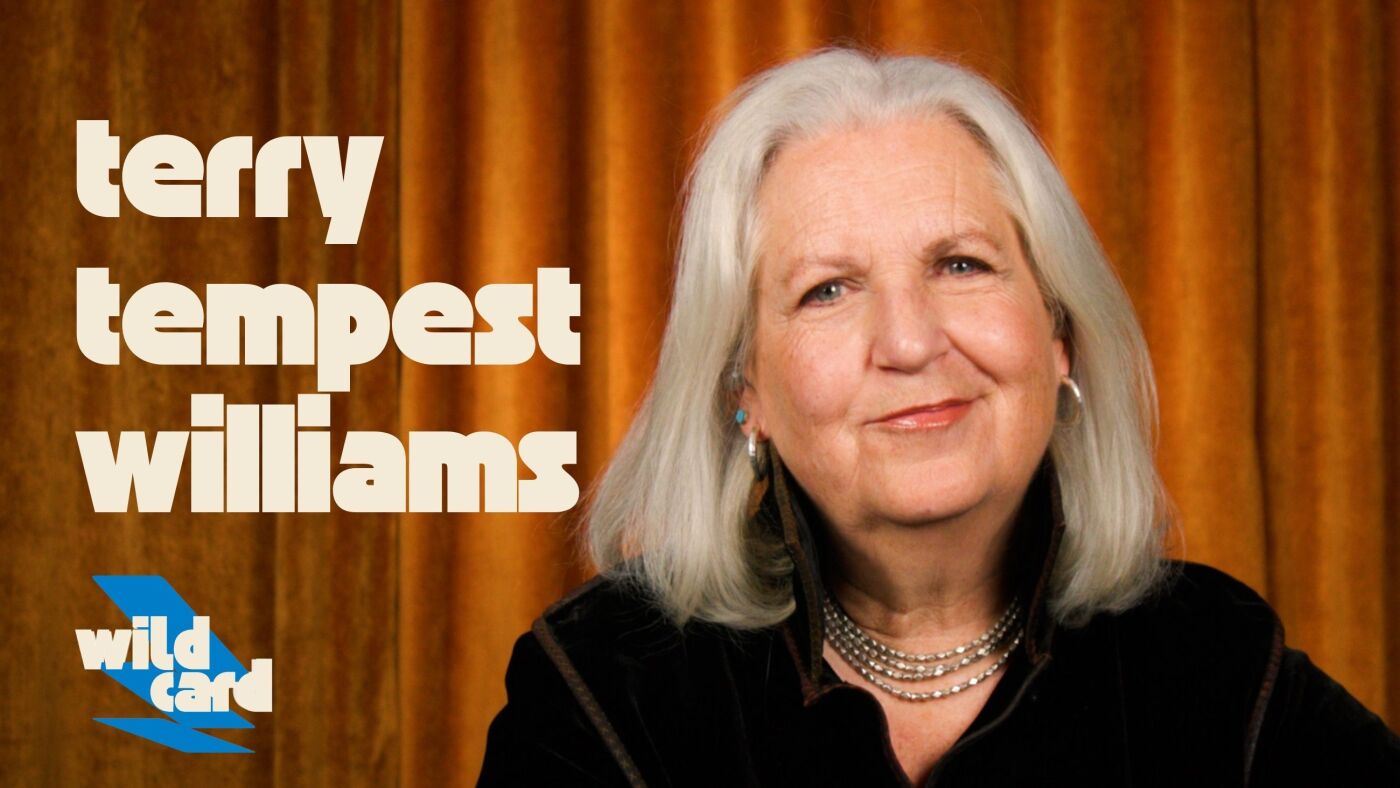
A note from Wild Card host Rachel Martin: I met Terry Tempest Williams about 25 years ago at a writer’s conference in Yosemite Valley. I was a young reporter who was there to do a story about how literature was addressing climate change and she made such a huge impression on me. I had never heard someone talk about the natural world the way Terry did and she had a spiritual depth I hadn’t encountered in my life at that point.
To this day, Terry’s writing always reorients me towards what is good, what is beautiful, and what is true. Her newest book is called “The Glorians.”
-

 Ohio3 minutes ago
Ohio reports nearly 200 cases of ‘explosive diarrhea’ illness
-

 Oklahoma6 minutes ago
Every Oklahoma State Cowboys’ College Football 27 Preseason Player Rating
-

 Oregon11 minutes ago
Illicit massage businesses shut down in Washington County
-
Pennsylvania18 minutes ago
Man arrested over alleged antisemitic threats to Gov. Josh Shapiro | The Jerusalem Post
-

 Rhode Island21 minutes ago
Aquatic Weed Treatments Planned for 2 RI Ponds, 1 Lake
-

 South-Carolina26 minutes ago
South Carolina Lottery Pick 3, Pick 4 results for July 9, 2026
-

 South Dakota33 minutes ago
Iverson Ford Welcomes the 2027 Ford Expedition to Drivers Across Eastern South Dakota
-

 Tennessee36 minutes ago
Tennessee Highway Patrol holds open house at Jackson district office

