Lifestyle
I stopped driving on L.A.'s chaotic freeways. How do I get over this painful anxiety?

My New Year’s resolution this year is simple. This weekend — my first back in L.A. after visiting family for the holidays — I will drive to the 101 freeway entrance by my house and I will … get on it.
Simple as that. But far easier said than done.
I haven’t driven on the freeway in more than two years — I’ve been too afraid. I’ve rarely even ridden as a passenger on the freeway, with someone else behind the wheel, and when I do, I sit on my hands so my fingers won’t tremble.
Fear of driving on the freeway is hardly uncommon — and for good reason. Headlines reporting fatal accidents and police pursuits ending in deadly crashes are more commonplace than ever in L.A.
But here’s the thing: It’s an entirely new phenomenon for me. Living in Los Angeles as a journalist, I’ve fearlessly traversed the city’s vast thicket of freeways for decades. My work took me from the mountains to the desert to the sea. Years ago, I dated someone in San Diego and endured the three-hour drive on the 5 south every other Friday for about a year. And all with relative ease.
So what changed? My brain, basically.
The pandemic was rough, in infinitely varied ways, for everyone. For me, on top of the stresses of the public health crisis and its myriad economic and social repercussions, I experienced a series of losses in succession, sometimes with just weeks between them. And it didn’t let up for about two years. My grief manifested on the freeway, where I’d have small, then more pronounced, panic attacks — something totally new to me.
Here’s what happened: In early 2020, a sibling of mine tragically died. Later that year, my partner and I broke up. We’d been together for several years and it was a significant loss. This was in the early days of the pandemic, when many of us were wiping down our groceries and staying inside for days on end. I was doing that too, but now alone in my apartment.
I don’t have children but my cats provided comfort during that period. (For some of us, our pets are our kids.) Then they both died too, one after the other — unexpectedly. The first, only 8 years old, suffered a violent and painful death. My second cat, much older and more fragile, witnessed it and became so anxious afterward that she got sick and passed away only months later.
The silence in my home, after that, was unsettling: no scritch-scratching of claws on hardwood floors or chomping of kibble in the background as I pecked away at my keyboard writing articles. I’d sip coffee in the mornings, taking some comfort in the lush view of the greenery on my deck. Until nearly all the plants died in a heatwave.
Then my parked car was smashed during a hit-and-run. Insurance paid to fix it. But then the car was targeted by catalytic converter thieves. Again, insurance covered the repairs. But when, several months later, the thieves struck again, my insurance company declared the 14-year-old Honda a total loss.
When the tow truck came to haul my car away, I fell into the driver’s burly arms and cried. I’d had that trusty, beat-up Honda longer than any romantic relationship, and at that moment, it felt like all I had left.
Given this sustained succession of emotional gut punches, my central nervous system was on high alert. A car door would slam outside and I’d jump, my body bracing tensely: “What next?”
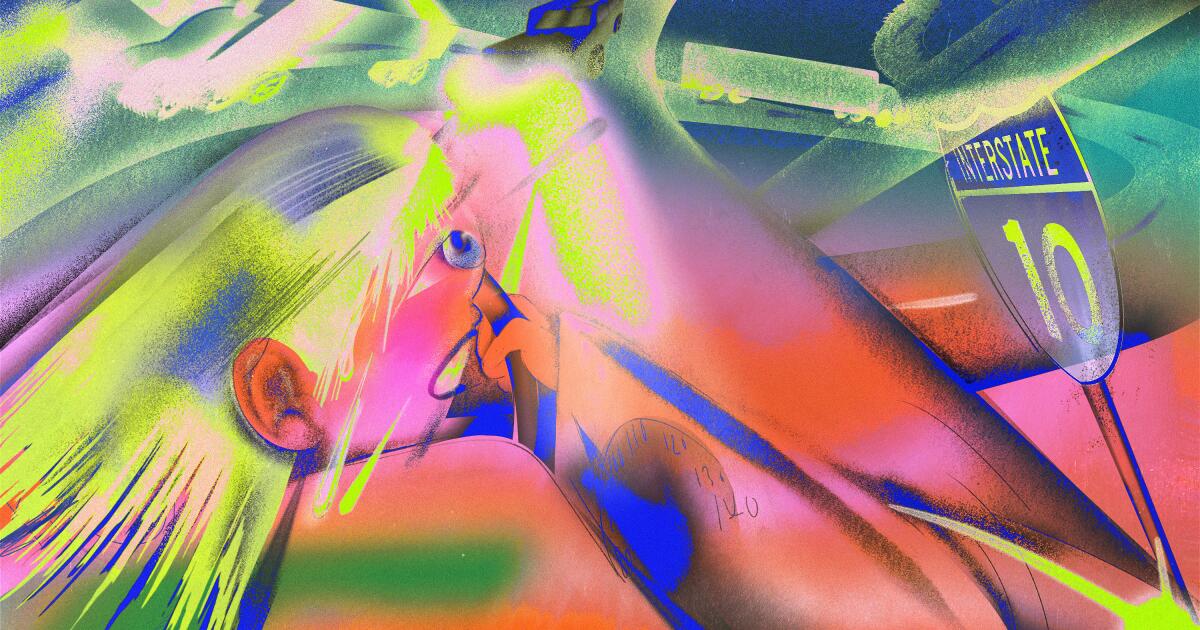
That feeling manifested — exaggeratedly so — driving on the freeway. I held it together in all areas of my life, but the freeway became a release valve for my pent-up grief. Instead of seeing the big picture while driving, getting into the flow of traffic, I saw too much detail. The freeway was a dangerous, kinetic collage of spinning wheels and whirling, sparking hubcaps and rectangular hunks of metal flying forward, any piece of which, at any instant, could crash into me. It was like at the start of a billiard game, when the cue breaks the racked balls with a fiery crack, sending the multicolored striped and solid orbs flying in all directions. That’s how I saw traffic. Panic.
The freeway was a dangerous, kinetic collage of spinning wheels and whirling, sparking hubcaps.
The lane I was driving in felt constricting and narrow; trucks on either side of me felt hulking and ominous. My jaw clenched, my breath quickened, my teeth chattered. And my heart pounded in my chest.
It wasn’t a choice so much as survival — I could not drive, safely, on the freeway anymore. I made adjustments, slipping like water around rocks. I changed my Waze settings to “avoid freeways” and took surface streets everywhere instead. I took Ubers or carpooled with friends if the drive was too long on surface streets. If headed especially far, I took a train.
I should add that I don’t particularly like to drive. Nor would anyone close to me say I’m good at it. Before L.A., I’d only lived in walkable cities with active public transportation systems: Philadelphia, San Francisco, Tokyo, Boston. But I certainly never feared driving.
And for those who have always feared freeway driving, it’s understandable. Traffic-related deaths in Los Angeles have been on the rise in recent years, at their highest point in two decades. In 2022, 312 people died in traffic accidents, according to the Los Angeles Police Department’s most recent data. That’s a 5% jump from 2021 and a 29% jump from 2020.
Perhaps the most disconcerting part was that my newfound freeway phobia sparked something of an identity crisis: I am not a fragile or fearful person. I take risks, I speak up for myself, I have a sense of agency. I don’t recognize this new, tentative version of myself. I’m confused by her, ashamed. Who is she? How do I get back to the self I identify with? Does she even still exist?
I’ve since healed from those aforementioned losses and am feeling infinitely revived in my personal life. New cats, new boyfriend, new car. But, oddly, the freeway fear has stuck.
“It’s such a normal human impulse when you’ve gone through tragedy and loss,” says L.A. author and psychotherapist Claire Bidwell Smith. “You’re seeing the world through a lens where the unexpected looms around every corner and something catastrophic can happen at any moment. Your life was going along and then: Bam! Bam! Bam! You’re scrambling to hold onto something, so you hold onto ‘How can I predict this, control it in some way?’ But we can’t control the world in the way we would like to, so we get stuck in this catastrophic place.”
Panic attacks in cars are especially common, Bidwell Smith adds. Her theory? “The car is a space where you’re often alone, a quiet private space, and all these thoughts, some of the stuff we’ve been pushing away, start to gurgle up.”
I haven’t talked openly about my freeway phobia much, not even to family. Until recently — and nearly everyone I’ve spoken to about it had experienced something similar or knew someone who had. I was at dinner recently with two journalist friends. One of them said she developed flying anxiety after her father died, something that dissipated over time. The other said her sister in Toronto developed a fear of driving on the freeway after their father died — she still hasn’t gotten over it.
Bidwell Smith says that after her own parents died, she developed a fear of flying and became fixated on her health. A client developed a fear of riding on elevators after his wife died.
How many more people are there like us in L.A.?
“It’s very common,” says Sarah Caliboso-Soto, director of the Telebehavioral Health Clinic at USC’s School of Social Work, which provides counseling for driving anxiety among other mental health issues. “Grief itself can be a very traumatic experience, and when people are driving, in particular, their senses are more heightened. And you can experience anxieties as a result.”
My period of avoiding freeways wasn’t all bad. I traversed neighborhoods I’d never otherwise pass through in L.A., gaining a better understanding of how the city connects. I got lost plenty, on zigzaggy Waze routes, but that had its upsides too. I stumbled on a collection of street murals, on remote side streets, in the downtown L.A. warehouse district. I found an available apartment for rent, for a friend, in Jefferson Park, a gem of a neighborhood filled with old Craftsman homes. I stopped several times for roadside fruit at different points around the city, wolfing down chili-spiked mango, drenched in lime juice, from behind the wheel.
But I long for my freedom again, to be unhindered by an emotional impediment. I miss the person I once was and ache to embody her again. It may not happen all at once; likely it will be a slow process, one freeway ramp at a time.



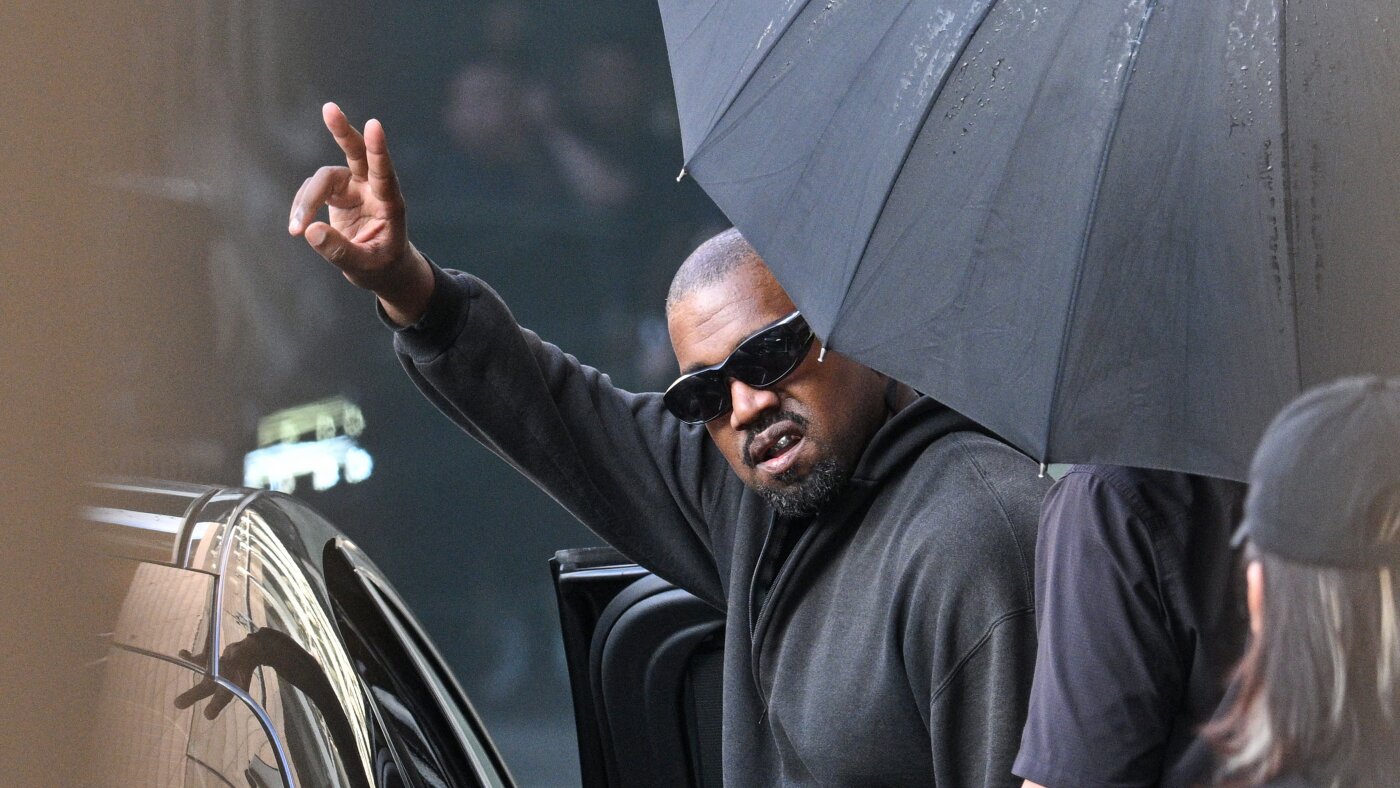
Rapper and producer Ye, also known as Kanye West, seen before a 2025 concert in Shanghai.
Hector Retamal/AFP via Getty Images
hide caption
toggle caption
Hector Retamal/AFP via Getty Images
Sponsors are exiting a major U.K. music festival and the country’s prime minister has been critical after the influential rapper Ye was announced as the event’s headliner.
The once widely revered musician and fashion impresario, formerly known as Kanye West, has gained notoriety over the years for his antisemitic comments and activities glorifying Nazis, including a 2025 song called “Heil Hitler” and selling swastika T-shirts on his clothing site.
Yet organizers announced last week that West would headline the Wireless Festival in North London for the entirety of its three-night run in July, invoking outrage from politicians and withdrawals from festival sponsors. Those include Diageo, the company that owns popular liquor brands such as Johnnie Walker and Captain Morgan.
In a statement emailed to NPR, Diageo confirmed that it will no longer sponsor the 2026 festival “as it stands.”
Pepsi, another company that reportedly pulled sponsorship, did not respond to NPR’s request for comment, nor did the Festival Republic team handling publicity for the shows. However, Pepsi confirmed to The Associated Press and others that it was withdrawing from its lead sponsor role.
The festival, which plays in Finsbury Park, is a major rap and hiphop event in the U.K. that draws tens of thousands of attendees each year.
British Prime Minister Keir Starmer was among those expressing distaste for the headliner selection. “It is deeply concerning Kanye West has been booked to perform at Wireless despite his previous antisemitic remarks and celebration of Nazism,” he told the newspaper The Sun on Sunday. “Antisemitism in any form is abhorrent and must be confronted firmly wherever it appears. Everyone has a responsibility to ensure Britain is a place where Jewish people feel safe.”
Earlier this year, the artist took out a full-page ad in The Wall Street Journal in which he apologized for his antisemitic behavior — not for the first time. Ye has attributed his outbursts to manic episodes due to bipolar disorder. He has not commented publicly on the Wireless Festival controversy.
The musician is attempting to resuscitate his once-storied career. He recently sold out two shows in Los Angeles following the release of his new album Bully, which debuted at number two on the Billboard 200 charts.


Arsenio Hall speaks onstage during the Emmy Awards on Jan. 15, 2024.
Kevin Winter/Getty Images North America
hide caption
toggle caption
Kevin Winter/Getty Images North America
As a kid in Cleveland, Arsenio Hall remembers watching The Tonight Show Starring Johnny Carson and feeling that something was missing. “I could watch … for weeks at a time maybe never see a minority perform,” he says.
Hall yearned to create something different: “My dream was to one day grow up and show the other side of show business,” he says. “I wanted to do this show that didn’t exist when I was a kid. … I wanted those things that Johnny didn’t do.”
The Arsenio Hall Show, which ran from 1989 until 1994, delivered just that. At its peak, the show was syndicated on nearly 200 stations, running second in the late-night ratings to Hall’s idol, Carson.
Some of the most indelible moments in American culture happened on Hall’s set. In 1991, Magic Johnson chose the show as the first place to speak after announcing his HIV diagnosis. That same year, a 6-year-old Bruno Mars won a week of free groceries after performing his Elvis impression on the show. And Bill Clinton famously played his saxophone on set during the run-up to the 1992 presidential election.
But Hall says he faced criticism on multiple fronts: White audiences thought the show was too Black, while Black audiences accused the show of not being Black enough.
“In America, you’re never gonna be No. 1 if you have this insatiable desire to do Toni Braxton instead of Dolly Parton,” Hall explains. “And by the way, I tried to do both. I would try to mix it up; I would put Dolly Parton on and then have something for the culture after it.”
In 1994, Hall decided to walk away: “I realized I couldn’t go any higher, and I was gonna lose my affiliates when [David] Letterman came into the game. And the CBS affiliates were very important to my strength, my success, and my profits. … I always said, when I end it, I want to go out on the top,” he says.
Hall’s new memoir is Arsenio.
Interview highlights
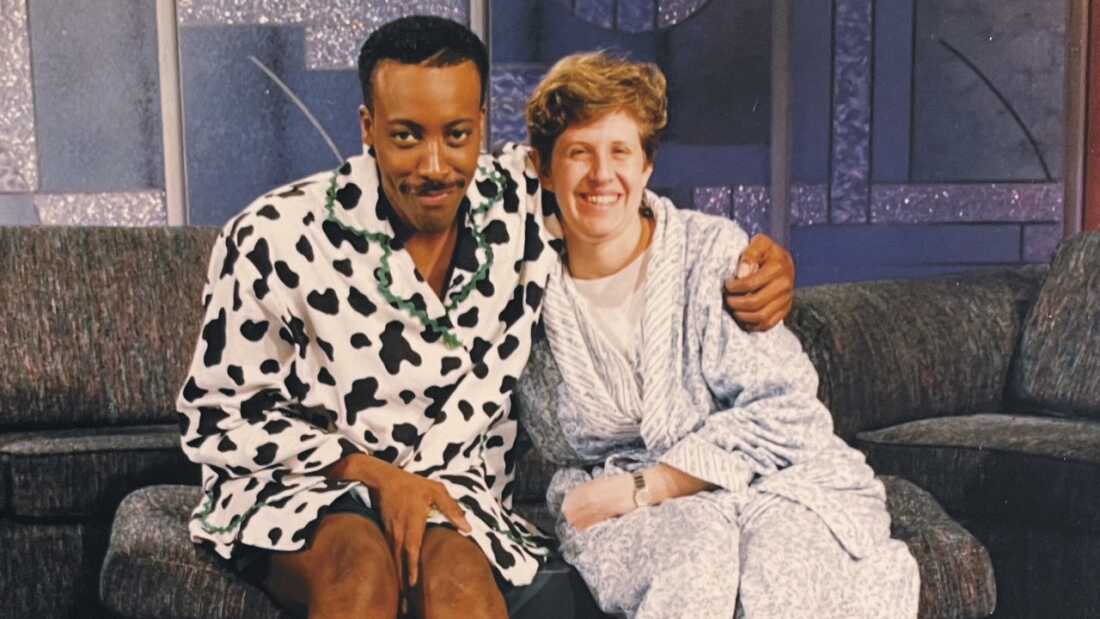
Arsenio Hall and executive producer Marla Kell Brown pose during the show’s staff PJ party.
Simon & Schuster
hide caption
toggle caption
Simon & Schuster
On why his stage had couches instead of the desk that other late-night shows used
Marla Kell Brown, my partner in crime, the executive producer, partner of the show … she had seen me do stand-up, and she talked about how I moved, and how free I was. She wanted me to be able to get up, to touch a guest, to decide to sit next to a guest. She felt — and she was right — the desk was this shield. This desk was something I was hiding behind. This desk was protective. And she wanted to take it away from me. When I took over for Joan Rivers, they let me host The Joan Rivers Show when she quit. And she had a desk. So at Fox, I’m sitting behind the Joan Rivers’ desk, and Marla said, “Why don’t you try it without the desk? I think you’ll like it. I would love to see you without that desk.” And we tried it. I had to admit she’s right, and the rest is history. I have to listen to Marla more often. …
It worked really well. When I watched it the first time, I knew it. To be able to lean into a guest and not have something between you. I remember doing an interview with Rosie Perez … [and] I held her hand during the interview because she was nervous. I remember an interview where Diana Ross kissed me. You can’t kiss me with the desk in between us. It created a different visual of a show and it became a thing.
On Magic Johnson‘s 1991 appearance, in which he talked about his HIV diagnosis
I call him Earv, Magic Johnson. He was a friend. And he called me because I had been worried about him. … And one of the things I remember most is he was afraid of losing friends, losing the love of friends and family. I remember the sentence, “I want people to still give me my hugs,” because Magic is a warm and fuzzy guy, and he’s that guy. I hugged him to show him I love him and I care.
I had heard a comic do an AIDS joke. And it was a very homophobic type joke. … We were so ignorant. We didn’t even know the rules of how you get it. And there were basketball players who didn’t want to play with Magic. So I think God gave me that hug or the inspiration to do that, to show people we don’t have to be afraid. …
I asked Earvin to go on Larry King or do Mike Wallace or something. I was like, “No, man, I can’t do that interview. You know me, I’m a crier. … You need a serious platform, dude. You need a journalist. I’m a comedian and infotainment late night guy.” And he says, “No I need you. I need to come there. I need come where I’m comfortable, because I’ve got to talk to the nation. And I’ve gotta give them my point of view. And I want to do it where I am comfortable.” So the point guard ran the play, and I just followed. And like he did in basketball, he makes everybody better.
On his angry reaction to being heckled by activists from Queer Nation in 1990
I think you become more angry and you become stronger when you realize you are right, because a huge part of my staff was gay, many of my guests were gay, but it was at a time when you didn’t always know it. So the gay people on my show couldn’t even come to my defense. Ellen [DeGeneres] couldn’t come and say, “Oh, wait a minute, you guys don’t know.” … And Rosie [O’Donnell] was on the show a lot and a lot of people that may be still in the closet, so I won’t mention their names, but, it wasn’t my job to say, “Ladies and gentlemen, balladeer and homosexual, put your hands together …” It wasn’t my job to introduce a singer that way.
I think part of my anger was at that point [was] I’m being told by the Black community that it ain’t Black enough. I’m being told by the Paramount executives that it ain’t white enough. And now the gay community is gonna attack me during the show? You’re gonna take money out of my wallet and food off my family’s plate? In the middle of my job here, when you don’t know what you’re talking about? You’re gonna blame me for something that is absolutely not true? I think I was sick of being criticized by everyone because everyone wanted it to be something else. It’s hard being the first Black anything in late night.
On the success of his show
I changed the culture in a way that I exposed America to some things they might not have seen if I didn’t come along then. If I came along now, it would be irrelevant. Everybody would now be gathering to watch Hammer, or this little Bruno Mars, or the Magic Johnson announcement. Timing is also very important. Talent is important. Hard work is important. But timing — if I came along 10 years before that, or if I came a long 10 years from now, it wouldn’t work. And that’s what’s really cool about life. Sometimes it’s the timing that matters.
Anna Bauman and Nico Gonzalez Wisler produced and edited this interview for broadcast. Bridget Bentz, Molly Seavy-Nesper and Clare Lombardo adapted it for the web.

Opinion: Alaska needs to curb crypto-kiosk scams
Kroger, Albertsons sued by Arizona, seven other states seeking antitrust lawsuit expense reimbursement

Drug Take Back Day returns to Arkansas this month; promotes safe drug disposal

Trump Won This Latino California District; Now Independents Will Decide Who Holds It

Colorado’s New Speed Cameras Can’t Be Outsmarted by Waze or Radar Detectors for Good Reason

Florida High School Football Rankings: Top 25 teams – Oct. 21

How old is Bo Nix? What to know about Oregon quarterback ahead of 2024 NFL Draft

Cleary's 21 help Le Moyne down Central Connecticut State 69-64 in OT

99th annual Pony Swim held in Virginia

Indiana Members Credit Union announced as new anchor tenant at Bottleworks District

Ilhan Omar calls Trump an ‘unhinged lunatic,’ urges booting him out of office
Between Budapest and Brussels: Péter Magyar’s political tightrope
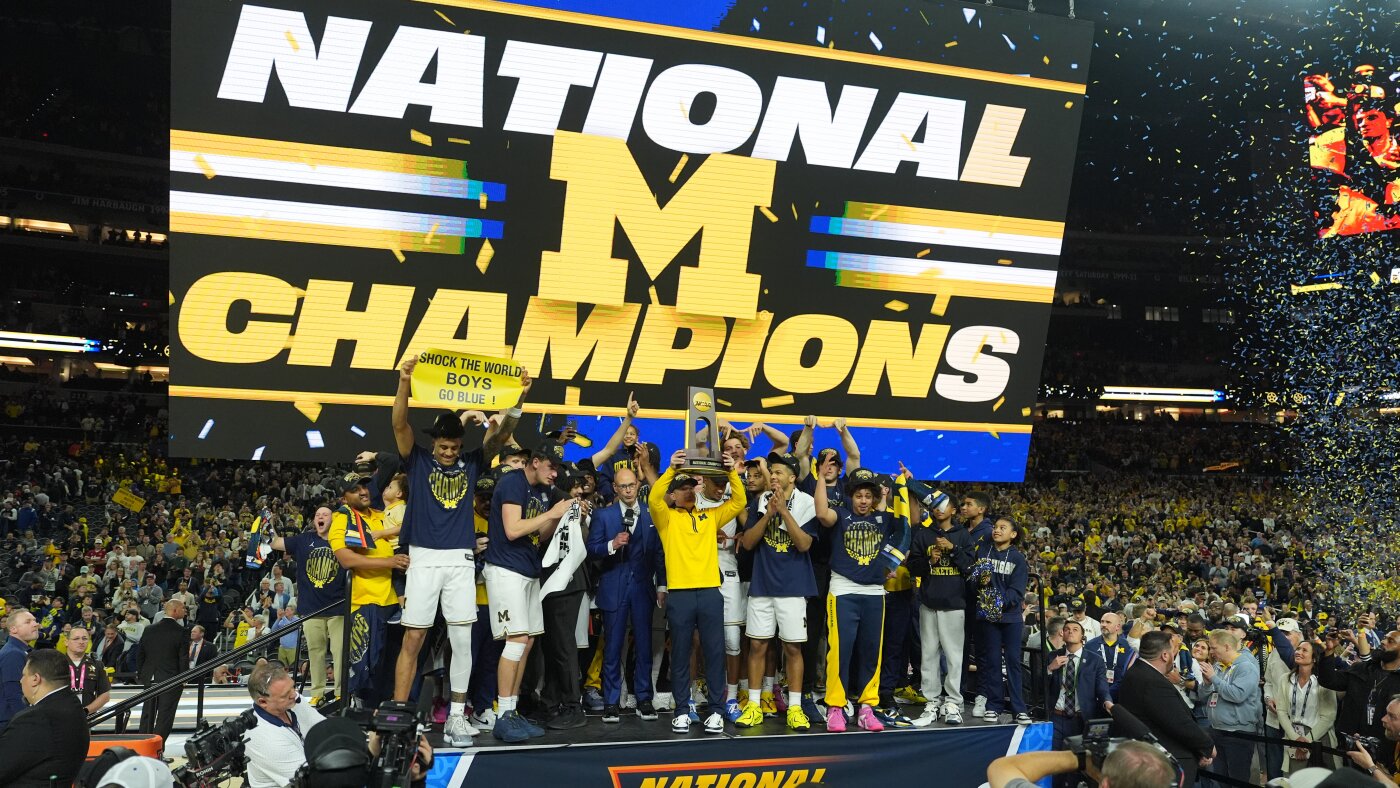
Michigan muscles its way to program’s 2nd NCAA basketball title, beating UConn

Map: Minor Earthquake Strikes Near San Diego

Trump claims he’d win as the president of Venezuela — just needs to ‘quickly’ learn Spanish
-

 Atlanta, GA2 days ago
1 teenage girl killed, another injured in shooting at Piedmont Park, police say
-

 South-Carolina1 week ago
South Carolina vs TCU predictions for Elite Eight game in March Madness
-

 Movie Reviews5 days ago
Vaazha 2 first half review: Hashir anchors a lively, chaos-filled teen tale
-

 Vermont1 week ago
Skier dies after fall at Sugarbush Resort
-

 Politics1 week ago
Trump’s Ballroom Design Has Barely Been Scrutinized
-

 Politics1 week ago
JD Vance says he was ‘obsessed’ with UFOs, believes aliens are actually ‘demons’
-

 Politics1 week ago
Jeffries declines to break with indicted Democrat after ethics panel’s guilty verdict
-
 Entertainment5 days ago
Inside Ye’s first comeback show at SoFi Stadium