Lifestyle
Grab a smoothie, draw some blood. Inside L.A.'s new $50,000-a-year wellness club

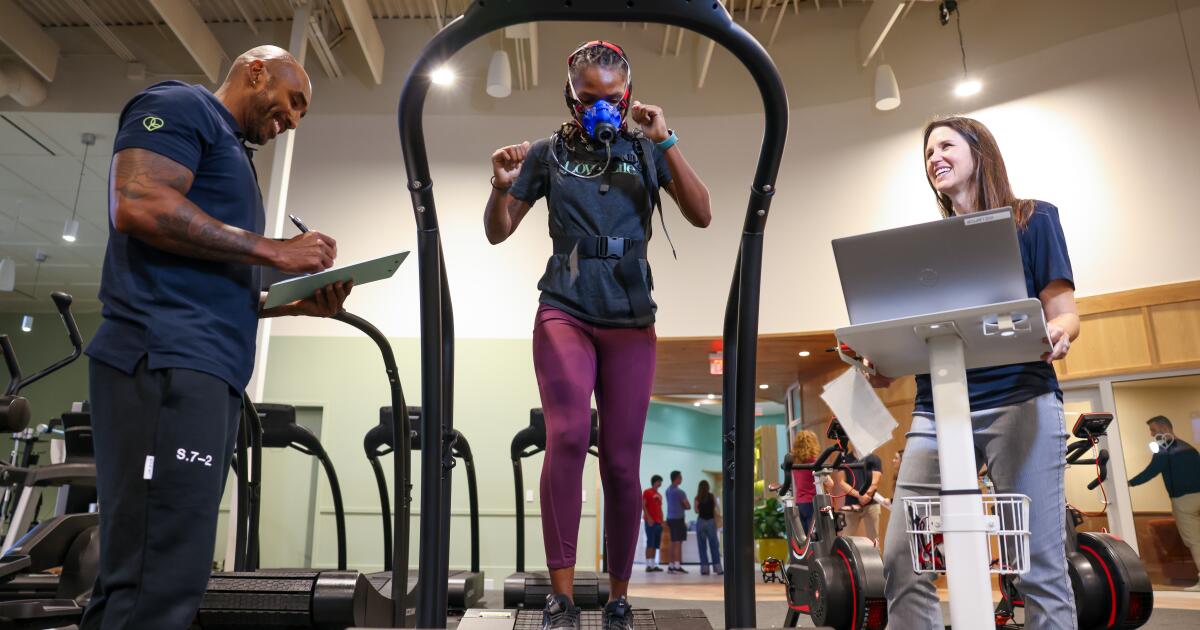
I sat in my car, in an El Segundo shopping mall parking lot, looking up at a new storefront touted as a one-stop shop for feeling physically fit, emotionally grounded and socially connected. My shoulder ached. It was my good luck that on the same day I was touring Love.Life — a new luxury health center conceived by John Mackey, co-founder of Whole Foods Market — I was also nursing a gym injury.
After weeks of navigating our infuriatingly slow medical system, it felt promising, if not surreal, to arrive at the doorstep of an establishment with nearly every treatment I could think of under one roof: diagnostic tests, rejuvenating therapies as well as fitness and nutrition plans to stave off future health problems.
I walked up to Love.Life’s entrance. Its gleaming picture windows and grass green exterior might as well have been the gates to the Emerald City, behind which mysterious healing modalities awaited. I clicked my heels together — I happened to be wearing red suede sneakers — and mumbled to myself: “There’s no place like a posh, membership-only holistic health club.” Then I headed inside, passing under block lettering that read: “Nourish Heal Thrive.”
“If this idea won’t work in L.A., it won’t work period,” says Love.Life co-founder John Mackey, who was also a co-founder of Whole Foods Market.
The lobby was blindingly bright, with porcelain floors and mod furniture in peppy colors. There was a spacious cafe on one side and a futuristic gym on the other, animated by various blinking screens. Around the corner were what looked like red-white-and-blue space pods. What they were for, I had no idea.
“Hi there,” said a receptionist at a clinically simple desk. Was I in the lobby of a boutique hotel? A doctor’s office? Or was this an astronaut training center? Or all of the above?
The idea for this lavish temple of wellness had been swirling in the back of Mackey’s brain for almost four decades. After co-founding Whole Foods in 1980, and growing the natural and organic foods store into an international network of more than 460 outlets, Mackey and company sold the publicly traded company to Amazon in 2017 for $13.7 billion.
For his next venture, the vegan, breathwork enthusiast and pickleball lover wanted to “change the way people think about health and wellness,” he told me a few weeks earlier when I met him at the not-yet-finished Love.Life space. “This is a continuation of my own higher purpose in life.”
Mackey left Whole Foods in 2022 but had already started working on plans for the club a year earlier. (It’s part of a multipronged parent company, Love.Life, that he co-founded in 2020.)
Over the last three years, he and his Love.Life co-founders — Whole Foods former Chief Executive Walter Robb and longtime executive Betsy Foster — transformed his dream into a reality: a swanky, holistic health center that’s part state-of-the-art gym, part high-end spa, part highly personalized doctor’s office and part exclusive social club. It touts specialists in both Eastern and Western modalities, as well as an on-site physical therapy clinic. Its “plants-forward” café serves superfood-filled dishes with names like Ocean Bowl and Green Tartine. Regular live events include meditations, soundbaths and breathwork classes. Love.Life even has three indoor pickleball courts.
If successful, Mackey envisions other centers in other cities before expanding internationally. But for now, the flagship Love.Life opens Saturday adjacent to — you guessed it — a palatial Whole Foods Market.
“If this idea won’t work in L.A., it won’t work period,” Mackey says. “People here are more into their health, they’re more into looking good, feeling good, they’re into longevity.”

Love.Life personal trainer Shelle Tarver plays on the pickleball court.
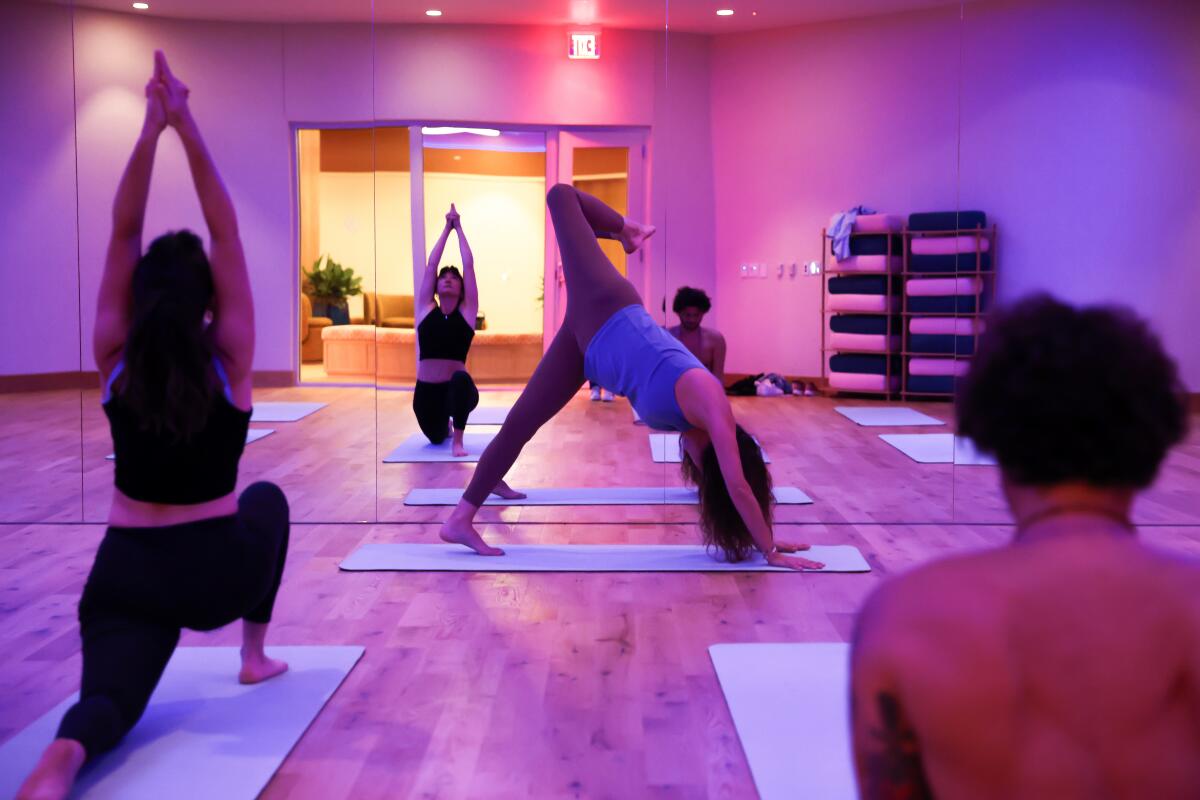
Love.Life team members demonstrate a yoga class.
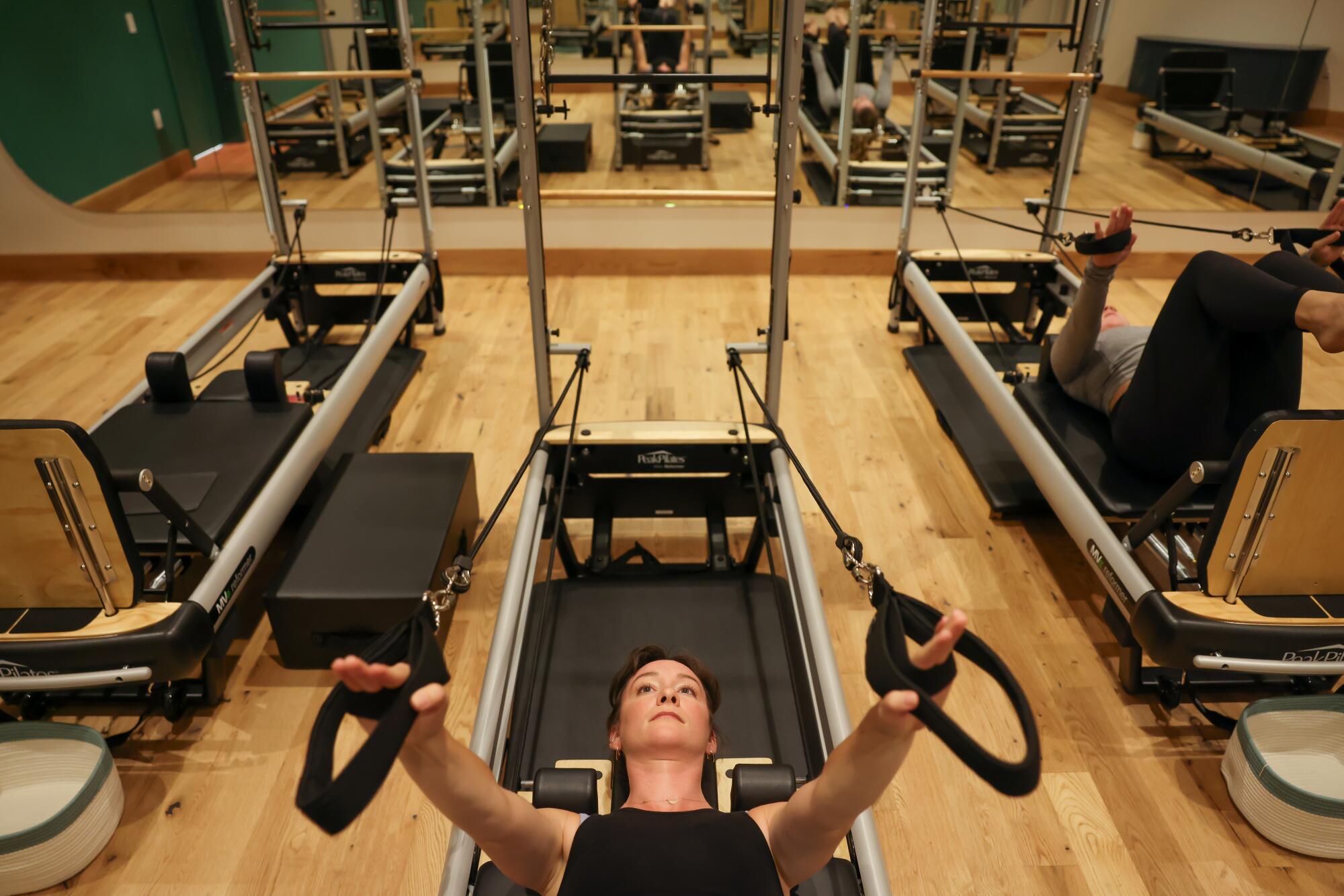
Love.Life team members Marcie Icovino, center, and Maddy Isbell demonstrate pilates equipment.
Love.Life’s mission is to help its members live longer, healthier lives by deep-diving into their health history, executing an array of specialized tests and then suggesting fitness and lifestyle changes, paired with as many preventive health measures as humanly possible.
“We’re trying to help individuals become the healthiest, best versions of themselves — physically, emotionally and spiritually,” Mackey, dressed in jeans and a Love.Life-branded polo, says. “When do most people go to a doctor? When they get sick. Our idea is: We want you to start seeing a doctor 1723376780 so that you don’t ever have to see a doctor for the chronic diseases that kill.”
There’s a good reason most people in America don’t see a doctor until they feel ill or, say, experience shoulder pain. Our country’s healthcare is often prohibitively expensive and difficult to navigate. The “individuals” Mackey aims to help, Love.Life’s target market, are those with deep pockets who can afford to circumvent the system.
A Love.Life core membership starts at $750 a month for either a “High Performance,” “Heal” or “Longevity” membership, depending on the goal. They include five visits a year with a Love.Life primary care doctor, as well as health coaching, medical testing, fitness and recovery services and access to practitioners across 20-plus disciplines including traditional Chinese medicine, sports performance, yoga and nutrition. The membership cost tops out at the “Concierge” level, which costs $50,000 a year and includes unlimited doctors visits, 24/7 care and the most detailed level of medical testing the facility offers. There are also limited memberships, such as a medical-only or fitness and recovery-only membership for $500 a month and $300 a month, respectively.
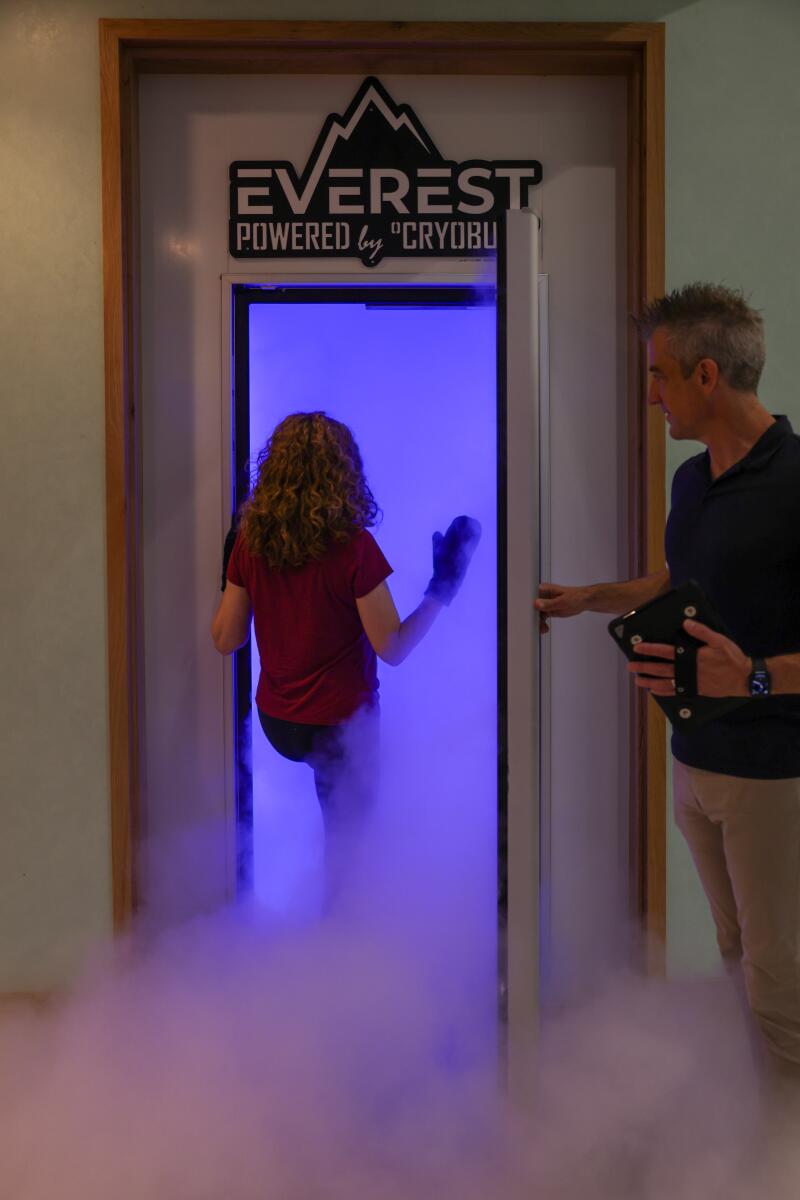
Cold vapor billows out of a cryotherapy chamber as the author steps in.

A red light lamp offers the author collagen stimulation.
Upon enrolling, members can undergo a series of tests so facility specialists have a 360-degree view of their health. It’s a journey into the bodily unknown. They may draw blood for an advanced lab panel measuring more than 120 biomarkers, have their musculoskeletal layer assessed or undergo a DEXA body composition assessment and bone mineral density scan. Other specialty tests address the microbiome, hormone health, cardiac health and food sensitivities, among other things.
From there, Love.Life experts put together a personalized fitness, nutrition and lifestyle plan for the member, which they can follow at the facility’s gym or through various treatments. Red light therapy beds to support healing? Check. Breathwork class to manage stress? Check. Hyperbaric oxygen therapy pods to reduce inflammation? You better believe it.
Members book all appointments on an app, which also stores their health history and tracks fitness progress. They can also use it to share that information with any of Love.Life’s practitioners, reserve a pickleball court, book a massage or order lunch.
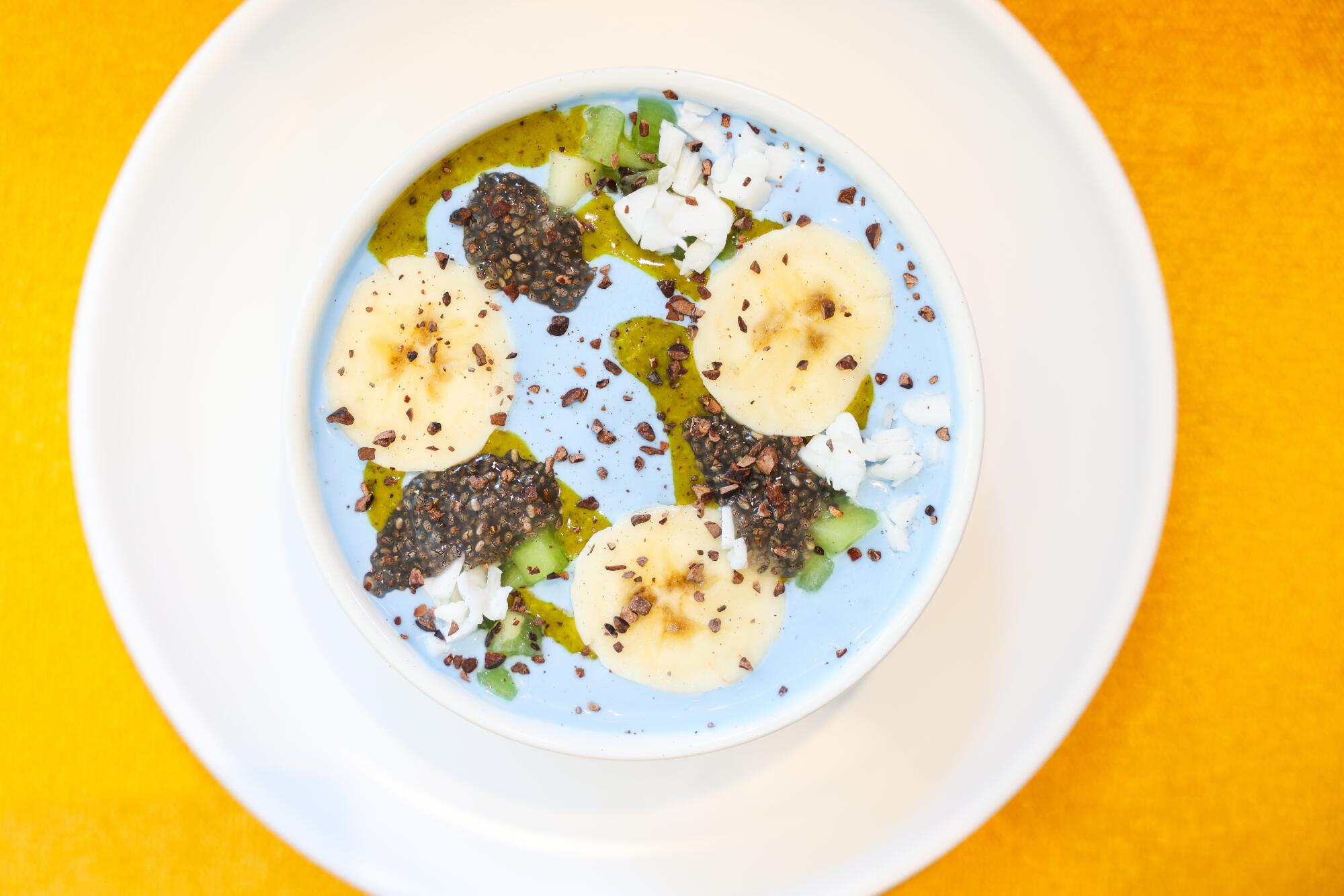
The Ocean Bowl at Love.Life is packed with superfoods, like blue spirulina, cacao and chia seeds. Though memberships to the wellness club start at $300 a month, members of the public are welcome to visit its cafe.
Some parts of Love.Life will be open to the public, such as the cafe, select healing therapies and the spa, for which anyone can buy a $100 day pass. But Mackey emphasizes that membership and community are key to the experience.
“If you have friends with good habits, you’re gonna pick that up,” he says.
That one-percenter healthy living also comes with its fair share of window dressing. In designing the 45,000-square-foot space, Mackey says Love.Life worked with an acoustical engineer to manage the sound flow. Passing from the airy, bustling lobby and cafe area into the spa, the halls narrow and the lights dim. A preserved moss wall absorbs ambient sound, but for a gurgling fountain and soothing music. Crystals, mirrors and chimes were ensconced in its walls per the advice of a Feng Shui expert. A warm Turkish Hammam Table allows visitors a place to stretch and lounge opposite a wall-sized fountain.
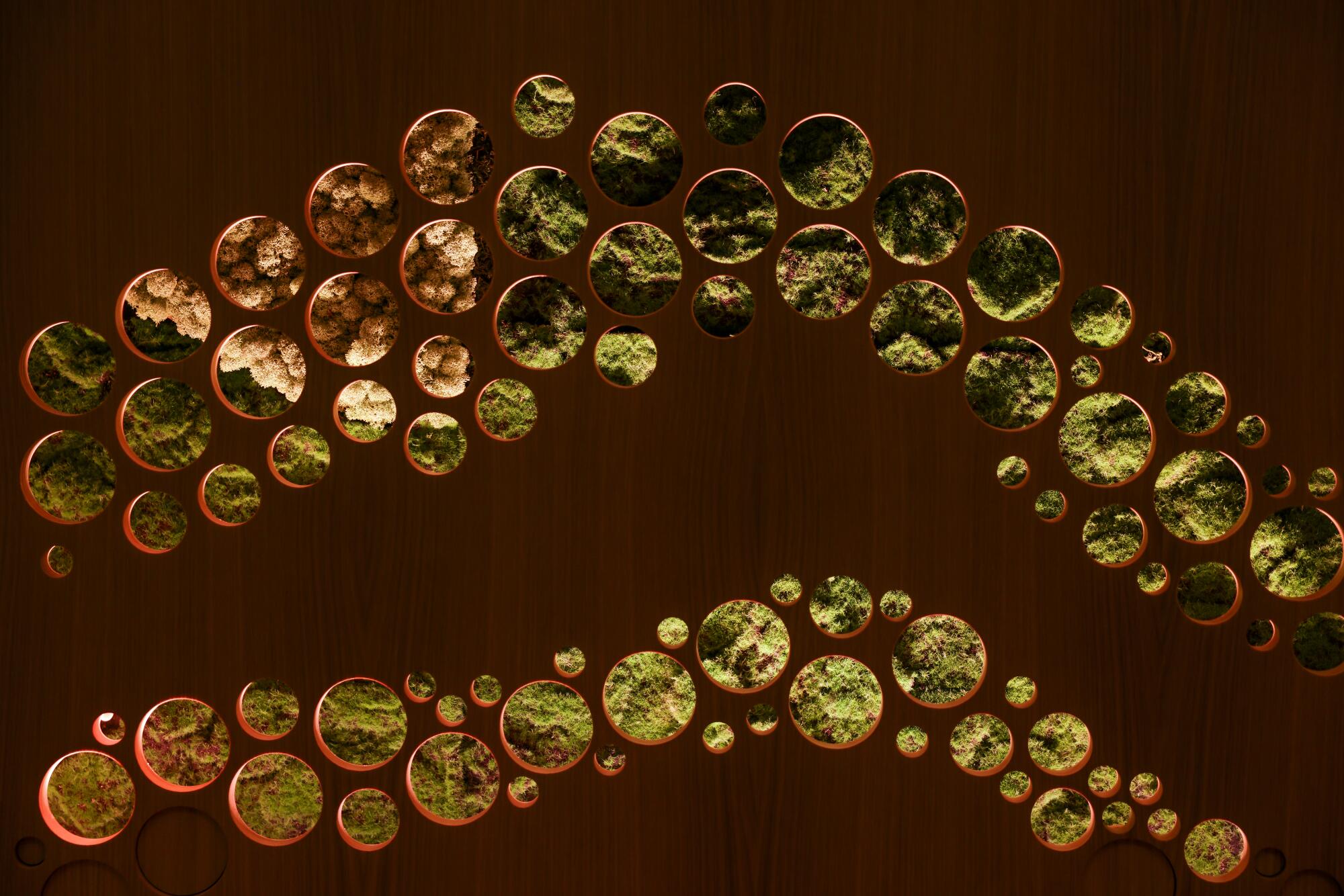
The preserved moss wall at Love.Life, which absorbs ambient sounds to keep the spa quiet.
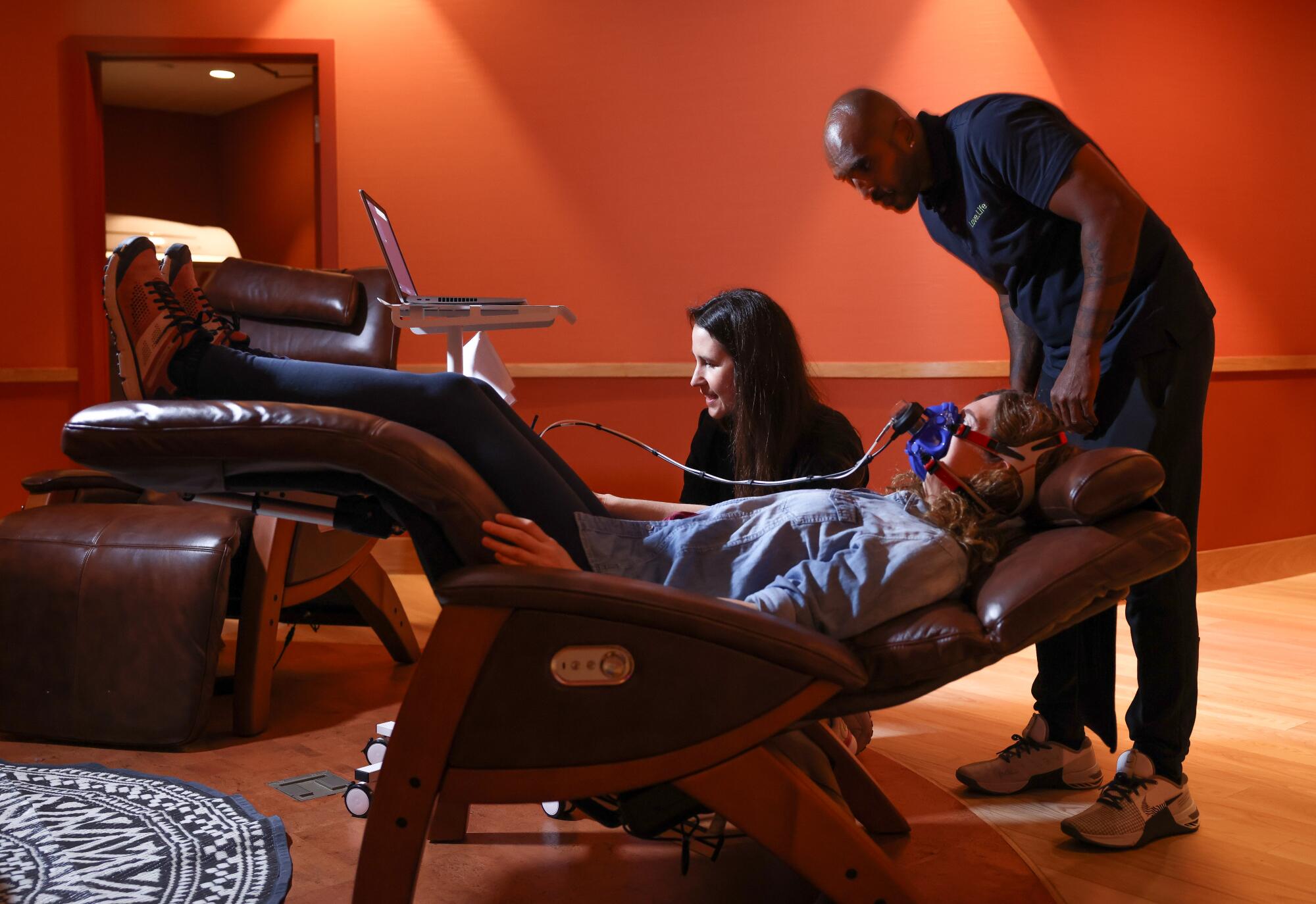
The author undergoes a resting metabolic rate assessment, measuring energy expenditure and caloric burn at rest, attended by Danél Lombard, physical therapist, back center, and Davon Murray, exercise physiologist.
I paid a $100 visitor fee to enter and relaxed into a plush, leather Zero Gravity Chair, with heated seats and massage nodes, my head draped backward and my feet pointed high. This was a resting metabolic rate assessment, which measures your energy expenditure and how many calories your body burns at rest (the test was part of my reporting, and is not included with a spa pass). Attendants fitted me with a snug Vo2 max mask, which was synced to a nearby laptop. Then I zoned out for about 20 minutes, nearly falling asleep.
When they returned, I learned exactly how many calories my body needs to think, breathe and otherwise stay alive (not nearly as many as I’d hoped for). Had I been a member, I might have met with a Love.Life nutritionist next, to configure my caloric and macronutrient needs to support weight loss or exercise performance.
From there, Love.Life regional president, Michael Robertson led me into a private room where I slid my lower limbs into what looked like a space suit, while lying on a table. The FDA-cleared Ballancer Pro lymphatic compression therapy, he said, enhances lymphatic drainage to rid the body of toxins and reduces swelling and muscle soreness. Robertson zipped me up and tapped a button before the suit began to swell and squeeze my legs. It was oddly relaxing.
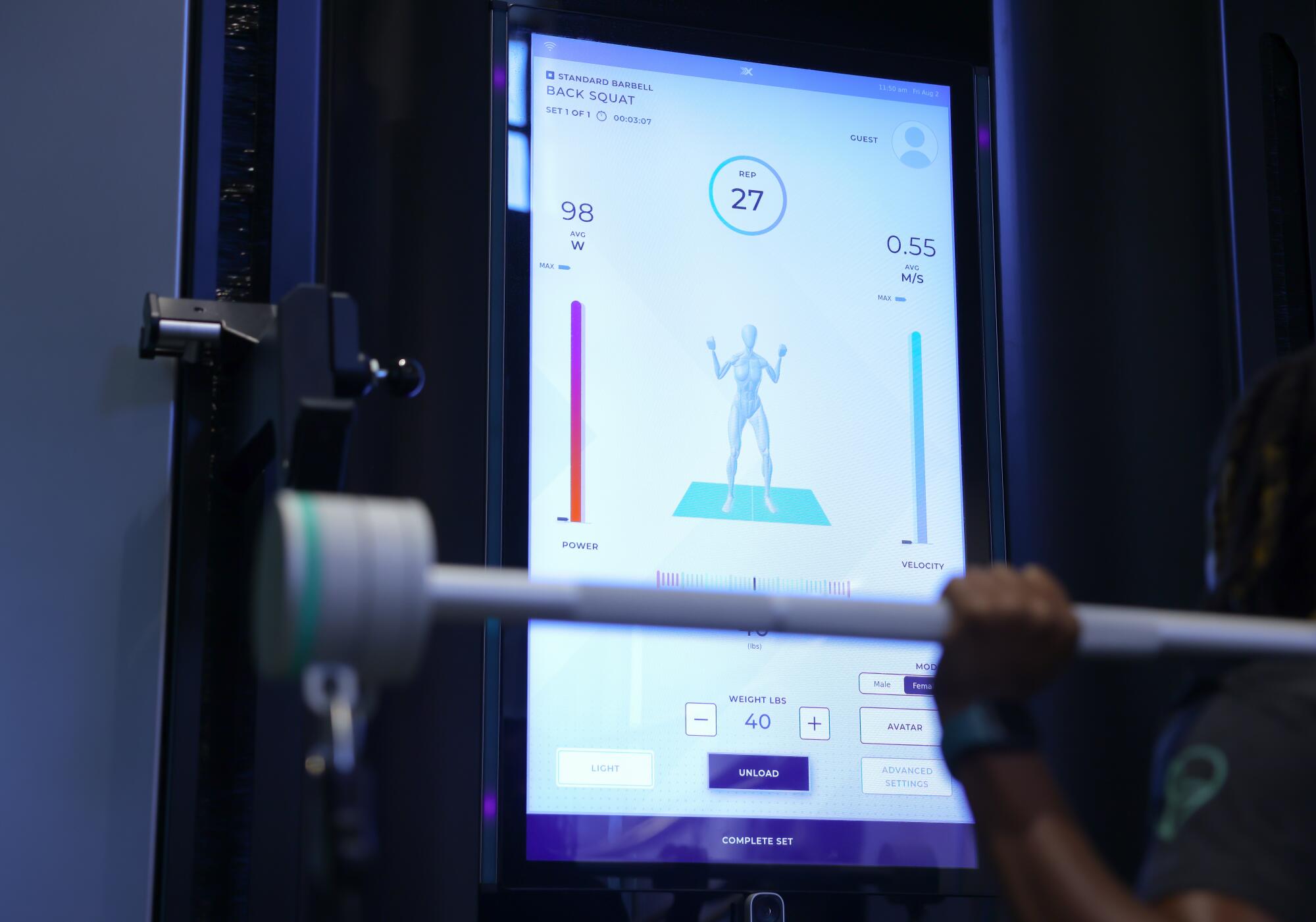
Love.Life personal trainer Shelle Tarver performs squats on a high tech OxeFit machine, which gives real-time feedback on power, velocity, load and balance.
Though I skipped the gym during my visit, personal trainer Shelle Tarver was there doing squats on something called an OxeFit machine. She faced a giant, vertical screen on which her digital avatar mirrored her moves and gave her real-time data about her power, velocity load and balance so she could make her workouts more effective.
Finally, it was time to chill out — literally. Robertson led me to what looked like a tall commercial refrigerator bathed in blue and purple light. The cryotherapy chamber was set at minus-120 degrees Fahrenheit. It was so cold that the instant I stepped inside — wearing a face mask, earmuffs and mittens for protection — ice crystals began to form on my nose and snowflakes fell from the ceiling. Cryotherapy is meant to reduce inflammation and increase circulation, Robertson said; but when I stepped out after one minute, I just felt very awake.
Preventive healthcare — spending money to stay well rather than on costly medical bills once sick — is a growing trend. Whether this proactive attitude is a response to America’s sluggish healthcare system or a quest for control at a chaotic time in history is anyone’s guess. But businesses have popped up to meet the desire.
West Hollywood’s Remedy Place offers high-end, holistic “social wellness services,” plus chiropractic and biometric testing; Healthspan, a digital medical clinic, aims to help patients fight aging and chronic disease. Even traditional gyms like Equinox are now offering a $40,000-a-year concierge membership that includes sleep coaching, personal training, massage therapy and nutrition advice.
Love.Life combines all these services into one club — and goes one step further. Its members can use their designated doctor at the club as their primary care provider. The company doesn’t accept insurance, but they do offer a super bill which members can submit for reimbursements if the tests and treatments qualify under their plan. Membership, Mackey clarified, is not meant to replace health insurance, however, which is still necessary for emergencies, among other things.
When Whole Foods opened in 1980, it merged the utilitarian supermarket experience with a hippie-minded desire to nourish oneself from the land. As the brand grew, it became synonymous with a certain crunchy aspirational lifestyle. Whole Foods became more than a place to pick up a carton of milk, it was a place to assert your values, and to feel good. (And spend, as many people joked, your “whole paycheck.”)
Can Mackey find the same success with Love.Life? To thread the same needle in the legendarily opaque realm of healthcare seems a much further stretch. But when your target market has bottomless pockets, a fantasy can become a reality.
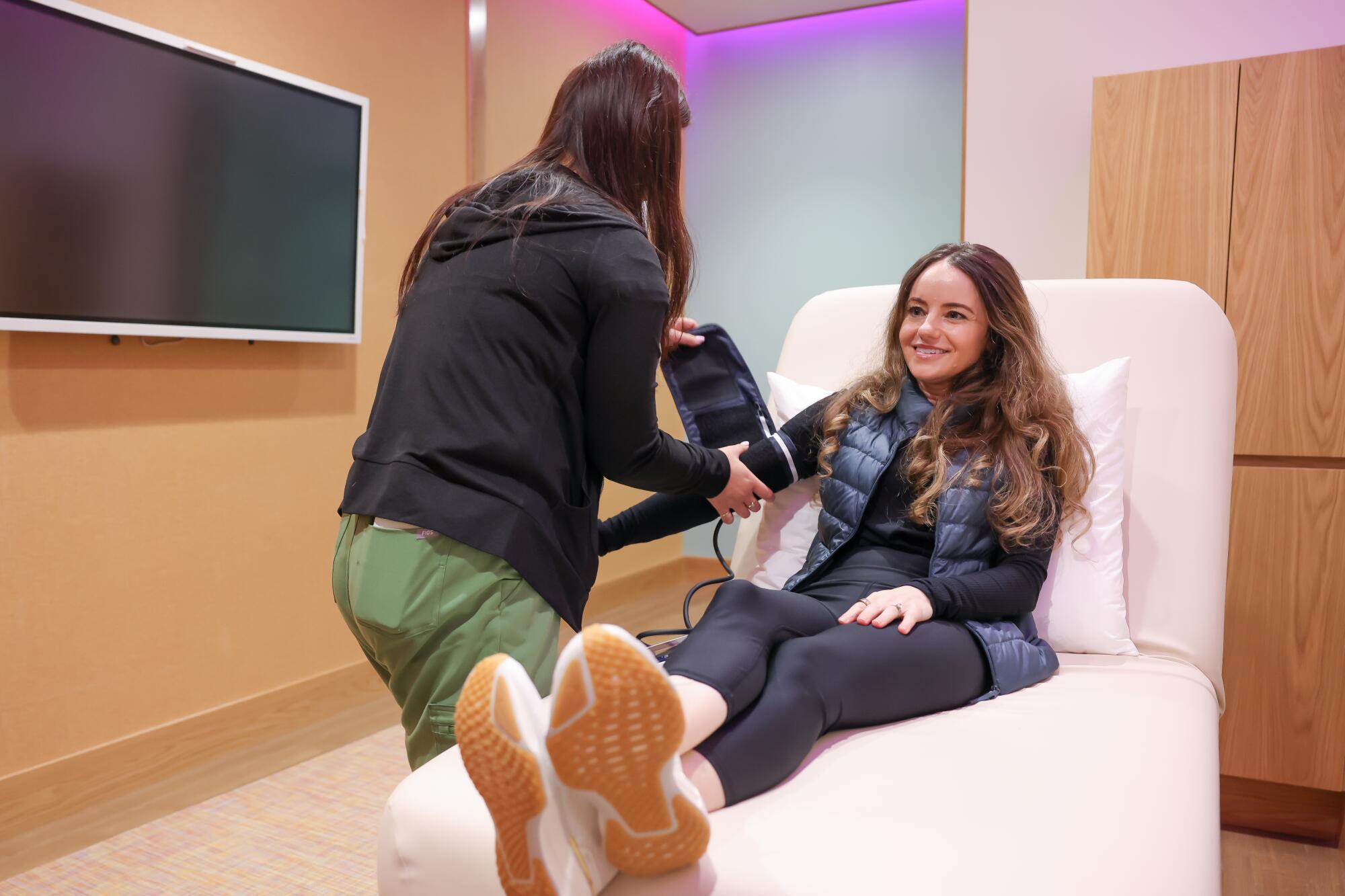
Janette Rizk, Love.Life’s communications director, has her blood pressure checked in the medical clinic.
As exciting as that might be for some people, it could have negative affects on the larger population, says Paul Ginsburg, a professor of health policy at USC.
“They’re extending the scope of what medical care is for their wealthy clients,” he says of Love.Life. “If you’re wealthy, it’s a wonderful opportunity. But physician resources are stretched pretty thin today, and if the centers were to take off, engaging physicians in service to very wealthy people means drawing their time away from treating the general population — that’s the downside.”
Mackey hopes that Love.Life will follow in Whole Foods’ philanthropic path. (Whole Planet, a project of the grocery chain’s nonprofit, has invested $113 million in global communities since 2005.)
“Philanthropy comes from success,” Mackey says. “We will do things to help improve the health of poor people. But it’ll come because we’ll have the resources to do that.”

One of Love.Life’s many cold plunge tubs.
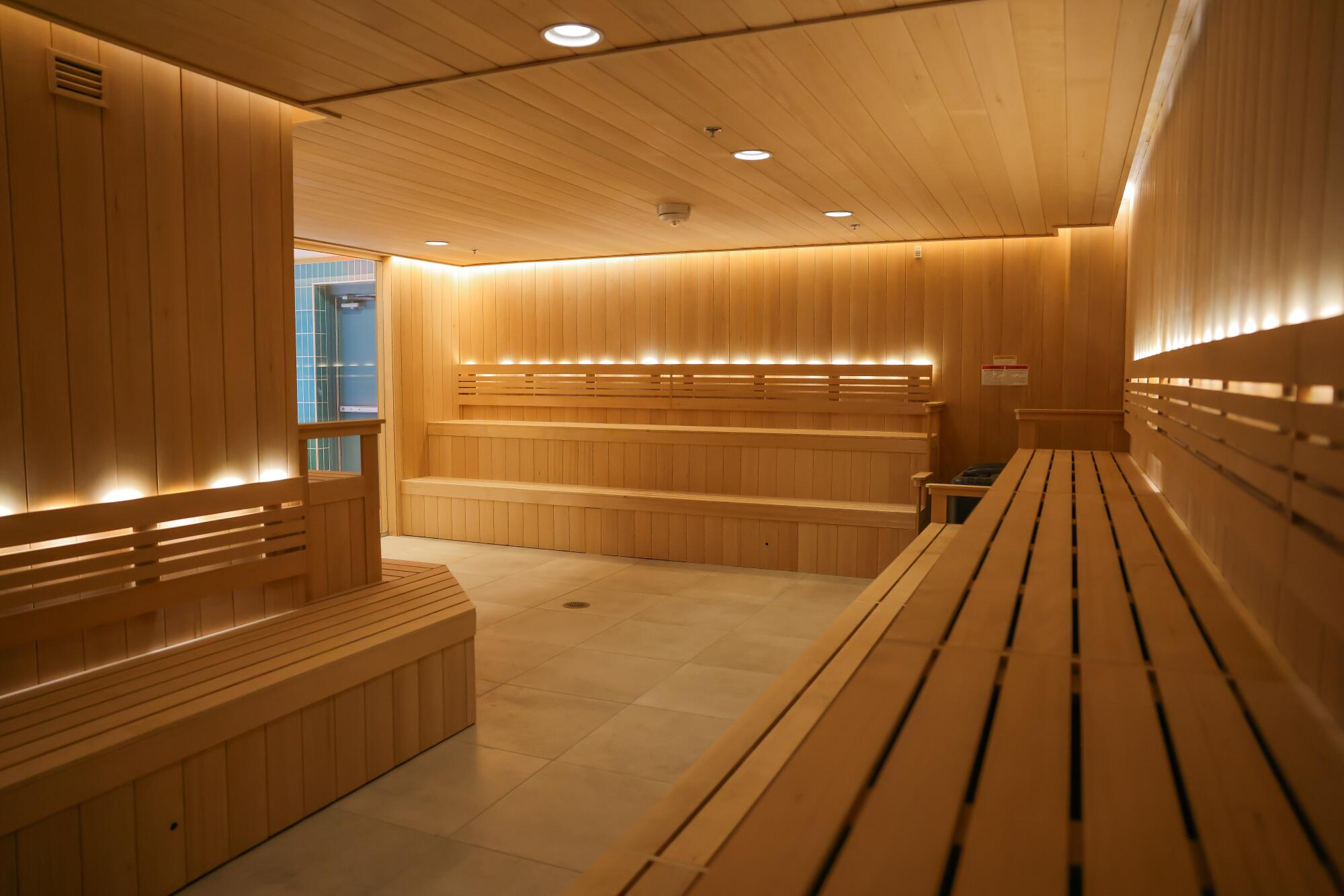
Love.Life’s spacious hemlock wood sauna in the spa.
Once my tour was over, I wistfully returned to the parking lot, a strawberry-Ashwagandha smoothie in hand. I’d enjoyed the experience more than I thought I would and longed for Love.Life’s services at my fingertips. After that whirlwind of peculiar chambers and treatments, I wondered if my ailing shoulder even felt a tad more limber.
But would I ever travel down this yellow brick road again? At Love.Life’s price points, likely never.



Sydney (Ayo Edebiri) and Carmy (Jeremy Allen White).
FX
hide caption
toggle caption
FX
There has always been a metaphorical parallel between The Bear, the television show, and The Bear, the fictional restaurant on the television show. Even as Carmy (Jeremy Allen White) and Sydney (Ayo Edebiri) transformed the Italian beef joint into the fancy restaurant of their dreams and wished for a Michelin star, there were undoubtedly locals who thought, “This is great and all, and I’m sure the food is good, but … I liked the beef sandwiches.” There’s still a window at The Bear to get them, but the focus is certainly elsewhere.
When it started, The Bear was mostly about the work that took place in the kitchen. The stresses of too many orders, territoriality from Richie (Ebon Moss-Bachrach), the arrival of Sydney, and the tightly wound but undeniably talented Carmy, making everybody both extremely stressed and significantly better. Over time, it shifted and grew, putting together beloved departure episodes like “Fishes” in Season 2, which introduced a boatload of guest stars for a flashback story of a disastrous family dinner before Mikey (Jon Bernthal) died. It spent time with Sydney’s family, it explored the way Tina (Liza Colón-Zayas) and Mikey originally met, it followed Marcus (Lionel Boyce) to Copenhagen, and it went with Richie to work for Andrea (Olivia Colman). All these episodes were excellent. And there was still a kitchen. But the focus seemed to be elsewhere.

At times, the show seemed to have disappeared up its own nose, to the point where you weren’t watching the show The Bear as much as you were watching the phenomenon The Bear. There were too many real-life chef cameos, until it seemed like those chefs were checking a box on a list of “things all the cool kids do.” There were too many other cameos, culminating in a rare miss from the reliably charismatic John Cena. The show placed a lot of narrative weight on Carmy’s love interest, Claire (Molly Gordon) — weight that the underwritten character couldn’t support. But even if every experiment and every diversion had worked, viewers couldn’t be blamed for missing the close focus on the kitchen and the camaraderie — for thinking, “This is all really special, but I do miss the beef sandwiches.”
The fifth and final season dispenses with the departure episodes, and it mostly dispenses with cameos. It all takes place on one day, just after Carmy tells Richie and Sydney that he wants to step back from the restaurant and give it to them and Sugar (Abby Elliott) to run, and it mostly takes place right there at The Bear. Now that the clock set by Jimmy (Oliver Platt) has run out, his money has run out as well, and a series of cascading disasters puts Sydney, Carmy and Richie behind the 8-ball from very early in the day, not least because of the tension hanging over all three of them as they prepare to tell the staff about Carmy’s decision to leave.

Tina (Liza Colón-Zayas).
FX
hide caption
toggle caption
FX
We spend this day mostly with the people we know best: our three leads, along with Sugar, Tina, Marcus, and the rest of the staff — including Luca (Will Poulter), who has stayed around to keep working with Marcus. Jimmy is running around with Computer (Brian Koppelman) and a young apprentice of his named Cheese (Elsie Fisher of Eighth Grade), trying to figure out what to do about his finances since it is Jimmy, and not just the restaurant, who’s out of money.
This day takes a while to get cooking, so to speak. The first three episodes of the season are slow, the first two in particular. It’s pouring rain outside, the lighting is dim, and the score maintains the same contemplative melancholy for a long, long time. For about two and a half episodes, it feels like one extended, low-energy scene.
But after that, there’s a shift in tone as the staff looks to get through service, and through seven episodes (FX did not make the finale available in advance for critics), the rest of the season is terrific. What you see is the core story of The Bear, which is people trying to serve food and overcome problems, but through the lens of everything that has happened over the show’s run: Carmy’s retreat from his obsessiveness, Richie’s expansive (and inspiring) discovery of his gift for hospitality; Sydney’s stepping forward from second-in-command to leader; Tina’s complex relationship with the restaurant and her grief over Mikey; Sugar and Carmy’s relationship with Donna (Jamie Lee Curtis); the arrival of Marcus as a high-end pastry chef.
The question the show asks over the last four episodes is: Given all those digressions and flashbacks, given all those visits with families and others, given everything we know about where all these people have been and what they’ve experienced, how does a high-pressure service — of the same kind we used to see in that first season — look now? How do they behave differently, and how does their behavior read differently? How are they the same people we have always known, but at a different juncture, in a different context? How do their wins mean more to them, and to the audience?
On the one hand, making a season this way, there are fewer surprising grace notes, like “Napkins,” the Tina/Mikey flashback episode in Season 3, or “Worms,” the episode in Season 4 where Sydney hung out with her cousin (Danielle Deadwyler) and her cousin’s kid. The Bear feels less daring and more conventional.
But oh, when they have victories under pressure? Victories, large or small? It is immensely, richly satisfying. There’s also more comedy other than just the goofy Faks family than we’ve had in a few seasons; Richie is perhaps the MVP of the season, and that’s partly because of how often he gets to be really funny. Ayo Edebiri continues to be the show’s best reactor, showing Syd eternally a little bit surprised (dismayed?) that she’s chosen to throw in her lot with these people.
There are a couple of questions yet to answer in the finale, both little plot items and broader character resolutions. Over these seven episodes, though, there is much to cheer.


Lifestyle
John Cena wanted to step away from the WWE ring before he became ‘too slow for the show’ : Wild Card with Rachel Martin

A note from Wild Card host Rachel Martin: First a confession: I have never watched a WWE match in its entirety. Don’t get me wrong, I appreciate the athleticism and the performance, it’s just not my thing. But there is something about John Cena I’ve never been able to shake.
Yes, he is a wrestling legend, but he has built a career as an entertainer that transcends the ring. The first time I saw him lead a cast was the 2019 family movie “Playing with Fire” and his rapport with kids in that film didn’t seem like acting at all. The man contains multitudes!
He co-stars with Eric Andre in his newest film, “Little Brother.”

Xie Miao and Yang Enyou in The Furious.
Norachai Kajchapanont/Lionsgate
hide caption
toggle caption
Norachai Kajchapanont/Lionsgate
There have been some fantastic movies released this year, and we know you can’t see them all. So we’re recommending four recent movies we missed that you should add to your watchlist: The Furious, Tuner, She’s The He, and Heresy.
If you need a few more fun film recommendations, check out these episodes:
Fun movies you may have missed
Our favorite movies on Tubi
We debate the best movies to watch on an airplane
Connect with Pop Culture Happy Hour:
Letterboxd / Facebook
Our weekly newsletter
Support Pop Culture Happy Hour+
-

 Los Angeles, Ca52 minutes ago
Woman ambushed, violently attacked by robber in downtown Long Beach
-

 Detroit, MI1 hour ago
Where to watch Houston Astros vs Detroit Tigers: TV channel, start time, streaming for June 26
-
San Francisco, CA1 hour ago
I own a Turkish Restaurant in San Francisco. Turkey’s World Cup match here has changed my business.
-

 Dallas, TX1 hour ago
Australia advances at World Cup, how to buy Australia soccer tickets
-

 Miami, FL1 hour ago
2 detained after police pursuit ends with bailout, neighborhood search in NW Miami-Dade – WSVN 7News | Miami News, Weather, Sports | Fort Lauderdale
-

 Boston, MA2 hours ago
Delta flight returns to Logan after smoke scare in cockpit – Boston News, Weather, Sports | WHDH 7News
-

 Denver, CO2 hours ago
Pat Surtain II Gets More Bad News Amid Broncos’ Uncertainty
-

 Seattle, WA2 hours ago
The World Cup 2026 Pride Match between Egypt and Iran that Seattle hopes can ‘unite football community’

