Lifestyle
Colin Farrell unravels mystery of the missing woman and himself in neo-noir 'Sugar'


Colin Farrell patrols Los Angeles in style as private eye John Sugar in new series, Sugar.
Sugar/Apple TV+
hide caption
toggle caption
Sugar/Apple TV+

Colin Farrell patrols Los Angeles in style as private eye John Sugar in new series, Sugar.
Sugar/Apple TV+
Colin Farrell has been in Hollywood long enough to know a few things. Like how to choose a role, what makes a character tick and even the city of Los Angeles itself. He navigates all that and more in the new series, Sugar on Apple TV+.
Farrell plays John Sugar, an LA private eye with a passion for classic cinema and a knack for violence, albeit reluctantly. He tells NPR’s Scott Simon that like his character, “films have been a visual accompaniment and a psychological and emotional accompaniment” throughout his life. The series leads him on an investigation into a missing woman from Hollywood producer royalty that brings him close to the dark underside of the city and his own mysterious demons.
Colin Farrell spoke with Scott Simon on Weekend Edition Saturday about what makes Los Angeles an appealing setting, movies that play in his own head and and humbly having choice as an actor in Hollywood. Hear their conversation at the audio link, and read an edited transcript below.
This interview has been edited for length and clarity.
Scott Simon: Why did you want to play John Sugar?
Colin Farrell: Initially because I heard it was shooting in Los Angeles (laughs) and that was the initial attraction, truly. I spent a lot of time, Scott, on the road and anywhere between 5 to 8 months of the year. And I have kids and so it gets a bit … I feel a bit long in the tooth to be spending so much time away from home. So that was the initial attraction. And then when I read the material, I read the pilot and it became apparent to me pretty quick that not only was it being set in Los Angeles, but if you’ve seen the show, Los Angeles is very prominent. It’s very much a character and very much what John Sugar, the character, projects his idealism about the world and about movies and and the kind of cultural importance of films through the lens of Los Angeles as a living, breathing, undulating city.
Help us understand what amounts to the art house cinema he has playing in his head, of classic film clips. And, inevitably, I wonder if as a kid growing up in Castleknock, Ireland, you used to play film clips in your head, too?
I did. They were a little bit more contemporary clips that I played in my head. They were a little bit more in the vein of the Back to the Futures and the E.T.s and the early Spielberg stuff: Jaws and Close Encounters. But films have, as music also is for many of us, films have been a a visual accompaniment and the psychological and emotional accompaniment for me through my life. So, you know, John Sugar, he has an innocence to him, a purity to him. And he leans into old films as kind of a reference for how the world works. And he just loves it as well. He’s just charmed by the old world.
Colin Farrell teaches his new furry friend Wiley about the classics in Sugar.
Sugar/Apple TV+
hide caption
toggle caption
Sugar/Apple TV+
Colin Farrell teaches his new furry friend Wiley about the classics in Sugar.
Sugar/Apple TV+
Look, he’s not Philip Marlowe or Sam Spade. John Sugar, in one 15-minute span, he speaks Japanese, Arabic and Spanish. He dresses in classy suits. He drinks hundred-dollar shots of whisky without blinking. And by the way, he says he’s metabolically incapable of getting drunk. He throws around the Benjamins, as we say, and he’s fighting some kind of health challenge. Is he the real mystery here?
Yeah, there’s obviously, Scott, there’s the two mysteries at play. There’s the case that he is, you know, as often happens in narratives born of the genre that this show explores. There is a case at the center of the show that begins to get under the protagonist’s skin. And it begins to become threateningly more and more and more personal to his well-being, to his mental well-being, his emotional well-being, and his physical life. And then there is this parallel mystery, which is who is this man and where does he come from? And why do the declarations he makes about not liking violence and not liking hurting people, but he’s so proficient at it, apparently from the opening scene in the show, all those questions. He was both, when I read him, Scott, a really vague character in regards to the information that I had on his background and also very specific in regards to his proclivities and his abilities and his behaviors. So it was a bit of a mystery for me as well because when we started filming, we really only had the first two episodes that were really marked out and a lot of it was almost building a plane mid-flight.
What was it like to work with Fernando Meirelles? The great Brazilian director. I think City of God is probably still his best known film.
Did he do The Constant Gardener as well?
I believe he did, yes. One of my favorites films, too, yeah.
Did he do that? God, such a … Yeah. Fernando Meirelles was amazing. Amazing. Conventional reason could say this story is set in LA, LA is a prominent character in the narrative, and we should have somebody who knows the city, and understands. … We had the total opposite. Fernando has, through his experience as a filmmaker over the last 30 years, he’s visited LA from time to time and had a couple of screenings and a few interviews. He’s never lived in LA. He doesn’t understand the city. I’m living in LA 25 years, and I don’t understand the city, and I mean that as a compliment. But he came in with child’s eyes and he was really, really curious. And he was really curious about the kind of chasm between those who have and those who don’t and the absolute kind of decadence and affluence of certain parts of the city and the kind of more working class, hardboiled aspects of other parts of the city. And I just felt like I was on a journey of exploration with him. But within the structure that we had, it was as loose as it could possibly be. And Fernando was always saying, you know, he wanted it to feel like jazz, to feel as much like it was in the moment, as improvisational as it possibly could. And and it felt like that. So he was wonderful, man. He was wonderful, playful. Playful.
Colin Farrell unravels the mystery in Hollywood and himself in Sugar.
YouTube
You’ve gone back and forth in much of your career between blockbusters and then artistic projects. Like maybe The Banshees of Inisherin, for which you were nominated for an Oscar. How do you decide what to do?
Depends, really. I have done through the years jobs that were predominantly, of course, for the money and to be able to provide and all that stuff. And I’m also fortunate enough, like a kind of fortune that is a very, very, very low percentile, which is just having a bit of choice. It’s not like I can do anything I want. There’s plenty of directors and scripts that go to other actors, of course, before they come to me, and it’ll always be that way. But I have a really lovely little bit of choice as well. There are times where I have two or three things on the table, and that’s kind of really uncommon. And it’s something that is indefinable really, Scott. You read something and honest to God based on wherever you are on that day, the sleep you had last night, the relationships and how they’re going in your life. Wherever you are in life, you’ll read something and it might not on the surface seem like it’s reflective of anything that you can recognize you’re dealing with in the present. But something about it will either irk you or provoke you, or please you or make you uncertain or whatever it is. So it’s that kind of thing, you know, it really is. And I just love doing different things.

Farrar, Straus and Giroux
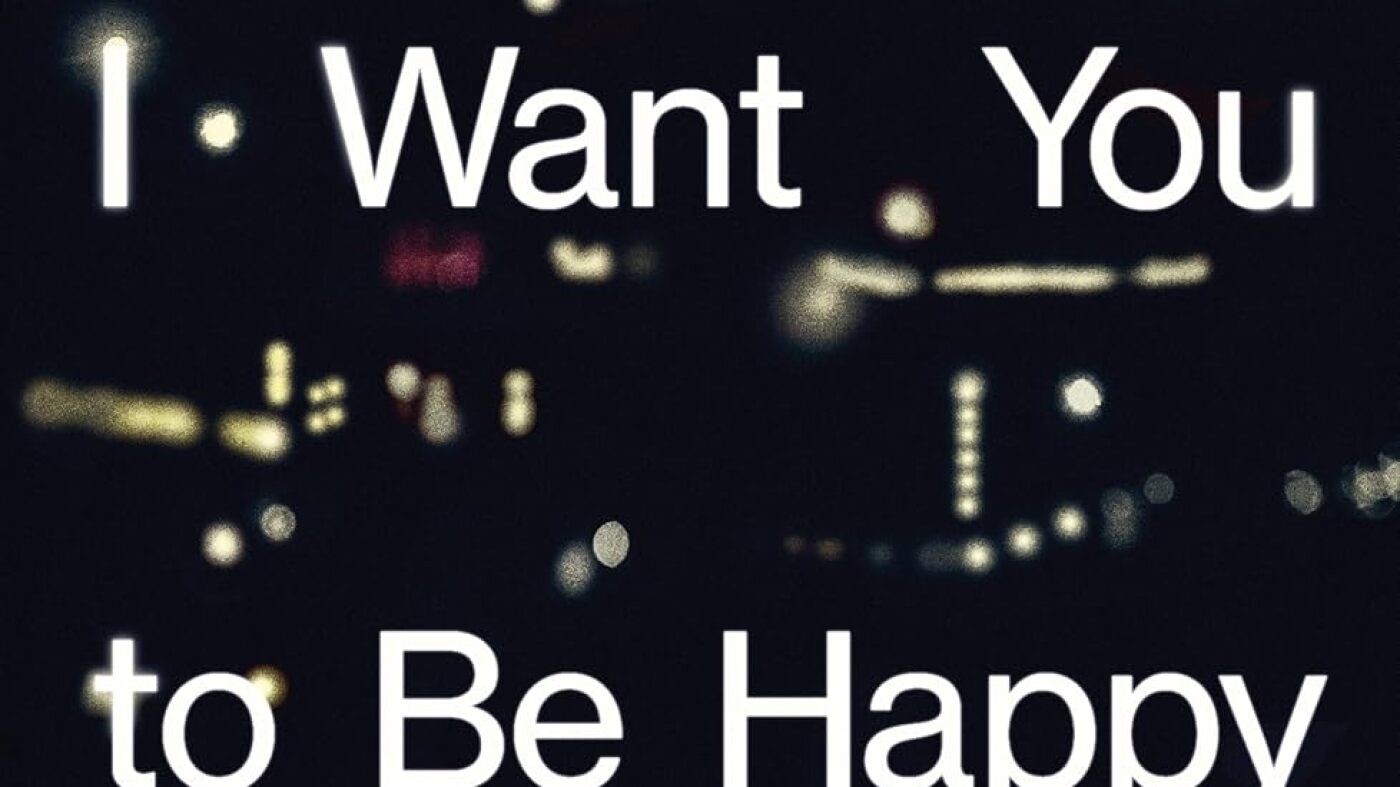
English writer Jem Calder’s debut novel, I Want You To Be Happy, reports from the frontlines of modern-day dating. His book is good – but the news is not.
A man in his mid-30s who recently broke off his engagement with his longtime girlfriend meets a young woman at a crowded London bar. He’s a copywriter, she’s a 23-year-old barista. Despite his intention not to talk about his breakup, he finds himself “shouting specific details directly in her ear.” “Pretty intense,” she yells back. He apologizes. “No-no, I like it,” she yells. “It’s like boarding a plane. You go baggage first.”
Neither can think what to say next. After an “interpersonal silence containing all the bar-noise,” they share a few drinks, their first names (Chuck and Joey), some quips about their 12 year age gap and her lack of what he calls “a real job.” They end up at his luxury apartment, which is far nicer than her crowded shared flat.
In other words, Calder’s characters have boarded a plane, baggage first — with no idea where it will land. Will it lead to an actual relationship, nevermind happiness?

Calder made a splash with his first book, Reward System, a collection of six interconnected short stories about young adults linked by social media yet adrift and alienated in today’s fragmented digital world. The title of one story, “Distraction from Sadness is Not the Same Thing as Happiness,” could also work for this closely observed, sad-but-sympathetic novel about the cagey, jittery dance that characterizes the modern-day mating game.
Chuck and Joey are guarded and uncertain. We get to know them better than they get to know each other — their insecurities and disappointments with themselves as well as others. Their fundamental imbalances — age, financial, commitment levels — lead to a wobbly connection. The discovery that they share literary aspirations (poetry for her, prose for him) and write around their day jobs opens up the potential for some sort of bond. Their nascent relationship stirs “a dormant feeling of possibility” in both of them. But a talent gap opens up an abyss. (I won’t say who has more.)
Joey is hopeful, always on stand-by for texts: “A new person finding you interesting makes you feel new,” she ruminates in this tight, third person narrative that alternates between the male and female perspective. Interestingly, although the author is male, the female character comes across as far more sympathetic.
Joey understands that she needs to wait before replying to texts, because responding too quickly betrays “an underlying neediness and desperation.” Chuck is generally avoidant in all aspects of his life — with alcohol as his chosen support system. It’s important to both of them to convey nonchalance. Neither wants to come across as a “tryhard.”
There’s nothing new about this, of course: Self doubts, waiting by the phone, playing hard to get, “acting noncommittal in the hopes of gaming his desire.” It’s a tale as old as time, with updated electronic devices.
Both characters are addicted to instant gratification: brand name status items, cyclist-delivered meals, push notifications, Instagram scrolling, podcasts, alcohol, smoking, vaping, sex, screens. They are constantly plugged in and online, compulsively checking their media feeds. One night, trying to distract herself from “recursive worries” about her finances and future, Joey spends “twenty of her non-refundable life minutes researching the relationship timeline of an actor she liked and a musician she didn’t like as much.”
Calder writes with precision, channeling his generation’s activities with a mix of interiority and verbs fabricated to convey the mechanical rote of their daily activities. These are people who routinely “gaze-unlocked” their phones, “V-60-ed” some coffee, and “escalatored” up to open plan spaces at work, where, lacking assigned cubicles, they “hot-desked” and then “sense-checked the work.” And at the end of the day, they “cheersed” drinks.
I Want You to Be Happy would have packed more punch at novella-length. Yet readers of all generations should be able to relate to these characters’ waves of disconsolate loneliness, if not how they deal with it. Older readers might recall their own anxieties about the future — but mostly feel relief that they’re no longer out there.
Lifestyle
L.A. Affairs: After losing our spouses, we found love again. But were we cheating on our children?

We’d progressed from walking in the park to perching across from each other in my living room to sitting side by side on the family room sofa. It was grief that drew us. A year earlier we’d both lost our beloved, vibrant spouses to cancer. Though his wife and I had been in the same women’s book group, I’d known Eric only through the wry gripes we’d all made about our husbands.
Now he took my face in his hands. Here it comes, I thought. Was I ready for this? Looking deep into my eyes he asked, “Would you nap with me?”
Apparently, this was what dating looked like in one’s 60s. As he snored companionably, I wondered how I’d handle our next progression, whatever that would be. My husband had devotedly nursed me through my own illness, only to be hit by one far worse. We and our two sons had been the closest of families, their father their best friend. As much as I knew they needed me, I was racked by survivor’s guilt — ashamed still to be alive. If I was mortified just to breathe, how could I even think about loving another man?
For months, Eric and I lurked about. Although he lacked the sense I had that we were cheating on our spouses, we both felt we were somehow cheating on our children. That his one child and my two were often at our respective homes made for tricky logistics. So we leased new life from the city.
Guided by Eric, we watched planes from the viewing deck at the Santa Monica Airport, where he explained Bernoulli’s principle. We wandered the Mar Vista Farmer’s Market, where he introduced me to the vendors he’d known for decades and taught me to top berry trays with tiny nets he’d made to hold the fruit in place. We saw L.A. Theater Works record plays at UCLA’s Melnitz Hall, where the primal storytelling of actors reading lines and Foley artists adding sounds riveted me more than a Broadway spectacle. On these outings, I learned not just about flight, farm-to-table and fabulism, but about Eric. He was a man fully engaged in life.
Guided by me, we took classes at Santa Monica Yoga, Eric treating himself afterward to a sandwich at Bob’s Market from the deservedly self-proclaimed Deli Lama. We walked our way through my L.A.-on-foot book, from Castellammare and Leimert Park to Pasadena, delighting in the architectural mashup Nathanael West derided in “The Day of the Locust” as “Mexican ranch houses, Samoan huts, Mediterranean villas” and “Egyptian and Japanese temples.” Eric especially admired the Witch’s House in Beverly Hills, the Shakespeare Bridge in Franklin Hills and the stained glass windows in Carthay Circle. He learned not just about poses, pastrami and parapets, but about me. I was a woman fully engaged in life.
We also learned we were both determined to seize the day after seeing the rest of our spouses’ days seized from them. My guilt persisted. But this good man had found a route from the sofa to the city to my heart.
We finally met each other’s children. The days we seized became weeks, months and years. Our sons, though forever brokenhearted, thrived. Mine had children of their own, all with names that begin with “A” to honor their father. The oldest, at four, understands from photos that she has another grandpa, understands that the man in the picture is her daddy’s daddy. Her parents and I tell her about him: his kindness, grace, humor, wisdom. “I wish I could have known him,” she says.
“I do too,” I say, “more than anything.” When the others are old enough, we’ll tell them, too, about him. They’ll feel his essence because their fathers are just like him. He’ll stay, this way, in and around us.
Ever-gracious, Eric holds this space for him, as I try to do for his wife with their son. But becoming a grandmother only increased my guilt. My husband, consummate family man, was born to be a grandfather. Yet here I was, without him, flying high on the joy of grandparenting. What could I do besides love the children and grandchildren fiercely and be grateful for the privilege?
I could do this: recognize that if it takes a village to raise a child, the more villagers who love the child the better. My lucky grandchildren will feel their grandfather’s love by proxy and Eric’s love firsthand. They can even enjoy the love of Eric’s son, who patiently helps them build Lego worlds and cooks them their favorite soup.
Even as he holds space for my husband, Eric affectionately fills his own. He’s a tall man with a deep voice, an easy laugh and a warm embrace. He marvels at the latest evidence of the grandchildren’s genius, like any grandfather should, and spoils them with treats and toys. He’s so handy around their houses that my grandson greets him with, “What’re you gonna fix today?”
His most recent project involved the crib my husband and I had saved from our sons’ infancy with the hope that grandchildren would one day use it. Since the distance between slats was now deemed unsafe, Eric transformed the crib into blocks. “I wanted to honor the spirit of what you’d both wished for,” he said.
Then and now. Loss and gain. Selfless love.
For years now, Eric and I have both lived in my house. There are still naps, but more bustle. Our sons live close enough that we’re together a lot, and my house tends to be the happy hub. The grandchildren play near photos of their grandpa. Their “A” names ring out in this home where we raised their fathers. Meanwhile, Eric pulls them around on a rug he rigged as a magic carpet and helps stack the blocks into towers. When the grandchildren leave, he hugs them tight. My guilt remains, like pain in a phantom limb, but the sofa holds us all.
The author is a law school professor, researcher and author of an upcoming book on the scientifically proven neural superpowers of grandmothers. She lives on the Westside. She’s on Instagram @rondafoxwrites, and her website is rondafox.com.
L.A. Affairs chronicles the search for romantic love in all its glorious expressions in the L.A. area, and we want to hear your true story. We pay $400 for a published essay. Email LAAffairs@latimes.com. You can find submission guidelines here. You can find past columns here.
George Orwell famously wrote that it takes a constant struggle to see what’s in front of one’s nose. That may be truer than ever. These days we barely register things that 20 years ago would’ve seemed downright bizarre — like people staring down at their phones in busy crosswalks. The unnatural comes to seem natural.
Until it doesn’t. This has happened with the proliferation of data centers all over America. After years of ignoring their mushrooming growth — there are over 4,000 in the U.S. — the public now sees them clearly and doesn’t like what they represent, be it soaring energy bills or the advent of job-killing AI. People now oppose having data centers in their communities. In real life — and in movies like Eddington — politicians are now pulled between their constituents’ desires and the devouring needs of Big Tech.
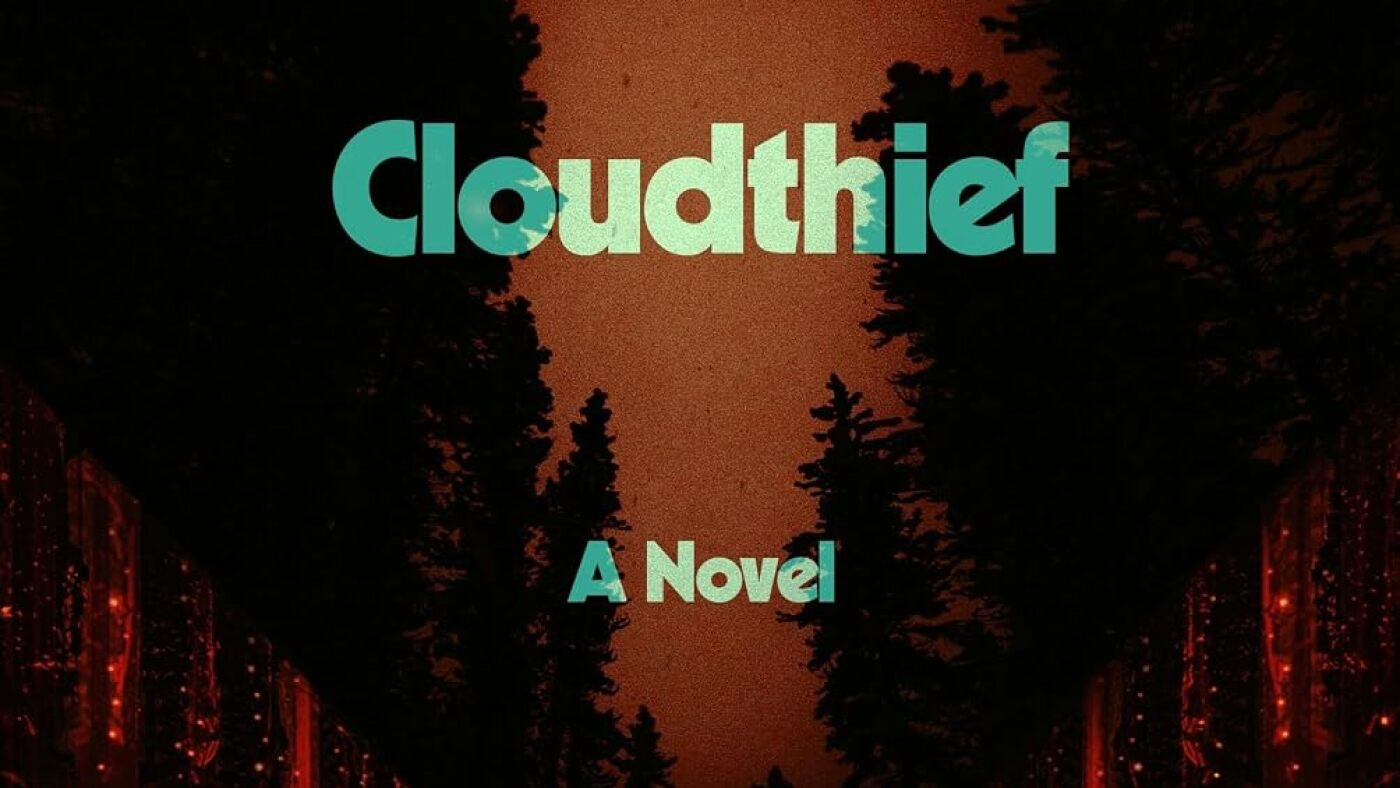
The hatred of data centers ignites the action in Cloudthief, a boisterous new novel that’s equal parts heist thriller and cry in the digital wilderness. It was written by novelist Nathaniel Rich, who may be best known for ecological non-fiction such as his 2019 book Losing Earth. Setting his story back in 2014 — when tech billionaires were still considered visionaries, not bullying moguls — Cloudthief centers on a brainy young man who, like the guy in the Leonard Cohen song, is just some Joseph looking for a manger.
Our narrator “Tim” — a pseudonym he says — is a freelance writer who’s gone broke doing magazine articles about climate change. He’s lonely and lost until he stumbles upon Virginia (also not her real name), who could be the American cousin of dragon-tattooed Lisbeth Salander.

Tech-savvy and paranoid and scarily elusive, Virginia lives off the grid in a Manhattan mini-storage unit and has plans for a blow against Big Tech. Evidently, Tim has never seen a noir movie because he doesn’t merely fall for this 21st-century fantasy of a femme fatale, he dreamily goes along with her plans to rob a data center in Pryor, Okla., and make off with the sellable information their servers contain.
Once they drive off to Pryor — Rich describes their road trip wonderfully — Cloudthief kicks into high gear, serving up the juicy stuff that we all love in a heist story. We see the baroque planning. We watch them case their target, a silver-smoke spewing behemoth that has the majestic size of two futuristic airport terminals but is actually as tacky as a boondocks mini-mall.
And we learn how things work. While data centers contain the records of major corporations and government departments — each building contains tens of thousands of servers fat with documents — they’re protected by a smattering of minimum wage guards.
“Nobody knows about them,” Tim says of these gigantic repositories. “But they are the foundation of life on earth. … If every data center went dark tomorrow, we would be plunged into the Middle Ages.”
As Virginia and the lovestruck Tim prepare for the robbery, Cloudthief is a blast. They philosophize, have sex, don silly disguises, bristle with suspicion and constantly argue, often quite wittily — she’s aghast at his amateur mistakes that could get them caught. They often seem like teenagers playing at committing a crime. But commit it they do.
Of course, if you’ve ever read or watched a heist tale, you know that things never go as planned, and that the setup is more fun than the aftermath. And so it is here. But rather than spoil things, I’ll merely note that Rich’s ending earnestly tells us what we already know.
No matter. Filled with sharp descriptions and terrific dialogue, Cloudthief stuck with me. I’ve read no other novel that captures so neatly what it means to be a data-center nation — the blighting of the physical landscape, the voracious use of fossil-fuel energy, the way that these huge, bland buildings, owned by private companies like Google and Amazon, now house, and thereby control, nearly all aspects of all our lives.
Leading a life of garrulous desperation and powerless analysis — he’s the very soul of defeated idealism — Tim can kid himself into believing that robbing the Pyror data center might be a meaningful gesture. In fact, he’s just chasing a woman — and trying to escape his own thwarted life. But his blindness helps us see our world.
Early in the novel, Tim ruminates on “the Cloud,” a term whose vague innocence seduces us into not thinking about its power. “The goal of any technology,” he says, “is to make itself both essential and invisible, like air.” In Cloudthief, Rich does the opposite. He helps us see the actual, earthbound workings of the magical-sounding cloud, and he gets us thinking about the perils of our needing it so badly.
-

 San Francisco, CA2 minutes ago
San Francisco Giants Announce Intriguing Roster Move Ahead of Mariners Series
-

 Dallas, TX8 minutes ago
Dallas seafood wholesaler fined $250K for false salmon labeling
-

 Miami, FL14 minutes ago
Absolutely Not: Florida woman’s “suggestive” license plate goes viral
-

 Boston, MA20 minutes ago
Ariana Grande fan gets better tickets to TD Garden concert in Boston after resolving StubHub issue
-

 Denver, CO26 minutes ago
Mitchell Fraboni will be the Bronco long snapper in 2026
-

 Seattle, WA32 minutes ago
Seattle real estate owner sentenced to prison for $4.7 million tax evasion scheme – MyNorthwest.com
-
San Diego, CA38 minutes ago
San Diego’s 6-month streak of a falling jobless rate comes to an end
-

 Milwaukee, WI44 minutes ago
12-year-old injured in Milwaukee shooting, police seek information

